15 337 résultats
réf. 2171PARIS, Lib. José Corti - 1967 - In-8 broché - 251 pages - Ex. non coupé - NEUF
2018réf. yl192TES - Ti-Embann ar Skoliou Brezhoneg Bemdez Album souple 2018 In-8 (18 x 21 cm), album souple dos agrafé, 18 pages, texte en breton, illustrations en couleurs, bien complet du CD ; comme neuf. Livraison a domicile (La Poste) ou en Mondial Relay sur simple demande.
1976réf. vm2209Flammarion Albums du Père Castor Dos agrafé 1976 In-8 (18 x 21 cm.), fascicule au dos agrafé, couverture illustrée, 15 pages, illustrations couleurs in-texte, texte en breton ; dos, coiffes et coins frottés,quelques traces et plis aux plats, assez bon état. Livraison a domicile (La Poste) ou en Mondial Relay sur simple demande.
1963réf. RO80181771ANDRE BALLAND. 1963. In-12. Relié toilé. Bon état, Couv. convenable, Dos satisfaisant, Intérieur frais. 317 Pages. Salissure sur le 1er plat. Signet conservé. Traces de crayon à papier.. . . . Classification Dewey : 398.2-Conte populaire
1939réf. R240100555HENRI DIER. 1939. In-8. Broché. Etat d'usage, Tâchée, Agraffes rouillées, Intérieur acceptable. 55 pages agrafées - quelques illustrations en noir et blanc dans et hors texte dont une en frontispice.. . . . Classification Dewey : 398.2-Conte populaire
2010
1960réf. 0269Instituto Potosino de Bellas Artes 1960 Broché couverture rempliée Bon état général 69 g
1919réf. 20154Eugène Fasquelle éditeur 1919 371 pages in12. 1919. reliure éditeur demi-basane. 371 pages.
1944réf. R300260103Musy Frères. 1944. in-8. Broché. Bon état, Couv. convenable, Dos satisfaisant, Intérieur frais. Paris, Musy Frères, 1944, grand in 8, broché, rousseurs éparses, 30 illustrations, 66 pp. Edition Orginale Numérotée sur vélin tirée à 930 exemplaires. . . . . Classification Dewey : 398.2-Conte populaire
in-4°, 161 pp., broché. Bel exemplaire avec ENVOI de l'auteur. [P-11]
1880réf. CCC-1325150. Edité par Alphonse Lemerre 1880 . Sous chemise avec ficelles. Treize eaux fortes. Page d’accueil, portrait de perrault,puis illustration des contes : griselidis, les souhaits ridicules, cendrillon le petit poucet, le chat botté, la barbe-bleue, peau d’ane, le petit chaperon rouge, les fees, la belle au bois dormant ( tache dans la marge) et riquet à la houppe ( tache dans la marge) . Format : 20,5 cm X 15 cm. Les eaux fortes sont en bon état sauf les deux dernières. Photos possibles
1954réf. RO40002825Bibliothèque Mondiale. 1954. In-12. Broché. Etat d'usage, Couv. convenable, Dos satisfaisant, Papier jauni. 243 pages. Couverture avec 1 rabat. Sommaire en photo.. . . . Classification Dewey : 398.2-Conte populaire
réf. 126515aafEditions de l’Aire, 2015, gr. in-8vo, 145 p., ill. couleurs par des peintures de Alphonse Layaz, brochure originale.
1989réf. 82103Abbeville Press Inc.,U.S. 1989 In-4 relié 33,5 cm sur 26,3. 256 pages. Très bon état d’occasion.
1953Mm 130x210 Brossura editoriale con sovraccoperta figurata, 241 pagine. Opera in ottime condizioni. SPEDIZIONE IN 24 ORE DALLA CONFERMA DELL'ORDINE.
réf. 3846La Chatre, Alfred Bourg, 1953 in-8, br. - 215pp.-2ff. Couvertureillustrée d'un dessin de Jean-Louis Boncoeur. Bon exemplaire, non coupé.
réf. 7650La Chatre, Alfred Bourg, 1953, 14x22,5cm, broché, couverture illustrée par Jean-Louis Boncoeur, 215 pages non coupées, bon état.
réf. 32428Paris Grande Loge Nationale de France 0 in-8°
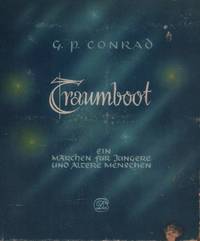
réf. 66637Berlin Daco-Verlag 1950. . Beyond the waves dt. - Deckeltitel: "Traumboot. Ein Märchen für jüngere und ältere Menschen". - Mit hs. WIDMUNG des Illustrators K. C. Knudsen 1916-1998 Bildhauer Graphiker u. Schriftsteller: "Meinem Freunde Siegfried M. Pistorius." Journalist u. Schriftsteller datiert Bad Nauheim Februar 1950. - Einband berieben VDeckel hellfleckig; Papier zeitbedingt gebräunt Berlin, Daco-Verlag, ( 1950). unknown
1581In-8°, (2), 172 i.e.173cc, buone condizioni tranne le prime carte restaurate all’angolo superiore con parziale mancanza di testo, legatura in pergamena. Passano I, 164 “collezione curiosa di novelle, moltissime delle quali assai licenziose. Il Libri, che così lo qualifica (Catal. del 1859, n.464), aggiunge che è libro estremamente raro”. Brunet I, 193. Conforme a Edit 16 id.CNCE 7834 Il volume contiene anche L’isola di Narsida (1572) vero e proprio romanzo utopistico, antesignano dei primi romanzi di fantascienza. In-8 °, (2), 172 i.e.173cc, good condition although the first leaves have been restored at the upper corner (the text is partially missing), vellum binding. Passano I,164 “curious collection of short stories, many of which are very licentious. Libri, which qualifies it this way (Catal. of 1859, n.464), adds that it is an extremely rare book ". Brunet I, 193. In accordance with Edit 16 id. CNCE 7834 The volume also contains The Island of Narsida (1572) a true utopian novel, a forerunner of the first science fiction novels.
réf. 68245Paris/Tournai (Belgique), Casterman, 1938. 18 x 25, 101 pp., reliure d'édition carton imprimé, bon état (pied et coiffe légèrement abîmés).
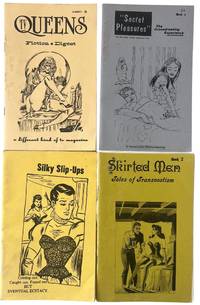
1982réf. 235301982. Five Transvestite Fiction Booklets containing reflections on gender trans identity self expression from 1982-1994 including story titles such as "Sissy in Satin" "Living Doll" "Jim into Jamie" "Trapped in Panties" "My Husband Married Me To be a Woman" "Letters to Cathy" "The Adventures of a Boy Turned Girl" and "Caught.In My Sister's Clothes." A first-person passage states that a transvestite needs "feedback from others" to understand "gait" "voice" and "other mannerisms" while "perfecting a gender role" placing social performance and self-assessment inside the language of everyday presentation. The group emerged during a period when queer and trans communities faced AIDS-era stigma homophobic public discourse and the lingering legal and social memory of anti-crossdressing enforcement in American cities. By 1980 defendants had challenged cross-dressing arrests in at least sixteen cities while the domestic HIV/AIDS epidemic began in 1981 and intensified public hostility toward already stigmatized queer communities. These booklets preserve small-press fiction created for readers seeking transvestite crossdressing and transfeminine narratives outside mainstream publishing with fantasy plots gender transformation motifs and direct language about feminine identity appearing within the same print culture. Crossdressing and Transvestite Fiction Booklets. Seattle and s.l.: Empathy Press and unidentified publishers 1982 to 1994 and undated. Five staple-bound booklets each approximately 50 pages including three Empathy Press titles and two related transvestite or crossdressing fiction titles. 1 Slavik Charles. Skirted Men: Tales of Transvestism. Book 2. Seattle: Empathy Press 1982. The contents page lists "Sissy in Satin" beginning on page 4 with copyright credited to Charles Slavik and the publisher given as Empathy Press P.O. Box 12466 Seattle Washington 98111. Princeton cataloging identifies Charles Slavik as creator of another Empathy Press Skirted Men issue confirming the publisher's place within late twentieth-century LGBTQIA periodical and ephemera collecting. 2 TV Queens Fiction Digest. Number 23. Seattle: Empathy Press 1990. The contents page lists "Living Doll" "Jim into Jamie" and "Trapped in Panties" and the imprint invites readers to send material if they "enjoy writing and would like to see your fantasies in print." That solicitation places the digest within a participatory reader-writer circuit where fantasy manuscripts could move from private desire into small-run printed circulation. 3 Secret Pleasures: The Crossdressing Experience. Book 16. Seattle: Empathy Press 1994. The contents page gives the story title "My Husband Married Me To be a Woman" and the front cover identifies the work as "A Transvestite Fiction Fantasy." Gerber/Hart's transgender periodicals exhibit describes Cathy Charles Slavik's Empathy Press enterprise as evolving by the early 1970s into several concurrent trans-oriented magazines giving this later booklet a connection to a publisher with a longer transvestite and trans readership history. 4 Silky Slip-Ups. S.l.: s.n. undated. The cover caption reads "Coming out. Caught out. Found out. BUT EVENTUAL ECSTACY" using discovery exposure and eventual pleasure as the narrative promise. The cover art and title align the booklet with forced-feminization and crossdressing fiction conventions described in trans small-press fiction where many plots turn on coerced dressing transformation or power exchange. 5 Astounding Transvestite Tales. Number 12. Seattle: Empathy Press undated. The contents page lists "Letters to Cathy" "The Adventures of a Boy Turned Girl" and "Caught.In My Sister's Clothes" with the publisher given as Empathy Press Box 12466 Seattle Washington 98111. The yellow illustrated cover and serialized number place it squarely within Empathy Press's small-format transvestite fiction output adding another example of the publisher's recurring use of readerly address transformation narrative and discovery plot conventions. The booklets use the historical vocabulary of "transvestism" "crossdressing" "feminine identity" and "gender role" before "transgender" became the dominant umbrella term in many public and archival contexts. Their contents connect erotic fantasy to questions of passing social recognition voice gait coming out exposure and reader participation making the group especially useful for tracing how trans and crossdressing readers articulated identity through small-format fiction during the 1980s and 1990s. All five booklets are in very good condition with intact spines minor price-sticker residue light discoloration and handling wear to the covers. The group preserves an early small-press record of transvestite and crossdressing fiction made around the desires anxieties vocabulary and self-fashioning practices of its own readership. unknown books
1982réf. 235301982. Five Transvestite Fiction Booklets containing reflections on gender trans identity self expression from 1982-1994 including story titles such as "Sissy in Satin" "Living Doll" "Jim into Jamie" "Trapped in Panties" "My Husband Married Me To be a Woman" "Letters to Cathy" "The Adventures of a Boy Turned Girl" and "Caught.In My Sister's Clothes." A first-person passage states that a transvestite needs "feedback from others" to understand "gait" "voice" and "other mannerisms" while "perfecting a gender role" placing social performance and self-assessment inside the language of everyday presentation. The group emerged during a period when queer and trans communities faced AIDS-era stigma homophobic public discourse and the lingering legal and social memory of anti-crossdressing enforcement in American cities. By 1980 defendants had challenged cross-dressing arrests in at least sixteen cities while the domestic HIV/AIDS epidemic began in 1981 and intensified public hostility toward already stigmatized queer communities. These booklets preserve small-press fiction created for readers seeking transvestite crossdressing and transfeminine narratives outside mainstream publishing with fantasy plots gender transformation motifs and direct language about feminine identity appearing within the same print culture. Crossdressing and Transvestite Fiction Booklets. Seattle and s.l.: Empathy Press and unidentified publishers 1982 to 1994 and undated. Five staple-bound booklets each approximately 50 pages including three Empathy Press titles and two related transvestite or crossdressing fiction titles. 1 Slavik Charles. Skirted Men: Tales of Transvestism. Book 2. Seattle: Empathy Press 1982. The contents page lists "Sissy in Satin" beginning on page 4 with copyright credited to Charles Slavik and the publisher given as Empathy Press P.O. Box 12466 Seattle Washington 98111. Princeton cataloging identifies Charles Slavik as creator of another Empathy Press Skirted Men issue confirming the publisher's place within late twentieth-century LGBTQIA periodical and ephemera collecting. 2 TV Queens Fiction Digest. Number 23. Seattle: Empathy Press 1990. The contents page lists "Living Doll" "Jim into Jamie" and "Trapped in Panties" and the imprint invites readers to send material if they "enjoy writing and would like to see your fantasies in print." That solicitation places the digest within a participatory reader-writer circuit where fantasy manuscripts could move from private desire into small-run printed circulation. 3 Secret Pleasures: The Crossdressing Experience. Book 16. Seattle: Empathy Press 1994. The contents page gives the story title "My Husband Married Me To be a Woman" and the front cover identifies the work as "A Transvestite Fiction Fantasy." Gerber/Hart's transgender periodicals exhibit describes Cathy Charles Slavik's Empathy Press enterprise as evolving by the early 1970s into several concurrent trans-oriented magazines giving this later booklet a connection to a publisher with a longer transvestite and trans readership history. 4 Silky Slip-Ups. S.l.: s.n. undated. The cover caption reads "Coming out. Caught out. Found out. BUT EVENTUAL ECSTACY" using discovery exposure and eventual pleasure as the narrative promise. The cover art and title align the booklet with forced-feminization and crossdressing fiction conventions described in trans small-press fiction where many plots turn on coerced dressing transformation or power exchange. 5 Astounding Transvestite Tales. Number 12. Seattle: Empathy Press undated. The contents page lists "Letters to Cathy" "The Adventures of a Boy Turned Girl" and "Caught.In My Sister's Clothes" with the publisher given as Empathy Press Box 12466 Seattle Washington 98111. The yellow illustrated cover and serialized number place it squarely within Empathy Press's small-format transvestite fiction output adding another example of the publisher's recurring use of readerly address transformation narrative and discovery plot conventions. The booklets use the historical vocabulary of "transvestism" "crossdressing" "feminine identity" and "gender role" before "transgender" became the dominant umbrella term in many public and archival contexts. Their contents connect erotic fantasy to questions of passing social recognition voice gait coming out exposure and reader participation making the group especially useful for tracing how trans and crossdressing readers articulated identity through small-format fiction during the 1980s and 1990s. All five booklets are in very good condition with intact spines minor price-sticker residue light discoloration and handling wear to the covers. The group preserves an early small-press record of transvestite and crossdressing fiction made around the desires anxieties vocabulary and self-fashioning practices of its own readership. unknown