Rosenthal Harold & Warrack JohnLivre Rare Book

5,619 results
1974ref. 4171Fayard 1974 409 pages 15 8x4x23 8cm. 1974. cartonnage editeur avec jaquette. 409 pages. Dictionnaire de référence consacré à la musique classique et à l'opéra offrant des définitions des biographies et des analyses d'œuvres pour les passionnés et les professionnels
1979ref. dc680Hachette La Nouvelle encyclopédie Album cartonné 1979 In-4 (20 x 26,5 cm.), album cartonné, couverture illustrée, 124 pages, illustrations couleurs et noir et blanc in-texte ; légères traces aux plats, par ailleurs très bel état. Livraison a domicile (La Poste) ou en Mondial Relay sur simple demande.
1990ref. nx199Gentleman éditeur Les Petits plaisirs Cartonné avec jaquette 1990 In-8, (22x12.5 cm), cartonné sous jaquette illustrée, 95 pages, illustrations en couleurs et en noir et blanc, préface de Michel Lis, le jardinier ; jaquette légèrement défraîchie, bon état général. Livraison a domicile (La Poste) ou en Mondial Relay sur simple demande.
1938Paris, Malfère, SFELT, Encyclopédie Roret, 1938. Un volume broché de format in 8° de 224 pp., 79 illustrations dans le texte. Petit manque angulaire au premier plat, papier jauni comme d'usage, bon état.
1963ref. 3590Club des amis du livre 1963 439 pages in8. 1963. Cartonnage editeur sous rhodoid. 439 pages. Ouvrage documentaire de Serge Bertino consacré à la faune sauvage d'Europe publié par le Club des Amis du Livre. Le livre présente probablement les différentes espèces animales du continent européen de manière systématique
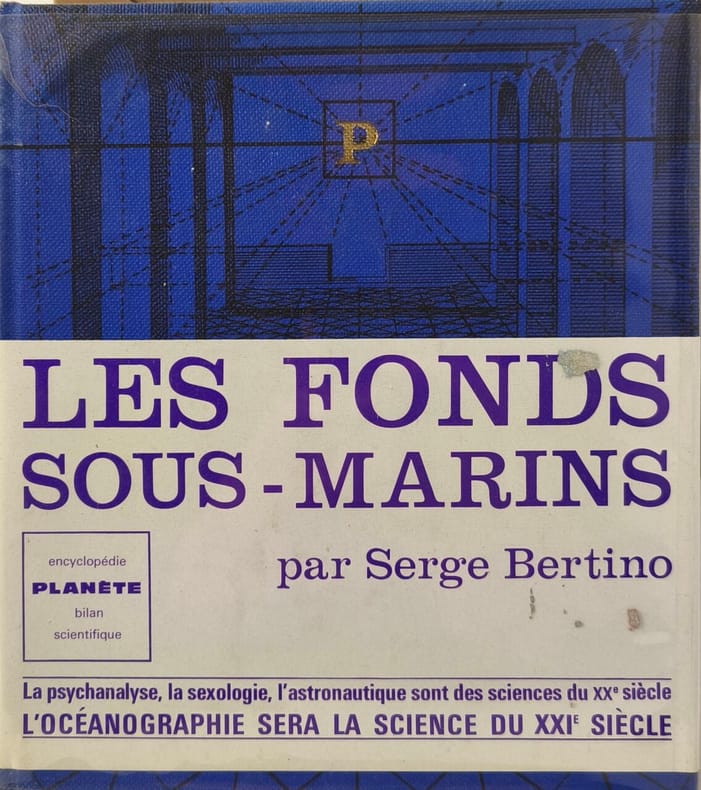
1968ref. 5362Éditions planète 1968 253 pages in8. 1968. reliure editeur sous rodhoid. 253 pages. Ouvrage documentaire de 1968 faisant partie de l'Encyclopédie Planète qui traite de l'exploration des profondeurs océaniques des relations entre l'homme et la mer et des richesses marines. Le livre contient 255 pages avec des illustrations et des cartes
1961ref. qi1651Hachette encyclopédie en couleurs Cartonné 1961 In-4 (26,2 x 31,7 cm), cartonné, 117 pages, illustrations en couleurs ; coiffes et coins usés, petit incident au mors supérieur, assez bon état Livraison a domicile (La Poste) ou en Mondial Relay sur simple demande.
Mm 130x200 Brossura editoriale di viii- 185 pagine perlopiù intonse, dorso brunito.Testo in lingua francese. Volume senza data di stampa. Buono stato. Spedizione entro 24 ore dalla conferma dell'ordine.
ref. 6035relié avec jacquette- 17,5x23 - 591 pp - 1978 - éditions LAROUSSE, Paris .Illustrations dans et hors texte de Roger REBOUSSIN. Nombreuses photographies hors texte.Avant-propos de F. MERVEILLEUX du VIGNAUX.
1976ref. vh3171Elsevier Séquoia Cartonné 1976 In-12 (13,5 x 19,8 cm), cartonné, 251 pages, photos en couleur ; très bon état général. Livraison a domicile (La Poste) ou en Mondial Relay sur simple demande.
2005About The Author:- Sir George Abraham Grierson, (Jan. 7, 1851-March 9, 1941) Irish linguist, language scholar and civil servant who conducted the Linguistic survey of India (1898-1928), obtaining information on 364 languages and dialects. While a student of mathematics at Trinity College, Dublin, Grierson took prizes in Sanskrit and Hindi. Grierson went to Bengal in October 1873, where-in addition to carrying out his duties in a succession of government posts until 1898-he devoted much time to language research. The first of his enormous output of papers, reviews, and books appeared in 1877. Contents:- Volume 1: DIVISION I • Historical • Introductory • Meaning of the word dialect •Nomenclature • The Eastern Neo Indo-Aryan or Gaudian languages • Western, Northern, and Southern Neo-Indo-Aryan or Gaudian languages • Their origin • The two great Prakrit languages • Their History • Their final location • Their modern representatives • Comparison of Bihari and Hindi languages • Preliminary definitions • Pronunciation • Derivation • Inflection • Construction • Vocabulary • Final results of the above • Geographical distribution-language boundaries • political boundaries • Dialects of Bihari • Bhojpuri • Maithili • Magadhi • Bihari Literature • General plan of these grammars • DIVISION II • Grammatical • Chapter I. - Alphabet • Character • Anunasik • The neutral vowel • Final sonant a • Short diphthongs • The complete series of Bihari vowels • The Consonants • Chapter II. – Spelling, &c • Concurrent vowels • Contraction • Shortening of antepenultimate vowel • Silent y and w • CHAPTER III. - Nouns • Nominal forms • Number • Case • Gender • CHAPTER IV. - Adjective • Gender • Maithili exceptions • Numeral adjectives • CHAPTER V. - Pronouns • No general rules • CHAPTER VI. - Verbs • General rules • Verbs how quoted • Multiplicity of forms • CHAPTER VII. - Indeclinables • Indeclinables • Adverbs • Prepositions • Conjunctions • Interjections • Final • Appendix • Conversation between two villagers • Translation of a conversation between two villagers • Translation of fables • The Title 'Seven Grammar of the Dialects Sub Dialects Subdialects of the Bihari Language, (Introductory, Bhojpuri Dialect, Magadhi Dailect) written/authored/edited by George A. Grierson', published in the year 2005. The ISBN 9788178354521 is assigned to the Hardcover version of this title. This book has total of pp. 307 (Pages). The publisher of this title is Kalpaz Publications. This Book is in English. The subject of this book is Literature / Linguistic / Reference / Dictionary / Encyclopaedia. Size of the book is 14.34 x 22.59 cms Vol:- Vol. 1st
2005About The Author:- Sir George Abraham Grierson, (Jan. 7, 1851-March 9, 1941) Irish linguist, language scholar and civil servant who conducted the Linguistic survey of India (1898-1928), obtaining information on 364 languages and dialects. While a student of mathematics at Trinity College, Dublin, Grierson took prizes in Sanskrit and Hindi. Grierson went to Bengal in October 1873, where-in addition to carrying out his duties in a succession of government posts until 1898-he devoted much time to language research. The first of his enormous output of papers, reviews, and books appeared in 1877. Contents:- Volume 2: Introduction • DIVISION I • DECLENSION • CHAPTER I.- NOUNS • Post-positions • Masculine tadbhavas in • Masculine nouns ending in silent consonants • General rules for other nouns • Masculine tatsamas in • Masculine nouns in • Masculine nouns in • Feminine nouns in • Feminine nouns ending in a silent consonant • Periphrastic Plural • Genitive Affixes • CHAPTER II. - ADJECTIVES • Gender • Numeral adjectives, cardinals • Ordinals • Fractional numbers • Multiplicatives • Definite cardinals • Indefinite cardinals • Collective numerals • CHAPTER III. - PRONOUNS • General remarks • Pronouns of the first and second person non-honorific • Pronoun of the second person honorific and reflexive pronoun • Demonstrative pronouns • Correlative pronouns • Interrogative pronoun • Indefinite pronoun • Indefinite pronoun • Indefinite Pronoun • Compound indefinite pronoun • Derivative pronominal forms • Adjectival pronouns • Pronominal oblique genitive • DIVISION II • CONJUGATION • CHAPTER IV. - INTRODUCTORY • Warning as to number and gender • Special honorific form common to second and third persons • Warning as to spelling • Conjugational system • Moods • Simple tenses • Periphrastic tenses • Personal terminations of simple tenses • Formation of tense stems • Present indicative • Preterite indicative • Future Indication • Future conjunctive and imperative • Preterite conjunctive • CHAPTER V. – AUXILIARY VERBS • Classes • Defective auxiliary verbs • Weak ands strong complete auxiliary • verbs • Conjugation of first defective auxiliary verb • Conjugation of Second defective auxiliary • Conjugation of third defective auxiliary verb • Conjugation of fourth defective auxiliary verb • Conjugation of fifth defective auxiliary verb • Conjugation of weak complete auxiliary verb • Preterite • Future • Present conjunctive • Preterite • Present imperative and precative forms • Participle • Strong complete auxiliary verb • CHAPTER VI. – THE REGULAR ACTIVE VERBS • Preliminary • Conjugation of dekh: principal parts • Simple tenses: present indicative • Preterite • Future • Present Conjunctive • Preterite • Present Imperative ands precative forms • Periphrastic tenses-indicative mood • Defitive present • Variety of Above • Imperfect • Durative future • Perfect • Pluperfect • Future exact • Future conditional • Future exact conditional • Preterite conditional • Participles • Infinitives or verbal nouns • Noun of agency • CHAPTER VII. – THE REGULAR NEUTER VERBS • Points of difference • gir: principal parts • Preterite indicative • Perfect • Pluperfect • CHAPTER VIII. – VOCALIC ROOTS • Causes of apparent irregularity • Verbs whose roots end in • Examples of use junction vowel • Example of a verb whose root ends in • Ditto • Ditto • Ditto • CHAPTER IX. – IRREGULAR VERBS • Preliminary • kar dhar • mar • ja • de • CHAPTER X. – THE PASSIVE VERB • Ordinary rule • Verbal noun in al • Passive with par • Potential passive voice • Periphrastic passive voice • CHAPTER XI. – CAUSAL VERBS • Ordinary rule • Shortening of a long radical vowel • Lengthening of short radical vowel • Substitution of a cognate diphthoug • Dissullabic causals • Irregular causals • CHAPTER XII. – COMPOUND VERBS • Kinds of compound verbs • Classes of compound verbs • Compound formed with the verbal noun varieties of verbal noun • Distribution of compound formed with the verbal noun • Intensive • intensive auxiliaries • Potential compounds • Completive compounds • Frequentative compounds • Desiderative compounds • Inceptive compounds • Permissive compound •Acquisitive compounds • Compounds formed from the participles continuative compounds • Statical compounds • DIVISION III • INDECLINABLES • APPENDIX I • SELECTIONS IN THE CENTRAL MUZAF FARPUR DIALECT • APPENDIX II • NOTE ON THE USE OF THE VARIOUS VERBAL TERMINATIONS • The Title 'Seven Grammar of the Dialects Sub Dialects Subdialects of the Bihari Language, ( Maithli Bhojpuri Dialect, South Maithli Dialect) written/authored/edited by George A. Grierson', published in the year 2005. The ISBN 9788178354538 is assigned to the Hardcover version of this title. This book has total of pp. 207 (Pages). The publisher of this title is Kalpaz Publications. This Book is in English. The subject of this book is Literature / Linguistic / Reference / Dictionary / Encyclopaedia. Size of the book is 14.34 x 22.59 cms Vol:- Vol. 2nd
2005About The Author:- Sir George Abraham Grierson, (Jan. 7, 1851-March 9, 1941) Irish linguist, language scholar and civil servant who conducted the Linguistic survey of India (1898-1928), obtaining information on 364 languages and dialects. While a student of mathematics at Trinity College, Dublin, Grierson took prizes in Sanskrit and Hindi. Grierson went to Bengal in October 1873, where-in addition to carrying out his duties in a succession of government posts until 1898-he devoted much time to language research. The first of his enormous output of papers, reviews, and books appeared in 1877. Contents:- Volume 3: INTRODUCTION • DIVISIOIN I • DECLENSION • CHAPTER I. - NOUNS • Post-positions • Masculine tadbhavas in • Masculine nouns ending in silent consonants • General rules for other nouns • Masculine tatsamas in • Masculine noun in • Masculine noun in • Feminine noun in • Feminine nouns ending in a silent consonant • Periphrastic plural • genitival affixes • CHAPTER II. - ADJECTIVE •Gender • Numeral adjective cardinals • Ordinals • Fractional Numerals • Multiplicatives • Definite cardinals • Indefinite cardinals • Collective numerals • CHAPTER III. - PRONOUN • General remarks • Non-honorific pronoun of the first and second persons • Pronoun of the second person honorific and reflexive pronoun • Demonstrative pronouns • Correlative pronouns • Interrogative pronoun • Indefinite pronoun • Indefinite pronoun • Indefinite pronoun • Compound indefinite pronouns • Derivative pronominal forms • adjective pronouns • Pronominal oblique genitive • DIVISION II • CONJUCTION • CHAPTER IV. - INTRODUCTORY • Warning as to numeral and gender • Warning as to spelling • Conjugational system • Moods • Simple tenses • Personal terminations of simple tenses • Formation of tense-stems • Preterite indicative • Future indicative • Present conjunctive and imperative • Preterite conjunctive • The use of the various verbal terminative • CHAPTER V. – AUXILIARY VERBS • Classes of auxiliary verbs • Defective auxiliary verbs • Complete auxiliary verbs • Conjugation of first defective auxiliary verb • Conjugation of second defective auxiliary verb • Preterite • Conjugation of complete auxiliary verb, preterite indicative • Future • Present Conjunctive • Preterite • Present imperative and precative forms • Participles • CHAPTER VI. – THE REGULAR ACTIVE VERB • Preliminary • Conjungation of principal parts • Simple tenses: preterite indicative • Future • Present conjunctive • preterite • Present imperative and precative forms • Periphrastic tenses-indicative mood • Definite present • Variety of above • Imperfect • Durative future • Perfect • Pluperfect • Future conditional • Durative present conditional • Future exact conditional • Preterite conditional • Participles • Infinitives or verbal nouns • Noun of agency • CHAPTER VII. – THE REGULAR NEUTER VERB • Points of defference • gir: principal parts • Preterite indicative • Perfect • Pluperfect • CHAPTER VIII. – VOCALIC ROOTS • Causes of apparent irregularity • Verbs whose roots end in Junction vowel • Examples of use of junction vowel • Example of a verb whose root ends in • Ditto • Ditto • Ditto • CHAPTER IX. – IRREGULARE VERBS • Preliminary • kar dhar • mar • ja • de • CHAPTER X. – THE PASSIVE VERB • Ordinary rule • Verbal noun in • Passive with par • Potential passive voice • Periphrastic passive voice • CHAPTER XI. – CAUSAL VERBS • Ordinary rule • Shorting of a long radical vowel • Lengthening of short radical vowel • Substitution of a cognate diphthoug • Dissyllabic causals • CHAPTER XII. – COMPOUND VERBS • Kinds of compound verbs • Classes of compound verb •Compounds formed with the verbal noun varieties of verbal noun • Distribution of Compounds formed with the verbal noun • Intensive Compounds • Intensive auxiliaries • Potential compounds • Completive compound • Frequentative compound • Desiderative compound • Inceptive compound • Permissive compound • Acquisitive compound • Compounds formed from the participles continuative compound • Statical compound • DIVISION III • INDECLINABLES • APPENDIX • SELECTIONS IN THE SOUTH MAITHIL-MAGADHI DIALECT • Conversation between two villagers. The Title 'Seven Grammar of the Dialects Sub Dialects Subdialects of the Bihari Language, (South Maithli-Magadhi Dialect, South Maithli-Bangali Dialect),Maithli Bengali Dailect) written/authored/edited by George A. Grierson', published in the year 2005. The ISBN 9788178354545 is assigned to the Hardcover version of this title. This book has total of pp. 301 (Pages). The publisher of this title is Kalpaz Publications. This Book is in English. The subject of this book is Literature / Linguistic / Reference / Dictionary / Encyclopaedia. Size of the book is 14.34 x 22.59 cms Vol:- Vol. 3rd
2004The Title 'Medicinal Plants written/authored/edited by Manisha Tiwari, Vibha Tandon', published in the year 2004. The ISBN 9788182050976 is assigned to the Hardcover version of this title. This book has total of pp. 350 (Pages). The publisher of this title is Isha Books. This Book is in English. The subject of this book is PURE AND APPLIED SCIENCES / Reference / Dictionary / Encyclopaedia. Size of the book is 14.34 x 22.59 cms Vol:- Vol. 1st
2004The Title 'Medicinal Plants written/authored/edited by Manisha Tiwari, Vibha Tandon', published in the year 2004. The ISBN 9788182050983 is assigned to the Hardcover version of this title. This book has total of pp. 303 (Pages). The publisher of this title is Isha Books. This Book is in English. The subject of this book is PURE AND APPLIED SCIENCES / Reference / Dictionary / Encyclopaedia. Size of the book is 14.34 x 22.59 cms Vol:- Vol. 2nd
2003About The Author:- Prof. Ramesh Chandra, was born in a family of freedom fighters on July 1st. 1957 in village Bijwara, District Meerut of Uttar Pradesh. He started his research career at University of Delhi and then went to the New York Hospital-Cornell University Medical Center, as well as at the School of Medicine, State University of New York at Stony Brook as a faculty member and then went to Harvard University Medical School-Massachusetts General Hospital joined at MIT, Cambridge, USA. On his return to India he joined the faculty at the University of Delhi, where he is currently a Professor of Chemistry and Director of Dr. BR Ambedkar Centre for Biomedical Research: in addition to his present assignment as Vice-Chancellor of Bundelkhand University, Jhansi (UP). He was appointed Professor (Research Scientist) by the UGC at the young age of 35 years. He is a creator, performer and builder of institutions of higher learning. He has established Dr. BR Ambedkar Centre of Biomedical Research at University of Delhi, when he was just 33 years old and became its Founder Director. He was appointed as youngest Vice-Chancellor of Bundelkhand University on March 24th, 1999 at the age of 41 years. He has metamorphosed it into a Center of Excellence by creating 36 institutes of higher learning and increasing the capacity of students from 225 to 90000 and raising the number of faculty member from 8 to 270 in such a short span of time. Prof. Ramesh Chandra is a scholar and an eminent scientist. He has done pioneering research work in the field of drug development and his inventions are being used in the development of drugs for Neonatal jaundice and breast tumor. He is recipient of several National and International Awards such as: UGC Career Award, Prof. DP Chakravorty Commemoration Award, The Rockefeller Foundation, USA Biotechnology Career Award, UGC Research Scientist Award, Fullbright Scholarship, Award of the Highest Honor of the Soka University, Japan and Fellowships of: the Royal Society of Chemistry, UK, International Academy of Physical Sciences. He is also recipient of National Scholarship of the Govt. of India and many more. He is member of more than three dozen scientific and academic societies as well as founder of several academic and scientific societies and institutions. He has been visiting scientist at various University and research institutions all over the world. Contents:- CONTENTS:- # Preface ix: Introduction 1: 1. India and Terrorism 5: Terrorism in Punjab: 2. Reasons of Terrorism in India 15: India under Threat, Role of Youth, Women as: Advocate of militancy; sensitivity of Kashmir and: Punjab; Hindu Communalism; The North-East;: Naxalism in India: Insurgency by Rural Poor; The: Dangers of Contempt: 3. Absence of Strategy: India 49: History of Strategic Failure; Need for a Combined: Defence Organization; Need for a Think Tank: Culture in India, Absence of Will Among Politicians: and Bureaucrats: The Joint Intelligence Committee: (JIC), Crisis Management Mechanism; The Home: Security: Selection and Duties; Strategy in Pakistan: 4. Strategies and Options 69: Conceps, Courses and Options—(I) Need for: National Policy (II) Maintenance of Local Autonomy: (III) Propagatorly Pluralism as an Emotional: Programme, (IV) Develop an Institutionalised: Strategic System, (V) Weeding out Corruption (VI): Economic Policy Aimed at Countering Militancy: (VII) Gathering International Support in Fighting: Proxy War. (VIII) Addressing Problems of Youth (IX): Improving the Criminal Justice System, Developing: an Effective Intelligence System (XI) Exploiting the: Disillusionment of Civil Population (XII) Insisting on: Transparency (XIII) Maintaining Healthy: Relationship with Expatriats: 6 Terrorism in India: 5. Tackling Terrorism 97: Routing Terrorism: North East and South India, The: Degeneration of Movements; Crushing Militancy in: Punjab; Victory over Terrorism in Assam; The: Failures While Containing Militancy: 6. India a Victim of Terrorism 131: Terrorism in Vogue Worldwide, The Case of India;: Aiding Terrorism from Foreigh Land by Expatriats;: Unwarranted Excesses; The Role of Media; The: Chrar-E-Sharif Burning: 7. Power Rivalry in the Indian Sub-continent 153: Situation Prevailing Before The Disintegration of: V.S.S.R, Gaining the Strategic Advantage: The Super: Powers; The Sowiet Stand; India’s Stand in the Subcontinent;: Establishment of Peace Zone; The Indian: Navy (Vessels); Nawal Aircraft.: 8. The Ugly Faces of Terrorism 165: Militancy in North-East, Militancy in Assam,: Mizoram’s Predicament, Isolation in Tripura,: Tribulations in Nagaland, Gun-running in the North-: East, Turbulence in Punjab Banks.: 9. Roots of Repression in the North-East: The Army: Excenes 185: Special Power Legislations for the Army, The: Military Solution to Insurgency, Anti Insurgency: Operations, Human Rights Violations and Army: 10. Development of Autowonious Councils in the: North-East 201: Socio-cultural Aspect of the North Easr, Community: Perceptions Related to Autonomy, Assamese: Discord, The Insurgents and their Struggle, Bodo: Autonomy: From Representation to Insurgency,: Towards Autonomy, Working of the Autonomous: Councils, Democracy and Insurgency Rhetoric.: 11. The Global Jihadi Movement 231: Spreading of the Jihadi Movement, Jihad in the: Northern Caucasus, War in Dagestan, The Jihadi: CONTENTS:- 7: Terror in Kashmir, Terrorist Organizations, Pakistani: Designs in Kashmir: Post Script 245: Appendix 1: Terrorism: Some Statistical Indicators: Appendix 2: Terrorism in Punjab (Dates/Cases): Appendix 3: Terrorism in North East (Dates): Appendix 4: Left-Wing Terrorism (Dates/Cases): Appendix 5: Islamic Groups/LTTE: Bibliography 287 The Title 'Global Terrorism: a Threat to Humanity (Terrorism in India) written/authored/edited by Ramesh Chandra', published in the year 2003. The ISBN 9788178352671 is assigned to the Hardcover version of this title. This book has total of pp. 296 (Pages). The publisher of this title is Kalpaz Publications. This Book is in English. The subject of this book is Reference / Dictionary / Encyclopaedia . / Police / Criminology / Law / Terrorism / Defence. Size of the book is 14.34 x 22.59 cms Vol:- Vol. 6th
2003About The Author:- Prof. Ramesh Chandra, was born in a family of freedom fighters on July 1st. 1957 in village Bijwara, District Meerut of Uttar Pradesh. He started his research career at University of Delhi and then went to the New York Hospital-Cornell University Medical Center, as well as at the School of Medicine, State University of New York at Stony Brook as a faculty member and then went to Harvard University Medical School-Massachusetts General Hospital joined at MIT, Cambridge, USA. On his return to India he joined the faculty at the University of Delhi, where he is currently a Professor of Chemistry and Director of Dr. BR Ambedkar Centre for Biomedical Research: in addition to his present assignment as Vice-Chancellor of Bundelkhand University, Jhansi (UP). He was appointed Professor (Research Scientist) by the UGC at the young age of 35 years. He is a creator, performer and builder of institutions of higher learning. He has established Dr. BR Ambedkar Centre of Biomedical Research at University of Delhi, when he was just 33 years old and became its Founder Director. He was appointed as youngest Vice-Chancellor of Bundelkhand University on March 24th, 1999 at the age of 41 years. He has metamorphosed it into a Center of Excellence by creating 36 institutes of higher learning and increasing the capacity of students from 225 to 90000 and raising the number of faculty member from 8 to 270 in such a short span of time. Prof. Ramesh Chandra is a scholar and an eminent scientist. He has done pioneering research work in the field of drug development and his inventions are being used in the development of drugs for Neonatal jaundice and breast tumor. He is recipient of several National and International Awards such as: UGC Career Award, Prof. DP Chakravorty Commemoration Award, The Rockefeller Foundation, USA Biotechnology Career Award, UGC Research Scientist Award, Fullbright Scholarship, Award of the Highest Honor of the Soka University, Japan and Fellowships of: the Royal Society of Chemistry, UK, International Academy of Physical Sciences. He is also recipient of National Scholarship of the Govt. of India and many more. He is member of more than three dozen scientific and academic societies as well as founder of several academic and scientific societies and institutions. He has been visiting scientist at various University and research institutions all over the world. Contents:- CONTENTS:- # Preface ix: Introduction 1: 1. The World in Transition 5: War in the Shadows • The Emerging Civizational: Clusters • New World Order and Terrorism • The: Nations Follies • The Greatest Folly in: Afghanistan • The Prospects for a Global Order.: 2. The Importance of Being Fair 27: 3. Global Options 35: 4. Political Terrorism 45: Introduction • Myth 1: Political Terrorism is the: Exclusive Domain of Antigovernmental: Forces • Myth 2: The Purpose of Political: Terrorism is the Production of Anarchy • Myth 3:: Political Terrorism is the Domain of a: Madmen • Myth 4: Political Terrorism is a: Criminal Activity and ot a Political Activity • All: Insurgent Violence is the Political: Terrorism • Government Always Oppose: Nongovernmental Terrorism • Terrorism is: Specially a Problem Relating to Internal Political: Conditions • Political Terrorism is a Design of: Futility • Political Terrorism: Victims and Targets.: 5. Terror: How it Came to the Seventies 63: 6. Political Disintegration and Latent Terror 71: Theoretical Framework • Disorganisation in: Society • Breakdown in Politics • Political: Integration • Political Justice • Case: Studies • London • US Urban Riots •: Cyprus • Algeria • Bon Bella’s Goals Reversed •: Psychological Action: Depolitiaization and: Mystification: Depolitasation of the National: vi World in Transition: Liberation Front (FLN) • Latent and Remaining: Terror in Algeria • Conclusions.: 7. Social Customs 97: The Name of the Game is Destabilization •: Emergence of Political Violence.: 8. The Nature of Terrorism 101: Terrorism of the State • Policing • Terrorism and: State Repression • Observations • Different Kind: of Terrorists • Terrorism and Fund Renising •: Community of Illegality • Political Terrorism •: Revolutionary and Repressive Terrorism •: Warfare, Terrorism and Legitimacy • Media and: its Role.: 9. The Urban Context of Political Terrorism 121: Introduction • The Organization, Recruitment and: Logistical Support • Important Considerations of: Insurgent and Repressive Terrorists • Urban: Oriented Tactics • Targets • Repressive Terror: and Terror Countermeasures.: 10. Fanaticism 137: Historical and Present Context • Psychological: Aspects of Fanaticism • Fanaticism and Mental: Illness • Famaticism, Anarahism and: Terrorism • Political Suicides.: 11. Transnational Terrorism 145: Defenitions of Terrorism • Annal Trends •: Trends • Geographically • Terrorism: in Economic: Point of View • Identity and Motivation of: Transnation Terrorists • Data and: Definitions • Patterns of Terrorism, 1961–1970 •: Nature of Terrorist Movements, 1961–1970 • The: Aims of Political Terrorism, 1961–1970 •: Worldwide Aspects of Political Terrorism • Same: Conclusions on the Considitions and: Consequences of Political Terrorism.: 12. The Anatomy Terrorism 155: Accommodation • Funding • Modes of: Communications • Doubt and Disciplines •: CONTENTS:- vii: Explosives • Hijacking • Identity Abduct •: Networks • Mode of Transport • Aliases •: Appearance • Draft • Recommerssome •: Strikes • Hideouts • Collateral Damages •: Arms: Spirit.: 13. Terrorism and Terrorists 179: The Character of Terrorism • The Character of: Terrorists • State Terrorism • Terrorism: Domistically • Terrorism Internationally.: 14. Same Characteristics of Political Terrorism in the: 1960s 185: Data and Definitions • Patterns of Terrorism,: 1961–1970 • Nature of Terrorist Movements,: 1961–1970 • The Crimes of Political Terrorism,: 1961–1970 • Worldwide Aspects of Political: Terrorism • Same Conclusions.: 15. The Nature of Problem 207: Terrorism and Its Definitions • Sources of: Contemporary Terrorism • The Past Ideology: Plays • The Psychology Behind Terrorism • The: Power of the Organisation • The Consequence of: Terrorism.: 16. Terrorism and Mental Health 221: Abnormality • Defining Terms of Abnormality •: The Context of Legality • Psyhopathy and: Sociopathy • Concluding Comments.: 17. Becoming and Remaining Involved: A General: Overview 241: Reflections of Psychology • The Way Terrorist: Views the World • Terrorist Lifestyle •: Organisations • Threats to the Organisation:: Arrest.: 18. Theories of Terrorism: Instrumental and Organisational: Approaches 263: The Instrumental Approach • Organisational: Process Theory.: viii World in Transition: 19. A Drawing Together 279: Assumptions • Wrong Assumptions 1 • Wrong: Assumption 2 • Wrong Assumption 3 •: Assertions • Asertion 1 • Assertion 2 •: Assertion 3 • Assertion 4.: 20. Protest, Riots and Industrial Conflict 295: The 21st Century World • Industrial: Tension • Protest and Violent Demonstrations •: The Role of Mass Media in Civil Disorder •: Controling Disturbances.: 21. Security and Civil Rights in a Liberal Society 303: The Paradox • Curbing Arms and explosives •: Intelligence Services • Filing Intelligence Data: Identity Cards • Emergency Provisions.: 22. Government Response: Coordination and Control 311: International Cooperation • Operational: Command and Control • Trends for Future: Summary.: 23. Corporate Response and Guidelines for Security 323: Management of Risk • Developing Security: Equipment • Selection of Personnel Vetting: • Access Control, Identification and: Impersonation • Crime Involvement Nature •: Riots, Demonstrations, Disruption and Sabotage •: Bombs and Hoaa Bomb Calls • Storage of Data: and Communications • Weapons with Long: Range • Product Extortion • Personal Attack,: Intimidation, Kidnapping and Hostage Taking •: Management and Planning of Contigency and: Crisis.: Index 335 The Title 'Global Terrorism: a Threat to Humanity (World in Transition) written/authored/edited by Ramesh Chandra', published in the year 2003. The ISBN 9788178352657 is assigned to the Hardcover version of this title. This book has total of pp. 342 (Pages). The publisher of this title is Kalpaz Publications. This Book is in English. The subject of this book is Reference / Dictionary / Encyclopaedia . / Police / Criminology / Law / Terrorism / Defence. Size of the book is 14.34 x 22.59 cms Vol:- Vol. 4th
2003About The Author:- Prof. Ramesh Chandra, was born in a family of freedom fighters on July 1st. 1957 in village Bijwara, District Meerut of Uttar Pradesh. He started his research career at University of Delhi and then went to the New York Hospital-Cornell University Medical Center, as well as at the School of Medicine, State University of New York at Stony Brook as a faculty member and then went to Harvard University Medical School-Massachusetts General Hospital joined at MIT, Cambridge, USA. On his return to India he joined the faculty at the University of Delhi, where he is currently a Professor of Chemistry and Director of Dr. BR Ambedkar Centre for Biomedical Research: in addition to his present assignment as Vice-Chancellor of Bundelkhand University, Jhansi (UP). He was appointed Professor (Research Scientist) by the UGC at the young age of 35 years. He is a creator, performer and builder of institutions of higher learning. He has established Dr. BR Ambedkar Centre of Biomedical Research at University of Delhi, when he was just 33 years old and became its Founder Director. He was appointed as youngest Vice-Chancellor of Bundelkhand University on March 24th, 1999 at the age of 41 years. He has metamorphosed it into a Center of Excellence by creating 36 institutes of higher learning and increasing the capacity of students from 225 to 90000 and raising the number of faculty member from 8 to 270 in such a short span of time. Prof. Ramesh Chandra is a scholar and an eminent scientist. He has done pioneering research work in the field of drug development and his inventions are being used in the development of drugs for Neonatal jaundice and breast tumor. He is recipient of several National and International Awards such as: UGC Career Award, Prof. DP Chakravorty Commemoration Award, The Rockefeller Foundation, USA Biotechnology Career Award, UGC Research Scientist Award, Fullbright Scholarship, Award of the Highest Honor of the Soka University, Japan and Fellowships of: the Royal Society of Chemistry, UK, International Academy of Physical Sciences. He is also recipient of National Scholarship of the Govt. of India and many more. He is member of more than three dozen scientific and academic societies as well as founder of several academic and scientific societies and institutions. He has been visiting scientist at various University and research institutions all over the world. Contents:- CONTENTS:- # Preface ix: Introduction 1: PART–I: EUROPE: 1. In Europe 5: Ethnic Tension • Terrorism of Ideologies • World: Terrorism • Environmentalist Terrorism.: 2. Action and Engagement 13: Amsterdam Incident •European Terrorism • The: Red Army Faction (RAF) • The Red Brigades (RB): • Alberto Franceschini • Policy Adopted with: Convicted Terrorists • Conclusion.: 3. Western European Perspective 39: Present-Day Terrorism • Left-Wing Terrorism in: Germany • Right-Wing Extremist Groups • Left and: Right-wing Terrorism • State Sponsored Terrorism: • Ethnic and Student Extremism • The Changing: Conditions: Historical Overview • Traditionalists’: Terrorist Tactics • Ideological Terrorism and Ethnic: Terrorism • Emergence of IRA • Mixed Economy of: Ireland: North and South • Favourable Conditions: • Pluralist Politics • The Polarisation for Terrorism: • IRA and Its Adventures • The Bequest of Irish: Republican Army • The Unravelling of a Plot: • Recommencement of Harmonious Relations: • Another Major Division within the IRA • Uprisings: of 1967 • Official and Provisional Violence: • Permission for Orange Marches (1970) • British and: Provo Strategies: A Change • Reaction to British: Reform Tactics • Irish Republican Army:: Factionalization and Terror • The British Policy: • Misperceptions of Britain and Ireland • The: Traditionalists’ Conflict • Emergence of the Baader-: Meinhof • Bases for Contemporary Ideological: vi Terrorism in Europe and European Strategies: Terrorism • Germany in the State of Chaos • Post-: World War II Germany • Emergence of Political: Party System • Dramatic Economic Growth and: Political Stability • German Socialist Student Alliance: (SDS): Its Radical Principles • Expansion of: University Enrollment • Second Phase of: Radicalization • Baader-Meinhof Terrorists:: Psychological Opinions • Unfavourable Conditions: for Terrorism • Conclusion.: 4. Facets of and General Themes in, the United: Kingdom’s Response to Terrorism 113: Shape of the Terrorist Challenges • Foreigners and: Foreign Targets • Northern Ireland Associated: Terrorism • The Legislative Response • Banishment: • Stop, Question and Search • Stop and Search in: Great Britain • Freezing the Accounts of Terrorist: • Wider Powers to Arrest and Extended Detention: • Choice of Strategy • Combating the Terrorism: • Themes: The Experience of United Kingdom: • European Court of Human Rights (ECHR): • Examination of Tourists • Internment without Trial: • Arrest and Extended Detention without Charge: • Fair Trial • Convention Organs’ Role Evaluation: • The European Court of Justice • Finding out the: Political Solution • Affair after April 1998: 5. The Insane Populations: Northern Ireland and: ‘Trouble Makers’ 145: The Intimidating Circumstances • The Social Context: • Terrorism in Ireland: 6. Terrorism in Italy from 1969 to 1983 : The Police: Response 165: The Relevant Characteristics • The Political Reaction: • Relevant Features of the Security System • Main: Events in the Conflict • The Firot Offensive (1969–: 75) • Dramatic Events from 1975 to Moro: Kidnapping (March 1978) • Political Crisis of: Terrorism 1973–83 • Relationship between Political: System and Security System in the Context of: Terrorism.: CONTENTS:- vii: 7. Inter-governmental Cooperation between the: European Union Member States 189: • Impetus for the Third Pillar of Judicial and Home: Affairs Cooperation • The Maastricht Third Pillar,: Positive Contribution to the Conflict • Integrated: and Coherent Anti-terrorist Policy • Limited and: Well-defined Strategy • The Public Conference: • Visible and Workable Structures of Accountability: • Consequences of Failing to Uphold the Rule of: Law • Conclusion.: 8. Counterterrorism: Major Objective of European: Police Cooperation 221: Ideology of Police Cooperation • The General: Problem • Terrorism Defined • International Police: Cooperation Slow and Hesitant Development: • Security Interest of West European Countries: • Police Organisation • The Legal Framework: • Conclusion.: 9. The Unending Conflict 237: CCC • Kremlin’s Surreptitious Support.: PART–II: ASIA: 10. Terrorism in Sri Lanka 253: Challenges to Security • Tamilian Conflict: • Resolution Democracy and Resolution of: Conflict• 1999 Presidential Polls • The Mediator: Norway • Ceasefire and Prospects for Talks.: 11. China’s Xinjiang State: The Taliban Factor 267: Xinjiang Unrests • Attempts to Buy Off the Taliban: • Mobilising Neighbours • China’s Dilemma.: 12. Nepal: The Maoist Threat 279: Origin of the Movement • Charter of Demands • The: Social Foothold • Prospects.: PART–III: AFRICA: 13. Terrorism in Sub-Saharan Africa 295: The European Presence • Colonial Situation • The: Political Relationships • The Nationalist Movements: viii Terrorism in Europe and European Strategies: • (A) Minority White-Ruled System • Independent: Black Africa • Black-Ruled Political Systems: • Political Opposition in Black Africa—The Rarity of: Terrorism • Conclusions.: PART–IV: NORTH AMERICA: 14. North Africa and the Middle East 323: The Palestine Liberation Organisation (PLO) • The: Kurds • Iranian Minorities • Polisario • Armenian: Terrorism • Iran’s Inspiration • State Sponsoring.: 15. The United States and Terrorism in Southwest: Asia • Flawed U.S. Policies 333: The Road Ahead.: PART-V: SOUTH AMERICA: 16. Political Terrorism in Latin America: Critical: Assessment 353: Index 375 The Title 'Global Terrorism: a Threat to Humanity(Terrorism in Europe and European Strategies) written/authored/edited by Ramesh Chandra', published in the year 2003. The ISBN 9788178352664 is assigned to the Hardcover version of this title. This book has total of pp. 384 (Pages). The publisher of this title is Kalpaz Publications. This Book is in English. The subject of this book is Reference / Dictionary / Encyclopaedia . / Police / Criminology / Law / Terrorism / Defence. Size of the book is 14.34 x 22.59 cms Vol:- Vol. 5th
2003About The Author:- Prof. Ramesh Chandra, was born in a family of freedom fighters on July 1st. 1957 in village Bijwara, District Meerut of Uttar Pradesh. He started his research career at University of Delhi and then went to the New York Hospital-Cornell University Medical Center, as well as at the School of Medicine, State University of New York at Stony Brook as a faculty member and then went to Harvard University Medical School-Massachusetts General Hospital joined at MIT, Cambridge, USA. On his return to India he joined the faculty at the University of Delhi, where he is currently a Professor of Chemistry and Director of Dr. BR Ambedkar Centre for Biomedical Research: in addition to his present assignment as Vice-Chancellor of Bundelkhand University, Jhansi (UP). He was appointed Professor (Research Scientist) by the UGC at the young age of 35 years. He is a creator, performer and builder of institutions of higher learning. He has established Dr. BR Ambedkar Centre of Biomedical Research at University of Delhi, when he was just 33 years old and became its Founder Director. He was appointed as youngest Vice-Chancellor of Bundelkhand University on March 24th, 1999 at the age of 41 years. He has metamorphosed it into a Center of Excellence by creating 36 institutes of higher learning and increasing the capacity of students from 225 to 90000 and raising the number of faculty member from 8 to 270 in such a short span of time. Prof. Ramesh Chandra is a scholar and an eminent scientist. He has done pioneering research work in the field of drug development and his inventions are being used in the development of drugs for Neonatal jaundice and breast tumor. He is recipient of several National and International Awards such as: UGC Career Award, Prof. DP Chakravorty Commemoration Award, The Rockefeller Foundation, USA Biotechnology Career Award, UGC Research Scientist Award, Fullbright Scholarship, Award of the Highest Honor of the Soka University, Japan and Fellowships of: the Royal Society of Chemistry, UK, International Academy of Physical Sciences. He is also recipient of National Scholarship of the Govt. of India and many more. He is member of more than three dozen scientific and academic societies as well as founder of several academic and scientific societies and institutions. He has been visiting scientist at various University and research institutions all over the world. The Title 'Global Terrorism: Foreign Policy in Th New Millennium (Potentials of World Terrorism) written/authored/edited by Ramesh Chandra', published in the year 2003. The ISBN 9788178352053 is assigned to the Hardcover version of this title. This book has total of pp. 321 (Pages). The publisher of this title is Kalpaz Publications. This Book is in English. The subject of this book is Reference / Dictionary / Encyclopaedia . / Police / Criminology / Law / Terrorism / Defence. Size of the book is 14.34 x 22.59 cms Vol:- Vol. 1st
2003About The Author:- Prof. Ramesh Chandra, was born in a family of freedom fighters on July 1st. 1957 in village Bijwara, District Meerut of Uttar Pradesh. He started his research career at University of Delhi and then went to the New York Hospital-Cornell University Medical Center, as well as at the School of Medicine, State University of New York at Stony Brook as a faculty member and then went to Harvard University Medical School-Massachusetts General Hospital joined at MIT, Cambridge, USA. On his return to India he joined the faculty at the University of Delhi, where he is currently a Professor of Chemistry and Director of Dr. BR Ambedkar Centre for Biomedical Research: in addition to his present assignment as Vice-Chancellor of Bundelkhand University, Jhansi (UP). He was appointed Professor (Research Scientist) by the UGC at the young age of 35 years. He is a creator, performer and builder of institutions of higher learning. He has established Dr. BR Ambedkar Centre of Biomedical Research at University of Delhi, when he was just 33 years old and became its Founder Director. He was appointed as youngest Vice-Chancellor of Bundelkhand University on March 24th, 1999 at the age of 41 years. He has metamorphosed it into a Center of Excellence by creating 36 institutes of higher learning and increasing the capacity of students from 225 to 90000 and raising the number of faculty member from 8 to 270 in such a short span of time. Prof. Ramesh Chandra is a scholar and an eminent scientist. He has done pioneering research work in the field of drug development and his inventions are being used in the development of drugs for Neonatal jaundice and breast tumor. He is recipient of several National and International Awards such as: UGC Career Award, Prof. DP Chakravorty Commemoration Award, The Rockefeller Foundation, USA Biotechnology Career Award, UGC Research Scientist Award, Fullbright Scholarship, Award of the Highest Honor of the Soka University, Japan and Fellowships of: the Royal Society of Chemistry, UK, International Academy of Physical Sciences. He is also recipient of National Scholarship of the Govt. of India and many more. He is member of more than three dozen scientific and academic societies as well as founder of several academic and scientific societies and institutions. He has been visiting scientist at various University and research institutions all over the world. The Title 'Global Terrorism: Foreign Policy in Th New Millennium (Foreign Policy in the Age of Terrorism) written/authored/edited by Ramesh Chandra', published in the year 2003. The ISBN 9788178352084 is assigned to the Hardcover version of this title. This book has total of pp. 309 (Pages). The publisher of this title is Kalpaz Publications. This Book is in English. The subject of this book is Reference / Dictionary / Encyclopaedia . / Police / Criminology / Law / Terrorism / Defence. Size of the book is 14.34 x 22.59 cms Vol:- Vol. 3rd
2003About The Author:- Prof. Ramesh Chandra, was born in a family of freedom fighters on July 1st. 1957 in village Bijwara, District Meerut of Uttar Pradesh. He started his research career at University of Delhi and then went to the New York Hospital-Cornell University Medical Center, as well as at the School of Medicine, State University of New York at Stony Brook as a faculty member and then went to Harvard University Medical School-Massachusetts General Hospital joined at MIT, Cambridge, USA. On his return to India he joined the faculty at the University of Delhi, where he is currently a Professor of Chemistry and Director of Dr. BR Ambedkar Centre for Biomedical Research: in addition to his present assignment as Vice-Chancellor of Bundelkhand University, Jhansi (UP). He was appointed Professor (Research Scientist) by the UGC at the young age of 35 years. He is a creator, performer and builder of institutions of higher learning. He has established Dr. BR Ambedkar Centre of Biomedical Research at University of Delhi, when he was just 33 years old and became its Founder Director. He was appointed as youngest Vice-Chancellor of Bundelkhand University on March 24th, 1999 at the age of 41 years. He has metamorphosed it into a Center of Excellence by creating 36 institutes of higher learning and increasing the capacity of students from 225 to 90000 and raising the number of faculty member from 8 to 270 in such a short span of time. Prof. Ramesh Chandra is a scholar and an eminent scientist. He has done pioneering research work in the field of drug development and his inventions are being used in the development of drugs for Neonatal jaundice and breast tumor. He is recipient of several National and International Awards such as: UGC Career Award, Prof. DP Chakravorty Commemoration Award, The Rockefeller Foundation, USA Biotechnology Career Award, UGC Research Scientist Award, Fullbright Scholarship, Award of the Highest Honor of the Soka University, Japan and Fellowships of: the Royal Society of Chemistry, UK, International Academy of Physical Sciences. He is also recipient of National Scholarship of the Govt. of India and many more. He is member of more than three dozen scientific and academic societies as well as founder of several academic and scientific societies and institutions. He has been visiting scientist at various University and research institutions all over the world. The Title 'Global Terrorism: Foreign Policy in Th New Millennium (Global Crime Trends) written/authored/edited by Ramesh Chandra', published in the year 2003. The ISBN 9788178352121 is assigned to the Hardcover version of this title. This book has total of pp. 282 (Pages). The publisher of this title is Kalpaz Publications. This Book is in English. The subject of this book is Reference / Dictionary / Encyclopaedia . / Police / Criminology / Law / Terrorism / Defence. Size of the book is 14.34 x 22.59 cms Vol:- Vol. 2nd
2006About The Author:- The Editors S.C. Bhatt, had been a writer and journalist with long years of experience as head of important departments in the government. He headed the News Services Division of All India Radio, Publications Division, Directorate of Advertising and Visual Publicity (DAVP) and Research and Reference Division. In the last mentioned department it was his responsibility to produce papers and writeups on matters of importance to the government and the public. Under his supervision the "INDIA—A Reference Annual" was produced, both from the Research as well as Reference division. Gopal Bhargava, a prolific writer and author of several books, was a senior official in Town and Country Planning Organization, Ministry of Urban Development, Government of India. First educated at Mayo College Ajmer, and a Post -graduate in Economics from Lucknow University, he is a regular contributor to leading newspapers and academic journals. So far, he has published a good number of papers and articles on various issues, concerning urban development, which is his forte. The map given on the back cover jacket is only illustrative and not true to scale. Contents:- Contents: List of Tables 11: Preface 13: Introduction 15: 1. History 17-30: The Ancient (before Christ); Ningthou Kangba (1405-1359 BC);: KOI-KOI, also Known as MARIYA FAMBAL-CHA (1359 BC-: 1329 BC); Korou Nongdren Pakhangba; Chingkhong Poireiton: (34-18 BC); The Early Period; Nongda Lairen Pakhangba (33-153: AD or 1431-1551 MF); Meidingu Yanglou Keiphaba (965-983 AD: or 2363-2381 MF); Meidingu Loitongba (1121-1149 AD or 2519-: 2547 MF); The Medieval Period; Meidingu Senbi Kiyamba (1467-: 1507 AD); Meidingu Pamheiba (1708-1747 AD or 3106-3145 MF);: Ningthou Ching-Thang Khomba (Maharaja Bheigyachandra): 1763-1798 AD or 3161-3196 MF; The Modern Period; Chahi-Taret: Khuntakpa, 1819-1825 AD (seven years of Manipur anarchy, 3212-: 3218 MF); Maharaja Chandrakirti (1834-1844 AD or 3232-3242: MF); Maharaja Surchand Singh (1886-1890 AD or 3289-3294 MF);: Maharaja Churachand Singh (1891-1941 AD or 3289-3339 MF);: Maharaja Budhachandra Singh (1941-1955 AD or 3339-3353 MF);: Present Manipur; IMPHAL and World War-II .: 2. Physical Aspects 31-33: Location; Area; Altitude; Climate; Physiographical Specialities;: Hills; Soils; Rivers.: 3. Population 35-52: Data Relevant to Population; Characteristics of People; Day-today: Life; Social Structure.: 6 Manipur: 4. Scheduled Caste 53-57: Need for Emancipation of Dalits.: 5. Scheduled Tribe 59-68: World of Tribal Communities; Tribal Development and Social: Scientists.: 6. Other Backward Classes 69-71: Reservation Policy and Backward Castes; The Depressed Classes: Vis-a-vis Backward Castes.: 7. Government and Politics 73-89: State Figures on Police and Crimes; Political Development; Chief: Ministers and Governors; Parliamentary and Assembly: Constituencies.: 8. Education 91-100: State Education Figures; Education System; Educational: Institutions; Manipur University; Present Scenario; List of: Universities in the State.: 9. Transport and Communication 101-109: Figures Related to Transportation and Communication;: Transportation; Roadways; Railways; Airways; Communication;: Information Technology Policy; Objectives; E-governance and: Citizen Interface; SMART Cards; Use of Manipuri; Management: Information System; Standardisation of IT Infrastructure, data: and applications; Use of GIS Technology; Development of Portal: Website; Government Notices on Website; IT Literacy in: Government; e-Citizen Interface; Delivery of Public Domain IT: Services; IT Based Human Resource Development; IT Industry: and IT Infrastructure; State Wide Area Network; Software: Technology Parks of India; Internet over Cable; Promotion of IT: Industry; Electronic Commerce; Village Telecom infrastructure: for Internet .: 10. Language and Literature 111-127: Meitei language; Meetei Mayak (Manipuri Script); Meiteilon: Literature; Bishnupriya Manipuri Language; Literatures of: Bishnupriya Manipuri; Tribal Languages: 11. Medical Facilities 129-135: Figures on Medical Facilities in the State; Health Issues.: 12. Industry 137-162: Figures Related to Industries in the State; Identification of: Feasible Industrial Projects; Market Potential; Handloom Industry;: Handloom Population and production; Reason of low production;: CONTENTS:- 7: Existing market mechanism; Handicrafts Industry; Trained: Artisans in Cane and Bamboo trade; Arrangement for raw: materials; Marketing arrangement; Kouna Craft Production Project: (KCPP) Marketing arrangement; Industrial Policy of Manipur;: Infrastructural Development Support; Agro-based industries;: Upgradation of Quality and Technology; Electricity; Power for: the Industry.: 13. Finance Sector 163-173: Figures Related to Financial Sector; Domestic Production;: Business Opportunities; Agro-horticulture; Economic Growth;: Challenges; The Prospects; Suggested Approach; Banking .: 14 Natural Wealth 175-185: Figures Related to Forest; Vegetation; Forest Resources; Semi: evergreen forests; Teak Gurjan Forests; Wet hill Forests; Pinus: Casia Forests; Wet Temperate Forests; Sub-Alpine Forests;: Bamboo Brakes; Cane Brakes; Minor products; Legal: classification; Important tree species; Protected areas; Forest: plantations; Forest cover; Mineral Resources; 200 TPD Cement: Project in Manipur; Infrastructure available; Serpentinite and: Idocrase Processing Industries.: 15. Agriculture 187-201: Figures Related to State Agriculture; Horticulture; Mushrooms;: Tea; Bamboo and Bamboo Shoots; Food processing sector;: Rubber; Agriculture Infrastructure; Irrigation; Agri-Land and: Irrigation in N-E Region (1995-1996); Hydel Power Projects;: Investment by Districts; Top Ten Projects in Manipur.: 16. Wild Life 203-205: Keibul Lamjao National Park.: 17. Tourism 207-217: Tourist Attractions; Imphal; Khwairamband Bazar; The War: Cemeteries; Shri Govindajee Temple; Imphal Museum; Near Imphal: pologround famous for its wide variety of customers, implements: of war, historical documents etc.; Manipur State Museum;: Manipur Zoological Garden Khonghampat Orchidarium; Saheed: Minar; Bishnupur; Phubala; Moirang; Loktak and Sendra Island;: Ukhrul; Khongjom; Tengnoupal; Moreh; Churachandpur;: Tamenglong; Singda; Entry Formalities Temple Architecture; The: Vishnu Temple of Bishanpur; Shri Hanuman Thakur Temple of: Mahabali Forest; Thangal General Temple of Wangkhai; Lord: Sanamahi Temples; Shri Govindjee temple of New Palace;: Leimapokpam Keirungba Temple; Shri Govindajee Temple of Old: 8 Manipur: Palace Kangla; Shri Radha Raman Temple of Kanchipur; Lord: Krishna Temple of Brahmpur Leikai; Bishnupur; Imphal; Kangla: Fort.: 18. Archaeological Sites 219-220: Shaheed Minar; War cemetries; Khongi Jom.: 19. Natural Calamities 221-222: Chronology of Natural Calamities Since 1980; Thunderstorm;: Hailstorm; Floods and Heavy Rains.: 20. Customs, Fairs and Festivals 223-235: Customs; Birth; Marriage; Death; Polygamy; Beliefs; Fairs and: Festivals.: 21. Arts and Crafts 237-243: Arts; Music; Khullong ishei; Lai Haraoba ishei; Pena ishei; Dance;: Lai - Haraoba; Nongdai Jagoi; Tribal Dances; Crafts; Cane and: Bamboo; Wood carving; Textile weaving; Dolls and toys; Stonecarving;: Block printing; Kauna (Water Reed) Mat; Handembroidery.: 22. Rural Development 245-252: Rural Development and Panchayati Raj; Rural Development: Schemes; Training; Poverty in Manipur; Gandhian Institute of: Rural Development; Integrated Child Development Services: (ICDS) Scheme; Aims and objectives of ICDS Schem; Package of: services.: 23. Urban Development 253-265: Objectives; Swarna Jayanti Shahari Rojgar Yojana (SJSRY);: Objectives; The Urban Self Employment Programme (USEP);: Components; National Slum Development Programme (NSDP);: Integrated Development of Small and Medium Towns (IDSMT);: Low Cost Sanitation Scheme for Liberation of Scavengers;: Objective; Selection of Towns; Eligibility; Selection of: Beneficiaries; Financing Pattern; Unit Cost; Coverage; Tech.: Schemes/Programmes to be implemented by MUDA;: Improvement of District Head Quarters (IDHQ); Capital Project;: EIUS Scheme; Objective; State Archives; Objectives; Integrated: Child Development Services (ICDS); Aims and objectives of ICDS: Scheme; Package of services; Training Programme under: UDISHA; Balika Samridhi Yojna (BSY) in Manipur; Balika Samridhi: Yojna (BSY); Objective of the Scheme; Components of the scheme: with rate of scholarship; Deposit of Benefits Admissible; Other: utilization of Benefits Admissible.: CONTENTS:- 9: 24. Newspapers 267-269: Small Dailies.: 25. Important Events (1951-2004) 271-272: Chronology of Events.: 26. Non-Governmental Organisations 273-275: Major NGOs in the State.: 27. Planning Outlay 277-284: Annual Plan-2003-2003; i. Agriculture and Allied Activities; ii.: Rural Development; iii. Special Areas Programmes; iv. Irrigation: and Flood Control; v. Energy; vi. Industry and Minerals; vii.: Transport; viii. Communications; ix. Science,Technology and: Environment; x. General Economic Services; xi. Social Services;: xii. General Services; i. Agriculture and Allied Activities; ii. Rural: Development; iii. Special Area Programmes; iv. Irrigation and Flood: Control; v. Energy; vi. Industry and Minerals; vii. Transport; viii.: Communications; ix. Science,Technology and Environment; xi.: Social Services Education; xii. General Services.: 10 Manipur: CONTENTS:- 11: List of Tables: 3.1. Population Characteristics—2001 36: 3.2. Decadal Growth 1991 - 2001: 37: 3.3. Population (0 - 6 years): (2001) 37: 3.4. (0 - 6 years) Percentage of Population (0-6) to Total Population: (2001) 37: 3.5. The district-wise population according to the Provisional Results of: 2001- Census 37: 3.6. Distribution of Religion by Sex with Percentage of Total Population: (State/district) (2001) 42: 3.7. Distribution of Disabled Persons by Type of Disabilty and Residence: (in %) (2001) 49: 3.8. Distribution of Beggars (2001) 50: 3.9. Population, India, States and Union Territory 1901-2001 52: 3.10. Percent Decadal Variation in Population, 1901-2001 52: 4.1. Statewise Distribution of Individual Scheduled Caste Population by: Sex and Literacy Rate (2001) 54: 4.2. SC Population Ratio w.r.t. Population (2001) 54: 4.3. Distribution of Individual Scheduled Castes Population by Sex (State/: District) (2001) 56: 5.1. Statewise Distribution of Individual Scheduled Tribes Population by: Sex and Literacy Rate (2001) 61: 5.2. ST Population Ratio w.r.t. Population (2001) 63: 5.3. Distribution of Individual Scheduled Tribes Population by Sex (State/: District) (2001) 65: 6.1. State-wise Central List of Backward Classes Notified by Government: of India 71: 7.1. Chief Ministers of Manipur 80: 7.2. Governors of Manipur 82: 7.3. Name of State, Districts, Tehsils and Towns 87: 7.4. List of Administrative Districts (1971) 88: 7.5. List of Administrative Districts (1981) 88: 7.6. List of Administrative Districts (1991) 88: 7.6. List of Administrative Districts (2001) 89: 8.1. Number of Literates 92: 8.2. Percentage of Literates to Total population 92: 8.3. Literates and Literacy rates by Districts of Manipur, according to the: Provisional Results of 2001 Census 93: 8.4. Number of Recognised Educational Institutions 94: 10.1. Distribution of Language 113: 10.2. Distribution of Mother Toungue 120: 11.1. Health Details of Manipur 130: 11.2. Medical and Health Care Centers 130: 11.3. Community Health Centres (CHCs) of Manipur 131: 12 Manipur: 11.4. Primary Health Centres (PHCs) of Manipur 131: 11.4. Districtwise list of Nursing Homes and Clinics 132: 12.1. Food Processing Industrial Porjects 141: 12.2. Population of Looms and Weavers in Manipur 143: 12.3. Projected target of production on full utilisation of existing manpower: and equipment 144: 12.4. Varieties of bamboo found in Manipur 145: 12.5. Availability of power from Central Sector Power Plants 159: 12.6. State Power Projects 159: 12.7. State wise and employment wise Minimum wages (Wages fixed in 5: Employments) 160: 12.8. Total Population, Total Workers, Main Workers, Marginal Workers: and Non-Workers–India, States and Union Territories : 2001 161: 12.9. Total Workers (Main + Marginal) and their Categories–India, States: and Union Territories : 2001 162: 13.1. State Domestic Product 165: 13.2. Highlights of Banking in Manipur (1998-99) 173: 14.1. Area under forest by Legal and Composition, 1982-83 177: 14.2. Area covered by different forest types under "Tree Forest" and Open: Forest, 1976 178: 14.3. Forest Area According to Vegetation Types, 1976 179: 14.4. Annual Potetial Cut of Forest Cover in Manipur, 1976 180: 14.5. Forest plantations by all agencies 181: 14.6. Species-wise plantations by forest department upto 1997 181: 15.1. Land used for Agriculture 189: 15.2. Area, Production and Yield of major food crops 189: 15.3. Area and production of major fruits 190: 15.4. Species of bamboo available in Manipur 193: 15.5. Commercial utilisation of bamboo 193: 15.6. Food value of bamboo 194: 15.7. Distribution of Household by Sources of Drinking Water (2001) 199: 16.1. United Nations List of National Parks and Protected Areas 205: 24.1. Circulation of Newspapers in 2001 (Language and Periodicity-wise) 268: 24.2. List of Big, Medium and Small Newspapers - 2001 269: 24.3. Publication Added in 2001 269: 27.1. Annual Plan of Manipur—2002-03 277: 27.2. Tenth Plan of Manipur—2002-07 281 The Title 'Land and People of Indian States & Union Territories (Manipur) written/authored/edited by Ed. S. C.Bhatt & Gopal K Bhargava', published in the year 2006. The ISBN 9788178353739 is assigned to the Hardcover version of this title. This book has total of pp. 284 (Pages). The publisher of this title is Kalpaz Publications. This Book is in English. The subject of this book is Anthropology / Tribal Studies / Reference / Dictionary / Encyclopaedia. Size of the book is 14.34 x 22.59 cms Vol:- Vol. 17th
1956Antonio M. Magri Enciclopedia pratica di direzione aziendale. , Casa Editrice Dr Francesco Vallardi 1956, Buone condizioni: copertina rigida, sporca ma in buono stato, dorso con segni di usura, tagli bruniti, pagine brunite ma di buona fruibilità Buono (Good) . 1175
1972ref. 394ABLondon, The Reader's Digest Association, 1972. 27 cm. 799 S. Mit vielen farbigen Abbildungen und Zeichnungen im Text. Dekoriertes Leinen (Hardcover), Fadenheftung. First Revise. Gutes Exemplar. Kapital einseitig am Kopf eingerissen, jedoch fachmännisch fast unsichtbar mit Japanpapier hinterlegt. Einband berieben und gering bestoßen. Buchblock gelockert. Seiten papierbedingt schwach lichtrandig.
1974ref. 007674Les Editions Chantereine Reliure Rigide Illustrée Paris 1974 195 pages en format 19-25 cm - nombreuses illustrations - Faites tout vous-même