3792 risultati
1809rif. 25838Imprimerie Impériale | Paris 1809-1829 | 54 x 71 cm | une feuille
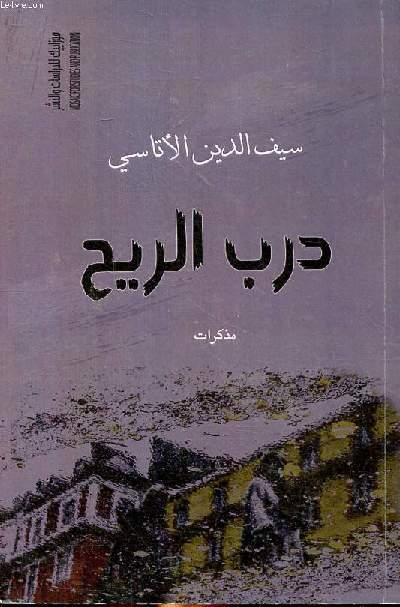
2014New English Original bdg. HC. 4to. (34 x 24 cm). In Turkish and Arabic. 698 p., color ills. Halep'te adim adim Osmanli'nin izinde. Halep'te Osmanli döneminde insa ve tadil edilen mimari eserlerin envanteri. Inventory of architectural works in Aleppo which were built or repaired during the Ottoman epoch. ARCHITECTURE Turkish and Islamic arts Ottoman Empire Ottoman art Aleppo Syria Architectural inventory Reference History of art.
Paris: Allouard et Kaeppelin, Se vend au Café de la Régence, sd Introduction datée novembre 1852, 1852. Edition originale - in-12 -1/2 Reliure chagrain (1 plat cassé) - Dos à nerfs orné ; iv, [5] - 372 pages - Frontispice :Pièce du jeu d'échec envoyé à Charlemagne par le Calif Haroun Al RASCHID - Figures dans le texte - diagrammes et pièces - rousseurs éparses - Envoi rapide et soigné "Se vend au Café de la Régence". l'un des premiers cafés de Paris, ouvert en 1681, qui devint le repaire de tout ce que le monde des échecs comptait d'amateurs et de champions à partir du milieu du XVIIIème siècle. Fréquenté par des célébrités (Napoléon, Robespierre, Diderot.) et de grands maîtres des échecs comme Stauntion, Horwitz, Saint-Amand, Stanley. dont on retrouve ici des parties. L'ouvrage débute par un chapitre historique et anecdotique qui relate l'histoire de l' "automate joueur" et se termine par quarante problèmes et leurs solution.
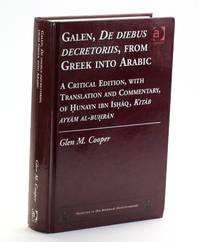
2011rif. 508901Ashgate 2011. Hardcover. FINE. 615pp. Perfectbound in printed hard covers sans DJ as issued. FINE copy entirely clean and sharp. 'This volume presents the first edition of the Arabic translation by Hunayn ibn Ishaq of Galen's Critical Days De diebus decretoriis together with the first translation of the text into a modern language. The substantial introduction contextualizes the treatise within the Greek and Arabic traditions. Galen's Critical Days was a founding text of astrological medicine. In febrile illnesses the critical days are the days on which an especially severe pattern of symptoms a crisis was likely to occur. The crisis was thought to expel the disease-producing substances from the body. If its precise timing were known the physician could prepare the patient so that the crisis would be most beneficial. After identifying the critical days based on empirical data and showing how to use them in therapy Galen explains the critical days via the moon's influence. In the historical introduction Glen Cooper discusses the translation of the Critical Days in Arabic and adumbrates its possible significance in the intellectual debates and political rivalries among the 9th-century Baghdad elite. It is argued that Galen originally composed the Critical Days both to confound the Skeptics of his own day and to refute a purely mathematical rationalist approach to science. These features made the text useful in the rivalries between Baghdad scholars. Al-Kindi d.c. 866 famously propounded a mathematical approach to science akin to the latter. The scholar-bureaucrat responsible for funding this translation Muhammad ibn Musa d. 873 al-Kindi's nemesis may have found the treatise useful in refuting that approach. The commentary and notes to the facing page translation address issues of translation as well as important concepts.'. Ashgate hardcover
1999rif. AWP-2023-0012Colour atlas with photomicrographs of blood smears of camels llamas alpacas and other camelids. Written in English and Arabic. Hardback. Tightly bound. No inscriptions. Weight 544 g - postage will be adjusted for weight. Blackwell Wissenschafts-Verlag hardcover
1882rif. R320131675Adolphe Jourdan. 1882. In-16. Relié. Etat d'usage, Couv. légèrement passée, Coiffe en tête abîmée, Intérieur acceptable. XII + 608 pages - dictionnaire arabe français - étiquette collée sur le 1er plat - coins frottés - coiffe en tête abîmée.. . . . Classification Dewey : 492.7-Arabe
1950rif. R260237562Au bureau du journal. 1950. In-12. Relié. Bon état, Couv. convenable, Dos satisfaisant, Intérieur frais. 500 pages environ. Dos à faux nerfs. Tranches de couleur rouge.. . . . Classification Dewey : 492.7-Arabe
rif. R260272037au bureau du journal. non daté. In-8. Broché. Très bon état, Couv. convenable, Dos satisfaisant, Intérieur frais. 120 pages environ augmentées de quelques photos en noir et blanc dans texte.. . . . Classification Dewey : 492.7-Arabe
1858rif. R260237851Editio stereotypa. 1858. In-8. Relié demi-cuir. Etat d'usage, Coins frottés, Dos abîmé, Intérieur acceptable. 300 pages environ. Filets. Titre doré sur pièce de titre. Etiquette collée sur coiffe en pied.. . . . Classification Dewey : 492.7-Arabe
rif. R320163200inconnu. non daté. In-8. Relié plein cuir. Etat d'usage, Coins frottés, Coiffe en pied abîmée, Intérieur acceptable. Ouvrage sur le catéchisme catholique en langue arabe - non paginé, environ 80 pages - ornements dorés sur le dos - dos à 4 nerfs - coiffes abîmées.. . . . Classification Dewey : 492.7-Arabe
2019rif. RO30366181Non précisé.. 2019. In-8. Broché. Etat passable, Couv. convenable, Dos satisfaisant, Intérieur acceptable. Environ 130 pages. Jaquette passable, déchirures. Texte en arabe. Sens de lecture original.. . . . Classification Dewey : 492.7-Arabe
rif. R300280220Non Renseigné. Non daté. In-12. Relié. Bon état, Couv. convenable, Dos satisfaisant, Intérieur frais. 250 pages environ. Signet conservé. Livre en arabe. Voir photos. Non daté.. . . . Classification Dewey : 492.7-Arabe
1825rif. PHO-1571Paris, Nepveu,1825.- XXXIV-233 pp., illustré d’une gravure en frontispice, relié demi basane époque, dos lisse orné avec titre, ex-libris, charnières fendues, frottements, rousseurs au titre.
rif. 22731PARIS, Publication Mensuelle - In-4 - Onzième Année - 1901 - Année complète - 12 Numéros - Cartes en texte ou HT - 424 pages + Table des Matières, 4 pages + Renseignements coloniaux et documents publiés par le Comité, 204 pages - Reliure cassée, légers trous de vers, Sinon frais, sans mouillures
PARIS, Publication Mensuelle - In-4 - Onzième Année - 1901 - Année complète - 12 Numéros - Cartes en texte ou HT - 424 pages + Table des Matières, 4 pages + Renseignements coloniaux et documents publiés par le Comité, 204 pages - Reliure cassée, légers trous de vers, Sinon frais, sans mouillures
1809rif. 23384Imprimerie Impériale | Paris 1809-1829 | 71 x 54 cm | une feuille
1809rif. 32847Imprimerie Impériale | Paris 1809-1829 | 53.50 x 71 cm | une feuille
1809rif. 26223Imprimerie Impériale | Paris 1809-1829 | 53.50 x 71 cm | une feuille
1809rif. 26230Imprimerie Impériale | Paris 1809-1829 | 53.50 x 71 cm | une feuille
1809- Imprimerie Impériale, Paris 1809-1829, 53,5x71cm, une feuille. - Gravure originale à l'eau-forte in plano, non rognée, extraite de l'édition dite « Impériale » de la Description de l'Égypte ou Recueil des observations et recherches faites en Égypte pendant l'expédition française, publié par les ordres de Sa Majesté l'Empereur Napoléon le Grand. Réalisée entre février 1802 et 1829 sur ordre de Napoléon Bonaparte et publiée à partir de 1809 [en réalité 1810], elle fut tirée à 1000 exemplaires sur Vergé filigrané « Égypte ancienne et moderne » et offerte aux institutions. Infimes et marginales piqûres sans aucune atteinte à la gravure, un petit trou de ver en marge gauche, sinon très bel état de fraîcheur et de conservation. Volume ANTIQUITES, V : Ces gravures fournissent à Jean-François Champollion une documentation épigraphique fondamentale pour le déchiffrage des hiéroglyphes et inspirent une lignée d'archéologues comme Mariette, Maspero et Carter qui donnent un nouveau visage à l'Egypte ancienne. Elles suscitent un engouement tel qu'elles donnent naissance au phénomène de l'égyptomanie et à l'orientalisme de Delacroix, Fromentin, Marilhat, Decamps mais aussi Théophile Gautier... Financiers, politiciens, marchands, et fouilleurs de tous ordres se presseront sur les rives du Nil en quête de bonnes affaires à la suite de cette redécouverte de l'Egypte. A l'origine de l'égyptologie, ces planches connaîtront une postérité immense. LA DESCRIPTION DE L'EGYPTE, édition IMPERIALE (1809-1829) : La Description de l'Egypte est un des chefs d'uvre de l'édition française et le point de départ d'une nouvelle science : l'égyptologie. Titanesque exposé de l'Egypte au temps des conquêtes de Bonaparte entre 1798 et 1799, elle est répartie en 23 volumes dont 13 volumes de gravures rassemblant près de 1000 planches en noir et 72 en couleur. Les 6 volumes de planches intitulées Antiquités sont consacrés aux splendeurs de l'Egypte pharaonique. L'Histoire naturelle est répartie en 3 volumes de gravures. Un volume est consacré aux Cartes géographiques et topographiques tandis que les 3 volumes : Etat Moderne dressent un portrait saisissant de l'Egypte copte et islamique telle qu'elle était vue par les armées d'Orient de Bonaparte. La « campagne d'Egypte », désastre militaire, dévoile à travers les gravures de la Description de l'Egypte la réussite scientifique qu'elle est devenue, grâce aux quelques 167 savants membres de la Commission des sciences et des arts de l'Institut d'Egypte qui suivaient l'armée de Napoléon. L'Institut a réuni en Egypte le mathématicien Monge, le chimiste Berthollet, le naturaliste Geoffroy Saint-Hilaire, ainsi que de nombreux artistes, ingénieurs, architectes, médecins... Ils eurent la charge de redécouvrir l'Egypte moderne et antique, d'en montrer les richesses naturelles, et le savoir-faire de ses habitants. L'édition originale, dite « Impériale », de la Description de l'Egypte fut réalisée sur quatre formats de grande taille, deux d'entre eux spécialement créés pour elle et baptisés formats « Moyen-Egypte » et « Grand-Egypte ». On construisit une presse spécifique pour son impression, qui s'étala sur vingt ans, entre 1809 et 1829. L'édition Impériale s'avéra si populaire qu'une deuxième édition en 37 volumes entièrement en noir et sans le filigrane « Egypte ancienne et moderne », dite édition « Panckoucke », fut publiée à partir de 1821 par l'imprimerie C.-L.-F. Panckoucke (Paris). La réalisation de ce monument d'érudition doit beaucoup au baron Dominique Vivant Denon, illustrateur, diplomate, collectionneur et par la suite directeur du musée Napoléon du Louvre qui accompagna Napoléon en Egypte avec de nombreux autres savants mais décida seul de s'aventurer dans le Sud du pays, alors que les autres scientifiques conviés restaient confinés dans la région du Caire. Les fabuleux croquis rapportés par Denon lors de sa romanesque chevauchée donnèrent l'idée à Bonaparte d'y envoyer les autres membres de l'Institut e
1809- Imprimerie Impériale, Paris 1809-1829, 53,5x71cm, une feuille. - Original, unshaved, full-page etching from the "Imperial edition" of the Description de l'Égypte, or 'Recueil des observations et recherches faites en Égypte pendant l'expédition française, publié par les ordres de Sa Majesté l'Empereur Napoléon le Grand [A Collection of the observations and research carried out in Egypt during the French expedition, published on the orders of his Majesty the Emperor Napoleon the Great]'. Produced between February 1802 and 1830 on the orders of Naopleon Bonaparte and published between 1809 and 1828, 1,000 copies were printed and distributed to institutions, on vergé paper with an 'Égypte ancienne et moderne' watermark, visible when held up to the light. Light marginal spotting not touching image, otherwise in very fresh, fine condition. An engraving from the Description de l'Egypte, one of the masterpieces of French printing and the birth of a new field: Egyptology. A gigantic survey of Egypt at the time of Bonaparte's conquests in 1798 and 1799, the work is divided into 13 volumes of engravings making up 892 plates, of which 72 colored, as well as presenting the splendors of the Egypt of the Pharaohs in 9 volumes. The other volumes discuss natural history and present a fascinating portrait of Coptic and Islamic Egypt as it was seen by Bonaparte's Eastern Armies. The 'Egyptian campaign', militarily a disaster, demonstrates, through the engravings of the Description d'Egypte, the scientific success it nonetheless became thanks to the 167 expert members of the Commission of the Sciences and Arts of the Institut d'Egypte [Egyptian Institute] who followed Napoleon's army. The Institut gathered together in Egypt the mathematician Monge, the chemist Berthollet, the naturalist Geoffroy Saint-Hilaire as well as numerous artists, engineers, architects and doctors. They were tasked with re-discovering modern and ancient Egypt and displaying its natural treasures as well as the know-how of its inhabitants. This edition, the so-called "Imperial" edition of the plates for the Description de l'Egypte was printed in four large formats, two of which were specially created for it and christened "Moyen-Egypte" and "Grand-Egypte". A special press was built to print it, the process extending over 20 years, from 1809 to 1829. The "Imperial" edition proved so popular that a second edition, this time in black and white and without the "Egypte ancienne et moderne" watermark - known as the "Royal Edition" - was published during the Restoration by the printing house of C.-L.-F. Panckoucke (Paris). The engravings of the Description d'Egypte owe a great deal to Baron Dominique-Vivant Denon, illustrator, diplomat, collector and later Director of the Musée Napoléon (the Louvre). His exploration of the South of Egypt gave Bonaparte the idea of sending the experts of the Institut there, thus creating a faithful and complete portrait of the area. This was the research gathered together from 1802 in the mammoth Description de L'Egypte. Denon embarked on this story of archeological exploration at the age of 51, reaching first Alexandria and then Cairo before exploring Upper Egypt. Along with the members of the Institut d'Egypte, the Natural History Museum's painter H.J. Redouté (brother of Pierre-Joseph Redouté, author of Roses), the mineralogist Dolomiue, and the draughtsman Joly, Denon then explored the Nile Delta and Lower Egypt. When, however, he joined the 21st Light Infantry Regiment as it marched across Upper Egypt in pursuit of the retreating Mameluks in November 1798, he found himself the only civilian. In the very midst of the battle itself, he reeled off sketches of the works of art that peppered his path right up to the threshold of the Sudan. He said that he had crossed "a country that is, apart from its name, entirely unknown to Europeans, and therefore everything was worth describing" (Voyages dans la Basse et la Haute Egypte pendant
1809- Imprimerie Impériale, Paris 1809-1829, 53,5x71cm, une feuille. - Gravure originale à l'eau-forte in plano, non rognée, extraite de l'édition dite « Impériale » de la Description de l'Égypte ou Recueil des observations et recherches faites en Égypte pendant l'expédition française, publié par les ordres de Sa Majesté l'Empereur Napoléon le Grand. Réalisée entre février 1802 et 1829 sur ordre de Napoléon Bonaparte et publiée à partir de 1809 [en réalité 1810], elle fut tirée à 1000 exemplaires sur Vergé filigrané « Égypte ancienne et moderne » et offerte aux institutions. Légères et marginales rousseurs sans atteinte à la gravure, sinon très bel état de fraîcheur et de conservation. Volume ETAT MODERNE, II : Le génie des savants de l'Institut se révèle particulièrement à travers les planches de la section dite Egypte Moderne. Architecture, industrie, structures sociales, état sanitaire, régime des eaux, musique, artisanat, sont exposés avec une précision et une qualité graphique exceptionnelle. L'esprit de L'Encyclopédie de Diderot et d'Alembert reste sous-jacent dans la démarche des dessinateurs de la Description de L'Egypte, qui accompagnent les volumes de textes de nombreuses planches détaillées, s'employant à dresser un portrait des populations empreint de beauté et de respect. Riches pachas ou simples artisans potiers sont représentés avec sensibilité, vaquant à leurs occupations au milieu de compositions esthétiques, sans pour autant tomber dans l'idéalisme ou la caricature. LA DESCRIPTION DE L'EGYPTE, édition IMPERIALE (1809-1829) : La Description de l'Egypte est un des chefs d'uvre de l'édition française et le point de départ d'une nouvelle science : l'égyptologie. Titanesque exposé de l'Egypte au temps des conquêtes de Bonaparte entre 1798 et 1799, elle est répartie en 23 volumes dont 13 volumes de gravures rassemblant près de 1000 planches en noir et 72 en couleur. Les 6 volumes de planches intitulées Antiquités sont consacrés aux splendeurs de l'Egypte pharaonique. L'Histoire naturelle est répartie en 3 volumes de gravures. Un volume est consacré aux Cartes géographiques et topographiques tandis que les 3 volumes : Etat Moderne dressent un portrait saisissant de l'Egypte copte et islamique telle qu'elle était vue par les armées d'Orient de Bonaparte. La « campagne d'Egypte », désastre militaire, dévoile à travers les gravures de la Description de l'Egypte la réussite scientifique qu'elle est devenue, grâce aux quelques 167 savants membres de la Commission des sciences et des arts de l'Institut d'Egypte qui suivaient l'armée de Napoléon. L'Institut a réuni en Egypte le mathématicien Monge, le chimiste Berthollet, le naturaliste Geoffroy Saint-Hilaire, ainsi que de nombreux artistes, ingénieurs, architectes, médecins... Ils eurent la charge de redécouvrir l'Egypte moderne et antique, d'en montrer les richesses naturelles, et le savoir-faire de ses habitants. L'édition originale, dite « Impériale », de la Description de l'Egypte fut réalisée sur quatre formats de grande taille, deux d'entre eux spécialement créés pour elle et baptisés formats « Moyen-Egypte » et « Grand-Egypte ». On construisit une presse spécifique pour son impression, qui s'étala sur vingt ans, entre 1809 et 1829. L'édition Impériale s'avéra si populaire qu'une deuxième édition en 37 volumes entièrement en noir et sans le filigrane « Egypte ancienne et moderne », dite édition « Panckoucke », fut publiée à partir de 1821 par l'imprimerie C.-L.-F. Panckoucke (Paris). La réalisation de ce monument d'érudition doit beaucoup au baron Dominique Vivant Denon, illustrateur, diplomate, collectionneur et par la suite directeur du musée Napoléon du Louvre qui accompagna Napoléon en Egypte avec de nombreux autres savants mais décida seul de s'aventurer dans le Sud du pays, alors que les autres scientifiques conviés restaient confinés dans la région du Caire. Les fabuleux croquis rapportés par Denon lors de sa romanesque chevauchée donnèrent l'idée à Bon