3.781 resultados
1818ref. PHO-2123Paris, [Imprimerie de Molé] pour J. Eberhardt, 1818-1819. In-4 (26,8 × 21,2 cm), 24 pages non chiffrées, texte en arabe, encadrements et séparations ornementales, non coupé tel que paru.
1809ref. 27646Imprimerie Impériale | à Paris 1809 | 27 x 32 cm | Relié
1809ref. 25339Imprimerie Impériale | Paris 1809-1829 | 53.50 x 70.50 cm | une feuille
1809ref. 25408Imprimerie Impériale | Paris 1809-1829 | 53.50 x 70 cm | une feuille
1809ref. 26519Imprimerie Impériale | Paris 1809-1829 | 71 x 54 cm | une feuille
1841ref. 020995Alger Brachet et Bastide 1841 Un volume grand in-8° (19 x 27cm), VII (1) 207 pp. Cartonnage moderne à la Bradel, étiquette de titre au dos, couverture conservée. (coiffe supérieure légèrement enfoncée, la couverture d'origine est abîmée, présences de pâles et éparses rousseurs, fine bande brune en bordure du faux-titre, petites coupures marginales ainsi que de légères traces d'humidité sur plusieurs feuillets). Un tableau (lettres adaptées pour représenter les caractères arabes qui n'ont point de correspondance en français). Lettrines et cul-de-lampe. RARE
1809ref. 25338Imprimerie Impériale | Paris 1809-1829 | 53.50 x 80 cm | une feuille
1904ref. PHO-764Tunis, Société Anonyme de l’Imprimerie Rapide, 1904 2 vol. in 4 , broché ,dos cassé t2, XVIII-597 pp + 10 tableaux dépliants et XIV-695-84 pp + 3 tableaux dépliants
1984ref. 84864S. n. | s. l. [Paris] avril 1984 | 24 x 30.50 cm | une feuille
1809ref. 26513Imprimerie Impériale | Paris 1809-1829 | 54 x 71 cm | une feuille
Cm. 23; pp. XVI, 257, (1), 327. Contemporary half leather, gilt lettering on spine. Ex library copy. Very good copy 1093/P
1925Very Good Turkish, Ottoman (1500-1928) Paperback. Cr. 8vo. (20 x 14 cm). In Ottoman script. 4 p. Folding trace on cover. Today's organized horse races as today were conducted in Izmir on 23 September 1856 for the first time. In the leadership of Evliyazade Refik Bey and the term's Consul General of England Mr. Patterson, Smyrna Races Club was founded. Izmir races were organized annually on Easter days. S.R.C. races were in their golden ages at the beginning of the 20th century and this ended with the start of 1st World War. Ottoman Jockey Club: The opinions of organizing horse races and breeding by means of jockey club in Turkey was tried to be accomplished but there is no clear knowledge on the actions of this club. According to the directory published in 1909, Grand Vizier Sait Halim Pasha was the president of the Ottoman Jockey Club. Refik Evliyazade started working for regular races to be organized in Istanbul when S.R.C races came to an end with the First World War. As a result of the support by the most powerful person of the era, Enver Pasha, Guild of Cavalryman Horse Riding Club, and Society of Improving Horse Breed were founded in 1913. Choosing Veliefendi as a racetrack coincides with the same era. Bursa Sipahi Ocagi was one of the earliest jockey and horse breeding and racing clubs in Ottoman / Turkish history. This rare booklet includes the regulations of the Bursa Sipahi Ocagi prepared in the Republican period. AH 1341 = AD 1925. Not in Özege.; Not in OCLC. Extremely rare.
1882Very Good Turkish, Ottoman (1500-1928) Original cloth bdg. with marbled boards and brown cloth spine. Fading on spine and foxing on boards and pages. Overall a good copy. Roy. 8vo. (24 x 17 cm). In Ottoman script (Old Turkish with Arabic letters). 118 p. Lithographed. Early edition of this rare poem collection by Leyla Hanim (?-1847), who was a few female poets in the Ottoman literature, known for her lyrical love poems. Divan literature is described as "a certain tradition literature with its rules and boundaries" in the most general form. These rules and boundaries have enabled the formation of common expressions in religion and in Sufi intellection in particular and in poetry by the influence of Persian literature, and they have made it traditional in time. In this context, in classical Turkish poetry, whose male poets are predominant in quality and quantity, patriarchal rhetoric presents an outlook that its frame has been established by common tropes, metaphors, poetic themes, and in short by similar imaginations and ideas. The divans of Lady Mihri (died after 1512), Lady Leyla (died in 1848), and Lady Seref (1809-1861) have different aesthetic understandings in that context. Leylâ Hanim was one of the few Turkish female poets who made a collection of her poems. Lived in Istanbul and died in 1848. Her family was close to the Ottoman Sultanate and Leylâ Hanim, witnessing the reign of Sultan Mahmud II (1808-1839) and Sultan Abdülmecid I (1839-1861). She is the daughter of Moralizâde Hâmid Efendi. Her mother Hadîce Hanim is the sister of Keçecizâde Izzet Molla, a notable bureaucrat, and poet of the times. She has three brothers, Atâullah Mehmed Efendi, Nurullah Mehmed Efendi and Hâlid Efendi, who died at a young age. She had financial problems after her father's death and she expressed those in her poems. Some of her poems in the divan mention that her father and brother Hâlid Efendi have lived in Bursa for a while. She is educated by Keçecizâde Izzet Molla, she is quick-witted. She experienced a short marriage, which lasted about a week; after the divorce, she devoted herself to poetry. Her grave is in Galata Mevlevîhanesi. Several books include information of her life, characteristics, and poetry such as Fatin Tezkiresi (363), Ahmet Rif'at's Lugat-i Târîhiyye ve Cogrâfiyye (154), Tuhfe-i Nâ'ilî (895), Sicill-i Osmânî (93), Bursali Mehmet Tahir's Osmanli Müellifleri (406), et alli. These resources indicate that Leylâ Hanim is from a noble family and the links of the family to the high cadres of Ottoman bureaucracy and their intellectual property have left traces in her poetry. AH 1299 = AD 1882. (Source: All poetry). OCLC 949496080.; Özege 4177 / 4. First two editions were printed in Cairo.
1973Very Good Arabic Early edition of this critical edition of Saad Zagloul's memoirs prepared by Mustafa al-Nahhas Jabr Pasha. Zaghloul was an Egyptian revolutionary and statesman, who was the leader of Egypt's nationalist Wafd Party. He served as Prime Minister of Egypt from 26 January 1924 to 24 November 1924. By working as a Europeanized lawyer, Zaghloul gained both wealth and status in a traditional framework of upward mobility. Despite this, Zaghloul success can equally be attributed to his familiarity with the Egyptian countryside and its many idioms. In 1918, he became politically active, as the founding leader of the Wafd Party, for which he was later arrested. Zaghloul became increasingly active in nationalist movements, and in 1919 he led an official Egyptian delegation (or wafd, the name of the political party he would later form) to the Paris Peace Conference demanding that the United Kingdom formally recognize the independence and unity of Egypt and Sudan (which had been united as one country under Muhammad Ali Pasha). The British in turn demanded that Zaghloul end his political agitation. When he refused, they exiled him to Malta, and later to Seychelles. In 1922, he was moved from Seychelles and was taken to Gibraltar due to ill health arriving there onboard HMS Curlew and he was released in 1923. Zaghloul's absence caused disturbances in Egypt, ultimately leading to the Egyptian Revolution of 1919. Upon his return from exile, Zaghloul led the Egyptian nationalist forces. Mu??afâ al-Nahhâs Pasha, (1879-1965), a statesman who, as the leader of the nationalist Wafd party, was a dominant figure in Egyptian politics until the revolution of 1952. A lawyer by profession, Na??âs was appointed a judge in the National Court at ?an?â in 1914. Soon after World War I he joined the recently formed Wafd; he was exiled with Sa'd Zaghlul in the early 1920s, and assumed the chairmanship upon Zaghlul's death in 1927. An imitation leather bdg., Arabic lettered gilt on front board. Foolscap 8vo. (18 x 12 cm). In Arabic. 280, [2] p., a portrait of Zaghloul, b/w ills. Offset lithography. OCLC 23485313, 784459538, 1044672960.
1878Very Good English Original autograph letter signed (ALS) by Ainsworth. Ravenscourt Villa, Hammersmith, 6 August 1878. 2 p. 18x12 cm. folds, occasional light soiling. William Francis Ainsworth, (1807-96), geologist, surgeon, and Eastern traveler, was an original Fellow of the Royal Geographical Society and published various works, including Observations on the Pestilential Cholera (1832).
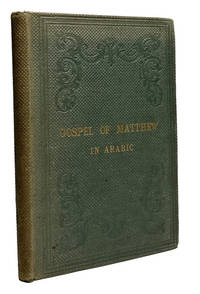
ref. a76262Londini 1824 R. Watts Impensis Societatis Biblicae. Book of Psalms in Arabic. 12mo. 249pp.full leather with later paper spine. Owner bookplate.Good inner hinges cracked. . hardcover
1863ref. 92359London: Samuel Bagster 1863. Hardcover. Very Good. viii 118p. Original cloth. Titled in gilt on front cover. 16 cm. Modest fading on backstrip and around edges of front cover. Library stamping on front free endpaper indicating that this was owned and discarded by Redemptorist Communities in Ireland. Arabic text with Introduction in English. Ferrette identified on the title page as a missionary of the irish Presbyterian Church at Damascus believed that he had come up with a great typographic method for dealing with the vowel problem in Arabic type. Ferrette's suggested fix did not catch on and his suggested fix is now mostly forgotten. Most copies located by OCLC list W. M. Watts as publisher and are dated 1863 on the title-page. This copy with the same pagination lists Bagster as publisher and is undated. We suspect that Bagster persuaded the publisher or Ferrette to issue some copies with Bagster's name as publisher for sale in Bagster's theological bookstore. We doubt that it is a later or second edition. OCLC locates one copy Huntington with the Bagster imprint. It is dated as 1836 which seems likely to be an error in dating caused by transposing the last two numbers. Samuel Bagster hardcover books
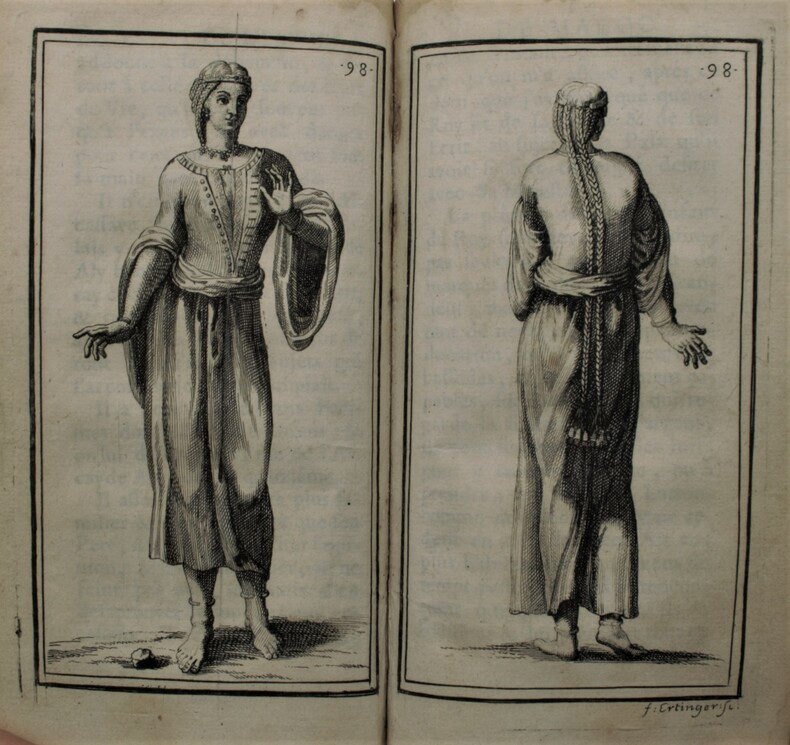
1694ref. PHO-1114A Paris. Chez Michel Brunet, 1694, in-12 de 9ff-227pp. (pagination erronée en fin d’ouvrage) , illustré de 8 gravures et un plan dépliant ,relié plein cuir époque , dos à nerfs orné avec pièce de titre , usé, mors fendus mais corps solide, petit manque au dos et au plat ,carte montée sur lin, quelques soulignements d'une main contemporaine, quelques brunissements et légères taches. ex-libris du colonel Felix A Matthews "Consul général des États-Unis d'Amérique au Maroc"
1809- Imprimerie Impériale, Paris 1809-1829, 53,5x71cm, une feuille. - Original, unshaved, full-page etching from the "Imperial edition" of the Description de l'Égypte, or 'Recueil des observations et recherches faites en Égypte pendant l'expédition française, publié par les ordres de Sa Majesté l'Empereur Napoléon le Grand [A Collection of the observations and research carried out in Egypt during the French expedition, published on the orders of his Majesty the Emperor Napoleon the Great]'. Produced between February 1802 and 1830 on the orders of Naopleon Bonaparte and published between 1809 and 1828, 1,000 copies were printed and distributed to institutions, on vergé paper with an 'Égypte ancienne et moderne' watermark, visible when held up to the light. Light marginal spotting not touching image, otherwise in very fresh, fine condition. An engraving from the Description de l'Egypte, one of the masterpieces of French printing and the birth of a new field: Egyptology. A gigantic survey of Egypt at the time of Bonaparte's conquests in 1798 and 1799, the work is divided into 13 volumes of engravings making up 892 plates, of which 72 colored, as well as presenting the splendors of the Egypt of the Pharaohs in 9 volumes. The other volumes discuss natural history and present a fascinating portrait of Coptic and Islamic Egypt as it was seen by Bonaparte's Eastern Armies. The 'Egyptian campaign', militarily a disaster, demonstrates, through the engravings of the Description d'Egypte, the scientific success it nonetheless became thanks to the 167 expert members of the Commission of the Sciences and Arts of the Institut d'Egypte [Egyptian Institute] who followed Napoleon's army. The Institut gathered together in Egypt the mathematician Monge, the chemist Berthollet, the naturalist Geoffroy Saint-Hilaire as well as numerous artists, engineers, architects and doctors. They were tasked with re-discovering modern and ancient Egypt and displaying its natural treasures as well as the know-how of its inhabitants. This edition, the so-called "Imperial" edition of the plates for the Description de l'Egypte was printed in four large formats, two of which were specially created for it and christened "Moyen-Egypte" and "Grand-Egypte". A special press was built to print it, the process extending over 20 years, from 1809 to 1829. The "Imperial" edition proved so popular that a second edition, this time in black and white and without the "Egypte ancienne et moderne" watermark - known as the "Royal Edition" - was published during the Restoration by the printing house of C.-L.-F. Panckoucke (Paris). The engravings of the Description d'Egypte owe a great deal to Baron Dominique-Vivant Denon, illustrator, diplomat, collector and later Director of the Musée Napoléon (the Louvre). His exploration of the South of Egypt gave Bonaparte the idea of sending the experts of the Institut there, thus creating a faithful and complete portrait of the area. This was the research gathered together from 1802 in the mammoth Description de L'Egypte. Denon embarked on this story of archeological exploration at the age of 51, reaching first Alexandria and then Cairo before exploring Upper Egypt. Along with the members of the Institut d'Egypte, the Natural History Museum's painter H.J. Redouté (brother of Pierre-Joseph Redouté, author of Roses), the mineralogist Dolomiue, and the draughtsman Joly, Denon then explored the Nile Delta and Lower Egypt. When, however, he joined the 21st Light Infantry Regiment as it marched across Upper Egypt in pursuit of the retreating Mameluks in November 1798, he found himself the only civilian. In the very midst of the battle itself, he reeled off sketches of the works of art that peppered his path right up to the threshold of the Sudan. He said that he had crossed "a country that is, apart from its name, entirely unknown to Europeans, and therefore everything was worth describing" (Voyages dans la Basse et la Haute Egypte pendant
1809- Imprimerie Impériale, Paris 1809-1829, 70x51,5cm, une feuille. - Original, unshaved, full-page etching from the "Imperial edition" of the Description de l'Égypte, or 'Recueil des observations et recherches faites en Égypte pendant l'expédition française, publié par les ordres de Sa Majesté l'Empereur Napoléon le Grand [A Collection of the observations and research carried out in Egypt during the French expedition, published on the orders of his Majesty the Emperor Napoleon the Great]'. Produced between February 1802 and 1830 on the orders of Naopleon Bonaparte and published between 1809 and 1828, 1,000 copies were printed and distributed to institutions, on vergé paper with an 'Égypte ancienne et moderne' watermark, visible when held up to the light. Light marginal spotting not touching image, otherwise in very fresh, fine condition. An engraving from the Description de l'Egypte, one of the masterpieces of French printing and the birth of a new field: Egyptology. A gigantic survey of Egypt at the time of Bonaparte's conquests in 1798 and 1799, the work is divided into 13 volumes of engravings making up 892 plates, of which 72 colored, as well as presenting the splendors of the Egypt of the Pharaohs in 9 volumes. The other volumes discuss natural history and present a fascinating portrait of Coptic and Islamic Egypt as it was seen by Bonaparte's Eastern Armies. The 'Egyptian campaign', militarily a disaster, demonstrates, through the engravings of the Description d'Egypte, the scientific success it nonetheless became thanks to the 167 expert members of the Commission of the Sciences and Arts of the Institut d'Egypte [Egyptian Institute] who followed Napoleon's army. The Institut gathered together in Egypt the mathematician Monge, the chemist Berthollet, the naturalist Geoffroy Saint-Hilaire as well as numerous artists, engineers, architects and doctors. They were tasked with re-discovering modern and ancient Egypt and displaying its natural treasures as well as the know-how of its inhabitants. This edition, the so-called "Imperial" edition of the plates for the Description de l'Egypte was printed in four large formats, two of which were specially created for it and christened "Moyen-Egypte" and "Grand-Egypte". A special press was built to print it, the process extending over 20 years, from 1809 to 1829. The "Imperial" edition proved so popular that a second edition, this time in black and white and without the "Egypte ancienne et moderne" watermark - known as the "Royal Edition" - was published during the Restoration by the printing house of C.-L.-F. Panckoucke (Paris). The engravings of the Description d'Egypte owe a great deal to Baron Dominique-Vivant Denon, illustrator, diplomat, collector and later Director of the Musée Napoléon (the Louvre). His exploration of the South of Egypt gave Bonaparte the idea of sending the experts of the Institut there, thus creating a faithful and complete portrait of the area. This was the research gathered together from 1802 in the mammoth Description de L'Egypte. Denon embarked on this story of archeological exploration at the age of 51, reaching first Alexandria and then Cairo before exploring Upper Egypt. Along with the members of the Institut d'Egypte, the Natural History Museum's painter H.J. Redouté (brother of Pierre-Joseph Redouté, author of Roses), the mineralogist Dolomiue, and the draughtsman Joly, Denon then explored the Nile Delta and Lower Egypt. When, however, he joined the 21st Light Infantry Regiment as it marched across Upper Egypt in pursuit of the retreating Mameluks in November 1798, he found himself the only civilian. In the very midst of the battle itself, he reeled off sketches of the works of art that peppered his path right up to the threshold of the Sudan. He said that he had crossed "a country that is, apart from its name, entirely unknown to Europeans, and therefore everything was worth describing" (Voyages dans la Basse et la Haute Egypte pendant
1809- Imprimerie Impériale, Paris 1809-1829, 70,5x53,5cm, une feuille. - Original, unshaved, full-page etching from the "Imperial edition" of the Description de l'Égypte, or 'Recueil des observations et recherches faites en Égypte pendant l'expédition française, publié par les ordres de Sa Majesté l'Empereur Napoléon le Grand [A Collection of the observations and research carried out in Egypt during the French expedition, published on the orders of his Majesty the Emperor Napoleon the Great]'. Produced between February 1802 and 1830 on the orders of Naopleon Bonaparte and published between 1809 and 1828, 1,000 copies were printed and distributed to institutions, on vergé paper with an 'Égypte ancienne et moderne' watermark, visible when held up to the light. Light marginal spotting not touching image, otherwise in very fresh, fine condition. An engraving from the Description de l'Egypte, one of the masterpieces of French printing and the birth of a new field: Egyptology. A gigantic survey of Egypt at the time of Bonaparte's conquests in 1798 and 1799, the work is divided into 13 volumes of engravings making up 892 plates, of which 72 colored, as well as presenting the splendors of the Egypt of the Pharaohs in 9 volumes. The other volumes discuss natural history and present a fascinating portrait of Coptic and Islamic Egypt as it was seen by Bonaparte's Eastern Armies. The 'Egyptian campaign', militarily a disaster, demonstrates, through the engravings of the Description d'Egypte, the scientific success it nonetheless became thanks to the 167 expert members of the Commission of the Sciences and Arts of the Institut d'Egypte [Egyptian Institute] who followed Napoleon's army. The Institut gathered together in Egypt the mathematician Monge, the chemist Berthollet, the naturalist Geoffroy Saint-Hilaire as well as numerous artists, engineers, architects and doctors. They were tasked with re-discovering modern and ancient Egypt and displaying its natural treasures as well as the know-how of its inhabitants. This edition, the so-called "Imperial" edition of the plates for the Description de l'Egypte was printed in four large formats, two of which were specially created for it and christened "Moyen-Egypte" and "Grand-Egypte". A special press was built to print it, the process extending over 20 years, from 1809 to 1829. The "Imperial" edition proved so popular that a second edition, this time in black and white and without the "Egypte ancienne et moderne" watermark - known as the "Royal Edition" - was published during the Restoration by the printing house of C.-L.-F. Panckoucke (Paris). The engravings of the Description d'Egypte owe a great deal to Baron Dominique-Vivant Denon, illustrator, diplomat, collector and later Director of the Musée Napoléon (the Louvre). His exploration of the South of Egypt gave Bonaparte the idea of sending the experts of the Institut there, thus creating a faithful and complete portrait of the area. This was the research gathered together from 1802 in the mammoth Description de L'Egypte. Denon embarked on this story of archeological exploration at the age of 51, reaching first Alexandria and then Cairo before exploring Upper Egypt. Along with the members of the Institut d'Egypte, the Natural History Museum's painter H.J. Redouté (brother of Pierre-Joseph Redouté, author of Roses), the mineralogist Dolomiue, and the draughtsman Joly, Denon then explored the Nile Delta and Lower Egypt. When, however, he joined the 21st Light Infantry Regiment as it marched across Upper Egypt in pursuit of the retreating Mameluks in November 1798, he found himself the only civilian. In the very midst of the battle itself, he reeled off sketches of the works of art that peppered his path right up to the threshold of the Sudan. He said that he had crossed "a country that is, apart from its name, entirely unknown to Europeans, and therefore everything was worth describing" (Voyages dans la Basse et la Haute Egypte pendan
1879- Librairie Hachette, Paris 1879, Grd. in-8 (16,5x24,5cm), 496pp. et 542pp., 2 volumes reliés. - Edition originale avec mention de Deuxième édition. 9 cartes et 150 gravures. Bien complet des 2 très grandes cartes dépliantes en couleurs à la fin des 2 tomes : Partie orientale de l'Afrique équatoriale et partie occidentale. Reliure en demi chagrin lilas à plats de percaline chagrinée. Dos à nerfs orné de roulettes et filets. Dos uniformément insolés, devenus blonds. Une trace de mouillure sur le premier caisson du tome 2. Quelques rares et pâles rousseurs sur un papier dans l'ensemble bien frais. Voyage de découvertes célèbre à travers l'Afrique équatoriale, un des plus remarquables du XIXe siècle. [ENGLISH DESCRIPTION ON DEMAND]
1803- Didot, Paris 1803, 40,5x54cm, une feuille. - Original, unshaved, full-page etching from the "Imperial edition" of the Description de l'Égypte, or 'Recueil des observations et recherches faites en Égypte pendant l'expédition française, publié par les ordres de Sa Majesté l'Empereur Napoléon le Grand [A Collection of the observations and research carried out in Egypt during the French expedition, published on the orders of his Majesty the Emperor Napoleon the Great]'. Produced between February 1802 and 1830 on the orders of Naopleon Bonaparte and published between 1809 and 1828, 1,000 copies were printed and distributed to institutions, on vergé paper with an 'Égypte ancienne et moderne' watermark, visible when held up to the light. Light marginal spotting not touching image, otherwise in very fresh, fine condition. An engraving from the Description de l'Egypte, one of the masterpieces of French printing and the birth of a new field: Egyptology. A gigantic survey of Egypt at the time of Bonaparte's conquests in 1798 and 1799, the work is divided into 13 volumes of engravings making up 892 plates, of which 72 colored, as well as presenting the splendors of the Egypt of the Pharaohs in 9 volumes. The other volumes discuss natural history and present a fascinating portrait of Coptic and Islamic Egypt as it was seen by Bonaparte's Eastern Armies. The 'Egyptian campaign', militarily a disaster, demonstrates, through the engravings of the Description d'Egypte, the scientific success it nonetheless became thanks to the 167 expert members of the Commission of the Sciences and Arts of the Institut d'Egypte [Egyptian Institute] who followed Napoleon's army. The Institut gathered together in Egypt the mathematician Monge, the chemist Berthollet, the naturalist Geoffroy Saint-Hilaire as well as numerous artists, engineers, architects and doctors. They were tasked with re-discovering modern and ancient Egypt and displaying its natural treasures as well as the know-how of its inhabitants. This edition, the so-called "Imperial" edition of the plates for the Description de l'Egypte was printed in four large formats, two of which were specially created for it and christened "Moyen-Egypte" and "Grand-Egypte". A special press was built to print it, the process extending over 20 years, from 1809 to 1829. The "Imperial" edition proved so popular that a second edition, this time in black and white and without the "Egypte ancienne et moderne" watermark - known as the "Royal Edition" - was published during the Restoration by the printing house of C.-L.-F. Panckoucke (Paris). The engravings of the Description d'Egypte owe a great deal to Baron Dominique-Vivant Denon, illustrator, diplomat, collector and later Director of the Musée Napoléon (the Louvre). His exploration of the South of Egypt gave Bonaparte the idea of sending the experts of the Institut there, thus creating a faithful and complete portrait of the area. This was the research gathered together from 1802 in the mammoth Description de L'Egypte. Denon embarked on this story of archeological exploration at the age of 51, reaching first Alexandria and then Cairo before exploring Upper Egypt. Along with the members of the Institut d'Egypte, the Natural History Museum's painter H.J. Redouté (brother of Pierre-Joseph Redouté, author of Roses), the mineralogist Dolomiue, and the draughtsman Joly, Denon then explored the Nile Delta and Lower Egypt. When, however, he joined the 21st Light Infantry Regiment as it marched across Upper Egypt in pursuit of the retreating Mameluks in November 1798, he found himself the only civilian. In the very midst of the battle itself, he reeled off sketches of the works of art that peppered his path right up to the threshold of the Sudan. He said that he had crossed "a country that is, apart from its name, entirely unknown to Europeans, and therefore everything was worth describing" (Voyages dans la Basse et la Haute Egypte pendant les campagnes de Bon
1803- Didot, Paris 1803, 40,5x54cm, une feuille. - Original, unshaved, full-page etching from the "Imperial edition" of the Description de l'Égypte, or 'Recueil des observations et recherches faites en Égypte pendant l'expédition française, publié par les ordres de Sa Majesté l'Empereur Napoléon le Grand [A Collection of the observations and research carried out in Egypt during the French expedition, published on the orders of his Majesty the Emperor Napoleon the Great]'. Produced between February 1802 and 1830 on the orders of Naopleon Bonaparte and published between 1809 and 1828, 1,000 copies were printed and distributed to institutions, on vergé paper with an 'Égypte ancienne et moderne' watermark, visible when held up to the light. Light marginal spotting not touching image, otherwise in very fresh, fine condition. An engraving from the Description de l'Egypte, one of the masterpieces of French printing and the birth of a new field: Egyptology. A gigantic survey of Egypt at the time of Bonaparte's conquests in 1798 and 1799, the work is divided into 13 volumes of engravings making up 892 plates, of which 72 colored, as well as presenting the splendors of the Egypt of the Pharaohs in 9 volumes. The other volumes discuss natural history and present a fascinating portrait of Coptic and Islamic Egypt as it was seen by Bonaparte's Eastern Armies. The 'Egyptian campaign', militarily a disaster, demonstrates, through the engravings of the Description d'Egypte, the scientific success it nonetheless became thanks to the 167 expert members of the Commission of the Sciences and Arts of the Institut d'Egypte [Egyptian Institute] who followed Napoleon's army. The Institut gathered together in Egypt the mathematician Monge, the chemist Berthollet, the naturalist Geoffroy Saint-Hilaire as well as numerous artists, engineers, architects and doctors. They were tasked with re-discovering modern and ancient Egypt and displaying its natural treasures as well as the know-how of its inhabitants. This edition, the so-called "Imperial" edition of the plates for the Description de l'Egypte was printed in four large formats, two of which were specially created for it and christened "Moyen-Egypte" and "Grand-Egypte". A special press was built to print it, the process extending over 20 years, from 1809 to 1829. The "Imperial" edition proved so popular that a second edition, this time in black and white and without the "Egypte ancienne et moderne" watermark - known as the "Royal Edition" - was published during the Restoration by the printing house of C.-L.-F. Panckoucke (Paris). The engravings of the Description d'Egypte owe a great deal to Baron Dominique-Vivant Denon, illustrator, diplomat, collector and later Director of the Musée Napoléon (the Louvre). His exploration of the South of Egypt gave Bonaparte the idea of sending the experts of the Institut there, thus creating a faithful and complete portrait of the area. This was the research gathered together from 1802 in the mammoth Description de L'Egypte. Denon embarked on this story of archeological exploration at the age of 51, reaching first Alexandria and then Cairo before exploring Upper Egypt. Along with the members of the Institut d'Egypte, the Natural History Museum's painter H.J. Redouté (brother of Pierre-Joseph Redouté, author of Roses), the mineralogist Dolomiue, and the draughtsman Joly, Denon then explored the Nile Delta and Lower Egypt. When, however, he joined the 21st Light Infantry Regiment as it marched across Upper Egypt in pursuit of the retreating Mameluks in November 1798, he found himself the only civilian. In the very midst of the battle itself, he reeled off sketches of the works of art that peppered his path right up to the threshold of the Sudan. He said that he had crossed "a country that is, apart from its name, entirely unknown to Europeans, and therefore everything was worth describing" (Voyages dans la Basse et la Haute Egypte pendant les campagnes de Bon
1803- Didot, Paris 1803, 40x54cm, une feuille. - Original, unshaved, full-page etching from the "Imperial edition" of the Description de l'Égypte, or 'Recueil des observations et recherches faites en Égypte pendant l'expédition française, publié par les ordres de Sa Majesté l'Empereur Napoléon le Grand [A Collection of the observations and research carried out in Egypt during the French expedition, published on the orders of his Majesty the Emperor Napoleon the Great]'. Produced between February 1802 and 1830 on the orders of Naopleon Bonaparte and published between 1809 and 1828, 1,000 copies were printed and distributed to institutions, on vergé paper with an 'Égypte ancienne et moderne' watermark, visible when held up to the light. Light marginal spotting not touching image, otherwise in very fresh, fine condition. An engraving from the Description de l'Egypte, one of the masterpieces of French printing and the birth of a new field: Egyptology. A gigantic survey of Egypt at the time of Bonaparte's conquests in 1798 and 1799, the work is divided into 13 volumes of engravings making up 892 plates, of which 72 colored, as well as presenting the splendors of the Egypt of the Pharaohs in 9 volumes. The other volumes discuss natural history and present a fascinating portrait of Coptic and Islamic Egypt as it was seen by Bonaparte's Eastern Armies. The 'Egyptian campaign', militarily a disaster, demonstrates, through the engravings of the Description d'Egypte, the scientific success it nonetheless became thanks to the 167 expert members of the Commission of the Sciences and Arts of the Institut d'Egypte [Egyptian Institute] who followed Napoleon's army. The Institut gathered together in Egypt the mathematician Monge, the chemist Berthollet, the naturalist Geoffroy Saint-Hilaire as well as numerous artists, engineers, architects and doctors. They were tasked with re-discovering modern and ancient Egypt and displaying its natural treasures as well as the know-how of its inhabitants. This edition, the so-called "Imperial" edition of the plates for the Description de l'Egypte was printed in four large formats, two of which were specially created for it and christened "Moyen-Egypte" and "Grand-Egypte". A special press was built to print it, the process extending over 20 years, from 1809 to 1829. The "Imperial" edition proved so popular that a second edition, this time in black and white and without the "Egypte ancienne et moderne" watermark - known as the "Royal Edition" - was published during the Restoration by the printing house of C.-L.-F. Panckoucke (Paris). The engravings of the Description d'Egypte owe a great deal to Baron Dominique-Vivant Denon, illustrator, diplomat, collector and later Director of the Musée Napoléon (the Louvre). His exploration of the South of Egypt gave Bonaparte the idea of sending the experts of the Institut there, thus creating a faithful and complete portrait of the area. This was the research gathered together from 1802 in the mammoth Description de L'Egypte. Denon embarked on this story of archeological exploration at the age of 51, reaching first Alexandria and then Cairo before exploring Upper Egypt. Along with the members of the Institut d'Egypte, the Natural History Museum's painter H.J. Redouté (brother of Pierre-Joseph Redouté, author of Roses), the mineralogist Dolomiue, and the draughtsman Joly, Denon then explored the Nile Delta and Lower Egypt. When, however, he joined the 21st Light Infantry Regiment as it marched across Upper Egypt in pursuit of the retreating Mameluks in November 1798, he found himself the only civilian. In the very midst of the battle itself, he reeled off sketches of the works of art that peppered his path right up to the threshold of the Sudan. He said that he had crossed "a country that is, apart from its name, entirely unknown to Europeans, and therefore everything was worth describing" (Voyages dans la Basse et la Haute Egypte pendant les campagnes de Bonap