4 115 résultats
Grand in-4 (300 x 236 mm), cartonnage illustré de l'éditeur, 288 p., nombreuses photos en couleurs dans le texte. Exemplaire à l'état de neuf.
réf. 31519Bonn, Botschaft des Königreichs Saudi-Arabien, 1985. Grand in-4 (300 x 236 mm), cartonnage illustré de l'éditeur, 288 p., nombreuses photos en couleurs dans le texte.
réf. 15786Bruxelles, Hayez, 1979. 16 x 24, 256 pp., illustrations en N/B et en couleurs, broché, très bon état.
1922- Lucien Vogel éditeur, Paris 1922, 18x24cm, relié. - Set of eight original prints in color, drawn on laid paper. The XXXIII and XXXVI sketches are signed lower left and right boards. The boards are introduced by a text Joan Ramon Fernandez. Original prints made ??for the illustration of The Gazette fashionable, one of the finest and most influential twentieth century fashion magazines, celebrating the talent of creators and artists French burgeoning art deco. Famous fashion magazine founded in 1912 by Lucien Vogel, The Gazette fashionable appeared until 1925 with an interruption during the War of 1915 to 1920, due to mobilization of its editor. She is 69 Deliveries from just 2000 copies and is illustrated including 573 color plates and 148 sketches depicting models of fashion designers. Upon publication, these luxury publications "are for bibliophiles and worldly aesthetes" (Françoise Tétart-Vittu "good Gazette of tone" in the fashion dictionary, 2016). Printed on fine laid paper, they use a typeface created specifically for the magazine by Georges Peignot, the Cochin character, taken in 1946 by Christian Dior. The prints are made with the technique of metal stencil, enhanced color and some outlined in gold or palladium. The adventure began in 1912 when Lucien Vogel, man of the world and fashion - it has already participated in Femina magazine - decided to found with his wife Cosette de Brunhoff (John's sister, the father of Babar) Gazette good tone in which the subtitle is then "Art, fashions and frivolities." Georges Charensol quotes the editor: "In 1910, he observed, there was no truly artistic fashion magazine and representative of the spirit of his time. So I thought of making a glossy magazine with truly modern artists [...] I was certain of success because for any fashion country can compete with France. "(" A great art editor. Lucien Vogel "in literary News, No. 133, May 1925). The success of the magazine is immediate, not only in France but also the US and South America. Originally, Vogel therefore brings together a group of seven artists: André-Édouard Marty and Pierre Brissaud, followed by Georges Lepape and Dammicourt; and finally his friends from the School of Fine Arts as are George Barbier, Bernard Boutet de Monvel or Charles Martin. Other talents come quickly reach the equipped Guy Arnoux, Léon Bakst, Benito, Boutet de Monvel, Umberto Brunelleschi, Chas Laborde, Jean-Gabriel Domergue, Raoul Dufy, Edward Halouze Alexander Iacovleff, Jean Emile Laboureur Charles Loupot, Charles Martin, Maggie Salcedo. These artists, mostly unknown when Lucien Vogel appealed to them, will eventually become iconic figures and artistic sought. These are the same illustrators who make the drawings advertisements Gazette. The boards highlight the dresses and sublime seven artists of the time: Lanvin, Doeuillet, Paquin, Poiret, Worth, Vionnet and Doucet. The designers provide for each number of exclusive models. Nevertheless, some of Illustrations contained no real model, but only the idea that the illustrator is done in the fashion of the day. Gazette fashionable is a milestone in the history of fashion. Combining the aesthetic requirement and plastic unit, it brings together for the first time the great talents of the world of arts, literature and fashion and imposed by this alchemy, a new image of women, slender, independent and bold, also driven by the new generation of designers Coco Chanel, Jean Patou, Rochas Marcel ... Recovery in 1920 by Condé Montrose Nast, Gazette fashionable modeled for the new composition and the aesthetic choices of the "little dying newspaper" that Nast had bought a few years ago: the Vogue magazine. [FRENCH VERSION FOLLOWS] Ensemble de huit estampes originales en couleur, tirées sur papier vergé. Les croquis XXXIII et XXXVI sont signés en bas à gauche et à droite des planches. Les planches sont introduites par un texte de Jeanne Ramon-Fernandez. Reliure à la bradel en plein papier à motif décoratif, do
1999réf. 16900ACTES SUD 1999 312 pages collection La Bibliothèque arabe. 2x23x14cm. 1999. Broché. 312 pages. Ce livre est le quatrième tome du Roman de Baïbars une saga épique et picaresque traduite de l'arabe par Georges Bohas et Jean-Patrick Guillaume. Il raconte les aventures de Baïbars sultan mamelouk du XIIIe siècle et de ses compagnons montagnards mêlant histoire et légende dans un récit populaire
réf. RO20255854FONDATION ARABE MODERNE AU CAIRE. NON DATE. In-16. Broché. Etat d'usage, Couv. légèrement passée, Dos satisfaisant, Quelques rousseurs. Environ 100 pages - en arabe, sens de lecture inversé - quelques dessins en noir/blanc (pages publicitaires en fin d'ouvrage) - 2 photos disponibles. . . . Classification Dewey : 492.7-Arabe
réf. 33023Zaragoza Caja Ahorros Inmaculada 1972 in 8 (24,5x18) 1 fort volume reliure façon vélin blanc de l'éditeur, dos et plat supérieur titrés (encuadernación editorial en pleno pergamino), LXXI et 638 pages [1]. Celui-ci un des 500 exemplaires numérotés du tirage limité. Bel exemplaire ( Photographies sur demande / We can send pictures of this book on simple request )
1973réf. 81842Rouge | Paris 11 Mai 1973 | 29 x 43.50 cm | une feuille
réf. 65263Le Fennec, Débats philosophiques, Casablanca, 1997, 937 pp. + 11 pp. en arabe, broché, traces d'usage, rousseurs sur les bords, état correct.
1987réf. R200051790ALBIN MICHEL. 1987. In-8. Broché. Très bon état, Couv. convenable, Dos satisfaisant, Intérieur frais. 224 pages. . . . Classification Dewey : 492.7-Arabe
193096p. Beautifully illustrated with tipped on color plates by Willy Pogany. Pages decorated in black and white designs and drawings. Small 4to. Original gold decorated full cloth binding. Slight wear. **PRICE JUST REDUCED! EROS5
1967réf. RO30356298. 1967. In-12. Broché. Etat passable, Coins frottés, Dos fané, Papier jauni. pages. Ex-libris à l'encre en page de garde. Quelques rousseurs. Quelques pages désolidarisées. Nombreuses illustrations en noir et blanc et en couleurs. Texte en anglais et arabe, en regard.. . . . Classification Dewey : 492.7-Arabe
réf. 572513Tehran Iran 1976 In-8 ( 170 X 120 mm ) de 127 pages, cartonnage illustrée en couleurs. Planches hors-texte. Plats détachés, exemplaire à relier.
1844réf. R320060234IMPRIMERIE ROYALE. 1844. In-8. Broché. Etat passable, Couv. partiel. décollorée, Dos abîmé, Quelques rousseurs. 132 pages - Plats et dos brunis - 1 etiquette collée en 1er plat - Renfort papier au dos.. . . . Classification Dewey : 492.7-Arabe
1989réf. 13145Paris, Institut du Monde Arabe, 1989. 199 Seiten. 4°. Farbig illustr. Original Karton
réf. 48059Saint-Clément-de-Rivière : Editions Fata Morgana, 2010. Un volume broché (22x14 cm), 72 pages. Avec des calligraphies de Ghani Alani. Edition originale tirée à 700 exemplaires : 1/670 sur vélin ivoire. Bon état.
1892réf. 0043551892 Paris, Calmann Lévy, 1892. Grand in-8 (199 X 280 mm) percaline bleue de l’éditeur reliée à la Bradel, premier plat illustré d’une plaque polychrome de Paul Souze avec l’auteur et le titre dorés, dos lisse orné d’un dessin polychrome, auteur et titre dorés, tranches dorées (Engel Rel.) ; XXIII-483 pages, 2 cartes dépliantes, (1) f. de table, (1) f. blanc. Petites taches d'encre noire au cartonnage, rousseurs aux premiers et derniers feuillets, sinon corps d'ouvrage frais.
1892réf. 46719Calmann-Lévy | Paris 1892 | 18.50 x 28 cm | reliure de l'éditeur
réf. 69565Paris, Editions Sindbad, 1988. 14 x 22, 198 pp., broché, bon état.
in-8°, 198 pp., broche, couverture à rabats. Bel exemplaire (couverture un peu défraîchie). [CA32-4]
réf. 28700P., Sindbad (La Bibliothèque Arabe), 1988, in 8° broché, 198 pages.
1866réf. 97895Tours Mame 1866 1 vol. relié in-12, demi-chagrin vert, dos à nerfs orné de fleurons dorés, plats de percaline avec plaque dorée de l'Institution de Toulenne, tranches mouchetées, 288 pp., frontispice et 6 jolies gravures hors-texte. Ex-libris imprimé sur le contreplat : "Jean-Louis Mauriac, de Langon" (le grand-père de François) et mention manuscrite "Malagar, 1968".
In-8, broché, couverture imprimée, 23 p. Édition originale. Précoce plaidoyer pour le renforcement de la colonisation que l'auteur tente d'envisager sous une forme "moderne". Il réfute les affirmations d'un rapport selon lequel les indigènes auraient été dépouillés de leurs biens et traite largement des conditions de collaboration avec ces populations. L'auteur Paul-Ambroise Volland, dit "Baron Volland" était intendant militaire de l'Algérie et délégué des colons d'Alger. (Tailliart, 2579). Bel exemplaire, à l'état de parution.
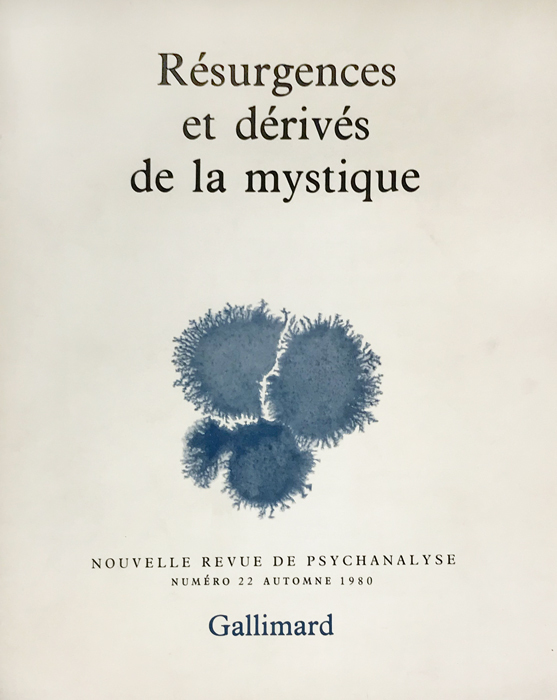
1980réf. 1067Paris, Gallimard, automne 1980, N°22 de La Nouvelle Revue de Psychanalyse, in-8, broché, 311 pages.