3754 risultati
1803- Didot, Paris 1803, 40,5x54cm, une feuille. - Original, unshaved, full-page etching from the "Imperial edition" of the Description de l'Égypte, or 'Recueil des observations et recherches faites en Égypte pendant l'expédition française, publié par les ordres de Sa Majesté l'Empereur Napoléon le Grand [A Collection of the observations and research carried out in Egypt during the French expedition, published on the orders of his Majesty the Emperor Napoleon the Great]'. Produced between February 1802 and 1830 on the orders of Naopleon Bonaparte and published between 1809 and 1828, 1,000 copies were printed and distributed to institutions, on vergé paper with an 'Égypte ancienne et moderne' watermark, visible when held up to the light. Light marginal spotting not touching image, otherwise in very fresh, fine condition. An engraving from the Description de l'Egypte, one of the masterpieces of French printing and the birth of a new field: Egyptology. A gigantic survey of Egypt at the time of Bonaparte's conquests in 1798 and 1799, the work is divided into 13 volumes of engravings making up 892 plates, of which 72 colored, as well as presenting the splendors of the Egypt of the Pharaohs in 9 volumes. The other volumes discuss natural history and present a fascinating portrait of Coptic and Islamic Egypt as it was seen by Bonaparte's Eastern Armies. The 'Egyptian campaign', militarily a disaster, demonstrates, through the engravings of the Description d'Egypte, the scientific success it nonetheless became thanks to the 167 expert members of the Commission of the Sciences and Arts of the Institut d'Egypte [Egyptian Institute] who followed Napoleon's army. The Institut gathered together in Egypt the mathematician Monge, the chemist Berthollet, the naturalist Geoffroy Saint-Hilaire as well as numerous artists, engineers, architects and doctors. They were tasked with re-discovering modern and ancient Egypt and displaying its natural treasures as well as the know-how of its inhabitants. This edition, the so-called "Imperial" edition of the plates for the Description de l'Egypte was printed in four large formats, two of which were specially created for it and christened "Moyen-Egypte" and "Grand-Egypte". A special press was built to print it, the process extending over 20 years, from 1809 to 1829. The "Imperial" edition proved so popular that a second edition, this time in black and white and without the "Egypte ancienne et moderne" watermark - known as the "Royal Edition" - was published during the Restoration by the printing house of C.-L.-F. Panckoucke (Paris). The engravings of the Description d'Egypte owe a great deal to Baron Dominique-Vivant Denon, illustrator, diplomat, collector and later Director of the Musée Napoléon (the Louvre). His exploration of the South of Egypt gave Bonaparte the idea of sending the experts of the Institut there, thus creating a faithful and complete portrait of the area. This was the research gathered together from 1802 in the mammoth Description de L'Egypte. Denon embarked on this story of archeological exploration at the age of 51, reaching first Alexandria and then Cairo before exploring Upper Egypt. Along with the members of the Institut d'Egypte, the Natural History Museum's painter H.J. Redouté (brother of Pierre-Joseph Redouté, author of Roses), the mineralogist Dolomiue, and the draughtsman Joly, Denon then explored the Nile Delta and Lower Egypt. When, however, he joined the 21st Light Infantry Regiment as it marched across Upper Egypt in pursuit of the retreating Mameluks in November 1798, he found himself the only civilian. In the very midst of the battle itself, he reeled off sketches of the works of art that peppered his path right up to the threshold of the Sudan. He said that he had crossed "a country that is, apart from its name, entirely unknown to Europeans, and therefore everything was worth describing" (Voyages dans la Basse et la Haute Egypte pendant les campagnes de Bon
1803- Didot, Paris 1803, 40x54cm, une feuille. - Original, unshaved, full-page etching from the "Imperial edition" of the Description de l'Égypte, or 'Recueil des observations et recherches faites en Égypte pendant l'expédition française, publié par les ordres de Sa Majesté l'Empereur Napoléon le Grand [A Collection of the observations and research carried out in Egypt during the French expedition, published on the orders of his Majesty the Emperor Napoleon the Great]'. Produced between February 1802 and 1830 on the orders of Naopleon Bonaparte and published between 1809 and 1828, 1,000 copies were printed and distributed to institutions, on vergé paper with an 'Égypte ancienne et moderne' watermark, visible when held up to the light. Light marginal spotting not touching image, otherwise in very fresh, fine condition. An engraving from the Description de l'Egypte, one of the masterpieces of French printing and the birth of a new field: Egyptology. A gigantic survey of Egypt at the time of Bonaparte's conquests in 1798 and 1799, the work is divided into 13 volumes of engravings making up 892 plates, of which 72 colored, as well as presenting the splendors of the Egypt of the Pharaohs in 9 volumes. The other volumes discuss natural history and present a fascinating portrait of Coptic and Islamic Egypt as it was seen by Bonaparte's Eastern Armies. The 'Egyptian campaign', militarily a disaster, demonstrates, through the engravings of the Description d'Egypte, the scientific success it nonetheless became thanks to the 167 expert members of the Commission of the Sciences and Arts of the Institut d'Egypte [Egyptian Institute] who followed Napoleon's army. The Institut gathered together in Egypt the mathematician Monge, the chemist Berthollet, the naturalist Geoffroy Saint-Hilaire as well as numerous artists, engineers, architects and doctors. They were tasked with re-discovering modern and ancient Egypt and displaying its natural treasures as well as the know-how of its inhabitants. This edition, the so-called "Imperial" edition of the plates for the Description de l'Egypte was printed in four large formats, two of which were specially created for it and christened "Moyen-Egypte" and "Grand-Egypte". A special press was built to print it, the process extending over 20 years, from 1809 to 1829. The "Imperial" edition proved so popular that a second edition, this time in black and white and without the "Egypte ancienne et moderne" watermark - known as the "Royal Edition" - was published during the Restoration by the printing house of C.-L.-F. Panckoucke (Paris). The engravings of the Description d'Egypte owe a great deal to Baron Dominique-Vivant Denon, illustrator, diplomat, collector and later Director of the Musée Napoléon (the Louvre). His exploration of the South of Egypt gave Bonaparte the idea of sending the experts of the Institut there, thus creating a faithful and complete portrait of the area. This was the research gathered together from 1802 in the mammoth Description de L'Egypte. Denon embarked on this story of archeological exploration at the age of 51, reaching first Alexandria and then Cairo before exploring Upper Egypt. Along with the members of the Institut d'Egypte, the Natural History Museum's painter H.J. Redouté (brother of Pierre-Joseph Redouté, author of Roses), the mineralogist Dolomiue, and the draughtsman Joly, Denon then explored the Nile Delta and Lower Egypt. When, however, he joined the 21st Light Infantry Regiment as it marched across Upper Egypt in pursuit of the retreating Mameluks in November 1798, he found himself the only civilian. In the very midst of the battle itself, he reeled off sketches of the works of art that peppered his path right up to the threshold of the Sudan. He said that he had crossed "a country that is, apart from its name, entirely unknown to Europeans, and therefore everything was worth describing" (Voyages dans la Basse et la Haute Egypte pendant les campagnes de Bonap
1803- Didot, Paris 1803, 40,5x54cm, une feuille. - Original, unshaved, full-page etching from the "Imperial edition" of the Description de l'Égypte, or 'Recueil des observations et recherches faites en Égypte pendant l'expédition française, publié par les ordres de Sa Majesté l'Empereur Napoléon le Grand [A Collection of the observations and research carried out in Egypt during the French expedition, published on the orders of his Majesty the Emperor Napoleon the Great]'. Produced between February 1802 and 1830 on the orders of Naopleon Bonaparte and published between 1809 and 1828, 1,000 copies were printed and distributed to institutions, on vergé paper with an 'Égypte ancienne et moderne' watermark, visible when held up to the light. Light marginal spotting not touching image, otherwise in very fresh, fine condition. An engraving from the Description de l'Egypte, one of the masterpieces of French printing and the birth of a new field: Egyptology. A gigantic survey of Egypt at the time of Bonaparte's conquests in 1798 and 1799, the work is divided into 13 volumes of engravings making up 892 plates, of which 72 colored, as well as presenting the splendors of the Egypt of the Pharaohs in 9 volumes. The other volumes discuss natural history and present a fascinating portrait of Coptic and Islamic Egypt as it was seen by Bonaparte's Eastern Armies. The 'Egyptian campaign', militarily a disaster, demonstrates, through the engravings of the Description d'Egypte, the scientific success it nonetheless became thanks to the 167 expert members of the Commission of the Sciences and Arts of the Institut d'Egypte [Egyptian Institute] who followed Napoleon's army. The Institut gathered together in Egypt the mathematician Monge, the chemist Berthollet, the naturalist Geoffroy Saint-Hilaire as well as numerous artists, engineers, architects and doctors. They were tasked with re-discovering modern and ancient Egypt and displaying its natural treasures as well as the know-how of its inhabitants. This edition, the so-called "Imperial" edition of the plates for the Description de l'Egypte was printed in four large formats, two of which were specially created for it and christened "Moyen-Egypte" and "Grand-Egypte". A special press was built to print it, the process extending over 20 years, from 1809 to 1829. The "Imperial" edition proved so popular that a second edition, this time in black and white and without the "Egypte ancienne et moderne" watermark - known as the "Royal Edition" - was published during the Restoration by the printing house of C.-L.-F. Panckoucke (Paris). The engravings of the Description d'Egypte owe a great deal to Baron Dominique-Vivant Denon, illustrator, diplomat, collector and later Director of the Musée Napoléon (the Louvre). His exploration of the South of Egypt gave Bonaparte the idea of sending the experts of the Institut there, thus creating a faithful and complete portrait of the area. This was the research gathered together from 1802 in the mammoth Description de L'Egypte. Denon embarked on this story of archeological exploration at the age of 51, reaching first Alexandria and then Cairo before exploring Upper Egypt. Along with the members of the Institut d'Egypte, the Natural History Museum's painter H.J. Redouté (brother of Pierre-Joseph Redouté, author of Roses), the mineralogist Dolomiue, and the draughtsman Joly, Denon then explored the Nile Delta and Lower Egypt. When, however, he joined the 21st Light Infantry Regiment as it marched across Upper Egypt in pursuit of the retreating Mameluks in November 1798, he found himself the only civilian. In the very midst of the battle itself, he reeled off sketches of the works of art that peppered his path right up to the threshold of the Sudan. He said that he had crossed "a country that is, apart from its name, entirely unknown to Europeans, and therefore everything was worth describing" (Voyages dans la Basse et la Haute Egypte pendant les campagnes de Bon
1803- Didot, Paris 1803, 40,5x54cm, une feuille. - Original, unshaved, full-page etching from the "Imperial edition" of the Description de l'Égypte, or 'Recueil des observations et recherches faites en Égypte pendant l'expédition française, publié par les ordres de Sa Majesté l'Empereur Napoléon le Grand [A Collection of the observations and research carried out in Egypt during the French expedition, published on the orders of his Majesty the Emperor Napoleon the Great]'. Produced between February 1802 and 1830 on the orders of Naopleon Bonaparte and published between 1809 and 1828, 1,000 copies were printed and distributed to institutions, on vergé paper with an 'Égypte ancienne et moderne' watermark, visible when held up to the light. Light marginal spotting not touching image, otherwise in very fresh, fine condition. An engraving from the Description de l'Egypte, one of the masterpieces of French printing and the birth of a new field: Egyptology. A gigantic survey of Egypt at the time of Bonaparte's conquests in 1798 and 1799, the work is divided into 13 volumes of engravings making up 892 plates, of which 72 colored, as well as presenting the splendors of the Egypt of the Pharaohs in 9 volumes. The other volumes discuss natural history and present a fascinating portrait of Coptic and Islamic Egypt as it was seen by Bonaparte's Eastern Armies. The 'Egyptian campaign', militarily a disaster, demonstrates, through the engravings of the Description d'Egypte, the scientific success it nonetheless became thanks to the 167 expert members of the Commission of the Sciences and Arts of the Institut d'Egypte [Egyptian Institute] who followed Napoleon's army. The Institut gathered together in Egypt the mathematician Monge, the chemist Berthollet, the naturalist Geoffroy Saint-Hilaire as well as numerous artists, engineers, architects and doctors. They were tasked with re-discovering modern and ancient Egypt and displaying its natural treasures as well as the know-how of its inhabitants. This edition, the so-called "Imperial" edition of the plates for the Description de l'Egypte was printed in four large formats, two of which were specially created for it and christened "Moyen-Egypte" and "Grand-Egypte". A special press was built to print it, the process extending over 20 years, from 1809 to 1829. The "Imperial" edition proved so popular that a second edition, this time in black and white and without the "Egypte ancienne et moderne" watermark - known as the "Royal Edition" - was published during the Restoration by the printing house of C.-L.-F. Panckoucke (Paris). The engravings of the Description d'Egypte owe a great deal to Baron Dominique-Vivant Denon, illustrator, diplomat, collector and later Director of the Musée Napoléon (the Louvre). His exploration of the South of Egypt gave Bonaparte the idea of sending the experts of the Institut there, thus creating a faithful and complete portrait of the area. This was the research gathered together from 1802 in the mammoth Description de L'Egypte. Denon embarked on this story of archeological exploration at the age of 51, reaching first Alexandria and then Cairo before exploring Upper Egypt. Along with the members of the Institut d'Egypte, the Natural History Museum's painter H.J. Redouté (brother of Pierre-Joseph Redouté, author of Roses), the mineralogist Dolomiue, and the draughtsman Joly, Denon then explored the Nile Delta and Lower Egypt. When, however, he joined the 21st Light Infantry Regiment as it marched across Upper Egypt in pursuit of the retreating Mameluks in November 1798, he found himself the only civilian. In the very midst of the battle itself, he reeled off sketches of the works of art that peppered his path right up to the threshold of the Sudan. He said that he had crossed "a country that is, apart from its name, entirely unknown to Europeans, and therefore everything was worth describing" (Voyages dans la Basse et la Haute Egypte pendant les campagnes de Bon
1803- Didot, Paris 1803, 40,5x54cm, une feuille. - Original, unshaved, full-page etching from the "Imperial edition" of the Description de l'Égypte, or 'Recueil des observations et recherches faites en Égypte pendant l'expédition française, publié par les ordres de Sa Majesté l'Empereur Napoléon le Grand [A Collection of the observations and research carried out in Egypt during the French expedition, published on the orders of his Majesty the Emperor Napoleon the Great]'. Produced between February 1802 and 1830 on the orders of Naopleon Bonaparte and published between 1809 and 1828, 1,000 copies were printed and distributed to institutions, on vergé paper with an 'Égypte ancienne et moderne' watermark, visible when held up to the light. Light marginal spotting not touching image, otherwise in very fresh, fine condition. An engraving from the Description de l'Egypte, one of the masterpieces of French printing and the birth of a new field: Egyptology. A gigantic survey of Egypt at the time of Bonaparte's conquests in 1798 and 1799, the work is divided into 13 volumes of engravings making up 892 plates, of which 72 colored, as well as presenting the splendors of the Egypt of the Pharaohs in 9 volumes. The other volumes discuss natural history and present a fascinating portrait of Coptic and Islamic Egypt as it was seen by Bonaparte's Eastern Armies. The 'Egyptian campaign', militarily a disaster, demonstrates, through the engravings of the Description d'Egypte, the scientific success it nonetheless became thanks to the 167 expert members of the Commission of the Sciences and Arts of the Institut d'Egypte [Egyptian Institute] who followed Napoleon's army. The Institut gathered together in Egypt the mathematician Monge, the chemist Berthollet, the naturalist Geoffroy Saint-Hilaire as well as numerous artists, engineers, architects and doctors. They were tasked with re-discovering modern and ancient Egypt and displaying its natural treasures as well as the know-how of its inhabitants. This edition, the so-called "Imperial" edition of the plates for the Description de l'Egypte was printed in four large formats, two of which were specially created for it and christened "Moyen-Egypte" and "Grand-Egypte". A special press was built to print it, the process extending over 20 years, from 1809 to 1829. The "Imperial" edition proved so popular that a second edition, this time in black and white and without the "Egypte ancienne et moderne" watermark - known as the "Royal Edition" - was published during the Restoration by the printing house of C.-L.-F. Panckoucke (Paris). The engravings of the Description d'Egypte owe a great deal to Baron Dominique-Vivant Denon, illustrator, diplomat, collector and later Director of the Musée Napoléon (the Louvre). His exploration of the South of Egypt gave Bonaparte the idea of sending the experts of the Institut there, thus creating a faithful and complete portrait of the area. This was the research gathered together from 1802 in the mammoth Description de L'Egypte. Denon embarked on this story of archeological exploration at the age of 51, reaching first Alexandria and then Cairo before exploring Upper Egypt. Along with the members of the Institut d'Egypte, the Natural History Museum's painter H.J. Redouté (brother of Pierre-Joseph Redouté, author of Roses), the mineralogist Dolomiue, and the draughtsman Joly, Denon then explored the Nile Delta and Lower Egypt. When, however, he joined the 21st Light Infantry Regiment as it marched across Upper Egypt in pursuit of the retreating Mameluks in November 1798, he found himself the only civilian. In the very midst of the battle itself, he reeled off sketches of the works of art that peppered his path right up to the threshold of the Sudan. He said that he had crossed "a country that is, apart from its name, entirely unknown to Europeans, and therefore everything was worth describing" (Voyages dans la Basse et la Haute Egypte pendant les campagnes de Bon
1803- Didot, Paris 1803, 40x54cm, une feuille. - Original, unshaved, full-page etching from the "Imperial edition" of the Description de l'Égypte, or 'Recueil des observations et recherches faites en Égypte pendant l'expédition française, publié par les ordres de Sa Majesté l'Empereur Napoléon le Grand [A Collection of the observations and research carried out in Egypt during the French expedition, published on the orders of his Majesty the Emperor Napoleon the Great]'. Produced between February 1802 and 1830 on the orders of Naopleon Bonaparte and published between 1809 and 1828, 1,000 copies were printed and distributed to institutions, on vergé paper with an 'Égypte ancienne et moderne' watermark, visible when held up to the light. Light marginal spotting not touching image, otherwise in very fresh, fine condition. An engraving from the Description de l'Egypte, one of the masterpieces of French printing and the birth of a new field: Egyptology. A gigantic survey of Egypt at the time of Bonaparte's conquests in 1798 and 1799, the work is divided into 13 volumes of engravings making up 892 plates, of which 72 colored, as well as presenting the splendors of the Egypt of the Pharaohs in 9 volumes. The other volumes discuss natural history and present a fascinating portrait of Coptic and Islamic Egypt as it was seen by Bonaparte's Eastern Armies. The 'Egyptian campaign', militarily a disaster, demonstrates, through the engravings of the Description d'Egypte, the scientific success it nonetheless became thanks to the 167 expert members of the Commission of the Sciences and Arts of the Institut d'Egypte [Egyptian Institute] who followed Napoleon's army. The Institut gathered together in Egypt the mathematician Monge, the chemist Berthollet, the naturalist Geoffroy Saint-Hilaire as well as numerous artists, engineers, architects and doctors. They were tasked with re-discovering modern and ancient Egypt and displaying its natural treasures as well as the know-how of its inhabitants. This edition, the so-called "Imperial" edition of the plates for the Description de l'Egypte was printed in four large formats, two of which were specially created for it and christened "Moyen-Egypte" and "Grand-Egypte". A special press was built to print it, the process extending over 20 years, from 1809 to 1829. The "Imperial" edition proved so popular that a second edition, this time in black and white and without the "Egypte ancienne et moderne" watermark - known as the "Royal Edition" - was published during the Restoration by the printing house of C.-L.-F. Panckoucke (Paris). The engravings of the Description d'Egypte owe a great deal to Baron Dominique-Vivant Denon, illustrator, diplomat, collector and later Director of the Musée Napoléon (the Louvre). His exploration of the South of Egypt gave Bonaparte the idea of sending the experts of the Institut there, thus creating a faithful and complete portrait of the area. This was the research gathered together from 1802 in the mammoth Description de L'Egypte. Denon embarked on this story of archeological exploration at the age of 51, reaching first Alexandria and then Cairo before exploring Upper Egypt. Along with the members of the Institut d'Egypte, the Natural History Museum's painter H.J. Redouté (brother of Pierre-Joseph Redouté, author of Roses), the mineralogist Dolomiue, and the draughtsman Joly, Denon then explored the Nile Delta and Lower Egypt. When, however, he joined the 21st Light Infantry Regiment as it marched across Upper Egypt in pursuit of the retreating Mameluks in November 1798, he found himself the only civilian. In the very midst of the battle itself, he reeled off sketches of the works of art that peppered his path right up to the threshold of the Sudan. He said that he had crossed "a country that is, apart from its name, entirely unknown to Europeans, and therefore everything was worth describing" (Voyages dans la Basse et la Haute Egypte pendant les campagnes de Bonap
1803- Didot, Paris 1803, 40x54cm, une feuille. - Original, unshaved, full-page etching from the "Imperial edition" of the Description de l'Égypte, or 'Recueil des observations et recherches faites en Égypte pendant l'expédition française, publié par les ordres de Sa Majesté l'Empereur Napoléon le Grand [A Collection of the observations and research carried out in Egypt during the French expedition, published on the orders of his Majesty the Emperor Napoleon the Great]'. Produced between February 1802 and 1830 on the orders of Naopleon Bonaparte and published between 1809 and 1828, 1,000 copies were printed and distributed to institutions, on vergé paper with an 'Égypte ancienne et moderne' watermark, visible when held up to the light. Light marginal spotting not touching image, otherwise in very fresh, fine condition. An engraving from the Description de l'Egypte, one of the masterpieces of French printing and the birth of a new field: Egyptology. A gigantic survey of Egypt at the time of Bonaparte's conquests in 1798 and 1799, the work is divided into 13 volumes of engravings making up 892 plates, of which 72 colored, as well as presenting the splendors of the Egypt of the Pharaohs in 9 volumes. The other volumes discuss natural history and present a fascinating portrait of Coptic and Islamic Egypt as it was seen by Bonaparte's Eastern Armies. The 'Egyptian campaign', militarily a disaster, demonstrates, through the engravings of the Description d'Egypte, the scientific success it nonetheless became thanks to the 167 expert members of the Commission of the Sciences and Arts of the Institut d'Egypte [Egyptian Institute] who followed Napoleon's army. The Institut gathered together in Egypt the mathematician Monge, the chemist Berthollet, the naturalist Geoffroy Saint-Hilaire as well as numerous artists, engineers, architects and doctors. They were tasked with re-discovering modern and ancient Egypt and displaying its natural treasures as well as the know-how of its inhabitants. This edition, the so-called "Imperial" edition of the plates for the Description de l'Egypte was printed in four large formats, two of which were specially created for it and christened "Moyen-Egypte" and "Grand-Egypte". A special press was built to print it, the process extending over 20 years, from 1809 to 1829. The "Imperial" edition proved so popular that a second edition, this time in black and white and without the "Egypte ancienne et moderne" watermark - known as the "Royal Edition" - was published during the Restoration by the printing house of C.-L.-F. Panckoucke (Paris). The engravings of the Description d'Egypte owe a great deal to Baron Dominique-Vivant Denon, illustrator, diplomat, collector and later Director of the Musée Napoléon (the Louvre). His exploration of the South of Egypt gave Bonaparte the idea of sending the experts of the Institut there, thus creating a faithful and complete portrait of the area. This was the research gathered together from 1802 in the mammoth Description de L'Egypte. Denon embarked on this story of archeological exploration at the age of 51, reaching first Alexandria and then Cairo before exploring Upper Egypt. Along with the members of the Institut d'Egypte, the Natural History Museum's painter H.J. Redouté (brother of Pierre-Joseph Redouté, author of Roses), the mineralogist Dolomiue, and the draughtsman Joly, Denon then explored the Nile Delta and Lower Egypt. When, however, he joined the 21st Light Infantry Regiment as it marched across Upper Egypt in pursuit of the retreating Mameluks in November 1798, he found himself the only civilian. In the very midst of the battle itself, he reeled off sketches of the works of art that peppered his path right up to the threshold of the Sudan. He said that he had crossed "a country that is, apart from its name, entirely unknown to Europeans, and therefore everything was worth describing" (Voyages dans la Basse et la Haute Egypte pendant les campagnes de Bonap
1803- Didot, Paris 1803, 40x54cm, une feuille. - Original, unshaved, full-page etching from the "Imperial edition" of the Description de l'Égypte, or 'Recueil des observations et recherches faites en Égypte pendant l'expédition française, publié par les ordres de Sa Majesté l'Empereur Napoléon le Grand [A Collection of the observations and research carried out in Egypt during the French expedition, published on the orders of his Majesty the Emperor Napoleon the Great]'. Produced between February 1802 and 1830 on the orders of Naopleon Bonaparte and published between 1809 and 1828, 1,000 copies were printed and distributed to institutions, on vergé paper with an 'Égypte ancienne et moderne' watermark, visible when held up to the light. Light marginal spotting not touching image, otherwise in very fresh, fine condition. An engraving from the Description de l'Egypte, one of the masterpieces of French printing and the birth of a new field: Egyptology. A gigantic survey of Egypt at the time of Bonaparte's conquests in 1798 and 1799, the work is divided into 13 volumes of engravings making up 892 plates, of which 72 colored, as well as presenting the splendors of the Egypt of the Pharaohs in 9 volumes. The other volumes discuss natural history and present a fascinating portrait of Coptic and Islamic Egypt as it was seen by Bonaparte's Eastern Armies. The 'Egyptian campaign', militarily a disaster, demonstrates, through the engravings of the Description d'Egypte, the scientific success it nonetheless became thanks to the 167 expert members of the Commission of the Sciences and Arts of the Institut d'Egypte [Egyptian Institute] who followed Napoleon's army. The Institut gathered together in Egypt the mathematician Monge, the chemist Berthollet, the naturalist Geoffroy Saint-Hilaire as well as numerous artists, engineers, architects and doctors. They were tasked with re-discovering modern and ancient Egypt and displaying its natural treasures as well as the know-how of its inhabitants. This edition, the so-called "Imperial" edition of the plates for the Description de l'Egypte was printed in four large formats, two of which were specially created for it and christened "Moyen-Egypte" and "Grand-Egypte". A special press was built to print it, the process extending over 20 years, from 1809 to 1829. The "Imperial" edition proved so popular that a second edition, this time in black and white and without the "Egypte ancienne et moderne" watermark - known as the "Royal Edition" - was published during the Restoration by the printing house of C.-L.-F. Panckoucke (Paris). The engravings of the Description d'Egypte owe a great deal to Baron Dominique-Vivant Denon, illustrator, diplomat, collector and later Director of the Musée Napoléon (the Louvre). His exploration of the South of Egypt gave Bonaparte the idea of sending the experts of the Institut there, thus creating a faithful and complete portrait of the area. This was the research gathered together from 1802 in the mammoth Description de L'Egypte. Denon embarked on this story of archeological exploration at the age of 51, reaching first Alexandria and then Cairo before exploring Upper Egypt. Along with the members of the Institut d'Egypte, the Natural History Museum's painter H.J. Redouté (brother of Pierre-Joseph Redouté, author of Roses), the mineralogist Dolomiue, and the draughtsman Joly, Denon then explored the Nile Delta and Lower Egypt. When, however, he joined the 21st Light Infantry Regiment as it marched across Upper Egypt in pursuit of the retreating Mameluks in November 1798, he found himself the only civilian. In the very midst of the battle itself, he reeled off sketches of the works of art that peppered his path right up to the threshold of the Sudan. He said that he had crossed "a country that is, apart from its name, entirely unknown to Europeans, and therefore everything was worth describing" (Voyages dans la Basse et la Haute Egypte pendant les campagnes de Bonap
1803- Didot, Paris 1803, 40,5x54cm, une feuille. - Original, unshaved, full-page etching from the "Imperial edition" of the Description de l'Égypte, or 'Recueil des observations et recherches faites en Égypte pendant l'expédition française, publié par les ordres de Sa Majesté l'Empereur Napoléon le Grand [A Collection of the observations and research carried out in Egypt during the French expedition, published on the orders of his Majesty the Emperor Napoleon the Great]'. Produced between February 1802 and 1830 on the orders of Naopleon Bonaparte and published between 1809 and 1828, 1,000 copies were printed and distributed to institutions, on vergé paper with an 'Égypte ancienne et moderne' watermark, visible when held up to the light. Light marginal spotting not touching image, otherwise in very fresh, fine condition. An engraving from the Description de l'Egypte, one of the masterpieces of French printing and the birth of a new field: Egyptology. A gigantic survey of Egypt at the time of Bonaparte's conquests in 1798 and 1799, the work is divided into 13 volumes of engravings making up 892 plates, of which 72 colored, as well as presenting the splendors of the Egypt of the Pharaohs in 9 volumes. The other volumes discuss natural history and present a fascinating portrait of Coptic and Islamic Egypt as it was seen by Bonaparte's Eastern Armies. The 'Egyptian campaign', militarily a disaster, demonstrates, through the engravings of the Description d'Egypte, the scientific success it nonetheless became thanks to the 167 expert members of the Commission of the Sciences and Arts of the Institut d'Egypte [Egyptian Institute] who followed Napoleon's army. The Institut gathered together in Egypt the mathematician Monge, the chemist Berthollet, the naturalist Geoffroy Saint-Hilaire as well as numerous artists, engineers, architects and doctors. They were tasked with re-discovering modern and ancient Egypt and displaying its natural treasures as well as the know-how of its inhabitants. This edition, the so-called "Imperial" edition of the plates for the Description de l'Egypte was printed in four large formats, two of which were specially created for it and christened "Moyen-Egypte" and "Grand-Egypte". A special press was built to print it, the process extending over 20 years, from 1809 to 1829. The "Imperial" edition proved so popular that a second edition, this time in black and white and without the "Egypte ancienne et moderne" watermark - known as the "Royal Edition" - was published during the Restoration by the printing house of C.-L.-F. Panckoucke (Paris). The engravings of the Description d'Egypte owe a great deal to Baron Dominique-Vivant Denon, illustrator, diplomat, collector and later Director of the Musée Napoléon (the Louvre). His exploration of the South of Egypt gave Bonaparte the idea of sending the experts of the Institut there, thus creating a faithful and complete portrait of the area. This was the research gathered together from 1802 in the mammoth Description de L'Egypte. Denon embarked on this story of archeological exploration at the age of 51, reaching first Alexandria and then Cairo before exploring Upper Egypt. Along with the members of the Institut d'Egypte, the Natural History Museum's painter H.J. Redouté (brother of Pierre-Joseph Redouté, author of Roses), the mineralogist Dolomiue, and the draughtsman Joly, Denon then explored the Nile Delta and Lower Egypt. When, however, he joined the 21st Light Infantry Regiment as it marched across Upper Egypt in pursuit of the retreating Mameluks in November 1798, he found himself the only civilian. In the very midst of the battle itself, he reeled off sketches of the works of art that peppered his path right up to the threshold of the Sudan. He said that he had crossed "a country that is, apart from its name, entirely unknown to Europeans, and therefore everything was worth describing" (Voyages dans la Basse et la Haute Egypte pendant les campagnes de Bon
1803- Didot, Paris 1803, 40x54cm, une feuille. - Original, unshaved, full-page etching from the "Imperial edition" of the Description de l'Égypte, or 'Recueil des observations et recherches faites en Égypte pendant l'expédition française, publié par les ordres de Sa Majesté l'Empereur Napoléon le Grand [A Collection of the observations and research carried out in Egypt during the French expedition, published on the orders of his Majesty the Emperor Napoleon the Great]'. Produced between February 1802 and 1830 on the orders of Naopleon Bonaparte and published between 1809 and 1828, 1,000 copies were printed and distributed to institutions, on vergé paper with an 'Égypte ancienne et moderne' watermark, visible when held up to the light. Light marginal spotting not touching image, otherwise in very fresh, fine condition. An engraving from the Description de l'Egypte, one of the masterpieces of French printing and the birth of a new field: Egyptology. A gigantic survey of Egypt at the time of Bonaparte's conquests in 1798 and 1799, the work is divided into 13 volumes of engravings making up 892 plates, of which 72 colored, as well as presenting the splendors of the Egypt of the Pharaohs in 9 volumes. The other volumes discuss natural history and present a fascinating portrait of Coptic and Islamic Egypt as it was seen by Bonaparte's Eastern Armies. The 'Egyptian campaign', militarily a disaster, demonstrates, through the engravings of the Description d'Egypte, the scientific success it nonetheless became thanks to the 167 expert members of the Commission of the Sciences and Arts of the Institut d'Egypte [Egyptian Institute] who followed Napoleon's army. The Institut gathered together in Egypt the mathematician Monge, the chemist Berthollet, the naturalist Geoffroy Saint-Hilaire as well as numerous artists, engineers, architects and doctors. They were tasked with re-discovering modern and ancient Egypt and displaying its natural treasures as well as the know-how of its inhabitants. This edition, the so-called "Imperial" edition of the plates for the Description de l'Egypte was printed in four large formats, two of which were specially created for it and christened "Moyen-Egypte" and "Grand-Egypte". A special press was built to print it, the process extending over 20 years, from 1809 to 1829. The "Imperial" edition proved so popular that a second edition, this time in black and white and without the "Egypte ancienne et moderne" watermark - known as the "Royal Edition" - was published during the Restoration by the printing house of C.-L.-F. Panckoucke (Paris). The engravings of the Description d'Egypte owe a great deal to Baron Dominique-Vivant Denon, illustrator, diplomat, collector and later Director of the Musée Napoléon (the Louvre). His exploration of the South of Egypt gave Bonaparte the idea of sending the experts of the Institut there, thus creating a faithful and complete portrait of the area. This was the research gathered together from 1802 in the mammoth Description de L'Egypte. Denon embarked on this story of archeological exploration at the age of 51, reaching first Alexandria and then Cairo before exploring Upper Egypt. Along with the members of the Institut d'Egypte, the Natural History Museum's painter H.J. Redouté (brother of Pierre-Joseph Redouté, author of Roses), the mineralogist Dolomiue, and the draughtsman Joly, Denon then explored the Nile Delta and Lower Egypt. When, however, he joined the 21st Light Infantry Regiment as it marched across Upper Egypt in pursuit of the retreating Mameluks in November 1798, he found himself the only civilian. In the very midst of the battle itself, he reeled off sketches of the works of art that peppered his path right up to the threshold of the Sudan. He said that he had crossed "a country that is, apart from its name, entirely unknown to Europeans, and therefore everything was worth describing" (Voyages dans la Basse et la Haute Egypte pendant les campagnes de Bonap
1803- Didot, Paris 1803, 40x54cm, une feuille. - Original, unshaved, full-page etching from the "Imperial edition" of the Description de l'Égypte, or 'Recueil des observations et recherches faites en Égypte pendant l'expédition française, publié par les ordres de Sa Majesté l'Empereur Napoléon le Grand [A Collection of the observations and research carried out in Egypt during the French expedition, published on the orders of his Majesty the Emperor Napoleon the Great]'. Produced between February 1802 and 1830 on the orders of Naopleon Bonaparte and published between 1809 and 1828, 1,000 copies were printed and distributed to institutions, on vergé paper with an 'Égypte ancienne et moderne' watermark, visible when held up to the light. Light marginal spotting not touching image, otherwise in very fresh, fine condition. An engraving from the Description de l'Egypte, one of the masterpieces of French printing and the birth of a new field: Egyptology. A gigantic survey of Egypt at the time of Bonaparte's conquests in 1798 and 1799, the work is divided into 13 volumes of engravings making up 892 plates, of which 72 colored, as well as presenting the splendors of the Egypt of the Pharaohs in 9 volumes. The other volumes discuss natural history and present a fascinating portrait of Coptic and Islamic Egypt as it was seen by Bonaparte's Eastern Armies. The 'Egyptian campaign', militarily a disaster, demonstrates, through the engravings of the Description d'Egypte, the scientific success it nonetheless became thanks to the 167 expert members of the Commission of the Sciences and Arts of the Institut d'Egypte [Egyptian Institute] who followed Napoleon's army. The Institut gathered together in Egypt the mathematician Monge, the chemist Berthollet, the naturalist Geoffroy Saint-Hilaire as well as numerous artists, engineers, architects and doctors. They were tasked with re-discovering modern and ancient Egypt and displaying its natural treasures as well as the know-how of its inhabitants. This edition, the so-called "Imperial" edition of the plates for the Description de l'Egypte was printed in four large formats, two of which were specially created for it and christened "Moyen-Egypte" and "Grand-Egypte". A special press was built to print it, the process extending over 20 years, from 1809 to 1829. The "Imperial" edition proved so popular that a second edition, this time in black and white and without the "Egypte ancienne et moderne" watermark - known as the "Royal Edition" - was published during the Restoration by the printing house of C.-L.-F. Panckoucke (Paris). The engravings of the Description d'Egypte owe a great deal to Baron Dominique-Vivant Denon, illustrator, diplomat, collector and later Director of the Musée Napoléon (the Louvre). His exploration of the South of Egypt gave Bonaparte the idea of sending the experts of the Institut there, thus creating a faithful and complete portrait of the area. This was the research gathered together from 1802 in the mammoth Description de L'Egypte. Denon embarked on this story of archeological exploration at the age of 51, reaching first Alexandria and then Cairo before exploring Upper Egypt. Along with the members of the Institut d'Egypte, the Natural History Museum's painter H.J. Redouté (brother of Pierre-Joseph Redouté, author of Roses), the mineralogist Dolomiue, and the draughtsman Joly, Denon then explored the Nile Delta and Lower Egypt. When, however, he joined the 21st Light Infantry Regiment as it marched across Upper Egypt in pursuit of the retreating Mameluks in November 1798, he found himself the only civilian. In the very midst of the battle itself, he reeled off sketches of the works of art that peppered his path right up to the threshold of the Sudan. He said that he had crossed "a country that is, apart from its name, entirely unknown to Europeans, and therefore everything was worth describing" (Voyages dans la Basse et la Haute Egypte pendant les campagnes de Bonap
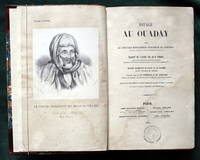
rif. 000903Hardcover. Good. Benjamin Duprat and others Paris 1851 first edition; large 8vo 170 x 240mm; pp lxxv 756 plus title to the plates section list of plates and the plates themselves together with a large folding map linen-backed of the area and dated 1845; the engraved plates with one exception are double page; the list calls for a total of ten plates including the portrait of the author and the folding map but one plate the first section of the double plate V is missing this featuring small items such as a stretcher a horse decoration and more; half brown morocco marbled sides skilfully rebacked with the original spine laid down and with appropriate new end papers; part of the marbled sides of the front cover scuffed; the early pages to about xv show the effects of some old wetting in the form of browning and with one page very skilfully repaired none with any loss of text or margins; neat small circular library stamps on the title and occasionally elsewhere including on the backs of the plates; occasional underlinings or brief notes in light pencil in the margins; overall a book in good condition generally clean and firm and not greatly affected by the matters mentioned; scarce in its original form as here. . . . Ouadây aka as Ouaddaï or Wadai is an area a former Sultanate in the east of Lake Chad and the border with Sudan. The Wadai Empire or Sultanate known locally as Burgu or Birgu emerged in the 17th century through conquest of the ruling Tunjur people of the area displacing them from the lands of the Sultanate of Darfur. It was overthrown by France in 1909/1912 and reconstituted under France in 1935. When Chad became independent in 1960 it became part of that new state. Its capital is Abéché. See Wikipedia for more detail. hardcover
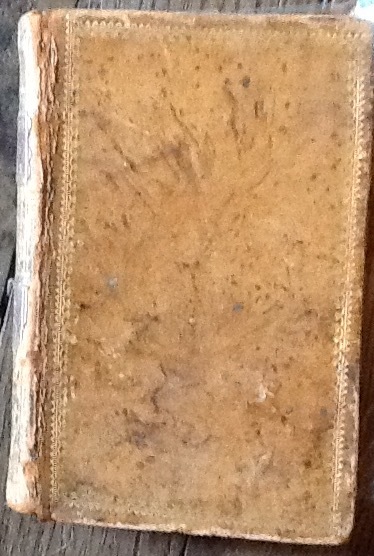
1797rif. CCC-1012191. edition Crapelet, Paris, 1797, l'an 5. In-16 (9 cm X 13,5 cm). Volume I: Voyage de l'Inde a la Mekke. Frontispice en couleur, il y a une gravure couleur ( arabes du desert, sous le nom bedouins), reliure plein veau d'epoque avec filet dore sur les 2 plats, bon etat, photos possibles
1825rif. PHO-1571Paris, Nepveu,1825.- XXXIV-233 pp., illustré d’une gravure en frontispice, relié demi basane époque, dos lisse orné avec titre, ex-libris, charnières fendues, frottements, rousseurs au titre.
rif. 33103Paris, Albert Méricant, s.d. (ca 1900). 9 x 14, 118 pp., broché, bon étrat (couverture défraîchie).
1745rif. PHO-885Paris & Rouen , Nyon & Machuel ,1745. 8 volumes in-12 (170x100), plein veau époque , dos à nerfs avec pièces de titre et tomaison , tranches rouges , défauts d’usage (coiffes arasées , coins usés , reliures frottées , manque au dos Tome 7, etc) , Édition illustrée des portraits de l'auteur et de sa femme morte durant le voyage et 5 plans H.T. et une planche.
1803rif. 29627Didot | Paris 1803 | 40 x 54 cm | une feuille
1803rif. 29628Didot | Paris 1803 | 40 x 54 cm | une feuille
1803rif. 29630Didot | Paris 1803 | 40.50 x 54 cm | une feuille
1803rif. 29632Didot | Paris 1803 | 40.50 x 54 cm | une feuille
1803rif. 29633Didot | Paris 1803 | 40 x 54 cm | une feuille