Wunderle, GeorgAntiquariat.de
21 774 résultats
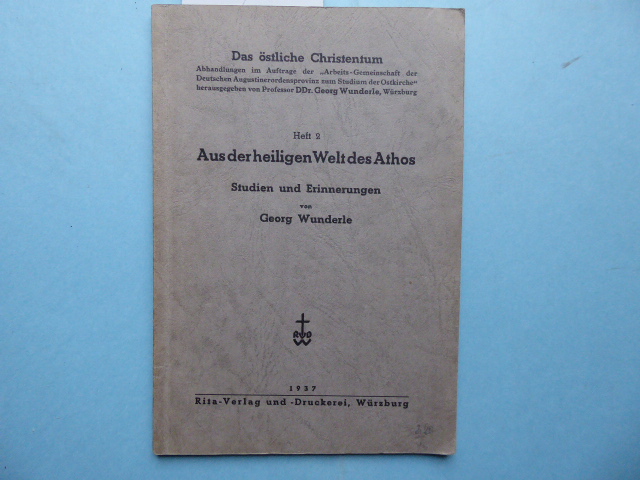
1937réf. 142745Würzburg, Rita-Verlag und -Druckerei. 1937. 61 Seiten. Originalbroschur. 22x15 cm
réf. 156370Cambridge, CUP, 2007.
réf. 18197Εκδοσεις Προοδος 139 pages in8. Sans date. broché. 139 pages.
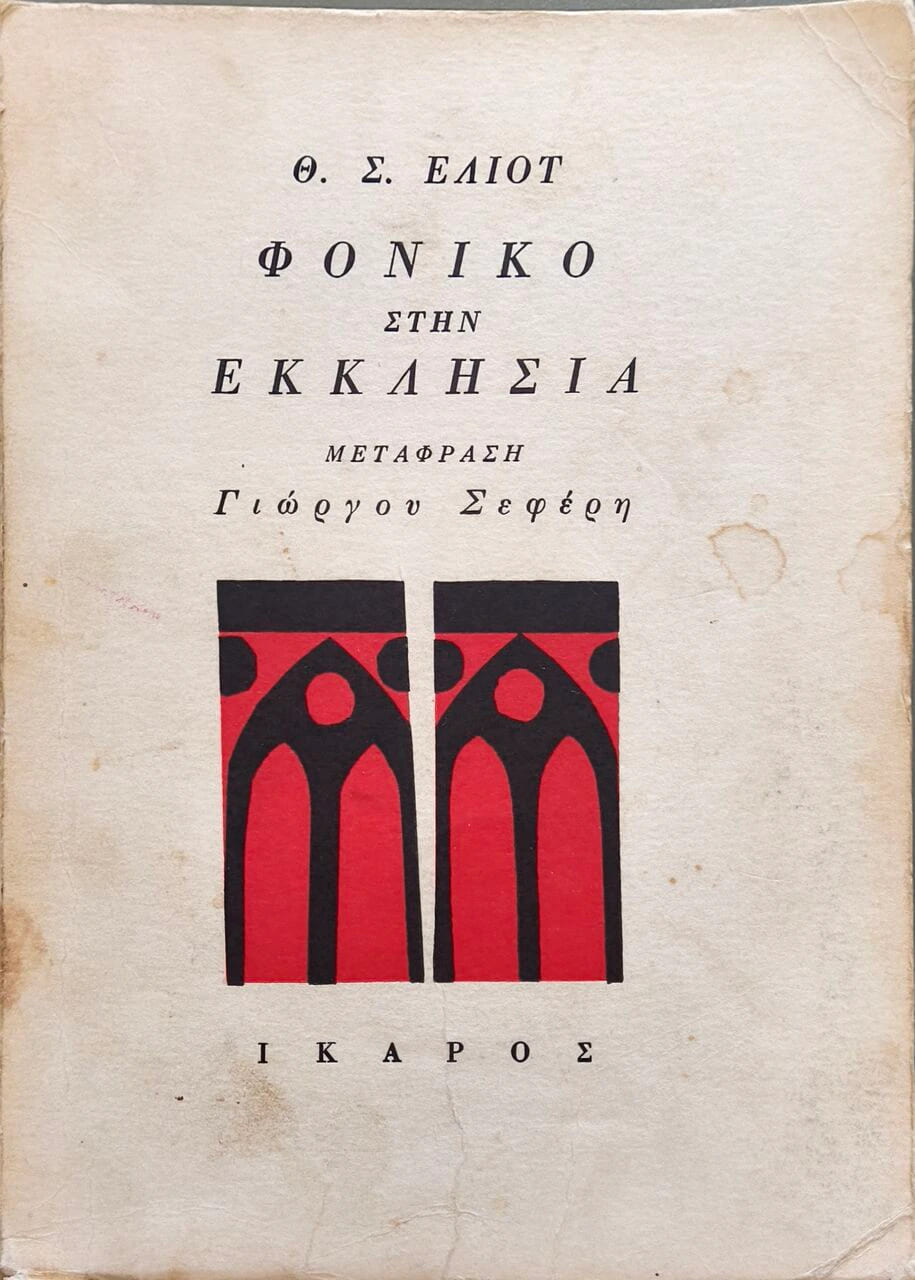
1974réf. 18249ΙΚΑΡΟΣ 1974 117 pages in8. 1974. broché. 117 pages.
1962Book is in excellent condition in bright red and black cloth HB covers, black print at spine. Binding is solid and square, covers have sharp corners, exterior shows no blemishes, text/interior is clean and free of marking of any kind. Dust jacket shows the slightest signs of shelf wear, some edge wear, chipping. 224 pages with b&w images of pottery, statues, Leda and the swan, Venus de Milo, Aphrodite riding a swan, Eros, Aphrodite and Erotes, Perithoos, Helen and Theseus, Greek youths, playing, playing flute, penis, Discobolo, Disco Polo, Schoolboy, Pederast, Dancing girl, Woman taking leave of youth, Epicurus, courtesans, sexuality, sex, homosexuality, boys, practice, etc.
1956Scholar's name to ffep (Robert Brown) , other name struck out. Foxing to endpapers, prelims and textblock. Spine sunned. ; Sir Frank Adcock's aim is to emphasize the literary character of Caesar's writings. He is worth reading, and this small book will help understanding. The Introduction reminds the reader what Caesar was and what he had accomplished when he wrote. In a chapter on "The Military Man" Caesar's literary interpretation of war and generalship is described. This short study gives insight into Roman literature and history as well as into the life and character of one of the world's great men. ; 114 pages
1958Scholar's name to inner cover (Cedric Boulter). Ink revisions (By Boulter? ) to a few pages of plates [references]. ; 64 pages, [127] plates; 4to 11" - 13" tall; 64 pages
1997Scholars' name to half-title (Mark Golden). Else book is fine. ; 256 pages
1997Some foxing to textblock. Else minor shelfwear. ; 256 pages
1972Offprint. Wraps browned. Gift inscription from Badian to G. P. Goold in pen to front wrap. ; Pp 151-208; Offprint from Entretiens Sur L'Antiquité Classique Tome XVII; 57 pages; Signed by Author
1991Former owner has underlining on one page indicating 2 other titles he/she wanted from this series (Achilles & Iago). Otherwise book is clean of any marks. Book has minor wear to top and bottom of spine. Dustjacket has a little soiling and light wear. ; Presents a representative selection of criticism devoted to the character of Odysseus, from Homer and the Romans to Shakespeare and Joyce, with a chronological survey of excerpts and critical essays. ; Major Literary Characters; 312 pages
1949Scholars' bookplate to ffep. Very light edgewear. Pages slightly toned. ; Albae Vigiliae Neue Folge, Heft VII; 120 pages
1958Folio. 230p. + Illustrations Original full cloth binding. XLIb.
1985Very light edgewear to DJ else fine. ; Martin Classical Lectures 29; 224 pages; Anne Burnett shows us the art of Bacchylides in the context of Greek lyric traditions. She discusses the beginnings of choral poetry and the functions of the choral myth; she describes the purposes of the victory song in particular and the practices of Bacchylides and Pindar as they fulfilled their victory commissions. In analyzing individual poems Burnett's approach is two-fold, for each ode is seen as a choral performance reflecting archaic cult practice, while it is also studied as the expression of a particular poetic vision and sensibility. Thus the formal elements of the Bacchylidean victory songs are recognized as the response of a chorus which must give semi-religious praise to a noble athlete or prize-winning prince in times of increasing democracy. At the same time an artistry and an ethic peculiar to Bacchylides are discovered in the manipulation of fictions and mythic materials.
1985Scholars' name to ffep (Mark Golden). Else book is fine. Very light shelfwear to DJ. ; Martin Classical Lectures 29; 224 pages; Anne Burnett shows us the art of Bacchylides in the context of Greek lyric traditions. She discusses the beginnings of choral poetry and the functions of the choral myth; she describes the purposes of the victory song in particular and the practices of Bacchylides and Pindar as they fulfilled their victory commissions. In analyzing individual poems Burnett's approach is two-fold, for each ode is seen as a choral performance reflecting archaic cult practice, while it is also studied as the expression of a particular poetic vision and sensibility. Thus the formal elements of the Bacchylidean victory songs are recognized as the response of a chorus which must give semi-religious praise to a noble athlete or prize-winning prince in times of increasing democracy. At the same time an artistry and an ethic peculiar to Bacchylides are discovered in the manipulation of fictions and mythic materials.
1985Scholar's bookplate to inner cover (G. P. Goold). Foxing to top of textblock. Very light shelfwear to DJ with 1 tiny chip ; Martin Classical Lectures 29; 224 pages; Anne Burnett shows us the art of Bacchylides in the context of Greek lyric traditions. She discusses the beginnings of choral poetry and the functions of the choral myth; she describes the purposes of the victory song in particular and the practices of Bacchylides and Pindar as they fulfilled their victory commissions. In analyzing individual poems Burnett's approach is two-fold, for each ode is seen as a choral performance reflecting archaic cult practice, while it is also studied as the expression of a particular poetic vision and sensibility. Thus the formal elements of the Bacchylidean victory songs are recognized as the response of a chorus which must give semi-religious praise to a noble athlete or prize-winning prince in times of increasing democracy. At the same time an artistry and an ethic peculiar to Bacchylides are discovered in the manipulation of fictions and mythic materials.
1921Spine browned. Chipping and tears Along spine cover. Pages age-toned. Some pencil notes. Piece of tape to spine (now browned). ; Parallel text in French and Latin. Xi, 132 pp; Collection Des Universités De France. Association Guillaume Budé; 132 pages
1966Ex-library copy (non-circulating reference) with usual stamps, call numbers. Else VG. ; Cambridge Ancient History Series; 121 pages; This book of plates can be used either as a companion to Volume IV or as an independent, illustrated account of the period, and of the evidence of Greek civilization and culture as it encountered the Persian empire and struggled for its freedom. Detailed commentary accompanies a full pictoral survey of the art and archaeology of the Persian empire and its provinces, from Thrace to India. The section on Greece concentrates on late Archaic Athens, immediately before the Persian wars, and considers cultural progress as evidence of various aspects of Greek life and society. The fortunes of the Western Greek colonial area and of the Etruscan and Italic peoples are similarly treated. The volume concludes with a study of the invention of coinage and its use throughout Greece and Persia.
1985Wraps have yellowing. Minor shelfwear. Scholar's name to ffep (Catherine Rubincam). ; If a scholar wishes to create a picture of a topical society in all its aspects, there is little of what he needs to know that he cannot know, although there may still be much that he cannot understand. For the history of Greece and Rome, there is a great deal that is simply unknowable. From the end of the archaic age of Greece, there is an unbroken sequence of works by Greek and, later, Roman historians down to the end of antiquity. Their vision and range of interest were often limited and much of what they produced has been lost. Some help may be derived from the documentary material supplied in antiquity, material that was the product of officials organising public activities, or heads of families organising their affairs, or individuals leaving their mark on the world. Beyond this, the evidence of archaeology and numismatics may also be helpful. The four essays in this book set out to characterise the nature of the ancient literary tradition, the inscriptional material, the archaeological and numismatic evidence and to explain how and for what purposes they may be used. Chapters on Literature, Epigraphy, Archaology and Numismatics. ; The Sources of History - Studies in the Uses of Historical Evidence; 252 pages
1983Wraps have yellowing. Minor shelfwear. Scholar's blindstamp to ffep (Robert Brown). ; If a scholar wishes to create a picture of a topical society in all its aspects, there is little of what he needs to know that he cannot know, although there may still be much that he cannot understand. For the history of Greece and Rome, there is a great deal that is simply unknowable. From the end of the archaic age of Greece, there is an unbroken sequence of works by Greek and, later, Roman historians down to the end of antiquity. Their vision and range of interest were often limited and much of what they produced has been lost. Some help may be derived from the documentary material supplied in antiquity, material that was the product of officials organising public activities, or heads of families organising their affairs, or individuals leaving their mark on the world. Beyond this, the evidence of archaeology and numismatics may also be helpful. The four essays in this book set out to characterise the nature of the ancient literary tradition, the inscriptional material, the archaeological and numismatic evidence and to explain how and for what purposes they may be used. Chapters on Literature, Epigraphy, Archaology and Numismatics. ; The Sources of History - Studies in the Uses of Historical Evidence; 252 pages
2012New English Paperback. Pbo. 269, [4] p. In Turkish and English summary. Color and b/w ills. Passages in Constantinople (Istanbul) in the period of Ottoman westernization. An architectural inventory. Batililasma Dönemi Istanbul'unda hanlar ve pasajlar.= [Hans and passages of Istanbul at Westernization Period].
1964Scholar's bookplate to front pastedown (G. P. Goold). Light foxing to top of textblock. A bit of chipping along spine. ; 205 pages
1987Dustjacket has very light sunning to spine else fine. ; Describes the forms of patronage from Homer's time to the Hellenistic period, focusing on Homeric bards, the lyric poets, Pindar, Theocritus, and the Alexandrian poets and scholars. Gold then discusses patronage in Rome from the dramatists in the third century B. C. To the later republican poets such as Catullus, Lucretius, and the elegists. ; 267 pages
1987Dustjacket has minor shelfwear and rubbing. One crease to back panel of DJ. Light soiling. ; Describes the forms of patronage from Homer's time to the Hellenistic period, focusing on Homeric bards, the lyric poets, Pindar, Theocritus, and the Alexandrian poets and scholars. Gold then discusses patronage in Rome from the dramatists in the third century B. C. To the later republican poets such as Catullus, Lucretius, and the elegists. ; 267 pages
1987Foxing to top of textblock. Minor shelfwear to book and DJ. ; Describes the forms of patronage from Homer's time to the Hellenistic period, focusing on Homeric bards, the lyric poets, Pindar, Theocritus, and the Alexandrian poets and scholars. Gold then discusses patronage in Rome from the dramatists in the third century B. C. To the later republican poets such as Catullus, Lucretius, and the elegists. ; 267 pages