[ROVIGO] LEMAIRE (Nicolas-Eloi)Livre Rare Book

23 181 résultats
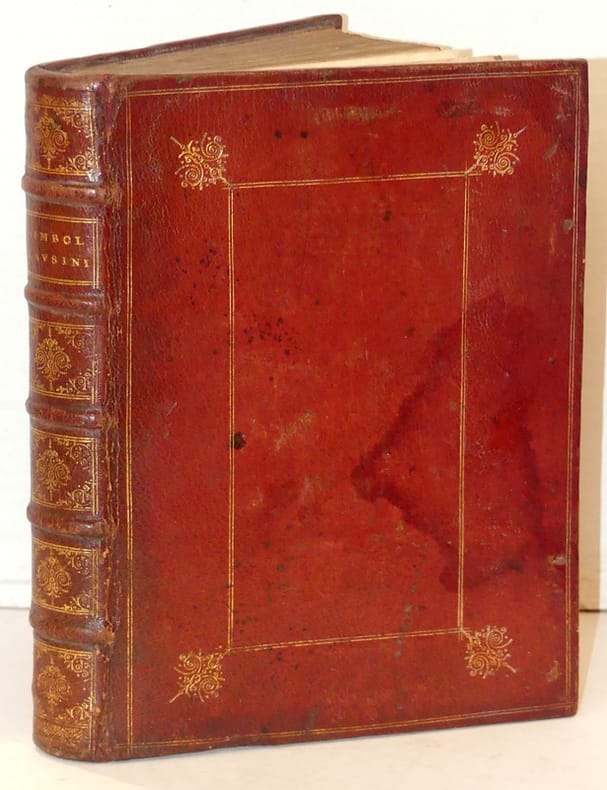
réf. 161288[Paris], Fain, janvier 1811 in-4, 25 pp., texte latin et traduction française en regard, maroquin cerise à long grain, dos lisse orné de filets et fleurons dorés, double encadrement de double filet doré enserrant une guirlande florale sur les plats, tranches dorées, dentelle intérieure, gardes doublées de tabis azur (Bradel l'aîné). Coiffe inférieure un peu frottée, mais très bel exemplaire.
1732In -4°, pp. (20), 82, (2). Marocchino, fregi dorati ai piatti e al dorso. Il conte Enrico Trivelli (1709-1737) fu un turbolento intellettuale e poeta napoletano, con ascendenze abruzzesi. La famiglia era di Vasto, ma trasferitasi temporaneamente a Napoli, dove nacque Enrico, che però compì gli studi nella cittadina abruzzese, dove la famiglia era tornata pochi anni dopo la sua nascita. Tornò a Napoli e poi andò a Roma dove, indebitato e in ristrettezze, si impiegò come copista presso la bottega di Martorello e Martino Dominici. Autore di poesia umoristica, satira, pasquinate, dialoghi irriverenti fra cardinali, sonetti contro la Chiesa cattolica e opere politiche. Si attirò il dispetto delle autorità politiche ed ecclesiastiche, compreso Clemente XII, e fu decapitato davanti a Castel Sant’Angelo, “per composizioni di scritture malediche e sediziose contro il Pontefice della Santa Sede”. Questo trattato è l’unico vero e proprio volume pubblicato dal Trivelli, che nello stesso anno aveva pubblicato anche un opuscolo celebrativo proprio di Clemente XII (la “Canzone del conte Errico Trivelli per l’esaltazione di N.S. Papa Clemente XII”, Firenze, 1732, della quale però non si conoscono copie complete): il trattato in sé è un fitto concentrato di erudizione retorica e letteraria, nel quale spicca l’affollamento di riferimenti, di citazioni e di autori rammentati, sia nell’ambito della composizione in volgare (da Dante, Petrarca, Ariosto, a Castiglione, Sannazzaro, Marino “e i suoi poco giudiziosi seguaci”), della critica (Valla, Muratori), degli autori classici (l’elenco dei citati è impressionante considerata la relativa esiguità del testo; numerose le citazioni composte in caratteri greci). Al di là dell’intento esibitorio condotto nel testo dal giovane Trivelli nei confronti del lettore, sono numerosi gli spunti e i dettagli originali, nell’arco del trattato: un esempio su tutti può essere la segnalazione di un’“improprietà” in un componimento del Sannazzaro (“non condonabile” la definisce T.), la seconda egloga, in cui il poeta pecca di superficialità nel tempo della narrazione, visto che la notte subentra al “mezzo giorno”, secondo Trivelli, “in brevissimo spazio di tempo, in cui appena Montano, ed Uranio avevan potuto far un colloquio di pochi versi”: la parte più originale del libro è proprio quella in cui l’autore, ambizioso e “scapestrato” si dedica a criticare speciosamente alcuni passi di autori, senza risparmiare dalla sua lente Ariosto, Tasso, Ovidio e via dicendo. L’urgenza di ottenere riconoscimento è peraltro confermata dalla collezione di testi che fanno da prefazione alla “Lettera” vera e propria, firmati Matteo Egizio (con lettera e replica dell’autore, a sua volta inclusa nel volume), Tommaso Bugassi, Matteo Piccoli Lettor Celestino. Nobile e letterato di area napoletana, il Francesco Caraffa (sc. Carafa) destinatario della “lettera” aveva pubblicato nel ’30 una poderosa raccolta di “Rime varie… Composte nella sua solitaria dimora nel monte Caprario della baronia di Formicola” (Firenze, 1730). Una nota manoscritta al recto del foglio di guardia anteriore recita “Ad usum Friderici Valignani ex dono Authoris…” Valignani (Chieti, 1700 – Torrevecchia Teatina, 1754) era considerato un letterato piuttosto illustre, che ebbe contatti con molti personaggi importanti dell’epoca (uno su tutti il Muratori, citato moltissime volte nella “Lettera” del Trivelli), e nel 1720 aveva fondato la “Colonia Tegea” dell’Arcadia Romana (accademia nella quale era stato accolto anche Trivelli, a Roma, col nome di Idasio Nivalgo. D’interesse la pagina degli imprimatur, che chiude il volume, e comprende la nota di approvazione del Vico. La nota manoscritta che precede il volume prosegue – da altra mano – “Qui Roma ob satyram in Clementem XII Pont: Max severi percussus fuit frustra ante mortem elegenti carmine eniam petente quam tamen assecutus fuerit a clementis principe si ipsa carmina ad aures opportuno tempore pervenissent.” Count Enrico Trivelli (1709-1737) was a turbulent thinker and poet, from Naples but with ancestry from Abruzzo, in Central Italy. In Rome, where he was living in poverty, emploied himself as a copyst in Dominici Brothers’ typography. Humour and satyric writer, he clashed against Vatican, included pope Clemente XII, and he was beheaded in front of Castel Sant’Angelo because of his “seditious” compositions against the Pope. This work is the only real volume ever published by Trivelli: it’s a dense concentrate of rethorics and erudition, with a large number of captions and mentions of authors from Italian, Latin, Greek and classic tradition. Beyond its meaning to exhibit knowledge, the book contains some original thoughts and interesting details. A manuscript note before the title page: “Ad usum Friderici Valignani ex dono Authoris…” Valignani was a well considered literary man with relations with many contemporary important personalities (as the Muratori, for instance). On “imprimatur” page there’s also the authorization to print by Giovan Battista Vico.
1653réf. 255179Londoni: Excudebat Rogerus Daniel: prostat autem venale apud Joannem Martin & Jacobum Allestrye sub signo Campanae in Cometerio D. Pauli 1653. The first edition of the Septuagint printed in England. 8 1279 1; 186 2 pp. plus terminal blank. 1 vols. 4to signed in 8's 195 x 143mm. Old vellum titled and dated in manuscript on the spine. Terminal leaves slightly soiled two ownership inscriptions on front endsheets and small Lincoln's Inn release/sale stamp vellum a bit handsoiled occasional modest foxing and dusting along upper margins but a very good copy. The first edition of the Septuagint printed in England. 8 1279 1; 186 2 pp. plus terminal blank. 1 vols. 4to signed in 8's 195 x 143mm. The first edition of the Septuagint printed in England with the Scholia the scarce printing in quarto format. The text is derived from the Sixtine text and edited by John Biddle 1615-1662 the Unitarian controversialist who was imprisoned by the Parliamentary Commissioners for his religious views. The SCHOLIA . has a separate title-leaf register and pagination. The same setting was imposed in both quarto and octavo formats the latter with rules separating the columns of text. In regard to institutional representation the edition in quarto is much more uncommon than that in octavo: ESTC locates 4 copies of the quarto printing in North America as opposed to 19 of the octavo printing. Occasionally Daniel's reprint of the New Testament is bound up with the octavo printings to form a complete Bible. Brunet cites that format but notes the sale of a copy on "Gr. Pap." presumably a copy in this format. Over the last 35 years ABPC records sale of one copy in quarto 1999 and four in octavo. ESTC R12599 & R236817; Wing B2718 octavo edition only; Darlow & Moule 4692; Brunet I:863 Excudebat Rogerus Daniel: prostat autem venale apud Joannem Martin & Jacobum Allestrye, sub signo Campanae in Cometerio D. Pauli unknown
1653réf. 255179Londoni: Excudebat Rogerus Daniel: prostat autem venale apud Joannem Martin & Jacobum Allestrye sub signo Campanae in Cometerio D. Pauli 1653. The first edition of the Septuagint printed in England. 8 1279 1; 186 2 pp. plus terminal blank. 1 vols. 4to signed in 8's 195 x 143mm. Old vellum titled and dated in manuscript on the spine. Terminal leaves slightly soiled two ownership inscriptions on front endsheets and small Lincoln's Inn release/sale stamp vellum a bit handsoiled occasional modest foxing and dusting along upper margins but a very good copy. The first edition of the Septuagint printed in England. 8 1279 1; 186 2 pp. plus terminal blank. 1 vols. 4to signed in 8's 195 x 143mm. The first edition of the Septuagint printed in England with the Scholia the scarce printing in quarto format. The text is derived from the Sixtine text and edited by John Biddle 1615-1662 the Unitarian controversialist who was imprisoned by the Parliamentary Commissioners for his religious views. The SCHOLIA . has a separate title-leaf register and pagination. The same setting was imposed in both quarto and octavo formats the latter with rules separating the columns of text. In regard to institutional representation the edition in quarto is much more uncommon than that in octavo: ESTC locates 4 copies of the quarto printing in North America as opposed to 19 of the octavo printing. Occasionally Daniel's reprint of the New Testament is bound up with the octavo printings to form a complete Bible. Brunet cites that format but notes the sale of a copy on "Gr. Pap." presumably a copy in this format. Over the last 35 years ABPC records sale of one copy in quarto 1999 and four in octavo. ESTC R12599 & R236817; Wing B2718 octavo edition only; Darlow & Moule 4692; Brunet I:863 Excudebat Rogerus Daniel: prostat autem venale apud Joannem Martin & Jacobum Allestrye, sub signo Campanae in Cometerio D. Pauli unknown books
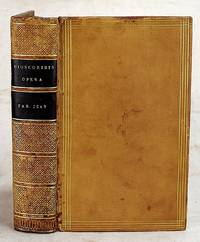
réf. 184115Paris, Nicolas-Eloi Lemaire, 1819-1832 92 vol. in-8, demi-basane blonde, dos lisses ornés de filets dorés, pièces de titre et de tomaison bouteille, tranches mouchetées (reliure de l'époque). Des dos insolés ou frottés, rousseurs abondantes, mais bon exemplaire.
1549réf. 2307040014Paris: Benoit Prevost for P. Haultin; Apud Petrum Haultinum 1549. Hardcover. Good. Pharmacology: Early printing Greek / Roman Medicine Bound In 19th century polished calf. Gilt spine. Triple gilt ruled covers. All edges gilt. Front hinge starting. Blue marbled end sheets. Woodcut printer's device. Printed in double columns in Greek and Latin. 20 392 leaves. Dioscorides's 1st-century A.D. materia medica remained authoritative into the early modern era. Today the Greek physician is considered the father of pharmacology for his work in herbal medicine. Provenance: From the library of Nicolas Yemeniz 1783-1871 one of the great French bibliophiles of the late 19th-century. "Lugdun" bookplate. Refs: Adams D-657; Durling 1135; Wellcome I 1779. Paris: (Benoit Prevost for) P. Haultin; Apud Petrum Haultinum hardcover
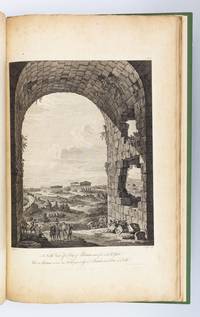
1768réf. ST17496-011London: Chez l'auteur 1768. First Edition in French. 590 x 380 mm. 23 1/4 x 15". 52 2 pp. Modern brown quarter morocco over green linen boards brown morocco label with gilt lettering on smooth spine edges untrimmed. WITH 25 FULL-PAGE ENGRAVED PLATES OF GRECIAN RUINS and seven smaller engraved plates in text including one on dedication page. A Large Paper Copy. Fowler p. 157; Millard British 41; Blackmer 1065; Brunet III 1329. Head of spine partly torn but with no loss contents with not infrequent light marginal soiling though plates uniformly clean other minor imperfections but an excellent copy with greatly generous margins with deep impressions of the type and with strong impressions of the plates. This work is the first significant account of the ancient city of Paestum being in the words of Blackmer "larger and much more complete than any of the previous publications." Located in the Tyrrhenian Sea off the coast of southern Italy Paestum or Poseidonia in Greek was founded by Greek colonists in the sixth century B.C. and still contains beautifully preserved ruins from that period including temples an amphitheater and painted tombs. Abandoned in the Medieval period Paestum wasn't rediscovered by the West until the 18th century with the first modern publication of the site not appearing until 1764 when a suite of plans by G. P. M. Dumont appeared with no text based on the observations of Jacques-Germain Soufflot. As Millard indicates the genesis of the present publication has an extremely complex history we do not even know with certainty who wrote the text but we do know that engraver Thomas Major 1729-99 whom DNB calls "the first great English landscape engraver" was responsible for preparing the plates. Because he had no first-hand knowledge of the site Major relied on images by other artists including Antonio Joli Gaetano Magri Robert Mylne and Jacques-Germain Soufflot. The text was first published in English and then in French the same year. According to Fowler "this work . . . was an important eighteenth-century pioneer contribution to the knowledge of Greek architecture in England"; and Millard tells us that "the book was surprisingly well received by reviewers" in both England and France remaining "the standard reference to Paestum until 'Les Ruines de Paestum ou Posidonia' by C.-M. Delagardette was issued in 1798.". Chez l'auteur unknown
1768réf. ST17496-011London: Chez l'auteur 1768. First Edition in French. 590 x 380 mm. 23 1/4 x 15". 52 2 pp. Modern brown quarter morocco over green linen boards brown morocco label with gilt lettering on smooth spine edges untrimmed. WITH 25 FULL-PAGE ENGRAVED PLATES OF GRECIAN RUINS and seven smaller engraved plates in text including one on dedication page. A Large Paper Copy. Fowler p. 157; Millard British 41; Blackmer 1065; Brunet III 1329. Head of spine partly torn but with no loss contents with not infrequent light marginal soiling though plates uniformly clean other minor imperfections but an excellent copy with greatly generous margins with deep impressions of the type and with strong impressions of the plates. This work is the first significant account of the ancient city of Paestum being in the words of Blackmer "larger and much more complete than any of the previous publications." Located in the Tyrrhenian Sea off the coast of southern Italy Paestum or Poseidonia in Greek was founded by Greek colonists in the sixth century B.C. and still contains beautifully preserved ruins from that period including temples an amphitheater and painted tombs. Abandoned in the Medieval period Paestum wasn't rediscovered by the West until the 18th century with the first modern publication of the site not appearing until 1764 when a suite of plans by G. P. M. Dumont appeared with no text based on the observations of Jacques-Germain Soufflot. As Millard indicates the genesis of the present publication has an extremely complex history we do not even know with certainty who wrote the text but we do know that engraver Thomas Major 1729-99 whom DNB calls "the first great English landscape engraver" was responsible for preparing the plates. Because he had no first-hand knowledge of the site Major relied on images by other artists including Antonio Joli Gaetano Magri Robert Mylne and Jacques-Germain Soufflot. The text was first published in English and then in French the same year. According to Fowler "this work . . . was an important eighteenth-century pioneer contribution to the knowledge of Greek architecture in England"; and Millard tells us that "the book was surprisingly well received by reviewers" in both England and France remaining "the standard reference to Paestum until 'Les Ruines de Paestum ou Posidonia' by C.-M. Delagardette was issued in 1798.". Chez l'auteur unknown books
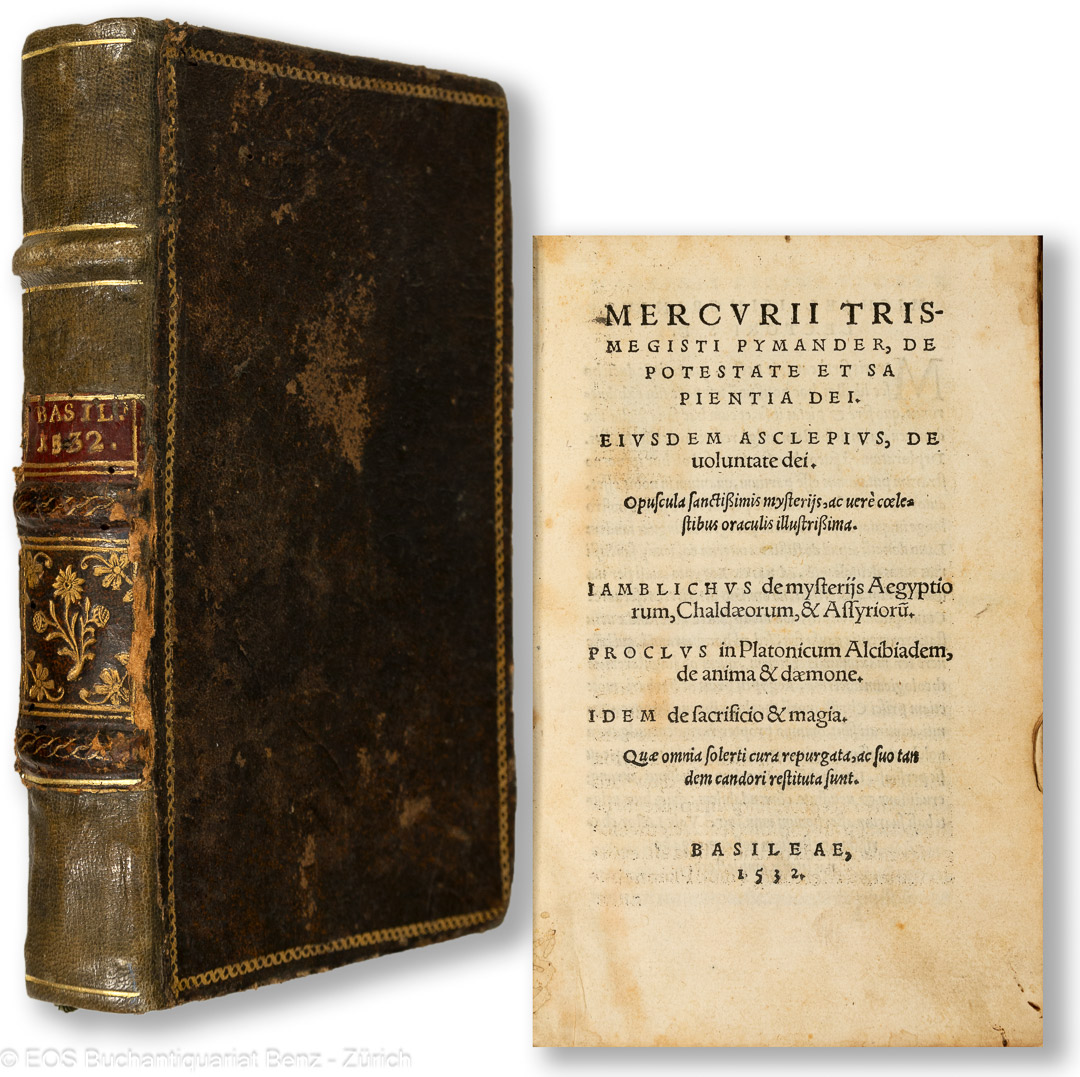
1532réf. 7677CBBasileae, Isengrin, 1532. 8°. 480 (recte 460) S., (2) Bl. Mit 22 Holzschnittinitialen (davon 4 grössere, hübsch illustriert), am Schluss mit Druckermarke. Lederband des 17. Jahrh. mit Rücken- und Deckelvergoldung sowie mit dreiseitigem Goldschnitt (mit Blindprägung).
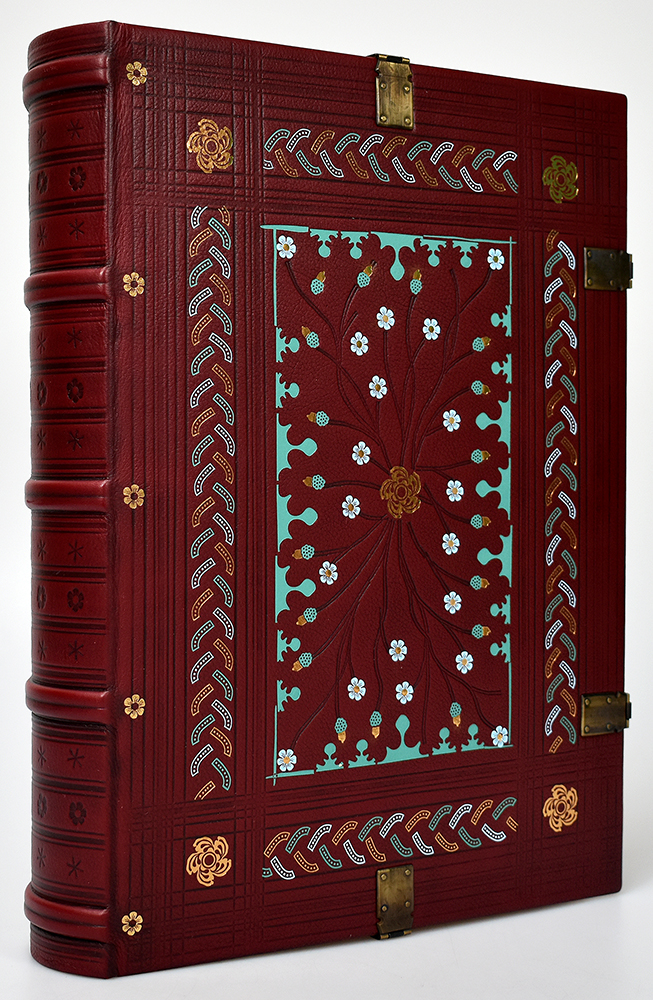
2007réf. 3063FBBerlin, Coron-Verlag, 2007. Faksimile: 27,5 x 37 cm. Kassette: 239 Blatt; 184 Seiten. Faksimile: Roter Original-Lederband auf 5 Bünden mit Streicheisenlinien, goldgeprägten Wirbelrosetten, Farbprägungen und verzierten Messingschließen. Kommentar: Original-Kunstseidenband mit montierter farbiger Deckelillustration und illustrierten Vorsätzen. Beides in Original-Lederkassette mit Acrylglasabdeckung. [10 Warenabbildungen]
1549réf. 378214Lutetia i.e. Paris: Ex officina Roberti Stephani typographi Regii 1549. Second Estienne edition. 528; 361 7 pp. Complete with 2 terminal blanks. Second part has special title page. Woodcut Estienne devices to both titles. 16mo. Later eighteenth-century red morocco tooled gilt frames to boards lettered gilt spine with raised bands gilt tooling to outer and inner board edges marbled endpapers gilt edges. All pages ruled in red ink. Light rubbing to exterior front board nearly separated rear joint cracked chipping to spine ends. Moderate toning to margins light fox-spots to a few leaves partial crack in text block before second title page all leaves secure. Provenance: Douglas Maxwell Moffat bookplate; General Theological Seminary bookplates. Second Estienne edition. 528; 361 7 pp. Complete with 2 terminal blanks. Second part has special title page. Woodcut Estienne devices to both titles. 16mo. Produced in his twin capacities as a skilled printer and a trained classical scholar the Biblical output of Robert Estienne Latinized as Stephanus "had perhaps more influence than that of any other single man in the sixteenth century" Wordsworth in Darlow & Moule. He is known not only for the editions of the Bible that placed him on the Louvain faculty's index of prohibited books but as a publisher of important dictionaries Roman classics and contemporary educational writings. After his flight to Geneva around 1550 he also became an important publisher of the works of John Calvin. The 1546 & 1549 editions of the Greek New Testament are referred to as the "O mirificam" editions after the opening of the Latin preface. They are especially desirable as specimens of the typography of Claude Garamond who was commissioned by the king to design the Greek type used in Estienne's editions of the New Testament. "Estienne felt strongly the propriety of consecrating as it were the Royal Greek types in this way. He evidently felt also some stirrings of ambition as an editor; might not the resources of the King's Library now at his disposal enable him to produce a better text than that of Erasmus especially as he could use also the Complutensian text" Armstrong. Estienne's editorial ambitions culminated in the folio edition of 1550 which included a full critical apparatus but still reveal themselves in the texts of the O mirificam editions. Like the first edition the text of the 1549 edition largely agrees with Erasmus but it indeed incorporates the Complutensian text and also makes a number of independent readings with minor changes from the 1546 edition Darlow & Moule. An important and beautifully printed work. USTC 150379; Darlowe & Moule 4620; Renouard 73 1; Schreiber 102; Adams B1660. Armstrong Robert Estienne Royal Printer 136 Ex officina Roberti Stephani typographi Regii unknown
1549réf. 378214Lutetia i.e. Paris: Ex officina Roberti Stephani typographi Regii 1549. Second Estienne edition. 528; 361 7 pp. Complete with 2 terminal blanks. Second part has special title page. Woodcut Estienne devices to both titles. 16mo. Later eighteenth-century red morocco tooled gilt frames to boards lettered gilt spine with raised bands gilt tooling to outer and inner board edges marbled endpapers gilt edges. All pages ruled in red ink. Light rubbing to exterior front board nearly separated rear joint cracked chipping to spine ends. Moderate toning to margins light fox-spots to a few leaves partial crack in text block before second title page all leaves secure. Provenance: Douglas Maxwell Moffat bookplate; General Theological Seminary bookplates. Second Estienne edition. 528; 361 7 pp. Complete with 2 terminal blanks. Second part has special title page. Woodcut Estienne devices to both titles. 16mo. Produced in his twin capacities as a skilled printer and a trained classical scholar the Biblical output of Robert Estienne Latinized as Stephanus "had perhaps more influence than that of any other single man in the sixteenth century" Wordsworth in Darlow & Moule. He is known not only for the editions of the Bible that placed him on the Louvain faculty's index of prohibited books but as a publisher of important dictionaries Roman classics and contemporary educational writings. After his flight to Geneva around 1550 he also became an important publisher of the works of John Calvin. The 1546 & 1549 editions of the Greek New Testament are referred to as the "O mirificam" editions after the opening of the Latin preface. They are especially desirable as specimens of the typography of Claude Garamond who was commissioned by the king to design the Greek type used in Estienne's editions of the New Testament. "Estienne felt strongly the propriety of consecrating as it were the Royal Greek types in this way. He evidently felt also some stirrings of ambition as an editor; might not the resources of the King's Library now at his disposal enable him to produce a better text than that of Erasmus especially as he could use also the Complutensian text" Armstrong. Estienne's editorial ambitions culminated in the folio edition of 1550 which included a full critical apparatus but still reveal themselves in the texts of the O mirificam editions. Like the first edition the text of the 1549 edition largely agrees with Erasmus but it indeed incorporates the Complutensian text and also makes a number of independent readings with minor changes from the 1546 edition Darlow & Moule. An important and beautifully printed work. USTC 150379; Darlowe & Moule 4620; Renouard 73 1; Schreiber 102; Adams B1660. Armstrong Robert Estienne Royal Printer 136 Ex officina Roberti Stephani typographi Regii unknown books
1701réf. AUB-4498A Bruxelles, chez Eugène Henry Frick 1701. 5 volumes reliés, reliures pleine peau d'époque, dos ornés avec titres, petits format, 1428 pages avec planches et notes + avertissement, préface de l'auteur, tables des chapitres et table des matières + 913 pages avec notes et planches + avertissement, approbation, extrait du privilège, lavie de Joseph écrite par lui-même (59 p.), préface de Joseph, tables des chapitres et table des matières. Contient: la réponse de Joseph à ce qu'Appion avait écrit contre son histoire des juifs touchant l'antiquité de leur race. Le martyre des Machabées. La relation faite par Philon de l'ambassade dont il était le chef envoyée par les juifs d'Alexandrie vers l'Empereur Caïus Caligula.
1935réf. 4056Lausanne, Gonin, 1935. In-folio en feuilles de 122-[2] pages, couverture blanche rempliée ornée d’une composition de Maillol, sous chemise demi-vélin blanc et étui cartonné. Belle condition.
réf. 054900Paris Chez Saillant et Nyon. Chez Panckoucke 1774 in 4 (25,5x19) 1 volume reliure demi basane fauve de l'époque, dos à nerfs orné de caissons dorés, pièce de titre de cuir beige, 52 planches ou cartes gravées dépliantes. Et successivement exécutés par le Commodore Byron, le Capitaine Carteret, le Capitaine Wallis, et le Capitaine Cook, dans les vaisseaux le Dauphin, le Swallow et l'Endeavour. Rédigée d'après les journaux tenus par les différents commandants & les papiers de M. Banks, Par J. Hawkesworth. Sir Joseph Banks, Londres 1743-1820, aristocrate et naturaliste britannique, participa au premier voyage de James Cook autour du monde (1768-1771). Atlas seul (collationné complet). Bel exemplaire ( Photographies sur demande / We can send pictures of this book on simple request )
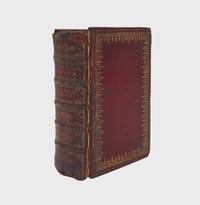
réf. 6532Paris, Simon Piget, 1647. 2 parties en un volume in-4 (225 x 164 mm), 14 ff. n. ch., 230 p.- pp. 231-641, 41 pp. n. ch. Maroquin rouge à la Du Seuil, avec larges fleurons en écoinçons et double filet doré encadrant les plats, dos à nerfs orné, tranches dorées, le feuillet e4 et le dernier feuillet, tous deux blancs, sont en déficit, mouillure sur le premier plat de reliure et mouillure angulaire sur les 8 premiers feuillets, petites rousseurs éparses (reliure de l’époque).
1668réf. 002733Londini (Londres), Jacobum Allestry, 1668
1532réf. 7677CBBasileae, Isengrin, 1532. 8°. 480 (recte 460) S., (2) Bl. Mit 22 Holzschnittinitialen (davon 4 grössere, hübsch illustriert), am Schluss mit Druckermarke. Lederband des 17. Jahrh. mit Rücken- und Deckelvergoldung sowie mit dreiseitigem Goldschnitt (mit Blindprägung). + Wichtig: Für unsere Kunden in der EU erfolgt der Versand alle 14 Tage verzollt ab Deutschland / Postbank-Konto in Deutschland vorhanden +, 7677CB|7677CB_2|7677CB_3 [3 Warenabbildungen]
1536In-8°; I) cc. (172) grande marca tipografica incisa su legno all’ultima pagina non numerata; il frontespizio è in greco e latino, tutto il testo in greco. II) pp. 132, (4) con un legno all’ultima p. non num., pp. 105, (7 di cui 2 cc. bianche) un legno all’ultima p. non num.; capilettera figurati incisi su legno. la prima parte è in greco la seconda in latino. Mezza pelle verde con tassello e titolo in oro al dorso.
1584réf. 48696Antverpiae: Ex officina Christophori Plantini 1584. Folio 6 parts in 1; pp. 8 186 2; 128; collating: ¶ⴠA-Yâ´ Zâ¶; Aa-Qqâ´; woodcut device on title page; bound with: Biblica Hebraica Antverpiae 1584 Hebrew-Latin Old Testament Greek-Latin Apocrypha etc. in various pagings from back of book viz.: pp. 20 183 1; 283 1; 84; 203 1; collating from the back: †ⴠ‡ⶠA-OⶠPâ¸; a-xⶠy-z⸠aa-ggⶠAA-RRâ¶; in all 551 leaves; text in double column in Hebrew Greek and Latin; early 18th century calf blindstamped panels on covers red morocco label on spine; covers with dampstains corners bumped and showing small cracks starting at the extremities of the joints occasional light minor dampstaining but in all a very good and reasonably sound copy. Terminal flyleaf with elaborately penned inscription: "Isaac Sharpe flourishes dono Patris 1719." On the rear pastedown is Sharpe's early "Coll. Mag." bookplate dated April 4 1683 - possibly the date of his matriculation at Magdalene College Cambridge. The Greek N.T. starts at the beginning of the volume and the Hebrew O.T. at the end with the Greek Apocrypha of 128 pages between them. Each Testament has its own title page and the mention of the Apocrypha on both suggests that it was intended to form an appendix to either of the Testaments if they were issued separately. See Darlow & Moule 4645 and 5106: "This forms the latter half of the complete Bible in the original languages with an interlinear Latin translation; the whole reprinted from the Antwerp polyglot"; Voet A2 p. 320. Ex officina Christophori Plantini unknown
1584réf. 48696Antverpiae: Ex officina Christophori Plantini 1584. Folio 6 parts in 1; pp. 8 186 2; 128; collating: ¶ⴠA-Yâ´ Zâ¶; Aa-Qqâ´; woodcut device on title page; bound with: Biblica Hebraica Antverpiae 1584 Hebrew-Latin Old Testament Greek-Latin Apocrypha etc. in various pagings from back of book viz.: pp. 20 183 1; 283 1; 84; 203 1; collating from the back: †ⴠ‡ⶠA-OⶠPâ¸; a-xⶠy-z⸠aa-ggⶠAA-RRâ¶; in all 551 leaves; text in double column in Hebrew Greek and Latin; early 18th century calf blindstamped panels on covers red morocco label on spine; covers with dampstains corners bumped and showing small cracks starting at the extremities of the joints occasional light minor dampstaining but in all a very good and reasonably sound copy. Terminal flyleaf with elaborately penned inscription: "Isaac Sharpe flourishes dono Patris 1719." On the rear pastedown is Sharpe's early "Coll. Mag." bookplate dated April 4 1683 - possibly the date of his matriculation at Magdalene College Cambridge. The Greek N.T. starts at the beginning of the volume and the Hebrew O.T. at the end with the Greek Apocrypha of 128 pages between them. Each Testament has its own title page and the mention of the Apocrypha on both suggests that it was intended to form an appendix to either of the Testaments if they were issued separately. See Darlow & Moule 4645 and 5106: "This forms the latter half of the complete Bible in the original languages with an interlinear Latin translation; the whole reprinted from the Antwerp polyglot"; Voet A2 p. 320. Ex officina Christophori Plantini unknown books
1765réf. 12424ex officina Luchtmanniana Lvgdvni Batavorvm 1765. E Kaine Diatheke. Novum Testamentum in quo tum selecti versiculi 1900 quibus omnes Novi Testamenti voces continentur asteriscis notantur; tum omnes & singulæ voces semel vel sæpius occurrentes peculiari nota distinguuntur. Auctore Johanne Leusden professore. frontispiece 4 504 p. Contemporary Vellum gilt-edged and gauffered text block 12°. H. 11 x W. 6 x D. 3 cm. A small and charming copy of the New Testament in Modern Greek. The binding is printed with various figures flowers leaves and ornaments and beautifully hand-coloured with various colours and finished with gold. ex officina Luchtmanniana, Lvgdvni Batavorvm hardcover
1641In-8°, (24cc), 400pp, testo greco e latino a fronte su colonne, frontespizio con marca tipografica (una sirena), iniziali e finalini xilografici, legatura in piena pergamena rigida coeva, titolo su tassello al dorso. Dedica in greco a Urbano VIII. In-8°, (24cc), 400pp, Latin and Greek two-column text, title page with printer’s mark (a siren), wood engraved initials and tails, full vellum contemporary binding, title on label at the spine.
1938réf. 4055Paris, Les Cent-Une, 1938. In-4 en feuilles de 309-[8] pages, couverture de vélin blanc à rabats imprimé en rouge, sous chemise demi-vélin blanc et étui carton. Etui un peu taché, pour le reste en belle condition.
réf. 155470Paris, Goupil & Cie Editeurs, no date (1868)