22.097 risultati
1889rif. 34983London: John C. Nimmo 1889. First edition. Cloth. Near fine copies; owner's book plate on front pastedown of Vol. I. xxviii 351 pp.; xii 343 pp. Illus. with 25 color plates and 25 b/w plates. Sm. 4to. No. 667 of 875 copies with duplicate plates one on plate paper proofs before letters and the other on Whatman paper with title and colored by hand. Includes Boston Daily newspaper ad clipping dated Dec. 6 1889. John C. Nimmo hardcover books
1889rif. 189273London: Nimmo 1889. Hardcover. F Covers have general wear corner/edge damage discoloration. Bookblocks have age toning and edge damage to pages. Interior bindings of both volumes loose but all pages still attached. Brown boards with gilt lettering on spine and decorative elements on front cover. 2 volumes : illustrations some color Vol I 352 pgs. Vol II 343 pgs. First volumes has loose plastic cover. Includes bibliographical references and indexes. Nimmo hardcover books
1978rif. 155749New York: Collector's Editions 1978. Reprint of the 1880 edition. VG ex artlibrary copy with small label at base of spine cardpocket and barcode sticker on rear free endpaper. All that being said the set has great shelf appeal and appears unused. Light reddish cloth. 2 Volumes profusely illustrated in bw with line engravings. A high-qality reprint of the 1880 edition. Collector's Editions hardcover books
1975rif. 004508Playboy Press 1975. Book. Fine. Cloth. Presentation & Association. First Edition. 8vo - over 7¾" - 9¾" tall. Fine copy in like jacket.Presentation & Association."JR Hurley Jimmy the Greek."Hurley is a Business Author.Fresh copy. Playboy Press Hardcover books
1503rif. 4503Venice: In Aedibus Aldi Mense Novembri 1503. FIRST ALDINE EDITION the first ed. of the text was published in 1494. Also includes the EDITIO PRINCEPS of the 6th-century Byzantine poem “In Thermas Pythias et aquarum miracula”on the warm baths of Pythia in Bithynia attributed to Paulos Silentiarius. Hardcover. Fine. Text in Greek type 4:79 first part of title register and colophon in roman 10:82. Bound in a contemporary Greek-style binding see below. A tall copy contents in very good condition with scattered ink stains mostly light and minor marks dampstain at head of some gatherings and in a few gutters; half of leaf L2 supplied from another copy text-block slightly rounded at corners minor marginal worm in a few gatherings not affecting the text. Woodcut Aldine device on title and final leaf. With scattered contemporary annotations additions and corrections longer ones on C6 E6v E8r I8v GG4r and HH3r those on C6 with added verses of Theocritus concerning Aphrodite “he kupris ou pandemos”. This copy is remarkable for its Greek-style “alla greca” “à la grecque” binding very worn board edges damaged slight losses at head and tail of spine; lacking straps but remnants preserved inside both boards and clasps one clasp peg preserved. Both end-bands are intact. The Greek-Style Binding: “The book was undoubtedly bound by a Greek bookbinder in the genuine Greek style possibly coming from Crete or trained in the tradition of Cretan bookbinding who was probably working in the Veneto but not necessarily Venice i.e. perhaps Padua as the university there would have provided a good market for such bindings and that the book was certainly tooled in Italy making the supposition that the binder was working in the Veneto more likely. The worn condition of the book makes it very difficult to get an accurate impression of the book as it looked when new but it is not finished with the precision of the best work in Venice of the time though the cutting of the grooves in the edges of the boards and working of the endbands are both very nicely executed. It is always possible therefore that the book was bound up the point of being sewn in boards and with endbands by a very competent Greek binder it was work that fell outside the experience of Italian binders at the time and that the covering and decoration was done afterwards possibly by another not necessarily Greek binder. The tools have not been identified but there are some structural features that might yet lead to a more precise provenance.”Nicholas Pickwoad “From archival data cited by De Marinis 1960 vol. 1 pp. 31ff.; vol. 2 p. 45 it is clear that in Italy the term 'alla greca' was in use by the second half of the fifteenth century: documents dating from 1455 to 1499 clearly distinguish bindings with 'une serratura greca' 'libri ala grechessa' and 'legate alla greca' from those of the kind 'ligatum more latino'. A bill made out for four bindings of either type 'doy in grecho e doy non grechi' proves that the same workshop could handle either technique; the specification that 'sei volumi greci should be bound ala grecha' attests the early humanists' traditional preference to have classical Greek texts bound accordingly. In his chapter on 'alla greca' bindings De Marinis 1960 vol. 3 pp. 36-49 lists 225 examples from Italy of the fifteenth and sixteenth centuries c.15 per cent and 85 per cent respectively; Venice and Rome are the most frequent places of origin. The 'alla greca' vogue had equally caught on in France where the royal libraries of Francis I and Henri II at Fontainebleau assembled a rich collection of no less than 600 Greek works bound 'alla greca' now in BNF A. Hobson 1989 pp. 172-212. Humanist collectors far and wide followed the fashion: members of the Fugger family in Augsburg had their Greek books bound in Paris Venice and also in Germany and Cardinal Granvelle even if he knew no Greek made sure that the Greek texts received an appropriate binding probably from Italy; see Piquard 1942; 1951.”Szirmai The Archaeology of Medieval Bookbinding “The fashion for Greek-style bindings amongst the wealthier humanist scholars and book collectors of Western Europe appeared first in Italy in the second half of the fifteenth century. The fall of Constantinople to the Ottoman Turks in 1453 led to the arrival in western European countries of increasing numbers of Greek scholars and scribes and with them their books. Famous libraries such as that of Cardinal Bessarion 1403-1472 became available to western scholars and as the Italian binding historian Tommaso de Marinis has claimed the association between Greek texts and ‘alla greca’ bindings became firmly fixed in the Italian humanist’s mind. The demand for texts was such that there was an active trade in copying Greek manuscripts mostly in Italy but even as far afield as England where the scribes Joannis Serbopoulos and Emmanuel of Constantinople worked together in the last quarter of the fifteenth century. It would seem that a high proportion of these books followed in the last quarter of the fifteenth century by books printed in Greek were bound in the Greek style. This phenomenon is in part explained by the highly recognisable differences between Greek and western bindings which are immediately evident to the most casual observer. “The differences may be simply summarised as the smooth spines which result from unsupported sewing techniques as opposed to raised bands across the spine created by raised sewing supports; wooden boards which are the same size as the textblocks often with grooved edges; endbands which therefore project beyond the height of the boards and which are sewn to the head and tail edges of the boards; clasps formed by metal rings attached to the back board by double or triple interlaced straps which fasten onto pins which project from the edges of the front board. The placing of the fastenings at head and tail is often eccentric in that they are in many bindings located closer to the foredge than the spine. The spines are often heavily rounded but the foredges are cut square flush with the board edges. This results in foredge margins of different widths throughout the book. All or any of these features might be taken up by the binders who made versions of these books in western Europe depending on how close they came to Greek originals.”Pickwoad “How Greek is Greek Western European Imitations of Greek-Style Bindings” in Vivlioamphiastis 3 ed. Niki Tsironis 2008. The “Planudean Anthology” was written by the Byzantine scholar Maximus Planudes. It was the first collection of Greek epigrams to be printed 1494 and the only one known until the Palatine Anthology emerged from obscurity 1606 to supersede it. Planudes’ work is based upon the compilation of Constantine Cephalas Konstantanos Kephalas a Byzantine schoolmaster who in about the year 900 excerpted all the major ancient manuscript collections of epigrams. Planudes lived during the reigns of Michael VIII Palaiologus and Andronikos II Palaiologus. He was born at Nicodemia in 1260 but the greater part of his life was spent in Constantinople where as a monk he devoted himself to study and teaching. On entering the monastery he changed his original name Manuel to Maximus. Planudes’ anthology of Greek epigrams is neatly arranged in seven books with complex subdivisions. It is not known what sources he used: certainly the collection of Cephalas probably two others closely resembling the Palatine Anthology… He included nearly 400 epigrams which are not in the Palatine manuscript; in modern editions these are printed as book 16 of the Greek Anthology. The result called the Planudean Anthology has survived in Planudes’ own autograph now in Venice dated 1301 perhaps a mistake for 1299: it was the first collection of Greek epigrams to be printed 1494 and the only one known until the palatine Anthology emerged from obscurity 1606 to supersede it.”. In Aedibus Aldi, Mense Novembri hardcover books
1985rif. 294932Washington DC: Dumbarton Oaks 1985. Second edition. Hard Cover. Near Fine binding/Near Fine dust jacket. Previous owner’s name and date on the front free end paper; otherwise a copy without any marks. Introductions in English. Presented with the Greek on the verso and the English on the recto of each page. The dust jacket is bright not proce clipped and protected in anew mylar cover. Near Fine binding / Near Fine dust jacket. Dumbarton Oaks unknown books
rif. 91053hardcover. Color frontis. many color illustrations thick small 4to dec. cloth t.e.g.; small stain on spine. London: A. & C. Black 1903. unknown books
1903rif. 89544London: A & C Black 1903. hardcover. very good. Cruikshank. Color frontispiece numerous color plates tissue guards. 326 pages. Small thick 4to 3/4 red morocco gilt-decorated spine raised bands t.e.g. front hinge repaired top of spine repaired. London: A. & C. Black 1903. Very good. A & C Black unknown books
1694rif. 20082Trajecti ad Rhenum: Ex Officini Francisci Halma 1694. First Tollius edition. 4to pp. 28 408 12. Engraved title-page; Printed with Greek and Latin texts on facing pages woodcut printer's device ornaments and initials full vellum backed marble boards with leather label. Upper margin along the hinge shows a water mark in the preliminary matter o/w a very nice clean copy. Longinus was a Greek Platonic philosopher and rhetorician of the 3rd century AD. He studied in Alexandria and taught in Athens. He was beheaded by Emperor Aurelian in 273 A.D. but is remembered for his Philosophical Discourses On First Principles On the Chief End. His authorship of the present work is desputed. Praised by Dibdin and Gibbon this edition of these commentaries on The Sublime by the anonymous author known as Longinus "is one of the greatest of all critical acheievements. An illuminating dissertation on style accompanied by many penetrating judgements as well as suggestive pronouncements on critical standards and principles the treatise is unique in its interpretation of the classical spirit its compelling enthusiasms its sanity its freshness and its unerring insights into the essentials of art."OCD. Ex Officini Francisci Halma unknown books
1900rif. 117379London: John C. Nimmo 1900. Hardcover. Good. Good Hardcover. Book has minor fraying of spine ends and cover corners fading spine and covers browning of covers and foredges light brown spotting endpapers and a few pages nameplate inside front cover slight cracking of hinges starting. John C. Nimmo hardcover books
rif. 93542New York: Collectors Editions Ltd. n.d. cloth. Rowlandson Thomas. large 4to. cloth. xvi378; xii454 pages. Two volumes. Reprint of the scarce 1880 first edition. A near fine set. A year by year chronology of Rowlandson's career. Well illustrated with approximately 400 illustrations. Indexed. Collectors Editions Ltd.) unknown books
1880rif. 1389763London: Chatto and Windus 1880. First Edition. Hardcover. Quartos two volumes. In Good condition. Quarter bound in red leather with gilt titling and ornamentation to spines and red cloth covered boards. Bindings with light plus scuffing shelf wear and rubbing to heads and tails of spines joints and edges and corners of boards. Light plus bumping and fraying to corners of boards; light plus shelf wear and marking to surfaces of boards. Several small areas of white staining to spine of Vol. 1. Front board of Vol. 2 significantly stained not impacting text block. Text blocks lightly age tones with scattered foxing. Ink annotations scattered throughout text blocks. From the library of Ronald Paulson leading expert on William Hogarth and former professor of English literature at Yale and Johns Hopkins. Oversized set. Additional postage necessary for expedited/international orders. Economy International shipping unavailable due to size/weight restrictions. For international/expedited customers please inquire for rates. Shelved in Room A Oversized. 1389763. Special Collections. Chatto and Windus hardcover books
1986rif. 26382Paris: Les Editions du Cerf 1986. First edition. Softcover. vg. Octavo. 236 8pp. Original printed wrappers with printer's device on front cover. Fascinating work being a treatise against Hierocles a Roman governor and Neoplatonic philosopher in which Eusebius combated the former's glorification of Apollonius of Tyana. Minor age-toning on spine. Text in French. Wrappers in overall very good interior in fine condition. About the author: Eusebius of Caesarea c. 263–339 AD called Eusebius Pamphili became the Bishop of Caesarea in Palestine about the year 314. Eusebius historian exegete and polemicist is one of the more renowned Church Fathers. He with Pamphilus was a scholar of the Biblical canon. He wrote "Demonstrations of the Gospel" "Preparations for the Gospel" and "On Discrepancies between the Gospels" studies of the Biblical text. As "Father of Church History" he produced the "Ecclesiastical History" "On the Life of Pamphilus" the "Chronicle" and "On the Martyrs. Les Editions du Cerf unknown books
2000rif. 22003NY: Continuum. Fine in Near Fine dust jacket. 2000. Hardcover. 0826412262 . Foreword by Jane Goodall. First edition. Fine in a near fine dust jacket. . Continuum hardcover books
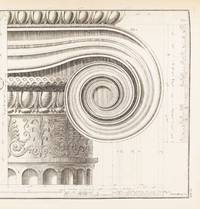
1758rif. ST17496-017Paris: H. L. Guerin & L. F. Delatour Jean-Luc Nyon and Jean Neaulme 1758. FIRST EDITION. 608 x 445 mm. 24 x 17". xiv 56; 2 vi 28 pp. Two parts in one volume. Later early 20th century quarter sheep over marbled boards raised bands compartments gilt reddish-brown leather label with gilt lettering all edges untrimmed. With large woodcut vignette on title and 60 ENGRAVED PLATES by Le Bas Littret de Montigny Neufforge and Patte after Le Roy. Brunet III 103; Millard French 101. A little rubbing to corners and head and tail of spine leather a bit faded chafed and freckled in places but the binding entirely sound and still quite pleasing; very faint diagonal crease at lower corner of many leaves a handful of plates slightly browned one more noticeably so other minor issues but quite a fine copy internally--the vast majority of the contents clean and bright with deep impressions of the text with the engravings richly impressed and with vast margins. With engravings by the some of the most esteemed artists of the day this imposing work contains beautiful depictions of Greek ruins and monuments that proved extremely influential to the development of French Neoclassical architecture. The text is divided into two parts the first covering the history of various monuments and Le Roy's thoughts on the principles of architecture and the second primarily containing a discussion of the orders of columns--particularly the Doric order--as well as several reconstructions of ruined temples. According to Millard this work "breaks new ground in providing a synthesis of archaeological findings with a body of architectural theory developed and expanded from the important controversy of Claude Perrault and Francois Blondel i.e. quarrel of the Ancients and the Moderns. . . . Perhaps most important Le Roy's treatise provides the theoretical framework and many of the actual models for French neoclassical architecture." Although "Les Ruines" came under some criticism especially by British rivals James Stuart and Nicholas Revett it nevertheless "made a strong public impact" in the words of the Dictionary of Art Historians and "greatly influenced the architects of the day particularly Jacques-Denis Antoine Jean-Arnaud Raymond Alexandre-Théodore Brongniart and François-Joseph Bélanger." This was in no small part due to the exquisite plates that included many picturesque views engraved by talented artists such as Louis-Joseph Le Lorrain Pierre-Charles Le Mettay Claude-Antoine Littret de Montigny and Jacques Philippe Le Bas among others. The son of the horologer to Louis XV Julien-David Le Roy 1724-1803 was an architect art historian and archaeologist. He was a protégé of Jacques-François Blondel 1705-74 whom he later succeeded as professor at the Académie Royale d'Architecture. After winning the Prix de Rome in 1754 Le Roy spent time in Greece studying and measuring ancient architecture and developing many of the theories that he would eventually publish in the present work. H. L. Guerin & L. F. Delatour, Jean-Luc Nyon, and Jean Neaulme unknown books
1874rif. 1383813London: Kegan Paul Trench Trubner and Company Limited 1874. Hardcover. Quarto viii ix xii xx xxiv 272 pages. In Good plus condition. Bound in the publisher's green cloth bearing gilt lettering to the spine. Boards have moderate wear including slight rubbing to the joint/edges bumped corners and mild sunning to the spine. Blind-stamped borders to the front/rear and gilt illustration to the front. Slight cocking to the spine. Shaken binding. Text block has slight age toning/soiling to the edges. Cracking to the front hinge. Some offsetting to the end papers. Frontispiece. Slight foxing and minor pencil interiorly. Undated but probably published in 1874. Illustrated. Oversized books. Additional postage necessary for expedited/international orders. Economy International shipping unavailable due to size/weight restrictions. For international/expedited customers please inquire for rates. NOTE: Shelved in Locked Annex Area Netdesk Column QD ND-QD. 1383813. FP New Rockville Stock. Kegan Paul, Trench, Trubner and Company Limited hardcover books
1886rif. 008070London: Chatto and Windus 1886. First Edition. Full Morocco. Custom cloth clamshell box. Fine. Extra-illustrated large paper and a special Bayntun full brown crushed morocco onlay binding featuring a centerpiece of the Palace of Westminster. No. 85 of 111 large paper editions. With a gorgeous Bayntun onlay binding featuring a centerpiece of the Palace of Westminster the current Parliament building. 4to. 26 by 21 cm. xxvii 1 403 1 pp. Including folding frontis nine of the additional plates are hand-colored four of which are choice Gillray prints. Many of the plates are double paged and a few are folding. Regarding the binding all edges gilt. Gilt ruled borders on boards -- six evenly spaced lines with jutting squared corners suggestive of a fortification design. These within a simple outer ruled border close to the edge. Five raised bands with compartments decorated with ruled rectangles and corner dots. Turn-ins with corner abstracted floral decoration. Attractive armorial bookplate of Colonel Sir Harold Mitchell 1900-1983 businessman and politician who was at one point vice chairman of the Conservative Party under Churchill. He was created a baronet in 1945. The title became extinct with his death. Clamshell box has stains especially heavy on one of the sides and one spine edge is worn through with its cloth entirely lifted and rolling away with frayed threads apparent and the underlying card exposed. Still this box retains structural integrity and has clearly helped preserve the pristine quality of the book's extradordinary binding. Photo File. Chatto and Windus unknown books
1985rif. 115649Mexico City: El Colegio de México 1985. Paperback. 272p. one of 3000 copies text in Spanish very good first edition trade paperback in pictorial wraps. With much on immigration economic integration etc. El Colegio de México paperback books
1983rif. 18981Los Angeles: UCLA Chicano Studies Research Center Publications and UCLA Latin American Center Publications 1983. xii 490p. illustrated with graphs and tables very good first edition trade paperback in wraps. Includes sections on migrants and on Chicano identity. Chicano Research Center Anthology #3 Latin American studies #56. UCLA Chicano Studies Research Center Publications and UCLA Latin American Center Publications unknown books
1981rif. 51169NY:: Henry Holt. Near Fine in Fine dust jacket. 1981. Hardcover. 0030567041 . First printing. Previous owner's name on front free endpaper else fine in a fine dust jacket. . Henry Holt, hardcover books
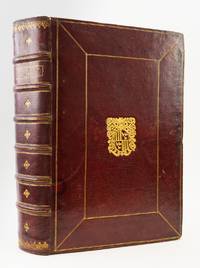
1597rif. ST19351Frankfurt: heirs of Andreas Wechel Claude de Marne & Johann Aubry 1597. Fourth Complete Greek Bible printed in Germany. 388 x 258 mm. 15 1/8 x 10 1/8". 4 p.l. 1 blank leaf attached to backing of folio :4 1098 2 pp. VERY STATELY 17TH CENTURY RED MOROCCO covers with mitered gilt frame gilt supralibros of Baderon de Maussac Olivier 745 at center raised bands spine panels with gilt flower gilt lettering all edges gilt. Printer's Pegasus device on title and final page. Front flyleaf with ink inscription recording the purchase on 24 February 1680 at Toulouse for 24 livres. Darlow & Moule 4653; VD16 B 2578; Adams B-979. ◆Three minute dents to front board a hint of wear to bands and corners isolated faint foxing blank recto of frontispiece leaf and blank verso of final leaf with faint blue shadow from endpapers but all of these quite trivial and otherwise A BEAUTIFUL COPY--fresh clean and bright internally with very wide margins and strong impressions of the plates and in a lustrous binding showing few signs of use. This handsome and remarkably well-preserved tall folio Greek Bible from a distinguished German printing firm comes in a shiny armorial binding with aristocratic French provenance. Darlow & Moule assigns the editing of this issue to Franciscus Junius François du Jon or Friedrich Sylburg noting that the Old Testament "is based on the Basel edition of 1545 . . . with correction from the Complutensian text and useful notes." The New Testament follows the text of Robert Estienne's 1568-69 edition. The Wechel family had a long tradition of humanist printing with an emphasis on Greek texts beginning with the press of Christian Wechel fl. 1520-54 in Paris and continuing after his son Andreas d. 1581 fled to Frankfurt to escape the persecution of Protestants in France. Andreas' descendants carried on the business through the first quarter of the 17th century. Olivier's "Reliures Armoriées Françaises" 1926 pl. 745 offers three possible attributions for the supralibros here all from the Languedoc region during the first half of the 17th century: Jean de Baderson; Jacques de Baderon seigneur de Maussac a member of the Parlement of Toulouse; and Jacques de Baderon de Maussac seigneur de Montagnac et de Corneillan and commandant of the city of Collioure. The inscription on the flyleaf here indicating that the book was purchased in Toulouse perhaps supports the case for the member of the Parlement in that city. The 24 livres paid for our imposing volume in 1680 would have represented as much as two months' wages for a worker in the region of its purchase. heirs of Andreas Wechel, Claude de Marne & Johann Aubry unknown books
rif. B106084-2London 1908. xvi 242pp. Frontis. 242 illus. Orig. boards 1/4 cloth. London, 1908. hardcover books
1566rif. D14106Geneva: Henricus Stephanus 1566. Hardcover. Very Good. Early-19th century red morocco boards and spine ruled in gilt gilt-stamped lettering in second spine compartment 5 raised bands; 4to 257x158m; pp. 4 539 33 index with woodcut printer's device on title-page. Spine and edges of boards somewhat darkened; binding a bit scuffed. Text block is lovely. Provenance: Arthur Machen acquired at the Anderson Auction Company December 1903. Estienne's important edition of the Greek Anthology which provided a far superior text than its predecessors. For this edition Henri devised a system of diacritical marks peculiar to himself notae sibi peculiares to denote various classes of proper nouns and also employs in the margins the symbol of the hand with pointing finger to call attention to gnomic expressions in the text Schreiber. Adams A-1187; Schreiber 159. Henricus Stephanus hardcover books
rif. 2507Charlottesville Virginia: The Daughters 2014. . Oblong 12mo 4 1/2 x 5 1/2 inches; spiral-bound with royal-blue spiral at top edge. Superb collection of really mouth-watering Greek recipes handed down in the Greek community and going directly back over 100 years to the Old Country. Favorites include Achladakia Baklava Finikia Galatoboure Kokoulourakia and Paximadia. Also included an awesome rice pudding and Braided Sweet Bread Tsoureki. All profits go to the Daughters of Penelope chapter at the Transfiguration Greek Orthodox Church in Charlottesville Virginia. Kal reksi! Make some traditional treats for the family this holiday season. Charlottesville, Virginia: [The Daughters], [2014]. unknown books
1925rif. 62979BBBerlin, Officina Serpentis, 1925. 4°. 35 x 25,5 cm. [248] Seiten. Pappband der Zeit mit papiernem Rückenschild. (= Auctores Graeci et Latini Officanae Serpentis).