(Bible New Testament Greek)Biblio.com
23 181 résultats
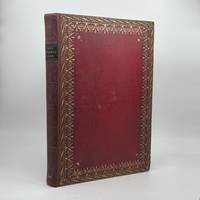
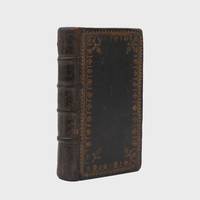
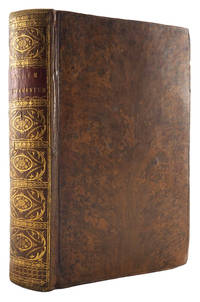
1763réf. 2548Oxonii Oxford: E Typographeo Clarendoniano 1763. 8vo pp. iv 676. Near-contemporary tree calf spine elaborately gilt in compartments red morocco label marbled endpapers edges yellow. Some light toning and spotting. Expertly rebacked by Bernard Middleton with old backstrip laid down hinges relined. An attractive copy. In 1758 Baskerville proposed the casting of a new set of Greek types to the Oxford University Press and they ordered 2000 copies of this octavo New Testament plus 500 in quarto to be printed with the resulting type - which ended up being its only use. Negative critical reception may have contributed to its abandonment but Baskerville’s Greek face has recently been reassessed by Gerry Leonidas as an important predecessor of more modern types if perhaps not quite as elegant as that used by the Foulis press that had fallen afoul of an arbitrary typographic orthodoxy. Gaskell Add. 2; ESTC T94889; D&M 4756. E Typographeo Clarendoniano unknown
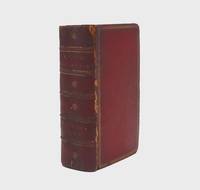
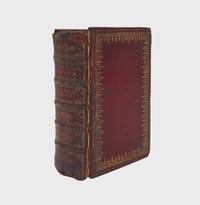
1642réf. 371830Paris: Ek basilikēs typographias Imprimerie Royale 1642. Engraved title by by Claude Mellan engraved head and tail pieces and initials. 2 453 3 pp. Extra-illustrated with a later English printed "Abbreviations and Connexions" leaf inserted after the title. Folio 15-1/2 x 10-5/8 inches. Late eighteenth or early nineteenth century red morocco gilt marbled endpapers gilt edges. Neatly rebacked. Cloth slipcase and chemise. Engraved title by by Claude Mellan engraved head and tail pieces and initials. 2 453 3 pp. Extra-illustrated with a later English printed "Abbreviations and Connexions" leaf inserted after the title. Folio 15-1/2 x 10-5/8 inches. Known as the Mazarin edition "since it appeared under the auspices of the great Cardinal" D&M it is the first edition of the Greek New Testament from the Imprimerie Royale founded just two years prior. Inserted before the engraved title page is a partly-printed certificate of the Collegium Mazarinaeum awarding this volume as a prize in Rhetoric to Philippus Matthaeus Guillot dated MDCC in manuscript i.e. 1700 and signed by the college's master P.-J. Le Chapelier Pierre-Jean le Chapelier de Mauron abbé de Ste Marie de Boquen in Brittany with the trace of a seal below. The College Mazarin or College des Quatre-Nations was established by bequest of Cardinal Mazarin 1602-1661 and opened its doors to students in 1688. Darlow & Moule 4687. Provenance: Philippus Matthaeus Guillot certificate his signature at foot of title engraving; Montagu Barton armorial bookplate; John Horatio Nelson gift inscription dated 1841; General Theological Seminary bookplate perforated stamp Ek basilikēs typographias [Imprimerie Royale] unknown
1642réf. 371830Paris: Ek basilikēs typographias Imprimerie Royale 1642. Engraved title by by Claude Mellan engraved head and tail pieces and initials. 2 453 3 pp. Extra-illustrated with a later English printed "Abbreviations and Connexions" leaf inserted after the title. Folio 15-1/2 x 10-5/8 inches. Late eighteenth or early nineteenth century red morocco gilt marbled endpapers gilt edges. Neatly rebacked. Cloth slipcase and chemise. Engraved title by by Claude Mellan engraved head and tail pieces and initials. 2 453 3 pp. Extra-illustrated with a later English printed "Abbreviations and Connexions" leaf inserted after the title. Folio 15-1/2 x 10-5/8 inches. Known as the Mazarin edition "since it appeared under the auspices of the great Cardinal" D&M it is the first edition of the Greek New Testament from the Imprimerie Royale founded just two years prior. Inserted before the engraved title page is a partly-printed certificate of the Collegium Mazarinaeum awarding this volume as a prize in Rhetoric to Philippus Matthaeus Guillot dated MDCC in manuscript i.e. 1700 and signed by the college's master P.-J. Le Chapelier Pierre-Jean le Chapelier de Mauron abbé de Ste Marie de Boquen in Brittany with the trace of a seal below. The College Mazarin or College des Quatre-Nations was established by bequest of Cardinal Mazarin 1602-1661 and opened its doors to students in 1688. Darlow & Moule 4687. Provenance: Philippus Matthaeus Guillot certificate his signature at foot of title engraving; Montagu Barton armorial bookplate; John Horatio Nelson gift inscription dated 1841; General Theological Seminary bookplate perforated stamp Ek basilikēs typographias [Imprimerie Royale] unknown books
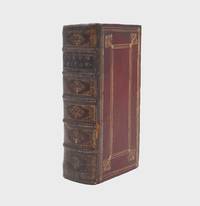
1624réf. 378211Lugduni Batavorum i.e. Leiden: Ex Officina Elzeviriana 1624. First Elzevir edition. xii 863 1 pp. Title page printed in red and black. Second part with half-title and separate register pagination continuous. 12mo. 19th-century straight-grained red morocco gilt rules to boards gilt-lettered spine with raised bands and gilt ornaments gilt tooling to outer and inner board edges marbled endpapers. Rubbing to joints which are starting but secure spine slightly darkened with chipping to its head. Moderate toning to text clean tear across leaf Kk3 mended with minor loss to a line of text. Provenance: William Gott trimmed armorial bookplate; Douglas Maxwell Moffat bookplate; General Theological Seminary bookplates. First Elzevir edition. xii 863 1 pp. Title page printed in red and black. Second part with half-title and separate register pagination continuous. 12mo. "The first of the Elzevir editions printed at the press established at Leyden by Bonaventure and Abraham Elzevir and celebrated for their fine type paper and convenient size" Darlow & Moule. The text is based on the 1565 version edited by Beza. Six more editions appeared from the Elzevir press the last in 1678. There are three known states of the first edition: one with a red and black title page and a listed publication city of Lugduni i.e. Lyon one with a plain title page and a listed publication city of Lugduni Batavorum i.e. Leiden and one with a red and black title page with a listed publication city of Lugduni Batavorum. Willems does not identify the third state but notes that the copies with red and black title pages were intended for distribution in Catholic countries. USTC 1547980; Darlow & Moule 4669 state C; STCN 378027026; Willems 225 ref Ex Officina Elzeviriana unknown
1701réf. 378206Amsterdam: Ex Officina Wetsteniana 1701. 565 2 pp. Without the map found in some copies but not called for by Darlow & Moule or STCN. 16mo. 19th-century red morocco gilt frames and corner fleurons to boards gilt-tooled and lettered spine gilt tooling to outer and inner board edges text block edges gilt multi-colored Dutch pastedowns. Title page printed in red and black. Spine somewhat darkened rubbing to joints. Moderate toning to margins of text block small faint stain to top-edge of first few leaves. A nice copy. Provenance: Frederick Keppel 19th-century armorial bookplate; Douglas Maxwell Moffat; General Theological Seminary bookplates. 565 2 pp. Without the map found in some copies but not called for by Darlow & Moule or STCN. 16mo. According to Darlow & Moule this was the third edition edited by Leusden and "the earliest Greek Testament to bear the name of the publisher Henricus Wetstenius Wetstein or Wettstein" Darlow & Moule 4718a; STCN 242135129 Ex Officina Wetsteniana unknown
1698réf. 255818Amsterdam: Ex Officina Westeniana 1698. 3rd Leusden edition. Additional engraved title-page and 2 folding engraved maps the Holy Land and the Mediterranean. 337 1. colophon; 142 1 pp. 8vo signatures alternating in 8s and 10s. 18th-century red morocco covers with gilt-rolled bordersgilt-tooled and -lettered spine multi-colored Dutch pastedowns without free endpapeers. a.e.g. Head of spine starting otherwise quite attractive. 3rd Leusden edition. Additional engraved title-page and 2 folding engraved maps the Holy Land and the Mediterranean. 337 1. colophon; 142 1 pp. 8vo signatures alternating in 8s and 10s. D & M doesn't mention the two fine engraved maps found in this copy; nor the separately printed COMPENDIOLUM 1699 with Leusden's useful concordance of all Greek words found in the New Testament. The Dutch Calvinist philologist Johann Leusden 1624 - 1699 was one of the foremost Biblical experts of his time. His edition of the Greek New Testament first appeared in 1675; this 1698 edition is quite scarce in the US and very rare with the Compendiolum. Darlow & Moule 4718a "Apparently the earlies Greek New Testament to bear the name of the publisher Henricus Wetstenius"; OCLC: 64158458 Ex Officina Westeniana unknown
1549réf. 378214Lutetia i.e. Paris: Ex officina Roberti Stephani typographi Regii 1549. Second Estienne edition. 528; 361 7 pp. Complete with 2 terminal blanks. Second part has special title page. Woodcut Estienne devices to both titles. 16mo. Later eighteenth-century red morocco tooled gilt frames to boards lettered gilt spine with raised bands gilt tooling to outer and inner board edges marbled endpapers gilt edges. All pages ruled in red ink. Light rubbing to exterior front board nearly separated rear joint cracked chipping to spine ends. Moderate toning to margins light fox-spots to a few leaves partial crack in text block before second title page all leaves secure. Provenance: Douglas Maxwell Moffat bookplate; General Theological Seminary bookplates. Second Estienne edition. 528; 361 7 pp. Complete with 2 terminal blanks. Second part has special title page. Woodcut Estienne devices to both titles. 16mo. Produced in his twin capacities as a skilled printer and a trained classical scholar the Biblical output of Robert Estienne Latinized as Stephanus "had perhaps more influence than that of any other single man in the sixteenth century" Wordsworth in Darlow & Moule. He is known not only for the editions of the Bible that placed him on the Louvain faculty's index of prohibited books but as a publisher of important dictionaries Roman classics and contemporary educational writings. After his flight to Geneva around 1550 he also became an important publisher of the works of John Calvin. The 1546 & 1549 editions of the Greek New Testament are referred to as the "O mirificam" editions after the opening of the Latin preface. They are especially desirable as specimens of the typography of Claude Garamond who was commissioned by the king to design the Greek type used in Estienne's editions of the New Testament. "Estienne felt strongly the propriety of consecrating as it were the Royal Greek types in this way. He evidently felt also some stirrings of ambition as an editor; might not the resources of the King's Library now at his disposal enable him to produce a better text than that of Erasmus especially as he could use also the Complutensian text" Armstrong. Estienne's editorial ambitions culminated in the folio edition of 1550 which included a full critical apparatus but still reveal themselves in the texts of the O mirificam editions. Like the first edition the text of the 1549 edition largely agrees with Erasmus but it indeed incorporates the Complutensian text and also makes a number of independent readings with minor changes from the 1546 edition Darlow & Moule. An important and beautifully printed work. USTC 150379; Darlowe & Moule 4620; Renouard 73 1; Schreiber 102; Adams B1660. Armstrong Robert Estienne Royal Printer 136 Ex officina Roberti Stephani typographi Regii unknown
1569réf. 378213Lutetia i.e. Paris: Ex officina Roberti Stephani typographi Regii 1569. Only edition by Robert Estienne II. xxxii 494 2; 342 42 pp. With terminal blanks. Title page of second volume "Hai tou hagiou Paulou epistolai" dated 1569. Woodcut Estienne devices to both titles. 1 vols. 16mo. 19th-century full straight-grained blue morocco tooled gilt frames to boards gilt title fillets and ornaments to spine gilt tooling to outer and inner board edges marbled endpapers gilt edges. Preliminaries ruled in red ink. Joints a bit rubbed spine ends and corners lightly bumped. Moderate toning a few partial cracks to text block all leaves secure. A handsome copy. Provenance: Cecil Dunn-Gardner pencil note to front endleaf; General Theological Seminary bookplates blindstamps inkstamp to verso of title. Only edition by Robert Estienne II. xxxii 494 2; 342 42 pp. With terminal blanks. Title page of second volume "Hai tou hagiou Paulou epistolai" dated 1569. Woodcut Estienne devices to both titles. 1 vols. 16mo. Printed by the son of the great Reformation printer Robert Estienne Stephanus and brother of Henri Estienne II the text primarily follows the first Estienne edition of 1546 substituting readings from the editions of 1549 or 1550 in five places. "The book closely resembles in size and type the O mirificam editions of 1546 and 1549 copies of which had become difficult to procure. The body of the type has been slightly reduced" from that of the original Royal Greek types by Claude Garamond Darlow & Moule. USTC 140582; Darlow & Moule 4633; Renouard 171 1; Schreiber 239; Adams B1671 Ex officina Roberti Stephani typographi Regii unknown
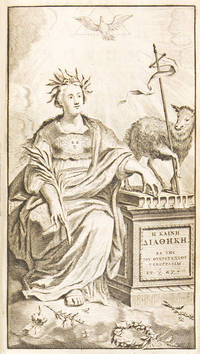
1633réf. 378209Amsterdam: Apud Guilielmum Blaeu 1633. Only Blaeu edition. 454 6 pp. Engraved allegorical title page. 16mo. Contemporary or near-contemporary morocco elaborate gilt frames and corner fleurons to boards lettered gilt spine with raised bands gilt tooling to outer and inner board edges marbled endpapers gilt edges. Light rubbing to exterior front joint starting at ends front hinge cracked. Moderate toning to text mostly unobtrusive faint stains to a few leaves. Provenance: Douglas Maxwell Moffat bookplate; General Theological Seminary bookplates. Only Blaeu edition. 454 6 pp. Engraved allegorical title page. 16mo. Based on the text of Beza's third edition but emended in places with readings from other editions particularly the second Estienne/Stephanus editions Darlow & Moule. Darlow & Moule 4681 Apud Guilielmum Blaeu unknown
1701réf. 378206Amsterdam: Ex Officina Wetsteniana 1701. 565 2 pp. Without the map found in some copies but not called for by Darlow & Moule or STCN. 16mo. 19th-century red morocco gilt frames and corner fleurons to boards gilt-tooled and lettered spine gilt tooling to outer and inner board edges text block edges gilt multi-colored Dutch pastedowns. Title page printed in red and black. Spine somewhat darkened rubbing to joints. Moderate toning to margins of text block small faint stain to top-edge of first few leaves. A nice copy. Provenance: Frederick Keppel 19th-century armorial bookplate; Douglas Maxwell Moffat; General Theological Seminary bookplates. 565 2 pp. Without the map found in some copies but not called for by Darlow & Moule or STCN. 16mo. According to Darlow & Moule this was the third edition edited by Leusden and "the earliest Greek Testament to bear the name of the publisher Henricus Wetstenius Wetstein or Wettstein" Darlow & Moule 4718a; STCN 242135129 Ex Officina Wetsteniana unknown books
1624réf. 378211Lugduni Batavorum i.e. Leiden: Ex Officina Elzeviriana 1624. First Elzevir edition. xii 863 1 pp. Title page printed in red and black. Second part with half-title and separate register pagination continuous. 12mo. 19th-century straight-grained red morocco gilt rules to boards gilt-lettered spine with raised bands and gilt ornaments gilt tooling to outer and inner board edges marbled endpapers. Rubbing to joints which are starting but secure spine slightly darkened with chipping to its head. Moderate toning to text clean tear across leaf Kk3 mended with minor loss to a line of text. Provenance: William Gott trimmed armorial bookplate; Douglas Maxwell Moffat bookplate; General Theological Seminary bookplates. First Elzevir edition. xii 863 1 pp. Title page printed in red and black. Second part with half-title and separate register pagination continuous. 12mo. "The first of the Elzevir editions printed at the press established at Leyden by Bonaventure and Abraham Elzevir and celebrated for their fine type paper and convenient size" Darlow & Moule. The text is based on the 1565 version edited by Beza. Six more editions appeared from the Elzevir press the last in 1678. There are three known states of the first edition: one with a red and black title page and a listed publication city of Lugduni i.e. Lyon one with a plain title page and a listed publication city of Lugduni Batavorum i.e. Leiden and one with a red and black title page with a listed publication city of Lugduni Batavorum. Willems does not identify the third state but notes that the copies with red and black title pages were intended for distribution in Catholic countries. USTC 1547980; Darlow & Moule 4669 state C; STCN 378027026; Willems 225 ref Ex Officina Elzeviriana unknown books
1698réf. 255818Amsterdam: Ex Officina Westeniana 1698. 3rd Leusden edition. Additional engraved title-page and 2 folding engraved maps the Holy Land and the Mediterranean. 337 1. colophon; 142 1 pp. 8vo signatures alternating in 8s and 10s. 18th-century red morocco covers with gilt-rolled bordersgilt-tooled and -lettered spine multi-colored Dutch pastedowns without free endpapeers. a.e.g. Head of spine starting otherwise quite attractive. 3rd Leusden edition. Additional engraved title-page and 2 folding engraved maps the Holy Land and the Mediterranean. 337 1. colophon; 142 1 pp. 8vo signatures alternating in 8s and 10s. D & M doesn't mention the two fine engraved maps found in this copy; nor the separately printed COMPENDIOLUM 1699 with Leusden's useful concordance of all Greek words found in the New Testament. The Dutch Calvinist philologist Johann Leusden 1624 - 1699 was one of the foremost Biblical experts of his time. His edition of the Greek New Testament first appeared in 1675; this 1698 edition is quite scarce in the US and very rare with the Compendiolum. Darlow & Moule 4718a "Apparently the earlies Greek New Testament to bear the name of the publisher Henricus Wetstenius"; OCLC: 64158458 Ex Officina Westeniana unknown books
1633réf. 378209Amsterdam: Apud Guilielmum Blaeu 1633. Only Blaeu edition. 454 6 pp. Engraved allegorical title page. 16mo. Contemporary or near-contemporary morocco elaborate gilt frames and corner fleurons to boards lettered gilt spine with raised bands gilt tooling to outer and inner board edges marbled endpapers gilt edges. Light rubbing to exterior front joint starting at ends front hinge cracked. Moderate toning to text mostly unobtrusive faint stains to a few leaves. Provenance: Douglas Maxwell Moffat bookplate; General Theological Seminary bookplates. Only Blaeu edition. 454 6 pp. Engraved allegorical title page. 16mo. Based on the text of Beza's third edition but emended in places with readings from other editions particularly the second Estienne/Stephanus editions Darlow & Moule. Darlow & Moule 4681 Apud Guilielmum Blaeu unknown books
1549réf. 378214Lutetia i.e. Paris: Ex officina Roberti Stephani typographi Regii 1549. Second Estienne edition. 528; 361 7 pp. Complete with 2 terminal blanks. Second part has special title page. Woodcut Estienne devices to both titles. 16mo. Later eighteenth-century red morocco tooled gilt frames to boards lettered gilt spine with raised bands gilt tooling to outer and inner board edges marbled endpapers gilt edges. All pages ruled in red ink. Light rubbing to exterior front board nearly separated rear joint cracked chipping to spine ends. Moderate toning to margins light fox-spots to a few leaves partial crack in text block before second title page all leaves secure. Provenance: Douglas Maxwell Moffat bookplate; General Theological Seminary bookplates. Second Estienne edition. 528; 361 7 pp. Complete with 2 terminal blanks. Second part has special title page. Woodcut Estienne devices to both titles. 16mo. Produced in his twin capacities as a skilled printer and a trained classical scholar the Biblical output of Robert Estienne Latinized as Stephanus "had perhaps more influence than that of any other single man in the sixteenth century" Wordsworth in Darlow & Moule. He is known not only for the editions of the Bible that placed him on the Louvain faculty's index of prohibited books but as a publisher of important dictionaries Roman classics and contemporary educational writings. After his flight to Geneva around 1550 he also became an important publisher of the works of John Calvin. The 1546 & 1549 editions of the Greek New Testament are referred to as the "O mirificam" editions after the opening of the Latin preface. They are especially desirable as specimens of the typography of Claude Garamond who was commissioned by the king to design the Greek type used in Estienne's editions of the New Testament. "Estienne felt strongly the propriety of consecrating as it were the Royal Greek types in this way. He evidently felt also some stirrings of ambition as an editor; might not the resources of the King's Library now at his disposal enable him to produce a better text than that of Erasmus especially as he could use also the Complutensian text" Armstrong. Estienne's editorial ambitions culminated in the folio edition of 1550 which included a full critical apparatus but still reveal themselves in the texts of the O mirificam editions. Like the first edition the text of the 1549 edition largely agrees with Erasmus but it indeed incorporates the Complutensian text and also makes a number of independent readings with minor changes from the 1546 edition Darlow & Moule. An important and beautifully printed work. USTC 150379; Darlowe & Moule 4620; Renouard 73 1; Schreiber 102; Adams B1660. Armstrong Robert Estienne Royal Printer 136 Ex officina Roberti Stephani typographi Regii unknown books
1569réf. 378213Lutetia i.e. Paris: Ex officina Roberti Stephani typographi Regii 1569. Only edition by Robert Estienne II. xxxii 494 2; 342 42 pp. With terminal blanks. Title page of second volume "Hai tou hagiou Paulou epistolai" dated 1569. Woodcut Estienne devices to both titles. 1 vols. 16mo. 19th-century full straight-grained blue morocco tooled gilt frames to boards gilt title fillets and ornaments to spine gilt tooling to outer and inner board edges marbled endpapers gilt edges. Preliminaries ruled in red ink. Joints a bit rubbed spine ends and corners lightly bumped. Moderate toning a few partial cracks to text block all leaves secure. A handsome copy. Provenance: Cecil Dunn-Gardner pencil note to front endleaf; General Theological Seminary bookplates blindstamps inkstamp to verso of title. Only edition by Robert Estienne II. xxxii 494 2; 342 42 pp. With terminal blanks. Title page of second volume "Hai tou hagiou Paulou epistolai" dated 1569. Woodcut Estienne devices to both titles. 1 vols. 16mo. Printed by the son of the great Reformation printer Robert Estienne Stephanus and brother of Henri Estienne II the text primarily follows the first Estienne edition of 1546 substituting readings from the editions of 1549 or 1550 in five places. "The book closely resembles in size and type the O mirificam editions of 1546 and 1549 copies of which had become difficult to procure. The body of the type has been slightly reduced" from that of the original Royal Greek types by Claude Garamond Darlow & Moule. USTC 140582; Darlow & Moule 4633; Renouard 171 1; Schreiber 239; Adams B1671 Ex officina Roberti Stephani typographi Regii unknown books
1653réf. 255179Londoni: Excudebat Rogerus Daniel: prostat autem venale apud Joannem Martin & Jacobum Allestrye sub signo Campanae in Cometerio D. Pauli 1653. The first edition of the Septuagint printed in England. 8 1279 1; 186 2 pp. plus terminal blank. 1 vols. 4to signed in 8's 195 x 143mm. Old vellum titled and dated in manuscript on the spine. Terminal leaves slightly soiled two ownership inscriptions on front endsheets and small Lincoln's Inn release/sale stamp vellum a bit handsoiled occasional modest foxing and dusting along upper margins but a very good copy. The first edition of the Septuagint printed in England. 8 1279 1; 186 2 pp. plus terminal blank. 1 vols. 4to signed in 8's 195 x 143mm. The first edition of the Septuagint printed in England with the Scholia the scarce printing in quarto format. The text is derived from the Sixtine text and edited by John Biddle 1615-1662 the Unitarian controversialist who was imprisoned by the Parliamentary Commissioners for his religious views. The SCHOLIA . has a separate title-leaf register and pagination. The same setting was imposed in both quarto and octavo formats the latter with rules separating the columns of text. In regard to institutional representation the edition in quarto is much more uncommon than that in octavo: ESTC locates 4 copies of the quarto printing in North America as opposed to 19 of the octavo printing. Occasionally Daniel's reprint of the New Testament is bound up with the octavo printings to form a complete Bible. Brunet cites that format but notes the sale of a copy on "Gr. Pap." presumably a copy in this format. Over the last 35 years ABPC records sale of one copy in quarto 1999 and four in octavo. ESTC R12599 & R236817; Wing B2718 octavo edition only; Darlow & Moule 4692; Brunet I:863 Excudebat Rogerus Daniel: prostat autem venale apud Joannem Martin & Jacobum Allestrye, sub signo Campanae in Cometerio D. Pauli unknown
1653réf. 255179Londoni: Excudebat Rogerus Daniel: prostat autem venale apud Joannem Martin & Jacobum Allestrye sub signo Campanae in Cometerio D. Pauli 1653. The first edition of the Septuagint printed in England. 8 1279 1; 186 2 pp. plus terminal blank. 1 vols. 4to signed in 8's 195 x 143mm. Old vellum titled and dated in manuscript on the spine. Terminal leaves slightly soiled two ownership inscriptions on front endsheets and small Lincoln's Inn release/sale stamp vellum a bit handsoiled occasional modest foxing and dusting along upper margins but a very good copy. The first edition of the Septuagint printed in England. 8 1279 1; 186 2 pp. plus terminal blank. 1 vols. 4to signed in 8's 195 x 143mm. The first edition of the Septuagint printed in England with the Scholia the scarce printing in quarto format. The text is derived from the Sixtine text and edited by John Biddle 1615-1662 the Unitarian controversialist who was imprisoned by the Parliamentary Commissioners for his religious views. The SCHOLIA . has a separate title-leaf register and pagination. The same setting was imposed in both quarto and octavo formats the latter with rules separating the columns of text. In regard to institutional representation the edition in quarto is much more uncommon than that in octavo: ESTC locates 4 copies of the quarto printing in North America as opposed to 19 of the octavo printing. Occasionally Daniel's reprint of the New Testament is bound up with the octavo printings to form a complete Bible. Brunet cites that format but notes the sale of a copy on "Gr. Pap." presumably a copy in this format. Over the last 35 years ABPC records sale of one copy in quarto 1999 and four in octavo. ESTC R12599 & R236817; Wing B2718 octavo edition only; Darlow & Moule 4692; Brunet I:863 Excudebat Rogerus Daniel: prostat autem venale apud Joannem Martin & Jacobum Allestrye, sub signo Campanae in Cometerio D. Pauli unknown books
1962réf. 52438Graz: Akademische Druck-u.Verlagsanstalt 1962. Hardcover. Very good. Two volumes large 8vo: pp. 16 966 6; 2 920 42. Publisher's light blue cloth. A nearly fine clean set with some slight erosion/scuffing at the covers of the second volume. Modern photo-reprint of this celebrated work of early modern biblical scholarship. First published in 1752 it was until the twentieth century regarded as "the most elaborate and valuable of all the critical editions of the New Testament" Orme. Edited by the scholar Johann Jakob Wetstein 1693-1754 a scion of the Amsterdam printing family who produced Gerhard von Maestricht's New Testament of 1711 the original edition includes the editio princeps of two pseudepigraphic works ascribed to Saint Clement of Rome which survive in Syriac. At his native city of Basel in 1713 Wetstein defended a thesis on the various readings of the New Testament. "After collating MSS. in various libraries he at length obtained in 1733 a professorship in the Remonstrants' college at Amsterdam in succession to Le Clerc. In 1730 the Wettstein press published his Prolegomena anonymously and in 1735 he edited for the same firm a revision of G. v. Maestricht's Testament. At length in 1751-2 he produced the critical edition at which he had been labouring for many years. Perhaps in deference to the opinions of his friends Wettstein did not print in his edition the text of Codex A as he seems at first to have intended or a recension of his own but merely reproduced the Elzevir text with very few variations. Immediately below however he indicated the changes which he considered absolutely necessary from which it is easy to construct 'Wettsteins's text.' Nearly all these proposed changed -- which according to Reuss number 159 -- had appeared in previous editions and are generally accepted do-day. . Below this matter stands the critical apparatus the most elaborate which had yet been published giving innumerable variants and citing as authorities for and against these a vast body of witnesses -- MSS. versions early fathers and printed editions. Wettstein introduced the practice of indicating uncial MSS. by roman letters and cursive MSS. by arabic numerals. In the revised and enlarged Prolegomena preceding the text which give some account of his labours and controversies Wettstein displays a marked antipathy to all the earliest MSS. which he suspected of having been corrupted by the Latin versions. The Animadversiones at the end of vol. 2 are more temperate and possess higher value. A distinctive feature of the book is the commentary printed at the foot of the page. This forms a curious treasury of notes illustrating both the matter and the language of the inspired writers by copious extracts from all kinds of authors -- classical patristic and rabbinic". References for the original edition: Dibdin 4th ed. 1: 156. Le Long/ Masch 1 1778: 243-46. Orme Bibliotheca Biblica 465: "Wetsteins's merits as a critic' says Dr. Marsh "undoubtedly surpass the merits of his predecessors: he alone contributed more to advance the criticism of the Greek Testament than all who had gone before him: and this task he performed not only without support either public or private but during a series of severe trials under which a mind of less energy than Wetstein's would infallibly have sunk." Full title and imprint: He Kaine Diatheke Novum Testamentum Graecum editionis receptae cum lectionibus variantibus codicum mss. editionum aliarum versionum et patrum nec non commentario pleniore ex scriptoribus veteribus Hebraeis Graecis et Latinis historiam et vim verborum illustrante Joannis Jacobi Wetstenii. Tomus I -II. Continens quatuor Evengelia. . Epistolas Pauli Acta Apostolorum Epistolas canonicas et Apocalypsin. Amstelaedami ex officinia Dommeriana. MDCCLI. Akademische Druck-u.Verlagsanstalt hardcover
1962réf. 52438Graz: Akademische Druck-u.Verlagsanstalt 1962. Hardcover. Very good. Two volumes large 8vo: pp. 16 966 6; 2 920 42. Publisher's light blue cloth. A nearly fine clean set with some slight erosion/scuffing at the covers of the second volume. Modern photo-reprint of this celebrated work of early modern biblical scholarship. First published in 1752 it was until the twentieth century regarded as "the most elaborate and valuable of all the critical editions of the New Testament" Orme. Edited by the scholar Johann Jakob Wetstein 1693-1754 a scion of the Amsterdam printing family who produced Gerhard von Maestricht's New Testament of 1711 the original edition includes the editio princeps of two pseudepigraphic works ascribed to Saint Clement of Rome which survive in Syriac. At his native city of Basel in 1713 Wetstein defended a thesis on the various readings of the New Testament. "After collating MSS. in various libraries he at length obtained in 1733 a professorship in the Remonstrants' college at Amsterdam in succession to Le Clerc. In 1730 the Wettstein press published his Prolegomena anonymously and in 1735 he edited for the same firm a revision of G. v. Maestricht's Testament. At length in 1751-2 he produced the critical edition at which he had been labouring for many years. Perhaps in deference to the opinions of his friends Wettstein did not print in his edition the text of Codex A as he seems at first to have intended or a recension of his own but merely reproduced the Elzevir text with very few variations. Immediately below however he indicated the changes which he considered absolutely necessary from which it is easy to construct 'Wettsteins's text.' Nearly all these proposed changed -- which according to Reuss number 159 -- had appeared in previous editions and are generally accepted do-day. . Below this matter stands the critical apparatus the most elaborate which had yet been published giving innumerable variants and citing as authorities for and against these a vast body of witnesses -- MSS. versions early fathers and printed editions. Wettstein introduced the practice of indicating uncial MSS. by roman letters and cursive MSS. by arabic numerals. In the revised and enlarged Prolegomena preceding the text which give some account of his labours and controversies Wettstein displays a marked antipathy to all the earliest MSS. which he suspected of having been corrupted by the Latin versions. The Animadversiones at the end of vol. 2 are more temperate and possess higher value. A distinctive feature of the book is the commentary printed at the foot of the page. This forms a curious treasury of notes illustrating both the matter and the language of the inspired writers by copious extracts from all kinds of authors -- classical patristic and rabbinic". References for the original edition: Dibdin 4th ed. 1: 156. Le Long/ Masch 1 1778: 243-46. Orme Bibliotheca Biblica 465: "Wetsteins's merits as a critic' says Dr. Marsh "undoubtedly surpass the merits of his predecessors: he alone contributed more to advance the criticism of the Greek Testament than all who had gone before him: and this task he performed not only without support either public or private but during a series of severe trials under which a mind of less energy than Wetstein's would infallibly have sunk." Full title and imprint: He Kaine Diatheke Novum Testamentum Graecum editionis receptae cum lectionibus variantibus codicum mss. editionum aliarum versionum et patrum nec non commentario pleniore ex scriptoribus veteribus Hebraeis Graecis et Latinis historiam et vim verborum illustrante Joannis Jacobi Wetstenii. Tomus I -II. Continens quatuor Evengelia. . Epistolas Pauli Acta Apostolorum Epistolas canonicas et Apocalypsin. Amstelaedami ex officinia Dommeriana. MDCCLI. Akademische Druck-u.Verlagsanstalt hardcover books
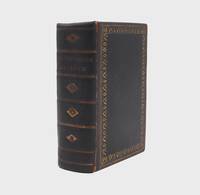
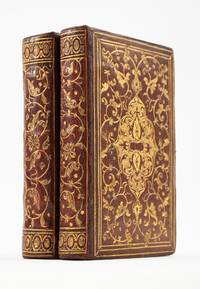
1568réf. ST20921Lutetia Paris: Robert Estienne II 1568. 128 x 87 mm. 5 x 3 1/2". Two volumes. LOVELY CONTEMPORARY RED MOROCCO GILT covers with large central azured arabesque surrounded by curling vines with azured leaves smooth spines with similar vines head and foot of spines with egg-and-dart roll similar to one used by Claude de Picques second volume with faint blind lettering to spine all edges gilt perhaps with some minor early restorations but if so then done with such care as to preclude certainty. Housed in modern suede-lined calf-backed clamshell boxes with magnetic closures. Printer's device on titles and final page decorative initials and headpieces. Front pastedown of volume I with ex-libris of Georgios Arvanitidis. Renouard 171:1; Schreiber 239; Darlow & Moule 4633; Adams B-1670. See: Verron "Les Reliures de l'Entrée de Charles IX à Paris 1572 . . . réalisées par Claude Picques" in Bulletin du Bibliophile 2014 no. 2 pp. 282-98. Just a touch of rubbing to extremities front hinge of second volume open but everything quite tight text with occasional mild browning small spots trivial smudges or tiny worm trails but A BEAUTIFUL COPY clean and fresh internally and the bindings tight and lustrous with very bright gilt With exceptional visual appeal these two precious volumes shining with gilt and containing the Greek New Testament from the renowned Estienne family of printers are of special interest because of their typography their bindings and their provenance. With the expressed goal of printing Greek texts from manuscripts in the royal library at Fontainebleau François I established the post of royal printer in Greek in 1539 appointed Robert Estienne I 1503-59 to the position in 1542 and commissioned the renowned Claude Garamond to cut a new Greek font for this project. To design the type the King called on his own celebrated calligrapher Angelo Vergecio who produced in collaboration with Garamond three different sizes of what came to be called the Royal Types or "grecs du roi." According to Schreiber "These cursive Greek types are universally acknowledged as the finest ever cut." In 1548 and 1549 Robert Estienne issued the press' first Greek Testament known as the "O mirificam" edition for the opening of the dedication to the king in 16mo or "pocket" format using the smaller font of Garamond's "grecs du roi." In 1550 Robert a Protestant moved to Geneva while his son Robert II 1533-70 a Catholic remained in Paris and took over as the royal printer in Greek. Our 1568 Testament--the only one issued by the son--is a reprinting of the "O mirificam" edition but expanded with the critical apparatus from the 1550 folio edition issued by the father. Schreiber notes that our edition is interesting from a typographical point of view as it contains an even more minute version of the already small grecs du roi type for the Table of Chapters. The exceptionally pretty volumes are done in the style of royal binder Claude Picques fl. 1539-78 and employ a decorative roll very similar to one that appears on the spine of the vellum bindings Picques did for "L'Entrée de Charles IX à Paris" 1572. Our volumes once graced the library of Constantinople collector Georgios Arvanitidis 1876-1953 whose library included a number of Estienne Greek editions. They were later in the distinguished library of Frederick B. Adams 1910-2001 director of the Pierpont Morgan Library from 1948-69 and then president of the prestigious Association Internationale de Bibliophilie from 1974-83. And they were featured in the celebrated 1929 Gumuchian catalogue of 398 historically exceptional bindings as item #71. Robert Estienne II unknown
1568réf. ST20921Lutetia Paris: Robert Estienne II 1568. 128 x 87 mm. 5 x 3 1/2". Two volumes. LOVELY CONTEMPORARY RED MOROCCO GILT covers with large central azured arabesque surrounded by curling vines with azured leaves smooth spines with similar vines head and foot of spines with egg-and-dart roll similar to one used by Claude de Picques second volume with faint blind lettering to spine all edges gilt perhaps with some minor early restorations but if so then done with such care as to preclude certainty. Housed in modern suede-lined calf-backed clamshell boxes with magnetic closures. Printer's device on titles and final page decorative initials and headpieces. Front pastedown of volume I with ex-libris of Georgios Arvanitidis. Renouard 171:1; Schreiber 239; Darlow & Moule 4633; Adams B-1670. See: Verron "Les Reliures de l'Entrée de Charles IX à Paris 1572 . . . réalisées par Claude Picques" in Bulletin du Bibliophile 2014 no. 2 pp. 282-98. Just a touch of rubbing to extremities front hinge of second volume open but everything quite tight text with occasional mild browning small spots trivial smudges or tiny worm trails but A BEAUTIFUL COPY clean and fresh internally and the bindings tight and lustrous with very bright gilt With exceptional visual appeal these two precious volumes shining with gilt and containing the Greek New Testament from the renowned Estienne family of printers are of special interest because of their typography their bindings and their provenance. With the expressed goal of printing Greek texts from manuscripts in the royal library at Fontainebleau François I established the post of royal printer in Greek in 1539 appointed Robert Estienne I 1503-59 to the position in 1542 and commissioned the renowned Claude Garamond to cut a new Greek font for this project. To design the type the King called on his own celebrated calligrapher Angelo Vergecio who produced in collaboration with Garamond three different sizes of what came to be called the Royal Types or "grecs du roi." According to Schreiber "These cursive Greek types are universally acknowledged as the finest ever cut." In 1548 and 1549 Robert Estienne issued the press' first Greek Testament known as the "O mirificam" edition for the opening of the dedication to the king in 16mo or "pocket" format using the smaller font of Garamond's "grecs du roi." In 1550 Robert a Protestant moved to Geneva while his son Robert II 1533-70 a Catholic remained in Paris and took over as the royal printer in Greek. Our 1568 Testament--the only one issued by the son--is a reprinting of the "O mirificam" edition but expanded with the critical apparatus from the 1550 folio edition issued by the father. Schreiber notes that our edition is interesting from a typographical point of view as it contains an even more minute version of the already small grecs du roi type for the Table of Chapters. The exceptionally pretty volumes are done in the style of royal binder Claude Picques fl. 1539-78 and employ a decorative roll very similar to one that appears on the spine of the vellum bindings Picques did for "L'Entrée de Charles IX à Paris" 1572. Our volumes once graced the library of Constantinople collector Georgios Arvanitidis 1876-1953 whose library included a number of Estienne Greek editions. They were later in the distinguished library of Frederick B. Adams 1910-2001 director of the Pierpont Morgan Library from 1948-69 and then president of the prestigious Association Internationale de Bibliophilie from 1974-83. And they were featured in the celebrated 1929 Gumuchian catalogue of 398 historically exceptional bindings as item #71. Robert Estienne II unknown books
1963réf. LFA-126726497Un ouvrage de 889 pages, format 125 x 180 mm, relié toile, publié en 1963, Librairie A. Hatier Editeur / Librairie Classique E. Belin, bon état
1998réf. LFA-126730172Un ouvrage de 230 pages, format 255 x 295 mm, illustré, relié cartonnage sous jaquette couleurs, publié en 1998, collection "L'Homme et son Histoire", bon état
1978réf. Rev71les 2 vol dans une pochette imprimée, 16,5 cm X 25,4 cm, 645 pp les 2 vol, couverture souple. Brochés.
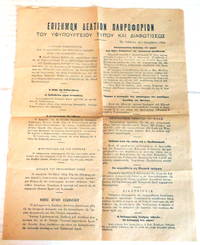
1944réf. 98904Athens Greece: Deputy Ministry of Press and Information December 5 1944. 1944. Very good. - Folio a 12-3/4 inch high by 9-1/2 inch wide broadside printed on newsprint. A two-line banner title centered at the top is followed by two columns of text with the contents justified left below centered headings. The publication info and the date are printed above the second column. The broadside is toned and folded both vertically and horizontally with minor pinprick holes. Very good. The text is in Greek and our translations may be subject to some corrections. During the late hours of December 4 1944 and the early hours of December 5 Lieut.-General Scobie GOC British Forces in Greece proclaimed martial law in Athens and in Piraeus the port of Athens following violence on December 3rd and the declaration of a general strike. The broadside publishes Winston Churchill's statement supporting his General. "The Prime Minister wishes to make known that the announcement of the 1st December by General Scobie to the Greek people stressing the need for unity and expressing our full support for the current Greek Government was made with the knowledge and full approval of the Government of her Majesty." Following this is a statement concerning order: ".General Scobie has taken all recommended measures to fully reestablish order. .English troops guard Public Facilities and simultaneously the reclamation of Police Departments has begun. The Greek people should be certain that order will be completely enforced." There is a statement that "In yesterday's first court day of the Special Collaborators' Court the S.S. associate and member of the 'BUND' the infamous Giannopoulos was sentenced to death." The BUND organization and its leader Aginor Giannopoulos trained a battalion of Greek volunteers who fought in SS and Brandenburgers units. According to the broadside 200 members of ELAS in the suburb of Nea Ionia were disarmed as were 1200 near Psychiko. There is a brief report on the events leading up to martial law: "In the march on the day before yesterday organized by the Communist Party protesters threw a grenade and shot at the house of the Prime Minister George Papandreou on Kifisias street. The leader of the protesters officer of ELAS and known communist Architect Provellegios was arrested." Finally there is a statement on food shortages. ".due to the three-day labor strike the steamboats full of food meant to be distributed to the Greek People anchored in Piraeus harbor remains unloaded." RARE. Athens, Greece: Deputy Ministry of Press and Information, December 5, 1944. unknown