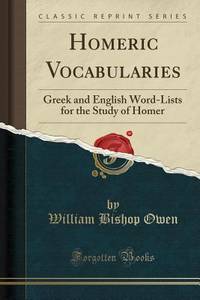
1890Former owner's name in ink to ffep. Book has been rebound dark marbled boards with brown spine and gilt lettering to spine. Boards a bit edgeworn. Small tears to spine ends. ; Xvii, 593 pp; 593 pages
1822Book has been rebound in baby blue boards with black lettering to front panel and black ornate designs to both covers. Former owner's oval blindstamp to half-title. Light tanning to pages. ; Tomus I (1822) vi, 202 pp; Tomus II (1849) 220 pp ; 2 Volumes Bound in 1 Book; Vol. 1/2/2022
1931Pages tanned. Spine slant. Boards worn with a couple of corners edgeworn. Base of spine is edgeworn with small loss. Lettering to spine faded. Inner hinges cracked. Some pencil and a bit of ink notes and underlining to a few pages. Good condition. Working copy. ; I: (1931) Xxiii, 249 pp; II: (1930) viii, 264 pp. 2 parts printed in 1 volume. ; Bibliotheca Scriptorum Graecorum Et Romanorum Teubneriana; Vol. 1; 1.2 x 8.3 x 5.6 Inches; 513 pages
1822Book has been rebound in baby blue boards with black lettering to front panel and black ornate designs to both covers. Former owner's oval blindstamp to half-title. Light tanning to pages. ; Tomus I (1849) 160 pp; Tomus II (1849) 154 + 85 pp (includes batrachomyomachia, hymni sive prooemia, epigrammata ceteraque fragmenta, homerico nomini olim adscripta). ; 2 Volumes Bound in 1 Book; Vol. 1/2/2022
Sumtibus Librariae Hahnianae, Lipsiae. 1833. In-8 Carré. Relié. Etat d'usage. Couv. convenable. Dos satisfaisant. Intérieur acceptable. 377 + 338 + 328 pages (3 tomes en 1 volume). Texte en grec ancien et notes en latin (sur 2 colonnes). Auteur, titre, date, fleurons, roulettes et filets dorés sur le dos. Tranche marbrée (passée). Etiquette de code sur la couverture. Quelques tampons de bibliothèque. Tranche fortement tachée. Nombreuses annotations d'époque en pages de garde. Recognovit et Explicuit Fridericus Henricus BOTHE.
Sumtibus Librariae Hahnianae, Lipsiae. 1835. In-8 Carré. Relié demi-cuir. Etat d'usage. Couv. convenable. Dos abîmé. Quelques rousseurs. 552 pages. Texte en grec ancien et notes en latin (sur 2 colonnes). Titre, tomaison, bandeaux et filets dorés sur le dos (passés). Tranche marbrée. Etiquette de code sur la couverture. Quelques tampons de bibliothèque. Dos et 1er plat se détachant. Recognovit et Explicuit Fridericus Henricus BOTHE.
Sumtibus Librariae Hahnianae, Lipsiae. 1834. In-8 Carré. Relié demi-cuir. Etat d'usage. Couv. convenable. Manque en coiffe de tête. Intérieur acceptable. 271 + 271 pages. 2 tomes en 1 volumes. Texte en grec ancien et notes en latin sur 2 colonnes. Etiquette de code sur le dos. Tranche marbrée. Mors fendus. Très rare. Recognovit et Explicuit Fridericus Henricus Bothe.
1931Scholar's bookplate to inner covers (G. P. Goold). Minor shelfwear to books. DJs are browned with chipping and some tears. DJs are price-clipped. Some tape applied to reinforced Vol. 3 DJ. ; V1: (1931) viii, 278 V2: (1931) Xiv, 356 pp; V3: (1931) xiii, 390 pp; 3 Volume Set COMPLETE; Vol. 1/3/2022
2000Light shelfwear to set and djs. ; Special Edition for Sandpiper books ; 3 Volume Set; This Greek text of the Iliad is based on scrupulous collations of papyri and medieval manuscripts begun in 1888, and comprises the complete text of the 1920 with a more elaborate apparatus and volume of the Prolegomena. Some of the author's more notorious hypotheses on the composition and language are mentioned briefly in Prolegomena part V.
B. G. Teubner. 1896. In-12 Carré. Broché. Etat d'usage. Couv. légèrement passée. Dos abîmé. Intérieur bon état. 249 pages. Texte en grec ancien. Cahiers se détachant. Bibliotheca Scriptorum Graecorum et Romanorum Teubneriana.
Carolus Tauchnitz, Lipsiae. 1824. In-18 Carré. Broché. Etat d'usage. Tâchée. Dos satisfaisant. Quelques rousseurs. 360 pages. Texte en grec ancien. Gravure en noir et blanc en frontispice (portrait). Papier muet encollé sur le dos, le consolidant. Etiquette de code sur la couverture. Quelques tampons de bibliothèque. Quelques pages non coupées. Quelques annotations au crayon dans le texte. Nova Editio Stereotypa Iteratis Curis Castigata et Expolita.
1935Book has minor shelfwear and rubbing. Light foxing to textblock. DJ is browned and a bit soiled. Dustjacket is protected in mylar. ; Shewan has collected his most important papers on Homeric literature. ; 456 pages
1935Book has minor shelfwear and rubbing. Former classics scholar's name on ffep (Wallace). ; Shewan has collected his most important papers on Homeric literature. ; 456 pages
1935Foxing to textblock. 1 corner a bit edgeworn. 1 corner bumped. ; Shewan has collected his most important papers on Homeric literature. ; 456 pages
1993Scholars' bookplate to inner cover. Gift inscription by author on titlepage. DJ has minor shelfwear. ; Michigan Monographs in Classical Antiquity; 184 pages; Studies the uses of suspense in the Iliad. ; Signed by Author
1995Spine a bit sunned and discolored. Faint foxing to top of textblock. ; Publications of the Netherlands Institute At Athens; 1 x 10 x 6.75 Inches; 328 pages; Contents: Ruijgh, C. J. : D’Homère aux origines proto-mycéniennes de la tradition épique. Analyse dialectologique du lange homérique, avec un excursus sur la création de l’alphabet grec. Bakker, E. J. : Noun-epithet Formulas, Milman Parry, and the Grammar of Poetry. Jong, I. J. F. De: Homer as Literature: Some Current Areas of Research. Wees, H. Van: Princes at Dinner: Social Event and Social Structure in Homer. Singor, H. W. : Eni Prôtoisi Machesthai: Some Remarks on the Iliadic Image of the Battlefield. Crielaard, J. P. : Homer, History and Archaeology: Some Remarks on the Date of the Homeric World. Stampolidis, N. C. : Homer and the Cremation Burials of Eleutherna. Crouwel, J. H. : Chariots in Homer and in Early Iron Age Greece. Crielaard, J. P. : A ‘Dutch’ Discoverer of Homer’s Tomb.
1995Slight sticker residue to back board otherwise fine. ; Publications of the Netherlands Institute At Athens; 1 x 10 x 6.75 Inches; 328 pages; Contents: Ruijgh, C. J. : D’Homère aux origines proto-mycéniennes de la tradition épique. Analyse dialectologique du lange homérique, avec un excursus sur la création de l’alphabet grec. Bakker, E. J. : Noun-epithet Formulas, Milman Parry, and the Grammar of Poetry. Jong, I. J. F. De: Homer as Literature: Some Current Areas of Research. Wees, H. Van: Princes at Dinner: Social Event and Social Structure in Homer. Singor, H. W. : Eni Prôtoisi Machesthai: Some Remarks on the Iliadic Image of the Battlefield. Crielaard, J. P. : Homer, History and Archaeology: Some Remarks on the Date of the Homeric World. Stampolidis, N. C. : Homer and the Cremation Burials of Eleutherna. Crouwel, J. H. : Chariots in Homer and in Early Iron Age Greece. Crielaard, J. P. : A ‘Dutch’ Discoverer of Homer’s Tomb.
1956" For many of us who have no Greek, Chapman's Odyssey opens up, ... a new world of experience; and in spite of Matthew Arnold's strictures, it remains the most poetically alive of all Homeric translations. But how far does it give us the original Homer? Chapman claimed that he had a vision of the Odyssey's true meaning. The author shows, from the poet's own notes and his additions and changes to the literal meaning of Homer, how this claim may be justified." 224p. frontis. bibliography Book
1997In a follow-up to his previous Homeric studies, noted classicist Paolo Vivante explores Homer's verse, highlighting rhythm rather than metre. Rhythmical qualities, he argues, constitute the force of the verse? For example, in the way the words take position and in the way each pause hints suspense, producing an immediate sense of time. Vivante's main concern is not with the techniques or rules of the verse-composition, but more philosophically with verse itself as a fundamental form of human expression. This study will be of interest to both students and scholars. ; Contributions to the Study of World Literature 82; 176 pages
2014Top corners a bit bumped. Else book is fine. ; Traditionally, Homer's epics have been the domain of scholars and students interested in ancient Greek poetry, and Aristotle's rhetorical theory has been the domain of those interested in ancient rhetoric. Rachel Ahern Knudsen believes that this academic distinction between poetry and rhetoric should be challenged. Based on a close analysis of persuasive speeches in the Iliad, Knudsen argues that Homeric poetry displays a systematic and technical concept of rhetoric and that many Iliadic speakers in fact employ the rhetorical techniques put forward by Aristotle. Rhetoric, in its earliest formulation in ancient Greece, was conceived as the power to change a listener’s actions or attitudes through words? Particularly through persuasive techniques and argumentation. Rhetoric was thus a "technical" discipline in the ancient Greek world, a craft ( technê) that was rule-governed, learned, and taught. This technical understanding of rhetoric can be traced back to the works of Plato and Aristotle, which provide the earliest formal explanations of rhetoric. But do such explanations constitute the true origins of rhetoric as an identifiable, systematic practice? If not, where does a technique-driven rhetoric first appear in literary and social history? Perhaps the answer is in Homeric epics. Homeric Speech and the Origins of Rhetoric demonstrates a remarkable congruence between the rhetorical techniques used by Iliadic speakers and those collected in Aristotle's seminal treatise on rhetoric. Knudsen's claim has implications for the fields of both Homeric poetry and the history of rhetoric. In the former field, it refines and extends previous scholarship on direct speech in Homer by identifying a new dimension within Homeric speech? Namely, the consistent deployment of well-defined rhetorical arguments and techniques. In the latter field, it challenges the traditional account of the development of rhetoric, probing the boundaries that currently demarcate its origins, history, and relationship to poetry. ; 248 pages
rif. 133348285X.Gpaperback. Good. Access codes and supplements are not guaranteed with used items. May be an ex-library book. paperback
1908Scholar's bookplate to inner cover (G. P. Goold). Additional name to ffep bleached out. Fraying to head of spine with thin strip of cloth flecked off. Bit of sunning to boards. ; 440 pages
1914Fomrer owner's name to front wrap. Wraps are tattered with tears, chipping and some loss. Faint dampstaining to some pages. Fair to good. ; Text is in German with some Ancient Greek. ; Bibliotheca Scriptorum Graecorum Et Romanorum Teubneriana TEUBNER; 12mo 7" - 7½" tall; 217 pages
1968Light bump to base of spine. ; 70 pages
1911Ex-library copy with usual stamps, call numbers and pocket. Scholar's name to ffeps and titlepage. Small tear to head of spine of V1 (1/2 cm). Boards may have been rebound at some point. Marbled boards. ; Vol. I: (1911) 202 pp; Vol. II: (1912) 272 pp; ; 2 Volume Set COMPLETE; Vol. 1/2/2022; 474 pages