Parke, H. W.MareMagnum
Greek Patristic and Eastern Orthodox Interpretations of Romans
rif. 12669551like new. unknown

GreatBookPrices · Stati Uniti57,29 USD≈ 51,18 €
23.958 risultati
1967Yellowing to wraps. Pencil underlining to a few pages. Scholar's name to ffep (Jenifer Neils). ; Gives a general picture of oracular activity up to the end of paganism. Delphi is the most famous oracle but recent archaeology gives further indications of the history of other oracles. Parke discusses the various methods of divination and the changes in importance and popularity of the different centres. ; 160 pages
1995Fine English Paperback. Pbo. Large roy. 8vo. (25 x 18 cm). In English. 203, [2] p., b/w ills. Greek Orthodox Archdiocese of North & South America yearbook 1995.= Nmerologion 1995. Edited by Rula Pantazopoulos.
1996Fine English Paperback. Pbo. Large roy. 8vo. (25 x 18 cm). In English. 200, [1] p., b/w ills. Greek Orthodox Archdiocese of North & South America yearbook 1996.= Nmerologion 1996. Edited by Rula Pantazopoulos.
1973Fine English Paperback. Pbo. 4to. (28 x 22 cm). In English. 133 p., b/w ills. Greek Orthodox Archdiocese of North & South America. Our Archdiocese Golden Jubilee Celebration. Yearbook, 1973.
1974Fine English Paperback. Pbo. 4to. (26 x 21 cm). In English. 125, [4] p., b/w ills. Greek Orthodox Archdiocese of North & South America. Yearbook, 1974.
2010New English Paperback. Pbo. 4to. (32 x 24 cm). Ills. In Turkish and English. 384 p. It is generally recognized that Greek painters from Istanbul contributed to a great extent to Ottoman and Turkish culture, beginning during the Byzantine era. Even after the end of the Byzantine era, however, Greek artists continued to play an active role in the development of art in Istanbul. Undeniably, one of the results of the Greeks having had to leave Turkey for political reasons has been the removal of an important treasure of art and culture from Istanbul. The beauty and splendor of Istanbul and the recurrent themes of migration and longing, are characteristic of the works of numerous Greek artists who left Istanbul at an early age and who developed or continued their artistic work in Greece or in various European countries. This book contains the biographies and more than five hundred works of nearly two hundred Greek artists of Istanbul.
19652nd impression. Near VG pbk. Light wear to the covers. Translated by Jean Stewart. (The Contact History of Art). 20676. eng
1979Book
1981English translation of 'He Hellenike zographike 1832-1922' Covers the major artists of16th. and early 20th century Greece.Large format. 56p. + 174 pages of coloured plates. index. Decorated end papers. Business card of donor with an inscription to Roger Heeler, Professor at York University. DJ has 1" square chip, but now protected in plastic sleeve. Book
rif. 30867London: Printed by C. Jephson for J. Batley and J. Wood at the Dove in Pater-Noster-Row 1737. First Edition advertisement on final page 2 81 1 pp. text a little browned pamphlet with a marbled paper spine. Printer's name is from the colophon. The ESTC locates copies at the British Library Westminster Abbey and Yale University only. London: Printed [by C. Jephson] for J. Batley and J. Wood, at the Dove in Pater-Noster-Row, 1737 unknown
rif. 12669551like new. unknown
rif. 12669551-nnew. unknown
2000Dustjacket has minor shelfwear and rubbing. One corner very lightly bumped else fine. ; Proceedings of the British Academy 104; 8vo 8" - 9" tall; 192 pages; Within the great diversity of their world, the assertion of origin was essential to the ancient Greeks in defining their sense of who they were and how they distinguished themselves from neighbours and strangers. Each person's name might carry both identity and origin - 'I am' . . . inseparable from 'I come from' . . . Names have surfaced in many guises and locations - on coins and artefacts, embedded within inscriptions and manuscripts - carrying with them evidence even from prehistoric and preliterate times. The Lexicon of Greek Personal Names has already identified more than 200,000 individuals. The contributors to this volume draw on this resource to demonstrate the breadth of scholarly uses to which name evidence can be put. These essays narrate the stories of political and social change revealed by the incidence of personal names and cast a fascinating light upon both the natural and supernatural phenomena which inspired them. This volume offers dramatic illumination of the ways in which the ancient Greeks both created and interpreted their world through the specific language of personal names.
2000Dustjacket has 1 tear to head of spine and 1 tear to bottom rear corner. Top edge of front board very lightly bumped else fine. Signed by Elaine Matthews to ffep. ; Proceedings of the British Academy 104; 8vo 8" - 9" tall; 192 pages; Within the great diversity of their world, the assertion of origin was essential to the ancient Greeks in defining their sense of who they were and how they distinguished themselves from neighbours and strangers. Each person's name might carry both identity and origin - 'I am' . . . inseparable from 'I come from' . . . Names have surfaced in many guises and locations - on coins and artefacts, embedded within inscriptions and manuscripts - carrying with them evidence even from prehistoric and preliterate times. The Lexicon of Greek Personal Names has already identified more than 200,000 individuals. The contributors to this volume draw on this resource to demonstrate the breadth of scholarly uses to which name evidence can be put. These essays narrate the stories of political and social change revealed by the incidence of personal names and cast a fascinating light upon both the natural and supernatural phenomena which inspired them. This volume offers dramatic illumination of the ways in which the ancient Greeks both created and interpreted their world through the specific language of personal names.; Signed by One Author
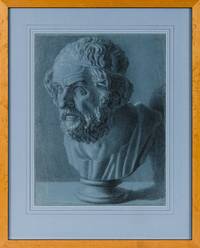
1823rif. 100020AG1823. Germany 1823. Stunning original extra-large 19th century Pencil Drawing on coloured paper. Beautifully Framed. Size of frame with drawing: 61.5 cm x 76 cm. Size of the actual drawing: c. 45 cm x 57 cm. Excellent condition. Signed by C. Schaafhausen d. 18. December 1823. Framed in a wonderful Biedermeier style. unknown
2004Minor knock along back upper board else Fine. ; While appearing to be a conventional Festschrift in honour of a reputed Professor of Philosophy at the University of Toronto, this book includes a unique collection of essays by a number of distinguished scholars, from an impressive number of countries, on current changes in the field of ancient philosophy (some might say resistance to change) as globalization profoundly affects local culture and the education of new generations seems likely to be transformed in significant ways. The essays have been organized largely in geographical order, starting with Professor Robinson's adopted country, Canada, and ending with the linguistic community (and geographical area) more strictly linked with what we have become accustomed to call "ancient philosophy": modern Greece. Through our journey, which takes us through the Americas, the Pacific area (Australia, Japan, China) , and Europe, readers will be pleased to discover how a widening interest in ancient philosophy has recently spread to a remarkable number of "new" countries, some of which have traditionally been thought of as on the margins of (if not strictly outside) the established scholarly community. Although this work is a tribute to a well-known and admired scholar, it is also meant to interest the entire scholarly community of ancient (primarily Greek) philosophy, philosophers and classicists alike: readers wanting to inform themselves about the status of ancient philosophy in a changing and multi-faceted world will find here very much to discover. ; Studies in Ancient Philosophy 6; 352 pages
E. J. Brill. 1953. In-8 Carré. Relié. Bon état. Couv. convenable. Dos satisfaisant. Intérieur frais. 337 pages. Text in Greek and notes in English. C.J. de Vogel, Ph.D., Prof. of Ancient and Mediaeval Philosophy in the Univ. of Utrecht.
1969First published in Sweden 1948 "The beliefs and religious feeling of the Ancient Greeks about the nature of the universe and the life of man." 198p. Book
1967Spine has been reinforced with brown tape. Browning to wraps. Else VG. ; Textus Minores XXXVI; Vol. 1; 93 pages
1984Minor shelfwear. Light foxing to top of textblock. Scholar's bookplate to inner cover (G. P. Goold). Signed by author to G. P. Goold on ffep. ; Aims at finding the precise limits and rationale, whether aesthetic or semantic, of certain syntactical phenomena in classical Greek poetry. ; Yale Classical Monographs 5; 220 pages; Signed by Author
1984Minor shelfwear. Scholar's name to ffep (E. Robbins). ; Scholars Press Homage Series, No 4; 1 x 9.5 x 6.25 Inches; 336 pages; Contributors: John M. Bell, Bruce Karl Braswell, Christopher Brown, David A. Campbell, Anne Carson, D J Conacher, Matthew W Dickie, Robert L Fowler, Douglas E Gerber, John Herington, Eleanor Irwin, Gordon M Kirkwood, Michael J O'Brien, John M Rist, Emmet Robbins, T M Robinson, William J Slater, Friedrich Solmsen, Rosamond Kent Sprague, Shirley Darcus Sullivan, M B Wallace, L S Wilson.
1984Minor shelfwear. Scholar's name to ffep (Douglas Le Pan, who wrote the introduction). ; Scholars Press Homage Series, No 4; 1 x 9.5 x 6.25 Inches; 336 pages; Contributors: John M. Bell, Bruce Karl Braswell, Christopher Brown, David A. Campbell, Anne Carson, D J Conacher, Matthew W Dickie, Robert L Fowler, Douglas E Gerber, John Herington, Eleanor Irwin, Gordon M Kirkwood, Michael J O'Brien, John M Rist, Emmet Robbins, T M Robinson, William J Slater, Friedrich Solmsen, Rosamond Kent Sprague, Shirley Darcus Sullivan, M B Wallace, L S Wilson.
1966"This examination of an alliance is unusual in presenting the point of view of the smaller partner. A Greek politician described the situation succinctly in 1952, "We exist not only thanks to our own decision, but because the Americans exist." A survey of the situation in the post World War era where "Greece has been a partner in NATO primarily for political, strategic, economic and geographical reasons so foreign policy is based on national self interest" x, 250p. index Author inscription on ffep. Book
1974Includes 2 clippings tipped in discussing Dover's possible role in the suicide of Trevor Aston. Scholar's bookplate to inner cover (G. P. Goold). Light foxing to top of textblock. DJ spine a bit discolored. Light edgewear to DJ. ; 349 pages; In ancient Greece, as today, popular moral attitudes differed importantly from the theories of moral philosophers. While for the latter we have Plato and Aristotle, this insightful work explores the everyday moral conceptions to which orators appealed in court and political assemblies, and which were reflected in non-philosophical literature. Oratory and comedy provide the primary testimony, and reference is also made to Sophocles, Euripides, Herodotus, Thucydides, Xenophon, and other sources. The selection of topics, the contrasts and comparisons with modern religious, social and legal principles, and accessibility to the non-specialist ensure the work's appeal to all readers with an interest in ancient Greek culture and social life.
1974Faint waviness to lower edges of about 5 pages. Small piece torn off to 1 page (1/2 cm). ; 349 pages; In ancient Greece, as today, popular moral attitudes differed importantly from the theories of moral philosophers. While for the latter we have Plato and Aristotle, this insightful work explores the everyday moral conceptions to which orators appealed in court and political assemblies, and which were reflected in non-philosophical literature. Oratory and comedy provide the primary testimony, and reference is also made to Sophocles, Euripides, Herodotus, Thucydides, Xenophon, and other sources. The selection of topics, the contrasts and comparisons with modern religious, social and legal principles, and accessibility to the non-specialist ensure the work's appeal to all readers with an interest in ancient Greek culture and social life.