22 983 résultats
1987Dustjacket has very light sunning to spine else fine. ; Describes the forms of patronage from Homer's time to the Hellenistic period, focusing on Homeric bards, the lyric poets, Pindar, Theocritus, and the Alexandrian poets and scholars. Gold then discusses patronage in Rome from the dramatists in the third century B. C. To the later republican poets such as Catullus, Lucretius, and the elegists. ; 267 pages
1987Dustjacket has minor shelfwear and rubbing. One crease to back panel of DJ. Light soiling. ; Describes the forms of patronage from Homer's time to the Hellenistic period, focusing on Homeric bards, the lyric poets, Pindar, Theocritus, and the Alexandrian poets and scholars. Gold then discusses patronage in Rome from the dramatists in the third century B. C. To the later republican poets such as Catullus, Lucretius, and the elegists. ; 267 pages
1987Foxing to top of textblock. Minor shelfwear to book and DJ. ; Describes the forms of patronage from Homer's time to the Hellenistic period, focusing on Homeric bards, the lyric poets, Pindar, Theocritus, and the Alexandrian poets and scholars. Gold then discusses patronage in Rome from the dramatists in the third century B. C. To the later republican poets such as Catullus, Lucretius, and the elegists. ; 267 pages
réf. 65987, Brepols, 2019 Paperback, vi + 560 pages, Size:156 x 234 mm, Illustrations:3 b/w, 7 col., Languages: English, French, Spanish. ISBN 9782503583549.
1983Begins with Aristotle and traces artistic and literary through to Samuel Johnson. 336p. Book
1952Vol. I& II: former owner's bookplate to inner cover (William E. Beattie). DJ has a bit of chipping and small tears In VG- condition. Vol. II: DJ has some chipping and tears and front panel is browned and a bit waterstained. DJ is Good. ; The First Volume starts with an introduction to the general character and functions of ancient literary criticism, and then discusses the contributions made by Greek writers, from Aristophanes to Aristarchus. The Second Volume deals with the varied critical activities at Rome which belong roughly to the first century B. C. And the century that followed - a period in which Greek as well as Roman writers turned their attention to literary criticism. ; 2 Volume Set COMPLETE; Vol. 1/2/2022; 562 pages
1984Gazetteer of Greek places as described by poets and writers through the ages. 321p. bibliography. index Paper age-toned. Book
1987xiii + 332pp. + 2pp. theses, 24cm., text in English, Doctoral Dissertation (Rijksuniversiteit te Groningen, the Netherlands), softcover, stamp at verso of title page, text is clean and bright, K113364
1987réf. K113364Groningen, 1987 xiii + 332pp. + 2pp. theses, 24cm., text in English, Doctoral Dissertation (Rijksuniversiteit te Groningen, the Netherlands), softcover, stamp at verso of title page, text is clean and bright, K113364
1998Light dustsoiling to textblock else fine. ; Text in deutsch; 310 pages
1998Light bumping to foreedges of boards. Minor shelfwear to DJ. ; Text in deutsch; 310 pages
réf. 105012München, Saur, 2001.
1991Light foxing to textblock. ; Contents: Tim Cornell: The tyranny of the evidence: a discussion of the possible uses of literacy in Etruria and Latiumin the archaic age; Mary Beard: Ancient literacy and the function of the written word in Roman religion; Nicholas Horsfall: Statistics or states of mind? ; James L. Franklin Jr. : Literacy and the parietal inscriptions of Pompeii; Mireille Corbier: L’ecriture en quête de lecteurs; Alan K. Bowman: Literacy in the Roman empire: mass and mode; Keith Hopkins: Conquest by book. Ann Ellis Hanson: Ancient illiteracy; Journal of Roman Archaeology Supplementary Series #3; 198 pages
2002Minor shelfwear. Dustjacket is protected in mylar. ; The Homeric poems were not intended for readers, but for a listening audience. Traditional in their basic elements, the stories were learned by oral poets from earlier poets and recreated at every performance. Individual nuances, tailored to the audience, could creep into the stories of the Greek heroes on each and every occasion when a bard recited the epics. For a particular audience at a particular moment, "tradition" is what it believes it has inherited from the past--and it may not be particularly old. The boundaries between the traditional and the innovative may become blurry and indistinct. By rethinking tradition, we can see Homer's methods and concerns in a new light. The Homeric poet is not naive. He must convince his audience that the story is true. He must therefore seem disinterested, unconcerned with promoting anyone's interests. The poet speaks as if everything he says is merely the repetition of old tales. Yet he carefully ensures that even someone who knows only a minimal amount about the ancient heroes can follow and enjoy the performance, while someone who knows many stories will not remember inappropriate ones. Pretending that every detail is already familiar, the poet heightens suspense and implies that ordinary people are the real judges of great heroes. Listening to Homer transcends present controversies about Homeric tradition and invention by rethinking how tradition functions. Focusing on reception rather than on composition, Ruth Scodel argues that an audience would only rarely succeed in identifying narrative innovation. Homeric narrative relies on a traditionalizing, inclusive rhetoric that denies the innovation of the oral performance while providing enough information to make the epics intelligible to audiences for whom much of the material is new. Listening to Homer will be of interest to general classicists, as well as to those specializing in Greek epic and narrative performance. Its wide breadth and scope will also appeal to those non-classicists interested in the nature of oral performance. ; 1.25 x 9.75 x 6.75 Inches; 248 pages
1995Very light shelfwear. ; I Classici Della Bur; 6.9 X 4.3 X 1.3 inches
1995Hachette 1995. In-8 cartonnage de 255 pages. Bon état
1995réf. 112602Hachette Hachette 1995. In-8 cartonnage de 255 pages. Bon état
1999réf. RO80132271HACHETTE EDUCATION. 1999. In-8. Broché. Bon état, Couv. convenable, Dos satisfaisant, Intérieur frais. 200 pages. Nombreuses illustrations en noir et blanc, dans le texte. Quelques cartes bicolores, dans le texte.. . . . Classification Dewey : 480-Langues helléniques. Grec
réf. 65438, Brepols, 2021 Hardback, 395 pages, Size:156 x 234 mm, Illustrations:6 b/w, 14 tables b/w., Language: French. ISBN 9782503589725.
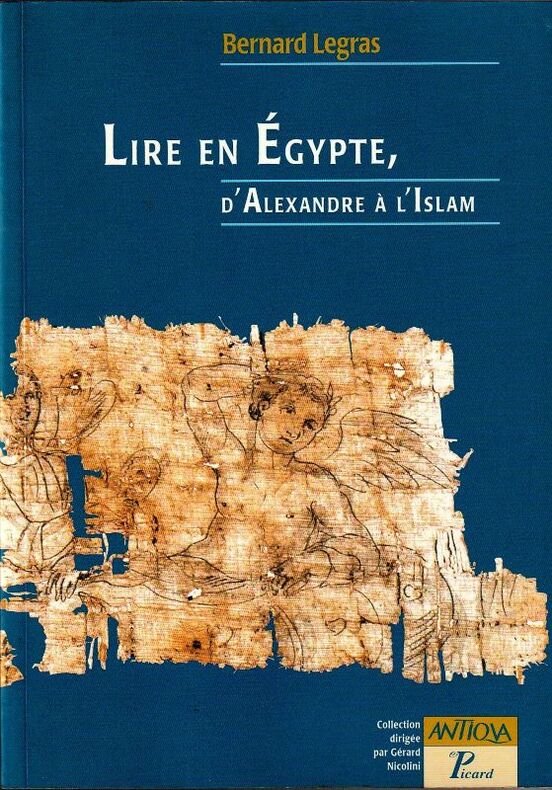
réf. 10533Éditions A & J Picard - Collection antiqua - 2002. In-8, broché, couverture souple glacée bleue ill (papyrus dessin),188 pages-XVII Planches en 25 pages glacées sur fond noir à part du texte et en début d'ouvrage, 90 figures par ailleurs dans le texte ainsi que, in fine 5 cartes à pp, un glossaire ainsi q'une importante bibliographie -très bel exemplaire sous tous rapports.
1974When Virginia Sanderson arrived on Mykonos, one of the many Greek isles, in search of her missing twin sister, Lee she realized she was being followed. Her sister's letter had alarmed her; what was really going on at the Boutique Cleopatra, the shop Lee was managing for her boss, Kriton Fileas? Lee had always been the one who could manage on her own, yet her brief note spoke of trouble. Virginia feared that she too was now involved. in the strange and terrifying series of events that had already caused her sister's disappearanced 218p. Neat copy.ffep missing, library stamps. Ex-Library
réf. 159881Leiden etc., Brill, 1999.
réf. 159741Amsterdam, Philadelphia, John Benjamins, 1988.