29 résultats
1999réf. 9825Belmont MA: Ford & Bailie 1999. Soft cover. Good. Paperback xxxv 387 pages b&w illustrations NOT ex-library. Interior is clean and bright untanned with unmarked text and firm binding free of inscriptions and stamps. Faint dusty and handling marks on page edges externally. A touch of wear to tips of corners. -- Contents: Preface; Introduction; Origins of Poets The Boyhood Deeds of Finn; The Story of Gwion Who Became Taliesin; Athirne and Amairgen; The Spirit of Poetry; Sinann: The Shannon River; Imbas Forosnai: Illuminating Inspiration; Poets on Tour Athirne the Insistent; Lomna Finn's Fool; The Battle of Allen; Llywelyn and the Fool; The Siege of Howth; Guaire's Greedy Guests; The Vision of Mac Con Glinne; Satire on Rhys Meigen; -- Welsh Poems: -- Summertime / Anonymous; Taliesin: - Cynan Garwyn son of Brochfael - The Battle of Gwen Ystrad - In Praise of Llwyfenydd; The Gododdin: selections / Aneirin; Llywarch Hen: - The Sick One of Aber Cuawg - Song of the Old Man - On Urien and the Gogledd - The Desolation of Erechwydd - Gnomes; -- The Poets of the Princes: -- Elegy for Gruffudd ap Cynan / Meilyr Brydydd; Elegy for Llywelyn de Gruffudd / Bleddyn Fardd; Elegy for Llywelyn de Gruffudd / Gruffudd ab yr Ynad Coch; Hywel's Boast / Hywel ab Owain Gwynedd; Gwalchmai's Boast / Gwalchmai ap Meilyr; Ieuan's Boast / Ieuan ap Rhydderch; Prydydd y Moch: - To Gwenlliant - A Threat to Dafydd ab Owain Gwynedd - A Threat to Gruffudd ap Cynan ab Owain - In Praise of Gruffudd ap Cynan ab Owain - An Elegy for Gruffudd ap Cynan ab Owain - In Praise of Llywelyn ap Iorwerth 1 - In Praise of Llywelyn ap Iorwerth 2 - A Prayer for the Health of Madog ap Gruffudd - The White-hot Iron; Dafydd ap Gwilym: - To Ifor Hael 1 - To Ifor Hael 2 - Basaleg - Elegy for Ifor and Nest - In Praise of Summer - May - Summer - The Holly Grove - The Woodland Mass - A House All of Leaves - The Ruin - Secret Love - The Seagull - The Star - Under the Eaves - The Girls of Llanbadarn - The Minor - The Sunshine Girl - Trouble in a Tavern - A Reluctant Girl - Looking for a Nun - The Magpie's Advice - The Poet and the Gray Friar - The Poet's Shadow; Complaint against Dafydd / Gruffudd Gryg; Reply to Gruffudd Gryg / Dafydd ap Gwilym; -- Irish Poems: -- Irish Bardic Poetry: -- Giolla Brighde Mac Con Midhe: - A Vision of Emain Macha - A Response to a Threat against Poetry; Tadhg Dall hUiginn: - Christmas in Creeve - Longing for Enniskillen; Laments: I-X / Gormlaith Daughter of Flann Sinna; Bibliography Ford & Bailie paperback
1937réf. 018590Baile Atha Cliath Dublin: Oifig Diolta Foillseachain Rialtais 1937. Book. Good. Hardcover. 1st Edition. First Edition First Printing. First edition in Gaelic A good copy in original jacket with wear and chipping. Original green cloth gilt title to the front panel and spine uneven fade to the boards tight binding.A Rare anthology of translation containing Miceal Breatnac M.A. translation of A.M Burrage 'The Waxwork' Padraic Og O Conaire translation of Frank O'Connor 'The Sisters'. Padraic O Domnallain translation of William Gilmore Sims 'Murder Will Out' Sean Mac Giollarnat translation of H.G. Wells 'The Country of the Blind' Padraic O Mograin M.A. translation of O. Henry 'The Gift of the Magi' Tomas O Ragaillig translation of Anton Tchehov 'The Bet' Sean O Ruadain translation of Lynn Doyle 'Dear Ducks' Mairtin O Cadain translation of Lynn Doyle 'A short suit' An Tatair O Beirn translation of Lynn Doyle 'A bit of land' and a piece in Irish by Padraic O Conaire . Oifig Diolta Foillseachain Rialtais Hardcover
1961réf. 455030Oxford University Press 1961. First Edition. Hardcover. Near fine cloth copy in a very good if slightly edge-nicked and dust-dulled dust-wrapper now mylar-sleeved. Remains well-preserved overall. Not price-clipped. Series; Penguin books ; 2000. Physical description; xiii 446 pages ; 24 cm. Notes; Translated under the supervision of the Joint Committee on the New Translation of the Bible. Subjects; Bible. New Testament. English. New English Bible 1961. Bible Versions English. New Testament Texts. Biblical studies English translations. Oxford University Press hardcover
1985réf. 13053Paperback 263 pages 13 NOT ex-library. Noticeably yellowed cover- and page-edges. Interior is clean with unmarked text free of inscriptions and stamps. Faint external grubby marks on outer page edges dusty lower and upper edges. Good secure binding. Creased spine. -- L'irrésistible ascension de Raffaele Cutolo fondateur et chef de la maffia napolitaine dont le procès fleuve a fait grand bruit jusqu'en juillet. Le film devrait sortir en 1986. -- La Sicile a la Mafia Naples a la Camorra qui de folklorique autrefois est devenue tentaculaire dans les années 70. L'artisan du changement: Raffaele Cutolo fils de paysans emprisonné très jeune pour avoir tué un homme au cours d'une dispute. Derrière les barreaux jour après jour il met la main sur la contrebande le racket le trafic de drogue… Et l'imagination populaire fait de lui un nouveau Robin des Bois qui vole aux riches pour donner aux pauvres. Le boss dicte sa loi et même Cosa Nostra s'allie avec lui. Aussi captivant que Le Parrain mais écrit à la première personne de l'intérieur même de la 'conscience' de Cutolo à partir de son témoignage Le Camorriste raconte ses crimes ses trafics ses amours ses faiblesses et les dessous de l'enlèvement du député démocrate-chrétien de Naples qui vit Cutolo être l'intermédiaire entre l'État et les Brigades rouges. Une histoire vraie qui est un grand roman d'action. L'auteur Giuseppe Marrazzo journaliste italien célèbre par ses enquêtes retentissantes sur le crime organisé est mort d'une crise cardiaque le soir de la présentation du livre à Rome. -- Table des matières: 1. Sur la chemin de l'Asinara 2. La recontre avec un vrai boss 3. Entre rêve et réalité 4. Le défi à 'o Malommo 5. Le pacte du sang 6. La cavale 7. Le voyage en Amérique 8. Cartuccia et Turatello sont condamnés à mort 9. Les dessous de l'enlèvement de Cirillo 10. La décapitation du criminologue Semerari 11. Le 'scandale' Cutolo explose 12. L'Asinara et la trahison de 'o Nerone; Postface Flammarion paperback
1945réf. 101342AB1945. Baile átha Cliath Oifig Diolta Foillseacháin Rialtais 1945. 22 cm. 62 pages. Softcover. Very good condition with only minor signs of external wear. paperback
1985réf. 75554AB1985. Reprint. London Darton Longman and Todd 1985. 14 cm x 22 cm. 154 pages. Original Softcover. Excellent condition with only very minor signs of external wear. Includes for example the following essays: Experience of God - Evil What Does Not Exist - Chance Experience of the Church - A Taboo to Be Rid Of 'Mercy I Desire Not Sacrifice' and Farewell. paperback
1993réf. 75317AB1993. London The Folio Society 1993. 18.5 cm x 27.5 cm. 96 pages. With 8 illustrations. Original Hardcover cloth-bound. With slipcase. Excellent condition with only very minor signs of external wear. Includes the text of The Art of Love divided into three books and an introduction to the text by James Michie translator. The text is accompanied with full-colour page illustrations titled for example:- 'A Man and a Woman in the Wood one day' 'Each man's on his own.' and 'While I was writing this I saw Apollo coming Towards me with his golden lyre'. hardcover
1990réf. 75200AB1990. Second Edition. Barcelona Fundacio Joan Miro 1990. 20.5 cm x 29.5 cm. 112 pages. Original Softcover. Excellent condition with only very minor signs of external wear. Includes for example the following essays: The Joan Miro Foundation and its collections Origins and Aims The Building Plan of the Foundation Illustrations - Paintings Sculptures and Drawings and a Biography Chronology of Joan Miro. Illustrated throughout. paperback
1970réf. 454986Oxford University Press ; Cambridge University Press 1970. First Edition. Hardcover. Fine cloth copy in an equally fine dust-wrapper. Not price-clipped. Well-preserved overall; tight bright clean and especially sharp-cornered. Series; The Bible: a new English translation. Physical description; xiv 362 pages ; 23 cm. Notes; Prepared by the Joint Committee on the New Translation of the Bible. Subjects; Bible. Apocrypha. English. New English Bible 1970. Apocryphal books Old Testament English Versions. Deuterocanonical literature. Biblical studies English translations. Oxford University Press ; Cambridge University Press hardcover
1961réf. 455365Cambridge England ; Oxford : at the University Press 1961. First Edition. Softcover. Near fine copy in a flexible gilt-blocked leatherette semi-yapp binding with all gilt edges. Remains well-preserved overall; tight bright clean and strong. Physical description; xiii 446 pages ; 24 cm. Notes; Translated under the supervision of the Joint Committee on the New Translation of the Bible. Includes bibliographical references. Subjects; Bible. New Testament. English. New English - 1961 Bible - Versions - English. Cambridge, England ; Oxford : at the University Press paperback
1970réf. 454988London : Oxford U.P./Cambridge University Press 1970. First Edition. Hardcover. Fine cloth copy in an equally fine dust-wrapper. Not price-clipped. Well-preserved overall; tight bright clean and especially sharp-cornered. Series; The Bible: a new English translation. Physical description; xxiv 1366 pages ; 24 cm. Notes; Translated under the supervision of the Joint Committee on the New Translation of the Bible. Subjects; Bible. Old Testament. English. New English Bible 1970. Bible Versions English. Biblical studies English translations. Old Testament Commentaries. London : Oxford U.P./Cambridge University Press hardcover
1961réf. 377997Oxford : Oxford University Press ; Cambridge : Cambridge University Press 1961. First Edition. Hardcover. Near fine copy in the original gilt-blocked boards. Slightest suggestion only of dust-dulling to the spine bands and panel edges. Remains particularly well-preserved overall; tight bright clean and strong. Physical description; xiii 446 pages 24 cm. Subjects; Bible Versions Catholic. Bible - N.T. English Versions. Bible. New Testament. Bible. English. Bible. New Testament Interpretations. Oxford : Oxford University Press ; Cambridge : Cambridge University Press hardcover
1970réf. 289064London : Oxford University Press : Cambridge University Press 1970. First Edition. Hardcover. Near fine copy in the original gilt-blocked cloth. Slightest suggestion only of dust-dulling to the spine bands and panel edges. Remains particularly well-preserved overall; tight bright clean and strong. Physical description: xxi 336p. ; 21cm. Subjects: Bible -- Old and New Testaments -- English translation. London : Oxford University Press : Cambridge University Press hardcover
1979réf. 5053Varsovie: PWN Editions scientifiques de Pologne & Centre d'Arch ologie m diterran enne de l'Acad mie polonaise des Sciences 1979. 1st Edition . Hardcover. Very Good/Good. Scarce oversized cloth hardcover no ISBN 133 pages 2 4 folded sheets in rear pocket Carte de la Nubie chr tienne & Les types de baptist res nubiens & Les types et l' volution des bassins & Gen se des baptist res nubiens copiously illustrated with b&w images NOT ex-library. Weight: 582g / 1.29lb. Gently age-yellowed endpapers else book is untanned free of foxing and age-spotting; pages show limited signs of light wear remain clean and bright with unmarked text; no stamps no inscriptions. Firm secure binding. Age-toned dust jacket with an approx. 1-inch tear scuffing to edges moderate shelfwear. -- Ce volume comporte une monographie consacr e aux baptist res chr tiens en Nubie. L'essor en fut donn par les d couvertes de la Mission Arch ologique Polonaise Faras puis Dongola. L'analyse englobe aussi bien les salles de bapt mes leur situation par rapport l' glise et leur orientation que les fonts baptismaux leur structure et volution. Les conclusions tir es de cette tude permettent de suivre la gen se et l' volution des baptist res en Nubie et permettent galement de reconstituer la c r monie du bapt me et le rite auquel il ob issait. L'auteur a particip plusieurs campagnes des fouilles polonaises Dongola et analysa sur place les ensembles baptismaux d couverts sur ce site et qui sont d'une importance primordiale pour l'histoire de cette forme architectonique dans la Nubie. -- Table des mati res: Introduction; I. Caract res g n raux des baptist res nubiens; II. La localisation des baptist res; III. Les baptist res; IV. Les fonts baptismaux; V. La d coration des baptist res nubiens; VI. La c r monie du bapt me; Catalogue -- Liste des baptist res nubiens tudi s: I. Baptist res certains: -- Abou Oda - glise; Arminna Ouest - glise; Faras - Cath drale de Paulos; Ikhmindi - glise Centrale; Kasr el Wizz - glise; Meinarti - glise; Old Dongola - Vieille glise; Old Dongola - glise au Dallage de Pierre; Old Dongola - glise aux Colonnes de Granit; Ouadi es Seboua - glise; Qasr Ibrim - Cath drale; Ar Ramal - glise; Seih Bedawi - glise; / II. Baptist res probables: -- Aksha - glise; Sonqi Tino - glise; / III. Baptist res hypoth tiques: -- Abdallah Nirqi - glise Centrale; 2. Abdallah Nirqi - glise Nord; Debeira Ouest - glise; Faras - Premi re Cath drale; Faras - 'Rivergate Church'; Faras - glise inconnue; Ghazali - glise; Kalabsha - glise; Musawwarat es Sufra - glise; Naga Abdallah - glise; Naga el Oqba - glise; Naga es Seima - glise; Shellal - glise PWN Editions scientifiques de Pologne & Centre d'Archéologie méditerranéenne de l'Académie polonaise des Sciences hardcover
2000réf. 3866Paperback 14 178 pages NOT ex-library. A couple of creases to lower outer corners throughout the book cover and pages. Else little used clean and bright throughout with tight binding and unmarked text: no writing no highlighting of any kind. Short horizontal creases to upper and lower spine edges.--- This book is the outcome of a seminar hosted by the Africa Institute of South Africa to provide a platform for Congolese and South African representatives of differing political persuasions to present their views on the multi-dimensional and complex nature of the present crisis in the Democratic Republic of Congo; and debate strategies for peace and reconstruction. The Congolese representatives came from both the government controlled area Kinshasa; and the territory under rebel administration Kivu. Both groups provide coverage of the conflict discuss issues of nationality and emphasise the need for inclusion in national and local dialogue. The papers also debate peace-keeping and peace-enforcement; military ethnic political and economic constraints to peace building and how these may be overcome; and demilitarisation and disarmament of militias operating in the eastern Congo. They analyse the state of the economy in the DRC in the periods of the Mobutu era during the Kabila-led take-over and since the eruption of the war; and consider the possibilities for sustainable economic reconstruction. They expose the impacts of the war on women and children and outline the role of women in the peace efforts. -- CONTENTS Part One: Internal and International Challenges to Peace-Making and Peace Building in the Democratic Republic of Congo Peace and Security in the DRC / Shannon Field and Ebrahim Ebrahim; The Democratic Republic of Congo: The Quest for Sustainable Peace / Claude Kabemba; Discussions; Part Two: Background to the Conflict and the Quest for Democracy and Good Governance Background to the Conflict and Instability in the African Great Lakes Region / Wildor Makonero; The Inter-Congolese Dialogue and Constitution-Making / Denis Kadima; Transforming the Political System in the DRC / Kabasubabo Katulondi; Discussion; Part Three: Civil Society in Kinshasa: War Peace Gender and Elections The Impact of the War on Women and Children / Anne-Marie Mukwayanzo; The Role of Women in Constructing and Maintaining Peace / Marie-Curie Makutu; Instituting Democratic Elections in the DRC / Paul Nsapu; Discussion; Part Four: Demilitarisation and Disarmament of Renegade Militias Should the Mai Mai Militia Be Disarmed / Augustin B. Mutambala; Regional Perspectives on Security and Peace After the War / Musimwa B. Partiel; Discussion; Part Five: Economic and Social Reconstruction After the War Reconstructing the Congolese Economy After the War / Joseph M. Kabwe Africa Institute of South Africa paperback
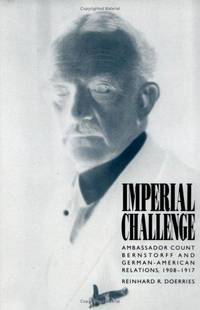
1989réf. 12827Oversized cloth hardcover xix 442 pages NOT ex-library. Shipping weight over 1kg. Pencil underlining and/or annotations / marginalia on 175 pages. Else light wear only book is clean untanned free of any foxing and age-spotting. Untorn dust jacket shows minor edgewear straightened creases on the flaps a touch of sunning on the spine. -- A scholarly study of the deteriorating diplomatic relationship between Germany and the United States in the decade leading up to America's entry into World War I. The book focuses on the tragic role of Count Johann Heinrich von Bernstorff the Imperial German Ambassador to Washington from 1908 to 1917. It portrays Bernstorff as a seasoned liberal diplomat who found himself caught between his personal desire for peace and the aggressive directives of his government in Berlin. Bernstorff is depicted as one of the few high-ranking German officials who understood American power. He repeatedly warned Berlin that unrestricted submarine warfare would inevitably force the U.S. into the war. In his desperation to prevent conflict Bernstorff frequently overstepped his instructions or ignored them entirely to appease the American administration and President Woodrow Wilson. Ultimately his conciliatory advice was ignored by the German military command and the Kaiser who overestimated German power and underestimated the United States. A significant portion of the English edition expanded from the original 1975 German version focuses on the "shadow war" conducted on American soil. The book details German activities in the U.S. between 1914 and 1917 including espionage propaganda and physical sabotage aimed at preventing American munitions from reaching the Allies. Doerries examines the extent to which Bernstorff was aware of these clandestine operations noting the "tricky position" he occupied as both an ambassador and a nominal supervisor of secret service agents like Franz von Papen. Critics and historians consider this work the most comprehensive treatment of German-American diplomatic relations during this critical era. The book utilizes documentary evidence that became available only after World War II providing fresh insight into the internal conflicts within the German Imperial government. University of North Carolina Press hardcover
1929réf. 019940London Bombay and Sydney: George G. Harrap & Co. Ltd 1929. Book. Illus. by Monro S Orr. Very Good . Hardcover. 1st Edition. First UK Edition THUS Third print of this edition. pp. 294. Original blue boards complete with eight full colour illustrations by Monro S Orr. Original pictorial jacket present same design as boards. Light wear and a touch of chipping to spine. Clean tightly bound copy gift inscription to front end page. . George G. Harrap & Co. Ltd Hardcover
1976réf. 10367Hardcover 246 pages. A foreign stamp on the title page. Interior in great shape clean and bright with unmarked text free of inscriptions firmly bound. Gently age-toned upper outer page edges a touch of minor yellowing on endpapers only. Dust jacket with a tear to the upper front edge. -- "This book needs no introduction. It is the authentic story of my brother-in-law a Polish officer of the reserve son of the composer and the well beloved conductor of the Warsaw Opera Emil Mlynarski captured at the end of the Polish-German Campaign in 1939 by the invading Red Army and detained in a Soviet camp for officers. Most of the inmates of these camps disappeared mysteriously and bodies of over 4000 of them were later found in the Katyn Woods near Smolensk. They were identified and it was established that the victims had been inmates of one camp only namely that of Kozyelsk Kozelsk. A similar fate befell officers in the two other camps most of whom disappeared without trace. Mlynarski was held at the camp of Starobyelsk and for reasons unknown with 78 other Polish officers was allowed to survive and to tell his story. It is a tragic one. First came the treacherous and brutal blow struck by the Red Army in the back of the retreating and unsuspecting Polish troops belonging to a country with whom the Soviet Union not only was not in a state of war but bound by a non-aggression pact. Then came the no less brutal manner by which the prisoners were driven into Central Russia first on foot later in box-cars more apt for transporting cattle than human beings. And finally the sojourn in the Starobyelsk Starobielsk Camp. The author's account of his ghastly ordeal is not only gripping but offers an incisive insight into the workings of the secret police known then as the NKVD which ran the camp. The way in which as one can assume the decision of the ultimate annihilation of the Polish prisoners of war was slowly maturing in Stalin's mind has the makings of a Greek tragedy of unsurpassed dimensions." Arthur Rubinstein -- Contents: 1 Warsaw September 1939; 2 Direction - East; 3 A knife in our backs; 4 Deadly ambush; 5 Eye to eye with the enemy; 6 In Soviet captivity; 7 To the East in stages; 8 Our first contacts with Soviet reality; 9 Camp Starobyelsk; 10 A delegate from Moscow; 11 Everyday camp life; 12 Prisoners from Shepetovka; 13 Lavotchka the green box; 14 Roubles; 15 My first interrogation; 16 The new barracks; 17 "Thank you my friends"; 18 Dogs; Epilogue by Witold Kaczkowski -- "Prompted by a sense of evil foreboding a handful of officers who had been closely united through brotherhood through suffering and distress gave each other a solemn vow that if one of them should live to see freedom he would remember the others. This proved to be our parting. For Providence chose to spare me only and to restore freedom to me alone." This book is the fulfilment of Mlynarski's promise to those friends. He was one of the 79 officers out of nearly 4000 whose life was spared by the NKVD when they liquidated the Starobyelsk "special" prisoner-of-war camp in 1940. Caught between the German and Red Armies at the beginning of the ww2 some Poles hoped against hope that the Red Army was crossing the border to fight side by side with them against the Germans. Reality brought an invaded Poland a defeated and imprisoned army and 3 special pow camps for the leaders of Polish society. In 1943 in the Katyn Woods the Germans dug up the corpses of the unlucky 4254 Poles from one of the special camps. The bodies of the "other 10000" from the other two camps have never been found. This is a tragic yet poetic story of a true patriot imbued with a deep love for human beings who also felt sympathy for the ordinary Russian people themselves victims of the inhuman Stalin regime. It is also one of the most important contributions to a chapter in history which has been shrouded in secrecy hidden behind an iron curtain of conspiracy. Bachman & Turner hardcover
1992réf. 10352Hurst & Company / St. Martin's Press 1992. 1st Edition . Hardcover. Near Fine/Good. Hardcover xx 236 pages numerous b&w photos and maps in text NOT ex-library. Book is clean and bright throughout untanned with unmarked text free of inscriptions and stamps firmly bound. A touch of rubbing to board edges. Bright dust jacket with a couple of tears treated with transparent tape. -- Sweden a neutral state since early in the nineteenth century has made an active contribution with forces and observers to most of the United Nations peacekeeping operations. The benefit has been mutual: for the UN the commitment of a prosperous state with a tradition of military preparedness despite its neutrality and for Sweden the opportunity to practise military leadership and test its soldiers in in complex situations often involving actual fighting. Sweden's important activity in this field has been little documented and hardly at all in languages other than Swedish. This is now remedied with a comprehensive case-study of a model UN operation which directly affected the political result - which was the transformation of Sinai a classic theatre of war into a peace front. The study is in two parts. The first is chronological and begins with the establishment of the UN Emergency Force UNEF II after the October War of 1973; the political antecedents involving the Secretary-General the Security Council and the countries approached for contributions; the interposition of "mini-battalions" between the Egyptian and Israeli front lines; the UNEF build-up the complex separation of forces the establishment of the blue helmets in the buffer-zones routine activities and incidents and finally after a peace treaty the winding-up of the UN force. The despatch of a Swedish advance guard to a new peacekeeping force in Lebanon in 1978 is also described. The three levels and locations of command - UN headquarters in New York UNEF headquarters and the fourteen successive Swedish contingents are all given their due weight. The second part is analytical looking not only at the course of events but at the different concerns of the military staff: operational logistical and personal. The final chapter sums up the essential experience and lessons of the operation with some proposals for improvements. -- Contents: Chronology of UN interventions in the Middle East; UNEF II: basic data; Part I. Course of Events 1. Background of war Palestine Suez June Wars; War of Attrition & October War 2. UN intervention 3. "Fire brigade" from Cyprus 4. Battalion from Sweden Interrupted training; Two battalions in co-operation; Baptism of fire & transfer of responsibility; Fragile armistice; Assignments in Alexandria and Suez 5. Troop separation Change of scene to Geneva; Peace conference & Military Working Group; Strength & weakness of UNEF; Sinai I becomes Operation Calendar; What did they do at battalion level 6. First buffer-zone 7. Further into Sinai 8. Lebanon calling 9. Peace and winding-up Sadat-Begin-Carter; Tottering mandate; Changed task; Last UNEF contingent but; A new peace force underway Part II. Functional Analyses 10. Operational functions Flexible organization fixed rotation; Violations by the parties. UN reactions; Intelligence: a dirty word in the UN; Communications: everybody's business; Command at different levels; Relations negotiations co-operation 11. Logistics & finance Procedure & terminology; Weapons clogs "candy mountain"; Health & hygiene go together; Mail & money; Air safer than road; Financing the operation 12. Personnel: the primary resource Planning & results; Welfare in a desert environment; Broadcasting newsletter & magazine; Physical training & field sports; Crime & punishment 13. Odd functions 14. Conclusions and suggestions The need for speed; Better equipment and logistics; Despite motley structure despite delays; Appendixes I. Places and Events II. Egyptian-Israeli agreement on disengagement of forces in pursuance of the Geneva Peace Conference; Sources and literature; Index Hurst & Company / St. Martin's Press hardcover
1993réf. 7728Cambridge UK: Polity Press 1993. Hardcover. Very Good/Very Good. Hardcover ix 168 pages b&w illustrations in text NOT ex-library. Limited mild wear book is clean and tight with unmarked text free of inscriptions and stamps. A tiny nick to the upper edge of a few leaves. Dust jacket is gently shelfworn with sunning to the spine and flap edges light creasing to edges a touch of rubbing. -- This book is a concise history of the use and interpretation of time written by one of the foremost historians in Europe today. Arno Borst examines the various ways that time has been calculated by numbers and measured by instruments through the ages from the "computus" - an ancient method of determining times and dates - to the present-day computer. In a wide-ranging discussion he analyses the classical Greek concepts of divine natural and human time; the universal time of ancient Rome; the Easter cycle of the Middle Ages; the development of the mechanical clock in the fourteenth and fifteenth centuries; early modern chronology; and twentieth-century data processing. Borst argues that although many centuries and countless different instruments - sundials horologia abaci astrolabes calendars and calculating machines - separate the "computus" from the modern computer each generation throughout the ages has had to answer the same question: how can we make the best use of our available time to improve our lives The computer he suggests is merely a new instrument employed for an ancient purpose. Lively and accessible The Ordering of Time will be welcomed by students and researchers in social and cultural history the history of science and mathematics as well as anyone interested in the history of time and numbers. Polity Press hardcover
2000réf. 9740Springer 2000. Hardcover. Near Fine/Good. Large-format cloth hardcover 36 x 26 cm 195 pages 157 colour illustrations pictorial endpapers NOT ex-library. Weight 2410g please note: extra shipping will be required. No slipcase. Minor light wear book is crisp clean and bright with unmarked text free of inscriptions and stamps firmly bound. Good dust jacket sunned spine corners and spine ends rubbed white with short creases and edge-nicks. -- Contents: Buddhist Buildings: Photographs North China; Central China; Western Localities; Formation and Development of Chinese Buddhism: Explaining Buddhism by Mysticism and Supplementing Mysticism with Buddhism Initial Spread of Buddhism; Beginnings and the Translation of Scripture; Establishment and Prosperity of the Buddhist Sect; Tibetan Buddhism Lamaism; Founding and Evolution of the Buddhist Monastery in China: From the Establishment of the Baima Temple to the Forest-like Buddhist Monasteries of the Sui and Tang Dynasties Origin of the Monastery; Structural Evolution of the Chinese Monastery; Transformation and Evolution of the Pagoda; Stone Cave Monastery; Building of the Lamasery; Artistic Characteristics of Buddhist Architecture in China: The Blending of Western Buddhist Culture and Chinese Innate Culture Varied Natural Settings Chosen for the Location of the Buddhist Monastery; Treatment of Space in the Buddhist Monastery on Han Territory; Characteristics of the Architectural Art of the Lamasery; Decoration Artistic Creation etc.; Appendices General Plan and Section of the Nan-Chan Monastery and Restored Elevation and Section of the Great Hall; General Plan and Section of the Foguang Monastery and Front Elevation and Section of the Great Hall; Schematic Drawing of the Beam Structure of the Great Hall in the Foguang Monastery; Elevation and Section of the Mahayana Pavilion in the Puning Monastery; General Plan of the Putuozongsheng Monastery and Plan Elevation and Section of the Dahong Platform; Drawings of the Great Hall in the Lower Guangsheng Monastery and Its Framework Structure; Illustration of the Principal Features of the Chinese Buddhist Pagoda; A Comparison of the Different Plans of Chinese Buddhist Pagodas; Sketch of Grotto Plan and Comparison with Cave Style Evolution; Plan Elevation and Section of the Tianlongshan Grotto 16; Imaginary Sketch of the Original State of the 4th Maijishan Grotto; Sketch of Stone-Sculptured Tang Dynasty Buddhist Building and Buddhist Monastery; Dougong Bracket Inner Lintel and Square Pillar; Glossary; Notes on the Photographs; Map and Chronology Map of Distribution of Buddhist Buildings; Tourist Map of Buddhist Buildings in Northern Shanxi; Chronology of Major Events in the History of Chinese Architecture -- From the end of the Han Dynasty onwards Buddhism took root in China spreading and developing over a period of more than 1000 years. The original teachings from India became imbued with native Chinese thought on heaven and man; a foreign religion therefore with Chinese modifications. As far as its architecture was concerned is gradually integrated with that of China in style hardly differing from that stipulated by central government law. In addition to the wooden or brick and stone temple gate the main hall and other Buddhist buildings the Buddhist pagoda or tomb pagoda often took on various forms in the monasteries. Unique forms including those to be found in the stone cave and the lamasery are also to be seen chiefly in Northern China and western localities. To facilitate identification the monasteries and their location in what is a vast land have roughly been arranged into three regions: Northern China Central China and the western localities. Not only is their appearance described but the reader is also given an insight into their internal structure their fittings as well as the exquisitely sculptured statues all an expression of the dignified beauty of Buddhist architecture. Springer hardcover
1997réf. 5542Faridabad Harayana India: Jiva Institute 1997. Hardcover. Good. Scarce hardcover x 262 pages NOT ex-library. No ISBN. Book is undamaged in overall good condition clean with unmarked text and firm secure binding free of inscriptions and stamps however the manufacturing quality of paper and binding is somehow not on par with Western standards: boards are a bit crooked with creases and uneven wrinkly texture; there is also slight wrinkling of pastedowns and some of the pages book is not moisture-damaged. -- "Hitopadesa or 'Good instructions' is famous for its wisdom and is one of the most popular books on ethics and polity from Niti-sastra. Many verses can be traced to the Puranas and Itihasas. It uses the story-within-a-story-format with animals as the main characters. The first book Mitralabha 'Acquisition of Friends' defines the characteristics of real friends and shows the importance of having them. Hitopadesa is an especially helpful tool in decision-making as it teaches one the valuable art of discrimination. During moments of decision fate is written. In movements of indecision and doubt Hitopadesa can illuminate one's intelligence inspire one to face problems as well as help one overcome obstacles on the path o enlightenment." "About 1500 vears ago the King of Iran got a book with the secret of how to raise the dead by means of a rasayana an elixir of life. The book explained how the elixir was extracted from herbs and trees growing on the high mountains of India. Eager to sample this elixir the King sent his chief minister on a quest for the prescribed herbs and trees. In India the minister was well-received and aided by sages he scoured the mountains for the herbs and trees to make the elixir. No mixture they made however could bring the dead back to life. Finally the disappointed minister concluded that the information was false. Greatly distressed about returning empty-handed and disappointing his king the minister asked his hosts what he should do. They led him to a famous philosopher who once searched in vain for the same elixir and in the end discovered hat the elixir was actually a book. The philosopher explained that the story about the elixir was allegorical. The high mountains in the story represented the wise and learned men of lofty intellect; the trees and herbs which are products of the mountains indicated the various writings of those sages; the elixir indicated the wisdom extracted from the sages' writings which revived the dead intelligence and buried thoughts of ignorant materialistic men. Relieved and elated the minister begged a copy of the book from the philosopher translated it and returned to his king. That book we know today as the Pancatantra of Visnu Sarma; it is the basis of the Hitopadesa. As Visnu Sarma is the narrator in both books he was thought the author of Hitopadesa. Study of old hand-written manuscripts reveal however that Narayana Pandit who lived in 14th-century Bengal wrote the book on the request of King Dhavalacandra drawing heavily from Pancatantra. It is common knowledge that beginning students learn more effectively by singing rhymes since this evokes emotions and aids memorization. Though this method is employed today using nursery rhymes these are generally inane and of no practical value. In contrast ancient Vedic teachers taught simple melodious Sanskrit verses. These hold invaluable wisdom which blossomed as the child matured; indeed as the years passed the verses became more meaningful. It should be noted that Sri Narayana Pandita uses a dialectic technique called purva-paksa-presenting a piece of conventional wisdom which is actually detrimental to spiritual progress and is the antithesis to what he wants to establish. After giving the antithesis he systematically refutes it and presents the actual conclusion siddhanta. This method is used in the Srimad-Bhagavatam and other Vedic literatures." from the Introduction Jiva Institute hardcover
2000réf. 9134Bogot Colombia: Villegas Editores 2000. 1st Edition . Hardcover. Very Good/Dust Jacket Included. Large format cloth hardcover 343 pages illustrated throughout glossy paper NOT ex-library. Weight over 3kg please note: extra shipping will be required. Light handling wear only. Book is clean and bright throughout with unmarked text free of inscriptions and stamps firmly bound. Bright untorn dust jacket shows shelfwear. -- Mestizo America offers a general panorama of what it calls Our America that is Latin America as seen by one of its outstanding writers. It provides detailed analysis of its development transformations history and defining social forces. But it is also the evocation of a utopia of the possibility of creating a supra-national society that ignores the restrictions of frontiers and thanks to its millenary traditions creates a common space with a privileged identity that may change the future of the continent. A shared heritage historical links and a pat that creates solidarity among its nations are the keys to this visionary ideal. Original and wide-ranging poetical yet scrupulously accurate the book demonstrates with a wealth of detail that the countries of Latin America have a common identity strong enough to redefine the destiny of the region above all because they share a profound and all-embracing culture whose influence is now being felt throughout the world. This culture couold be the basis for creating a coordinated and balanced economic community a federated political body and a commonwealth of nations with a dynamic social interchange. The great challenge for the next century argues the author revolves around getting the continent to formulate and establish a political and economic order that is in harmony with the global trends of the modern world. And while the many provinces of Latin America should not lose sight of their peoples' roots and local cultures the continent must also create optimum strategies for the development of its competitiveness an indispensable condition for achieving prosperity in a world heading towards integration--an integration that not only requires institutional reforms but also a commitment to Latin American culture as a whole. This book approaches its subject matter from different angles but all of them converge on a single purpose: to create and strengthen our awareness of the possibilities of a Latin America that is mestizo that is "ours." It does this through a rigorous and panoramic description of the history of Latin America which not only covers politics and economics but also its natural setting and geography literature and art social and intellectual movements ethnic groups and local traditions as well as the achievements of its great men. From the multiple examples given by the author it is easy to understand that the conditions which may lead to the unification of Latin America do exist and reflect its potential and wealth: there is a new awareness that its inhabitants belong to an authentic world. One of the key arguments developed in the final chapter is that any unification of Latin America must be based on an equilibrium between material prosperity and humanism which in turn depends on obtaining a higher level of education and greater degree of democracy for its people as well as a recognition of their innate dignity. Villegas Editores hardcover
1975réf. 11306McGraw-Hill 1975. 1st Edition . Soft cover. Good. Good. Paperback xix 306 pages NOT ex-library. Mildly age-toned interior is clean throughout with unmarked text free of inscriptions and stamps; no foxing no age-spotting. Text block split in a couple of places all leaves remain firmly attached. Faint marks on the front cover; a small area of dark spots on the side page edges. Gentle chipping and long creases on spine. -- What if Hitler wasn't just a dictator - but the frontman for a secret cult operating behind the scenes of Nazi Germany In The Occult and the Third Reich Jean-Michel Angebert pulls back the curtain on one of history's most disturbing enigmas: the hidden spiritual forces that shaped the ideology and rise of the Nazis. This is not your typical history book. This is a jaw-dropping journey into the world of forbidden knowledge lost civilizations ancient magic and dark religions that inspired some of the most powerful men of the 20th century. Forget what you've heard in school textbooks. Behind the uniforms and speeches there was something much stranger going on: secret societies with mystical symbols an obsession with the Holy Grail the worship of the sun and a belief that the Aryan race descended from a lost world called Hyperborea. Hitler Himmler and their circle were not just political fanatics - they were believers in a cosmic war between light and darkness and they saw themselves as spiritual warriors destined to bring about the next phase of human evolution. Angebert shows how Nazi leaders were deeply influenced by Gnostic teachings the Cathar heresy and ancient Eastern philosophies. They believed that the world was locked in a spiritual battle between divine light and corrupt matter - and that by purifying the world even through horror they could return mankind to a lost golden age. The SS wasn't just a military organization - it was designed as a secret initiation order. Their symbols weren't decorative - they were magical tools in a ritual of transformation. And places like Monts gur in France weren't random tourist sites - they were sacred landmarks tied to a hidden history of power and knowledge. From swastikas to sun-worship bloodlines to prophecy nothing was accidental. Every gesture every myth every architectural plan had a deeper esoteric meaning. This book doesn't just suggest that occultism was one part of the Nazi worldview - it argues that it was central to it. Packed with documented evidence rare historical connections and terrifying philosophical ideas that seem torn from the pages of a Dan Brown novel - but are chillingly real - The Occult and the Third Reich invites readers to ask: how much of what we think we know about history is just the surface layer What dark beliefs still linger beneath the politics of power And what if some of those beliefs never really went away Angebert's work has the feel of a forbidden manuscript revealing how myths were weaponized and how symbols became tools of domination. The Nazi dream of a thousand-year Reich wasn't just about territory or economics - it was about spiritual conquest a vision of remaking reality itself. In a time when conspiracy theories lost knowledge and secret societies are at the center of popular fascination this book delivers the ultimate historical rabbit hole. This isn't fiction. This is the secret story of the Nazi empire - the one they tried to bury. If you've ever wondered whether symbols matter whether secret societies shape world events or whether history hides more than it reveals this book is your red pill. Prepare to see the Third Reich like never before - through the eyes of mystery myth and the occult forces that still ripple through our world today. McGraw-Hill paperback
1983réf. 9845Arkady 1983. 1st Edition . Hardcover. Very Good/Fair. Scarce large-format cloth hardcover fully bilingual parallel text Polish & English 474 pages illustrated throughout 56 colour 497 b&w illustrations pictorial endpapers NOT ex-library. Weight over 1.6kg. Clean untanned pages with unmarked text free of inscriptions and stamps firmly bound; some internal age-dicolourations affecting the edges; clean outer page edges. Gently dulled board edges with dusty storage marks. Shelfworn and edgeworn dust jacket tearing areas of loss scuffing. -- The book explores the rich and innovative world of Polish theatre highlighting the creativity and impact of Polish set designers. It presents a comprehensive look at stage design including set lighting and costume design illustrated with numerous photographs and sketches. It celebrates the work of key Polish stage designers and their collaborations with directors demonstrating how their designs contribute to the storytelling and overall theatrical experience. -- The book presents the works of contemporary Polish scenographers created in the 20th century; the author also discusses the trends and conditions behind the development of stagecraft in Poland. The copious images of set designs from the interwar period and after the year 1946 post-WWII are accompanied by a 12-page introduction in Polish and English. In the main part of the book illustrations are arranged by names of artists-designers in alphabetical order. -- Contents: Introduction Heritage of the Past; Old Polish Drama in Folk and Period Formulae; From the Great to the Open Theatre; Painting Poetry and Music; Room for Pegasus Composition of the Interior and Costume; Painter's Theatre; Catalogue of Illustrations Stanislaw Wyspianski; Karol Frycz; Wincenty Drabik; Andrzej Pronaszko; Wladyslaw Daszewski; Szymon Syrkus; Iwo Gall; Stanislaw Ignacy Witkiewicz Witkacy; Otto Axer; Jan Banucha; Stanislaw Bakowski; Zbigniew Bednarowicz; Jan Berdyszak; Lukasz Burnat; Andrzej Cybulski; Wladyslaw Daszewski; Jan Dorman; Wanda Fik-Palkowa; Urszula Gogulska; Jerzy Grzegorzewski; Jerzy Gurawski; Wladyslaw Hasior; Zofia de Ines Lewczuk; Barbara Jankowska; Liliana Jankowska; Jerzy Jelenski; Aleksander Jedrzejewski; Tadeusz Kantor; Adam Kilian; Marian Kolodziej; Waclaw Kondek; Jan Kosinski; Lucja Kossakowska; Jerzy Kowarski Juk; Wojciech Krakowski; Wieslaw Lange; Jerzy Lawacz; Andrzej Majewski; Leszek Madzik; Kazimierz Mikulski; Krzysztof Pankiewicz; Zofia Pietrusinska; Jan Polewka; Teresa Poninska; Piotr Potworowski; Henryk Poulain; Jadwiga Pozakowska; Andrzej Pronaszko; J zef Rachwalski; Henryk Regimowicz; Teresa Roszkowska; Andrzej Sadowski; Leokadia Serafinowicz; Wojciech Siecinski; Lidia & Jerzy Skarzynscy; Zygmunt Smandzik; Marian Stanczak; Ewa Starowieyska; Franciszek Starowieyski; Andrzej Stopka; Barbara Stopka; Zenobiusz Strzelecki; Konrad Swinarski; J zef Szajna; Teatr Stu / Stu Theatre; Franciszka Themerson; Antoni Tosta; Kazimierz Urbanski; Andrzej Wajda; Janusz Warpechowski; Marcin Wenzel; Zofia Wierchowicz; Wladyslaw Wigura; Ryszard Winiarski; Kazimierz Wisniak; Iwona Zaborowska; Krystyna Zachwatowicz; Xymena Zaniewska; Jerzy Zitzman Arkady hardcover