8.985 Ergebnisse
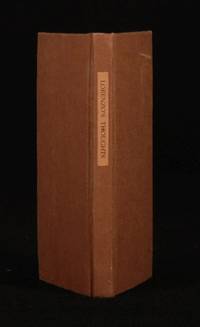
1626Best.-Nr. D17852Venice: Giacomo Sarzina 1626. First Edition. Hardcover. Very Good. 276 pp. 8vo 15.5x10 cm 6x4" old stiff wrappers paper label lettered in an old hand. Parallel text in Spanish and Italian. Very scarce 17th century conversation guide for Spanish visitors to Italy and the reverse. Giacomo Sarzina hardcover
1626Best.-Nr. D17852Venice: Giacomo Sarzina 1626. First Edition. Hardcover. Very Good. 276 pp. 8vo 15.5x10 cm 6x4" old stiff wrappers paper label lettered in an old hand. Parallel text in Spanish and Italian. Very scarce 17th century conversation guide for Spanish visitors to Italy and the reverse. Giacomo Sarzina hardcover books
1566Best.-Nr. 049817Geneva: Henricus Stephanus Henri Estienne 1566. First Edition. Hardcover Full Leather. Good Condition. Contemporary or very early calf well worn hinges cracked bu holding corners worn through leather dry and chipped. Light but pervasive dampstains wear browning. Still good at least overall. Lacking the woodcuts sometimes present and the preface Estienne's apology for Herodotus but with the Life of Homer and the fragments of Ctesiass who critiqued Herodotus but was placed on the same afterlife island by Lucian reserved for those who wrote mendacious histories. 2 256 12 24p. An interesting copy that appears to have been bound without Henri Estienne's controversial apology for Herodotus where he explained the more fantastic elements of the history which occasioned attacks by Thuycides and Plutarch giving birth to his "father of lies" moniker to balance the "father of history" title bestowed by Cicero by reference to current events. Calvin was incensed and ordered the preface canceled and Estienne a protestant who had left Paris for the safe religious haven of Geneva had to leave there for a time - the book though was a bestseller. In addition to being bound without the offending section the early ownership marks have all been bowdlerized - a section crossed out at the top of the pastedown a name crossed out on the title another name covered with paper on the title and the top edge of the title page excised presumably for the same purpose. Three additional though difficult to make out owner signatures and dates remain 1807 1826 and a marked out date that appears to be 1736. Provenance: Eugène de Boucheron et al Size: Folio. Quantity Available: 1. Shipped Weight: 1-2 kilos. Category: Antiquarian & Rare; Inventory No: 049817. Henricus Stephanus (Henri Estienne) hardcover
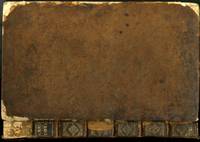
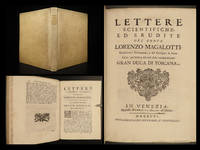
1756Best.-Nr. 204331756 Scientific Letters GALILEO Physics Comets Italian Vellum Lorenzo Magalotti Lorenzo Magalotti was a 17th-century Italian scientist known for his philosophical treatises his studies of Galileo and translation of Milton's "Paradise Lost". While these contributions were important he also wrote a series of scientific letters which were first published in the 18th-century. These letters offer descriptions of his physics experiments including his experiments on light testing Galileo's theories the effects of cold and snow blood circulation and even his observations on the 1664 comet. Item number: #20433 Price: $750 MAGALOTTI Lorenzo Lettere scientifiche ed erudite del Conte Lorenzo Magalotti . In Venezia : Appresso Domenico Occhi . 1756. Details: · Collation: Complete with all pages o xx 294 2 · Language: Italian · Binding: Vellum; tight and secure · Size: ~9.25in X 6.75in 23.5cm x 17cm Our Guarantee: Very Fast. Very Safe. Free Shipping Worldwide. Customer satisfaction is our priority! Notify us with 7 days of receiving and we will offer a full refund without reservation! 20433 Photos available upon request. Domenico Occhi hardcover
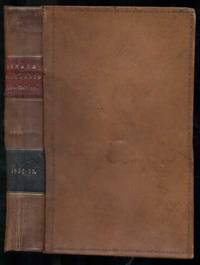
1853Best.-Nr. 47330Washington: Robert Armstrong Public Printer 1853. Senate Issue. Leather bound. Very good minus. 198pp. Octavo 23.5 cm Original calf with red and black leather labels on the backstrip. 'Senate Documents 2d Sess 32d Cong' gilt stamped on red label. '1852-53' gilt stamped on black label. The extremities are subtly rubbed. The front board is a bit warped with the lower portion being mildly damp stained. The spine is a bit rolled back. There is a 1/2" crack in the front board at the head of the joint. The text block is cracked at the center. Sporadic foxing throughout. The large folding map is present at the rear of the volume and is in nice clean condition. All plates present. The announced purpose of Sitgreaves' expedition was to determine whether the Zuni River actually emptied into the Colorado and to examine the territory en route. Wheat described the large folding map as follows: "All in all this map is a monumental achievement and while it is marred with misspellings such as "Butles for Buttes it is generally correct and exceedingly well done." Howes S528. Wheat 763. Farquhar 16. Wagner/Camp 230:2 Graff 3809. Robert Armstrong, Public Printer unknown
1853Best.-Nr. 47330Washington: Robert Armstrong Public Printer 1853. Senate Issue. Leather bound. Very good minus. 198pp. Octavo 23.5 cm Original calf with red and black leather labels on the backstrip. 'Senate Documents 2d Sess 32d Cong' gilt stamped on red label. '1852-53' gilt stamped on black label. The extremities are subtly rubbed. The front board is a bit warped with the lower portion being mildly damp stained. The spine is a bit rolled back. There is a 1/2" crack in the front board at the head of the joint. The text block is cracked at the center. Sporadic foxing throughout. The large folding map is present at the rear of the volume and is in nice clean condition. All plates present. The announced purpose of Sitgreaves' expedition was to determine whether the Zuni River actually emptied into the Colorado and to examine the territory en route. Wheat described the large folding map as follows: "All in all this map is a monumental achievement and while it is marred with misspellings such as "Butles for Buttes it is generally correct and exceedingly well done." Howes S528. Wheat 763. Farquhar 16. Wagner/Camp 230:2 Graff 3809. Robert Armstrong, Public Printer unknown books
1588Best.-Nr. 322821Florence: Bartolommeo Sermartelli 1588. hardcover. very good. 8vo older brown calf-backed marbled boards. One folding plate small library stamp of title page. Intaglio vignette on the title page with a turtle bearing a sail with a Florentine lily on its shell and the motto "Festina lente". Florence: Bartolommeo Sermartelli 1588. Very good in a lightly rubbed but attractive binding. History of the house of the Ubaldini and of the affairs of some of that family. Book one. Described by Giovambattista by Lorenzo Ubaldini 134 pages - And the life of Niccola Acciaioli Grand Seniscalco of the Kingdoms of Sicily and of Gierusalemme 46 pages described by Matteo Palmieri. Bartolommeo Sermartelli unknown
1588Best.-Nr. 322821Florence: Bartolommeo Sermartelli 1588. hardcover. very good. 8vo older brown calf-backed marbled boards. One folding plate small library stamp of title page. Intaglio vignette on the title page with a turtle bearing a sail with a Florentine lily on its shell and the motto "Festina lente". Florence: Bartolommeo Sermartelli 1588. Very good in a lightly rubbed but attractive binding. History of the house of the Ubaldini and of the affairs of some of that family. Book one. Described by Giovambattista by Lorenzo Ubaldini 134 pages - And the life of Niccola Acciaioli Grand Seniscalco of the Kingdoms of Sicily and of Gierusalemme 46 pages described by Matteo Palmieri. Bartolommeo Sermartelli unknown books
1535Best.-Nr. WB15731Lyon: Seb. Gryphium 1535. Hardcover. Very Good. MDXXXV 1535. 8vo 170 x 120mm. 493pp. 42. Signatures: a-z8 A-K8 L4. Colophon on leaf 3r. Woodcut engraved printers device of griffin on pedestal and winged orb with motto VIRTUTE DVCE COMITE FORTVNA Under the guidance of valor accompanied by good fortune. 5-line chapter decorative initials throughout. Printed catchwords and marginalia. 19th century half cloth over marbled boards spine with three raised bands and lettered in gilt LAURENTIUS VALLA endpapers renewed; title browned with small lower right marginal tear some marginal dampstaining marginal worming in center of text block only affecting a few quires few stains outer edgewear; altogether a good French imprint from the Gryphius press. Title page with 19th century ownership inscriptions "Gabriele Tasinari 1865 and early 20th century ink ownership stamp of Jaime Azancot. Lyon edition of Lorenzo Vallas linguistic work on the Latin language. This same year an edition appeared with Jodus Badius Ascensius and was printed in Paris with Simonem Colinaeum. The next year 1536 saw editions from the printers Giunta in Lyon and Fabricius in Cologne. Immensely popular as a textbook this was Vallas widely reprinted and influential work on Latin linguistics which went through at least 60 editions between 1471 and 1536. Lorenzo or Laurentius Valla from Piacenza was a scholar humanist and philosopher not unfamiliar with controversy. In his tumultuous career he was chosen by Pope Nicholas V to translate the classical texts of Herodotus and Thucydides into Latin. His masterwork is De lingvae latinae elegantia 1444 called a brilliant philological defense of classical Latin in which he contrasted the elegance of the ancient Romans works - especially those of Cicero and Quintilian - with the clumsiness of medieval and Church Latin Columbia Electronic Encyclopedia 6th ed. 2006. Vallas treatise was novel in it subjected the forms of Latin grammar and the rules of Latin style and rhetoric to a critical examination. His work was the basis for the Humanist movement to reform the style of Latin prose to a more classical and Ciceronian direction and on a scientific basis and away from the Christian Latin of the European Middle Ages. This was thought to be a major improvement in style and elegance in Latin usage. Sebastian Gryphius was a German bookseller-printer and humanist. Around 1520 he came to Lyon and settled there on behalf of a Venetian firm of booksellers. Initially Gryphius largely published works on law but was later known for classic works in humanism produced in elegant format. For an often reprinted title this particular edition is not common. Seb. Gryphium hardcover
1535Best.-Nr. WB15731Lyon: Seb. Gryphium 1535. Hardcover. Very Good. MDXXXV 1535. 8vo 170 x 120mm. 493pp. 42. Signatures: a-z8 A-K8 L4. Colophon on leaf 3r. Woodcut engraved printers device of griffin on pedestal and winged orb with motto VIRTUTE DVCE COMITE FORTVNA Under the guidance of valor accompanied by good fortune. 5-line chapter decorative initials throughout. Printed catchwords and marginalia. 19th century half cloth over marbled boards spine with three raised bands and lettered in gilt LAURENTIUS VALLA endpapers renewed; title browned with small lower right marginal tear some marginal dampstaining marginal worming in center of text block only affecting a few quires few stains outer edgewear; altogether a good French imprint from the Gryphius press. Title page with 19th century ownership inscriptions "Gabriele Tasinari 1865 and early 20th century ink ownership stamp of Jaime Azancot. Lyon edition of Lorenzo Vallas linguistic work on the Latin language. This same year an edition appeared with Jodus Badius Ascensius and was printed in Paris with Simonem Colinaeum. The next year 1536 saw editions from the printers Giunta in Lyon and Fabricius in Cologne. Immensely popular as a textbook this was Vallas widely reprinted and influential work on Latin linguistics which went through at least 60 editions between 1471 and 1536. Lorenzo or Laurentius Valla from Piacenza was a scholar humanist and philosopher not unfamiliar with controversy. In his tumultuous career he was chosen by Pope Nicholas V to translate the classical texts of Herodotus and Thucydides into Latin. His masterwork is De lingvae latinae elegantia 1444 called a brilliant philological defense of classical Latin in which he contrasted the elegance of the ancient Romans works - especially those of Cicero and Quintilian - with the clumsiness of medieval and Church Latin Columbia Electronic Encyclopedia 6th ed. 2006. Vallas treatise was novel in it subjected the forms of Latin grammar and the rules of Latin style and rhetoric to a critical examination. His work was the basis for the Humanist movement to reform the style of Latin prose to a more classical and Ciceronian direction and on a scientific basis and away from the Christian Latin of the European Middle Ages. This was thought to be a major improvement in style and elegance in Latin usage. Sebastian Gryphius was a German bookseller-printer and humanist. Around 1520 he came to Lyon and settled there on behalf of a Venetian firm of booksellers. Initially Gryphius largely published works on law but was later known for classic works in humanism produced in elegant format. For an often reprinted title this particular edition is not common. Seb. Gryphium hardcover books
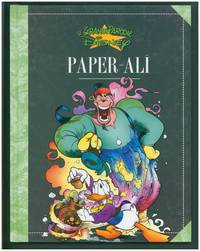
1992Best.-Nr. 39409Milano: The Walt Disney Company Italia 1992. First Edition. Hardcover. The run includes the following titles the first twenty-nine issues of the series were softcovers the rest hardcovers: 3 - Il Dottor Paperus; 5 - Paperino e i Tre Moschettieri; 6 - Paperino e il Conte di Montecristo; 11 - Guerra e Pace; 12 - Paperodissea; 13 - Paperiade; 15 - Paperopoli Liberata; 16 - I Promessi Paperi; 17 - Paperin Babà; 18 - Canto di Natale; 19 - La leggenda di Paperin Hood; 20 - Paperino Principe di Dunimarca; 21 - Paperino e l'Oro di Reno ovvero L'Anello dei Nani Lunghi; 23 - Paperino missione Bob Fingher; 24 - Paperin Furioso; 26 - Paperino e le ventimila beghe sotto i mari; 28 - Paperinik e l'arca dimenticata; 29 Topolino e il Pippotarzan; 30 - La storia di Marco Polo detta Il Milione; 31 - Paperino e l'Isola del Tesoro; 33 - Le straordinarie avventure di Paperino Girandola; 35 - Paperino e il giro del mondo in otto giorni; 36 - Topolino corriere dello Zar; 37 - Il Corsaro Paperinero; 38 - I viaggi di Papergulliver; 40 - Sandopaper e la perla di Labuan; 42 - Il principe e il povero; 45 - Topolino nel favoloso regno di Shan-Grillà; 47 - Paperino e il pendolo di Ekol; 48 - Topolino e il fantasma dell'opera; 49 - Paperino e il revival dell'indipendenza; 51 - Paperino il Paladino; 52 - Topolino e i dolci segreti di Twin Pipps; 53 - Zio Paperone e la magica atmosfera di Natale; 55 - La disfida di Paperetta; 56 - I racconti di Edgar Allan Top; 57 - Paper-Alì; 58 - Paperino e il flauto magico; 59 - Il mistero dei candelabri; 60 - Piccole papere; 61 - Topolino sull'Orient Express; 62 - Paperino in Il mondo perduto; 63 - Paperino e la nipote del Corsaro Nero; 64 - Topolino e i misteri della giungla nera; 65 - Dall'inferno a un papero bisbetico; 66 - Paperino e il re del fiume d'oro; 67 - Topolino e la fiamma eterna di Kalhoa; 68 - Paperino e il tesoro di Papero Magno; 69 - Paperin Sigfrido e l'oro del Reno; 70 - Topolino e gli ammutinati del Daunty; 72 - Don Pippo Chisciotte; 73 - Pippo e Cleopatra; 74 - Pippo Stradivari; 75 - Pippo Strauss. The collection represents a variety of parodies of the classics of literature including Don QuixoteThe Count of Montecristo The Lost World The Three Musketeers Doctor Faust The Iliad A Christmas Carol The Betrothed Ali Baba and the Forty Thieves The Prince and the Pauper Foucaults' Pendulum and more. Each volume includes introductory articles about the stories and authors. The average condition for this set is near fine/fine. Text in Italian. Set will require extra postage. ; 21 x 28.5 cm. The Walt Disney Company Italia hardcover
2004Best.-Nr. DBS-9783540210221Springer 2004. 1st. New. Springer unknown
2016Best.-Nr. 2-3662451328Springer 2016. Hardcover. New. 2nd edition. 988 pages. German language. 10.98x8.26x2.05 inches. Springer hardcover
1978Best.-Nr. 182965Zug Switzerland: Tourist Research & Planning T.R.P. Ltd 1978. First edition of this work promoting the modernization of the UAE. This was produced just seven years after the country's formation and highlights its history biodiversity agriculture architecture and commerce. The three landscape volumes are a biography of Sheikh Zayed a study of Islam in the region and a report on the effects of oil on the country's government and welfare systems. The text was contributed by Peter Hellyer 1947-2023 a British-Emirati filmmaker and historian. In 1969 he was hired to film the official foreign visits of Sheikh Zayed who he followed to France Iran Egypt and Sri Lanka. He was instrumental in the launch of the English-language service of the Emirates Press Agency and was the managing editor of Abu Dhabi's first English-language newspaper Emirates News. There are only three copies listed on WorldCat in Middle Eastern institutions: at the United Arab Emirates University the Mohammed Bin Rashid Library and NYU Abu Dhabi. 4 vols single quarto and 3 oblong octavo pamphlets. Colour photographic illustrations throughout; text in Arabic French and English. Original pictorial boards spine and front board lettered in gold; oblong octavos: original pictorial wrappers lettered in white and gold. Housed together in original plastic binder. Boards a little scuffed binding slightly shaken but holding contents rubbed in places; oblong octavos: extremities rubbed contents bright: a very good copy. hardcover
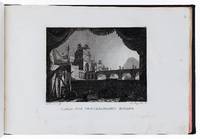
Best.-Nr. 58150Bologna c.1840. FIRST EDITION. Oblong folio 25 x 36 cm. Contemporary brown cloth with shiny pink-coated endpapers rebacked in complementary brown morocco with gilt rules and lettering. Title-page and 50 full-page engraved plates after Cini Palagi Berti Corsini Antolini Ferri Palaggi Liverani and others. The scenes depicted both real and imaginary are for various historical dramas and include architectural views and interiors of Egyptian temples Roman baths cathedrals temples prisons and rural settings. A number of the plates have dedications below the scene and two are dated 1833 and 1836. Occasional light foxing generally a very good copy. Ruggi was a pupil of Francesco Rosaspina in Bologna. Bologna, [c.1840]. hardcover
1820Best.-Nr. 110613Um 1820. Auf Bütten. 17 x 13 cm (verso: 15 x 13 cm). 27,5 x 22,8 cm (Papier).
1804Best.-Nr. GEN17-C-1Windham: J. Byrne 1804. First edition. Cloth. Very Good. 5.75" by 3.5". None. The first edition of The Opinion of Dow by the eccentric American preacher Lorenzo Dow. Bound in cloth. Lorenzo Dow 1777 1834 was an eccentric itinerant American preacher. He was an important figure in the Second Great Awakening. He was also a successful writer. His autobiography at one time was the second best-selling book in the United States exceeded only by the Bible. Dow's enthusiasm sustained him through the incessant labors of more than 30 years during which he preached in almost all parts of the United States. A fierce abolitionist Dow's sermons were often unpopular in the southern United States. His later efforts were directed chiefly against the Jesuits; indeed he was in general a vigorous opponent of Roman Catholicism. In a cloth binding. Externally there is almost no wear to the extremities. Internally the pages have browning that becomes significant to the first and last few pages and scattered spots. There is chipping and small closed tears to the first and last few pages with loss to pages 161-164 as shown above. Very Good J. Byrne hardcover
2004Best.-Nr. SONG3540212426Springer 2004-10-04. 2005. hardcover. Used: Good. 6.25x1.00x9.25. Buy with confidence. Excellent Customer Service & Return policy. Springer hardcover
1820Best.-Nr. 3960Mexico City: Impreso en Madrid en la imprenta de Vega y compañia y reimpreso en México en la de D. Alejandro Valdés en dicho año 1820. Second edition. Very good. Small 4to. 26 pp. a little age toning. Recent drab wrappers lettered in manuscript. REPUBLICAN SPAIN COLLAPSES ERODING SPANISH DOMINION OVERSEAS: A WEIRD AND VERY LITTLE-KNOWN DIATRIBE CONCERNING THE 1820 SPANISH ELECTION SCANDAL INVOLVING LATIN-AMERICAN BORN REPRESENTATIVES IN THE NEWLY REFORMED SPANISH PARLIAMENT "CORTES OF CÃDIZ. This issue fueled the debate on the future of the former Spanish colonies in the Americas which openly advocated independence -- as here. In 1820 the provisional Cortes of Cádiz election board limited to 30 the number of Latin-American born substitute deputies which led to strong criticism across the Atlantic. Particular outrage was expressed by those born in the Americas and who had been summoned to Spain to elect the aforementioned substitutes on May 28 and 29 1820 an event which occasioned the present pamphlet. While the present text is more than 200 years old its venomous spew reminds us of more recent claims of "election fraud." The first paragraph of this "Manifesto on the Nullity of the Elections" conveys the foaming nonsensical language throughout: "The crazy or drunk populace often shout in the excess of their delirium: 'Long live our death Perish our life!' This sublime concept of Dante is the most faithful depiction of the power of seducers over the common imbecile. A strong genius a strong character an ambition without limits are the weapons with which an impostor attracts to his party a large number of weak spirits of little people. With the examples with modern and ancient history he presents the master of our political works. We do not need this to happen to know this truth to ancient or alien events. We continually see iniquitous men who disturb the internal peace of states and who sacrifice the most sacred rights of their compatriots for petty interests. Monster enemies of society you had to have a thousand heads and even then your blood would not compensate for the horrendous evil that your greed caused! What a horrible compromise in which the imprudence of a few American Spaniards constitutes me!" And finally the last paragraph which in its rhythmic desparation reminds us of Ginsburg's "Howl": "When America screams without her voices dissipating either by distance or the seas asking for help from her own children; when she presents them with her hands in manacles her feet in chains; when she discovers the aged and deep sores that her fanaticism and tyranny caused on her delicate body; when she stretches out her arms to rest on the chest of the beings she produced and to recover from the spirits that are beginning to fail her ah! She is neglected despised insulted. In what debates do we waste time when the Homeland demands our help What laurels do we think will cover us if our countries turn to ashes What peaceful sleep awaits us in abundance if we are continually agitated by the cries of our unfortunate people But the denatured American does not hear me: I turn to the European Spaniards and tell them with the most illustrious tragedy: You who have broken the chains that oppressed you generously defend the freedom of your brothers." It is a remarkable fact that the author Manuel Lorenzo de Vidaurre 1773-1841 was the enlightened liberal president of the first Peruvian Supreme Court see: Lissell Quiroz-Pérez "The Books and Private Libraries of Peruvian High Magistrates of the Nineteenth Century" in: Revue historique 658:2 2011 p. 265 et seq. Sabin 99488 Madrid and Mexico City editions. Impreso en Madrid en la imprenta de Vega y compañia, y reimpreso en México en la de D. Alejandro Valdés, en dicho año unknown
1820Best.-Nr. 3960Mexico City: Impreso en Madrid en la imprenta de Vega y compañia y reimpreso en México en la de D. Alejandro Valdés en dicho año 1820. Second edition. Very good. Small 4to. 26 pp. a little age toning. Recent drab wrappers lettered in manuscript. REPUBLICAN SPAIN COLLAPSES ERODING SPANISH DOMINION OVERSEAS: A WEIRD AND VERY LITTLE-KNOWN DIATRIBE CONCERNING THE 1820 SPANISH ELECTION SCANDAL INVOLVING LATIN-AMERICAN BORN REPRESENTATIVES IN THE NEWLY REFORMED SPANISH PARLIAMENT "CORTES OF CÃDIZ. This issue fueled the debate on the future of the former Spanish colonies in the Americas which openly advocated independence -- as here. In 1820 the provisional Cortes of Cádiz election board limited to 30 the number of Latin-American born substitute deputies which led to strong criticism across the Atlantic. Particular outrage was expressed by those born in the Americas and who had been summoned to Spain to elect the aforementioned substitutes on May 28 and 29 1820 an event which occasioned the present pamphlet. While the present text is more than 200 years old its venomous spew reminds us of more recent claims of "election fraud." The first paragraph of this "Manifesto on the Nullity of the Elections" conveys the foaming nonsensical language throughout: "The crazy or drunk populace often shout in the excess of their delirium: 'Long live our death Perish our life!' This sublime concept of Dante is the most faithful depiction of the power of seducers over the common imbecile. A strong genius a strong character an ambition without limits are the weapons with which an impostor attracts to his party a large number of weak spirits of little people. With the examples with modern and ancient history he presents the master of our political works. We do not need this to happen to know this truth to ancient or alien events. We continually see iniquitous men who disturb the internal peace of states and who sacrifice the most sacred rights of their compatriots for petty interests. Monster enemies of society you had to have a thousand heads and even then your blood would not compensate for the horrendous evil that your greed caused! What a horrible compromise in which the imprudence of a few American Spaniards constitutes me!" And finally the last paragraph which in its rhythmic desparation reminds us of Ginsburg's "Howl": "When America screams without her voices dissipating either by distance or the seas asking for help from her own children; when she presents them with her hands in manacles her feet in chains; when she discovers the aged and deep sores that her fanaticism and tyranny caused on her delicate body; when she stretches out her arms to rest on the chest of the beings she produced and to recover from the spirits that are beginning to fail her ah! She is neglected despised insulted. In what debates do we waste time when the Homeland demands our help What laurels do we think will cover us if our countries turn to ashes What peaceful sleep awaits us in abundance if we are continually agitated by the cries of our unfortunate people But the denatured American does not hear me: I turn to the European Spaniards and tell them with the most illustrious tragedy: You who have broken the chains that oppressed you generously defend the freedom of your brothers." It is a remarkable fact that the author Manuel Lorenzo de Vidaurre 1773-1841 was the enlightened liberal president of the first Peruvian Supreme Court see: Lissell Quiroz-Pérez "The Books and Private Libraries of Peruvian High Magistrates of the Nineteenth Century" in: Revue historique 658:2 2011 p. 265 et seq. Sabin 99488 Madrid and Mexico City editions. Impreso en Madrid en la imprenta de Vega y compañia, y reimpreso en México en la de D. Alejandro Valdés, en dicho año unknown books
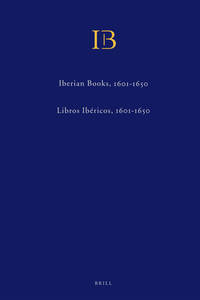
2015Best.-Nr. __9004292292Brill Academic Pub 2015. Hardcover. New. bilingual edition. 2510 pages. Spanish language. 11.00x7.50x4.75 inches. Brill Academic Pub hardcover
1774Best.-Nr. 328501774. unknown
1674Best.-Nr. 69880Sumptibus Andrea Frisius | Amsterdam 1674 | 7.50 x 13.30 cm | relié
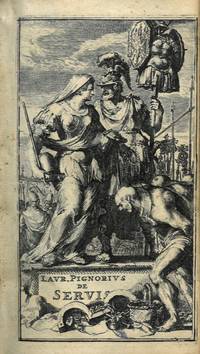
Best.-Nr. 2-75098Amsterdam Sumptibus Andreae Frisii 1674 12° cm. 14 x 8 legatura coeva piena pelle bazzana dorso a quattro nervi con titoli e ornamenti dorati ormai sbiaditi bordi decorati ai piccoli ferri anch'essi sbiaditi tagli spruzzati pp. 34-582-38 con antiporta allegorica incisa in rame vignetta xilografica al frontespizio decine di illustrazioni xilografiche e calcografiche nel testo anche a piena pagina e 14 tavole di 15 sempre incise in rame ripiegate fuori testo. Dal Dizionario Biografico Treccani: “L'opera con note di carattere antiquario fu modello per il Dei servi e liberti antichi del Muratori ma ha attirato l'attenzione degli studiosi anche di recente Vogt 1974 pp. 9-10. Si fa risalire a quest'opera p. 205 la figura del servo nero accanto a una dama ben presente nella produzione pittorica del XVIII secolo McGrath 1998 p. 276”. Opera molto interessante con curiose e ben eseguite illustrazioni. UNITO A: Amsterdam apud Andream Frisium 1672 pp. 181-6 con vignetta incisa in rame al frontespizio. Legatura consunta ma solida; due fori di tarlo prevalentemente ai margini bianchi attraversano la seconda metà del volume con minuscole perdite di testo che non pregiudicano la lettura; strappo senza mancanze alle pp. 397-398; carta leggermente ingiallita ma esente da fioriture. Vinciana 4501: “Terza ediz. citata dal Fétis come “la plus estimée””. unknown