[PHILIPPE d’ORLEANS, Régent] - LONGUS.Livre Rare Book
728 résultats
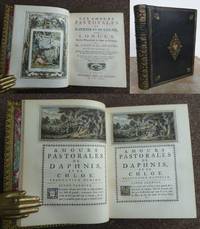
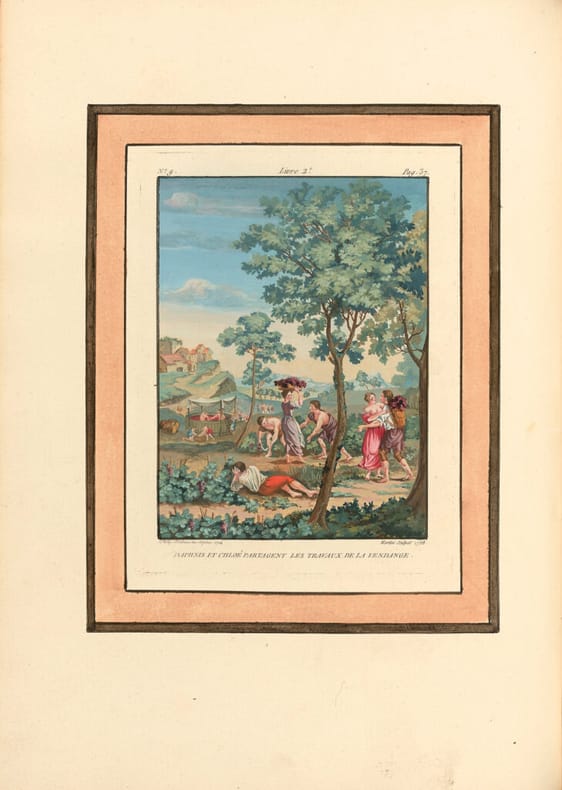
réf. LCS-18396L’un des rarissimes exemplaires de luxe contenant les 29 figures gouachées tirées sur vélin des Amours de Daphnis et Chloé, l’un des plus célèbres livres illustrés du XVIIIe siècle. Paris, de l’Imprimerie de Monsieur, 1787. Petit in-folio de (1) f. bl., viii pp., (1) f., 175 pp., 29 planches hors-texte en couleurs numérotés, protégées par des serpentes. Maroquin rouge, filet et guirlande dorés encadrant les plats, dos lisse finement orné, pièce de titre de maroquin vert, coupes décorées, roulette intérieure dorée, tranches dorées. Etui. Reliure de l’époque. 319 x 240 mm.
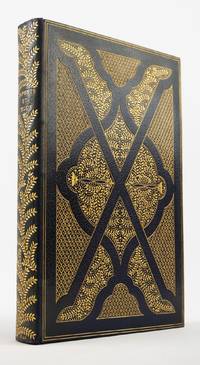
1893réf. 1276951893. LAWRENCE T.E. LONGUS. Daphnis and Chloe: A Most Sweet and Pleasant Pastoral Romance for Young Ladies. London: Vale Press 1893. Quarto contemporary full black crushed morocco elaborately gilt-decorated spine and covers raised bands top edge gilt uncut. $15000.An exceptional association copy: the finely printed and beautifully illustrated Vale Press Daphnis and Chloeone of only 210 copies 200 of which were for sale with 36 charming woodcuts in the Italian style by Charles Ricketts and Charles Shannon with ""T.E.L.""likely in T.E. Lawrence's handfaintly penciled in the upper right corner of the front free endpaper and a note from recipient Charles Francis Bell describing the circumstances in which Lawrence presented this copy to him. Beautifully bound in full morocco-gilt by C. & C. McLeish.""There are works which will never cease to be reprinted and which artists will ever love to illustrate according to their own individual fancies"" Jules Claretie Preface. This classical Greek work whose author Longus has not been fully identified has been dated to the 2nd or early 3rd century CE. Described by one scholar as ""an unknown best seller"" Giles Barber Daphnis and Chloe is considered ""the original or earliest survivor"" of the idyllic/pastoral romance Hardin Love in a Green Shade 1. This large-format illustrated edition is one of the Vale Press' most impressive books. It uses the quaint 17th-century translation of Thornley designed to convert the lascivious tale into reading matter for young ladies. One homosexual passage is left in the original Greek. In the Art Nouveau style the illustrations by Ricketts and Shannon effectively capture Longus' combination of decadence and sweet innocence.Born in 1859 binder Charles McLeish was apprenticed to Andrew Grieve in Edinburgh then came to London in 1890 to work for Riviere. When Cobden-Sanderson founded the Doves Bindery in 1893 he hired McLeish as the firm's finisher. McLeish held that estimable position until 1909 when he left to go into partnership with his son Charles who had apprenticed under Roger de Coverly. Although the senior McLeish was no longer in the employ of Cobden-Sanderson all of the bindings that were signed ""Doves Bindery"" between 1909 and 1921 were actually done in the McLeish workshop. The work produced by the McLeishes was beautifully designed and impeccably executed as evidenced in the present volume. With publisher's scarce four-page prospectus bound in at rear. Bookplate of recipient art historian Charles Francis Bell with his handwritten note regarding the circumstances of Lawrence presenting this copy to him tipped to the front free endpaper: ""This book was bound by McLeish for Colonel T.E. Lawrence whose initials in pencil in his own writing are in the top corner of the opposite endpaper. It was given by him to me at All Souls College Oxford on November 16 1920. C.F. Bell."" Bell 1871-1966 was curator of the Department of Fine Art in the Ashmolean Museum Oxford where he met Lawrence when the latter had brought fragments of pottery into the Ashmolean for identification. The two became friends and frequently discussed their shared enthusiasm for Medieval art and architecture. Although the brevity and faintness of the initials on the front free endpaper make it difficult to verify it as being in Lawrence's hand it is consistent with Lawrence's known practice of initialing his own books.Mild offsetting from woodcuts; offsetting from morocco turn-ins partially obscuring penciled initials in upper corner of front free endpaper binding beautiful and fine. An excellent association copy with distinguished provenance. hardcover
réf. LCS-17957Superbe exemplaire à grandes marges (hauteur : 167 mm) revêtu d’une élégante reliure en maroquin rouge du XVIIIe siècle de Derome le Jeune avec son étiquette. S.l. [Paris, Quillau], 1718. Petit in-8 de (7) ff. dont (1) f. frontispice, 164 pp., 29 planches hors-texte non-numérotés dont 13 sur double-page. Maroquin rouge, diverses roulettes dorées encadrant les plats avec fleuron d'angle, dos lisse finement orné, coupes décorées, roulette intérieure dorée, tranches dorées, doublures et gardes de tabis bleu. Reliure du XVIIIe siècle de Derome le jeune avec son étiquette. 167 x 98 mm.
1937réf. 1720691937. MAILLOL Aristide. Les Pastorales de Daphnis and Chloe. By Longus. With 52 woodcuts by Aristide Maillol. Two volumes. 8vo. original illustrated wrappers and publisher's vellum-backed slipcases. Paris: Gonin 1937. A unique copy of the most beloved of all Maillol's books. This is the publisher's copy accompanied by 6 autograph letters from Maillol to the publisher discussin varuious aspects of the making of the book. As with all his books Maillol was closely involved in all aspects of production and the result is an extremely pleasing work "perhaps the most harmonious of Maillol's illustrated books" Garvey. This is copy number 1 of 25 hors commerce copies on large paper containing a double suite of the plates one in black and white and one in sanguine. It is also accompanied by a somewhat foxed example of the wedding invitation which Maillol printed for Gonin and a letter from Gonin to the original purchaser of this copy. Signed by Maillol on the colophon. The Artist and the Book 174. hardcover
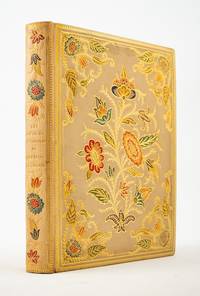
1745réf. ST20826Paris: s.n. 1745. 205 x 155 mm. 8 x 6". 6 p.l. first blank 159 1 xx pp.Translated by Jacques Amyot. SPLENDID CREAM-COLORED MOROCCO BEAUTIFULLY GILT AND INLAID BY RENÉ KIEFFER stamp-signed on front turn-in verso of front flyleaf with his Rue Seguier ticket covers framed by dogtooth roll and plain rule border a charming spray of flowers at center inlaid in scarlet orange citron indigo turquoise lilac pink and violet morocco tooled with gilt on graceful gilt branches with leaves in three shades of green morocco smaller sprays of inlaid flowers and leaves in similar shades at corners the whole giving the effect of an elegant embroidered sampler smooth spine framed in gilt and with a chain of four inlaid morocco blossoms in brilliant hues extending from the head and foot of spine gilt lettering at center of spine turn-ins with frame of cream morocco inlaid with strips of emerald green morocco tooled with a ribbon and floral chain roll orange morocco squares at corners stamped with gilt flowers gold silk endleaves marbled flyleaves all edges gilt. In a kid-lined blue marbled chemise with navy morocco spine and lips and in a matching suede-lined slipcase. Additional engraved pictorial title by Coypel four engraved headpieces of putti four tailpiece vignettes by Cochin and 33 ENGRAVED PLATES consisting of 28 plates after Philippe d'Orléans by Audran the oft-lacking final plate "Les petits pieds" by the Comte de Caylus and EXTRA-ILLUSTRATED with four engraved headpiece vignettes by Fokke after Eisen mounted on blank leaves. A Large Paper Copy. Cohen-de Ricci 652-53; Ray 2A. Four small very faint water spots to boards one plate somewhat foxed in all other ways A GORGEOUS COPY clean and fresh internally with immense margins and in an unworn binding. This exceptionally desirable copy of Longus' unique combination of decadence and sweet innocence is printed on quarto-sized paper enhanced with engravings from some of the greatest Rococo illustrators and offered in an exquisite binding by a modern Parisian master. The charming pastoral novel appears here in the popular translation of Jacques Amyot 1513-93 first printed in 1559 and always recognized for its graceful style. The illustrations were created in 1714 by Philippe duc d'Orléans and Regent of France 1674-1723 engraved by Benoît Audran and published for the first time in 1718. Although Ray indicates that Philippe's work is clearly an amateur's he says that the plates "do tell the story in their halting way and the background landscapes in some of the larger plates have a naïve appeal." The plates were re-engraved for our 1745 printing and the always elegantly graceful tailpiece vignettes by Charles-Nicholas Cochin were created for this edition. Cochin 1715-90 is generally considered on a par with the three Rococo masters Gravelot Eisen and Moreau. Ray notes that works from his early career like the engravings here "are marked not only by the mastery of outline and firmness of composition which never deserted him but also by acute observation and unpretentious humor." Our volume also contains an extra plate by the Comte de Caylus omitted from some copies for its suggestive nature as it shows the feet of the entwined lovers Mon Dieu! protruding from the privacy of a grotto. Additionally a previous owner added four engravings created for the 1754 Longus by the great Charles Eisen 1720-78 Louis XV's Court painter and drawing master to Madame de Pompadour. Ray describes him as "the master of the small design" with "a marvelous talent for pleasing." The beauty of this copy was further--and gloriously--enhanced ca. 1910 when binder René Kieffer created the striking binding with its bouquets of fantastical flowers in a riot of colors and gold. Kieffer 1875-1963 was in the first class of students to graduate from the École Étienne where he concentrated on becoming a doreur learning to tool gold designs in the well-established style. After leaving school he worked for Chambolle-Duru until 1898 at which time he established his own studio. According to Duncan & De Bartha he "became a disciple of Marius Michel moving gradually away from his traditional training towards a more emblematic and modern style." He would become one of the most innovative and progressive binders in Paris in the 20th century earning a well-deserved reputation for producing widely variable bindings that defied typification. s.n. unknown
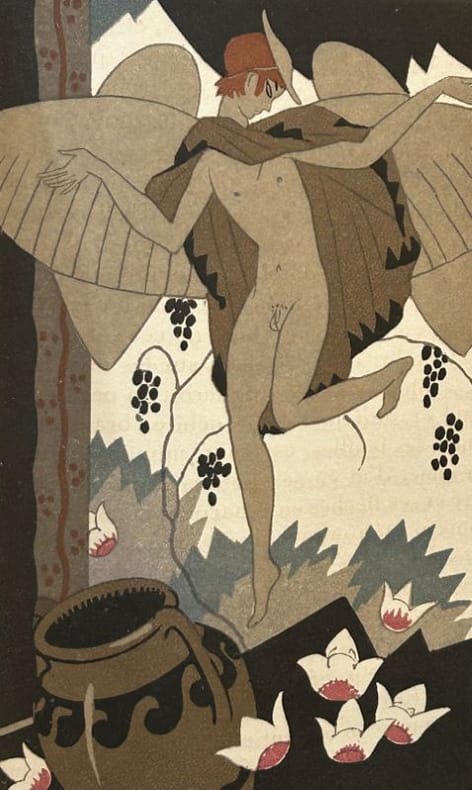
1926réf. 49677Paris Editions d'Art H. Pi 1926 In-4, maroquin vert bouteille orn sur chaque plat d'une composition gomtrique mosaque en maroquin vert, beige et dor, mle quatre motifs floraux pousss froid; trs lger rappel du dcor sur le dos sans nerfs portant le nom de l'auteur et le titre de l'ouvrage en petites capitales dores; doublures serties d'un listel de maroquin beige et ornes d'un large encadrement gomtrique compos de filets ondulants froid et de mosaques en maroquin brun et dor, gardes de soie verte, tte dore, non rogn, couverture illustre. Chemise, tui (Gruel).25 compositions de Carlos Schwabe, dont 2 vignettes tires en spia (une sur la couverture et une sur la page de titre) et 23 en couleurs (4 en-ttes, 12 hors-texte et 7 in-texte). Cet ouvrage, publi dans la collection Les Cent Onze, a t tir 111 exemplaires numrots. Un des 31 premiers exemplaires sur japon imprial, seuls comporter une double suite des illustrations sur vlin, en couleurs et en noir. Exceptionnelle reliure double de Gruel.
1937réf. CLL-287Paris, Philippe Gonin, 1937 In-8 de (1) f., 218 pp., (2) ff., maroquin bleu nuit, plats et dos entièrement ornés d'un décor de cercles entrecroisés tracés en points or et paladium de tailles variées, entrelacs mosaïqués beige et rouge aux angles, dos lisse, doublures de maroquin bleu nuit ornées du même décor avec au centre un large rectangle de soie dorée ornée d'ocelles crème, gardes de soie de même, tranches dorées sur témoins, chemise à recouvrement, étui bordé, couvertures et dos conservés (J. Anthoine-Legrain).
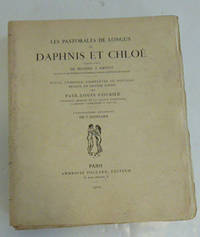
1902réf. 2840Paris Ambroise Vollard 1902 In-4 (290 x 238 mm). 294 pp. 151 lithographies originales de Pierre Bonnard, couverture conservée. Pleine reliure de maroquin vert, gardes de soie verte, filets sur les coupes et les contreplats, dos à nerfs, tête dorée, étui (reliure signée David). Tirage limité à 250 exemplaires numérotés, celui-ci un des 200 sur Hollande van Gelder (numéroté 108).
1937réf. 9147Philippe Gonin 14 x 20 Paris 1937 In-8, reliure plein maroquin vermillon signée Gras [Madeleine Gras, 1891-1958], dos lisse, auteur et titre doré, "Maillol" doré en queue, plats décorés d'arabesques de filets dorés incrustés de vert, prolongés en tête et en queue, doublure et gardes de daim prune, filet doré aux angles des contre plats, toutes tranches dorées, sous étui signé de Madeleine Gras, couvertures et dos conservés. [3] gardes bl., couverture, [4] ff. bl., faux titre, 217-[1] pp., sur chine, colophon et achevé d'imprimer de 4 pp., [1] f. bl. Couverture annonçant les bois originaux d'Aristide Maillol : suite de 50 bois sur chine en sanguine, de 11 épreuves sur papier Maillol et de 15 épreuves sur chine. [4] ff. bl., [3] gardes bl. Nombreux bois gravés in-texte, sur la page de titre et au colophon. Edition composée et gravée par Aristide Maillol (1861-1944), signée par l'artiste au colophon. Tirage limité à 500 exemplaires sur papier Maillol, numéroté de 1 à 500. Tirage en outre des épreuves à part des bois ainsi que des exemplaires hors commerce marqués de chiffres romains, dont notre exemplaire numéroté "H.C. chine IX/XXV. Très belle association du trait épuré des gravures sur bois de Maillol et d'un des classiques de la littérature grecque, qui fait de cette édition, un des livres d'artistes les plus réputés du XXe siècle. Elégante reliure de Madeleine Gras et un des rares exemplaires sur chine hors-commerce.(RoB73) PHOTOS NUMERIQUES DISPONIBLES PAR EMAIL SUR SIMPLE DEMANDE-DIGITAL PHOTOGRAPS MAY BE AVAILABLE ON REQUEST
1937réf. 9147Philippe Gonin 14 x 20 Paris 1937 In-8, reliure plein maroquin vermillon signée Gras [Madeleine Gras, 1891-1958], dos lisse, auteur et titre doré, "Maillol" doré en queue, plats décorés d'arabesques de filets dorés incrustés de vert, prolongés en tête et en queue, doublure et gardes de daim prune, filet doré aux angles des contre plats, toutes tranches dorées, sous étui signé de Madeleine Gras, couvertures et dos conservés. [3] gardes bl., couverture, [4] ff. bl., faux titre, 217-[1] pp., sur chine, colophon et achevé d'imprimer de 4 pp., [1] f. bl. Couverture annonçant les bois originaux d'Aristide Maillol : suite de 50 bois sur chine en sanguine, de 11 épreuves sur papier Maillol et de 15 épreuves sur chine. [4] ff. bl., [3] gardes bl. Nombreux bois gravés in-texte, sur la page de titre et au colophon. Edition composée et gravée par Aristide Maillol (1861-1944), signée par l'artiste au colophon. Tirage limité à 500 exemplaires sur papier Maillol, numéroté de 1 à 500. Tirage en outre des épreuves à part des bois ainsi que des exemplaires hors commerce marqués de chiffres romains, dont notre exemplaire numéroté "H.C. chine IX/XXV. Très belle association du trait épuré des gravures sur bois de Maillol et d'un des classiques de la littérature grecque, qui fait de cette édition, un des livres d'artistes les plus réputés du XXe siècle. Elégante reliure de Madeleine Gras et un des rares exemplaires sur chine hors-commerce.(RoB73) PHOTOS NUMERIQUES DISPONIBLES PAR EMAIL SUR SIMPLE DEMANDE-DIGITAL PHOTOGRAPS MAY BE AVAILABLE ON REQUEST
1937réf. ST11995Paris: Les Frères Gonin 1937. No. CXXV OF 500 COPIES SIGNED BY THE ARTIST this is one of the hors commerce copies with an additional suite of plates. 219 x 149 mm. 8 5/8 x 5 7/8". 2 217 5 pp. One volume and one portfolio. Translated by Jacques Amyot. MOST ATTRACTIVE BEIGE CRUSHED MOROCCO BY IRMGARD HACCIUS stamp-signed "I. H." in gilt on rear cover front cover with gilt titling arranged in 10 short descending rows surrounded by blind-tooled leaves and grasses rear cover with three-inch column of blind-tooled leaves bearing gilt berries and the binder's initials flat spine with titling in blind top edge gilt. Housed with the portfolio of plates in its original printed paper wrapper in a matching marbled paper folding box with beige morocco spine and edges no doubt done by Haccius as well. WITH 47 WOODCUTS BY ARISTIDE MAILLOL depicting scenes from the text AND WITH AN EXTRA SUITE OF 48 PLATES printed in sanguine the additional plate bearing the 15 woodcut initials used in the text. Front pastedown with armorial bookplate of German bibliophile and music publisher Ludwig Strecker. The Artist and the Book 174. ◆A SPLENDID COPY clean and bright in a luxurious unworn binding. This version of Longus' charming Greek pastoral novel of awakening love long retained its popularity and was published frequently often with illustrations. And perhaps the chief virtue of the present edition is the unaffected sometimes mischievous woodcuts of nymphs and lovers by the French-Catalan artist Aristide Maillol 1861-1944 best known for his sculpture. His engravings here have the same classical lines that typify his three-dimensional works. According to "The Artist and the Book" the work is "perhaps the most harmonious of Maillol's illustrated books." The very attractive and intelligent binding is by Mainz master bookbinder Irmgard Haccius 1916-2003 whose work here is entirely in keeping with the illustrator's graceful simplicity. Haccius studied at the art academies in Munich and Berlin in addition to completing advanced training in book binding at the Academy of Fine Arts at Castle Giebenstein Hall. She was one of the first faculty members at the State University Institute for Art and Handicraft in Mainz before joining Johannes Gutenberg University in 1973 as a professor in the Department of Visual Arts. Les Frères Gonin unknown
1937réf. 55850Paris Philippe Gonin 1937 In-8, maroquin vert orn sur les plats en passant par le dos d'un important dcor pouss or et froid, compos de lignes obliques qui s'entrecroisent et de jeux de filets dors pouvant voquer le scintillement de petites toiles; doublures bord bord en box noir, gardes de soie moire verte, tranches dores sur brochure, couverture illustre. Chemise, tui (H. Alix). 46 bois originaux in texte de Maillol. Tirage limit 500 exemplaires numrots sur papier Maillol et 70 exemplaires rimposs dont 20 sur peau de chvre, 25 japon ancien et 25 chine, tous signs au crayon par l'artiste. Un des 25 exemplaires sur japon ancien, enrichi d'une double suite en noir et en bistre de tous les bois et de 8 preuves d'tat imprimes en noir sur diffrents papiers. Les suites et les preuves supplmentaires ont t runies dans un second volume reli en demi-maroquin vert coins.
réf. 51-6792Paris: Ambroise Vollard 31 octobre 1902. 4to. 24.5 x 30cm. 10. 294 4pp.Original wraps in a contemporary half calf chemise with marbled boards in a matching slipcase repaired. One of 250 numbered copies.Francis Bouvet The Complete Graphic Work no. 75; Luc Monod Manuel. no. 7262; François Chapon Le Peintre et le livre pp. 67-68 -- The Artist & the Book 28 -- Rauch 22; OCLC Number / Unique Identifier:54167315.One of the most famous modern illustrated books – copy on hollande paper. Seduced by his first collaboration with Pierre Bonnard on Parallel by Verlaine 1900 Ambroise Vollard commissioned a second one from him these Pastorales. Where Parallel with its daring layout and the choice of printing the lithographs in pink had been disconcerting the layout of this second book is more classical the illustration being clearly separated from the text. However at the time of its publication it remained "shunned by bibliophiles who for a long time refused to see it as an appropriate illustration technique for luxury books because it was considered too commercial even vulgar" Limited edition. Vollard Petiet et l'estampe de maîtres pp. 44-45. .This judgment has largely been revised by their successors and the work is today considered one of the greatest successes of the illustrated book. Carteret Illustrés IV p. 242: a beautiful work highly sought after and highly rated. One of the greatest stars of modern books. ; « Like Bonnard’s earlier lithographs for Parallèlement and Manet’s for Le Corbeau these subtle plates had little appeal in 1902 for a public that preferred the sharply defined realism of the professional engraver.The book is today considered one of the finest of its period”. The Artist and the Book n°28 ; Mahé II col. 695 ; Mornand Vingt-deux artistes du livre pp. 45-46 “Daphnis et Chloé fut pour Bonnard l’occasion de montrer toute la souplesse de son talent non seulement par la pureté du style bien antique des personnages mais par le caractère des paysages essentiellement grecs”. Paris: Ambroise Vollard, 31 octobre 1902. paperback
1757réf. 53169Paris Imprimées pour les curieux 1757. HAND COLOURED EDITION 1757. Small 4to approximately 200 x 150 mm 7¾ x 6 inches title in red and black with engraved vignette engraved frontispiece by Benoit Audran after A. Coypel 29 further engraved plates 28 by Audran after Phillippe Duc d'Orléans 1 unsigned plate after the Comte de Caylus including the plate of Les petits pieds at page162 each within decorative border by S. Focke all engravings HAND COLOURED including initials and 16 head- and tailpieces 20 heightened with gilt parallel text. Pages: viii 1-269 1 bound in 19th century black morocco by Masson-Debonnelle his name on first lower dentelle gilt lettering and decoration to spine covers with central gilt-blocked bird quiver of arrows and torch motif corners with rose device triple fillet border gilt decorated dentelles all edges gilt marbled endpapers. Spine professionally relaid small brown stain to top inner margin of title page most plates have pale foxing to margins in varying degrees pale foxing to blank side of plates occasional foxing to text otherwise a very good copy of a hand coloured copy. The earlier translation is by Jacques Amyot 1513-1593. See Brunet Manuel du Libraire Volume 3 page 1158; Bonham's Auction Lot 41 29th July 2020 who sold a hand coloured edition see Google. MORE IMAGES ATTACHED TO THIS LISTING ALL ZOOMABLE FURTHER IMAGES ON REQUEST. POSTAGE AT COST. Paris, Imprimées pour les curieux, 1757. hardcover
1890réf. ST20732Paris: H. Launette et Cie 1890. No. 196 of 1000 copies and 100 Large Paper Copies with the etchings in multiple states. 255 x 165 mm. 10 x 6 1/2". 3 p.l. viii 190 pp. 3 leaves.Translated into French by Jacques Amyot. LOVELY DARK BLUE MOROCCO GILT BY CAPTAIN GLADSTONE stamp-signed C. E. G. on front dentelle covers divided into multiple compartments that at center a lobed mandorla all of the compartments densely gilt the inner compartments with swirls of leafy branches on a dotted background the others diapered by diagonal gilt fillets into lozenge-shaped compartments containing a single gilt dot smooth spine covered with leafy branches gilt lettering wide inner dentelles with sprays of leafy branches green silk pastedowns and endleaves top edge gilt imperceptible repair at top of spine. With 12 full-page etchings and 29 in-text illustrations by Champollion after the designs of Raphaël Collin. Ray "French" p. 377. Spine just faintly sunned though difficult to see with all its gilt occasional very minor foxing otherwise a fine copy clean and fresh internally with vast margins in a well-preserved binding bright with gilt. A unique combination of decadence and sweet innocence Longus' charming pastoral novel appears here with a series of engravings that were considered to be some of the most attractive of the period and in an impressive binding that emphasizes its pastoral setting and that has an origin clouded with mystery. Ray says that in a survey conducted in 1895 our "Daphnis et Chloé" with the Collin engravings came in fourth in a poll to determine the 10 most successful modern French illustrated books. Our edition uses the popular translation of Jacques Amyot 1513-93 first printed in 1559 and always recognized for its graceful style. Naval Commander Charles Elsden Gladstone 1855-1919 or "Captain Gladstone" as he is commonly called was an English bookbinder of great technical skill working in the late 19th Century but no one seems to know how or by whom he was trained. We know he had many hobbies including microscopy and optical magic lanterns per family accounts suggesting a curious mind and attention to detail both useful in bookbinding. Although testimony from the period indicates that Gladstone personally bound his books there are no known contemporaneous i.e. 1880-1910 exhibitions or auction records of the sale of any of his bindings and no information exists about his being an apprentice. Since the degree of complexity and beauty of his bindings--clearly in evidence here--is extraordinary one wonders if he did in fact personally bind the books. Yes he could have been a self-taught genius binding for his own pleasure but it is not inconceivable that he commissioned someone like Alfred de Sauty as finisher requiring that his own initials always be placed on the dentelles. Regardless of their origin Captain Gladstone bindings are exquisitely crafted filled with lovely all-over gilt-tooled work and characterized by innovative design features. Whoever produced them they are among the best to be found in England around the turn of the century. H. Launette et Cie unknown
1937réf. 26800Paris Gonin 1937 In-8, en feuilles, couverture illustre (embotage de l'diteur).46 bois originaux d'Aristide Maillol. Tirage numrot limit 500 exemplaires sur papier Maillol et 70 exemplaires rimposs dont 20 sur peau de chvre, 25 japon ancien et 25 chine, tous signs au crayon par l'artiste. Un des 500 exemplaires sur papier Maillol, enrichi d'une suite part de tous les bois tirs en noir, augmente d'une preuve d'artiste pour trois des illustrations correspondant aux pages 23, 166 et 218, soit au total 49 bois.
1954réf. 002315Paris: Manuel Bruker 1954. First Limited Edition. Wraps. Very Good. No. 12 of 20. With a folio of three original ink drawings signed by Vertes a folio of 10 engravings that were rejected for use in the book proper and a suite of all the engravings used in the book. This copy is also inscribed by the artist to the collector/owner which is not something called for in the limitation. 204 pp. Stylistically the Hungarian-American Vertes brought a loose near-abstraction sensibility to what nonetheless remained lucidly representational art. He executed his images with a spare economy while keeping his lines fluid and flowing. At times his output could look slapdash and improvisational; this effect though splendidly captured the emphemeral moment in an ever-changing scene and we can sense easily movement and motion. Vertes was a modernist very much of his time and place. His was an oeuvre that dared to please the average man and thus his work decorate such places as the lobby of the Carlyle Hotel in New York. Vertes was also a costume designer who won an Academy Award for his art direction and costume designs in the movie "Moulin Rouge" released in 1952. Manuel Bruker unknown
1937réf. 67381937 Paris: Philippe Gonin, 1937. 2 vol. en feuilles sous chemises et étui: 14 x 22 cm. I/ 217-[4] pp.; II/ [47] pl. grav. pour la suite en noir, [47] pl. grav. pour la suite en sanguine, [9] ff. sup. Édition illustrée par Maillol de 46 bois originaux dans le texte, une vignette sur la couverture, et de nombreuses lettrines initiales répétées. Un des exemplaires hors commerce marqués en chiffres romains (no. XLVI) et signés au crayon par Maillol et léditeur au colophon. Exemplaire imprimé en grandes marges comportant UNE DOUBLE SUITE COMPLÈTE DES BOIS, lune tirée en noir et lautre en sanguine. Le premier volume contient le texte intégral illustré. Le deuxième contient les deux suites complètes des 46 bois à pleine page et des 15 lettrines tirées sur une seule page. Il se trouve également une chemise contenant la plaquette de vente et 4 feuillets des versions divergentes de celle du texte « définitif » (pp. 117-120 ; pp. 141-144 en deux versions ; pp. 161-164). Couvertures de papier écru illustrées dun bois original, chemises en demi-parchemin, auteurs et titre en noir au dos, étuis assortis. En excellent état.
1954réf. 002315Paris: Manuel Bruker 1954. First Limited Edition. Wraps. Very Good. No. 12 of 20. With a folio of three original ink drawings signed by Vertes a folio of 10 engravings that were rejected for use in the book proper and a suite of all the engravings used in the book. This copy is also inscribed by the artist to the collector/owner which is not something called for in the limitation. 204 pp. Stylistically the Hungarian-American Vertes brought a loose near-abstraction sensibility to what nonetheless remained lucidly representational art. He executed his images with a spare economy while keeping his lines fluid and flowing. At times his output could look slapdash and improvisational; this effect though splendidly captured the emphemeral moment in an ever-changing scene and we can sense easily movement and motion. Vertes was a modernist very much of his time and place. His was an oeuvre that dared to please the average man and thus his work decorate such places as the lobby of the Carlyle Hotel in New York. Vertes was also a costume designer who won an Academy Award for his art direction and costume designs in the movie "Moulin Rouge" released in 1952. Manuel Bruker paperback books
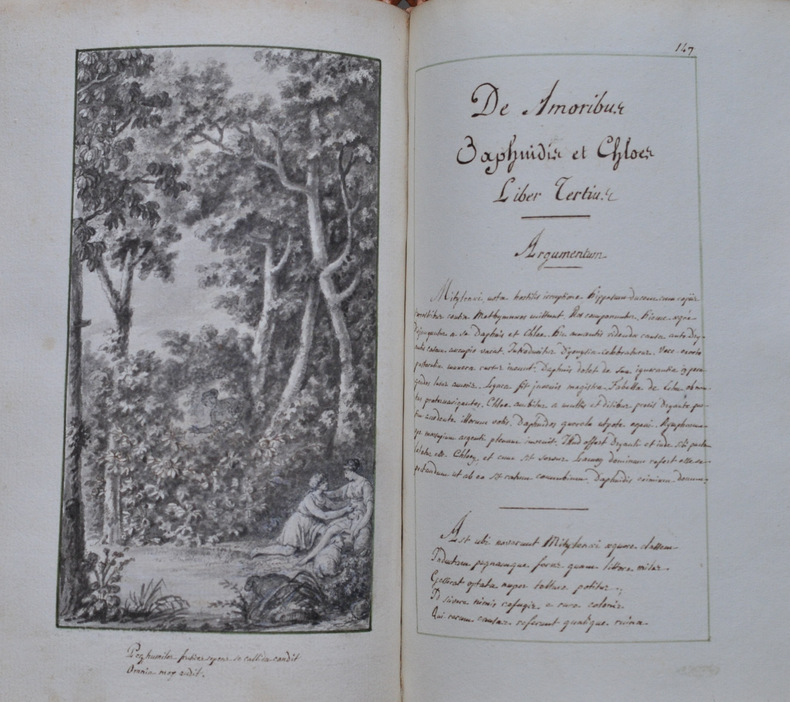
réf. 46400195, MANUSCRIT AUTOGRAPHE avec ornements et illustrations; grand in-8, demi-maroquin rouge, coins, dos lisse orné de grecques et fleurons dorés, tranches jaunes. (Reliure de l'époque). XXXIV et 308 pp. rédigées au recto sur papier vergé. "PRECIEUX MANUSCRIT AUTOGRAPHE. Il s'agit d'une traduction en vers latins modernes de Daphnis et Chloé de Longus. Le beau poète néo-latin, auteur de cette version est le célèbre chirurgien français Philippe Petit-Radel. Il naquit à Paris en 1749 et mourut dans la même ville en 1815. Il séjourna aux Indes de 1774 à 1777 et exerça comme chirurgien major à Surate. En 1782 il fut pourvu de la chaire de chirurgie à Paris. Le 10 août 1792, après avoir prononcé un discours en latin d'apparat, il s'éloigna brusquement et s'enfuit à Bordeaux. Enrôlé dans l'armée malgré lui, il s'échappa et s'embarqua pour l'île Bourbon en 1793 et de là partit pour l'Amérique. Il rentra en France en 1797 et fut appelé en 1798 à la chaire de clinique chirurgicale. Petit-Radel fut un latiniste distingué et militant. Il s'efforça toujours à rétablir dans les milieux médicaux l'ancien usage de parler latin. Outre ses importants travaux médicaux il nous a laissé divers livres latins De amoribus Pancharitiis et Zoroae. Poema erotico-didacticon (en 1798 et 1801); une traduction en vers latins des Hymnes de Callimaque ( 1810) et cette traduction de Longus qui parut chez Agasse à Paris en 1809. Le manuscrit est daté 1806. Titre calligraphié dans un encadrement d'emblèmes dessinés à la plume. En frontispice portrait gravé e Petit-Radel par J. Bouilliard. 4 belles compositions à pleine page dessinées au lavis par l'auteur et 7 vignettes dans le texte également au lavis. Toutes les pages de texte sont encadrées d'un filet bistre. Les 34 premières pages sont une préface en prose latine. Elle est datée de Paris 1806. En tête du livre figure un billet autographe du célèbre poète DELILLE, daté de Paris 11 juillet 1806. Il dit: """"J'ai entendu avec plaisir la lecture de quelques morceaux d'une traduction du grec en vers latins des hymnes de Callimaque et de Longus, faites par Monsieur Petit-Radel médecin, je ne doute point que la publication de ces deux ouvrages ne fasse plaisir aux amateurs des langues grecque et latine"""". Ce beau manuscrit provient de la bibliothèque de Charles Palissot (Nancy 1730-Paris 1814) le célèbre auteur dramatique qui fut aussi l'un des conservateurs de la bibliothèque Mazarine.
1928réf. 52441Sous étui bordé. Reliure plein maroquin turquoise. Dos lisse avec titre doré. Plats décorés de demi-cercles dorées en soleil. Tête dorée. Couverture et dos conservés. Reliure signée F. FERRAN Agen. Édition illustrée de 23 gravures originales en noir et en couleurs d'Henri LE RICHE.
1800réf. 46402614Paris, Imprimerie de P. Didot l’aîné, an VIII, 1800 ; in-4, plein maroquin vert à longs grains, large encadrement de fil. en pointillé, guirlandes et motifs dorés à l’antique (grecques, amphores et thyrses), dos orné de filets et grands fleurons dorés, dentelle intérieure dorée, non rogné, tranches dorées sur témoin. (Loutrel) VIII pp., 200pp. - 9 planches hors-texte.PREMIER TIRAGE. Un des plus beaux livres illustrés néo-classique. Superbe typographie de Didot l’aîné.9 tableaux de genre hors-texte dont 3 dessinés par PRUDHON et 6 par GÉRARD, gravés sur cuivre par B. Roger, Godfroy, Marais et Massard. “Les figures de Prudhon sont dignes du grand artiste” dit Cohen 656 - Brunet 1159.Bel exemplaire sur vélin fort, non rogné.
1925réf. 25296Paris Chez l'Artiste 1925 Préface de Eugène Marsan. Paris, Chez l'Artiste, 1925, in-8, veau noir, plats mosaïqués de 2 grands motifs géométriques or et argent, triple filets intérieur or et argent palladium, tête dorée, dos avec bandeau argenté portant titre et auteur, pièce d'arme en pied (sir Abdy), sous étui, 168 pages, (Creuzevault relieur).
1919réf. 000387One of the most beautiful books illustrated by Carlègle. With 33 original woodcuts. With two extra suites of illustrations on Japon ancien and on Chine all signed by the artist. No. 2 of 20 numbered and signed copies of the special edition on Japon ancien à la forme. "C'est la meilleure illustration de l'artiste" Carteret. Description: Vellum spine and fore edge with wood veneer covered boards filleted in gilt; flat spine lettered and decorated in gilt. Housed in the original slipcase covered with wood veneer and black leather entry. Bound by Devauchelle signed. Quarto: 27 × 19 cm; pp. 144 1ll. 33 plates on Japan 33 plates on China. Top edge gilt. Ref.: Carteret: iv 242 Condition: Slipcase with slightly torn edges otherwise a near fine copy. Notes: Charles Émile Egli born in Aigle in 1877 was a Swiss illustrator and artist. Under the name Carlègle he worked in Paris from 1900 until his death in 1937 for numerous magazines such as Le Rire Gazette du Bon Ton and La Vie Parisienne. From 1908 he began to illustrate books working for publishers such as Georges Briffaut Calmann-Lévy collection "Pour nos enfants" Mornay the Société de Bibliophile the Société Littéraire de France and Léon Pichon. The edition of the "Amours Pastorales" is one of Carlègle's most elaborate works. The total edition consisted of 395 copies of which only copies 1-20 were signed. Léon Pinchon hardcover
1757réf. 46402091A Paris, Imprimés pour les curieux, 1757 ; in-4, plein veau blond, encadrement de filets dor., dos lisse avec décor doré, tranches rouges. (Reliure de l’époque) VIII pp., 269 pp., (1 p.) - Frontispice et 29 planches hors-texte.Superbe édition illustrée, la première de ce format, la première aussi à donner, en face de la version d’Amyot, la nouvelle traduction, dite anonyme sur le titre, et qui est d’Antoine LECAMUS, un médecin né à Paris en 1722, mort en 1772. Pour se distraire de ses travaux de médecine, il a publié dans sa jeunesse quelques variétés littéraires, des poèmes, des allégories. Lecamus devint célèbre pour avoir rédigé les notices médicales du Journal Oeconomique de 1753 à 1765, puis comme régent de la Faculté de médecine de Paris.Toutes les pages de cette édition sont dans un encadrement typographique. L’illustration comprend 1 frontispice de Coypel, les 29 planches du Régent retouchées et entourées de magnifiques cadres avec sujets divers, 1 fleuron de titre, 8 grandes vignettes en-tête et 8 culs-de-lampe par Cochin, le tout gravé par Audran et Fokke. La célèbre figure des “petits pieds”, différente de celle de l’originale est ici placée p. 162. - Cohen 653.Très bel exemplaire en veau blond de l’époque.