2 477 résultats
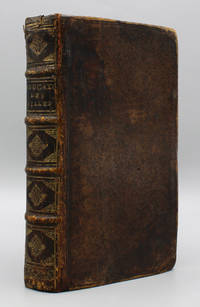
1718réf. 25140Paris: Florentin Delaulne 1718. First edition the Delaulne issue without the repeated pages 159-68; pp. 8 419 5; full contemporary calf red morocco label on gilt-paneled spine; joints starting else very good. Published posthumously and seen through the press by Andrew Ramsay who has supplied a preface. An important work by the archbishop of Cambrai "wherein he entered an eloquent plea for greater simplicity and naturalness in the pulpit and urged preachers to take the scriptural natural style of Bossuet as their model rather than the coldly analytical eloquence of his great rival Bourdaloue" EB-11. Three copies of this issue in OCLC. Florentin Delaulne unknown books
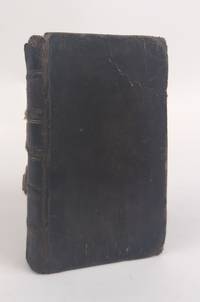
1750réf. 1377510Edinburgh: James Reid 1750. First Edinburgh Edition. Hardcover. 12mo 283 pages. In Poor condition. Bound in full brown leather but lacking rear board; front board significantly rubbed and bumped with chipping to head of spine. Text block with light plus age toning and bumping and creasing to several corners. Final six pages of text detached and significantly damaged but present and readable. 1377510. Special Collections - Downstairs. James Reid hardcover books
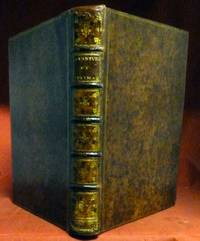
1764réf. ST15125Augustae Vindelicorum Augsburg: Conradum Henricum Stage 1764. Second Edition in Latin. 208 x 160 mm. 8 1/8 x 6 1/4". 9 p.l. 262 pp.Translated from French into Latin by Joseph Claude Destouches. VERY ATTRACTIVE LATE 18TH CENTURY ETRUSCAN CALF IN THE STYLE OF EDWARDS OF HALIFAX covers with gilt border central panel framed by stencilled palmettes within double gilt rules an Etruscan-style vase at center within a stencilled sunburst raised bands spine panels with blind-stamped Etruscan vase black morocco label gilt-rolled turn-ins all edges gilt. With printer's elaborate engraved device on title page engraved portrait of Elector Maximilian-Joseph of Bavaria at the head of the dedication to him engraved allegorical headpiece at the opening of Book I wood-engraved tailpieces at end of each section. Small wormhole near head of front joint two corners a bit bumped minor foxing to title and final page other trivial imperfections but QUITE A FINE WIDE-MARGINED COPY clean fresh and bright internally and in a binding with only minor defects. This beautifully preserved and attractive Neoclassical binding is a fitting cover for a Latin edition of Fénelon's Homeric coming-of-age tale. Edwards of Halifax is credited with developing the process of acid staining calf by using stencils a method known most notably to produce as here their so-called Etruscan calf bindings after the Etruscan vase decoration they resembled. The process was also adopted by binders on the Continent and became a fashionable choice for bindings in the late 19th century when the present binding was surely produced. It is difficult to say whether this binding was done by the Edwards firm or by an imitator but in any case the quality of execution is very high. The popularity of Fénelon's account of the adventures of the son of Odysseus also spread in this case beyond his native France and it became a favorite of schoolboys far removed from the young Dauphin for whom it was originally composed. First printed in 1759 our Latin translation offered an opportunity for young men to practice reading that classical language. The engravings here were newly designed and executed for this edition by German painter and engraver Georg Sigmund Rösch d. 1766. Conradum Henricum Stage unknown books
1821réf. 58413London: John Bumpus 1821. New Edition. 16mo. embossed brown patterned full-calf leather stamped in gilt; all edges gilt.204 pages. Translated from the French by Samuel Boyse. Very Good covers nice; contents clean with minor spotting text. John Bumpus unknown books
1810réf. 212560Paris: Briand 1810. Hardcover. VG-: Rubbing and some flaking to the edges of the leather especially around the spine. Book plate from previous owner on the front pasted end page. Some tanning to the pages. Clear text solid binding. A leatherbound book with gilt text on a red plate on the spine. Black plate with gilted series number 7 on the spine. Color marbled end pages. 428 pages. Volume seven ONLY. Contents are as follows: Tome VII: Dialogues sur l'élocuence en général et sur celle de la chaire en particulier. Briand hardcover books
1790réf. ST20479Paris: De l'imprimerie de Monsieur i.e. P. Didot jeune 1790. 243 x 154 mm. 9 1/2 x 6 1/4". Two volumes. LOVELY DARK BLUE STRAIGHT GRAIN MOROCCO BY BOZERIAN JEUNE stamp-signed at foot of Tome I spine covers with pretty gilt frame enclosed by double gilt rule raised bands spine gilt in panels with large millepoint ornament with floral tools emanating from a central circle gilt lettering turn-ins with Greek key roll marbled endpapers all edges gilt. With frontispiece and six engravings by Cochin and Moreau as called for all before letters and EXTRA-ILLUSTRATED with 24 engravings by Marillier here in proofs before the letter and with three versions of the portrait of Fénélon by Vivien engraved by Hubert Figuet and Savart. Cohen-de Ricci col. 386-87 noting the addition of the Marillier plates to some copies; Graesse II 565; Brunet II 1215-16. Spine evenly a little sunned Marillier plates with minor marginal foxing isolated small smudges to the very generous margins one quire a little yellowed a couple of leaves with small holes to a margin due to paper flaws but AN ESPECIALLY FINE COPY--clean fresh and bright in a most appealing binding with almost no signs of wear. Our copy of Fénélon's political allegory featuring the son of Odysseus is a very fine example of French Rococo book production with printing illustration and binding by leading practitioners of those arts. Scion of a printing dynasty Pierre-François Didot jeune 1732-95 sought to improve the family's productions by founding a factory to product the luxurious papers that characterize Didot editions as well as by making improvements in type-founding to refine their always-admired font. Ray considers illustrators Cochin and Moreau le jeune part of the Rococo pantheon of greats headed by Boucher Gravelot and Eisen. He praises Cochin’s "mastery of outline and firmness of composition" as well as his "acute observation and unpretentious humor." Ray was also impressed with Moreau's keen eye for detail and agreed with the Goncourt brothers that "the grace and charm of his drawing . . . brought about 'a renaissance in the rococo style.'" Forced by financial necessity to take up book illustration Pierre-Clémént Marillier 1740-1808 soon earned what Ray called "a position in the front rank of book artists" with his skill and energy. Ray deems Marillier "among the most accomplished" illustrators of the century and he says that "nearly all of his designs are characterized by grace liveliness and firmness of drawing”—a fitting description for the plates in our volumes. François Bozerian generally called Bozerian jeune was active in Paris from just after the turn of the century until 1818 and for much of that time he worked with his elder brother Jean-Claude 1762-1840. The Bozerian workshop produced many fine bindings for clients that included the emperor Napoleon I as well as leading bibliophiles of the day. Their works are valued today especially for their technical achievement and refinement of design. Our two volumes are especially elaborate--even for Bozerian work--and the precision of the faultless finishing here leaves a very strong impression of rigorous order. De l'imprimerie de Monsieur [i.e., P. Didot jeune] unknown books
1705réf. 284756A La Haye: Chez Adrien Motjens 1705. Full Leather. Good binding. An early copy of the Avantures de Telemaque Fils d’Ulysse or the “Adventures of Telemachus son of Ulysses” published six years after the First. Written by Francois Fenelon while he was tutor of Louis Duke of Burgundy. The work served as a didactic tool for the future ruler the young ‘Fils de France’ as well as a not-so-subtle critique of absolute monarchy and King Louis XIV. Literary historian Jean-Claude Bonnet is quoted as stating that the Avantures is “the true key to the museum of the eighteenth century imagination;” an instant bestseller Telemaque went through numerous editions. Text in French. Two volumes in one; additional title page for Tome II; pagination and collation reset. Title pages in black and red; with seventeen engraved plates throughout. Some offsetting to the type of signature Bb suggesting the leaves were sewn in before they were dry; previous owners’ names in ink on the rear flyleaves and first title page; lacking endpapers. 26 272 2 328 pp. Full leather with raised bands leather label and tooling in gilt in compartments. Jean-Claude Bonnet La Naissance du Pantheon: Essai sur le culte des grands hommes. Good binding. Chez Adrien Motjens unknown books
1823réf. 24133Louvain: Vanlinthout et Vandenzande 1823. Boards. Good. 4 148 pages. 8vo. Exlibrary with several old institutional stamps and labels the most recent being Bibliotheca Mt. St. Alphonsus Esopus N.Y. which closed and was repurposed in 2012. Cloth spine over marbled boards flyleaves lacking bound with stubs affixed to title and last page. Remnants of paper spine label. Generally bright and clean internally. Boards. Originally published by Fenelon in 1687 and translated/published many times since. An attempt to instruct the reader on how to raise and "monitor" one's daughter. Translated from the German here in French. Vanlinthout et Vandenzande unknown books
1700réf. 314595Geneva: Vincent Miege 1700. hardcover. very good. 4 197 2 pages. Slim 12mo handsomely bound in older 3/4 calf over marbled boards. Engraved device on title and some engraved headpieces and initials. Geneve: Vincent Miege 1700. Nouvelle Edition. A very good copy with some light scattered foxing. Vincent Miege unknown books
1805réf. 47106Clermont: Lanriot 1805. hardcover. very good. Portrait folding map and 24 fine copperplates. 2 volumes. 12mo contemporary mottled calf gilt leather spine labels top edge gilt; some foxing. Clermont: Lanriot An 13 1805. Very Good. Lanriot unknown books
1818réf. 268081Paris: Ledentu 1818. Hardcover. Very Good. Nouvelle édition. Text in French. 16mo. viii 222pp. frontispiece portrait. Contemporary quarter calf and marbled paper boards gilt spine. Joints are cracked else a very good copy of Fenelon's treatise his first book intended to produce hard working frugal mothers of noble families. OCLC locates only 1 copy of this edition. Ledentu hardcover books
1812réf. 170910Philadelphie: Imprime pour M. Carey Johnson & Warner et al. 1812. Hardcover. Fair. New edition. 12mo. 432pp. Text in French. Contemporary full calf. Early small owner's signatures in pen and pencil. The binding is worn both boards are detached still a fair sound copy. A scarce example of an early American imprint printed in French. Imprime pour M. Carey, Johnson & Warner, [et al.] hardcover books
1830réf. 261605Paris: ChezLebigre 1830. Hardcover. Fair. Two volumes. Octavos. Quarter leather and marbled paper covered boards. Owner's name in each volume spines largely perished a very worn fair only set. ChezLebigre hardcover books
1734réf. 22235Amsterdam & Rotterdam: J. Wetstein & G. Smith & Zacharie Chatelain; Jean Hofhout 1734. Nouvelle Edition. leather_bound. Contemporary full mottled calf. Aeg. Very good/Near fine. 2 X XVII 424 pages. 28.5 x 23 cm. Folding map 24 plates engraved by Balthasar Bernaerts Philipp Van Gunst Louis Surugue and Jacob Folkema after Louis Fabricius Dubourg Bernard Picart and Guillaume-François-Laurent Debrie with 22 engraved tail pieces. There was also a 1734 folio edition of this work limited to 150 copies. The engravings of the two editions are similar. Our copy contains the suppressed "Ode" last six pages of the text. First edition published 1699: it was also considered an attack on the divine right of absolute monarchy and the the most popular book of its time. BRUNET. p.1214 calls it a "belle edition." GORDON N. RAY. p.8: depicts frontispiece herein. Bookplate of Armand-Jules de Rohan Archbishop of Reims. Raised bands spine panels in gilt floral arabesques triple gilt border panels marbled endpapers spine ends conserved. J. Wetstein & G. Smith, & Zacharie Chatelain; Jean Hofhout unknown books
1717réf. 20110Paris: Jacques Estienne 1717. leather_bound. Contemporary full mottled calf. Very good. 526 pages. 16 x 9.5 cm. Twenty-six engraved plates mostly after Giffart large folding map engraved head piece. A biting attack on absolute monarchy and one of the most popular works of the century. BRUNET Vol. II pp. 1212-1213 gives this edition praise: "De Toutes les anciennes editions du Telemaque imprimees a Paris celle-ci est la plus belle et celle qui merite le plus de conserver une place dans la bibilotheque d'un curioux." Text generally clean frontispiece slightly shaved at margin raised bands spine panels richly gilt half centimeter loss at spine head small creases lower backstrip marbled endpapers. Jacques Estienne unknown books
1687réf. 12094A Paris: Chez Pierre Aubouin Pierre Emery et Charles Clousier… 1687 First edition mixed issue of Fénelon's 1651-1715 most important book. This copy has no errata as is the case with first issue copies according to Tchermerzine. It follows Tchermerzine's description of the second issue with p. 167 line 20 having the reading "sans vivre de son esprit" . However it has the errors on p. 275 "manifiques" and "simplieté" as does the first issue. Both O4 pp. 167-8 and pp. 275-6 Z3 are on stubs. . Contemporary calf gilt-decorated spine. . Twelvemo. Spine ends corners lightly worn. Some light browning but generally a very good copy. Instructions for the Education of a Daughter was "…the first systematic attempt ever made to deal with that subject as a whole. Hence it was probably the most influential of all Fénelon's books and guided French ideas on the question all through the 18th century. It holds a most judicious balance between the two opposing parties of the time. On the one side were the précieuses enthusiasts for the 'higher' education of their sex; on the other were the heavy Philistines so often portrayed by Molière who thought that the less girls knew the better they were likely to be. Fénelon sums up in favour of the cultivated house-wife; his first object was to persuade the mothers to take charge of their girls themselves and fit them to become wives and mothers in their turn" Encyclopedia Britannica 13th edition. "Il faut considérer outre le bien que font les femmes quand elles sont bien élevées le mal qu'elles causent dans e monde quand elles manquent d'une education qui leur inspire la vertu. Il est constant que la mauvaise éducation des femmes fait plus de mal que celle des hommes puisque les désordres des hommes viennent souvent & de la mauvaise éducation qu'ils ont receüe de leurs mères & des passions que d'autres femmes leur ont inspirées dans un âge plus avancé. Quelles intrigues se presentent à nous dans les Histoires quel renversement des lois & des moeurs quelles guerres sanglantes quelles nouveautez contre la religion quelles révolutions d'Etat causées par le déreglement des femmes! Voilà ce qui prouve l'importance de bien élever les filles" pp. 7-8. Chez Pierre Aubouin, Pierre Emery et Charles Clousier… books
1785réf. 012369Paris: Chez J. Barbou 1785. 1st Edition Thus. Hardcover. Very Good. 2 volumes 12mo old tree calf blind ruled six compartments spine with gilt and red leather label xlviii 356 10 plates: 454 12 plates plus foldout map of Mediterranean Very nice copies. Chez J. Barbou hardcover books
1803réf. 14098Edinburgh: Printed by J. Pillans; sold by A. Constable and J. Guthrie; and by Longman London 1803 First edition of this English translation of Fenelon's study of the Greek philosophers. An earlier English translation appeared in 1726. Cormack's translation is unaccountably rare in the first edition: OCLC lists but five copies Northern Illinois University Meadville-Lombard Theological Seminary in Illinois University of Western Ontario Massachusetts Historical Society Allegheny College. This translation turned out to be enduring. Numerous editions were published in both Britain and America throughout the nineteenth century. Original boards uncut printed paper label in Volume II. Two volumes twelvemo. . Spines worn and backstrips largely missing but generally a sound copy. Printed by J. Pillans; sold by A. Constable, and J. Guthrie; and by Longman, London, hardcover books
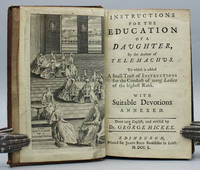
1750réf. 16113Edinburgh: Printed for James Reid 1750 First Edinburgh edition. The first English edition was published in London for Jonah Bowyer in 1707. Contemporary full polished calf with red calf spine label. Six-paneled gilt spine. . Twelvemo. Binding extremities rubbed. Small chip at foot of spine. Minor split at top of rear joint but holding soundly. Previous owner's signature removed from front pastedown. Light foxing. Francois de Salignac de la Mothe Fenelon 1651-1715 was a poet writer theologian and French Roman Catholic archbishop. Fenelon was ordained as a priest in 1675 and served as a missionary to the Huguenots during the reign of Louis XIV as the church wished to convert them from Protestantism. Originally published as Traité de l'education des Filles Fenelon's Instructions is considered a progressive work given its support and encouragement of female education; it has a particular emphasis on theological matters which Fenelon believed was necessary so that they might better understand and refute heresies. He served as a tutor to the Dauphin's eldest son the Duke of Burgundy and composed the works Fables and Dialogues des Morts for him. Fenelon's also wrote Les Aventures de Telemaque which upon its publication infuriated Louis XIV given the fact that it seemingly questioned the foundations of his regime. As a result the king did not revoke an earlier order against Fenelon that forbade him to leave his archdiocese a punishment for his previous Quietist views. Fenelon died in January of 1715. Printed for James Reid, books
1734réf. ST12855Amsterdam: Wetstein & G. Smith; Rotterdam: Jean Hofhout 1734. First Printing of this Edition. ONE OF 150 COPIES IN FOLIO FORMAT. 375 x 265 mm. 14 3/4 x 10 1/2". 4 p.l. including portrait and frontispiece x xxvi i.e. xvi 395 1 pp. Like most copies ours lacks the suppressed material designed to follow page 395. FINE CONTEMPORARY RED STRAIGHT-GRAIN MOROCCO covers with palmette roll border central panel with gilt-ruled frame and lozenge accented with bead and lozenge roll spine gilt and inlaid with olive morocco bands tooled with gilt chalice and leaves between the double raised bands spine compartments with central urn ornament surrounded by small tools calligraphic flourishes at corners gilt titling turn-ins with elaborate gilt roll featuring leaves and moths blue watered silk endleaves all edges gilt lower board with three older repaired patches. In a modern marbled paper slipcase. Ornamental headpieces and tailpieces title page decorated with vignette author portrait by Drevet after Vivien and 25 more plates illustrating the tale engraved by Folkéma and others predominantly in classical style three including the frontispiece designed by Picart 16 by Dubourg and six by Debrie with original tissue guards; 45 vignettes serving as headpieces 24 and tailpieces 21 designed by Dubourg and Shenk one engraved folding map and extra-illustrated with a portrait of Fenelon by Jean Coraboeuf dated 1920. Text with ornamental border throughout. Front pastedown with the bookplate of Arthur Meyer. Cohen-de Ricci 381-82; Ray 1; Brunet II 1214; Graesse II 564. ◆A few darkened patches on boards small chip to olive band at tail of spine corners gently bumped occasional minor foxing or light browning otherwise QUITE AN EXCELLENT COPY the binding altogether pleasing with only insignificant wear the text clean and fresh with rich impressions of the plates. This is a very well-preserved copy of the luxury version of one of the most impressive French illustrated books of the 18th century offered in a Neoclassical binding appropriate for its contents. Ray says that in our volume "all the formal elements of the mid-18th century French masterpieces are present." He describes the 25 plates as "stately and elaborate" and singles out Picart's frontispiece which he reproduces in one of the rare full-page illustrations in his book as being "developed with exceptional spirit and inventiveness." Not only the handsome plates but also the leafy frames of each text page the large type and the many charming headpieces and tailpieces make it an elegant object that provides for a visually memorable experience. Fénelon 1651-1715 wrote this utopian work for Louis XIV's grandson whom he was employed to tutor. The book was designed to give the future ruler more farsighted political social and economic ideas than he might otherwise have met with. Unfortunately the boy died before he could come to power and Fénelon fell into disgrace partly because "Telemaque" reflected badly on the government of Louis. According to Graesse our "beautiful" edition supervised by the marquis de Fénelon is much more correct than previous printings as a great many errors have been corrected and lacunae have been filled in. While the unsigned binding is not quite up to the level of émigré binders Kalthoeber and Staggemeier & Welcher it is in their style and is certainly impressive enough to look handsome on the shelf. Former owner Arthur Meyer 1844-1924 was a French press baron whose collection focused on fine bindings and beautiful illustrations. Wetstein & G. Smith; Rotterdam: Jean Hofhout unknown books
1795réf. 3982London: G. and G. Kearsley 1795. Hardcover. Very Good. 12 engraved plates after Thomas Stothard hand-colored. xi 1 xxxv 1 439 12 pages. 4to contemporary tree calf rebacked; plates variously foxed front free endpaper lacking. A surprisingly uncommon edition even more seldom with the plates hand-colored as they are here. G. and G. Kearsley hardcover books
1768réf. 94Venise: chez Guillaume Zerletii 1768. Two volumes. 8vo. 230 x 155 mm. 9 x 6 inches. xlviii 272 pp.; 262 2 pp. Engraved frontispiece two engraved title-pages folding map and 24 vignettes. Bound in contemporary paste-paper boards soiled but sound; some staining to lower right corner of some of the leaves. With faults an acceptable copy. Appears to be the first edition printed by Zerletti who published a more expensive edition in 1788. This is the first appearance of the engravings by Giovanni Volpato 1740-1803 a professional engraver from Bassano who worked with the Remondinis' publishing house. "In 1762 he was brought by Bartolozzi to Joseph Wagner's shop in Venice" and worked with several printers until 1772 when he moved to Rome to run his own shop and open a school of engraving. In 1786 he published a book with 36 plates entitled Principi del Disegno. Raphael Morghen was among his many pupils in Rome. The in this edition of Les Aventures de Télémaque Volpato's his engravings are in the classical style and some of them demonstrate his skill capturing the moment and highlighting the action of the scene. He is best remembered for series of plates after the frescos in the Vatican. Hind Short History of Engraving and Etching p. 209. Claudia Lazzaro Eighteenth Century Italian Prints from the Collection of Mr. and Mrs. Marcus S. Sopher 1980 p. 37. See Morazoni p. 229 for a description of the 1788 edition by Zerletti. 94. chez Guillaume Zerletii unknown books
1780réf. 8649London. J. Walker. n.d. circa 1780. Bound in full gilt tooled calfskin. Gilt tooled spine compartments with gilt titles. Marbled endsheets. 16mo. 3.0" x 5.0". Illustrated with an engraved Frontis and title page. Small chip at headpiece. Covers variously rubbed. A Very Good tight clean copy. J. Walker. unknown books
1829réf. 104747Bruxelles: X. Renaudiere Fils Aine 1829. 427 S.; mit 10 Kupfern; Ganzleder der Zeit Rückentitelschild erneuert; Papier teils fleckig einige Eselsohren letztes Bl. locker Ecken gestaucht verschiedene kleinere äussere Läsuren. Leder. Noch befriedigend. 172 cm. X. Renaudiere Fils Aine Hardcover
réf. 0425041999-9-1Berkley Books. New. The item is brand new never used or read. It's in perfect condition and may include supplements and/or access codes or come shrink-wrapped. Berkley Books unknown