2 472 résultats
1905réf. 25871Paris: Letouzey & Ané 1905. Fine. Letouzey & Ané Paris 1905 13.50 x 21.50 cm broché First edition of this conference given at the Institut catholique de Paris printed in a small number as this offprint. Rare and handsome pamphlet. Letouzey & Ané unknown
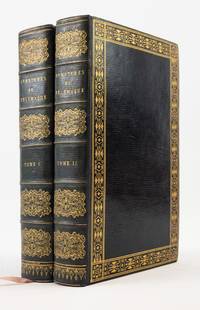
1790réf. ST20479Paris: De l'imprimerie de Monsieur i.e. P. Didot jeune 1790. 243 x 154 mm. 9 1/2 x 6 1/4". Two volumes. LOVELY DARK BLUE STRAIGHT GRAIN MOROCCO BY BOZERIAN JEUNE stamp-signed at foot of Tome I spine covers with pretty gilt frame enclosed by double gilt rule raised bands spine gilt in panels with large millepoint ornament with floral tools emanating from a central circle gilt lettering turn-ins with Greek key roll marbled endpapers all edges gilt. With frontispiece and six engravings by Cochin and Moreau as called for all before letters and EXTRA-ILLUSTRATED with 24 engravings by Marillier here in proofs before the letter and with three versions of the portrait of Fénélon by Vivien engraved by Hubert Figuet and Savart. Cohen-de Ricci col. 386-87 noting the addition of the Marillier plates to some copies; Graesse II 565; Brunet II 1215-16. Spine evenly a little sunned Marillier plates with minor marginal foxing isolated small smudges to the very generous margins one quire a little yellowed a couple of leaves with small holes to a margin due to paper flaws but AN ESPECIALLY FINE COPY--clean fresh and bright in a most appealing binding with almost no signs of wear. Our copy of Fénélon's political allegory featuring the son of Odysseus is a very fine example of French Rococo book production with printing illustration and binding by leading practitioners of those arts. Scion of a printing dynasty Pierre-François Didot jeune 1732-95 sought to improve the family's productions by founding a factory to product the luxurious papers that characterize Didot editions as well as by making improvements in type-founding to refine their always-admired font. Ray considers illustrators Cochin and Moreau le jeune part of the Rococo pantheon of greats headed by Boucher Gravelot and Eisen. He praises Cochin’s "mastery of outline and firmness of composition" as well as his "acute observation and unpretentious humor." Ray was also impressed with Moreau's keen eye for detail and agreed with the Goncourt brothers that "the grace and charm of his drawing . . . brought about 'a renaissance in the rococo style.'" Forced by financial necessity to take up book illustration Pierre-Clémént Marillier 1740-1808 soon earned what Ray called "a position in the front rank of book artists" with his skill and energy. Ray deems Marillier "among the most accomplished" illustrators of the century and he says that "nearly all of his designs are characterized by grace liveliness and firmness of drawing”—a fitting description for the plates in our volumes. François Bozerian generally called Bozerian jeune was active in Paris from just after the turn of the century until 1818 and for much of that time he worked with his elder brother Jean-Claude 1762-1840. The Bozerian workshop produced many fine bindings for clients that included the emperor Napoleon I as well as leading bibliophiles of the day. Their works are valued today especially for their technical achievement and refinement of design. Our two volumes are especially elaborate--even for Bozerian work--and the precision of the faultless finishing here leaves a very strong impression of rigorous order. De l'imprimerie de Monsieur [i.e., P. Didot jeune] unknown
1734réf. ST12855Amsterdam: Wetstein & G. Smith; Rotterdam: Jean Hofhout 1734. First Printing of this Edition. ONE OF 150 COPIES IN FOLIO FORMAT. 375 x 265 mm. 14 3/4 x 10 1/2". 4 p.l. including portrait and frontispiece x xxvi i.e. xvi 395 1 pp. Like most copies ours lacks the suppressed material designed to follow page 395. FINE CONTEMPORARY RED STRAIGHT-GRAIN MOROCCO covers with palmette roll border central panel with gilt-ruled frame and lozenge accented with bead and lozenge roll spine gilt and inlaid with olive morocco bands tooled with gilt chalice and leaves between the double raised bands spine compartments with central urn ornament surrounded by small tools calligraphic flourishes at corners gilt titling turn-ins with elaborate gilt roll featuring leaves and moths blue watered silk endleaves all edges gilt lower board with three older repaired patches. In a modern marbled paper slipcase. Ornamental headpieces and tailpieces title page decorated with vignette author portrait by Drevet after Vivien and 25 more plates illustrating the tale engraved by Folkéma and others predominantly in classical style three including the frontispiece designed by Picart 16 by Dubourg and six by Debrie with original tissue guards; 45 vignettes serving as headpieces 24 and tailpieces 21 designed by Dubourg and Shenk one engraved folding map and extra-illustrated with a portrait of Fenelon by Jean Coraboeuf dated 1920. Text with ornamental border throughout. Front pastedown with the bookplate of Arthur Meyer. Cohen-de Ricci 381-82; Ray 1; Brunet II 1214; Graesse II 564. ◆A few darkened patches on boards small chip to olive band at tail of spine corners gently bumped occasional minor foxing or light browning otherwise QUITE AN EXCELLENT COPY the binding altogether pleasing with only insignificant wear the text clean and fresh with rich impressions of the plates. This is a very well-preserved copy of the luxury version of one of the most impressive French illustrated books of the 18th century offered in a Neoclassical binding appropriate for its contents. Ray says that in our volume "all the formal elements of the mid-18th century French masterpieces are present." He describes the 25 plates as "stately and elaborate" and singles out Picart's frontispiece which he reproduces in one of the rare full-page illustrations in his book as being "developed with exceptional spirit and inventiveness." Not only the handsome plates but also the leafy frames of each text page the large type and the many charming headpieces and tailpieces make it an elegant object that provides for a visually memorable experience. Fénelon 1651-1715 wrote this utopian work for Louis XIV's grandson whom he was employed to tutor. The book was designed to give the future ruler more farsighted political social and economic ideas than he might otherwise have met with. Unfortunately the boy died before he could come to power and Fénelon fell into disgrace partly because "Telemaque" reflected badly on the government of Louis. According to Graesse our "beautiful" edition supervised by the marquis de Fénelon is much more correct than previous printings as a great many errors have been corrected and lacunae have been filled in. While the unsigned binding is not quite up to the level of émigré binders Kalthoeber and Staggemeier & Welcher it is in their style and is certainly impressive enough to look handsome on the shelf. Former owner Arthur Meyer 1844-1924 was a French press baron whose collection focused on fine bindings and beautiful illustrations. Wetstein & G. Smith; Rotterdam: Jean Hofhout unknown
1790réf. ST20479Paris: De l'imprimerie de Monsieur i.e. P. Didot jeune 1790. 243 x 154 mm. 9 1/2 x 6 1/4". Two volumes. LOVELY DARK BLUE STRAIGHT GRAIN MOROCCO BY BOZERIAN JEUNE stamp-signed at foot of Tome I spine covers with pretty gilt frame enclosed by double gilt rule raised bands spine gilt in panels with large millepoint ornament with floral tools emanating from a central circle gilt lettering turn-ins with Greek key roll marbled endpapers all edges gilt. With frontispiece and six engravings by Cochin and Moreau as called for all before letters and EXTRA-ILLUSTRATED with 24 engravings by Marillier here in proofs before the letter and with three versions of the portrait of Fénélon by Vivien engraved by Hubert Figuet and Savart. Cohen-de Ricci col. 386-87 noting the addition of the Marillier plates to some copies; Graesse II 565; Brunet II 1215-16. Spine evenly a little sunned Marillier plates with minor marginal foxing isolated small smudges to the very generous margins one quire a little yellowed a couple of leaves with small holes to a margin due to paper flaws but AN ESPECIALLY FINE COPY--clean fresh and bright in a most appealing binding with almost no signs of wear. Our copy of Fénélon's political allegory featuring the son of Odysseus is a very fine example of French Rococo book production with printing illustration and binding by leading practitioners of those arts. Scion of a printing dynasty Pierre-François Didot jeune 1732-95 sought to improve the family's productions by founding a factory to product the luxurious papers that characterize Didot editions as well as by making improvements in type-founding to refine their always-admired font. Ray considers illustrators Cochin and Moreau le jeune part of the Rococo pantheon of greats headed by Boucher Gravelot and Eisen. He praises Cochin’s "mastery of outline and firmness of composition" as well as his "acute observation and unpretentious humor." Ray was also impressed with Moreau's keen eye for detail and agreed with the Goncourt brothers that "the grace and charm of his drawing . . . brought about 'a renaissance in the rococo style.'" Forced by financial necessity to take up book illustration Pierre-Clémént Marillier 1740-1808 soon earned what Ray called "a position in the front rank of book artists" with his skill and energy. Ray deems Marillier "among the most accomplished" illustrators of the century and he says that "nearly all of his designs are characterized by grace liveliness and firmness of drawing”—a fitting description for the plates in our volumes. François Bozerian generally called Bozerian jeune was active in Paris from just after the turn of the century until 1818 and for much of that time he worked with his elder brother Jean-Claude 1762-1840. The Bozerian workshop produced many fine bindings for clients that included the emperor Napoleon I as well as leading bibliophiles of the day. Their works are valued today especially for their technical achievement and refinement of design. Our two volumes are especially elaborate--even for Bozerian work--and the precision of the faultless finishing here leaves a very strong impression of rigorous order. De l'imprimerie de Monsieur [i.e., P. Didot jeune] unknown books
1734réf. ST12855Amsterdam: Wetstein & G. Smith; Rotterdam: Jean Hofhout 1734. First Printing of this Edition. ONE OF 150 COPIES IN FOLIO FORMAT. 375 x 265 mm. 14 3/4 x 10 1/2". 4 p.l. including portrait and frontispiece x xxvi i.e. xvi 395 1 pp. Like most copies ours lacks the suppressed material designed to follow page 395. FINE CONTEMPORARY RED STRAIGHT-GRAIN MOROCCO covers with palmette roll border central panel with gilt-ruled frame and lozenge accented with bead and lozenge roll spine gilt and inlaid with olive morocco bands tooled with gilt chalice and leaves between the double raised bands spine compartments with central urn ornament surrounded by small tools calligraphic flourishes at corners gilt titling turn-ins with elaborate gilt roll featuring leaves and moths blue watered silk endleaves all edges gilt lower board with three older repaired patches. In a modern marbled paper slipcase. Ornamental headpieces and tailpieces title page decorated with vignette author portrait by Drevet after Vivien and 25 more plates illustrating the tale engraved by Folkéma and others predominantly in classical style three including the frontispiece designed by Picart 16 by Dubourg and six by Debrie with original tissue guards; 45 vignettes serving as headpieces 24 and tailpieces 21 designed by Dubourg and Shenk one engraved folding map and extra-illustrated with a portrait of Fenelon by Jean Coraboeuf dated 1920. Text with ornamental border throughout. Front pastedown with the bookplate of Arthur Meyer. Cohen-de Ricci 381-82; Ray 1; Brunet II 1214; Graesse II 564. ◆A few darkened patches on boards small chip to olive band at tail of spine corners gently bumped occasional minor foxing or light browning otherwise QUITE AN EXCELLENT COPY the binding altogether pleasing with only insignificant wear the text clean and fresh with rich impressions of the plates. This is a very well-preserved copy of the luxury version of one of the most impressive French illustrated books of the 18th century offered in a Neoclassical binding appropriate for its contents. Ray says that in our volume "all the formal elements of the mid-18th century French masterpieces are present." He describes the 25 plates as "stately and elaborate" and singles out Picart's frontispiece which he reproduces in one of the rare full-page illustrations in his book as being "developed with exceptional spirit and inventiveness." Not only the handsome plates but also the leafy frames of each text page the large type and the many charming headpieces and tailpieces make it an elegant object that provides for a visually memorable experience. Fénelon 1651-1715 wrote this utopian work for Louis XIV's grandson whom he was employed to tutor. The book was designed to give the future ruler more farsighted political social and economic ideas than he might otherwise have met with. Unfortunately the boy died before he could come to power and Fénelon fell into disgrace partly because "Telemaque" reflected badly on the government of Louis. According to Graesse our "beautiful" edition supervised by the marquis de Fénelon is much more correct than previous printings as a great many errors have been corrected and lacunae have been filled in. While the unsigned binding is not quite up to the level of émigré binders Kalthoeber and Staggemeier & Welcher it is in their style and is certainly impressive enough to look handsome on the shelf. Former owner Arthur Meyer 1844-1924 was a French press baron whose collection focused on fine bindings and beautiful illustrations. Wetstein & G. Smith; Rotterdam: Jean Hofhout unknown books
réf. 3337Paris, Librairie Aristide Quillet, collection encyclopédique des classiques Quillet publiée sous la direction de Paul Penciolelli, 1961, reliure demi-basane fauve, titres et faux nerfs dorés, décors à froid, 12x18cm, 473 pages, portraits et illustrations.
réf. 200818358Paris, Horizons de france - collection provinciales, 1953 ; in-8, 210 pp., broché, couverture illustr - rousseurs. Complet avec sa carte.
réf. 55452P., Stock, 1976, in 8° broché, 402 pages ; couverture illustrée.
réf. 16224P., Les Belles Lettres, 1939, in 8 broché, 136 pages.
réf. 44555P., Alcan, 1928, petit in 8° broché, 117 pages.
réf. 44559Fribourg, Egloff (Collection "Cri de la France"), 1947, in 12 carré, 134 pages.
réf. 44574P., de Gigord, 1917, in 12 broché, 375 pages ; manque de papier à la page des matières sans atteinte au texte.
réf. 35570Neuchâtel, Secrétariat de l'Université, 1954. Gr. in-8°, 143p. Broché.
réf. 28288P., Fayard, 1910, in 12 broché, 328 pages.
réf. 38914P., Michel Lévy, 1864, in 12 relié demi-basane aubergine, dos à faux nerfs orné, 257 pages ; quelques rousseurs ; un feuillet anciennement réparé au ruban adhésif.
réf. 49904P., Fayard, 1961, in 12 broché, 211 pages.
1884réf. 843201884 Paris, Plon, 1884, in 8° relié demi-chagrin cerise, dos à nerfs, XI-450 pages ; cachet-ex-libris.
1751réf. 652811751 Amsterdam, L'Honoré, 1751, in 12 relié plein veau moucheté ancien, dos à nerfs orné, 287 pages.
1751réf. 862571751 La Hay, Vaillant et Prevost, 1723, petit in 12 relié pleine basane de l'époque dos à nerfs orné, 228 pages ; reliure frottée, coiffes arrachées, ors fanés.
réf. 80"Nouvelle édition, augmentée de l'Histoire d'Aristonoüs & Sophronime". A Bruxelles. Chez François Foppens. 1700 (l'E.O. a paru en 1699). Deux tomes en un volume. 95 x 160 mm. 246 pages. Reliure du temps en plein veau havane ; dos à nerfs, pièce de titre en maroquin rouge, tranches rouges. Coins un peu émoussés, mais bon exemplaire.
réf. 37723Sans lieu, sans nom, 1801. In-8°, [4]-IV-465p. Brochure muette d'attente.
réf. 18672Cologne. Chez les Heretiers de Pierre Marteau. 1700. Soft cover. 24cm 14.2cm 92p. title page vignette rebound marbled paper wraps new paper label on the upper cover fine thus n14.1. - A contemporary response to Fenlon's didactic romance "Telamaque" published surreptitiously in 1699. Fenlon 1651-1715 Bishop of Cambrai was severely censured for what was perceived to be criticism of Louis XIV's reign. This "Critique Generale" is anonymous but believed to be written by Nicolas Gueudeville. Cologne. Chez les Heretiers de Pierre Marteau. 1700 unknown
réf. 18758Cologne. Chez les Heretiers de Pierre Marteau. 1700. Hardcover. Very Good. 24mo 14.2cm 92p. title page vignette rebound in french marbled paper over boards with paper label on the upper cover some slight damp staining else very good copy attractively bound copy ds1. - A contemporary response to Fenlon's didactic romance "Telamaque" published surreptitiously in 1699. Fenlon 1651-1715 Bishop of Cambrai was severely censured for what was perceived to be criticism of Louis XIV's reign. This "Critique Generale"is anonymous but believed to be written by Nicolas Gueudeville. Cologne. Chez les Heretiers de Pierre Marteau. 1700 hardcover
réf. #[42469]Leiden Th. Haak 1719 671 pag. Two volumes in one full leather good copy. Translated by B.D. Moretti from the French 'Les avantures de Telemaque'. hardcover
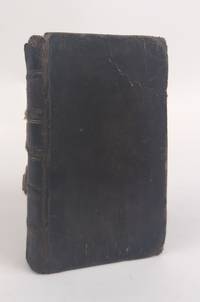
1750réf. 1377510Edinburgh: James Reid 1750. First Edinburgh Edition. Hardcover. 12mo 283 pages. In Poor condition. Bound in full brown leather but lacking rear board; front board significantly rubbed and bumped with chipping to head of spine. Text block with light plus age toning and bumping and creasing to several corners. Final six pages of text detached and significantly damaged but present and readable. 1377510. Special Collections - Downstairs. James Reid hardcover