Machiavel, Nicolas [Niccolo Machiavelli]Biblio.com
877 résultats
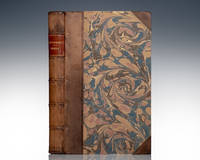
1675réf. 148533London: John Starkey at the Miter in Fleetstreet near Temple-Bar 1675. First edition in English of the most important writings of Niccolo Machiavelli widely considered the foundation of the modern study of politics. Includes The History of Florence The Prince Discourses on Livy and The Art of War. Folio bound in three quarter modern calf over marbled boards with gilt-lettered morocco spine label modern endpapers but retaining early binder's flyleaves engraved ornamental initials headpieces. Without the general title frontispiece or ads sometimes encountered. Included is “Nicholas Machiavel’s Letter to Zanobius Buondelmontius in Vindication of Himself and His Writings” which was in fact authored by Henry Neville the translator of this edition. There are two issues of this work in 1675: one with the general title page imprint “Printed for John Starkey” this copy and another “Printed for J.S.” Separate title pages for The History of Florence The Prince The Discourses and The Art of War as issued. French inscription to the front binder's flyleaf marginal toning and spotting throughout toning to the spine. In very good condition. A very sharp example. “Machiavelli founded the science of modern politics on the study of mankind… Politics was a science to be divorced entirely from ethics and nothing must stand in the way of its machinery” PMM 63. “Machiavelli is a popular symbol for the… completely unprincipled and unscrupulous politician whose whole philosophy is that the end justifies the means. The highest law to Machiavelli it is universally believed was political expediency… From a comparative reading of Discourses and The Prince one must come to the startling conclusion that Machiavelli was a convinced republican. He had no liking for despotism and considered a combination of popular and monarchical government best. No ruler was safe without the favor of his people. The most stable states are those ruled by princes checked by constitutional limitations… His ideal government was the old Roman republic and he constantly harked back to it in the Discourses… It is hardly disputable that no man previous to Karl Marx has had as revolutionary an impact on political thought as Machiavelli” Downs 12. “He more than any other political thinker created the meaning that has been attached to the state in modern political usage” Sabine 351. John Starkey at the Miter in Fleetstreet, near Temple-Bar hardcover
1747réf. 92Rare and precious edition of the Opere by Machiavelli missing in Gamba. Bertelli-Innocenti 155 n. 60 ; Brunet III 1275. First edition mentioned by Brunet of "the principal editions of Machiavelli's Opere printed in the 18th century and worthy of being mentioned". Brunet Machiavelli's importance is proportional to the interest the 18th century had of politics: as interest in political science increases so do the references to the Prince. A real political movement was created. The question of liberty is fundamental to Machiavelli who associates the law to the desire for freedom which is what the quest of the Enlightenment was. If the Prince is considered by the Church to be an impious text many philosophers manifested a keen interest for the "republican" maxims found in this treaty reputed to be odious. In his own way Montesquieu continued Machiavelli's work. Nicollo Machiavelli 1469-1527 wrote in one session the 26 chapters of the Prince his masterpiece in 1513. His last text The History of Florence was started in 1520 and finished in 1526 the account ending with the death of Lorenzo di Medici and the alteration of the political balance of Italy. "His genius principally lied in the way he brilliantly treated modern history. He seized through his superior genius the real principles of the constitution of the States unthreaded their motives with finesse explained the causes of their revolution; basically he carved a new road and examined all of the depths of politics." Diderot A beautiful and precious copy on large paper with wide margins preserved in its attractive contemporary calf binding with the arms of la Pompadour. From an artistic point of view she had great influence on her era : "She inspired good taste and the arts during the period she called her "reign" says the baron Roger Portalis in his nice book on the Dessinateurs d'illustrations au dix-huitième siècle. It is under her influence and inspiration that Carle Vanloo and Boucher painted that Bouchardon Coustou Falconnet and Pigalle sculpted their marbles ; that Cochin and Eisen drew that Guay engraved his stones and each of these artists' work bears the Pompadour seal." hardcover
