rif. 118436Lausanne : André et Pierre Gonin 1977. PETRARQUE. - PALEZIEUX illustrations de.Sonnets. Traduction de Georges Nicole. Gravures originales de Palézieux. Lausanne André et Pierre Gonin1977 260x200mm 85 pages collation effectuée : 12 eaux-fortes sous serpentines dont le frontispice en feuille couverture rempliée chemise rigide et étui. Un des 98 exemplaires sur papier vélin d’Arches numéroté n.° 68 / 113. Les douze eaux-fortes originales sont l’oeuvre du peintre et graveur Gérard d Palézieux; elles ont été tirées sur les presses à bras de l’atelier de taille-douce à Saint-Prex sous la direction de Pietro Sarto. Tous les cuivres ont été barrés après le tirage. Signés au colophon par les éditeurs et l’artiste. Achevé d’imprimer le 21 mars 1977 par le Maître imprimeur André Kundig à Genève assisté de sons collaborateur Auguste Griess. Très bel exemplaire. For shipments to the U.S.A. with a value exceeding 800 USD VAT is not included. Please contact us via our website if needed. André et Pierre Gonin unknown
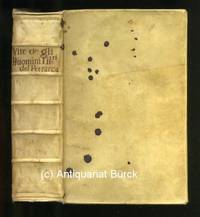
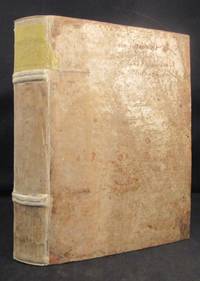
1527rif. 407565Venedig "Vineggia": Gregorio de Gregori 1527. hardcover. Gut. Titelei 5 Blatt 381 Blatt 1 Blatt. Ganzpergament der Zeit mit handschriftlichem Rückentitel Vorderdeckel mit dunklen Fleckchen mit kleinem Pergamentfrass leicht berieben und bestossen Paginierung teils irrig Seiten aber vollständig vorhanden Bezug der Spiegel angelöst Titelei im rechten weissen Rand angestückt ohne Text- und Bildverlust die ersten 30 Blatt wasserfleckig und teils braunfleckig sonst innen nur wenig gebräunt bzw. braunfleckig insgesamt recht frischer Druck auf meist weissem Papier schön und recht gut erhalten. - Schöner und seltener venezianischer Druck des italienischen Klassikers. Über KVK konnten wir weltweit nur 8 Exemplare nachweisen! Die "Huomini illustri" bringen Biographien aus der Antike u.a. von Romulus über Alexander den Großen Hannibal Cäsar Augustus bis Vespanian und Trajan. Petrarca war Mitbegründer des Humanismus und wollte die Antike wiederbeleben. Der Drucker Gregorio de Gregoriis da Forli ist in der Zeit von 1496 bis 1527 nachgewiesen. Teilweise zusammen mit seinem Bruder Giovanni druckte er in dieser Zeit die erstaunliche Menge von mehr als 100 Büchern meist Texte klassischer Autoren und Humanisten. - Nicht bei Adams; BL STC ital 506 teilt wie auf dem Titel: de glihuomini!; zu Gregori: Contemporaries of Erasmus II126. - Weitere Bilder auf Anfrage oder auf unserer Homepage. Gregorio de Gregori hardcover
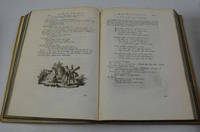
1756rif. 151482In Venezia: presso Antonio Zatta 1756. Due volumi di cm. 26 pp. xvi lxxx 557 1 1 carta bianca; xvi 615 1. Frontespizi con grandi vignette il primo dei quali in rosso e nero antiporta allegorica una tavola di dedica a Maria Antonia di Baviera e due tavole di ritratti. Nel testo inoltre moltissime eleganti testate e finalini figurati il tutto magistralmente inciso in rame dai maggiori artisti veneti del tempo Crivellari Brustolon Leonardis Magnini ecc. Solida legatura coeva in piena pergamena rigida con neri passanti dorsi lisci con titoli in oro su tasselli. Ex libris antichi. Esemplare particolarmente genuino ed in ottimo stato di conservazione. Cfr. Morazzoni 248; Gamba 735 e Marsand: "Può dirsi in tutta verità a gloria non meno degli editori che dello stampatore che questa edizione e per ciò ch'essa contiene e per la diligenza somma con cui è stata fatta e per gli ornamenti e pe' caratteri e per la correzione dovrà sempre tenersi in grandissima stima; e già n'è indubitata prova la difficoltà di rinvenirne gli esemplari". presso Antonio Zatta unknown
1766rif. D19895Venice: Antonio Zatta 1766. First Edition thus. Hardcover. Near Fine. 4to. Contemporary vellum. Beautiful wide-margained copies. Early ownership signature of Vincentii Marcarelli. Antonio Zatta hardcover
1766rif. D19895Venice: Antonio Zatta 1766. First Edition thus. Hardcover. Near Fine. 4to. Contemporary vellum. Beautiful wide-margained copies. Early ownership signature of Vincentii Marcarelli. Antonio Zatta hardcover books
rif. 58203Venetia Domenico Giglio 1552. Kl.-8° 8 Bl. 317 S. 3 Bl. einige figürliche Initialen 6 Textholzschnitte im letzten Teil . Perg. m Stehkante. Vorderer Deckel partiell erneuert Einige Seiten mit Wurmfrass a. Steg minimal fingerfleckig einige Seiten eselohrig «Die kommentierte Ausgabe des Canzoniere von Alessandro Vellutello ist die berühmteste und erfolgreichste des 16. Jahrhunderts. Sie ist 1525 zum ersten Mal erschienen. Die massgebliche Ausgabe ist aber die von Vellutello überarbeitete die 1528 veröffentlicht wurde. Vielen Lesern war die Anordnung der Gedichte im Canzoniere nicht klar. In ihm sind die Gedichte über die Liebe zu Laura mit Gedichten anderen politischen kirchenkritischen Inhalts vermischt. Vellutello hat den Canzoniere neu geordnet so dass sich die Liebesgeschichte zwischen Petrarca und Laura - in vita prima parteI und in morte seconda parte - Schritt für Schritt verfolgen lässt. Die Gedichte die mit diesen Ereignissen nicht in Verbindung stehen hat er in einer Parte terza seines' Canzoniere zusammengestellt. Vellutello war davon überzeugt dass es die Liebesgeschichte zwischen Petrarca und Laura wirklich gegeben hat. In der ausführlichen Einleitung stellte er dazu alle Informationen zusammen.» Petrarca-Ausstellung Strauhof Zürich 2004.Alessandro Vellutello 1473 - nach 1550 wirkte ab 1515 in Venedig. 1544 publizierte er seinen berühmten Kommentar zu Dantes «La Comedia». 010 Venetia, Domenico Giglio, 1552 unknown
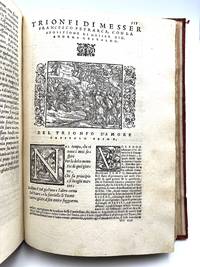
1553rif. 048658Venice: Gabriel Giolito 1553. Third Edition. Hardcover Full Leather. Very Good Condition. 19th century full leather rubbing at edges and hinges binding quite sound endpapers refreshed. Slight scattered foxing; browning to bottom of title and first few leaves in the preliminaries and final leaf two small temoin at end of book; an attractive copy with 6 woodcuts in the Trionfi and a full page map of Valclusa. 52 667 1. Printer's mark on verso of final page. Giolito published similar editions of Petrarch with commentary by Gesualdo first was 1533 and Vellutell first was 1538 in the 1540s and 50s with the same map and engravings. Adams P820 Mortimer 375 for the 1543 Vellutello ed. Size: Quarto 4to. Quantity Available: 1. Shipped Weight: Under 1 kilo. Category: Poetry; Antiquarian & Rare. Inventory No: 048658. Gabriel Giolito hardcover
1991rif. ANAIS-0253348498Indiana University Press 1991-11-22. First Edition. hardcover. Good. 10.2X7.8X7.6. Buy with confidence. Excellent Customer Service & Return policy. Indiana University Press hardcover
2016Canzoniere, Trionfi (Petrarca Queriniano). Brescia, Biblioteca Queriniana, Inc. G V 15. Salerno Editrice, Roma, 2016. Riproduzione in facsimile dell’ incunabolo veneziano di Vindelino da Spira del 1470, con figure dipinte da Antonio Grifo. Suntuoso manoscritto cartaceo corredato di un grandioso apparato di chiose manoscritte e di rappresentazioni figurative che occupano ogni spazio bianco della pagina, in una ricchissima decorazione pressoché continua dalla prima all’ultima pagina. Legatura in piena pelle con capitelli e tagli in colore, fregi e incisioni in oro e a secco sui piatti e sul dorso. Commentario a cura di Ennio Sandal, Giordana Mariani Canova, Giuseppe Frasso. Cofanetto in plexiglass. Tiratura di 499 esemplari numerati. Condizione di nuovo.
rif. 35790Lausanne, André et Pierre Gonin, 1977. Pt. in-4°, 86p. en feuilles, sous couverture imprimée rempliée, chemise et étui.
rif. 126621aafIn Venetia, apresso Nicolo Bevilacqua, 1562, 1562, pt. in-8vo, 490 p. + 1 Bl. (blanche) ; 259 p. + 1 f. (blanche), avec 3 marques de l’imprimeur gravées sur bois, 1 portrait et 4 gravures sur bois in-texte, plusieurs cachets sur faux-titre et titre ‘Bibliothek SJ Zürich Prov. Helv’ et ‘Archivum V. Prov. Helvetiae’ (Jesuiten Bibl. Schweiz à Zürich, vendu vers 1980), reliure en cuir d’époque, les deux plats gaufré d’un grand losange doré et multicolore, tranches dorées, ciselées et coloriées, e.a. avec un arbre flanqué des initiales ‘F. D.’ sur les tranches devant, coiffes professionellement restaurées.
rif. EXE009daLausanne, André et Pierre Gonin, 1977. Petit in-4° en feuilles, couverture blanche imprimée et rempliée, chemise et étui de l'édition. Illustré de 12 eaux-fortes originales de Gérard de Palézieux. Tiré à 120 exemplaires, celui-ci le numéro 63 sur vélin d'Arches, signé par l'éditeur et l'illustrateur.
1821rif. 022774Firenze: Dalla Tipografia 1821. Octavo. In two volumes. 366 9 pp. and 470pp. Each with a fore-edge painting. Volume 1 with a fore-edge painting depicting Ducal Palace and volume 2 depicts a painting of The Rialto Venice.From the publisher."So that this reprint of ours is in no way less valuable than the Padua edition the publishers will scrupulously reproduce everything that was published by the famous Professor Antonio Marsand in his 1818 following the order he gave to the rhymes to the illustrations and c imitating the invention of the branches and also the typographical correction. A beautiful set with each volume displaying a meticulously painted fore-edge painting. Bound in full dark blue levant triple ruled in gilt with corner flourishes raised bands gilt with title gilt marbled endpapers all edges gilt previous owner's name cannot decipher neatly written on verso of free endpaper. Some staining to covers but nonintrusive. A very handsome set housed within a custom lined slipcase. Dalla Tipografia unknown
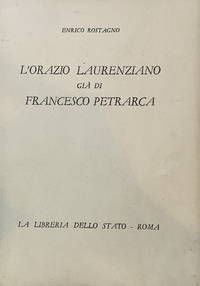
rif. lom-MS000217In Russian. Short description: Rostagno, E. L'Orazio laurenziano gia di Francesco Petrarca. - Rome: Libreria dello stato, 1933. - [3]-60 p., 1 l. Edition limited to 500 copies. The facsimile reproduces a manuscript of the writings of Horace dating from the late X - early XI century, acquired by Francesco Petrarca in 1347 and now in the Biblioteca Mediceo-Laurenziana, Florence. Please feel free to contact us for a detailed description of the copies available. SKUMS000217
rif. lom-MS000217In Russian. Short description: Rostagno E. L'Orazio laurenziano gia di Francesco Petrarca. - Rome: Libreria dello stato 1933. - 3-60 p. 1 l. Edition limited to 500 copies. The facsimile reproduces a manuscript of the writings of Horace dating from the late X - early XI century acquired by Francesco Petrarca in 1347 and now in the Biblioteca Mediceo-Laurenziana Florence. Please feel free to contact us for a detailed description of the copies available. SKUMS000217 unknown
2005rif. 16932Meaux, Editions de la Revue Conférence, 2005. Un volume grand in-4 (281 x 380) en feuilles de 44 pages non chiffrées. Couverture blanche rempliée, sous emboîtage pleine toile brune. Parfaite condition.
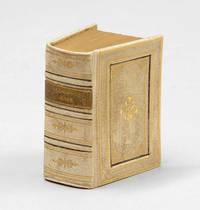
1879rif. 60835Venice: Ferd. Ongania Edit. 1879. The "fly's eye" miniature Petrarch First edition thus first impression number 281 of 1000 copies only. This edition contains six sonnets that had recently been discovered by G. Veludo the dedicatee. Ongania explains in his preface that this edition is uniform with Salmin's famous "fly's eye type" miniature Dante of the previous year the success of which inspired him to produce the Petrarch. This copy is inscribed on the verso of the front free endpaper "To P.M. with every good wish from V.J.S. 23 May 1914". P.M. is very likely Philip Morrell 1870-1943 husband of Ottoline Morrell chatelaine of Garsington. The book was part of a lot offered for sale at Christie's South Kensington 1 November 2006 Modern First Editions including Books from the Library of Lady Ottoline Morrell and Family. Miniature book 2 vols in 1 tricesimo-secundo 54 x 35 mm. Portrait frontispiece and engravings throughout. Original panelled vellum spine gilt in compartments patterned endpapers all edges gilt. Bookseller's ticket to recto of rear free endpaper. Binding lightly rubbed and toned. An excellent copy. Bondy p. 96; Houghton 270; Mikrobiblion 189; Welsh 5665. hardcover
1553rif. 81681Apresso Gabriel Giolito de Ferrari | In Vinegia 1553 | 15.30 x 22.50 cm | relié
1553rif. 81681In Vinegia Venice: Apresso Gabriel Giolito de Ferrari 1553. Fine. Apresso Gabriel Giolito de Ferrari In Vinegia Venice 1553 15.30 x 22.50 cm relié Third edition of Giovanni Andrea Gesualdos commentary on Petrarchs Canzoniere and Trionfi following the editions of 1533 and 1541 issued by the Nicolini da Sabbio printed in Venice in 1553 by Gabriele Giolito de Ferrari and his brothers. The Canzoniere printed in italic type and divided into two parts is set within an expansive page layout dominated by Gesualdos commentary. The Trionfi form a separate second part with their own title page and distinct dedication. Each part bears Giolitos phoenix device with the motto Semper eadem and the initials G.G.F.; the general title page is further decorated with portraits of Laura and Petrarch flanking an architectural portico. Numerous historiated initials. A woodcut map of Vaucluse closely associated with Petrarchs periods of retreat and with his poetic imagination appears among the preliminary matter. Each of the six Trionfi is preceded by an engraved vignette. 19th-century Italian binding circa 1840 in half cherry-red morocco-grained shagreen over red cloth boards. Spine with four flat false bands decorated with three tools and blind compartments rolls over the bands and broad blind fillets; gilt initials CG in one compartment. Some rubbing and staining to the boards. Engraved title cropped close with small losses at the corners and outer margin. Pale yellow dampstaining to the margins of the first five preliminary leaves and to two leaves of the Life of Petrarch. Gathering 553 detached. From leaves 647 to 657 the outer margin is nibbled away by approximately 1 cm progressively diminishing. Scattered light foxing; overall relatively fresh particularly through the text of the Canzoniere with somewhat heavier though still pale foxing towards the end. An early manuscript ownership inscription partly cancelled appears at the foot of the general title page: Ex Libris V.I.D. . Iacobi Praeconij olim. This early provenance has not yet been securely identified. The preliminary matter includes a stylistic analysis together with lives of Petrarch and Laura. Gesualdos commentary belongs to an exegetical tradition already strongly shaped by Alessandro Vellutello whose own commentary first appeared in 1525. Eight years later Gesualdo offered a broad and learned reading of Petrarchs text informed by classical learning and ranging widely across questions of language style history and interpretation. The 1553 edition is particularly notable for placing its two principal parts under two distinct forms of female patronage. The Canzoniere is dedicated to Maria di Cardona Marchioness of Padula and Countess of Avellino an important figure in Neapolitan aristocratic and literary circles. The Trionfi meanwhile are dedicated to Susanna Gonzaga Countess of Collesano. This second dedication appears to go beyond conventional homage: the preliminary texts suggest that Susanna Gonzaga may have played a direct role in commissioning or encouraging the commentary on the Trionfi. The very structure of the volume therefore reflects two networks of female patronage involved in the reception of Petrarch in 16th-century Italy. Far from serving merely as prestigious names at the head of the book Maria di Cardona and Susanna Gonzaga each place one part of Gesualdos commentary within an aristocratic culture in which poetry scholarship and patronage were closely intertwined. With its rich critical and visual apparatus and above all its double dedication dividing the Canzoniere and Trionfi between two prominent women of the Italian nobility this Giolito edition offers a particularly revealing witness to the ways in which Petrarch was read interpreted and reshaped within the learned and aristocratic networks of the Renaissance. Apresso Gabriel Giolito de Ferrari hardcover
rif. Seprian32The Triumphs of Francis Petrarch Vol.I° Code 2581 Les Triumphes de Petrarque Vol.I°; Petrarch s Triumphs. Vienna Österreichische Nationalbibliothek Austrian National Library. Imago 2017. The manuscript early 16th century is the French translation of the Italian text. The number of miniatures made by artists from the school of Rouen is very important. Leather binding with gold impressions on the plates and back. Size 21x33 cm. Pages 586 293 cards. Brown canvas case 275x395 cm. Commentary in Italian. Limited edition of 100 numbered copies. Excellent condition. 5500g. Leather with gold impressions on plates and back Imago hardcover
1554rif. 242933Vinegia: Giovan. Griffio 1554. hardcover. very good. Griffin and putti woodcut device on title page griffin passant device at end 5 large woodcut illustrations and historiated letters. Italic and roman letter. 218 pages small 4to full vellum lacks title label on spine. Vinegia: Giovan. Griffio 1554. A beautiful copy of a scarce book. Not in Brunet; Cornell 104; not in Graesse; Haym 73 9; Hortis 55 99; Marsand 68. Giovan. Griffio unknown
1554rif. 242933Vinegia: Giovan. Griffio 1554. hardcover. very good. Griffin and putti woodcut device on title page griffin passant device at end 5 large woodcut illustrations and historiated letters. Italic and roman letter. 218 pages small 4to full vellum lacks title label on spine. Vinegia: Giovan. Griffio 1554. A beautiful copy of a scarce book. Not in Brunet; Cornell 104; not in Graesse; Haym 73 9; Hortis 55 99; Marsand 68. Giovan. Griffio unknown books
1528rif. 32165Venegia: Maestro Bernardino de Vidali 1528. A very early Edition of the Vellutello Petrarca. With fine heraldic ownership label. Illustrated with the rare two page view of the Valchiusa. This copy with the Babylonian Sonnets 165 ff not censored and still included in the text. Rare thus. 4to mm. 190 x 140 handsomely bound in fine full vellum of the period. 11ff 185 ff 51 ff Del Triumpho pp. A contemporarily bound copy in a pleasing state of preservation generally crisp and clean throughout some interesting notes in very early hands to the pastedowns a few here and there in the margins of the text-block interesting notes concerning prohibition to the leaves that contain the Babylonian verses the back sometime strengthened the vellum binding strong and in good order. A FINE AND VERY EARLY PRINTING OF THE VELLUTELLO PETRARCA. The volume was dedicated to Carlo Grotta Chancellor to Cardinal Cristofor Madruzzo Principe Vescovo of Trent and organizer of the Council of Trent. This edition of Petrarca with the commentary of Vellutello is considered the most important. Especially important is the celebrated commentary on the Canzoniere out of the edition of 1525. Also important is the biography of the poet. This copy contains the Babylonian Sonnets which were generally censored and seldom included in copies of Petrarca's writings. These Babylonian sonnets a group of three poems that criticized the Avignon Papacy were initially banned because they were included in a prohibited Protestant work. In 1557 Pier Paolo Vergerio wrote Alcuni importanti luochi an attack against the Church that emphasized those three sonnets from Petrarch. Many clerics denounced the greed and corruption of the Avignon papacy. In the 1340s Petrarch wrote “I am living in the Babylon of the West” comparing Avignon to the biblical city of vice and corruption. He went on to condemn the habits of prelates who feasted at “licentious banquets” and rode white horses “decked in gold fed on gold and soon to be shod in gold if the Lord does not check this slavish luxury” Petrarch in Tuchman p. 29. His disgust found fuller expression in several sonnets among them Sonnet 138 which he addressed to the papal court at Avignon: “O foundry of deceits cruel prison where good dies and evil is / created and nourished a hell for the living: it will be a great / miracle if Christ does not finally show his anger against you” The Canzoniere poetic “songbook” is also known as the Rime Sparse “scattered rhymes”. The work is a series of erotic poems that Petrarch wrote in the Italian vernacular about his love for the mysterious beauty “Laura” whom he first encountered on April 6 1327 at the church of St. Clare. Apparently in 1348 Laura and Cardinal Colonna both succumbed to the Black Death the bubonic plague that was ravaging Europe. Petrarch himself escaped the plague though he recorded these devastating personal losses in the Canzoniere; Laura’s death in particular shaped the resolution of the sequence of poems. Tiring of Church politics Petrarch left Avignon in 1353 and spent his remaining years in various Italian provinces. He continued work on the Canzoniere sorting and arranging its poems until his death in 1374. Although Petrarch was best known among contemporaries for his Latin writings his vernacular works especially the Canzoniere are now regarded as his masterpieces. His exploration of the emotional states of love yearning and spiritual aspiration in this work would have a major influence on future generations of poets. Maestro Bernardino de Vidali hardcover
1819rif. 32220Padova: Nella Tipografia del Seminario 1819-1820. 2 volumes. The especially handsome folio edition of Petrarca and Marsand. This Copy on Large and Grand paper the best of the editions. Volume I with the very fine portraits beautifully engraved on copper by Raffaello Morghen and Mauro Gandolfi. The text in a fine and handsome Bodoniesque typography. Two engraved plates showing a view of Valchiusa engraved by Federico Lose the other showing a facsimile of the celebrated words of the poet handwritten on the Virgilian manuscript and another five plates depicting landscapes and the monument of Petrarca. Folio 33 by 23 cm very handsomely bound in full dark green grained morocco the spines with raised bands ruled in gilt the compartments with gilt panels formed by concentric squares tooled in gilt lettered in gilt in two compartments the covers and turnovers multi-ruled in gilt at the borders dark green endleaves all edges gilt. lix 375; 2 444 pp. A very regal and handsome set the bindings elegant with some unobtrusive age mellowing to the vellum and textured cloth the leather labels a bit rubbed. Internally both volumes are sound and sturdy the hinges fine and tight. The text with some light spotting to which the paper is prone this copy less than is typical and always quite mild. ONE OF THE FINEST PRINTINGS OF THE GREAT ITALIAN POET THIS REMINISCENT OF THE GREAT BODONI PRINTINGS The work is a connoisseur's and bibliophile's treasure printed in a small number of copies on large paper. Published with the valuable work and study of Antonio Marsand and the true reference edition for all later publications. Notable for its refinement and typographic elegance comparable to Bodoni's editions and for the scrupulous attention paid to the critical analysis of texts. At the end of the book a rich and accurate bibliography of all the previous editions of Pertrarca's works. One of the "great triumvirate" of Italian poets Francesco Petrarch's sonnets were admired and imitated throughout Europe during the Renaissance and they served as the model for nearly all later Western lyrical poetry. He was also the first true reviver of learning in Medieval Europe. He was a great student of the classical works-- histories poetry law and orations and he included in his studies many ancient books and manuscripts that the medieval period had ignored for nearly a millennium. He also closely followed the politics and learning of his own age. It was with Petrarca that the ancient and the modern eras met together and a new stadium for the Human spirit that which we are wont to style Renaissance was opened. Many have stated that the book is as beautiful as a Bodoni printing. Brunet IV 556. Graesse V 229. Marsand p. 126. Hortis 232. Fiske p. 125. Bellini "storia della tipografica del Seminario di Padova Nella Tipografia del Seminario hardcover
1539rif. 2109100001Venetia : Stampato per Francesco Marcolino 1539. Hardcover. Very Good. Early Italian Emblem Book 2 volumes bound as one. Octavo 15 cm. Bound in later 1/2 vellum over marbled boards. Leather spine labels. Good binding and cover. 4 354 18 pages 180 leaves. Architectural title vignette with portrait of Petrarch. Engraved printer's device at end of first volume. Second volume has an engraved title with a portrait of Alunno. Provenance: From Professor John MacQueen's library of Scotland. Includes related ephemera associated with Renaissance studies. "It is appropriate that Petrarch be printed in Italics a type invented in 1501 by the famous Venetian printer Aldus Manutius was said to have adopted Petrarch's own handwriting for . creating the new type." - Note inside front cover. Refs: Fiske / Fowler 97; Ley 159-161; Brunet III 477. Venetia : Stampato per Francesco Marcolino hardcover