1 622 résultats
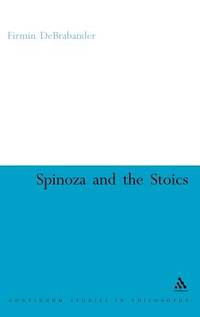
2007réf. 91643Continuum. New. Hardcover. FREE UPGRADE to Courier/Priority Shipping Upon Request - IN STOCK AND IMMEDIATELY AVAILABLE FOR SHIPMENT - Flawless copy brand new pristine never opened -- 160 pages. Description: "This important book examines Spinoza's moral and political philosophy. Specifically it considers Spinoza's engagement with the themes of Stoicism and his significant contribution to the origins of the European Enlightenment. Firmin DeBrabander explores the problematic view of the relationship between ethics and politics that Spinoza apparently inherited from the Stoics and in so doing asks some important questions that contribute to a crucial contemporary debate. Does ethics provide any foundation for political theory and if so in what way Likewise does politics contribute anything essential to the life of virtue And what is the political place and public role of the philosopher as a practitioner of ethics In examining Spinoza's Ethics his most important and widely-read work and exploring the ways in which this work echoes Stoic themes regarding the public behaviour of the philosopher the author seeks to answer these key questions and thus makes a fascinating contribution to the study of moral and political philosophy. " -- with a bonus offer--; Continuum Studies In Philosophy; This important book examines Spinoza's moral and political philosophy. Specifically it considers Spinoza's engagement with the themes of Stoicism and his significant contribution to the origins of the European Enlightenment. Firmin DeBrabander explores the problematic view of the relationship between ethics and politics that Spinoza apparently inherited from the Stoics and in so doing asks some important questions that contribute to a crucial contemporary debate. Does ethics provide any foundation for political theory and if so in what way Likewise does politics contribute anything essential to the life of virtue And what is the political place and public role of the philosopher as a practitioner of ethics In examining Spinoza's Ethics his most important and widely-read work and exploring the ways in which this work echoes Stoic themes regarding the public behaviour of the philosopher the author seeks to answer these key questions and thus makes a fascinating contribution to the study of moral and political philosophy. . 2007. 0826493939 . Continuum hardcover
2004réf. 34511Focus Publishing/R. Pullins Co Incus. New. Hardcover. FREE UPGRADE to Courier/Priority Shipping Upon Request - IN STOCK AND IMMEDIATELY AVAILABLE FOR SHIPMENT - FLAWLESS COPY PRISTINE NEVER OPENED -- 480 pages; clean and crisp tight and bright pages with no writing or markings to the text. -- TABLE OF CONTENTS: Translator's Remarks Acknowledgements Spinoza's Preface TEXT OF THEOLGOICO-POLITICAL TREATISE Spinoza's Annotations Glossary Interpretive Essay Selected Bibliography Indexes: Citations Names Terms. -- DESCRIPTION: A new and complete translation in English of this modern text with substantive apparatus to allow the student and serious reader to grapple in a meaningful way with this seminal text which Dr. Yaffe describes in his Translator’s Remarks: “the philosophical founding-document of both modern biblical criticism and modern liberal democracy.” As such “it is also the philosophical founding-document of modern liberal religion. ” Tools in the text for the serious reader include the translation ample footnotes Spinoza’s annotations an interpretative essay glossary and other indices. REVIEW: "Professor Yaffe's learned study of the treatise and his interpretations of its significance are simply among the most intelligent studies that one may find - his devotion to researching the teachings of the treatise has encouraged the production of this new English translation of it which is unique and comprehensive.and is valuable to every reader of Spinoza at every level of ability. Indeed I have every confidence that his translated edition of the treatise together with the outstanding scholarly critical apparatus that it employs will be acknowledged universally as the best English translation and edition of the work available." -Paul J. Bagley President North American Spinoza Society. -- with a bonus offer--; 520-Spino; Spinoza ; Yaffe Martin transl. Spinoza's Theologico-Political Treatise: Translation in English with substantive notes a glossary indices selected biography and an interpretive Essay SPINOZA; EXPLORING THE WILL OF GOD A new and complete transla . 2004. 1585101125 . Focus Publishing/R. Pullins Co Inc,us hardcover
réf. 16100Mineola New York U.S.A.: Dover Pubns. As New. Paperback. FREE UPGRADE to Courier/Priority Shipping Upon Request - IN STOCK AND IMMEDIATELY AVAILABLE FOR SHIPMENT - AS NEW THE TEXT BLOCK IS PRISTINE CLEAN UNMARKED AND IN EXCELLENT CONDITION - -- with a bonus offer--; 016100; PHILOSOPHY COLLECTED WORKS . 1951. 0486202496 . Dover Pubns paperback
1938réf. 89146J. M. Dent & Sons Limited. As New. Hardcover. FREE UPGRADE to Courier/Priority Shipping Upon Request - IN STOCK AND IMMEDIATELY AVAILABLE FOR SHIPMENT - AS NEW THE TEXT BLOCK IS PRISTINE CLEAN UNMARKED AND IN EXCELLENT CONDITION - - -- with a bonus offer--; H-T-Spineth-STE; Spinoza Baruch; Boyle A. translation; Santayana George introduction Philosophy & Theology: Spinoza's Ethics & De Intellectus Emendatione . 1938. J. M. Dent & Sons, Limited hardcover
1943réf. 39157La Salle IL: Open Court Publishing Co. . As New. Paperback. FREE UPGRADE to Courier/Priority Shipping Upon Request – – IN STOCK AND IMMEDIATELY AVAILABLE FOR SHIPMENT - TEXT PRISTINE -- with a bonus offer--; T-Spindes; Spinoza Benedictus; Translated By Britain Halbert Hains Spinoza on Descartes' Philosophy . 1943. Open Court Publishing Co. paperback
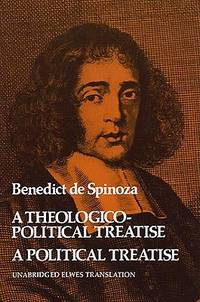
1951réf. 89023Dover Publications. As New. Hardcover. FREE UPGRADE to Courier/Priority Shipping Upon Request - IN STOCK AND IMMEDIATELY AVAILABLE FOR SHIPMENT - Text pristine unmarked and tight to spine - Includes "A Theological-Political Treatise" "A Political Treatise" "On the Improvement of the Understanding" "The Ethics" and some of Spinoza's correspondence with Fabritius Hugo Boxel and others. -- with a bonus offer--; T-Spinel; Spinoza Benedict De; Translated from the Latin with an Introduction By R. H. M. Elwes; Bibliographical Note By Cordasco Francesco The Chief Works of Benedict De Spinoza - Volumes I and II Bound as One . 1951. Dover Publications hardcover
réf. 13478Modern Library. As New. Hardcover. FREE UPGRADE to Courier/Priority Shipping Upon Request - IN STOCK AND IMMEDIATELY AVAILABLE FOR SHIPMENT - -- with a bonus offer--; 013478; Spinoza B.; Ratner Joseph editor introduction The Philosophy of Spinoza : Selected from His Chief Works with a Life of Spinoza and an Introduction . 1927. 112230630X . Modern Library hardcover
réf. 27897Tudor Publishing Company. As New. Hardcover. FREE UPGRADE to Courier/Priority Shipping Upon Request - IN STOCK AND IMMEDIATELY AVAILABLE FOR SHIPMENT - AS NEW THE TEXT BLOCK IS PRISTINE CLEAN UNMARKED AND IN EXCELLENT CONDITION - . No publication date cited; preface dated 1926. -- with a bonus offer--; T-RATNER; Spinoza B.; Ratner Joseph editor preface The Philosophy of Spinoza . Tudor Publishing Company hardcover
1961réf. 53895Open Court Pub Co. As New. Hardcover. FREE UPGRADE to Courier/Priority Shipping Upon Request – – IN STOCK AND IMMEDIATELY AVAILABLE FOR SHIPMENT - AS NEW THE TEXT BLOCK IS PRISTINE CLEAN UNMARKED AND IN EXCELLENT CONDITION - - 177 pages. -- with a bonus offer-- . 1961. Open Court Pub Co hardcover
1899réf. 37660London: Duckworth and Co. . As New. Hardcover. FREE UPGRADE to Courier/Priority Shipping Upon Request – – IN STOCK AND IMMEDIATELY AVAILABLE FOR SHIPMENT - -- with a bonus offer--; T-Spintrac; Spinoza Benedict De; translated from the Latin By White W. Hale; translation Revised By Stirling Amelia Hutchison Tractatus De Intellectus Emendatione et De Via Qua Optime in Veram Rerum Cognitionem Dirigitur . 1899. Duckworth and Co. hardcover
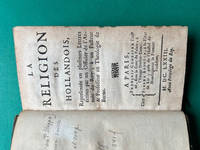
1673réf. 1010Spinoza Stoppa or Stouppe Giovanni Battista La Religion des Hollandois representée en plusieurs Lettres écrites par un Officier de l'Armée du Roy à un Pasteur & Professeur en Théologie de Berne Paris: Chez François Clousier l'ainé dans la cCour du Palais. Pierre Auboüin à la Fleur du Lis. 1673. Blank leaf TP 1 leaf = table 2 leafs = Privilege du Roi 1 - 204. 12mo. First Edition. The author of this important work is Jean Baptiste Stouppe Lieutenant of a Swiss regiment in French service during the war with the Netherlands. He describes Spinoza as "un homme illustre & sçavant qui à ce que l'on m'a asseuré a un grand nombre de sectateurs . qui est né juif qui s'appelle Spinola sic qui n'a point abjuré la religion des juifs ny embrassé la religion chrêtienne; aussi il est tres-méchant juif & n'est pas meilleur chrestien" p. 91 translated as: an illustrious and learned man who I am assured has a great number of followers . who was born a Jew whose name is Spinola sic and who has neither abjured the Jewish religion nor embraced the Christian religion; indeed he is a very bad Jew and no better a Christian. He specifically condemns Spinoza's Tractatus as a threat to destroy all religions—and particularly the Jewish and Christian ones—and to introduce atheism libertinism and freedom of religion. "Spinoza's Tractatus was always deemed an illegal publication and his adherents from the outset a clandestine 'sect.' Colonel Jean-Baptiste Stouppe the Swiss officer commanding the French garrison in Utrecht in 1672-3 who wrote the anti-Dutch Religion des Hollandois described the situation accurately in the main when he observed that Spinoza's followers 'n'osent pas se decouvrir parce que son livre renverse absolument les fondemens de toutes les religions et qu'il a este condamne par un décret public des Estats et qu'on a déffendu de le vendre bien qu'on ne laisse pas de le vendre publiquement'. Spinoza's pernicious influence in the Netherlands was growing and that Stouppe's Religion des Hollandois had enhanced his reputation as the foremost enemy of revealed religion" Jonathan Israel Radical Enlightenment 278 & 290. Van der Linde 63 Linde only mentions the edition Cologne 1673. CONDITION: Very good or better in 19th c. half brown clf. over green marbled boards. Spine in compartments with red gilt-lettered panel. Minor restoration to margin of page 162. Chez François Clousier and Pierre Auboüin hardcover
1909réf. 883Kazan: N.P. 1909. First Edition. Hardcover. Very good. SPINOZA Baruch Bogoslovsko-Politicheskii Traktat Tractatus Theologico Politicus translated into Russian from the Latin by Mikhail Lopatkin N.P. Kazan 1906. 1 blank leaf TP half title i - iv = translators introduction 1 - 440 i - iv = contents 1 leaf = corrections blank leaf octavo FIRST RUSSIAN EDITION. First Russian translation of Spinozas most dangerous book the Tractatus Theologico-Politicus. Spinozas philosophy proved highly influential among the 19th and early 20th century Russian intelligentsia. Georgi Plekhanov noted that if one looks for philosophical predecessors of Marxism they can be found in the materialist tradition especially in Spinoza and the radical Enlightenment Interestingly Lenin allied himself with the Spinozistic Plekhanov in order to suppress the leftist and subjectivist tendencies in his own Bolshevik faction. Lenins philosophical alliance with Plekhanov in 1909 had far-reaching consequences Oittinen V. Soviet Spinoza: introduction. Stud East Eur Thought 74 267277 2022. CONDITION: Very good or better in contemporary quarter leather with marbled boards. Minor edgewear. A few pages in the contents with wrinkling from old moisture but pages mostly clean crisp and unmarked. Neat stamp to title page and hint of old ownership name to top corner. Pages minimally browned. N.P. hardcover
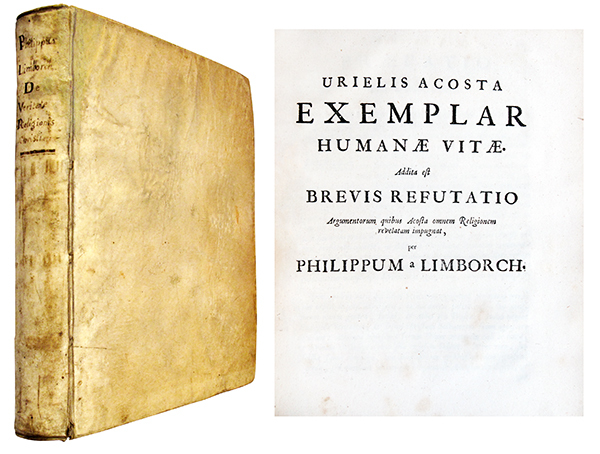
1687réf. 37003In-4 (232 x 185 mm), plein vélin ivoire rigide de l'époque, dos titré à la plume, (16), 364, (14) p. Goudae, Justum ab Hoeve [Gouda, Justus van der Hoeve], 1687.
In-4, plein vélin rigide de l'époque, dos titré à la plume, (16), 364, (14) p. Edition princeps de la célèbre autobiographie testamentaire d'Uriel da Costa ('Exemplar humanae vitae'), composée à la veille de son suicide en 1640 et publiée "presque par hasard" (Daniel Lacerda) quarante-sept années après sa mort. Elle est insérée entre les pages 341 et 354 d'un recueil qu'un ministre calviniste arminien, Philip Van Limborch professeur à Amsterdam (1633-1712), consacre à la défense de la "vérité de la religion chrétienne", en discussion avec un Juif érudit, Isaac Orobio de Castro (c.1617-1687), lui-même réfugié du Portugal à Amsterdam. Éditée d'après un manuscrit et peut-être révisée, "Une vie humaine" est suivie de sa réfutation par Limborch. Né au sein d'une famille portugaise marrane, Uriel Da Costa (1585-1640) s'installa à Amsterdam en 1617 et revint au judaïsme, mais il entra bientôt en conflit avec la synagogue. Soumis à une humiliante pénitence publique, il se suicida. Ce document demeurait l'unique seule source d'informations sur Uriel da Costa jusqu'à la découverture récente (1990), à la bibliothèque d'Amsterdam, d'un exemplaire unique d'un autre de ses textes que l'on croyait perdu ("Exame das tradições fariseas") et qui le place aux côtés de Spinoza, dix années avant la condamnation de celui-ci, parmi les victimes du durcissement doctrinaire des autorités juives d'Amsterdam. "Cette autobiographie écrite par Uriel da Costa en 1640 avant de se suicider, reflète toute la culture et toutes les interrogations religieuses de cet esprit qui passa du christianisme-marranisme au judaïsme puis au sadducéisme, enfin au déisme vénérant la Nature. Juif portugais d'Amsterdam, Gabriel, devenu Uriel da Costa, reflète - lui et toute sa famille, affiliée à celle de Spinoza - les recherches de cette société des nouveaux convertis du Portugal et des pays occidentaux au XVII° siècle" (Béatrice Leroy). Cf. I.S. Revah, H. Méchoulan et coll., 'Des Marranes à Spinoza', Vrin, 1995, passim. (Bamberger, 'The printed literature of Spinozism', n° 67. Fürst, 'Bibliotheca judaica', I, p. 17). Quelques rousseurs éparses. Petite trace de restauration de vélin au dos. Très bon exemplaire, très bien conservé dans sa première reliure hollandaise de vélin rigide.
1678réf. 22856A Cologne, chez Claude Emmanuel, 1678 ; in-12, vélin ivoire rigide, titre manuscrit au dos (reliure de l'époque ; [2] titre, [12] préface, [4] Table des Chapitres, 531, [29] Table, [2] Fautes, blanc, 30 pp. Remarques qui sont les annotations manuscrites de Spinoza sur son exemplaire en latin paru en 1670.
1678réf. ABC_50006Amsterdam: Jacob Smith = Israel de Paull for Jan Rieuwertsz. Sr. 1678. Contemporary mottled calf gold-tooled spine with a red morocco title-label lettered in gold gold-tooled board edges marbled endpapers. 12mo. With a woodcut vignette on title page ornament E in the description of Van de Ven. First French edition of Spinoza's famous Tractatus Theologico-Politicus 1670 printed by Israel de Paull for Jan Riewertsz. Sr. in Amsterdam but appearing with the false imprint of "Hamburg Henricus Künrath". The original Latin edition is one of two works by Spinoza that originally appeared during his lifetime the other work is his Principia philosophiae cartesianae 1663. The present French translation was published only a year after Spinoza's death in 1677 and was still so controversial that it was published without mentioning the author's name and with false imprints. Three issues of the first French edition are known all three dated 1678 but with different titles and false imprints: 1: Reflexions curieuses d'un esprit des-interressé sur les matieres les plus importantes au salut Leiden Pierre Warnaer 1678; 2: La clef du santuaire Cologne Claude Emanuel 1678; and 3: the present work Traitté des ceremonies superstitieuses des juifs. In chapter 5 pp. 200-255 of Van de Vens bibliography of Spinoza's works the complicated printing history of the French translation is covered in detail; our issue has the number X3. The translation presumably launched by Spinozas Amsterdam publisher Jan Rieuwertsz Sr. is commonly attributed to a French Hugenot Gabriel Lord of Saint Glain 1620-1684 who had been a zealous Protestant before he came to know Spinoza. He grew into one of his disciples and one of his greatest admirers. He settled in The Hague about the same time when Spinoza moved to that same city where they could have met each other.What makes this edition of the French translation extra important also for the general Spinoza bibliography is that it contains at the end the 31 "Adnotationes ad Tractatum theologico-politicus" here called "Remarques curieuses et necessaires pour lIntelligence de ce livre" pp. 1-30: notes clarifying obscurities in Spinozas book. The majority of these Adnotationes were composed by Spinoza himself some were arguably made by others. The precise sources for these notes which were unpublished until this French translation are unknown. In the autumn of 1675 Spinoza was planning - as he wrote to his correspondent H. Oldenburg in London - a new edition of his Tractatus together with his Adnotationes marginal notes to explain passages easily to be misinterpreted by critical readers written in the margins of his copy of the first edition now lost. But there are more copies known and lost with a varying number of notes 31-39. If Saint Glain was indeed the translator of the Tractatus this would indicate that he must have gotten hold of either Spinozas holograph or an apograph of the notes whether or not written in de margins of a copy of the first Latin edition probably through Jan Rieuwertsz who was after the death of Spinoza in the possession of his written legacy. It may even be speculated that Rieuwertsz himself did ask and commission Saint Glain to translate the Tractatus into French and to append the still unpublished Adnotationes in French.With a manuscript inscription initials on the verso of the first flyleaf a crossed out manuscript owner's inscription of Abraham Couet du Vivier 1646-1719 Hugenot pastor and author in The Hague at the head of the title page with the manuscript additions of the Latin title and "par Benedict. Spinosa" around the printed title in the same hand. The binding shows clear signs of wear the front hinge is weakened the corners of the boards are slightly damaged the marbled endpapers are slightly rubbed and frayed slight browning throughout. Otherwise in good condition.l Akkerman F. Introduction to his translation into Dutch 1997; Kingma/Offenberg p. 15; STCN 840787480; USTC 1561976; Van der Linde p. 12; Ven J.M.M. van de Printing Spinoza Leiden Brill 2022 Chapter 5 pp. 200-255 nr. X3; cf. STCN 843272147 other issues of this ed. Jacob Smith [= (Israel de Paull for) Jan Rieuwertsz. Sr.], unknown
1678réf. ABC_50004Amsterdam: Jacob Smith = Israel de Paull for Jan Rieuwertsz. Sr. 1678. Contemporary gold-tooled sprinkled calf with the title lettered in gold on the spine gold-tooled board edges. 12mo. With a woodcut vignette on the title page ornament E in the description of Van de Ven. First French edition of Spinoza's famous Tractatus Theologico-Politicus 1670 printed by Israel de Paull for Jan Riewertsz. Sr. in Amsterdam but appearing with the false imprint of "Hamburg Henricus Künrath". The original Latin edition is one of two works by Spinoza that originally appeared during his lifetime the other work is his Principia philosophiae cartesianae 1663. The present French translation was published only a year after Spinoza's death in 1677 and was still so controversial that it was published without mentioning the author's name and with false imprints. Three issues of the first French edition are known all three dated 1678 but with different titles and false imprints: 1: Reflexions curieuses d'un esprit des-interressé sur les matieres les plus importantes au salut Leiden Pierre Warnaer 1678; 2: La clef du santuaire Cologne Claude Emanuel 1678; and 3: the present work Traitté des ceremonies superstitieuses des juifs. In chapter 5 pp. 200-255 of Van de Vens bibliography of Spinoza's works the complicated printing history of the French translation is covered in detail; our issue has the number X3. What makes this edition of the French translation extra important also for the general Spinoza bibliography is that it contains at the end the 31 "Adnotationes ad Tractatum theologico-politicus" here called "Remarques curieuses et necessaires pour lIntelligence de ce livre" pp. 1-30: notes clarifying obscurities in Spinozas book. The majority of these Adnotationes were composed by Spinoza himself some were arguably made by others. The precise sources for these notes which were unpublished until this French translation are unknown. In the autumn of 1675 Spinoza was planning - as he wrote to his correspondent H. Oldenburg in London - a new edition of his Tractatus together with his Adnotationes marginal notes to explain passages easily to be misinterpreted by critical readers written in the margins of his copy of the first edition now lost. But there are more copies known and lost with a varying number of notes 31-39. If Saint Glain was indeed the translator of the Tractatus this would indicate that he must have gotten hold of either Spinozas holograph or an apograph of the notes whether or not written in de margins of a copy of the first Latin edition probably through Jan Rieuwertsz who was after the death of Spinoza in the possession of his written legacy. It may even be speculated that Rieuwertsz himself did ask and commission Saint Glain to translate the Tractatus into French and to append the still unpublished Adnotationes in French.With an owner's stamp on the title page initials V.P. the bindings shows signs of wear the front hinge is weakened the leather on the boards is slightly cracked slightly browned throughout. Otherwise in good condition.l Akkerman F. Introduction to his translation into Dutch 1997; Kingma/Offenberg p. 15; STCN 840787480; USTC 1561976; Van der Linde p. 12; Ven J.M.M. van de Printing Spinoza Leiden Brill 2022 Chapter 5 pp. 200-255 nr. X3; cf. STCN 843272147 other issues of this ed. Jacob Smith [= (Israel de Paull for) Jan Rieuwertsz. Sr.], unknown
réf. 38417Ensemble relié en 2 volumes in-12 (140 x 78 mm), plein maroquin vert sapin, dos à 5 nerfs guillochés or, garnis de compartiments entièrement dorés à la fanfare, large roulette d'encadrement sur les plats garnie de fleurons aux coins, roulette sur les coupes, titre doré, dorés sur tranches, gardes de tabis rose (reliure de l'époque).
Ensemble relié en 2 volumes in-12 (140 x 78 mm), plein maroquin vert sapin, dos à 5 nerfs guillochés or, garnis de compartiments entièrement dorés à la fanfare, large roulette d'encadrement sur les plats garnie de fleurons aux coins, roulette sur les coupes, titre doré, dorés sur tranche, gardes de tabis rose (reliure de l'époque). Exceptionnel exemplaire relié en maroquin de l'époque, réunion en deux volumes de l'ensemble de la production contemporaine française de / et autour de Spinoza 1- Première édition française du "Tractatus Theologico-Politicus", augmentée des additions apportées par Spinoza à son texte ("Remarques curieuses") publiées ici pour la première fois. Le traducteur, Gabriel de Saint-Glain, calviniste français réfugié en Hollande, devint un fervent spinoziste après sa rencontre avec un élève du philosophe. Rigoureusement interdite et poursuivie en France, cette édition fut présentée sous pages de titre et adresses différentes afin de détourner la censure. La traduction de Saint-Glain, "avec des éclaircissements et un commentaire inestimable", contribua directement à la diffusion du spinozisme en Europe (cf. Vernière, I, p. 25 sq., qui signale que Saint-Glain effectua sa traduction sur un exemplaire annoté de la main de Spinoza). (Kingma & Offenberg, n° 13, 14 et 15. "Catalogue du tricentenaire, Institut hollandais", p. 59. Van der Linde, n° 10, 11 et 12. Sauvy, 'Livres saisis à Paris', n°204 et 568). 2 et 3- Edition originale de ce recueil collectif consacré à Spinoza et à sa doctrine, édité par Nicolas Lenglet du Fresnoy. Il contient la "Vie de Spinoza" (p. 1 à 150) par Jean Colerus (Johann Koehler), pasteur luthérien à La Haye -- La préface et la "Réfutation" de Spinoza par le comte de Boulainvilliers ainsi que celle de Fénelon (p. 151 à 320) – "Extrait du nouvel athéisme renversé" oeuvre du cartésien François Lamy (p. 321 à 386) sous page de titre particulière à la date de 1696 – "Certamen Philosophicum" (...) d’Isaac Orobion médecin et personnalité de la communauté juive d’Amsterdam (p. 387 à 483), également sous page de titre particulière, à la date de 1703. "Sous prétexte de rendre plus facile la réfutation de Spinoza en mettant ses opinions à la portée de tout le monde, Boulainvilliers a eu réellement pour but de propager le système de ce philosophe (...) en substituant au langage austère du métaphysicien hollandais une forme simple et pleine d’attraits" (Franck, p. 202). Sur l’importance décisive de ce recueil dans la propagation du spinozisme en France, cf. P. Vernière, ‘Spinoza et la pensée française’, p. 373 sq. (Brunet, II, 1209. Fürst, III, p. 54. Cat. Expo. Spinoza, Herzog August Bibliothek, n° 64. Tchemerzine-Scheler, III, 232. Van der Linde, 107 et 108). Ex-libris amorié du Dr Armand Ripault à sa devise "D'espérer servir". Très bel exemplaire, exceptionnelle réunion en reliure de maroquin de l'époque orné à la fanfare.
1674réf. 2110210037N.P.: Amsterdam : Jan Rieuwertsz 1674. 3rd. Hardcover. Good. The Origins of Secular Thought: Moral Philosophy Unbound from Religion Octavo 162 x 102 mm. 2 parts in one volume. Bound in contemporary sheep with gilt spine. Rebacked and restored with new spine label. Scattered spotting. Collated: 22 334 4; 16 182 19 pages including blanks Z3-4. 18th-century signatures of George Wycherley and Alexander Hatton of St. John's College Cambridge on front free endpaper. Van der Linde states that the text block was printed in 1673 while the title page was printed in 1674. No publisher is listed because the work was banned in Holland this edition was intended for distribution in England. This work was censored for its dangerous ideas arguing for a philosophical interpretation of scripture. "Spinoza's thought a fusion of cartesian rationalism and the Hebraic tradition in which he grew up is a solitary but crystal-clear exposition of the theory of natural right. It is also the forerunner of modern Biblical criticism." - Printing and the Mind of Man 153 1670 original edition; Bamberger T3.E this edition. N.P.: [Amsterdam] : [Jan Rieuwertsz] hardcover
1663réf. 1005First Edition of Spinoza's First Book – Explicating Descartes SPINOZA Benedict. Renati Des Cartes Principiorum Philosophiæ Pars I & II More Geometrico demonstratæ per Benedictum de Spinoza per Amstelodamensem . Accesserunt Eiusdem Cogitata Metaphysica Rene Descartes' Principles of Philosophy Parts I & II Demonstrated According to the Geometric Method by Benedict de Spinoza of Amsterdam. the same followed by Metaphysical Thoughts Johannem Riewerts Amstelodami Amsterdam 1663. 1 blank leaf TP i-vii = Præfatio viii = Ad Librum ix-xiv = Index 1-90 91 = half-title 93-140 blank leaf; Small Quarto. First Edition in original paper wrappers Kingma-Offenberg 1. This Spinoza's first work is the only one published during his lifetime that identified him as the author and had the correct information on the printer-publisher. Spinoza's next two works Tractatus Theologico-Politicus & Opera posthuma were very much his own radical thought rather than a reworking of Descartes ideas as here and so were necessarily published anonymously listing false information about the printer-publisher on the title page. The radical nature of Spinoza's thought and the dangers of publishing such materials in this time and place are brilliantly explained in Jonathan Israel's Radical Enlightenment Oxford 2001. Here Spinoza presents an exposition of Cartesian philosophy but he has recast it using his own geometrical method of reasoning and presentation. The origins of this work are interesting and clearly explained by the author himself in a letter to his friend Oldenburg written shortly after the book's publication: "Some of my friends asked me to make them a copy of a treatise containing a precise account of the Second Part of Descartes' Principia Philosophiæ 1644 demonstrated in the geometric style and of the main points treated in metaphysics. Previously I had dictated this to a certain young man to whom I did not want to teach my own opinions openly. They asked me to prepare the First Part also by the same method as soon as I could. Not to disappoint my friends I immediately undertook to do this and finished it in two weeks. I delivered it to my friends who in the end asked me to let them publish the whole work. They easily won my agreement on the condition that one of them Lodewijk Meyer in my presence would provide it with a more elegant Latin style and add a short preface warning readers that I did not acknowledge all the opinions contained in this treatise as my own since I had written many things in it which were the opposite of what I held and illustrating this by one or two examples. One of my friends to whose care the publishing of this little book has been entrusted has promised to do all this and that is why I stayed for a while in Amsterdam" Nadler Spinoza A Life 205. This rather straightforward – though completely reformatted – exposition of Descartes is followed by the Cogita Metaphysica 91-140 – with its own half-title page which is written from the Cartesian perspective defending for instance the freedom of the will but with some serious foreshadowing of Spinoza's later doctrines. CONDITION: Very good in original brown paper wrappers most of backstrip lacking with wear to extremities. Woodcut illustr. to title-page and several woodcut mathematical and physical illustrations throughout. Annotations to both free end-paper. Some minor brownspotting and even light browning to leaves. A very nice and attractive copy of Spinoza's first book housed in a custom cloth archival box. Johannem Riewerts paperback
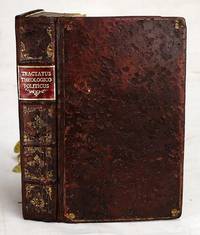
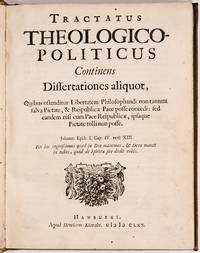
1670réf. 42820837Contemporary vellum hand-lettered spine edges sprinkled blue. A fine copy. First edition of this landmark of 17th-century thought the Theological-Political Treatise. This is the rare first edition readily identified by the misspelled "Künraht" imprint and the mis-numbering of page 104 as 304. "Although there is only one genuine first edition the other quarto editions also pretend that they were printed in the year 1670. … The reason for this is that the work was highly controversial: although formally banned only in 1674 it was considered illegal from its publication and there were attempts to have it repressed from the very start. So the Amsterdam publisher Jan Rieuwertsz had to be careful. He did not reveal his identity on the title page which carries a fictitious imprint: Henricus Künrath in Hamburg and when there was a demand for reprints it was important to make the book look like copies left over from the original 1670 issue rather than newly printed ones" Melamed and Rosenthal. Baruch Spinoza is a giant of 17th-century thought and a key figure of the Enlightenment. "He made significant contributions in virtually every area of philosophy and his writings reveal the influence of such divergent sources as Stoicism Jewish Rationalism Machiavelli Hobbes Descartes and a variety of heterodox religious thinkers … He is usually counted along with Descartes and Leibniz as one of the three major Rationalists. … Spinoza has remained an enormously controversial figure. For many he is the harbinger of enlightened modernity who calls us to live by the guidance of reason. For others he is the enemy of the traditions that sustain us and the denier of what is noble within us" IEP. "Spinoza's thought a fusion of Cartesian rationalism and the Hebraic tradition in which he grew up is a solitary but crystal clear exposition of the theory of natural right. He defends with eloquence the liberty of thought and speech in speculative matters and the Tractatus contains the first clear statement of the independence of each other of philosophy and religion" PMM. Spinoza held that "Man is moved to the knowledge and love of God; the love of God involves the love of our fellow men. Man in order to obtain security surrenders part of his right of independent action to the State. But the State exists to give liberty not to enslave; justice wisdom and toleration are essential to the sovereign power" Printing and the Mind of Man 153. Spinoza's Tractatus Theologico-Politicus was a notorious book in its own time both for what it attacked and for what it advocated. Spinoza scrutinized religious teachings and Scripture to argue that they were mere products of the human mind. At the same time he "believed that the political model of the ancient Hebrews could be imitated in certain key respects. … Unlike Hobbes whose social contract theory justified absolute monarchy Spinoza argued that democracy was a preferred form of government. And finally he thought that the state would be better off if it granted limited religious toleration and the freedom to philosophize" Melamed and Rosenthal eds. Spinoza's Tractatus Theologico-Politicus: A Critical Guide. The author's concerns about political repercussions delayed publication of the book for years. It finally appeared anonymously in 1670 with a false imprint. The Tractatus was soon placed on the Index of Prohibited Books and was interdicted in Holland. Leibniz rejected its scandalous arguments while Hobbes is said to have declared "I durst not write so boldly." Spinoza has come to be embraced by many seemingly irreconcilable "-isms" including liberalism Marxist materialism conservatism and Zionism. The first printing of the Tractatus is rarely found in this excellent condition. This true first edition has become a rare book in a period binding. Heinrich Künraht [i.e. Amsterdam: Rieuwertsz] hardcover