[ARISTOTLE ALBERTUS, Magnus]Biblio.com
6979 risultati
1799rif. 830021799. ARISTOTLE. ALBERTUS Magnus. Kurzgefasste Weiber-Buchlein. Enthalt Aristotels and Alberti Magni Hebammen-Kunst mit den darzu gehorigen Recepten. Harrisburg PA: Benjamin Mayer 1799. 10th ed. 24mo. 64 pp. In contemporary calf-backed boards. Close trimming to the fore-edge touches some text. Wear to the board edges nevertheless a remarkably well-preserved and attractive copy. Very good or better. Arndt 1173. Bristol B10844. Austin 1109. Brendle and Unger G19. While Bristol Austin and Brendle and Unger place this in Ephrata and from the press of G. Baumann Arndt notes this is a Harrisburg imprint from the press of Benjamin Mayers based on "typographical evidence." In terms of content Arndt has compared this with the 1796 edition and finds three chapters added: "Culpepper XVI" "Culpepper XII" and "Der Kaiserliche Schnitt." Arndt hypothesizes that the chapters likely come from Nicholas Culpeper's Directory for Midwives. Despite having been issued in several editions this early Pennsylvania German book on midwifery is rare in commerce. Text in German. unknown
1555rif. 67038Venice:: I. Gryphius 1555. contemporary limp vellum. Marginal worming to Biii - Diiiii; vellum soiled and a little worn; fragments of leather ties present. . Folio. Engraved vignette on title page and a few text illustrations. A few old marginal annotations associated with underlined text. I. Gryphius, hardcover
1995rif. 315699Easton Press 1995. Hardcover. Near Fine. Twelve volumes in uniform bindings of full bright red leather stamped in gilt spine titles in black labels. No corners or spine ends bumped or pushed. All have an unused bookplate laid in. Three have no flaws whatsoever to the page edge gilt eight have very minor almost imperceptible flaws Plato has two white spots on the top edge. This set will be remarkably attractive on your shelf. Please request a shipping quote before ordering. Easton Press hardcover
1619rif. 1907170004London: Edward Gifffin; Thomas Snodham 1619. First Edition. Hardcover. Very Good. First British edition of two works of Aristotle Rhetoric and Poetics both edited by Theodore Goulston. Printed in 1619 and 1623 respectively. Fine modern 1/4 speckled calf over marbled boards. Gilt ruled raised bands with 6 spine compartments. Collated: Aristotle's Rhetoric: vi 239 vi 2 blank. Aristotle's Poetics: iv. 74 iv. Both works title pages printed within engraved woodcut border large woodcut royal coat of arms on title versos. Parallel Greek and Latin texts. STC 2nd ed. 759. The translator Goulston 1572-1632 dedicated this volume to Prince Charles. After graduating from Oxford he worked as a physician in London and became a fellow of the College of Physicians. According to Dibdin Goulston's version of Aristotle's Rhetoric was the most popular 17th century version. ARISTOTELOUV TECNHV RHTORIKHV BIBLIA TRIA. London: Edward Gifffin; Thomas Snodham hardcover
rif. 1378Venice: appresso Bartholomeo detto l'Imperadore & Francesco suo Genero 1551. Hardcover. Good. Octavo. 343 pages 5 leaves. Second edition. Title within ornate woodcut border. a8-z8 A8-V8 X4. In a nineteenth-century half red morocco binding over marbled boards. Illustrated with a few woodcut diagrams in the text. Adams A1837; Cranz Aristotle 108.220; Riley Aristotle 112. From the library of Jacobo Manzoni with his bookplate. Fine. 0 Venice: appresso Bartholomeo detto l'Imperadore, & Francesco suo Genero, 1551. hardcover
rif. 79269Basle Basileae Eusebii Episcopii opera ac impensa 1582. Folio. XX62312 index1 printer's mark p. Modern calf 35.5 cm Details: Nice copy bound in modern full redbrown calf with 5 raised bands on the back. Spine short title in gilt: 'ARISTOTELIS / DE REPVBLICA'. Text in three columns with the Greek in the centre flanked by the Latin translations of Piero Vettori and Denys Lambin respectively on each side. Large printer's woodcut device to the title and last page depicting a bust of 'Hermes triceps' three-headed Hermes on a pillar; each of the heads wears a winged helmet; the middle Hermes holds in his right hand a caduceus and in his left a bishop's staff Episcopius!; from the pillar seems to hang a chopped off head. Large historiated woodcut letter on leaf a2 woodcut letters of various sizes throughout the text. Wide margins Condition: First and last leaf dust-soiled. Small and faint name on the title. Paper yellowing. Small bookplate on the front pastedown. 2 bookplates on the lower pastedown Note: The Greek scholar/philosopher Aristotle 384-322 B.C. is one of the foremost names in the history of thought and perhaps the most influential of all who have ever written. His influence on Werstern science and culture is immense. His boundless industry extended to most branches of higher learning. 74 treatises genuine and spurious have come down to us under his name. His 'Politics' literally 'the things concerning the polis' is among his best known and most widely read works. It embraces in 8 books the historical theoretical and practical aspect of politics. To Aristotle 'politics were the very crown of philosophical study . and the ultimate end of the State to provide an environment in which those capable of the highest mental and moral development might attain thereto. . The important sections of this great work are the sketch of the ideal state . the account of the various forms of government . the discussions of sovranty and responsibility and of kingship'. H.J. Rose 'A handbook of Greek literature' Oxford 1965 p. 276 § This Basle edition of 1582 of the Politics adopts the Greek text Latin translation and the famous commentary earlier published by the Italian scholar Piero Vettori Petrus Victorius 1499-1585 at Florence in 1576. Vettori professor of Greek and Latin in the 'Studio Fiorentino' at Florence was the greatest Italian Greek scholar of his time. His best known works in the field of Greek philology are his commentaries on Aristotle's Rhetoric 1548 Poetics 1560 Politics 1576 and Nicomachean Ethics 1584. Every chapter caput in this Politics edition of 1582 is printed separately followed by Vettori's very extensive and rich commentary. The Greek text is flanked by 2 Latin translations one of Vettori and one which the French scholar and Royal Reader in Greek Denys Lambin Dionysius Lambinus 1520-1572 had published in Paris in 1567. Added to the chapters are hot from the press the notes and diagrams of the Basle professor of Greek and Moral philosophy Theodor Zwinger Theodorus Zuingerus 1533-1588. He is best known for his editions of the Nicomachean Ethics Basle 1566 and the Politica of Aristotle Basle 1582 in which he transformed these works in a series of diagrams analysing and showing their structures in systematic tables. Appended are the 'Pythagoreorum fragmenta politica' in the edition of the French scholar Jean de Sponde or Johannes Spondanus 1557-1595 Provenance: Bookplates of: 'United Presbyterian Church. 'Brown library'. Glasgow 66 Virginia St.' and of 'United Presbyterian College. Brown-Lindsay Library. Shelfmark 3C1.1 No. 5154'. § Small bookplate 'Bibliotheca Classica Stephaniana' of the Swedish classical scholar Staffan Fogelmark on the front pastedown. Fogelmark was Reader in Greek 1972-85 at Lund University; Lecturer in Greek 1985-96. University of Gothenburg: Professor of Greek 1997-2004 Ref: VD16 A 3582 & VD16 P 5468. Bibliotheca Bibliographica Aureliana 38 no. 108.655; Hoffmann 1294. Griechischer Geist aus Basler Pressen no 129. Ebert 1166; Graesse 1214. Adams A 1914. Moss 1129; Not in Brunet Collation: alpha6 beta4 a-z6 A-2G6 Photographs on request Heavy book may require extra shipping costs hardcover
rif. 79269Basle (Basileae), Eusebii Episcopii opera ac impensa, 1582.
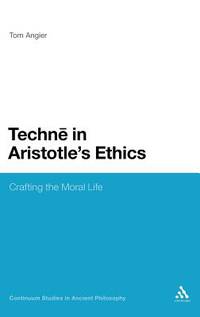
2011rif. 91612Continuum. New. Hardcover. FREE UPGRADE to Courier/Priority Shipping Upon Request - IN STOCK AND IMMEDIATELY AVAILABLE FOR SHIPMENT - Flawless copy brand new pristine never opened -- 192 pages. Description: "A new account of Aristotle’s 'Ethics' this book argues for the central importance of the concept of ‘techne’ or ‘craft’ in Aristotle’s moral theory. Exploring the importance of ‘techne’ in the Platonic and pre-Platonic intellectual context in which Aristotle was writing Tom Angier here shows that this concept has an important role in Aristotle's 'Ethics' that has rarely been studied in Anglo-American scholarship. Through close-analysis of the primary texts this book uses the focus on ‘techne’ to systematically critique and renew Aristotelian moral philosophy. 'Techne in Aristotle’s Ethics’ provides a novel and challenging approach to one of the Ancient World’s most enduring intellectual legacies. " -- with a bonus offer--; A new account of Aristotle’s Ethics this book argues for the central importance of the concept of ‘techne’ or ‘craft’ in Aristotle’s moral theory. Exploring the importance of ‘techne’ in the Platonic and pre-Platonic intellectual context in which Aristotle was writing Tom Angier here shows that this concept has an important role in Aristotle's Ethics that has rarely been studied in Anglo-American scholarship. Through close-analysis of the primary texts this book uses the focus on ‘techne’ to systematically critique and renew Aristotelian moral philosophy. Techne in Aristotle’s ‘Ethics’ provides a novel and challenging approach to one of the Ancient World’s most enduring intellectual legacies. > . 2011. 0826462715 . Continuum hardcover
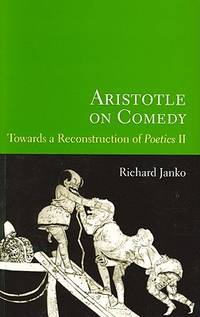
2003rif. 34966United Kingdom: Duckworth Pub. New. Paperback. FREE UPGRADE to Courier/Priority Shipping Upon Request – – IN STOCK AND IMMEDIATELY AVAILABLE FOR SHIPMENT - FLAWLESS COPY BRAND NEW PRISTINE NEVER OPENED - 320 pages; 5 3/8 x 8 1/2 inches -- In 1839 the Tractatus Coislinianus a summarised treatise on comedy was published from a tenth-century manuscript. Its discoverer suggested that it derived from the lost second book of Aristotle’s "Poetics" which inaugurated the systematic study of comedy but it was soon condemned as an ignorant compilation verging on forgery and thus matters stood until the first publication of "Aristotle on Comedy" in 1984. Richard Janko’s edition of the text is accompanied by a facing translation interpretive essays reconstruction and commentary. The book is now made available in paperback for the first time with a new Preface and additional bibliography. -- REVIEW: "This is a splendidly vigorous book. Janko presents his case with enthusiasm and panache. He is forthright in expressing his own views and in denouncing the errors of other scholars. His arguments some of them complex are invariably clear - and often deliciously clever. Whatever the truth about TC Tractatus Coislinianus Janko’s conclusions must be taken seriously. . No reader will be able to stay silent about this fascinating book." ----Jonathan Barnes "Phronesis" -- with a bonus offer--; 520-Janko; Aristotle ; Janko Richard translator Essay - facing translation interpretive essays reconstruction and commentary. Aristotle on Comedy: Towards a Reconstruction of "Poetics II" Purported In 1839 the Tractatus Coislinianus a summarised treati . 2003. 0715631691 . Duckworth Pub paperback
1969rif. 52182La Salle IL: Open Court Pub Co. As New. Hardcover. FREE UPGRADE to Courier/Priority Shipping Upon Request – – IN STOCK AND IMMEDIATELY AVAILABLE FOR SHIPMENT - Text pristine clean & unmarked - 160 pages. -- with a bonus offer-- . 1969. Open Court Pub Co hardcover
rif. 52382New York: Carlton House. As New. Hardcover. FREE UPGRADE to Courier/Priority Shipping Upon Request – – IN STOCK AND IMMEDIATELY AVAILABLE FOR SHIPMENT - Text pristine clean & unmarked tight to the spine - ND Circa1950 337 pages -- with a bonus offer-- . N.D. Carlton House hardcover
1961rif. 53801New York: Hafner Publishing Company. As New. Paperback. FREE UPGRADE to Courier/Priority Shipping Upon Request – – IN STOCK AND IMMEDIATELY AVAILABLE FOR SHIPMENT - Tight to spine - 233 pages -- with a bonus offer-- . 1961. Hafner Publishing Company paperback
1943rif. 13498Walter J. Black. As New. Hardcover. FREE UPGRADE to Courier/Priority Shipping Upon Request - IN STOCK AND IMMEDIATELY AVAILABLE FOR SHIPMENT - Book In fine Condition -- with a bonus offer--; 013498 . 1943. Walter J. Black hardcover
rif. 27542Modern Library. As New. Paperback. FREE UPGRADE to Courier/Priority Shipping Upon Request - IN STOCK AND IMMEDIATELY AVAILABLE FOR SHIPMENT - -- with a bonus offer--; T-ARISTOTLEMCK; Aristotle; Edited By McKeon Richard Introduction to Aristotle . 1947. 0394309731 . Modern Library paperback
rif. 14945The Library of the Liberal Arts / Bobbs-Merrill. As New. Paperback. FREE UPGRADE to Courier/Priority Shipping Upon Request - IN STOCK AND IMMEDIATELY AVAILABLE FOR SHIPMENT - AS NEW THE TEXT BLOCK IS PRISTINE CLEAN UNMARKED AND IN EXCELLENT CONDITION - - ND; c 1962 -- with a bonus offer--; 014945 . N.D. The Library of the Liberal Arts / Bobbs-Merrill paperback
1967rif. 14633Regnery Gateway. As New. Paperback. FREE UPGRADE to Courier/Priority Shipping Upon Request - IN STOCK AND IMMEDIATELY AVAILABLE FOR SHIPMENT - AS NEW THE TEXT BLOCK IS PRISTINE CLEAN UNMARKED AND IN EXCELLENT CONDITION - - -- with a bonus offer--; 014633 . 1967. Regnery Gateway paperback
rif. 14041New York: Heritage Press. As New. Hardcover. FREE UPGRADE to Courier/Priority Shipping Upon Request - AS NEW THE TEXT BLOCK IS PRISTINE CLEAN UNMARKED AND IN EXCELLENT CONDITION - . Decorated cover boards. -- with a bonus offer--; 014041 . 1964. 1199994448 . Heritage Press hardcover
rif. 14776Everyman's Library. New. Hardcover. FREE UPGRADE to Courier/Priority Shipping Upon Request - IN STOCK AND IMMEDIATELY AVAILABLE FOR SHIPMENT - Book In fine Condition. Copyright 1964. -- with a bonus offer--; 014776 . Everyman's Library hardcover
rif. 85189Mentor / New American Library. As New. Paperback. FREE UPGRADE to Courier/Priority Shipping Upon Request - IN STOCK AND IMMEDIATELY AVAILABLE FOR SHIPMENT - AS NEW THE TEXT BLOCK IS PRISTINE CLEAN UNMARKED AND IN EXCELLENT CONDITION - - Corresponds to: ISBN: 0451612175. 432 pages. -- with a bonus offer-- . 1963. 0451612175 . Mentor / New American Library paperback
rif. 52571Oxford At the Clarendon Press. As New. Hardcover. FREE UPGRADE to Courier/Priority Shipping Upon Request – – IN STOCK AND IMMEDIATELY AVAILABLE FOR SHIPMENT - TEXT PRISTINE TIGHT TO THE SPINE - Corresponds to ASIN: B000VMA58E -- with a bonus offer-- . Oxford At the Clarendon Press hardcover
2007rif. 91625Continuum. New. Hardcover. FREE UPGRADE to Courier/Priority Shipping Upon Request - IN STOCK AND IMMEDIATELY AVAILABLE FOR SHIPMENT - Flawless copy brand new pristine never opened -- 256 pages. Description: "The work of Aristotle 384-322 bc is considered to be one of the great achievements of the ancient world and is a foundation of both Western and Middle Eastern philosophy and science. Although Aristotle left significant material on almost all branches of learning what has survived is a somewhat disorganized collection of notes and lectures. Moreover the centuries of interpretation across various epochs and cultures tend to cloud our understanding of him. Thomas Kiefer breaks through this cloud of interpretation and provides an organized account of one key part of Aristotle's philosophy namely his theory of knowledge. This theory concerns what is knowledge what we can know and how we can do so. Kiefer's book is the first work that takes this theory as its sole focus and reconstructs it systematically. Kiefer's work throughout provides many new interpretations of key parts of Aristotle's philosophy including an unnoticed -but crucial- distinction between knowledge in general and knowledge for us the differences between his semantic and psychological requirements for knowledge and 'nous' which is perhaps the most obscure notion in Aristotle's work. He also concludes with a summary of Aristotle's theory in the terms and style of contemporary epistemology. Kiefer's work should be of interest to anyone involved in the history of philosophy or contemporary epistemology." -- with a bonus offer--; The work of Aristotle 384-322 BC is considered to be one of the great achievements of the ancient world and is a foundation of both Western and Middle Eastern philosophy and science. Although Aristotle left significant material on almost all branches of learning what has survived is a somewhat disorganized collection of notes and lectures. Moreover the centuries of interpretation across various epochs and cultures tend to cloud our understanding of him. Thomas Kiefer breaks through this cloud of interpretation and provides an organized account of one key part of Aristotle's philosophy namely his theory of knowledge. This theory concerns what is knowledge what we can know and how we can do so. Kiefer's book is the first work that takes this theory as its sole focus and reconstructs it systematically. Kiefer's work throughout provides many new interpretations of key parts of Aristotle's philosophy including an unnoticed -but crucial-distinction between knowledge in general and knowledge for us the differences between his semantic and psychological requirements for knowledge and 'nous' which is perhaps the most obscure notion in Aristotle's work. He also concludes with a summary of Aristotle's theory in the terms and style of contemporary epistemology. Kiefer's work should be of interest to anyone involved in the history of philosophy or contemporary epistemology. . 2007. 0826494854 . Continuum hardcover
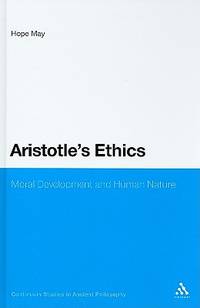
2010rif. 91615Continuum. New. Hardcover. FREE UPGRADE to Courier/Priority Shipping Upon Request - IN STOCK AND IMMEDIATELY AVAILABLE FOR SHIPMENT - Flawless copy brand new pristine never opened -- 204 pages. Description: "Aristotle's 'Nicomachean Ethics' is devoted to the topic of human happiness. Yet although Aristotle's conception of happiness is central to his whole philosophical project there is much controversy surrounding it. Hope May offers a new interpretation of Aristotle's account of happiness - one which incorporates Aristotle's views about the biological development of human beings. May argues that the relationship amongst the moral virtues the intellectual virtues and happiness is best understood through the lens of developmentalism. On this view happiness emerges from the cultivation of a number of virtues that are developmentally related. May goes on to show how contemporary scholarship in psychology ethical theory and legal philosophy signals a return to Aristotelian ethics. Specifically May shows how a theory of motivation known as Self-Determination Theory and recent research on goal attainment have deep affinities to Aristotle’s ethical theory. May argues that this recent work can ground a contemporary virtue theory that acknowledges the centrality of autonomy in a way that captures the fundamental tenets of Aristotle’s ethics." -- with a bonus offer--; Aristotle's Nicomachean Ethics is devoted to the topic of human happiness. Yet although Aristotle's conception of happiness is central to his whole philosophical project there is much controversy surrounding it. Hope May offers a new interpretation of Aristotle's account of happiness - one which incorporates Aristotle's views about the biological development of human beings. May argues that the relationship amongst the moral virtues the intellectual virtues and happiness is best understood through the lens of developmentalism. On this view happiness emerges from the cultivation of a number of virtues that are developmentally related. May goes on to show how contemporary scholarship in psychology ethical theory and legal philosophy signals a return to Aristotelian ethics. Specifically May shows how a theory of motivation known as Self-Determination Theory and recent research on goal attainment have deep affinities to Aristotle s ethical theory. May argues that this recent work can ground a contemporary virtue theory that acknowledges the centrality of autonomy in a way that captures the fundamental tenets of Aristotle s ethics. . 2010. 0826491103 . Continuum hardcover
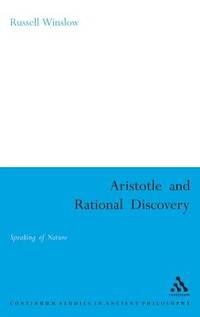
2007rif. 91624Continuum. New. Hardcover. FREE UPGRADE to Courier/Priority Shipping Upon Request - IN STOCK AND IMMEDIATELY AVAILABLE FOR SHIPMENT - Flawless copy brand new pristine never opened -- 160 pages. Description: "In this lively and original book Russell Winslow pursues a new interpretation of logos in Aristotle. Rather than a reading of rationality that cleaves human beings from nature this new interpretation suggests that for Aristotle consistent and dependable rational arguments reveal a deep dependency upon nature. To this end the author shows that a rational account of a being is in fact subject to the very same principle that governs the physical motion and generation of a being under inquiry. Among the many consequences of this argument is a rejection of both of the prevailing oppositional claims that Aristotle's methodological procedure of discovery is one resting on either empirical or conceptual grounds: discovery reveals a more complex structure than can be grasped by either of these modern modes. Further Winslow argues that this interpretation of rational discovery also contributes to the ethical debates surrounding Aristotle's work insofar as an ethical claim is achieved through reason but is not thereby conceived as objective. Again the demand for agreement in ethical/political decision will be disclosed as superseding in its complexity both those accounts of ethical decision as subjective for example 'emotivist' accounts and those as objective 'realist' accounts." -- with a bonus offer--; In this lively and original book Russell Winslow pursues a new interpretation of logos in Aristotle. Rather than a reading of rationality that cleaves human beings from nature this new interpretation suggests that for Aristotle consistent and dependable rational arguments reveal a deep dependency upon nature. To this end the author shows that a rational account of a being is in fact subject to the very same principle that governs the physical motion and generation of a being under inquiry. Among the many consequences of this argument is a rejection of both of the prevailing oppositional claims that Aristotle's methodological procedure of discovery is one resting on either empirical or conceptual grounds: discovery reveals a more complex structure than can be grasped by either of these modern modes. Further Winslow argues that this interpretation of rational discovery also contributes to the ethical debates surrounding Aristotle's work insofar as an ethical claim is achieved through reason but is not thereby conceived as objective. Again the demand for agreement in ethical/political decision will be disclosed as superseding in its complexity both those accounts of ethical decision as subjective for example "emotivist" accounts and those as objective "realist" accounts. . 2007. 0826496873 . Continuum hardcover
rif. 121300London Printed for A. Strahan; and T. Cadell Jun. and W. Davies in the Strand 1797. . First edition; 2 vols in 1; 4to 29.5 x 23 cm; divisional title printed on blue tinted paper bookplate to front pastedown light spotting; contemporary mottled calf covers with decorative wheatsheaf roll rebacked preserving the original gilt spine which has been laid down sprinkled edges corners slightly bumped with minor loss very good; 3 vi-xv 1 416 3 'vi' 343 4pp. The first edition of this English language translation of the Nicomachean Ethics and Politics of Aristotle 384-322 BC. Although both works had previously appeared in English translation as The Ethiques of Aristotle by John Wilkinson in 1547 and John Dickenson's Aristotles Politiqves or Discovrses of Government in 1598 this edition by the Scottish historian John Gillies 1747-1836 marks the first occasion that both texts appear together in one composite translation which as Gillies explains in his preface is perhaps how Aristotle intended the works to be understood: 'The "Ethics of Nichomachus and the Politics" ought never to have been disjoined since they are considered by Aristotle himself as forming essential parts of one and the same work; which as it was the last and principal object of his studies is of all his performances the longest the best connected and incomparably the most interesting. The two treatises combined constitute what he calls his practical philosophy' i.e. that which concerns human nature. Gillies prefixed this work with a lengthy life of Aristotle and a 'New Analysis of Aristotle's Works' the latter coming under fire by the Platonist Thomas Taylor 1758-1835 who criticised Gillies' comments on the ordering of the books in Aristotle's treatise on metaphysics in the introduction to his English-language translation of this work which was published in 1801. This led in turn to a revised edition of Gillies' Ethics and Politics which came out in 1804 defending his work. Prior to the present work Gillies' principal contribution to academia was a history of ancient Greece that appeared in two parts the first printed in 1786 the second not appearing until 1807. On the strength of this Gillies was appointed Historiographer Royal for Scotland on the death of William Robertson in 1793 and devoted his attention to this translation of Aristotle's two major works of practical philosophy here first published. From the library of Sir John Swinburne 1762-1860 of Capheaton Hall with his bookplate to the front pastedown. Swinburne was elected Member of Parliament for Launceston in the Whig interest in 1788 and was a supporter of social reform including the abolition of the slave trade. ESTC T128120. London, Printed for A. Strahan; and T. Cadell Jun. and W. Davies, in the Strand, 1797. unknown
1554rif. 1506230049Venice: Apud Hieronymum Scotum 1554-01-01. Hardcover. Good. Folio. Original vellum. Minor soiling to cover. Good binding and cover. Later leather binding straps. Later end pages. Printer's device on title page. Text generally clean a few lines of early marginal notation and underlining. Collated: A-L8 M-M6 N-N4 in 8's with the title as leaf A1. Faint stain on first few leaves. Edito princeps 1535. Refs: British Museum p. 44. STC Italy Vol I. p. 99; Not in Brunet. Johannes Philoponus John the Grammarian or John of Alexandria was an important Aristotelian commentator and Christian theologian. John's commentaries on Aristotle were influential on medieval and early modern thinkers in Europe such as Gianfrancesco Pico della Mirandola and Galileo. Philoponus has been seen as an important precursor to the establishment of empirical philosophy. In this book Philoponus comments on Aristotle's De Anima On the Soul and substantially modifies Aristotle's ideas. His commentary deals specifically with Aristotle's theory of light "Philoponus contends that Aristotle' view fails to account both for the laws of optics. Philoponus modifies the theory so as to save the phenomena he proceeds to re-interpret the term Energeia not as a state of actuality but rather as an 'incorporeal activity' which besides constituting the transparency of the medium is also capable of warming bodies.Due to this novel interpretation of Aristotle's terminology light is now understood not statically but as something dynamical." - Stanford Philosophical Encyclopedia. It should also be noted that since Michael Hayduck's edition Berlin 1897 it is generally assumed by scholars that the third book of the commentary that had been ascribed to John Philoponus wasoriginally written by Stephanus of Alexandria as is attested in the manuscript Parisinus gr. 1914 11th/12th cent. An important early work in physics and natural philosophy. Venice: Apud Hieronymum Scotum hardcover