4799 risultati
1559rif. 7737Bâle 1559 1 Basilea: Per Hier. Frobenium et Nicol. Episcopium, 1559. In-4: 23 x 33,5 cm, 6 ff. n. chiff. [titre, tables], 886 pp. [Antiquitatum Judaicarum Liber I-XX; Flavii Josephi vita; De bello Judaico Liber I-VII; Contra Apionem Liber I-II; De Machabaeis]+ 17 ff. n. chiff. [index, colophon]. Nouvelle édition, augmentée et révisée, de ce Flavius Joseph des Froben de Bâle paru pour la première fois en 1534. Traduction latine par lhumaniste tchèque par Sigmund Gelen (1497-1554) du corpus josephien comprenant Les antiquités judaïques, La guerre des Juifs, lAutobiographie de Flavius Josèphe, Contre Apion. À cela sajoute le De Imperio rations, ou De Machabaeis, édité quand à lui par Erasme (1467-1536). Marque des Froben à la page de titre et au colophon. (Heinz Schreckenberg, Bibliographie zu Flavius Josephus, I, Leiden, 1968, p. 14)Reliure de la première moitié du XVIIIe en veau blond. Dos à cinq nerfs avec pièce de titre en maroquin rouge et caissons ornés aux petits fers. Toutes tranches rouges. Ex-libris manuscrit à la page de titre: «Renatus Guillaume Presbiter 1729». Ex-libris: «André Gutzwiller». Coupe du plat supérieure abîmée. Larges mouillures aux premiers et derniers ff., sans altération du contenu. Quelques marginalia. Désirable pour la somptueuse typographie des Froben!
1734rif. 23640Amstardam, Aux Dépens de la Compagnie, 1734. 2 volumes in-12 (10 x 18 cm) maroquin citron à long grain, dos à nerfs ornés de petits fers dorés, roulette dorée encadrant les plats et à l'intérieur des plats, gardes et doublures de papier rose, tranches dorées. (22)-396 et 419 pages. (Reliure signée Bozérain jeune).
1547rif. 014688Basileae: Hieronymus Froben & Nikolaus Episcopius 1547. Book measures 16.5x11.5.cm. 415pp.1pp printer's device. Rebacked retaining period or early boards raised bands leather lebel. Some wear to edges of boards. Binding in very good clean firm condition. Internally previous owners bookplate very light staining of browning to margins. Pages in very good clean condition. A very nice copy. F. Leather. Very Good. 8vo. [Hieronymus Froben & Nikolaus Episcopius]
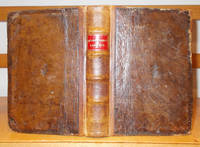
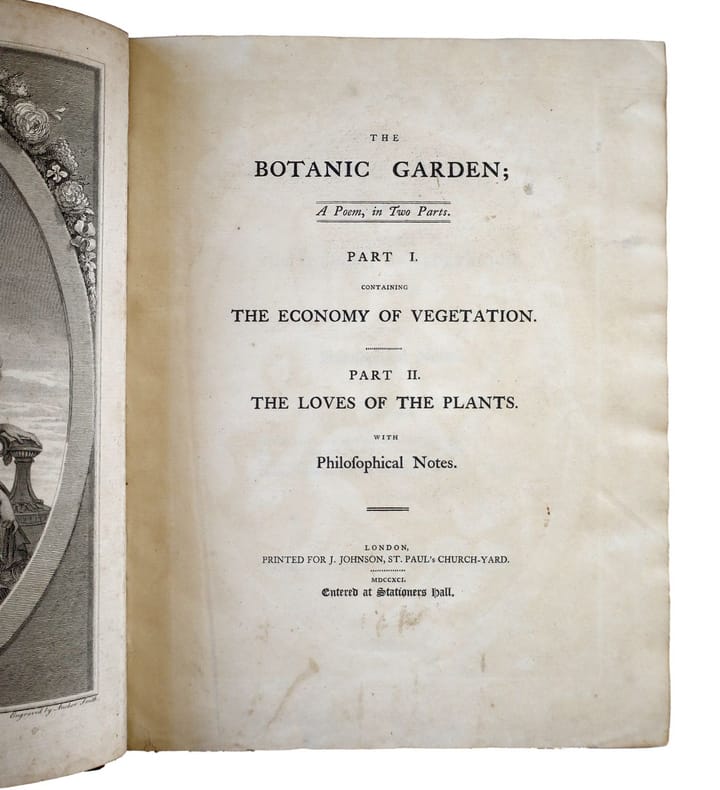
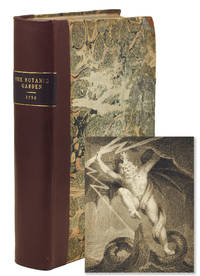
1791rif. 93718London, printed for J. Johnson, 1791, in-4, Front, XII-214-126-[2] pp, 9 pl. dont 1 depl.; front, [2]-IX-197 pp, 9 pl, Reliure ancienne, dos lisse, plats de veau brun rapportés, Célèbre poème scientifique du grand père de Charles Darwin, Erasmus Darwin (1731-1802). Cet exemplaire comprend la première édition de la première partie (The Economy of Vegetation) et la troisième édition de la deuxième partie (The Loves of the Plants), enrichie de deux planches supplémentaires par rapport à la première édition de 1789. Le Jardin botanique fut publié de manière inversée, selon le souhait de l'auteur, qui fit d'abord paraître la seconde partie de l'ouvrage (1789 et 1790), la jugeant plus apte à divertir et charmer. Comme dans les autres oeuvres d'Erasmus Darwin, ce poème contient un grand nombre d'informations scientifiques souvent avancées. La première partie, plus scientifique, couvre la philosophie naturelle et fait état de nombreuses recherches et inventions contemporaines, telle que l'histoire du cosmos. En seconde partie, l'auteur explique le système de la reproduction sexuée de Linné avec les propriétés remarquables de certaines plantes en particulier. L'aïeul de Charles postule que la reproduction sexuelle est au coeur des changements et des progrès de l'évolution, tant chez les humains que chez les plantes. Cette conception d'une transformation progressive des espèces appartient aux sciences de la reproduction et rejoint les théories pré-évolutionnistes qui sont apparues à l'aube du XIXe siècle (Laniel-Musitelli). Néanmoins, son petit-fils, Charles, déclara que la théorie d'Erasmus n'avait pas eu d'effet sur L'origine des espèces. Le Jardin botanique est également précieux pour son illustration, qui comporte deux frontispices, 18 planches et une vignette dans le texte : 5 des planches du volume I ont été gravées par William Blake, soit 4 gravures du vase de Portland et la planche de la Fertilisation de l'Égypte, d'après un dessin de Johann Heinrich Füssli (Henry Fuseli), célèbre peintre du Cauchemar. Ex-libris gravé de Marcus Jacobson. Coins et dos anciennement refaits. Épidemures sur les plats. Légères rousseurs et salissures sur les premiers feuillets. Garrison & Morton n° 8921. Sophie Laniel-Musitelli, "Erasmus Darwin : naissance du transformisme dans le texte poétique". In Bulletin d'histoire et d'épistémologie des sciences de la vie, 2011/1 (Volume 18), p. 25-40. Couverture rigide
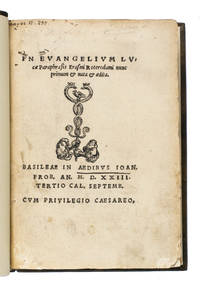
1523rif. ABC_49899Basel 1523. Small 8vo 10.7 x 15.2 cm. Johann Froben Modern blind-tooled marbled calf bound by Period Bookbinders from Bath England with the author and title lettered in gold at the head of the spine the year at the foot of the spine. With 2 small woodcut illustrations incorporating Frobens device on the title page and the verso of the final leaf a woodcut headpiece above the dedication and two woodcut decorated initials. 275 ll. First edition of Erasmus Paraphrase on the gospel of Luke. Unlike his paraphrases on the gospels of Matthew Mark and John each dedicated to rulers of France or the Holy Roman Empire this work was addressed to King Henry VIII of England. The lengthy dedicatory preface which spans the first twelve leaves takes the form of a personal letter from Erasmus to the king. The Paraphrase on Luke was also unique in its format: it was the only one of the gospel paraphrases to be first published in octavo. The Paraphrases themselves were a novel form of literature at the time: more than mere translations or commentaries they were interpretative retellings of the gospels aiming to clarify the theological and moral meaning of Scripture for a wider audience. Despite Erasmus towering knowledge of the Church Fathers and his editorial work on patristic texts his method in the Paraphrase on Luke was not one of direct quotation from memory. Instead as Jan Bloemendal states Erasmus likely worked with various compilatory sources on his desk texts such as Bedes commentary on Luke the Glossa Ordinaria a medieval annotated Bible and Aquinas Catena Aurea which gathered together centuries of Christian interpretation. Through these sources Erasmus was able to channel the voice of the early Church while crafting something new and distinctly his own.Modern scholarship has also examined the layered narrative voices in the paraphrase on Luke. According to Bloemendal Erasmus plays with the roles of paraphrast narrator and evangelist creating a subtle interplay between himself and the biblical Luke. This device allowed Erasmus to offer veiled critiques on the abuses and moral failings of his own time under the guise of Lukes voice while also inviting his readers into a deeper more personal engagement with Scripture.With some contemporary underlining and annotations primarily consisting of corrections textual additions and markings of notable passages; a later bibliographical annotation in brown ink at the head of the title page "Panzer VI 237" and a small bookbinders label mounted in the bottom inner corner of the recto of the final blank flyleaf Period Bookbinders Bath England Tel 0225 20698. Some small wormholes in the first 5 leaves slightly affecting the text the title page is slightly dust soiled. Otherwise in good condition.l Adams E 755; Bezzel 1164; Bloemendal Collected Works of Erasmus vol. 47: Paraphrase on Luke 1-10 edited by Jane E. Phillips Erasmus Studies 37 2 2017 pp. 217-222 see p. 218; Bloemendal Exegesis and Hermeneutics in Erasmus Paraphrase on Luke Erasmus studies 36 2 2016 pp. 148-162; BM STC German p. 119; USTC 665710; Vander Haeghen I 148; VD16 E 3061; not in De Reuck. unknown
In 16, pp (LXI) 310, tutta pergamena molle (brunita), bella impresa xilografica al frontespizio di Melchiorre Sessa(gatto con topo in bocca in cornice figurata) e in fine (gatto che cattura topo in cornice figurata e motto che tradotto e' 'La compagnia dei dissimili e' infida'), qualche capolettera inciso. RARISSIMO ESEMPLARE: 2 copie conosciute in Italia secondo il catalogo Cinquecentine dell'OPAC ICCU. 5689 Gora di umidita' che prende la parte inferiore del volume. Contraffazione veneziana della prima edizione di Lione. Cancellature ad inchiostro relative ai nomi di Erasmo, Latomi e Corradi. /CICERO - CICERONE - DE OFFICIS - DE SENECTUTE - SOMNIO SCIPIONIS - ERASMO DA ROTTERDAM)
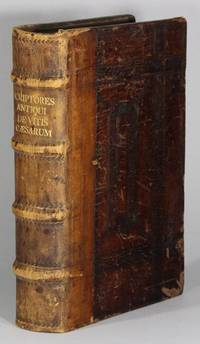
1546rif. 73674Basileae: Per Hieronymvm Frobenivm et Nic. Episcopivm 1546. Folio leaf 32.0 cm pp. 20 810 70; printer's woodcut device on title page and verso of last leaf; woodcut initials some historiated and ornaments; contemporary paneled calf over wooden boards sometime rebacked to match paneled spine in 5 compartments gilt-lettered direct in 1; clasps perished the whole rubbed and worn but the binding is sound and the text clean. Includes blank leaves Q8 and Xx6. Beginning with Suetonius's biographies of the Caesars and Roman emperors this volume brings together numerous "Historiae augustae scriptores" - the title of the first edition of the anthology published in Milan in 1475. A Venetian reprint of 1489 was followed in 1516 by a "nouvelle revision du texte" Graesse by the humanist scholar Giovanni Battista Egnazio and again in 1518 with a further revision by Erasmus. Added to this edition are the two books of Velleius Paterculus. Adams C 91. Graesse III 303. [Per Hieronymvm Frobenivm et Nic. Episcopivm] unknown
1546rif. 73674Basileae: Per Hieronymvm Frobenivm et Nic. Episcopivm 1546. Folio leaf 32.0 cm pp. 20 810 70; printer's woodcut device on title page and verso of last leaf; woodcut initials some historiated and ornaments; contemporary paneled calf over wooden boards sometime rebacked to match paneled spine in 5 compartments gilt-lettered direct in 1; clasps perished the whole rubbed and worn but the binding is sound and the text clean. Includes blank leaves Q8 and Xx6. Beginning with Suetonius's biographies of the Caesars and Roman emperors this volume brings together numerous "Historiae augustae scriptores" - the title of the first edition of the anthology published in Milan in 1475. A Venetian reprint of 1489 was followed in 1516 by a "nouvelle revision du texte" Graesse by the humanist scholar Giovanni Battista Egnazio and again in 1518 with a further revision by Erasmus. Added to this edition are the two books of Velleius Paterculus. Adams C 91. Graesse III 303. [Per Hieronymvm Frobenivm et Nic. Episcopivm] unknown books
1988rif. C94084Luca Verlag. As New. Hardcover. FREE UPGRADE to Courier/Priority Shipping Upon Request - IN STOCK AND IMMEDIATELY AVAILABLE FOR SHIPMENT - Flawless copy brand new pristine never opened -- Text in Dutch; summaries in English and in German. Catalogue Raisonne Catalog Raisonné Complete Works Catalogus Het Complete Oeuvre Raisonnee -- with a bonus offer-- - May be EITHER: out of print OOP and extremely rare in this pristine condition; signed by author or contributor; or a first or special edition; inquire for details . 1988. 3923641141 . Luca Verlag hardcover
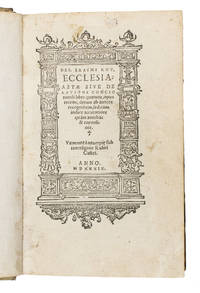
1539rif. ABC_49727Antwerp: sub intersignio Rubri Castri = Guilielmus Montanus 1539. 18th-century half vellum with a brown paper title label on the spine lettered in black the manuscript year of publication at the foot of the spine decorated paper sides with a hand drawn floral design in red and blue ink red edges. Small 8vo. With an architectural woodcut border on the title page 7 decorated metalcut initials 5 woodcut headpieces 7 woodcut tailpieces and a woodcut printer's device at the end of the work. Scarce early edition of an influential manual on preaching. It was one of the last major works which Erasmus produced and is considered one of his most significant treatises on theology. The work was incredibly popular in his own time as Erasmus had been pressured for many years to write it. The present edition which is the first by Montanus and the third authorised edition is relatively scarce however with only two other copies recorded in sales records of the 21st century."The Ecclesiastes is really a collection of three works: a theological treatise on the importance of preaching and the role of the preacher in the church Book I a textbook on homiletics and hermeneutics which provides the preacher with the basic tools necessary for both the interpretation of scripture and the construction and delivery of sermons based on biblical terms Books II and III and a list of sermon topics with an explanation of how some of them should be developed. From this organization it is clear that Erasmus attempted to provide his contemporaries with both a theology of preaching and clear and precise advice on the art of preaching" Kleinhans.With 18th-century annotations on the front pastedown and in the margins of some of the leaves several portions of text are underlined. The edges and corners of the boards are somewhat scuffed the vellum is somewhat soiled and stained. The work is somewhat browned throughout with brown ink stains on a few leaves affecting a few words minor loss of material in the lower margin of a7 and a8 without affecting the text. Otherwise in good condition.l Adams E-631; De Reuck 179; Erasmus Online 1682; Nijhoff & Kronenberg 2923; STCV 12926615; USTC 440876; Vander Haeghen I 78; not in Bezzel; cf. Kleinhans R.G. "Erasmus Ecclesiastes and the Church of England" in Historical Magazine of the Protestant Episcopal Church 39 3 1970 pp. 307-14; Rouzet Dictionnaire des imprimeurs belges p. 153. sub intersignio Rubri Castri (= Guilielmus Montanus), hardcover
rif. 120771852. In-12, (123) ff., texte manuscrit, dessins contrecollés, reliure de l'époque plein chagrin (restauré). 12mo, (123) f., manuscript text, pasted drawings, full contemporary shagreen binding (restored).
1519rif. PHO-1100Haguenau, apud Thomas Anshelm, 1519 (M.D.XIX Mense Maio). Pet. in-4, cartonnage postérieur ,titre encadré , LXXIX f.,3ff.n.ch. (R 6),( table et marque d’imprimeur) .Exemplaire très frais, écriture sur le titre .
1829rif. 1511300026Roma Tip. della Societa editrice 1829 - 1838. First Edition. Hardcover. Good. 8 volume set. 848 pl. of 850. Folios 46 cm. Bound in contemporary 3/4 green leather. Marbled boards. Top edge gilt. Wear and rubbing to extremities. Library bookplates. Markings to spine and verso of title page. Front board detached to Vols. IVIVII. Front boards starting to Vol. I-III. Chipping and loss to head and tail of Vol. I III and VII. Lacking two plates. Pages clean and unmarked. Brunet IV p. 677. Collated: Vol. I: 304p. 86 pl. complete; Vol. II: 294p. 68 pl. plate LXVII as plate LXVI matching plate list then to pl LXVIII resulting from pl. XI printed as X and number continuously as such complete; Vol. III: 280p. 113 pl. complete; Vol. IV: 279p. 115 pl complete; Vol. V: 230p. 118 pl. complete; Vol. VI: 188p. 106 pl. complete pl 90-100 misbound; Vol. VII: 128p. 98 pl lacking pl 19; Vol. VIII: 170p. 152 pl. lacking pl 92. This is an oversized or heavy book that requires additional postage for international delivery outside the US. Roma, Tip. della Societa editrice hardcover
1795rif. 1262351795. London: Johnson 1795-94. 2 vols. in one 4to xx 218 124 2 directions to binder and advertisement; 2 viii 200 2 directions to the binder lacking the errata and ads pp. With a frontispiece to each volume ten plates in vol. I and 8 in vol. II. Early half calf marbled boards newly rebacked in calf with gilt-lettered label. A very good copy if a little aged -- early manuscript note loosely inserted about the Portland Vase copied from the Morning Chronicle c. 1796. § Best edition. 6 plates are engraved by Blake the best known being Fertilization of Egypt and Tornado both after Fuseli. The third edition of part one is the only edition to include the striking Tornado plate. At page 87 appears the enigmatic circular image of an African man in chains titled "Am I not a man and a brother." Bentley 450B and C. Essick William Blake's Commercial Book Illustrations XXI. The Morning Chronicle was a newspaper founded in 1769 in London. It was notable for having been the first steady employer of essayist William Hazlitt as a political reporter and the first steady employer of Charles Dickens as a journalist. unknown
1795rif. 1262351795. London: Johnson 1795-94. 2 vols. in one 4to xx 218 124 2 directions to binder and advertisement; 2 viii 200 2 directions to the binder lacking the errata and ads pp. With a frontispiece to each volume ten plates in vol. I and 8 in vol. II. Early half calf marbled boards newly rebacked in calf with gilt-lettered label. A very good copy if a little aged -- early manuscript note loosely inserted about the Portland Vase copied from the Morning Chronicle c. 1796. § Best edition. 6 plates are engraved by Blake the best known being Fertilization of Egypt and Tornado both after Fuseli. The third edition of part one is the only edition to include the striking Tornado plate. At page 87 appears the enigmatic circular image of an African man in chains titled "Am I not a man and a brother." Bentley 450B and C. Essick William Blake's Commercial Book Illustrations XXI. The Morning Chronicle was a newspaper founded in 1769 in London. It was notable for having been the first steady employer of essayist William Hazlitt as a political reporter and the first steady employer of Charles Dickens as a journalist. unknown books
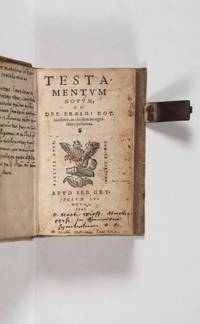
1547rif. 49141Lyon: Sebastian Gryphius 1547. Hardcover. Very Good-. 16mo in 8s: a-z8 A-Z8 aa8 bb8 =384 leaves; blank bb7-8. 763 5 blankpp. Printer's device at title woodcut lettrines. Text in italic headlines and chapter headings in roman; printed marginalia. Later pigskin over bevelled boards tooled in blind brass clasps one of two and catches manuscript title at spine. Extensive old manuscript notes at front endleaf and four blank leaves at the end including the two integral blanks; occasional marginalia and underlining. Title soiled with some slight erosion at margin from oxidation of the clasps else a very good copy with clean fresh text throughout. Complete with the two final blank leaves. Second Gryphius edition and a rather uncommon early sixteenth-century printing of Erasmus' Latin translation of the New Testament first published at Basel in 1516. According to Baudrier Ly. V. 804101/Cat. de Lignerolles Paris Porquet 1894 no. 48 Gryphius first published this translation in 1542 and 1543 as a 16mo of 847 pages; neither of these issues appear in Deleveau & Hillard. Like the present edition these early Gryphius printings of the Erasmus New Testament survive in only a handful of copies. The text opens with Erasmus' dedication to pope Leo X followed by his preface to the reader a general index of the New Testament corpus a listing of the chapters of the four Gospels and a brief passage from Jerome's catalogue of ecclesiastical writings. The editor's introductions precede each book. The text concludes with Erasmus' translation of a brief discussion of apocryphal literature partly from Athanasius though Erasmus questions the attribution: "De libris utriusque testamenti partim reiectus aut non sine contradictione admissis partim apocryphis ex Athanasio tametsi mihi suspectus est titulus." Provenance and annotations: Extensive early annotations in more than one hand appear throughout the book; many marginal notes have been added throughout the Gospel of Matthew. At the front of the book beginning with the free endleaf: "Poeta de Pythogora" several stanzas in Latin and Greek; facing the title: A morning prayer "Oro matutina lecturis oracula divina" 11 lines; an accounting of biblical eras 10 lines since Abraham David and the Babylonian Exile appears at the verso of the title leaf. The final blank page the two intergral blank leaves and two additional blanks added by the binder are filled with notes in several different hands including: a passage from Augustine's De doctrina christianae 14 lines; noted as book 2 chapters 11 and 12 along with four lines about Tertullian; four pages of notes on the twelve disciples numbered; a Greek text discussing the divine names in which the tetragrammaton is written in Hebrew letters; a passage from a letter of Basilius Magnus in Greek with Latin translation. Printed label of Edward Davis Hoblyn 1809-1881 and his manuscript entry dated 1831 at the free endleaf. Edward was likely related to the renowned book collector Robert Hoblyn 1710-1756 of Cornwall. A catalogue of Robert's collection was printed in 1768 as Bibliotheca Hobliniana and reissued by Murray in 1769 with a new titlepage. The library remained with Robert's widow and was sold in 1778. The present work is not listed in the Bibliotheca though no fewer than nineteen 16th-century Latin Bibles and Testaments appear in the catalogue. Gift inscription of D. N. Goodman of San Francisco California to Father J. L. Damas at front pastedown dated 1935. References: Baudrier 8 217. Baumgarten Nach. v. merkw. Büchern 8 1755 206 noting that this and the later Gryphius edition which Le Long assigns to the master printer's workshop are in fact identical and notable examples of elegant typography. Deleveau & Hillard 4407 BNF. Le Long Leipzig 1709 1:751 & 2:478 Bibl. Colbertina - the earlier Gryphius edition of 1542/43 is not cited in either part. Le Long-Masch 2.3 p. 599 noted as the first New Testament ex. Erasmi to appear at Lyon. Sebastian Gryphius hardcover
1547rif. 49141Lyon: Sebastian Gryphius 1547. Hardcover. Very Good-. 16mo in 8s: a-z8 A-Z8 aa8 bb8 =384 leaves; blank bb7-8. 763 5 blankpp. Printer's device at title woodcut lettrines. Text in italic headlines and chapter headings in roman; printed marginalia. Later pigskin over bevelled boards tooled in blind brass clasps one of two and catches manuscript title at spine. Extensive old manuscript notes at front endleaf and four blank leaves at the end including the two integral blanks; occasional marginalia and underlining. Title soiled with some slight erosion at margin from oxidation of the clasps else a very good copy with clean fresh text throughout. Complete with the two final blank leaves. Second Gryphius edition and a rather uncommon early sixteenth-century printing of Erasmus' Latin translation of the New Testament first published at Basel in 1516. According to Baudrier Ly. V. 804101/Cat. de Lignerolles Paris Porquet 1894 no. 48 Gryphius first published this translation in 1542 and 1543 as a 16mo of 847 pages; neither of these issues appear in Deleveau & Hillard. Like the present edition these early Gryphius printings of the Erasmus New Testament survive in only a handful of copies. The text opens with Erasmus' dedication to pope Leo X followed by his preface to the reader a general index of the New Testament corpus a listing of the chapters of the four Gospels and a brief passage from Jerome's catalogue of ecclesiastical writings. The editor's introductions precede each book. The text concludes with Erasmus' translation of a brief discussion of apocryphal literature partly from Athanasius though Erasmus questions the attribution: "De libris utriusque testamenti partim reiectus aut non sine contradictione admissis partim apocryphis ex Athanasio tametsi mihi suspectus est titulus." Provenance and annotations: Extensive early annotations in more than one hand appear throughout the book; many marginal notes have been added throughout the Gospel of Matthew. At the front of the book beginning with the free endleaf: "Poeta de Pythogora" several stanzas in Latin and Greek; facing the title: A morning prayer "Oro matutina lecturis oracula divina" 11 lines; an accounting of biblical eras 10 lines since Abraham David and the Babylonian Exile appears at the verso of the title leaf. The final blank page the two intergral blank leaves and two additional blanks added by the binder are filled with notes in several different hands including: a passage from Augustine's De doctrina christianae 14 lines; noted as book 2 chapters 11 and 12 along with four lines about Tertullian; four pages of notes on the twelve disciples numbered; a Greek text discussing the divine names in which the tetragrammaton is written in Hebrew letters; a passage from a letter of Basilius Magnus in Greek with Latin translation. Printed label of Edward Davis Hoblyn 1809-1881 and his manuscript entry dated 1831 at the free endleaf. Edward was likely related to the renowned book collector Robert Hoblyn 1710-1756 of Cornwall. A catalogue of Robert's collection was printed in 1768 as Bibliotheca Hobliniana and reissued by Murray in 1769 with a new titlepage. The library remained with Robert's widow and was sold in 1778. The present work is not listed in the Bibliotheca though no fewer than nineteen 16th-century Latin Bibles and Testaments appear in the catalogue. Gift inscription of D. N. Goodman of San Francisco California to Father J. L. Damas at front pastedown dated 1935. References: Baudrier 8 217. Baumgarten Nach. v. merkw. Büchern 8 1755 206 noting that this and the later Gryphius edition which Le Long assigns to the master printer's workshop are in fact identical and notable examples of elegant typography. Deleveau & Hillard 4407 BNF. Le Long Leipzig 1709 1:751 & 2:478 Bibl. Colbertina - the earlier Gryphius edition of 1542/43 is not cited in either part. Le Long-Masch 2.3 p. 599 noted as the first New Testament ex. Erasmi to appear at Lyon. Sebastian Gryphius hardcover books
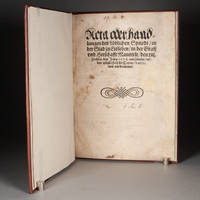
1554rif. 0050840 p. 4to A-E4 194 x 138 mm --- First and only edition of this report of the 1554 Eisleben Synod—which happens to have been the first book printed in Eisleben perhaps best known today as the birthplace of Martin Luther. USTC alone mentions an edition of Johannes Agricola's Ain Christliche Kinder printed at Eisleben in 1528 though it reports no copies USTC 710818. We suspect this refers to a copy once at the Staatsbibliothek zu Berlin tragically lost in the war. Like many editions of the Christliche Kinder the title indicates the author prepared the catechism for his students in Eisleben where he taught. Hence a cataloger might mistakenly provide Eisleben as place of printing when no other city appears on the title page. While Henry Cotton reports Eisleben was printing as early as 1535 Deschamps found no evidence of this and defers to the Synod publications of 1554 as the earliest. For what it's worth VD16 reports no Eisleben imprints before 1554. ¶ This particular synod was occasioned by three pastors in Mansfeld: Stephan Agricola Moritz Heling and Georg Major. All had professed that good works were necessary for salvation which obviously smacked of papistry. Nearly a hundred attended the synod with a complete list of names here on leaves C1v-C3r. While the vast majority did reject the necessity of good works the debate ended like so many noncommittal institutional positions "without clear wording as to whether an agreement was reached with the opponents at all and without mentioning the dismissal of Agricola and Heling" Dingel. ¶ But at least the report left us with Luther's first printed appearance in the city of his birth. Indeed half of the content beginning on C3v consists of excerpts from Luther's vast corpus. The synod appears to be citing Hans Lufft's multivolume Wittenberg edition. Compare Luther cited in our pamphlet aus dem vierden Tomo fol. 550 to >fol. 550v in Lufft's fourth volume 1551. Luther's family moved to nearby Mansfeld—the locus of our pamphlet's controversy—the year after he was born where he spent most of his youth. Family business brought Luther back to Mansfeld in 1546. He preached his final antisemitic sermon in Eisleben just a few days before his death. ¶ Jakob Bärwald was a Leipzig printer. He produced just a handful of items in Eisleben before turning the press over to Urban Gaubisch in 1554 his former apprentice and now husband to his sister-in-law. Of Bärwald's five Eisleben items two have precisely dated colophons: our Acta April 4 and an >Orationby Georg Lauterbeck April 7; VD16 L776. The preface to Sleidanus's >Kurtze summa is dated 16 April VD16 S6720. Sarcerius dates the text of his >TrostschrifftMay 5 VD16 S1779. Which leaves only Sarcerius's Form und Weise einer Visitation to possibly rival the April 4 Acta for priority VD16 S1705 and ZV20662 representing two slightly different title settings. And priority appears to go to the Acta. His two imprints with precise dates and the three without form two distinct groups even beyond the precise colophons with Form und Weise belonging to the second group. The later imprints those without precise colophons have dated title pages; the Acta and Oration have no imprint information whatsoever on their title pages. The Acta and Oration use the same woodcut decoration on the title which Bärwald only deploys again beneath the errata in Form und Weise; he preferred different decorations for the other three titles. This is consistent with Sabine Arend's assessment whose research found that Form und Weise "flowed from his pen between April and June 1554." And for what it's worth our source a reputable German auction house citing reference sources beyond our own was unequivocal in calling this Eisleben's first printed book. ¶ Of course it's satisfying to have the first printed book from any given city. But beyond that to have Luther's first printed appearance in the city of both his birth and death.it feels almost totemic. ¶ We find two copies in North America Harvard and Yale. --- PROVENANCE: A couple of numbers inked on the title page perhaps shelfmarks of the 18th or 19th centuries. Scattered early underlining on a handful of pages. Faint evidence of an old ink stamp on the title. --- CONDITION: Recent full brown calfskin the boards paneled in blind the spine tooled in gold. ¶ Title leaf and blank verso of the final leaf soiled; scattered dark staining in the lower margin a few leaves with large stains in the text; title leaf and final leaf repaired at the outer margin the other outer margins generally a bit ragged but damage not quite reaching the text. --- REFERENCES: USTC 608666; VD16 A151 ¶ Henry Cotton A Typographical Gazetteer Oxford Univ 1831 >p. 132 "Eisleben a town of Upper Saxony near Mansfeld memorable for the birth of Luther. Printing was exercised here at least so early as 1566."; Henry Cotton A Typographical Gazetteer Second Series Oxford 1866 >p. 104 claiming 1535 as the start of printing in Eisleben; P. Deschamps Dictionnaire de géographie ancienne et moderne a l'usage du libraire Berlin 1922 col. 666; Irene Dingel Controversia et Confessio Digital 2022; an excellent summary of the content; Sabine Arend "Die Kirchenordnungen der Grafschaft Mansfeld im 16. Jahrhundert" Von Grafen und Predigern: Zur Reformationsgeschichte des Mansfelder Landes Leipzig 2014 p. 50; Heinrich Rembe "Geschichte der Buchdruckerkunst in der Stadt Eisleben" Zeitschrift des Harz-Vereins für Geschichte und Altertumskunde 18 1886 p. 423-425; Josef Benzing Die Buchdrucker des 16. und 17. Jahrhunderts im Deutschen Sprachgebiet 1963 p. 94 cites 1554 as Eisleben's first year of printing and Bärwald as its first printer Jakob Bärwald hardcover
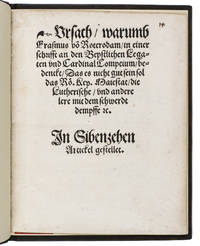
1531rif. ABC_49886Strasbourg or Nuremberg 1531. 4to. Georg Ulricher or Wolfgang Heußler Modern blind-tooled mottled calf with a double fillet border on both boards. 3 1 blank ll. Rare German edition of a letter Erasmus sent to the papal legate Lorenzo Campeggi 1474-1539 on August 18 1530. In this letter Erasmus expresses his fear that the Holy Roman Emperor would declare war to the Protestant German princes and explains in 17 articles why violence is not the answer. He never printed the letter himself and it probably never reached Campeggi. According to Allen Erasmus wrote that "it was intercepted by the treachery of some unnamed 'evangelical' and printed without authority in Strasburg". The letter was translated into German and indeed published several times in Strasbourg Wittenberg Magdenburg and Nuremberg in 1531. The present edition does not have an imprint but was either printed in 1531 in Strasbourg by Georg Ulricher or in 1546 in Nuremberg by Wolfgang Heußler. It is quite rare as we not been able to find any other copies of the present edition in sales records of the past hundred years.With a red bookbinder's label "Period Bookbinders Bath England" mounted on the recto of the last free flyleaf. The work is lightly browned and foxed the inner margins have been reinforced. Otherwise in good condition.l Bezzel 26; Erasmus Online 1874; USTC 704493 and 704494; VD16 E 1881 and VD16 E 1882; Vander Haeghen I 88; not in Adams; BM STC German; De Reuck; cf. Allen Opus Epistolarum Erasmi vol. IX intro. to Ep. 2366. hardcover
1523rif. ABC_50186Antwerp: Michiel Hillen van Hoochstraten 1523. Modern boards covered with a leaf from a Latin incunable probably part of a commentary on the Song of Solomon red sprinkled edges. 8vo. With a full-page woodcut illustration incorporating Hillen van Hoochstratens device on the last page and 3 woodcut decorated initials. First Antwerp edition published in the same year as the first Froben edition in Basel of Erasmus De sarcienda ecclesiae concordia. Dedicated to Julius Pflug of Eytra 1499-1564 later the last Catholic Bishop of Naumburg the work sets out Erasmus most urgent appeal for unity at a moment when the fractures of the Reformation were widening by the month. Pflug who valued peace and moderation shared Erasmus unease about the increasingly bitter debates dividing Western Christendom.De sarcienda ecclesiae concordia opens as a commentary on psalm 83 in which Erasmus underscores the spiritual necessity of harmony within the Church. From this biblical foundation he advances his lifelong conviction: that a polarised Christendom is fundamentally at odds with the teaching and example of Christ. In passages marked by clarity moral urgency and classical poise Erasmus argues that contentious theology has little to do with genuine faith and everything to do with human pride.Appended to the treatise is the brief Precatio pro pace ecclesiae addressed to the Cologne jurist Johann Rinck further underlining Erasmus conviction that peace moderation and the diligent search for concord must prevail over doctrinal intransigence.With very minor underlining on three pages and one tiny marginal annotation a small ink stain in the upper margin of the title page a small wormhole running from leaves A6 to B6 and some occasional water staining confined to the margins. Otherwise in good condition.l Adams E 387; De Reuck 248; Erasmus online 2340; Nijhoff & Kronenberg 798; STCV 12920380; USTC 403885; Vanderhaeghen I 117. Michiel Hillen van Hoochstraten, hardcover
1549rif. 9472Cologne, Mart. Gymnicus, 1549 ; in-8 ; plein vélin estampé sur ais de bois, dos à trois gros nerfs, fermoirs de cuivre (reliure de l'époque) ; (16) y compris le titre, 632, [634], (76) pp. index, (1) f. blanc (*, AZ, Aa-Xx - 8, Yy - 4).
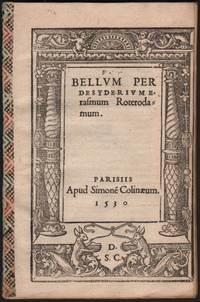
1530rif. 329Parisiis Paris: Apud Simonem Colinaeum Simon de Colines 1530. Reprint of the printer's edition of 1525. First printed by Johann Froben in 1517. Papered spine. In fine condition. Title within elaborate woodcut border with initials S.D.C. and Geoffroy Tory’s Lorraine cross. Title within elaborate woodcut border with initials S.D.C. and Geoffroy Tory’s Lorraine cross. Reprint of the printer's edition of 1525. First printed by Johann Froben in 1517. Papered spine. 8º a–c8 c8 blank; 23 1 blank leaves. Erasmus’ famous pacifist text on the adage “dulce bellum inexpertis" war is sweet to those who have not tried it. It was first published in the revised and enlarged edition of “Adages” called “Proverbiorum chiliades" 1515 Basel; Froben and published separately in 1517 also by Froben. “Bellum" is the first essay where Erasmus speaks of Jews contemporary to him praises them along with the Turks and the pagans as well as various peoples of Europe Asia and Africa for their virtuous living. He writes: “When has the sword murder arson plundering turned conquered people into good Christians! Openly to be a Turk or a Jew is lesser evil than to pretend to be a Christian. I prefer a real Turk to a false Christian.” The printer Simon de Colines 1480–1546 is most notable for his 1525 “Grandes Heures de Simon de Colines” the illustrator was the same Geoffroy Tory 1480–1533 who made the design of the woodcut border of this book. Bibl.: Markish Shimon: Erasmus and the Jews. Chicago. University of Chicago Press 1986.; Johnson Carina L.: Cultural hierarchy in sixteenth-century Europe. The Ottomans and Mexicans. Cambridge; New York. Cambridge University Press 2011.; Olin John C.: Six essays on Erasmus and a Translation of Erasmus' Letter to Carondelet 1523. New York. Fordham University Press 1979. Moreau III 2074. . Apud Simonem Colinaeum (Simon de Colines) unknown
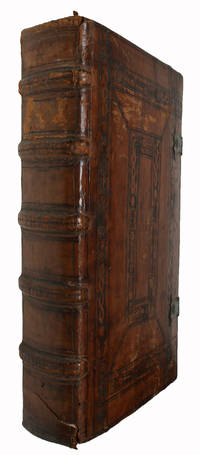
1531rif. 47178Basel Froben 1531 Coloniae Petrus Quentell 1536. Folio. Bound together in a beautiful contemporary full calf binding over wooden boards. Blindstamped ornamental frames to boards. Five raised bands to spine. Remains of brass clasps to boards. Brass at corners of boards and brass strips to bottom edges of boards. A tear through the letter at the lower capital no loss. Some scrathing of leather mostly to back board and upper part of spine. The titles of the two works written in contemporary hand to the outer edge. The strong vellum cords which go through the the wooden boards can be seen on the inside of the wooden boards which also have some initials in red and blue paint possibly from a painted leaf that has rubbed off First title-page a bit dusty otherwise very nice clean and crisp throughout. Eucherius: Froben printer's device to title-page to final leaf of the first part to the half-title of the second part Episcopi Commentariorum in libros Regum ad Veranium & Salonium and to the last leaf of that part. Beautiful large woodcut initial at beginning of each new work. 8 194 2; 310 2 pp.Radulphus: Woodcut device to title-page. Numerous beautiful woodcut allegorical initials both large and smaller throughout. 4 - title dedications 14 - index 6 314 pp. First editions of both works being the first edition of the works "Several Studies" of St. Eucharius most of them printed for the first time here as well as the first edition of Rodulfus Tortarius' or Radulphus Flaviacensis commentaries of Leviticus the third of the Books of Moses written in Latin in 20 books. Saint Eucherius bishop of Lyon ca. 380 - ca. 449 was a high-born and high-ranking ecclesiastic in the Christian Church of Gaul. He is remembered for his letters advocating extreme self-abnegation. Henry Wace ranked him "except perhaps St. Irenaeus the most distinguished occupant of that see"."St. Eucherius Bishop of Lyons theologian born in the latter half of the fourth century; died about 449. On the death of his wife he withdrew to the monastery of Lérins where his sons Veranius and Salonius lived and soon afterward to the neighbouring island of Lerona now Sainte-Marguerite where he devoted his time to study and mortification. Desirous of joining the anchorites in the deserts of the East he consulted John Cassian who in reply sent him some of his "Collationes" describing the daily lives of the hermits of the Thebaid. It was at this time that Eucherius wrote his beautiful letter "De laude Eremi" to St. Hilary of Arles c. 428. Though imitating the virtues of the Egyptian solitaries he kept in touch with men renowned for learning and piety e.g. Cassian St. Hilary of Arles St. Honoratus later Bishop of Marseilles and Valerian to whom he wrote his "Epistola parænetica de contemptu mundi". The fame of Eucherius was soon so widespread in southeastern Gaul that he was chosen Bishop of Lyons. This was probably in 434; it is certain at least that he attended the First Council of Orange 441 as Metropolitan of Lyons and that he retained this dignity until his death. In addition to the above-mentioned letters Eucherius wrote "Formularium spiritualis intelligentiæ ad Veranium" and "Institutiones ad Salonium" besides many homilies. His works have been published both separately and among the writings of the Fathers." Catholic Encyclopedia. His "Epistola paraenetica ad Valerianum cognatum de contemptu mundi "Epistle of exhortation to his kinsman Valerian On the contempt of the world" is an expression of the despair for the present and future of the world in its last throes shared by many educated men of Late Antiquity with hope for a world to come. Erasmus thought so highly of its Latin style that he edited and published it at Basel in 1520. His commentaries on the work are also included here. His "Liber formularum spiritalis intelligentiae" which is addressed to his son Veranius is a defence of the lawfulness of reading an allegorical sense in Scripture bringing to bear the metaphors in Psalms and such phrases as "the hand of God" The term anagoge in Greek is employed for the application of Scripture to the heavenly Jerusalem to come and there are other examples of what would become classic Medieval hermeneutics.Rodulfus Tortarius also known as Raoul of Tourtier Raoul de La Tourte Radulphus Flaviacensis c.1063 - c.1122 was a French Benedictine monk of the Abbey of Fleury-sur-Loire and a poet writing in Latin. He is known both for his style of writing his biblical commentaries and religious works and his literary and comic tales. His commentary on "Leviticus" is considered important and influential. The first edition of the work is rare. hardcover
1531rif. 47178Basel, Froben, 1531 + Coloniae, Petrus Quentell, 1536. Folio. Bound together in a beautiful contemporary full calf binding over wooden boards. Blindstamped ornamental frames to boards. Five raised bands to spine. Remains of brass clasps to boards. Brass at corners of boards and brass strips to bottom edges of boards. A tear through the letter at the lower capital, no loss. Some scrathing of leather, mostly to back board and upper part of spine. The titles of the two works written in contemporary hand to the outer edge. The strong vellum cords, which go through the the wooden boards can be seen on the inside of the wooden boards, which also have some initials in red and blue paint, possibly from a painted leaf that has rubbed off? First title-page a bit dusty, otherwise very nice, clean, and crisp throughout. [Eucherius:] Froben printer's device to title-page, to final leaf of the first part, to the half-title of the second part (Episcopi Commentariorum in libros Regum ad Veranium & Salonium) and to the last leaf of that part. Beautiful large woodcut initial at beginning of each new work. (8), 194, (2)" 310, (2) pp.[Radulphus:] Woodcut device to title-page. Numerous beautiful woodcut, allegorical initials, both large and smaller, throughout. (4 - title, dedications), (14 - index), (6), 314 pp.
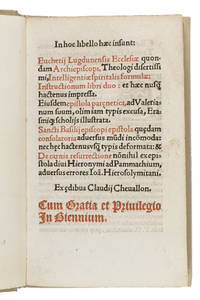
1523rif. ABC_49898Colophon: Paris 1523. 8vo. Claude Chevallon Modern half vellum and beige paper sides blue sprinkled head- and fore-edge manuscript author and title on the spine in brown ink. With Cevallons woodcut device on the verso of the final leaf the title is printed in red and black and 10 woodcut decorated initials. 6 CVII 1 ll. Collection of patristic writings many of which appear here in print for the first time. The book opens with the spiritual writings of Eucherius ca. 380-ca. 449 CE Archbishop of Lyon including his Intelligentiae spiritalis formulae and two instructional treatises both of which are printed here for the first time.At the heart of the volume is Eucherius paraenetic letter to Valerianus a moral exhortation encouraging the rejection of worldly distractions and the pursuit of true Christian wisdom. Although this letter had been printed previously it is presented here together with annotations by Erasmus.Also included is a consolatory letter by Basil the Great Bishop of Caesarea 330-379 CE intended to support believers facing the hardships of earthly life. Like the instructional works of Eucherius this letter also appears here in print for the first time. The final text is a fragment from a letter by Saint Jerome ca. 342/7-420 CE to Pammachius d. 410 CE defending the doctrine of the resurrection of the flesh and refuting the teachings of John of Jerusalem.The exact date of publication remains uncertain but it is unlikely that the book appeared before 1520 the year when Chevallon first began using his soleil dor printers device.The pages show some browning and water staining throughout. Overall in good condition.l BM STC French p. 157; Erasmus Online 4203; Vander Haeghen II 25; Moreau & Renouard III 498; Renouard P. Marques 176; USTC 184320; not in Adams; De Reuck; Kossmann; Meyers. hardcover