Erasmus.Livre Rare Book
3.744 resultados
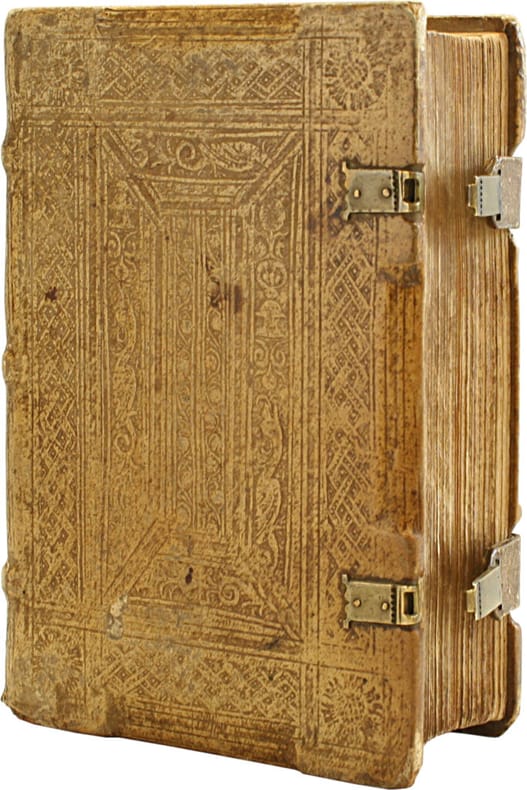
ref. LCS-17326conservées dans leur première reliure estampée à froid. Strasbourg, 1523, 1525. Cologne, 1525. Argentorati, Iohannem Heruagium, 1525. [Suivi de] : Erasme. De octo orationis partium constructione libellus, tum elegans imprimis, tum dilucida brevitate copiosissimus. Erasmo roterodamo autore. A la fin « Augustae Vindelicorum, in officina D. Sigismum Grim, 11 Aout Anno 1523. » [Suivi de] : Valla. Laurentii vallae elegatiarum adeps, exeius de lingua latina libris per Bonum Accursium Pisanum studiosissime collectus. (Les élégances de la langue latine). Apud Sanctam Romanorum Colonia, 1525. Soit trois textes reliés en un volume in-8 de I/ 184 ff., le dernier blanc ; II/ (28) ff. ; III/ (1) p. de titre, 148 pp., (10) pp. d’index, (1) p.bl. Nombreuses annotations manuscrites sur les 2 derniers ff. du 1er texte. Relié en peau de truie estampée à froid sur ais de bois, dos à nerfs, attaches et fermoirs de laiton. Reliure de l’époque. 148 x 100 mm.
1524ref. 2455Paris: Jodocus Badius Ascensius 1524. THE 1524 BADIUS ASCENSIUS EDITION. Written in 1509 as a visitor's gift to Thomas More whose name -Morus- was so aptly similar to the Greek "moros" folly the "Moriae Encomium" was first printed by Gilles de Gourmont at Paris probably in 1511. Hardcover. Fine. Bound in contemporary limp vellum lightly soiled. The contents are in very good condition with a few pencil annotations and light soiling to the title page. With Badius' device of his print shop the “Praelum Ascensianum” showing printers working a press on the title page. With large attractive crible initials and smaller charming historiated initials. Passages in Greek. A fine unsophisticated copy of this rare edition. From the personal library of Bob and Emily De Graaf. The rare 1524 Parisian “Praise of Folly” printed by Erasmus’ friend the scholar-printer Badius Ascensius who printed the first authorized edition in 1512. This edition contains all of the supplementary texts found in the Froben edition of 1519 see the note “additional Moria texts” below including the dedicatory letter to Thomas More and the letter to Martin Dorp in which Erasmus explains his motives for writing the “Moria”: “My aim in the ‘Folly’ was exactly the same as in my other works. Only the presentation was different. In the ‘Enchiridion’ I simply outlined the pattern of a Christian life. In my little book the ‘Education of a Christian Prince’ I offered plain advice on how to instruct a prince. In my ‘Panegyric’ I did the same under the veil of eulogy as I had done elsewhere explicitly. And in the ‘Folly’ I expressed the same ideas as in the ‘Enchiridion’ but in the form of a joke.” “The ‘Praise of Folly’ is Erasmus’ most famous and controversial work… In Erasmus’ lifetime the ‘Moria’ was condemned in 1527 by the theologians of Paris for its attacks on faith and morality and again in 1533 by the Franciscans who found it full of heresies. The officials of the Sorbonne put it on the list of condemned books in 1542 and 1543 a list that was the basis of the Tridentine Index of 1564… “The ‘Moria’ may start as a learned joke to amuse a fellow humanist Thomas More but it moves into sharp criticism of contemporary mores and ends with a plea for a return to the Christianity of the Gospels… Erasmus writes in a Lucianic spirit of irreverent burlesque of the gods of classical mythology and light-hearted amusement at the irrationality of mankind. Folly argues that she is all that is natural youthful fecund and happy and that life would be intolerable if it were not ruled by civilized conventions which necessitate a degree of humbug and illusion. By contrast the Stoic ideal rational man is a ‘kind of marble statue of a man devoid of sense and any sort of human feeling.’ She then shifts her viewpoint and lists the people who enjoy her benefits insofar as they try to preserve their illusions or are happy in their ignorance self-deception or self-love. She even adds superstitious piety to alchemy gambling and the nobility’s obsession with hunting and extravagant building… “Next Erasmus starts to deliver a sharp and often bitter attack on all the victims of blind folly those who are deaf to the voice of true religion and lacking the gentler Christian virtues among whom are sycophants self-seekers money-makers pedants scholastics lawyers theologians superstitious worshippers of images and relics courtiers and kings worldly monks and irreligious pontiffs. This section culminates in a savage thrust at Pope Julius II the bellicose pope. The keen wit and ingenuity of the satire can be highly entertaining but there is no note of gaiety now. As Erasmus surveys the gulf between the Church and the ‘true philosophy of Christ’ he moves into the final section where the alternative offered to barren scholasticism is the vision of reality taken from Plato and folly in the sense used by Saint Paul that of receptivity to the Christian message by the ‘fool in Christ.’ All irony is dropped until the final short epilogue when Folly light-heartedly cuts short her ‘hotch-potch of words’; this is a direct and simply worded account of Erasmus’ personal belief moving into an exposition of the Neoplatonist concept that the soul’s ascent to beatitude ends in ecstasy a form of folly which is its supreme fulfillment.”Betty Radice Collected Works of Erasmus Vol. 27 pp. 78 ff. Additional Moria Texts: In addition to Erasmus' main text this edition includes two ancient examples of the mock-encomium Seneca's "Ludus de Morte Claudii Caesaris" and Synesius of Cyrene's "De Laudibus Calvitii" "In Praise of Baldness" translated from the Greek by the Englishman John Phreas d. 1465. In his introductory letter to Thomas More Erasmus cites both the "Ludus" and the "Praise of Baldness" in a pre-emptive defense against those who will object to his literary frivolity "levitas et ludicrum argumenti" pp. 102-104 in this edition. The text of the "Moria" is accompanied by the commentary of Gerard Listrius with assistance from Erasmus. Jodocus Badius Ascensius hardcover
1520ref. 253908Basel: Johann Froben 1520. First collected editions. Titles within ornamental woodcut border initials printer's device in colophon. 465 i.e. 495 1; 167 1; and 141 3 pp. 1 vols. 8vo. Contemporary blindstamped pigskin over wooden boards spine in four compartments with raised bands over doubled cords ruled in blind and crossed floral ornaments boards tooled with floral borders about a central field edges ochre. Covers somewhat soiled one brass clasp missing upper joint just starting but quite firm; internally a SUPERB near flawless copy. Bookplate and ownership signature of scholar and author Nathan Comfort Starr. First collected editions. Titles within ornamental woodcut border initials printer's device in colophon. 465 i.e. 495 1; 167 1; and 141 3 pp. 1 vols. 8vo. First collected editions of these "Paraphrases" of the letters of Paul which were undertaken shortly after Erasmus's revolutionary edition of the Greek New Testament of 1516. As part of that monumental reconstruction of the New Testament Erasmus' intention was to "retell" the books of the New Testament in one uninterrupted voice without the clutter of textual commentary or critical interruption. It was a bold undertaking and in 1517 Erasmus began with the letters of Paul. They were first issued separately starting with Romans in 1517; and editions appeared in Louvain Thierry Martens Leipzig Valentin Schumann and Basel Johann Froben. The collected issues - such as the three which are bound together in this exquisite volume - began to be issued in Basel by Froben in 1519; and finally in 1521 Froben issued a collected edition of all of the Pauline letters. All of the lifetime editions both separate and collected are rare on the market; this copy is in a well preserved contemporary pigskin binding first binding. Adams E790; E792; E791; VD16 E 3060; E 3324; E 3328 Johann Froben unknown
1520ref. 253908Basel: Johann Froben 1520. First collected editions. Titles within ornamental woodcut border initials printer's device in colophon. 465 i.e. 495 1; 167 1; and 141 3 pp. 1 vols. 8vo. Contemporary blindstamped pigskin over wooden boards spine in four compartments with raised bands over doubled cords ruled in blind and crossed floral ornaments boards tooled with floral borders about a central field edges ochre. Covers somewhat soiled one brass clasp missing upper joint just starting but quite firm; internally a SUPERB near flawless copy. Bookplate and ownership signature of scholar and author Nathan Comfort Starr. First collected editions. Titles within ornamental woodcut border initials printer's device in colophon. 465 i.e. 495 1; 167 1; and 141 3 pp. 1 vols. 8vo. First collected editions of these "Paraphrases" of the letters of Paul which were undertaken shortly after Erasmus's revolutionary edition of the Greek New Testament of 1516. As part of that monumental reconstruction of the New Testament Erasmus' intention was to "retell" the books of the New Testament in one uninterrupted voice without the clutter of textual commentary or critical interruption. It was a bold undertaking and in 1517 Erasmus began with the letters of Paul. They were first issued separately starting with Romans in 1517; and editions appeared in Louvain Thierry Martens Leipzig Valentin Schumann and Basel Johann Froben. The collected issues - such as the three which are bound together in this exquisite volume - began to be issued in Basel by Froben in 1519; and finally in 1521 Froben issued a collected edition of all of the Pauline letters. All of the lifetime editions both separate and collected are rare on the market; this copy is in a well preserved contemporary pigskin binding first binding. Adams E790; E792; E791; VD16 E 3060; E 3324; E 3328 Johann Froben unknown books
1524ref. 2455Paris: Jodocus Badius Ascensius 1524. THE 1524 BADIUS ASCENSIUS EDITION. Written in 1509 as a visitor's gift to Thomas More whose name -Morus- was so aptly similar to the Greek "moros" folly the "Moriae Encomium" was first printed by Gilles de Gourmont at Paris probably in 1511. Hardcover. Fine. Bound in contemporary limp vellum lightly soiled. The contents are in very good condition with a few pencil annotations and light soiling to the title page. With Badius' device of his print shop the “Praelum Ascensianum” showing printers working a press on the title page. With large attractive crible initials and smaller charming historiated initials. Passages in Greek. A fine unsophisticated copy of this rare edition. From the personal library of Bob and Emily De Graaf. The rare 1524 Parisian “Praise of Folly” printed by Erasmus’ friend the scholar-printer Badius Ascensius who printed the first authorized edition in 1512. This edition contains all of the supplementary texts found in the Froben edition of 1519 see the note “additional Moria texts” below including the dedicatory letter to Thomas More and the letter to Martin Dorp in which Erasmus explains his motives for writing the “Moria”: “My aim in the ‘Folly’ was exactly the same as in my other works. Only the presentation was different. In the ‘Enchiridion’ I simply outlined the pattern of a Christian life. In my little book the ‘Education of a Christian Prince’ I offered plain advice on how to instruct a prince. In my ‘Panegyric’ I did the same under the veil of eulogy as I had done elsewhere explicitly. And in the ‘Folly’ I expressed the same ideas as in the ‘Enchiridion’ but in the form of a joke.” “The ‘Praise of Folly’ is Erasmus’ most famous and controversial work… In Erasmus’ lifetime the ‘Moria’ was condemned in 1527 by the theologians of Paris for its attacks on faith and morality and again in 1533 by the Franciscans who found it full of heresies. The officials of the Sorbonne put it on the list of condemned books in 1542 and 1543 a list that was the basis of the Tridentine Index of 1564… “The ‘Moria’ may start as a learned joke to amuse a fellow humanist Thomas More but it moves into sharp criticism of contemporary mores and ends with a plea for a return to the Christianity of the Gospels… Erasmus writes in a Lucianic spirit of irreverent burlesque of the gods of classical mythology and light-hearted amusement at the irrationality of mankind. Folly argues that she is all that is natural youthful fecund and happy and that life would be intolerable if it were not ruled by civilized conventions which necessitate a degree of humbug and illusion. By contrast the Stoic ideal rational man is a ‘kind of marble statue of a man devoid of sense and any sort of human feeling.’ She then shifts her viewpoint and lists the people who enjoy her benefits insofar as they try to preserve their illusions or are happy in their ignorance self-deception or self-love. She even adds superstitious piety to alchemy gambling and the nobility’s obsession with hunting and extravagant building… “Next Erasmus starts to deliver a sharp and often bitter attack on all the victims of blind folly those who are deaf to the voice of true religion and lacking the gentler Christian virtues among whom are sycophants self-seekers money-makers pedants scholastics lawyers theologians superstitious worshippers of images and relics courtiers and kings worldly monks and irreligious pontiffs. This section culminates in a savage thrust at Pope Julius II the bellicose pope. The keen wit and ingenuity of the satire can be highly entertaining but there is no note of gaiety now. As Erasmus surveys the gulf between the Church and the ‘true philosophy of Christ’ he moves into the final section where the alternative offered to barren scholasticism is the vision of reality taken from Plato and folly in the sense used by Saint Paul that of receptivity to the Christian message by the ‘fool in Christ.’ All irony is dropped until the final short epilogue when Folly light-heartedly cuts short her ‘hotch-potch of words’; this is a direct and simply worded account of Erasmus’ personal belief moving into an exposition of the Neoplatonist concept that the soul’s ascent to beatitude ends in ecstasy a form of folly which is its supreme fulfillment.”Betty Radice Collected Works of Erasmus Vol. 27 pp. 78 ff. Additional Moria Texts: In addition to Erasmus' main text this edition includes two ancient examples of the mock-encomium Seneca's "Ludus de Morte Claudii Caesaris" and Synesius of Cyrene's "De Laudibus Calvitii" "In Praise of Baldness" translated from the Greek by the Englishman John Phreas d. 1465. In his introductory letter to Thomas More Erasmus cites both the "Ludus" and the "Praise of Baldness" in a pre-emptive defense against those who will object to his literary frivolity "levitas et ludicrum argumenti" pp. 102-104 in this edition. The text of the "Moria" is accompanied by the commentary of Gerard Listrius with assistance from Erasmus. Jodocus Badius Ascensius hardcover books
1521ref. 16988Colophon: Mainz: Johannes Schoeffer 1521. German contemporary blind-tooled calf sewn on 3 double cords in a panel design each board with a 15 mm-wide border roll with fillets on either side containing 4 different heads in medaillions separated by quatrefoils. The central panel on each board is filled with dozens of impressions of 3 floral stamps 1 on the front board and 2 on the back. Titles in ink written on the spine partly upside down and the fore-edge; later paper spine label; 2 holes near the fore-edge of each board from fastenings now lost. 8vo. Ad 1: with the title in woodcut architectural border with 3 coats of arms the Isenburg bars and Mainz wagon wheel above left and right and Schoeffer's device here with 2 stars above and a rosette below rather than 3 stars at the foot under his IS-monogram; 6 large beautiful woodcut initials the largest 45 mm with 2 human figures. Both works set throughout in italic types still with upright capitals as always at this date. With 1 initial coloured by hand. Ad 2: with the title in an elaborate woodcut border dated "MDXX" at the head first page of the dedicatory letter by Erasmus to Petrus Aegidius dated Basle 5 October 1514 on back of the title page with a border made of woodcut strips Froben's large woodcut device on the last page and 2 decorative woodcut initials 2 series the 30 mm Q with a scorpion. 2 works in 1 volume. With: 2 ERASMUS Desiderius. Parabolae sive similia.Colophon: Basel Johannes Froben July 1521. Ad 1: Good scholarly edition of Erasmus's famous guide to writing and speaking style in Latin designed to provide the student of Latin with a wide range of words and expressions. Ad 2: A collection of similes or comparisons composed along the same lines and with the same intentions as those that had brought Erasmus much success in his Adagia. In a sense the Parabolae are an addition to and continuation of the Adagia. With some contemporary annotations. In very good condition with only a few minor marginal smudges or chips. Binding lacking fastenings and with damage to the spine and edges but still in good condition with most of the tooling very clear.l Ad 1: VD 16 E 2656; Allen I 260; II 305 311; Bezzel 748; Vander Haeghen Bibl. Erasm. p. 66; Reedijk 95 97; De Reuck Bibl. Erasm. Bruxel. 135 with illus. of the title; ad 2: VD 16 E 3246 2 copies; Bezzel 1371; Vander Haeghen Bibl. Erasm. p. 138; for the binding: cf. K. von Rabenau Deutsche Einbände der Renaissance von Jakob Krause Berlin 1994 7 & 8 similar bindings using stamps with the same motifs. Johannes Schoeffer, unknown
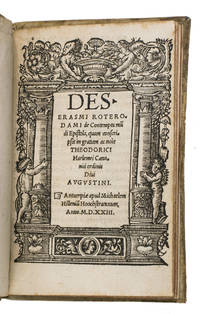
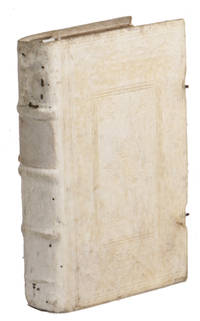
1523ref. ABC_50124Antwerp: Michiel Hillen van Hoogstraten 1523. Later vellum with the manuscript title and year of publication on the spine red sprinkled edges. 8vo. With a decorative woodcut border on the title page and 2 decorated woodcut initials. Very rare early edition of Erasmus first written work a letter in praise of monastic life which was only published later in his career. Erasmus wrote it in 1488 or 1489 when he was 20 years old at the request of Theodoricus of Haarlem a fellow canon at the Augustine monastery at Steyn in order to persuade his nephew to join the order. It circulated in manuscript form for many years and was likely used to entice prospective candidates to enter the order of Canons Regular of St. Augustine.The work is divided into three parts: the first seven chapters focus on the evils of this world; chapter eight through eleven on the pleasures of the religious life; and chapter twelve on the ultimate choice between the material world or the religious state. This final chapter appears to counteract the rest of the work as it advises Theodoricus' nephew to carefully consider whether he truly wanted to enter a religious order since being a Christian is enough in itself. As such it has been suggested that Erasmus rewrote the text before its publication adding the 12th chapter but as he apologises for his adolescent writing style in the preface the work was likely mostly unedited.The first edition was published in Louvain in 1521 more than 30 years after it was written. The present edition is the first by Michiel Hillen van Hoogstraten and one of four printed in 1523. It is exceptionally rare on both the market and in institutions as only four copies have been recorded in libraries and we have not been able to find any others in sales records of the past century.The vellum is slightly soiled. The work is slightly browned throughout. Otherwise in good condition.l Adams E-569; Erasmus Online 1383; Nijhoff & Kronenberg 804; USTC 403708 4 copies; Vander Haeghen p. 64; WorldCat 71746606 2 copies; cf. De Molen R. "First fruits. The place of Antibarbarorum Liber and De contemptu mundi in the formulation of Erasmus Philosophia Christi" in: Colloque érasmien de Liège 1986 pp. 177-196; not in Bezzel; De Reuck; STCV. Michiel Hillen van Hoogstraten, hardcover
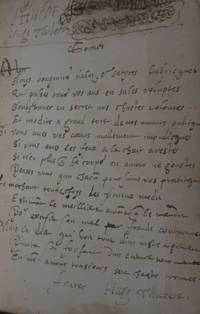
1523ref. 3722Paris: apud Simon de Colines 1523. First edition. Contemporary French blind-stamped calf over wooden boards panelled with intersecting fillets and lozenge tools; remains of clasps present metal attachments preserved; spine with raised bands. Wide-margined and notably clean throughout. Early manuscript moral sonnet signed "Frater Hugo Thubert" on the front flyleaf and a biblical motto "Si quis vult post me venire." in a seemingly different sixteenth-century hand on the rear flyleaf. With a few early marginal annotations in a sixteenth-century hand on ff. 39 and 253 and f. 9 ruled with brown-ink frames. Leather somewhat worn including a damaged area on the front panel and some loss at the lower corners with surface abrasions and light cracking along the joints; spine rubbed at head and foot. A complete unsophisticated copy in its original binding retaining notable early reader's marks; overall in very good condition. First edition. Contemporary French blind-stamped calf over wooden boards panelled with intersecting fillets and lozenge tools; remains of clasps present metal attachments preserved; spine with raised bands. ff. 373 22. A rare example of early educational use of Erasmus's Adagia in its contemporary French leather binding and preserved with a handwritten French moral sonnet by its sixteenth-century owner Hugues Thubert. First edition of Jean Brouchier's pedagogical epitome of Erasmus's Adagia printed by Simon de Colines in the early years of his Paris press. Though derived entirely from Erasmus's celebrated Chiliades the structure and didactic programme are Brouchier's: an abridged sequence of selected adages arranged for the studiosa iuventus intended to make the moral historical and rhetorical substance of the Adagia usable in the Latin classroom at an elementary stage. Brouchier's dedicatory epistle explains the rationale behind the epitome: while the Adagia had become essential reading for humanist education their full scope far exceeded what younger students could manage. His selection extracts the most serviceable sententiae supplying a compact repertory suited to memorization written exercises and introductory rhetorical training. The epitome reflects early humanist classroom practice when teachers adopted shorter selections to provide beginners with a practical corpus for variation and elementary composition while still introducing Erasmus's ethical and stylistic programme. A dedicatory letter to the magistrates of Florence precedes the text outlining Brouchier's aims and directing readers to Erasmus for fuller commentary. The work aligns with Colines's broader programme of humanist educational printing which equipped collèges and monastic schools with clear reliable editions of classical and contemporary authors. Colines's architectural title border clean roman types and spacious mise-en-page underscore the book's intended function as a school text designed for legibility and daily use. As an adaptation of one of Erasmus's most influential works Brouchier's Epitome documents an early stage in the mediation condensation and classroom transmission of the Adagia illustrating the practical needs of humanist teaching in early sixteenth-century France. Brouchier's biography is largely undocumented; he is known only through a small group of humanist pedagogical editions issued in Paris between 1511 and 1534. Three of these-the present Epitome and the two editions of the Commentarii in Septem Sapientum Graeciae Apophthegmata-were printed by Simon de Colines placing Brouchier within the circle of authors associated with Colines's early humanist programme. This copy preserves an unpublished French moral sonnet in the hand of Hugues Thubert written on the front flyleaf and signed "Frater Hugo Thubert." The poem belongs to the broad and often fragmentary vernacular literary production of the sixteenth century when humanist education and the widespread use of printed and manuscript verse encouraged even non-professional writers to adopt classical forms for ethical reflection. Autograph poems of this type-especially those entered into the flyleaves of school and humanist books-are relatively uncommon and they offer intimate evidence of personal reading practices. Thubert's sonnet in fluent but regionally inflected French adapts the sonnet structure to a concise moral argument setting impurity and chastity in rhetorical opposition a mode familiar from contemporary humanist and devotional writing. An early owner of the present volume Hugues Hugo Thubert was a Benedictine of the Congregation of Chezal-Benoît listed in the 1529 matricule as a monk of Saint-Germain-des-Prés and later recorded as having left the order TELMA IRHT. He signs himself in this volume and appears again as owner of another book-Jean Grolier's former copy of Gaspar Bracellus's Ortus delitiarum Milan Minutianus 1515; Austin 357; Michon 24A-which he inscribed with his name and the date 1580 and which subsequently entered the abbey library of Saint-Germain-des-Prés. These traces collectively document a Paris-based sixteenth-century reader whose surviving books display consistent humanistic engagement. Rare; USTC lists 14 copies only six outside France and RBH records a single sale 2024. References: USTC 180884; IRHT-CNRS. n.d. Matricule de la Congrégation de Chezal-Benoît 1529. In TELMA - Traitement électronique des manuscrits. . apud Simon de Colines unknown
1520ref. ABC_49643Colophon: Basel 1520. Small 8vo. Johann Froben Later blind-tooled pigskin over bevelled wooden boards each board in a panel design with a lozenge-shaped ornament and cornerpieces in the central panel surrounded by a decorative border 2 metal clasps and catches the manuscript title at the head edge a blank paper label on the spine and 4 pigskin tabs. With a decorative woodcut border on the title page of each work a woodcut printer's device at the end of the first 2 works 9 decorative woodcut borders in the text 16 decorative woodcut initials and 4 woodcut headpieces. 4 works in 1 volume. 141 3; 167 1; 91 1 blank; 14 2 blank pp. Compilation of first or early editions of four of the most important religious works by Desiderius Erasmus all printed during his lifetime. The texts which were incredibly popular in his own time were written to promote a more accurate understanding of the scriptures and make them more accessible to the public. Lifetime editions of these four works are quite rare on the market.In 1516 Erasmus published his revolutionary Latin edition of the Greek New Testament. It was not so much a translation but more a correction as Erasmus intended to free the text of the imperfections that had built up over time. When finished he began working on other parts of the scriptures with the same goal. The first two works in the present volume include his paraphrases of the letters of Paul. They were first issued separately in 4 parts starting in 1517. The present works are part of the first collected edition of the Pauline letters published by Froben in 1520 and 1521. This edition is praised for the fine title borders and initials some of them are known to have been cut by Johann Faber after drawings by the renowned artist Hans Holbein the Younger who often worked for Froben. The beautiful border on fol. 2A1 has been monogrammed by Ursus Graf "VG".The third work of this collection Modus orandi Deum is considered a centrepiece of Erasmus teachings on prayer. In it he explains the importance of prayer and provides a manual for how one should pray. He criticises monastic prayer long church services and practices that place the focus on the number of psalms said rather than their content. Instead he emphasises inner devotion and personal communication with God. The work was first published in October 1524 by Froben and in December 1524 by Knobloch. The present March 1525 edition is the second by Knobloch.The final work of the compilation was first published anonymously in 1520 as Consilium cujusdam . cupientis esse consultum & R. Pontificis dignitati & christianae religionis tranquillitati. Only two Latin editions and two German translations of it have been recorded by Vander Haeghen.With a contemporary ownership annotation at the head of the title page "Martini i iouilliami Vinter" a later annotation at the foot "Bernardhus Chymel alias Thalheuser" and a faded library stamp a few contemporary annotations and nota signs in the margins in 2 different hands. The pigskin has been washed with later clasps a few worm holes on the spine. The work is lightly browned throughout with water stains on some of the leaves mostly in the margins a brown stain on the title-page of ad 3. Otherwise in good condition.l Ad 1: Adams E 791; BM STC German p. 115; Erasmus Online 2919; USTC 682536 11 copies; Vander Haeghen I 144; VD16 E 3329; Ad 2: Adams E 792; BM STC German p. 115; Erasmus Online 2914; Vander Haeghen I 144; this ed. not in the USTC; VD 16; Ad 3: Adams E 697; Erasmus Online 2427; USTC 676364 10 copies; Vander Haeghen I 120; VD16 E 3176; not in BM STC German; Ad 4: Erasmus Online 5731; USTC 623273 3 copies; Vander Haeghen I 59; VD16 E 2542; not in Adams; BM STC German. EARLY PRINTING & MANUSCRIPTS LAW PHILOSOPHY & POLITICS RELIGION & DEVOTION Bibles Liturgy & Devotional Works Early Printing - 16th century Erasmus Humanism & Reformation Philosophy & Humanism Religion 16th Century hardcover
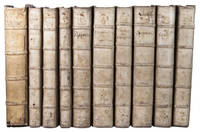
1569ref. ABC_49477Basel: Ambrosius & Aurelius Froben 1569. Contemporary half elaborately blind-tooled pigskin over wooden boards sewn on 5 supports volume 1 on 4 with two brass clasps on the fore edge leather anchor plate brass clasp and catch plate. With the manuscript titles on the spines and the contents of each volume in manuscript on the bottom edge of all but one volume. Probably bound by Michael Hermann in Stuttgart before 1580. See for the workshop einbanddatenbank no. 502297b the rolls used: nos. r004651 and r003964. Folio 38 x 25.5 cm. With the general title page in volume 1 set within an elaborate woodcut frame all other title pages show the large woodcut Froben printer's device repeated on all but one verso of the final page in each part. Further with woodcut decorated initials. 11 parts in 10 volumes. A complete and uniformly bound set of the monumental edition of the complete works of Saint Augustine of Hippo printed by the celebrated Froben press. This edition follows the editorial tradition established by Erasmus and Johann Froben in the early 16th century and reflects the enduring influence of Augustines thought on early modern theology. The present work includes a broad range of Augustines writings: his dogmatic treatises De Trinitate De civitate Dei polemical works notably against Pelagianism and Manichaeism exegetical texts Enarrationes in Psalmos Gospel homilies ascetic and moral discourses and the Epistolae. This edition represents an early attempt to consolidate Augustines vast corpus for academic and ecclesiastical use during period following the Council of Trent. It demonstrates the persistence of Augustinian authority in Reformation-era intellectual life as well as the role of the Swiss printing houses in disseminating patristic texts throughout Europe.Aurelius Augustine 354-430 CE commonly known as Augustine of Hippo was a North African bishop theologian and philosopher widely regarded as one of the most influential figures in Western Christianity and Latin patristic thought. Born in Thagaste modern-day Souk Ahras Algeria Augustine received a classical education in rhetoric and philosophy before embracing Manichaeism and later Neoplatonism.After a period of moral and spiritual searching chronicled in his Confessiones he converted to Christianity in 386 CE under the influence of Ambrose of Milan. He was baptised in 387 ordained a priest in 391 and became bishop of Hippo Regius in 395 a position he held until his death.Augustines vast body of work addresses themes such as original sin grace free will the nature of the Church and the interpretation of Scripture. His most notable writings include Confessiones De civitate Dei the City of God and De Trinitate. His thought shaped the theological foundations of both medieval Catholicism and later Protestant traditions particularly through his doctrines of grace and predestination. He died in 430 CE during the Vandal siege of Hippo. Augustine was later declared a Doctor of the Church and his intellectual legacy remains foundational to Western theology and philosophy.With a manuscript inscription on each of the title pages and a small printed book plate mounted on the front pastedown of volume 1. The bindings are slightly stained and are occasionally slightly bumped and rubbed. The front hinge of volume one is slightly weakened lacking the upper clasp and anchor plate of volume 7 and the front board of volume 9 is slightly damaged along the fore edge. Internally the volumes are variably slightly foxed and/or browned some volumes show very minor water staining most volumes contain some minor worm holes which affect small parts of the letters. A more detailed condition report including collations etc. per volume is available upon request. The 10 volumes are overall in very good condition. A handsome and important Renaissance printing of one of the most significant corpora of Christian antiquity. Rare complete in all ten volumes here uniformly bound.l USTC 686573; VD 16 A 4153; WorldCat 1828402 1406901978 1090145458 1002789099 35656998 222081178 1322263024 1114269923; cf. for the binder see Einbanddatenbank no. 502297b rolls nos. r004651 and r003964. Ambrosius & Aurelius Froben, hardcover
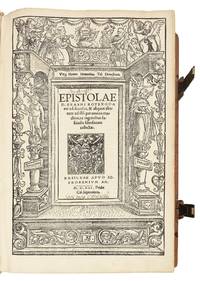
1522ref. 5299Basel: Johann Froben August 21 1521 - January 1522. FIRST EDITION. Hardcover. Fine. A superb copy bound in contemporary alum-tawed pigskin over beveled wooden boards ruled and tooled in blind with the original clasps catches and straps preserved. Binding mildly soiled a few scrapes mild surface wear. Internally crisp and bright with just a few lightly toned leaves and a few trivial stains. With 16th c. manuscript annotations scattered throughout and a 16th c. ownership inscription on the paste-down. The errata lvs. have been tipped in possibly indicating early issue. Excellent. Title page with the fine ‘Triumph of Humanitas’ historiated woodcut border by Urs Graf Lüthi 50a and Hieronymus Oberrheinische Buchillustration 172 enclosing Froben’s printer’s device; two preliminary pages with fine four- and five-piece woodcut borders by Ambrosius Holbein; white-on-black woodcut headpiece two 10-line woodcut initials and numerous smaller ones verso of final leaf with large printer’s device enclosed in five-piece woodcut border; some Greek printing. First edition of this collection of 671 letters of which 171 are newly printed. The majority of the new letters are from 1519-1521 but some are earlier the first dated 11 July 1513. The collection is far larger than its predecessors: the ‘Epistolae aliquot’ of January 1518 52 letters the ‘Auctarium’ of October 1518 63 letters and the ‘Farrago’ of Nov 1519 333 letters. Erasmus provides a preface to his correspondence for the first time in this edition. The letter to his editor Beatus Rhenanus Ep 1206 tells of his dislike of two earlier collections edited by him Beatus and published by Froben the ‘Auctarium’ of October 1518 and the ‘Farrago’ of Nov 1519 and implies that they were published surreptitiously without his consent. After the present edition no further collections were printed until the ‘Opus epistolarum’ of 1529. The introduction in the Collected Works to Erasmus’ prefatory letter to Beatus Rhenanus illustrates his personal involvement in the production of this collection: "Even as the Farrago was being printed Erasmus spoke of another edition with new letters added and others revised. The last thing he desired was a straight reprint either by Froben or another publisher. So in the summer of 1520 he was going through all his letters and in November the review of the ‘Farrago’ was apparently completed. Before the middle of January 1521 the revised copy together with a substantial number of new letters had reached Basel. When he sent the first part of the revised New Testament shortly afterwards he apparently asked to have all letters old and new back for another review but was sent none and told instead that a volume of 41 quires pages 1-490 was set in type lacking only a preface and an epilogue. So he wrote this preface as well as dispatching more letters to Basel. “Froben next prepared a preliminary quire containing the title-page dated 31 August Epp 1206 1225 and to fill some space left over on the last page Ep. 1239. All was printed and ready to be launched at the Frankfurt autumn fair but with the certain prospect of Erasmus’ return to Basel a delay was indicated. As Froben now preferred his volume not to reach the public and his rivals until the time of the spring fair of 1522 Erasmus could add more letters including the last in time dated from Basle 22 November 1521 which appears on page 639 but is followed by thirty more pages of letters. Presumably as a result of Erasmus’ review of the printed volume over three pages of corrigenda were added at the end" Collected Works vol. 8 pp. 215/7. The correspondents for the newly printed letters include Johann Reuchlin Justus Jonas Guillaume Bude Petrus Mosellanus Polydore Vergil Pope Leo X Cardinal Albert of Brandenburg Thomas More William Warham Thomas Wolsey and John Fisher. Many of the letters reflect Erasmus’ changing stance regarding Luther but at the same time continue his attacks on the friars and Louvain theologians. Bietenholz singles out a long letter of 10 May 1521 Ep 1202 to Justus Jonas as one of the finest of the period in which Erasmus expresses his alarm that Jonas as well as a whole group of German humanists especially Melanchthon are committing themselves irrevocably to the Lutheran cause Collected Works vol. 8 pp. 201. Another letter to Jonas of June 1521 Ep 1211 holds an important biography of his friend John Colet the humanist and educational pioneer who had died in September 1519 “Sixteenth-century Europe’s image of Colet owes everything to Erasmus. Much is still today known only from that source. Erasmus’ encomium is the fullest and most explicit portrait.” Contemporaries of Erasmus I p. 327. Also included in this collection and previously published in the Farrago is one of Erasmus’ most famous letters “which will always rank among his finest writing and the great accomplishments of Renaissance literature” Collected Works vol. 7 p. xii. Addressed to Ulrich von Hutten in July 1519 Ep 999 it contains Erasmus’ intimate pen portrait of his close friend Thomas More. It serves as earliest biographical account of More and is the most substantial of three letters the others Ep 1233 see below & Ep 2750 “which are indispensable for any historical assessment of More’s character” Contemporaries of Erasmus II p. 458. It is full of memorable phrases such as “in a word if you want a perfect model of friendship you will find it in no one better than in More” and “no one is less led by the opinions of the crowd yet no one departs less from common sense”. The friends met for the last time in Bruges in August 1521 and in his letter to Budé Ep 1233 first printed here Erasmus writes of the invigorating impact of their meeting and of the shining example set in More’s household for the education of women. Johann Froben, August 21 1521 - January hardcover
1522ref. 5299Basel: Johann Froben August 21 1521 - January 1522. FIRST EDITION. Hardcover. Fine. A superb copy bound in contemporary alum-tawed pigskin over beveled wooden boards ruled and tooled in blind with the original clasps catches and straps preserved. Binding mildly soiled a few scrapes mild surface wear. Internally crisp and bright with just a few lightly toned leaves and a few trivial stains. With 16th c. manuscript annotations scattered throughout and a 16th c. ownership inscription on the paste-down. The errata lvs. have been tipped in possibly indicating early issue. Excellent. Title page with the fine ‘Triumph of Humanitas’ historiated woodcut border by Urs Graf Lüthi 50a and Hieronymus Oberrheinische Buchillustration 172 enclosing Froben’s printer’s device; two preliminary pages with fine four- and five-piece woodcut borders by Ambrosius Holbein; white-on-black woodcut headpiece two 10-line woodcut initials and numerous smaller ones verso of final leaf with large printer’s device enclosed in five-piece woodcut border; some Greek printing. First edition of this collection of 671 letters of which 171 are newly printed. The majority of the new letters are from 1519-1521 but some are earlier the first dated 11 July 1513. The collection is far larger than its predecessors: the ‘Epistolae aliquot’ of January 1518 52 letters the ‘Auctarium’ of October 1518 63 letters and the ‘Farrago’ of Nov 1519 333 letters. Erasmus provides a preface to his correspondence for the first time in this edition. The letter to his editor Beatus Rhenanus Ep 1206 tells of his dislike of two earlier collections edited by him Beatus and published by Froben the ‘Auctarium’ of October 1518 and the ‘Farrago’ of Nov 1519 and implies that they were published surreptitiously without his consent. After the present edition no further collections were printed until the ‘Opus epistolarum’ of 1529. The introduction in the Collected Works to Erasmus’ prefatory letter to Beatus Rhenanus illustrates his personal involvement in the production of this collection: "Even as the Farrago was being printed Erasmus spoke of another edition with new letters added and others revised. The last thing he desired was a straight reprint either by Froben or another publisher. So in the summer of 1520 he was going through all his letters and in November the review of the ‘Farrago’ was apparently completed. Before the middle of January 1521 the revised copy together with a substantial number of new letters had reached Basel. When he sent the first part of the revised New Testament shortly afterwards he apparently asked to have all letters old and new back for another review but was sent none and told instead that a volume of 41 quires pages 1-490 was set in type lacking only a preface and an epilogue. So he wrote this preface as well as dispatching more letters to Basel. “Froben next prepared a preliminary quire containing the title-page dated 31 August Epp 1206 1225 and to fill some space left over on the last page Ep. 1239. All was printed and ready to be launched at the Frankfurt autumn fair but with the certain prospect of Erasmus’ return to Basel a delay was indicated. As Froben now preferred his volume not to reach the public and his rivals until the time of the spring fair of 1522 Erasmus could add more letters including the last in time dated from Basle 22 November 1521 which appears on page 639 but is followed by thirty more pages of letters. Presumably as a result of Erasmus’ review of the printed volume over three pages of corrigenda were added at the end" Collected Works vol. 8 pp. 215/7. The correspondents for the newly printed letters include Johann Reuchlin Justus Jonas Guillaume Bude Petrus Mosellanus Polydore Vergil Pope Leo X Cardinal Albert of Brandenburg Thomas More William Warham Thomas Wolsey and John Fisher. Many of the letters reflect Erasmus’ changing stance regarding Luther but at the same time continue his attacks on the friars and Louvain theologians. Bietenholz singles out a long letter of 10 May 1521 Ep 1202 to Justus Jonas as one of the finest of the period in which Erasmus expresses his alarm that Jonas as well as a whole group of German humanists especially Melanchthon are committing themselves irrevocably to the Lutheran cause Collected Works vol. 8 pp. 201. Another letter to Jonas of June 1521 Ep 1211 holds an important biography of his friend John Colet the humanist and educational pioneer who had died in September 1519 “Sixteenth-century Europe’s image of Colet owes everything to Erasmus. Much is still today known only from that source. Erasmus’ encomium is the fullest and most explicit portrait.” Contemporaries of Erasmus I p. 327. Also included in this collection and previously published in the Farrago is one of Erasmus’ most famous letters “which will always rank among his finest writing and the great accomplishments of Renaissance literature” Collected Works vol. 7 p. xii. Addressed to Ulrich von Hutten in July 1519 Ep 999 it contains Erasmus’ intimate pen portrait of his close friend Thomas More. It serves as earliest biographical account of More and is the most substantial of three letters the others Ep 1233 see below & Ep 2750 “which are indispensable for any historical assessment of More’s character” Contemporaries of Erasmus II p. 458. It is full of memorable phrases such as “in a word if you want a perfect model of friendship you will find it in no one better than in More” and “no one is less led by the opinions of the crowd yet no one departs less from common sense”. The friends met for the last time in Bruges in August 1521 and in his letter to Budé Ep 1233 first printed here Erasmus writes of the invigorating impact of their meeting and of the shining example set in More’s household for the education of women. Johann Froben, August 21 1521 - January hardcover books
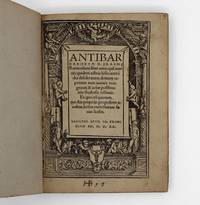
1520ref. 375736Basel: Froben 1520. First edition printed in May. Woodcut borders to title leaf and dedication by Hans Holbein printer's device on last page. 150 2 imprint pp. 4to. Eighteenth-century marbled boards ink label. Some toning to spine. Very good fresh copy. First edition printed in May. Woodcut borders to title leaf and dedication by Hans Holbein printer's device on last page. 150 2 imprint pp. 4to. Ignorantiam esse superbiae matrem. Eruditionem contra modestiam parere. Ignorance is the mother of pride; it is from learning on the contrary that modesty is born. First edition of Antibarbari Erasmus' manifesto "defending the arts against the scruples of the barbarians" Tracy. Erasmus argues for the primacy of poetry among the liberal arts for the importance of critical understanding of the writers of classical antiquity and for appropriating what is good in their work. He is also scornful of rote learning and blind repetition of earlier scholarship where "cuckoo calls to cuckoo". In Petro summus erat ardor fidei in Hieronymino summa doctrina: alterius animum alterius studia imitar. In Peter there was the ardour of faith at its highest; in Jeronme there was learning at its best. It is for you to imitate the spirit if the one and the scholarship of the other. This was a work of very long ripening. Erasmus began the earliest version circa 1490 when he was a newly ordained monk but that manuscript was left behind in his wanderings. Decades later when he came across his earlier work he was at the center of intellectual controversy following publication of of his edition of the New Testament. He revised his Antibarbari to assert the humanist position and Froben published it in May 1520. There were six editions of the work in the early 1520s Froben himself published another edition later the same year and ten editions in his lifetime. "it is ignorance rather than erudtion which makes men insolent" FIRST EDITION OF A KEY WORK BY ERASMUS. VD16 E1997; Valentina Sebastiani Johann Froben Printer of Basel 170; Bibliotheca Erasmiana p. 9; Adams E-463; Bezzel 157. The standard modern text iwith translation by Margaret Mann Phillips˜The Antibarbarians" is in the Toronto Collected Works vol. 23 1978 Froben unknown
1520ref. 375736Basel: Froben 1520. First edition printed in May. Woodcut borders to title leaf and dedication by Hans Holbein printer's device on last page. 150 2 imprint pp. 4to. Eighteenth-century marbled boards ink label. Some toning to spine. Very good fresh copy. First edition printed in May. Woodcut borders to title leaf and dedication by Hans Holbein printer's device on last page. 150 2 imprint pp. 4to. Ignorantiam esse superbiae matrem. Eruditionem contra modestiam parere. Ignorance is the mother of pride; it is from learning on the contrary that modesty is born. First edition of Antibarbari Erasmus' manifesto "defending the arts against the scruples of the barbarians" Tracy. Erasmus argues for the primacy of poetry among the liberal arts for the importance of critical understanding of the writers of classical antiquity and for appropriating what is good in their work. He is also scornful of rote learning and blind repetition of earlier scholarship where "cuckoo calls to cuckoo". In Petro summus erat ardor fidei in Hieronymino summa doctrina: alterius animum alterius studia imitar. In Peter there was the ardour of faith at its highest; in Jeronme there was learning at its best. It is for you to imitate the spirit if the one and the scholarship of the other. This was a work of very long ripening. Erasmus began the earliest version circa 1490 when he was a newly ordained monk but that manuscript was left behind in his wanderings. Decades later when he came across his earlier work he was at the center of intellectual controversy following publication of of his edition of the New Testament. He revised his Antibarbari to assert the humanist position and Froben published it in May 1520. There were six editions of the work in the early 1520s Froben himself published another edition later the same year and ten editions in his lifetime. "it is ignorance rather than erudtion which makes men insolent" FIRST EDITION OF A KEY WORK BY ERASMUS. VD16 E1997; Valentina Sebastiani Johann Froben Printer of Basel 170; Bibliotheca Erasmiana p. 9; Adams E-463; Bezzel 157. The standard modern text iwith translation by Margaret Mann Phillips˜The Antibarbarians" is in the Toronto Collected Works vol. 23 1978 Froben unknown books
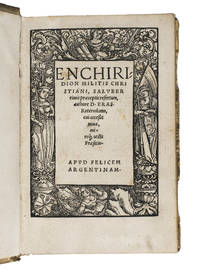
1523ref. ABC_49639Strassburg 1523. 8vo. Colophon: Johann Knobloch Contemporary elaborately blind-tooled pigskin over wooden boards remnants of brass anchor plates. Ad 1 with a woodcut frame on the title page 1 woodcut decorated initial and Knoblochs large woodcut device on the verso of the last blank leaf. Ads 2 and 3 with 1 woodcut decorated initial each. Ad 4 with a woodcut architectural frame on the title page and 1 large woodcut decorated initial. 4 works in 1 volume. 106; 57 1 blank; 49 1 blank ll.;158 pp. Four significant early 16th-century works that illuminate the intellectual and theological tensions of the Reformation. Ad 1: The Enchiridion militis christiani Poinard of the Christian Knight one of Erasmus most influential writings serves as a practical manual for inner reform and devout living. Emphasising moral integrity over ritual this widely reprinted work became a cornerstone of Christian humanist thought.Ad 2: The two homilies in De immensa Dei misericordia include a sermon on divine mercy likely composed for the dedication of a chapel in Basel and a second comparing virginity and martyrdom written for the Benedictine nuns of Cologne. Both reflect Erasmuss pastoral sensibilities and rhetorical skill.Ad 3: In De libero arbitrio Erasmus directly challenges Luthers doctrine of predestination in a pivotal treatise on free will. This foundational text marking the definitive break between the two reformers is one of the periods most significant theological works.Ad 4: The volume concludes with an early -and apparently rare- edition of Henry VIIIs Assertio septem sacramentorum a fierce rebuttal of Luthers De captivitate Babylonica. This work earned the English king the title Fidei Defensor from Pope Leo X. A splendid collection that captures the core tensions of the Reformation and the humanist response to it.Ad 1 with some of the text underlined. Ad 2 with manuscript annotations in the margins. Ad 3 with some marginal annotations and some of the text underlined. Ad 4 with a manuscript inscription on the title page and a few annotations in the margins. The binding shows signs of wear some small pieces of leather missing on the back board revealing the wood below remnants of fastenings along the fore-edge ads 2 and 3 with some minor worm holes in the paper barely affecting the text some staining and browning in places. Otherwise in good condition.l Ad 1: USTC 650175 7 copies; Vander Haeghen I 80; VD 16 E 2772; Ad 2: Bezzel 1131; VD 16 E 3041 and VD 16 E 3659; not in the USTC; Ad 3: VD 16 E 3151; not in the USTC; Ad 4: VD 16 H 2166; this ed. not in USTC. EARLY PRINTING & MANUSCRIPTS RELIGION & DEVOTION Church History & Missions Early Printing - 16th century Erasmus Humanism & Reformation Philosophy & Humanism Religion 16th Century ZZ 001 De Graaf Inkopen hardcover
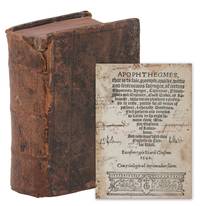
1542ref. 140949529London: Richard Grafton 1542. First Edition. Good. First English translation of Erasmus' collection of Classical wisdom. Small octavo -8 4 a-z8 A-X8 Y6 lacking leaf z1 p. 177 and blank leaf Y6. 376 leaves foliated. xx 176 178-345 12 pp. 62 '53' 64 '55' 83 '81' 100 '84' 119 '118' 122 '101' 144 '143' 222 '224' 224 '222' 225 '522' 273 '275' 275 '273' 277 '279' 279 '277' 311 '310'. Blackletter type on laid paper decorative capitals colophon with printer's device at rear. Bound in near-contemporary calf ruled in blind all edges stained red. Good with heavy wear to covers chipping at head of spine; lacking two leaves as noted. Margins tightly trimmed with frequent shaving to sidenotes slight worming to lower left margin corner through p. 112 light toning and dampstaining to contents. Evidence of bookplate removal to front pastedown round wax stain to p. 104 and facing page several inkstains. Generations of ownership signatures to title and colophon pages occasional ink marginalia. Devereux 3.3.1. The Dutch humanist Erasmus of Rotterdam was the greatest Renaissance scholar in Northern Europe. His Apophthegmata a collection of Greek and Latin adages and anecdotes was first published in Latin in 1531. The English playwright Nicolas Udall translated Books III and IV of the lengthy work into English intending his portion to be the first in a series of pocket-sized scholarly works. It was however a dangerous time to publish Erasmus. The humanist's criticism of clerical corruption had paved the way for Martin Luther's denunciation of the Catholic Church. There was a conservative backlash against reform after the 1540 execution of Henry VIII's fixer Thomas Cromwell who had patronized both Udall and his publisher Richard Grafton. In 1541 Grafton was imprisoned for publishing an epistle by a Lutheran reformer. He was sentenced again in 1543 'for printing off such bokes as wer thought to be unlawfull.' Grafton and Udall did better under Henry's successor Edward VI who after his ascension ordered that a copy of Erasmus's commentary on the New Testament edited by Udall be kept in every church in England. Among the faded names beautifully inscribed in this copy is that of Philemon Holland 1552-1637 whose fame as a translator surpassed that of Udall. He gave the world the first complete translation of Livy into English and followed it with Pliny the Elder's Natural History. Udall's rendering of Latin into English would have interested Holland professionally though he doubtless owned a copy of the original as well. Richard Grafton unknown
1542ref. 140949529London: Richard Grafton 1542. First Edition. Good. First English translation of Erasmus' collection of Classical wisdom. Small octavo -8 4 a-z8 A-X8 Y6 lacking leaf z1 p. 177 and blank leaf Y6. 376 leaves foliated. xx 176 178-345 12 pp. 62 '53' 64 '55' 83 '81' 100 '84' 119 '118' 122 '101' 144 '143' 222 '224' 224 '222' 225 '522' 273 '275' 275 '273' 277 '279' 279 '277' 311 '310'. Blackletter type on laid paper decorative capitals colophon with printer's device at rear. Bound in near-contemporary calf ruled in blind all edges stained red. Good with heavy wear to covers chipping at head of spine; lacking two leaves as noted. Margins tightly trimmed with frequent shaving to sidenotes slight worming to lower left margin corner through p. 112 light toning and dampstaining to contents. Evidence of bookplate removal to front pastedown round wax stain to p. 104 and facing page several inkstains. Generations of ownership signatures to title and colophon pages occasional ink marginalia. Devereux 3.3.1. The Dutch humanist Erasmus of Rotterdam was the greatest Renaissance scholar in Northern Europe. His Apophthegmata a collection of Greek and Latin adages and anecdotes was first published in Latin in 1531. The English playwright Nicolas Udall translated Books III and IV of the lengthy work into English intending his portion to be the first in a series of pocket-sized scholarly works. It was however a dangerous time to publish Erasmus. The humanist's criticism of clerical corruption had paved the way for Martin Luther's denunciation of the Catholic Church. There was a conservative backlash against reform after the 1540 execution of Henry VIII's fixer Thomas Cromwell who had patronized both Udall and his publisher Richard Grafton. In 1541 Grafton was imprisoned for publishing an epistle by a Lutheran reformer. He was sentenced again in 1543 'for printing off such bokes as wer thought to be unlawfull.' Grafton and Udall did better under Henry's successor Edward VI who after his ascension ordered that a copy of Erasmus's commentary on the New Testament edited by Udall be kept in every church in England. Among the faded names beautifully inscribed in this copy is that of Philemon Holland 1552-1637 whose fame as a translator surpassed that of Udall. He gave the world the first complete translation of Livy into English and followed it with Pliny the Elder's Natural History. Udall's rendering of Latin into English would have interested Holland professionally though he doubtless owned a copy of the original as well. Richard Grafton unknown books
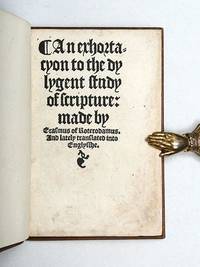
1534ref. 150904London: Robert Wyer c. 1534. Erasmus on reading the Bible in the vernacular Rare English translation of Erasmus's Paraclesis "a cogently argued text in support of the Bible in the vernacular and it is this particular thrust of the work that must have drawn the early English reformers to it since they too like Erasmus spoke eloquently and at length. in support of the Bible in English" Douglas H. Parker. Based on a translation variously attributed to either William Joy or George Joye which was first printed at Antwerp in 1529 this is one of two editions printed for the first time in England in 1534. While the 1529 Antwerp edition had included a translation of Martin Luther's commentary on 1 Corinthians 7 both 1534 editions replace Luther's text with another Erasmus text "An exhortacyon to the study of the Gospell". This is the only copy to have appeared in commerce in the past 45 years. Octavo 135 x 94 mm in two parts. Woodcut opening initials printer's devices McKerrow 67c and 68 69 "dieu et mon droit" woodcut on I8r. Twentieth-century brown pigskin spine lettered in gilt marbled endpapers. Fore-margins restored throughout affecting woodcuts on final leaf and occasional shoulder notes numerous short wormtracks filled some just into text some mostly marginal staining washed still a presentable copy carefully restored of a notably rare book. STC 10494 four copies only: British Library Oxford Huntington and the present copy. unknown
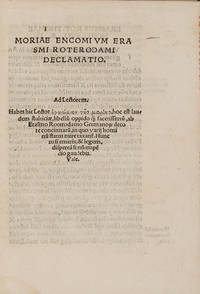
ref. 93719Argentorati Strassburg in aeidibus Matthiae Schurerii August 1511. . Second first dated edition; small 4to leaves measuring 19.4 x 13.8 cm; occasional minor coeval underlining and marginalia to earlier part of text very light stain to lower margin at gutter throughout not affecting text bibliographical clippings tipped onto front endpapers; bound in antique style calf; 96pp; A8 B4 C8 D4 E8 F4 G-H6 with the final blank leaf H6 present ff. First dated & earliest procurable edition of Erasmus' 'In Praise of Folly'. The scarce first dated edition of Erasmus' Moriae Encomium an important work of humanist rhetoric which satirised the corruption and religious hypocrisy of Europe's elite. Printed two months after the undated Paris edition by Gilles de Gourmont of which only a handful of copies survive all of them in institutional libraries. The present edition almost as rare is not merely a reprint of the Paris edition but contains additional material including an address and laudatory letter to Erasmus by his fellow humanist Jakob Wimpfeling. All early editions are exceedingly scarce with only three appearing at auction in the last 100 years that we could trace. The first English translation was not published until 1549 although there had been Czech French and German editions prior to this. An excellent example of a classic work of paradoxical satire in which folly is personified and holds up a mirror to mankind. An extremely significant work both in its own right and for its influence on the Protestant Reformation in general. Sir Thomas More's own magnum opus Utopia was at least in part written as a response to Moriae Encomium. 'The Praise of Folly was written when Erasmus was staying in the house of Thomas More in the winter of 150910. Its title is a delicate and complimentary play on the name of his host: its subject matter is a brilliant biting satire on the folly to be found in all walks of life. The book stemmed from the decision which Erasmus had taken when he left Rome to come to England that no form of preferment could be obtained at the sacrifice of his freedom to read think and write what he liked. The work was first secretly printed in Paris and as in other cases its immediate success safeguarded him from the consequences of his audacity. Whenever tyranny or absolute power threatened The Praise of Folly was re-read and reprinted. It is a sign of what was in the air that Milton found it in every hand at Cambridge in 1628. His inherent scepticism has led people to call Erasmus the father of eighteenth-century rationalism but his rationalist attitude is that of perfect common sense to which tyranny and fanaticism were alike abhorrent' PMM 43. Despite the risky nature of the work and its explicit and implicit attacks on established religion and authority figures of the time its rapid popularity ensured that the author and the work were left unmolested by church and state at least until Erasmus' death in 1536 after which his previously untainted reputation was diminished. By 1559 all of his works had been proscribed under the insidious Index Auctorum et Librorum Prohibitorum. We can trace copies in just 12 institutional collections worldwide: 3 in the British Isles BL University of Cambridge and Bodleian Library 2 in France BnF and Université de Strasbourg 43 in the USA Folger Shakespeare Library Harvard University Divinity School and Ohio State University 3 in Germany Staatsbibliothek zu Berlin Universitaet Goettingen and Wurttembergische Landesbibliotherk and 1 in Denmark Det Kgl. Bibliotek. Bezzel 1298; cf.PMM 43; Vander Haeghen 122. Argentorati (Strassburg), in aeidibus Matthiae Schurerii, August 1511. unknown