4766 resultados
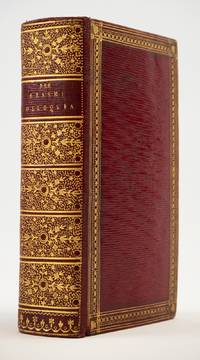
ref. MA03C-03224T. & J. Swords. Collectible - Acceptable. NY: T. & J. Swords 1796. 1st US edition. Volume 1. 8vo Leather Bound. 430pp. Reading Copy. Heavy edgewear and rubbing. Boards detached but present. Pages age toned. Lacking endpapers. Top-edge of title page torn away. Inked and penciled notations to the endpages and to several pages throughout. With typical period foxing. In polypropylene bag. From the collection of American author columnist journalist and presidential speechwriter William Safire. physiology nature evolution Inquire if you need further information. T. & J. Swords hardcover books
1973ref. 246852MA: Peter Smith 1973. Hardcover. Very Good. Later. Very good Hardcover has no dust jacket name inked on end page text edges smudged. Peter Smith hardcover books
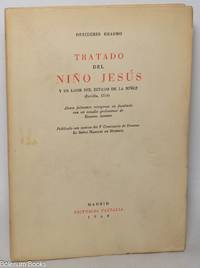
1969ref. 345733Madrid: Editorial Castalia 1969. Paperback. 89 3 pages facsimile paperback. Copy 76 of 300. Some leaves uncut. Covers dustsoiled. Facsimile of the 1516 edition of Erasmus's Sermon on the Child Jesus. Includes a preliminary study by Eugenio Asensio. Editorial Castalia paperback books
1876ref. 24975Paris: Librarie Des Bibliophiles 1876. Troisieme edition. Three quarter red morocco over red marbled boards raised bands gilt titles marbled end papers. Very good plus or better copy tight clean just a bit of wear at the extremities. A handsome copy of this somewhat uncommon title. xi 247 pp. Illus. with 83 b/w gravures. Sm. 4to. 20 cm. Number 266 of 500 copies on Holland paper original wrappers sewn in. Book plate of Charles Fairfax Murray the English Pre-Raphaelite Painter 1849-1919 on front pastedown. Librarie Des Bibliophiles hardcover books
1881ref. 206939Kegan Paul Trench and Co 1881. Hardcover. G. Leather has some scuffing and rubbing. Catholic school gift plate inside front cover. Twelvemo. Hardcover. Full gilt edges. Leather bound with gilt stamped titles. 475 pages. Kegan, Paul, Trench and Co hardcover books
1905ref. 135166London: John Murray 1905. Hardcover. F- Ex-library with usual library markings bookplate on front inside cover pocket and discoloration at back inside cover perforation stamp used on illus. pages are tanning in margins hinges are loose some pages have separated but are still present covers show heavy wear along edges and corners both v. have front cover damage above the design v.1 spine has been repaired with unfortunate adhesive tape. A reading copy at best. Red cloth 2 vols. gilt letters on spine gilt design on cover gilt top edge 453 464 pp. 11 BW plates. Prince George Duke of Cambridge 1819-1904 was a member of the British Royal family who headed the military. Vol. 1: 1819-1871 Vol. 2: 1871-1904. John Murray hardcover books
1864ref. 34929Buxelles: T. J. I. Arnold 1864. 32 of 100 copies. Hardcover. Good light wear to cover light wear foxing and fading to inside edges. Brown marble boards. xlvi text; TEG. Reproduction of his text of Silva Carminum printed at Gouda in 1513. Includes a partial map of the Gouda area where Erasmus was born and biographical information in the introduction. Introduction in French and main text in Latin. T. J. I. Arnold hardcover books
1824ref. 47058Roma: Presso Francesco Bourlie 1824. Very Good. Roma: Presso Francesco Bourlie 1824-1830. First Edition. Four volumes bound in two; contemporary parchment over marbled paper-covered boards black gilt spine labels. Moderate wear to board margins parchment a bit dust-soiled else a Very Good internally clean and sound set of this early biography of Pope Pius VII 1742-1823. Presso Francesco Bourlie unknown books
1643ref. ST20492Lugduni Batavorum Leyden: Bonaventura Elzevier and Abraham Elzevier 1643. Second Elzevier Edition. 137 x 78 mm. 5 1/2 x 3". 12 p.l. 672 44 pp. 2 leaves. ELEGANT EARLY 19TH CENTURY RED STRAIGHT-GRAIN MOROCCO VERY ELABORATELY GILT BY BOZERIAN unsigned but see below covers framed by bead-and-star roll enclosed with double gilt fillets leaf tools at corners. smooth spine in compartments with large central fleuron of floral lancets emanating from central circlet in a richly stippled ground small circles at corners one compartment with gilt lettering cresting tulip and violet roll at foot of spine turn-ins with bead-and-star roll marbled endpapers vellum flyleaves all edges gilt. Woodcut initials headpieces and tailpieces numismatic portrait tondo fine engraved title page by C. C. Dusend showing Erasmus gazing through a telescope at the Godly orb seen through parted clouds. Willems 552; Rahir 546; USTC 1027918. For the binding: Culot "Jean Claude Bozerian" Roulette 9 Plate I and Palette 12 Plate X. Just barely perceptible rubbing to joints and extremities one leaf with tiny burn hole affecting a couple of words intermittent minor foxing negligible ink spots here and there other trivial imperfections but an extremely attractive copy the text fresh and clean and the very well-preserved binding with lustrous leather and bright gilt. This is a remarkably pretty copy of an extremely influential but generically elusive work printed by a legendary press and bound by the founder of a celebrated French binding dynasty. First published in 1524 the "Colloquia" comprise 63 conversations originally written for Erasmus' students on varied and overlapping topics but these urbane meditations soon became widely read as they covered subjects that intrigued the important thinkers of the day. Their influence was so profound that it is not saying too much to claim that they helped to speed the Reformation. Although they are difficult to classify precisely one could categorize them as including in general terms exposure of ritualistic fallacies invective against corruption within the church examination of popular imposture deploring of contemporary personal sins practical advice for laymen and miscellaneous discussion of amusing topics. In specific terms the text takes on such controversial topics as the value of pilgrimage celibacy and abstinence from meat on Fridays and other prescribed days. Erasmus' "Colloquia" was frequently published by the Elzeviers once in French and a total of nine times in Latin. The text was universally adopted for school use up through the 18th century. Although our lovely little binding is unsigned Culot firmly identifies its tools as those used by Jean-Claude Bozerian 1762-1840. He was the elder of the Bozerian brothers François is referred to as "le jeune" and was active in Paris from 1795 to about 1810. He began his career in Lyon as an apprentice bookseller printer and bookbinder eventually deciding to focus on the latter craft. Marriage to the widow of binder Pierre Boulier allowed him to establish a binding workshop in Paris where he was joined by his brother. His bindings were soon much in demand by French bibliophiles who appreciated their superior materials tasteful design and flawless execution--all characteristics that are plainly evident in the present case. Bonaventura Elzevier and Abraham Elzevier unknown books
1972ref. 328186New York: Aquarius 1972. Limited. unbound. fine. Fritz Eichenberg. Rubricated title page. Large folio with 10 large loose original woodcut engravings each individually signed by Fritz Eichenberg. One page of text printed in red and black facing each woodcut. New York / Baltimore: Aquarius Press 1972. Limited edition -- Number 131 of 150 copies. Fine. Each engraving is printed on Japanese mulberry paper and signed at the lower corner by the artist. Aquarius unknown books
1966ref. 221830Piedmont: Tallone 1966. Limited. paperback. fine. 157 pages untrimmed tall narrow 8vo original printed wrappers cloth slipcase. Piedmont: Tallone 1966. Fine. Limited to one of 500 copies. Tallone unknown books
1957ref. 112755Munich 1957. hardcover. near fine/very good. Illustrated. 97pp. 8vo cloth d.w. Munchen 1957. A near fine copy in a very good dust wrapper. unknown books
1745ref. 58075Amsterdam: L'Honore 1745. hardcover. very good. Traduit par M. Gueudeville. Rubricated title and edges 2 folding plates and many charming woodcuts within the text after Holbein. 340 pages index 12mo cont. calf rubbed ornately gilt spine. Amsterdam: F. L'Honore 1745. VEry good. Counterfeit edition with 340pp. See Lewine p. 170. L'Honore unknown books
1717ref. 146426Amsterdam: Wetstein 1717. hardcover. very good. Traduite Nouvellement par M. Gueudeville. Title page in red & black extra engraved t.p. Illustrated with 72 in-text copper- plates and 6 double-page plates. 34 304 16pp. 1 leaf missing p. 47-48 and 1 plate crudely hand-colored. 12mo contemporary calf- backed marbled boards with gilt-decorated spines rubricated edges. Amsterdam: R. & G. Wetstein 1717. Scarce. Very good . Facing engraved t.p. is a trimmed & mounted plate with portraits of Erasmus More & Holbein. Wetstein unknown books
ref. 32242hardcover. Traduit par M. Gueudeville. Nouvelle Edn. revue & corrigee. Title in red & black with large vignette. Frontis. & 13 copperplates after Charles Eisen head- and tail-pieces. 12mo cont. mottled calf back gilt. n.p. 1757. Fine plates engraved by Aliamet Flipart Tardieu & others. Lewine p. 170. unknown books
1943ref. 33993NY: The Limited Editions Club Printed By J.Horace McFarland Company At The Mount Pleasant Press 1943. Lynd Ward. 4to pp. xv 110 1 leafcolophon. 10 mezzotints. tissue guards with legends. marginal illus. & captions headings & typographical ornaments printed in red. Bound in original black sheep ivory medallion inset on upper cover rubbed at corners & most of spine leather lacking worn & chipped slight wear to medallion internally very good. Offered without the slipcase. Limited to 1500 # 1363 numbered copies signed by the Illustrator Ward. Designed by George Macy letterpress composed and printed on special Worthy paper in black and rubric red by the J.Horace McFarland Company at the Mount Pleasant Press in Harrisburg the mezzotints by Ward hand-pulled in the shop of Charles Furth in New York bound by Russell-Rutter Company NY. Laid in are a large page of three proofs 2 printed in red one in black of the headings and typographical ornaments that are used in the book. The Limited Editions Club, Printed By J.Horace McFarland Company At The Mount Pleasant Press unknown books
1800ref. 36911London 1800. First Edition. 4to pp. Illustrated with 12 engraved plates including one folding and one double page. Bound in contemporary 3/4 calf piece nicked from the bottom of the spine some foxing couple of plates with water stain plates foxed. Generally a very clean copy. Author Kenneth Robert's copy with his bookplate. Henrey 615; Nissen 452; King-Hele Erasmus Darwin 58-62; Wheeler Gift 621; McDonald page 224. Erasmus Darwin 1731-1802 was an English physiologist and poet the grandfather of Charles Darwin. A physician in Litchfield UK Darwin kept an 8 acre botanical garden. Darwin's reputation rests on his long poem The Botanic Garden 1789 which anticipates the Linnaean system. It was crude poetry seemingly written in a carriage while Darwin was traveling between patients. He decribed the plants through a misplaced amusing personification . In the present work he described the plants as having sensation and volition. Roberts is best rememebred for his American historical romances ie Trending into Maine Northwest Passage Arundel etc. unknown books
1950ref. 276545New York: The Heritage Press 1950. Hardcover. Fine. Reprint. Translated from the Latin by Harry Carter. Introduction by Hendrik Willem van Loon. Illustrated by Franz Masereel. Light soiling on the boards but fine. Lacking the slip case. The Heritage Press hardcover books
1979ref. 1407516Toronto: University of Totonto Press 1979. Hardcover. Octavo xviii 348 pages. In Good plus condition. Spine is brown with black print. Boards in brown cloth black print. Text block has spotting to edges. Illustrated: b&w plates. NOTE: Shelved in Netdesk Column W. 1407516. FP New Rockville Stock. University of Totonto Press hardcover books
1713ref. 100202Small 8vo full leather illustrated 312 pp. Binding worn in places top hinge cracked bottom starting one folding plate repaired internally quite clean. Contains 81 illustrations including six folding plates. The text is satire that pokes fun at everyone from Kings to common folk. It is considered one of the great works of satire. The plates are after designs by Hans Hoblien 1497-1543. Pierre Vander hardcover books
1800ref. 10635London: J. Johnson 1800. FIRST EDITION. Contemporary half calf over marbled boards. faded covers title page has a large cut out probably where exlibris was does not affect any letters. Interior generally clean with some browning to plates From the library of Algernon Peckover with bookplate. Paper is slightly blue shade. Fore edges with light stamp of University of Colorado`. First edition of Darwin’s valuable work on agriculture and gardening. The work is important for the understanding of plant physiology photosynthesis and plant nutrition. Darwin recognized here for the first time the key roles that nitrogen phosphorus and carbon played in plant growth. An advocate of progressive scientific agriculture Darwin stressed the continuity between plant and animal life. Darwin 1731-1802 grandfather of Charles Darwin was a remarkable polymath that worked as a physician naturalists medical botanist and inventor. He expounded one of the earliest theories of evolution and described the importance of sexual selection to continuing changes within species. In the present work Darwin laid the foundation of scientific agriculture by showing the productivity of crops could be increased. J. Johnson unknown books
1797ref. 17295New York; Philadelphia: T. & J. Swords Volume 1; T. Dobson Volume 2 parts I and II 1797. FIRST AMERICAN EDITION. Complete with all half-titles and blanks. With 6 colored plates in Volume 1. Contemporary calf spine labels; text toned due to paper stock. Overall an excellent copy. First American editions of Erasmus Darwin’s important hypothesis on evolution which included discussion of how competition and sexual selection could cause change in species an idea on which his grandson Charles must certainly have drawn. Darwin’s focus here is the functioning of the body and he includes significant sections on anatomy and physiology as well as psychology. He was an early advocate of the inheritance of acquired characteristics similar to what Lamarck later developed. “The Zoonomia contains a system of pathology and a treatise on generation. Darwin believed that ‘one and the same kind of living filaments is and has been the cause of life’” Garrison & Morton. Darwin 1731-1802 grandfather of Charles Darwin was a remarkable polymath that worked as a physician naturalists medical botanist and inventor. T. & J. Swords (Volume 1); T. Dobson (Volume 2, parts I and II) unknown books
1943ref. 1401589New York: Limited Edition Club 1943. Limited Edition #314. Hardcover. Octavo 110 pages plus illustrated plates. In Very Good condition with a Very Good minus condition slipcase. Black spine with gilt lettering. Red slipcase has moderate chipping to extremities. Boards are bound in black leather has chipping and rubbing wear to spine a white medallion inset on the front board and minor rubbing wear to corners. Textblock has mild age toning and light plus offsetting to protective sheets verso of illustrated plates. Red ink speckling to edges. Signed flat by Lyn Ward on the publisher's limitation page. NOTE: Shelved in Netdesk Column U ND-U. 1401589. FP New Rockville Stock. Limited Edition Club hardcover books
1688ref. 49228Cologne disguised; Paris or the Netherlands: Adrian Le Jeune 1688. First edition. Hardcover. Very good . Duodecimo. Collation: aster.12 2aster.6 A-R12 S4 = 226 leaves. 36 415 1 blankpp. Engraved frontispiece and headpiece; woodcut lettrines head- and tailpieces; printed side notes. Contemporary calf mildly worn at extremities; gilt tooled spine with raised bands gilt lettering piece; edges sprinkled in red. Old inscription cropped from top edge title; one leaf with clean marginal tear just extending into text else fine and crisp throughout. First edition of this defense of Jansenism via the celebrated scholar of Rotterdam. Among the works reviewed by Locke for Jean Le Clerc the present title “indicated a new wave of interest in Erasmus” Mansfield. “Jean Richard 1615-1686 wanted to persuade the Roman Catholic Church that in persecuting the Jansenists it was as much in error as it had been when it denounced Erasmus. He also wanted to convince the English monarch that despite appearances to the contrary Erasmus had never adopted any stance outside the Catholic Church” van Herwaarden. The author surely intends the quotation from Cyprian at the verso of the title as a reference to both Erasmians and Jansenists: “This is always the devil’s work to destroy with lies the servants of God and defame their glorious name with false opinions” trans. Mansfield. Early modern reviews were mixed: Bayle considered it a “pity that the author. stopt at the first part of it” General Dictionary 5 1737 “Erasmus” 85 note T. Burigny Vie d’Erasme Paris: 1758 judged it “. so badly done and so filled with invectives and declamations that it does not lead one to wish for the second” 547; quoted in Mansfield 293n. In 1660 the French cleric Jean Richard was imprisoned by the archbishop of Rouen de Harlay a bitter opponent of Jansenism."During this personal crisis he published two works in defense of his Jansenist belief and behaviour. As we shall see there are grounds for believing that his Sentimens. was meant in part at least to achieve the same end. Nevertheless mysteries surround the work: it was published posthumously Richard died in 1686 having been prior of Beaulieu Saint-Avoie since 1673; what we have is the first part and we may only guess at how seriously the promise of a second part was intended. As it stands this is an ill-organized book repetitive with many digressions but filled with a naive enthusiasm and fascinating partly because of the evidences of a sound judgment about Erasmus partly because of the tantalizing but insoluble problem of the author’s aims. The avowed aim was proselytism. The book is dedicated -- on the eve of the Revolution of 1688 -- to James II of England a new Theodosius who is hazarding three kingdoms for the sake of the kingdom of heaven. May it help the English people to follow the king’s example in conversion to Catholicism by showing them the true character of Erasmus’ religion" Mansfield. References: Barbier 4:467. J. v. Herwaarden Between Saint James and Erasmus Studies in Late-Medieval Religious Life 598; Jöcher 3:2078; VD17 12:110664Q. For a thorough discussion see B. Mansfield Phoenix of His Age: Interpretations of Erasmus c. 1550–1750 Toronto 1979 163–174. Locke’s review appears in Bibliotheque universelle et historique VII 1688: 106-122. Adrian Le Jeune hardcover books
1522ref. 53365Mainz: J. Schöffer 1522. First Mainz edition. Octavo. 562 2: colophon blankpp. Collation: A-Z8 Mm8 chi2 O4/O5 reversed complete. Title within historiated woodcut border. Woodcut initials throughout. Text in italics. Printed side-glosses. Errata at final text leaf. Contemporary beveled wooden boards backed in tooled pigskin; spine with raised bands. Brass catch and clasp with expert restoration of leather thong. Contemporary manuscript musical scores used as pastedowns at front and back. Seven leather stubbs affixed at front edge as indexes. Occasional faint smudging mostly at margins else text crisp and fresh. A very good copy in a well-preserved sixteenth-century binding with a notable provenance. Scarce very early collective edition of the Latin "Paraphrases" of the Pauline Epistles prepared by the celebrated humanist scholar theologian and educational writer Desiderius Erasmus of Rotterdam 1466-1536. Preceded by the Froben collective editions of 1520 and 1521 this first and only edition of the Pauline Epistle Paraphrases to be printed at Mainz was issued by Schöffer in two parts each with full title and separate register and pagination; our volume contains the first part only: the Epistles to the Romans; Corinthians 2; Galatians; Ephesians; Philippians; Colossians; and Thessalonians 2. "In the vast and sustained labour he devoted to the New Testament Erasmus saw the culmination of his commitment to scholarship. and nothing else he wrote not even the Moriae encomium was to have so great an influence on posterity. The first edition of the New Testament appeared in 1516 and was followed in his lifetime by four more 1518/10 1522 1527 1535 each newly revised. Each consisted of the Greek text Erasmus' translation thereof and a copious apparatus of notes Annotations published as a separate volume. Beginning in 1517 he also published a Paraphrase of all parts of the New Testament save Revelation. Written in smooth and comprehensible Latin it was usually fuller than the original text. If offered his own interpretatiton but often avoided the provocative statements found in the Annotations. From the outset the translation the Annotations and to a lesser degree the Paraphrases drew criticism originally from conservative theologians who found heresies in his humanist philology but soon also from Lutherans and Catholics who denounced him for departures from their respective doctrines" Bietenholz. The Paraphrases were composed between May 1517 and January 1524. "Erasmus began with the Pauline Epistles. The paraphrase of Romans was published in quarto by Dirk Martens in Louvain in November 1517 and reprinted by Erasmus's friend Johann Froben in January of the following year; it sold well and was soon reprinted in octavo. Corinthians was published by Martens in February 1519 and reprinted in Basel by Froben in March; Galatians appeared later that year with editions from both publishers. The remaining Epistles followed in 1520 and 1521 the last to appear being Hebrews. In the autumn of 1521 Erasmus moved from Louvain to Basel and from that time Froben published the first editions of the remaining Paraphrases" Mynors. Our edition was printed by Johann Schöffer the son of Peter Schöffer who was the principal workman of Johannes Gutenberg. Apart from those of the Pauline Epistles the only other complete Paraphrase of Erasmus to be published by Schöffer was that on the Gospel of Matthew also in 1522. He did in 1521 however issue a series of four brief excerpts from the Paraphrases in German translation which appear to highlight provocative exegesis by the great scholar of Rotterdam concerning for example the hypocracy of the Pharisees Matthew 23 or the exhortation to "Take My yoke upon you and learn from Me" Matthew 11.29. Provenance and annotations: Contemporary manuscript entry at the title-page of the Benedictine monastery library at Amorbach; contemporary 50-word manuscript note in Latin at the free endleaf facing the title which discusses the present work. Early manuscript note in German at the final blank endleaf. Early leaves with light rubrication in red ink; about twenty leaves with contemporary annotations throughout. Later stamps of the Leiningen Palace Library at the bottom margin of the title and very faintly at the pigskin covers. Bookplate of United Theological Seminary Dayton Ohio noting the gift of Dr. Walter N. Roberts with their vertical entry stamp Mar 28 1963 at the dedication leaf lightly over the left-hand edge of the text but not impairing legibility. Full title and imprint: Paraphrases Eras. Rot. In omnes epistolas Pauli apostoli germanas : et in eam quae est ad Hebraeos incerti autoris cum ijs quae Canonicae uocantur diligenter recognitae excusaeque & ita binos in tomos digestae ut cuique secare in formam enchiridij siuelit liberum sit. References: P.G. Bietenholz Encounters with a Radical Erasmus Univ. Toronto 2009 p.13; R.A.B. Mynors "The Publication of the Latin Paraphrases" in: R.D. Sider ed. New Testament Scholarship: Paraphrases on Romans and Galatians University of Toronto Press 1984 pp. xx-xxix; USTC 682534; Vander Haeghen p.145: Paraphrases in omnes epistolas Pauli. Moguntiae Io. Schoeffer m. augusto 1522 octavo; VD16 E-3379 Berlin; Halle; Leipzig; Wittenberg; Wolfenbüttel. This first part not in Adams but cf. E-795 the second part 378pp. J. Schöffer unknown books