4799 resultados
1688ref. 49228Cologne disguised; Paris or the Netherlands: Adrian Le Jeune 1688. First edition. Hardcover. Very good . Duodecimo. Collation: aster.12 2aster.6 A-R12 S4 = 226 leaves. 36 415 1 blankpp. Engraved frontispiece and headpiece; woodcut lettrines head- and tailpieces; printed side notes. Contemporary calf mildly worn at extremities; gilt tooled spine with raised bands gilt lettering piece; edges sprinkled in red. Old inscription cropped from top edge title; one leaf with clean marginal tear just extending into text else fine and crisp throughout. First edition of this defense of Jansenism via the celebrated scholar of Rotterdam. Among the works reviewed by Locke for Jean Le Clerc the present title “indicated a new wave of interest in Erasmus” Mansfield. “Jean Richard 1615-1686 wanted to persuade the Roman Catholic Church that in persecuting the Jansenists it was as much in error as it had been when it denounced Erasmus. He also wanted to convince the English monarch that despite appearances to the contrary Erasmus had never adopted any stance outside the Catholic Church” van Herwaarden. The author surely intends the quotation from Cyprian at the verso of the title as a reference to both Erasmians and Jansenists: “This is always the devil’s work to destroy with lies the servants of God and defame their glorious name with false opinions” trans. Mansfield. Early modern reviews were mixed: Bayle considered it a “pity that the author. stopt at the first part of it” General Dictionary 5 1737 “Erasmus” 85 note T. Burigny Vie d’Erasme Paris: 1758 judged it “. so badly done and so filled with invectives and declamations that it does not lead one to wish for the second” 547; quoted in Mansfield 293n. In 1660 the French cleric Jean Richard was imprisoned by the archbishop of Rouen de Harlay a bitter opponent of Jansenism."During this personal crisis he published two works in defense of his Jansenist belief and behaviour. As we shall see there are grounds for believing that his Sentimens. was meant in part at least to achieve the same end. Nevertheless mysteries surround the work: it was published posthumously Richard died in 1686 having been prior of Beaulieu Saint-Avoie since 1673; what we have is the first part and we may only guess at how seriously the promise of a second part was intended. As it stands this is an ill-organized book repetitive with many digressions but filled with a naive enthusiasm and fascinating partly because of the evidences of a sound judgment about Erasmus partly because of the tantalizing but insoluble problem of the author’s aims. The avowed aim was proselytism. The book is dedicated -- on the eve of the Revolution of 1688 -- to James II of England a new Theodosius who is hazarding three kingdoms for the sake of the kingdom of heaven. May it help the English people to follow the king’s example in conversion to Catholicism by showing them the true character of Erasmus’ religion" Mansfield. References: Barbier 4:467. J. v. Herwaarden Between Saint James and Erasmus Studies in Late-Medieval Religious Life 598; Jöcher 3:2078; VD17 12:110664Q. For a thorough discussion see B. Mansfield Phoenix of His Age: Interpretations of Erasmus c. 1550–1750 Toronto 1979 163–174. Locke’s review appears in Bibliotheque universelle et historique VII 1688: 106-122. Adrian Le Jeune hardcover books
ref. 23596Cologne, Adrian Le Jeune, 1688. In-12, [36], 415 pp., frontispice représentant une statue d'Erasme et bandeau de l'auteur dans une bibliothèque (page 1). Veau d'époque, dos à nerfs orné (manque en pied, un mors fendu, coins émoussés).
1870ref. R69507Gouda, Maaskant 1870 2 werken in 1 vol.: viii,269,[7] + 68pp. + frontispice, 21cm., herdruk van 1591-ed., gecart.band (gemarbreerde platen, lederen rug met goudopdruk, bibl.ex., (enkele stempeltjes), tekst in goede staat, [in Gotisch schrift], R69507
2004Mm 120x170 Collana "I rombi". Prefazione di Piero Coda. Brossura editoriale di 137 pagine. Esemplare in ottime condizioni, pari al nuovo. SPEDIZIONE IN 24 ORE DALLA CONFERMA DELL'ORDINE.
1933ref. 514Imprimerie Provinciale de l'Ouest 1933 X + 100 pages pages collection by Henri Erasme Anger. Rennes. 14 3 x 19 2 cm. 1933. broché. X + 100 pages pages. Henri Erasme ANGER – Si le vent se taisait… Préface d'Ernest Raynaud. Rennes Imprimerie Provinciale de l'Ouest 1933. In-8° (14 3 x 19 2 cm) X + 100 pages + 3 ff. Broché exemplaire en parfait état de fraîcheur sans aucun manque à la couverture ni au dos. Rare recueil poétique d'Henri Erasme Anger écrivain originaire d'Autrain-sur-Couëston. L'auteur participa un temps aux soirées de La Plume cercle littéraire symboliste où se retrouvaient notamment Paul Verlaine et les jeunes poètes de la fin du XIXe siècle. La préface est signée d'Ernest Raynaud (1864–1936) poète symboliste et membre de l'Académie des Jeux Floraux de Toulouse qui encouragea plusieurs auteurs de sa génération. Cet ouvrage s'inscrit dans la tradition poétique de l'entre-deux-guerres empreint d'une sensibilité symboliste et musicale. Belle condition pour ce volume régional rare. Librairie Au Bon Livre 1 rue de la Violette 30000 Nîmes Ouvert du lundi au samedi 10h–12h et 14h–19h Instagram : alibrairieaubonlivre Google Maps English description Henri Erasme ANGER – If the Wind Were Silent… Preface by Ernest Raynaud. Rennes Imprimerie Provinciale de l'Ouest 1933. 8vo (14.3 x 19.2 cm) X + 100 pp. + 3 ll. Original softcover a very fresh copy without any defect to the cover or spine. A scarce poetry collection by Henri Erasme Anger a writer born in Autrain-sur-Couëston. He attended for a time the literary evenings of La Plume where Paul Verlaine and the symbolist poets gathered at the end of the 19th century. The preface is written by Ernest Raynaud (1864–1936) symbolist poet and member of the Académie des Jeux Floraux in Toulouse who supported several contemporary writers. A fine example of French regional poetry from the interwar period with a symbolist and musical tone. Rare in this condition. Ref34/08
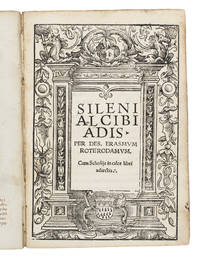
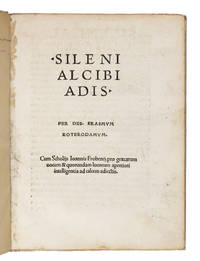
1520ref. ABC_49888Colophon: Cologne: Servas Kruffter 1520. 19th-century marbled boards with a blue paper manuscript title label on the front board. 4to. With an elaborate woodcut border on the title page and a decorated woodcut initial. Rare early edition of an influential work by Desiderius Erasmus which is a call for reform of the Catholic Church. It uses the Ancient Greek figure Alcibiades ca. 450-404 BC and the mythical characters known as the Sileni as an allegory for looking beyond appearances in order to perceive someone's or the Church's true nature. Erasmus wrote the text as part of his compilation of proverbs the Adagia in particular for the revised 1515 edition where it became one of the most popular entries. It was then published by Froben as a separate work in 1517 with his scholia. The present edition is the fourth or fifth overall but the first by Servas Kruffter fl. ca. 1520-1538 and is of considerable scarcity with only five copies recorded in institutions and none in sales records. The Cologne printer Kruffter was repeatedly restricted by censorship and even put in jail several times. Only a comparatively small number of books from his limited production has survived.With the bookplate of the Oberherrlingen Library dated 1839 mounted on the verso of the front board together with two typed descriptions of the work. The boards are somewhat rubbed lacking most of the spine. The work is somewhat browned throughout with a water stain in the inner margin not affecting the text. Otherwise in good condition.l Bibl. Belgica E 261; Erasmus Online 3582; USTC 693956 4 copies; Vander Haeghen I 176; VD 16 E 1991; WorldCat 763214270 150404098 5 copies; not in Adams; Bezzel; BM STC German; De Reuck. Servas Kruffter, hardcover
1517ref. ABC_49731Colophon: Basel 1517. 4to. Johann Froben Late 19th-century or early 20th-century boards red edges. With 4 decorated woodcut initials and a woodcut printer's device at the end of each part. 2 parts in 1 volume. 42 ll. First separate edition of an influential work by Desiderius Erasmus which is a call for reform of the Catholic Church. It uses the Ancient Greek figure Alcibiades ca. 450-404 BC and the mythical characters known as the Sileni as an allegory for looking beyond appearances in order to perceive someone's or the Church's true nature. Erasmus wrote the text as part of his compilation of proverbs the Adagia in particular for the revised 1515 edition where it became one of the most popular entries. It was then published by Froben as a separate work in 1517 together with his scholia. The present copy also includes the Scarabeus a similar essay from the Adagia with scholia from Beatus Rhenanus. Although these two works are now rarely found together on the market the Scarabeus was clearly intended as the second part of the Sileni Alcibiades for the present edition as both the pagination and collation continue between the two works.The boards are slightly soiled. The work is slightly browned throughout with water stains in the margins of some of the leaves and numerous near contemporary academic annotations in the margins of the first part by at least 2 different hands. Otherwise in good condition.l Bibl. Belgica E 259; BM STC German p. 277; USTC 693955; ad 1: Adams E 833; Erasmus Online 3579; Vander Haeghen I 176; VD16 E 1990; Ad 2: Adams E 830; Erasmus Online 3574; Vander Haeghen I 175; VD 16 E 1986. hardcover
1864ref. 34929Buxelles: T. J. I. Arnold 1864. 32 of 100 copies. Hardcover. Good light wear to cover light wear foxing and fading to inside edges. Brown marble boards. xlvi text; TEG. Reproduction of his text of Silva Carminum printed at Gouda in 1513. Includes a partial map of the Gouda area where Erasmus was born and biographical information in the introduction. Introduction in French and main text in Latin. T. J. I. Arnold hardcover
1864ref. 34929Buxelles: T. J. I. Arnold 1864. 32 of 100 copies. Hardcover. Good light wear to cover light wear foxing and fading to inside edges. Brown marble boards. xlvi text; TEG. Reproduction of his text of Silva Carminum printed at Gouda in 1513. Includes a partial map of the Gouda area where Erasmus was born and biographical information in the introduction. Introduction in French and main text in Latin. T. J. I. Arnold hardcover books
ref. 1263426Contentum Ltd. Loose sheet. New. High-quality art print based on an original work from the Rijksmuseum. Created in the 17th century 1617. Professionally printed on premium fine-art paper Museum Etching museum quality in size A3. The artwork is printed with a white border museum-style presentation. Contentum Ltd. unknown
ref. 1263427Contentum Ltd. Loose sheet. New. High-quality art print based on an original work from the Rijksmuseum. Created in the 17th century 1617. Professionally printed on premium fine-art paper Photo Matt Fibre in size A2. The artwork is printed with a white border museum-style presentation. Contentum Ltd. unknown
ref. 1263428Contentum Ltd. Loose sheet. New. High-quality art print based on an original work from the Rijksmuseum. Created in the 17th century 1617. Professionally printed on premium fine-art paper Photo Rag Bright White premium quality in size A2. The artwork is printed with a white border museum-style presentation. Contentum Ltd. unknown
ref. 1263429Contentum Ltd. Loose sheet. New. High-quality art print based on an original work from the Rijksmuseum. Created in the 17th century 1617. Professionally printed on premium fine-art paper Museum Etching museum quality in size A2. The artwork is printed with a white border museum-style presentation. Contentum Ltd. unknown
ref. 2409824Contentum Ltd. Loose sheet. New. High-quality art print based on an original work from the Rijksmuseum. Created in the 17th century 1617. Professionally printed on premium fine-art paper Photo Matt Fibre in size A2. The artwork is printed with a white border museum-style presentation. Contentum Ltd. unknown
ref. 2409825Contentum Ltd. Loose sheet. New. High-quality art print based on an original work from the Rijksmuseum. Created in the 17th century 1617. Professionally printed on premium fine-art paper Photo Rag Bright White premium quality in size A2. The artwork is printed with a white border museum-style presentation. Contentum Ltd. unknown
ref. 2409826Contentum Ltd. Loose sheet. New. High-quality art print based on an original work from the Rijksmuseum. Created in the 17th century 1617. Professionally printed on premium fine-art paper Museum Etching museum quality in size A2. The artwork is printed with a white border museum-style presentation. Contentum Ltd. unknown
ref. 2409823Contentum Ltd. Loose sheet. New. High-quality art print based on an original work from the Rijksmuseum. Created in the 17th century 1617. Professionally printed on premium fine-art paper Museum Etching museum quality in size A3. The artwork is printed with a white border museum-style presentation. Contentum Ltd. unknown
1930143pp., [bevat: Woord vooraf, I.Tot het schrijversleven van Augustinus, II.Erasmus als uitgever van Augustinus, III.Het gebed der alleenspraken van Augustinus & IV.430-28 aug.1930 St.Augustinus' Dies Natalis]
1930ref. H40393Tilburg, De Kempen 1930 143pp., [bevat: Woord vooraf, I.Tot het schrijversleven van Augustinus, II.Erasmus als uitgever van Augustinus, III.Het gebed der alleenspraken van Augustinus & IV.430-28 aug.1930 St.Augustinus' Dies Natalis]
ref. 2500621 March 1882; on letterhead of The Avenue 76 Fulham Road S.W. London. See his entry in the Oxford DNB. 3pp 12mo. On bifolium. In good condition lightly aged. He thanks him for ‘letting me try the little horse which I returned to Banks’s. I wrote to them to say that I found him too small for the Victoria. This & his taking too much interest in the subterranian openings alone prevented me from keeping him at once for a hack as his paces & temper seemed to me perfect.’ He sends his compliments to Bristow’s family ‘if they should still recollect me - and the terrible ascent on the “Monks cap” - never to be attempted again by me -’. 21 March 1882; on letterhead of The Avenue, 76 Fulham Road, S.W. [London] unknown
ref. 3848471698.Gpaperback. Good. Access codes and supplements are not guaranteed with used items. May be an ex-library book. paperback
ref. 1412043182.Gpaperback. Good. Access codes and supplements are not guaranteed with used items. May be an ex-library book. paperback
2026ref. x-1032161590Taylor & Francis Ltd 2026. Paperback. New. 154 pages. 6.14x0.35x9.21 inches. Taylor & Francis Ltd paperback
1840ref. 276296London : B. Wertheim 1840. First Edition. Hardcover. Poor copy in the original gilt-blocked cloth. Text remains in fine condition. Physical description; 128 p. ; 20 cm. Subject; Judaism — Controversial literature. London : B. Wertheim hardcover
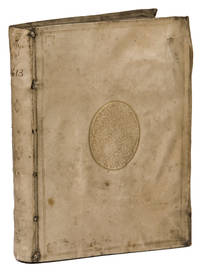
1613ref. ABC_49605Utrecht 1613. 4to. Jan Amelisz Contemporary gold-tooled overlapping vellum sewn on 4 supports laced through the joints both boards show a double fillet frame with small ornamental cornerpieces in the inside corners and a large ornamental oval centrepiece on both boards and with small ornaments slightly faded and the manuscript title on the spine. With a woodcut printers device on the title page and the rare full-page engraved portrait of Erasmus which is lacking in at least 2 of the 4 copies known in an oval lettered: "Magnus ille Erasmus Roterodamus natus Roterdami Octobr. Ao 1467" with emblems in the corners ink pot trumpets hourglass and Bible and a Latin poem of 4 lines underneath "Post cineres vivo doctis tuta manet". This portrait of Erasmus on leaf p1r half to the left and seated his hands resting on an open book is apparently engraved after the portrait by Frans Huys of 1555 which he engraved after the painted portrait by Hans Holbein the Younger Hollstein Dutch & Flemish engr. and etches 132. On the verso of this portrait is a laudatory "Klanck-Ghedicht" sonnet for Erasmus between typographical borders; the same borders on leaf. p2r: the privilege by the States General verso blank. 18 141 3 ll. Very rare first and only edition of a collection of 27 colloquia dialogues by Erasmus and 13 by Lucian of Samosata ca. 125-after 180 CE. The colloquia were translated into Dutch by Andreas van Oosterbeeck fl. 1584-ca. 1620 a minister in Abcoude 1590 and Montfoort 1616. The 27 dialogues by Erasmus include Proci & Puella Virgo Misogamos Virgo poenitens Coniugium Adolescentis & Scorti Abbatis & Eruditae Puerpera Convivium Fabulorum Absurda Opulentia sordida Naufragium Charon Coniugium impar Inquisition de Fide Exorcismus sive Spectrum Peregrinatio Religionis ergo and others.The Colloquia familiaria is one of the main works by Desiderius Erasmus first published in 1518 as Latin dialogues for school exercises and expanded over the following decades with witty - albeit serious - and often controversial content including contemporary religious practises treated in a pervasively ironic tone. After Cornelis Crul's translations of a number of dialogues published between 1530 and 1545 these annotated translations by Andreas van Oosterbeeck are the first 17th-century edition followed in 1622 and 1634 by translation of the colloquia by Dirck Pietersz. Pers.After Erasmus' dialogues follow after a separate title page the 13 highly ironical dialogues originally written in Greek by Lucian: Gallus Toxaris Cnemon Zenophantes Tantalus Menippus Trophonius Charon Crates Nireus Mausolus Polystratus and Diogenes. These are all translated in Dutch by Andreas van Oosterbeeck after the Latin translations made by Erasmus from the original Greek. Lucian of Samosata - a town in Syria - was a Greek writer and satirist who lived in the 2nd century CE. He invented the genre of comic dialogue a parody of the traditional Socratic dialogues and wrote numerous satires about the Gods and public figures.With later annotations in pencil on the front pastedown and flyleave the fore-edge and the bottom outer corner of the back board are somewhat stained and soiled a water stain in the upper outer corner throughout. Otherwise in good condition.l Van der Aa 14 1867; Gheerebaert Lijst p. 57 LVI: Lucianus no. 1 First translation of a work by Lucianus in Dutch!; STCN 169198340 4 copies; USTC 1019209 4 copies same as STCN. hardcover