4.799 resultados
ref. 56641Gent, Koninklijke Vlaamse Academie voor Taal- en Letterkunde, z;j. Softcover, papieromslag, 140 x 220mm., 34pp. ** met opdracht Arents
ref. 26951Gent, Koninklijke Vlaamse Academie voor Taal- en Letterkunde, z;j. Softcover, papieromslag, 140 x 220mm., 34pp.
ref. 56644, Gent, Drukkerij Erasmus, 1954., Originele uitgeversomslag, frontispice z/w, 14,5x22,5cm, pagina's 60- 77 ** met correcties van (zet) drukfouten met potlood door Ere-bibliothecaris W. Van den Berghe ( bibliotheek Antwerpen) + getypte brief van Arents aan van Den Berghe die zijn zondag had opgeofferd om alle fouten aan te stippen.
ref. 0243546939.Gpaperback. Good. Access codes and supplements are not guaranteed with used items. May be an ex-library book. paperback
ref. 0484617559.Ghardcover. Good. Access codes and supplements are not guaranteed with used items. May be an ex-library book. hardcover
2000ref. 10045Leeuwarden, 2000. 2 Bl., S. (55)-80. Gr.-8°. Original-Karton.
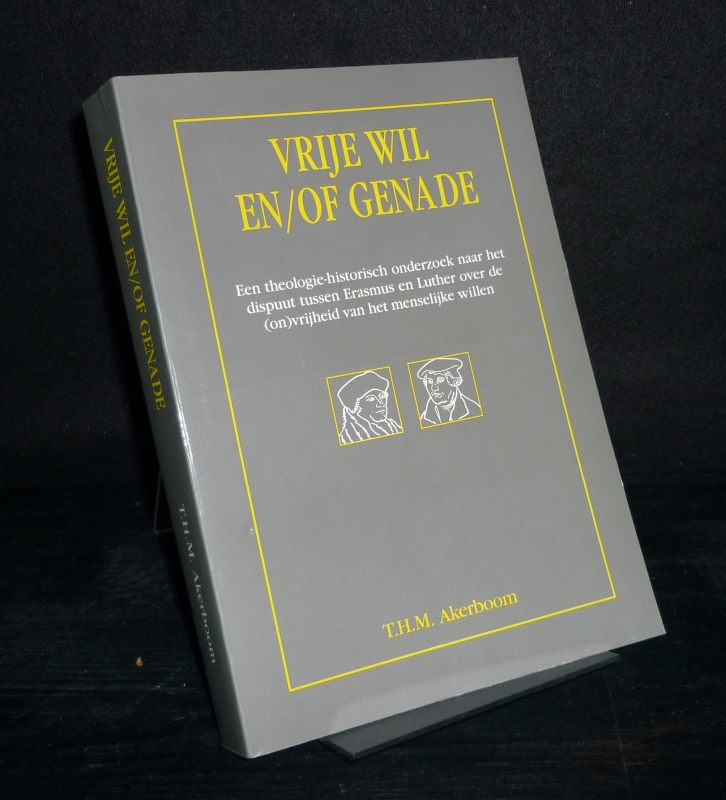
1995ref. 94796Nijmegen: T.H.M. Akerboom 1995. IX, 498 Seiten. 8° (17,5-22,5 cm). Orig.-Broschur. [Softcover / Paperback].
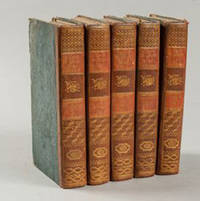
ref. 51-4439Paris: F. Buisson An 7 de la République 1798-99. 5 vols. 12.5 x 19.5 cm. Contemporary qtr. roan very good slightly worn on edges. 39 plates including fold-out maps. Cordier Sinica 2384; OCLC Number: 551933808 lists vol 5 only. .CONTENTS:• Tome premier.• 1Front cover• 5Title page• 11Préface du traducteur.• 23Précis de l'histoire de la Chine.• 199Avertissement de l'auteur anglais.• 201Chapitre premier. Motifs qui ont déterminé la cour de Londres a envoyer und ambassade à la Chine.• 240Chapitre II. Préparatifs de l'ambassade.• 268Chapitre III. Passabe de Portsmouth à Madère. Observations sur cette isle.• 312Chapitre IV. Passage à Ténériffe et à Sant-Yago. Remarque sur ces isles.• 388Chapitre V. Le lion et l'Indostan passent la ligne. Navigation dans la mer atlantique. Port ville et pays de Rio-Janeiro.• 457Chapitre VI. Traversée dans la partie méridionale de la Mer Atlantique et de l'Océan Indien. vue des îles de Tristan d'Acunha dans la première de ces mers et de celles de Sain-Paul et d'Amsterdam dans la seconde.• 507Table of contents• 521Back cover• Tome second.• 523Front cover• 527Voyage dans l'intérieur de la Chine et en Tartarie. T. II.• 531Chapitre premier. Entrée dans le détroit de la sonde. Relache A Batavia dans l'esle de Java.• 603Chapitre II. Vue de l'extrémité méridionale de l'isle de Sumatra. Relache à Bantam. Passage dans le détroit de Banca. Arrivée à Pulo-Condor.• 654Chapitre III. Cochinchine.• 737Chapitre IV. Traverseée de la Cochinchine aux isles des Larrons près de Macao et de la a Chu-San. Observations sur ces diférens pays.• 811Chapitre V. Navigation dans la Mer Jaune. Entrée de l'ambassade dans la rivière qui conduit à Tien-Sing.• 850Chapitre VI. Entrée de l'ambassadeur dans la rivière qui conduit à Tien-Sing.• 919Chapitre VII. L'ambassade remonte la rivière Peiho pour se rendre dans la capitale de la Chine.• 940Table of contents• 955Back cover• Tome troisième.• 957Front cover• 961Title page• 965Chapitre premier. Continuation du voyage sur le Peiho. Les vaisseaux-anglais quittent le golfe de Pé-Ché-Lée.• 1012Chapitre II. Continuation du voyage sur le Peiho. Les vaisseaux anglas quittent le golfe de Pé-Ché-Lée.• 1058Chapitre II. =III. L'ambassade débarque près de Tong-Chou-Fou. Elle traverse Pékin pour se rendre dans un palais qui est au-dela. Elle retourne dans la capitale.• 1229Chapitre IV. L'ambassade anglaise arrive auprès de l'empereur de la Chine en Tartarie dans le palais ou ce prince fait sa résidence pendant l'été.• 1336Chapitre V. Retour à Pékin. Séjour de l'ambassade dans cette capitale et à Yuen-Min-Yuen. Observations qui y ont rapport.• 1387Table of contents• 1409Back cover• Tome quatrième.• 1411Front cover• 1415Title page• 1419Chapitre premier. Suite des observations qui ont rapport à Pékin et à la cour de la Chine.• 1455Chapitre II. Départ de Pékin. Voyage à Han-Chou-Fou fait en partie sur le canal impérial.• 1596Chapitre III. Vue de Han-Chou- Fou et voyage à Chu-San.• 1626Chapitre IV. Voyage de Han-Chou-Fou à Canton. Passage du lion et de l'Indostan de Chu-San à Canton.• 1720Chapitre V. Séjour de l'ambassade anglaise à Canton.• 1799Table of contents• 1817Back cover.Voyage dans l'intérieur de la Chine et en Tartarie fait dans les années 1792 1793 et 1794. Staunton George Leonard 1737-1801 - Sir Macartney George 1737-1806. Auteur Gower Erasmus 1742-1814 - Sir. Auteur Huttner Johann Christian 1766-1847. AuteurParis Buisson an 7 2e édition augmentée 5 volumes in-8 reliés demi-basane dos lisses ornés double pièce de titre. Illustrés de 39 planches dont 4 frontispices et 4 cartes.Cette seconde édition publiée un an après la première contient 32 nouvelles planches qui ont également été réunies dans un atlas pour les acquéreurs de la première édition. Macartney fut envoyé en Chine par George III pour établir un contact avec les élites de la dynastie Qing et en rapporter toutes les observations possibles tant sur le plan des moeurs de la nature que du commerce. Il fut le premier européen à naviguer sur la mer Jaune et fut reçu à la résidence de l'empereur avec les honneurs les plus extravagants.Expertise by F. Valleriaux Paris. Paris: F. Buisson, An 7 de la République (1798-99) unknown
1936ref. 140301-1'S-Gravenhage, Nijhoff 1936. Gr.8°. 146 S. Original-Kartonband
ref. BN87171Göttingen Verlag Vandenhoeck und Ruprecht. Vom freien Willen. Erasmus von Rotterdam. Verdeutscht von Otto Schumacher. Göttingen, Verlag Vandenhoeck und Ruprecht unknown
1998ref. BN43000Vandenhoeck & Ruprecht 1998. 1998. Softcover. 11.5 x 1.3 x 19 cm. Als Humanist Theologe Herausgeber und Übersetzer antiker Autoren Kirchenväter und vor allem des griechischen Neuen Testaments genoß der Gelehrte Erasmus von Rotterdam gleichermaßen bei den Reformatoren wie bei altgläubigen Theologen hohes Ansehen. Mit der Veröffentlichung dieses Traktats Vom freien Willen De libero arbitrio 1524 kam es jedoch zum Bruch mit Martin Luther der seinen leidenschaftlichen Widerspruch in der Gegenschrift De servo arbitrio Vom unfreien Willen 1525 artikulierte. Diese Auseinandersetzung um ein Kernstück der christlichen Anthropologie macht Erasmus Schrift zu einem Dokument der europäischen Geistesgeschichte.Für die Erarbeitung der Schrift und der Debatte enthält der Band ein Bibelstellenverzeichnis und eine Tabelle mit Parallelstellen in Luthers Gegenschrift mit den Seitenzahlen der vier gängigsten Ausgaben: WA Borcherdt/Merz Münchener Ausgabe Luther Deutsch Aland und Clemen. Autor: Erasmus Desiderius von Rotterdam zählt zu den bedeutendsten Repräsentanten des philosophischen Humanismus. Als Philologe und Kirchenkritiker bestimmte er die Grundlagen der protestantischen Bewegung wesentlich mit. Gunther Wenz ist em. Professor für Systematische Theologie an der Evangelisch-Theologischen Fakultät der LMU und Leiter der Wolfhart-Pannenberg Forschungsstelle an der Hochschule für Philosophie in München. Reihe/Serie: Kleine Reihe V&R ; 4007 Übersetzer: Otto Schumacher Vorwort: Gunther Wenz Sprache: deutsch Einbandart: kartoniert Geisteswissenschaften Religion Theologie Christentum Wille ISBN-10: 3-525-34007-9 3525340079 ISBN-13: 978-3-525-34007-3 9783525340073 Vom freien Willen: . Vom freien Willen 7.A Novum Testamentum/Studien Zur Umwelt Des Nt Band 400 Rotterdam Erasmus von; Wenz Gunther Schumacher Otto KLEINE REIHE V&R 4007 Geisteswissenschaften Religion Theologie Christentum Wille Vom freien Willen: . Vom freien Willen 7.A Novum Testamentum/Studien Zur Umwelt Des Nt Band 400 Rotterdam Erasmus von; Wenz Gunther Schumacher Otto KLEINE REIHE V&R 4007 Als Humanist Theologe Herausgeber und Übersetzer antiker Autoren Kirchenväter und vor allem des griechischen Neuen Testaments genoß der Gelehrte Erasmus von Rotterdam gleichermaßen bei den Reformatoren wie bei altgläubigen Theologen hohes Ansehen. Mit der Veröffentlichung dieses Traktats Vom freien Willen De libero arbitrio 1524 kam es jedoch zum Bruch mit Martin Luther der seinen leidenschaftlichen Widerspruch in der Gegenschrift De servo arbitrio Vom unfreien Willen 1525 artikulierte. Diese Auseinandersetzung um ein Kernstück der christlichen Anthropologie macht Erasmus Schrift zu einem Dokument der europäischen Geistesgeschichte.Für die Erarbeitung der Schrift und der Debatte enthält der Band ein Bibelstellenverzeichnis und eine Tabelle mit Parallelstellen in Luthers Gegenschrift mit den Seitenzahlen der vier gängigsten Ausgaben: WA Borcherdt/Merz Münchener Ausgabe Luther Deutsch Aland und Clemen. Autor: Erasmus Desiderius von Rotterdam zählt zu den bedeutendsten Repräsentanten des philosophischen Humanismus. Als Philologe und Kirchenkritiker bestimmte er die Grundlagen der protestantischen Bewegung wesentlich mit. Gunther Wenz ist em. Professor für Systematische Theologie an der Evangelisch-Theologischen Fakultät der LMU und Leiter der Wolfhart-Pannenberg Forschungsstelle an der Hochschule für Philosophie in München. Reihe/Serie: Kleine Reihe V&R ; 4007 Übersetzer: Otto Schumacher Vorwort: Gunther Wenz Sprache: deutsch Einbandart: kartoniert ISBN-10: 3-525-34007-9 3525340079 ISBN-13: 978-3-525-34007-3 9783525340073 Vandenhoeck & Ruprecht paperback
ref. 24197Ledeberg/Gent, Erasmus, 1972 Originele uitgeversomslag in kleur, 19x25.5 cm., 205 pp. + 120 illustraties in z/w.
ref. 32841Turin, Umberto Allemandi & C., 2010 320pp Misure: 24 x 31 cm Illustrazioni: 320 col. Hardback nederlands preface by Emmanuel Le Roy Ladurie ISBN 9788842219590.
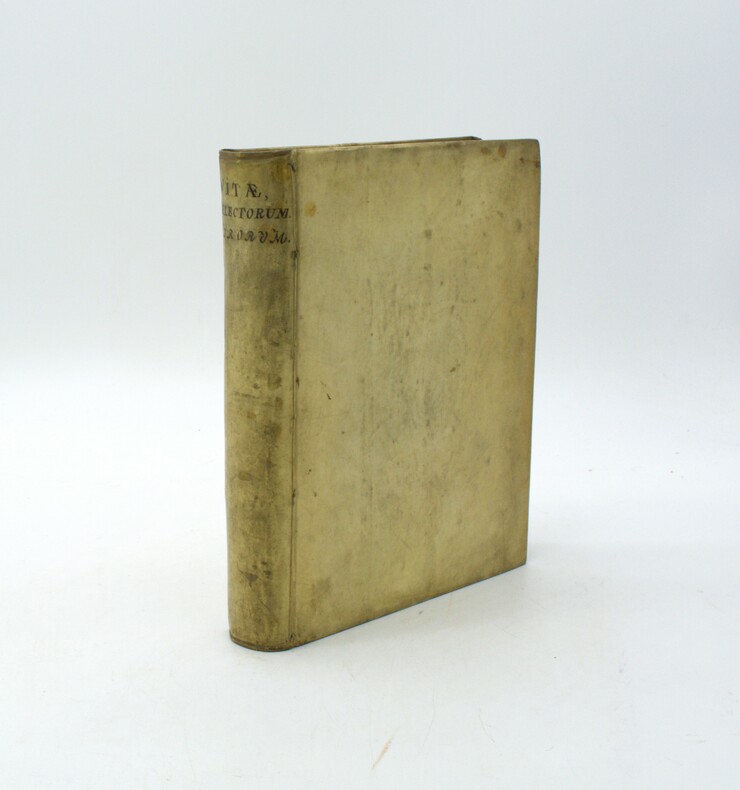
1681ref. PHO-1835Londini, George Wells, 1681, 4°, 2ff.-748pp., plein vélin époque, dos lisse avec titre manuscrit.
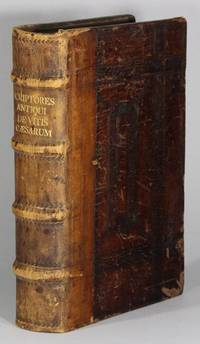
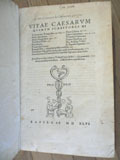
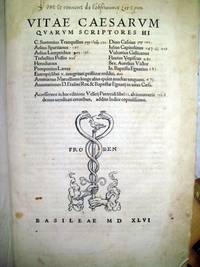
1546ref. 73674Basileae: Per Hieronymvm Frobenivm et Nic. Episcopivm 1546. Folio leaf 32.0 cm pp. 20 810 70; printer's woodcut device on title page and verso of last leaf; woodcut initials some historiated and ornaments; contemporary paneled calf over wooden boards sometime rebacked to match paneled spine in 5 compartments gilt-lettered direct in 1; clasps perished the whole rubbed and worn but the binding is sound and the text clean. Includes blank leaves Q8 and Xx6. Beginning with Suetonius's biographies of the Caesars and Roman emperors this volume brings together numerous "Historiae augustae scriptores" - the title of the first edition of the anthology published in Milan in 1475. A Venetian reprint of 1489 was followed in 1516 by a "nouvelle revision du texte" Graesse by the humanist scholar Giovanni Battista Egnazio and again in 1518 with a further revision by Erasmus. Added to this edition are the two books of Velleius Paterculus. Adams C 91. Graesse III 303. [Per Hieronymvm Frobenivm et Nic. Episcopivm] unknown books
1546ref. 13096Froben | Basilae (Bâle) 1546 | 33 x 22.50 cm | relié
1546ref. 13096Basilae Basel Bâle Basel: Froben 1546. Fine. Froben Basilae Basel Bâle Basel 1546 33 x 22.50 cm relié Colophon: Basileae per Hieronymvm Frobenivm et Nic. Episcopvm mense Septembri M.D.XLVI. First edition. Decorated with numerous historiated initials. Printer's device on the title page and verso of the final leaf. Absent from French catalogues but present in English catalogues 2 copies in Germany at the GBV union catalogue of northern Germany and one at the University of Munich. The 1544 edition published in Paris does not include Erasmus's notes and the complete assembly of authors gathered in this edition; the Parisian edition was reissued in 1551 in Lyon by Gryphium but not this Froben edition which reproduces only Egnazio's edition. The first edition of Suetonius dates from 1479. Full sheep binding 17th century decorated raised spine red morocco title label. Overall rubbed and worn on boards numerous scratches upper headcap missing 2 upper corners broken and missing. Fine interior condition with pale dampstaining running through about twenty pages at top center pp. 29 to 45. Several pagination errors same number repeated leaf skipped without lack. The evident interest of this edition was to gather together all the writers of antiquity who wrote about the Roman empire not only Suetonius but also rarer writers such as Dio Cassius translated by Merula Herodian translated by Angelo Ambrogini Poliziano Spartianus or Lampidius Velleius Paterculus Vulcatius Gallicanus Ammianus Marcellinus. Two commentators: Erasmus died in 1536 and Giovanni Battista Egnazio 1478-1553. Froben 1501-1563 is one of the great publishers of the Renaissance and the worthy successor of Johann Froben the first of the dynasty who established his printing house in Basel in 1491; it was with him that Erasmus was linked and worked and Jerome Froben merely reaped the fruits. This edition is the alliance of Froben and Nikolaus Episcopius his brother-in-law. Gothic manuscript note: ""pour le couvent de l'observance des Lyon"" and manuscript pagination of the authors. Froben hardcover
1546ref. 73674Basileae: Per Hieronymvm Frobenivm et Nic. Episcopivm 1546. Folio leaf 32.0 cm pp. 20 810 70; printer's woodcut device on title page and verso of last leaf; woodcut initials some historiated and ornaments; contemporary paneled calf over wooden boards sometime rebacked to match paneled spine in 5 compartments gilt-lettered direct in 1; clasps perished the whole rubbed and worn but the binding is sound and the text clean. Includes blank leaves Q8 and Xx6. Beginning with Suetonius's biographies of the Caesars and Roman emperors this volume brings together numerous "Historiae augustae scriptores" - the title of the first edition of the anthology published in Milan in 1475. A Venetian reprint of 1489 was followed in 1516 by a "nouvelle revision du texte" Graesse by the humanist scholar Giovanni Battista Egnazio and again in 1518 with a further revision by Erasmus. Added to this edition are the two books of Velleius Paterculus. Adams C 91. Graesse III 303. [Per Hieronymvm Frobenivm et Nic. Episcopivm] unknown
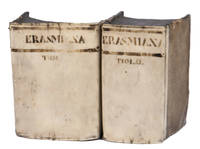
1642ref. AB6GB5JMB8EQLeiden: Joannes Maire 1642. Contemporary half vellum paper sides with "Erasmiana tom. I or II" in manuscript on the spine blue edges. 12mo. Ad 1 with an engraved title page by C. van Dalen showing Erasmus standing in a church with a book in his left hand pointing to three other men. All title pages contain Maire's woodcut device see Breugelmans nr. 13 and a woodcut portrait of Erasmus in a roundel on leaf 8r in ad 1 and his device in a roundel in the text on leaf 25v in ad 1. Further with several woodcut decorated initials throughout. 14 works in 2 volumes. With:2 ERASMUS Desiderius. Lingua sive de linguae usu atque abusu liber utilissimus.Leiden Joannes Maire 1649.3 ERASMUS Desiderius. Moriae encomium cum Gerradi Listriis commentariis. Epistolae aliqut in fine additae. Leiden Joannes Maire 1648.4 ERASMUS Desiderius. Dialogus Ciceronianus: sive de optimo genere dicendi. Leiden Joannes Maire 1643.5 ERASMUS Desiderius. Dialogus de recta Latini Graecique sermonis pronuntiatione. Leiden Joannes Maire 1643.6 ERASMUS Desiderius. De contemptu mundi liber. Leiden Joannes Maire 1641.7 ERASMUS Desiderius. Querela pacis undique gentium ejectae profligataeque. Leiden Joannes Maire 1641.8 ERASMUS Desiderius. De immensa Dei misericordia. Leiden Joannes Maire 1641.9 ERASMUS Desiderius. Modus orandi Deum. Leiden Joannes Maire 1641.10 ERASMUS Desiderius. Precationes quibus homines assuescant cum Deo loqui.Leiden Joannes. Maire 1641.11 ERASMUS Desiderius. Enarratio in Psalmum I.Leiden Joannes Maire 1644.12 ERASMUS Desiderius. Enarratio triplex in Psalmum XXII. Leiden Joannes Maire 1645.13 ERASMUS Desiderius. Enarratio pia juxta ac docta in Psalmum XXXIV.Leiden Joannes Maire 1652.14 ERASMUS Desiderius. Concionalis interpretatio plena pietatis in Psalmum LXXXVI.Leiden Joannes Maire 1652. These 14 important works by Erasmus - the edition of his most important letters after the Vita edited by Petrus Scriverius 1576-1660 his famous Laus stultitiae and 3 of his linguistic works in the first volume and 9 theological works in volume 2 - belong to a project of the Leiden publisher printer and bookseller Joannes Maire 1603-1657. This project that can be seen as a series of editions that together represent Erasmus' collected works ensured Maire's stellar reputation through the ages. 23 different works appeared between 1641 and 1652. It has long been thought that Petrus Scriverius was the editor but now there is proof that in fact Willem Henricus Vorstius a learned Remonstrant minister in the village of Warmond near Leiden did the job Breugelmans p. 24.11 works were published in 1641 5 of which in the present collection; 2 in 1642 1 present 3 in 1643 2 present 1 in 1644 also present 3 in 1645 1 present 1 in 1648 also present 1 in 1649 also present 1 in 1650 also present and 2 in 1652 both present. The whole collection brings together a representative selection of Erasmus' spiritual moral and exegetical writings - as it includes treatises on Christian prayer and devotion moral and ascetical reflections expositions of the Creed the Ten Commandments and the Lord's Prayer and commentaries on select psalms. It is presented together with Sriverius' edition of the Vita a biography of Erasmus.Printed in compact duodecimo format with Maires characteristic typographic elegance these Leiden editions form one of the most coherent 17th-century series of Erasmus spiritual writings.With a manuscript owner's inscription on the title pages of ads 1 and 6 a small manuscript inscription on the title page of ad 2 and a small manuscript inscription on the title pages of ads 3 5 and 6-14. Further with two library stamps of the Nordelbische Kirchenbibliothek in Hamburg incl. "Gelöscht" stamps on the versos of the title pages of ads 1 and 6. The bindings are dust soiled and slightly damaged along the extremities but the structural integrity of both bindings remains fine slight foxing and browning throughout. Otherwise in good condition.l Ad 1: Breugelmans Fac et spera. Joannes Maire 2003 1642:7; STCN 840230303; USTC 1028900; Van der Haeghen I 182; Ad 2: Breugelmans 1649:3; Overzicht werken Erasmus Rotterdam 1936 934; STCN 840230753; USTC 1028906; Van der Haeghen I 118; Ad 3: Breugelmans 1648:3A; Overzicht werken Erasmus Rotterdam 1936 990; STCN 840230621 9 copies incl. 1 incomplete; USTC 1028905 9 copies same as STCN; Van der Haeghen I 124; Ad 4: Breugelmans 1643:4; Overzicht werken Erasmus Rotterdam 1936 663; STCN 84023127X; USTC 1028908; Van der Haeghen I 75; Ad 5: Breugelmans 1643:5; Overzicht werken Erasmus Rotterdam 1936 671; STCN 840231237; USTC 1028907; Van der Haeghen I 242; Ad 6: Breugelmans 1641:3B; Overzicht werken Erasmus Rotterdam 1936 556; STCN 840238592 7 copies; USTC 1028914 7 copies same as STCN; Van der Haeghen I 7; Ad 7: Breugelmans 1641:13B; STCN 840227620 5 copies; USTC 1028897 5 copies same as STCN; Van der Haeghen I 167; Ad 8: Breugelmans 1641:4B; STCN 840238479 7 copies; USTC 1028912; Van der Haeghen I 73; Ad 9: Breugelmans 1641:10B; STCN 06126220X 6 copies; USTC 1011884; Van der Haeghen I 121; Ad 10: Breugelmans 1641:11A; Overzicht werken Erasmus Rotterdam 1936 1033; STCN 061215252; USTC 1011798; Van der Haeghen I 160; Ad 11: Breugelmans 1644:2; Overzicht werken Erasmus Rotterdam 1936 1340; STCN 061265306; USTC 1011896; Van der Haeghen I 162; Ad 12: Breugelmans 1645:4; Overzicht werken Erasmus Rotterdam 1936 1345; STCN 113911165; USTC 1015819; Van der Haeghen I 162; Ad 13: Breugelmans 1652:3; Overzicht werken Erasmus Rotterdam 1936 1347; STCN 061377597; USTC 1801991; Van der Haeghen I 162; Ad 14: Breugelmans1652:2; Overzicht werken Erasmus Rotterdam 1936 1350; STCN 061377473; USTC 1802003; Van der Haeghen I 162. Joannes Maire, hardcover
1516ref. 4621Strasbourg: Johann Knobloch 1516. Hardcover. Fine. Bound with: 2. Erasmus Desiderius 1466-1536 De duplici copia verborum ac rerum commentarij duo. Ab authore ipso diligentissime recogniti & emaculati atque in plerisque locis aucti. . ; Item Epistola Erasmi Roterodami ad Iacobum Vuimphelingium Selestatinum. Strasbourg: Mathias Schürer October 1516 And: 3. Hutten Ulrich von 1488-1523; Weiditz Hans 1495- ca. 1536 artist. ΟΥΤΙΣ. Nemo Augsburg: Johann Miller 9 September 1518 Three Publications in One Volume: Quarto: 19.3 x 13.6 cm. I. Burley 8 LII ff. Collation: i-viii8 A-B8 C-D4 E8 F4-H4 I8 leaf 8 in fist gathering blank. II. Erasmus 6 LXXIII 5 ff. Collation: 1-66 a4 b8 c4 d8 e-f4 g8 h-i4 k8 l-m4 n8 o6. III. Hutten 12 ff. Collation: A-C4 A humanist sammelband featuring Ulrich von Hutten's satire championing the liberal arts with the impressive woodcut of Hutten's Odyssean hero surrounded by the equipment of all students: books a flagon board games musical instruments. Bound in 16th c. pigskin signed S.K.E. and dated 1575 soiled and stained corners bumped. The binding tooled in blind with a roll tool with images of Christ St. Paul and King David playing his lyre signed HW Haebler I p. 486/8. Contents in good condition a little careworn binding and contents moderately soiled scattered marginal notes and underscores occasional stains. Text block cut a bit close at the head at the time 1572 of rebinding; text block separating at front of volume. I. Burley: title page with numerous pen-trials 17th c. ownership note; short worm-trail to first three leaves only not affecting text; damp-stain to corner of first gathering. II. Erasmus: Title with white-on-black woodcut border with fools columns and putti supporting a shield with the printer’s initials. The name of Erasmus has been censored on the first two lvs. in ink with shine though onto the following two lvs. and by scratching out the name elsewhere in the text. Small marginal dampstain occ. notes. III. Hutten: With the iconic full-page woodcut title by Hans Weiditz see below for details. Mild soiling throughout final gathering lightly browned/stained cut close at head. I. Medieval Encounters with the Ancient Philosophers Burley Walter Pseudo- ca. 1320; Diogenes Laertius 3rd c. CE Vita Philosophorum et Poetarum : cum auctoritatibus et sententiis aureis eorundem annexis Strasbourg: Johann Knobloch 1516 ONE OF NUMEROUS EARLY EDITIONS. The first edition was printed in 1470. Now believed to have been composed in the early 14th c. from the 15th c. up until the 20th “The Lives of the Philosophers and Poets” was transmitted under the name of Walter Burley ca. 1275–1344 one of the most prominent and influential philosophers of the fourteenth century. Burley had a very long career in both England and France becoming Master of Arts at Oxford by 1301 and Master of Theology at Paris by 1324. He produced a large body of about fifty works many of which were widely read in the later Middle Ages. “In 1990 the image of ‘De vita et moribus’ suffered a terrible blow when Mario Grignaschi severed its connection with Walter Burley Grignaschi “Lo Pseudo Walter Burley” 131–90 and in the same volume “Corrigenda et addenda” 325–54. Grignaschi showed that the work had to have been composed in northern Italy which had the resources in classical materials and that – from the evidence of an anonymous work dated 1326 that made use of it – it had to have been made no later than the 1320s perhaps even about 1310 that is during a period long before Burley arrived in Bologna. Overnight ‘De vita et moribus’ was deprived of its glamorous Burleian associations with Oxford Paris high scholasticism debates about realism and the Plantagenet court to be revealed as the work of an anonymous Italian who is now referred to – teasingly and cruelly – as the ‘Pseudo-Burley.’ How the work came to be attributed to Burley in fifteenth - century manuscripts is unclear although the attribution stuck and was reaffirmed in early prints… “Adding insult to injury the ‘De vita et moribus’ was hack work not the product of thoughtful pedagogical ruminations in the Oxford common rooms. The anonymous Italian was keen to get his work out there in a competitive literary market so he worked quickly. To this end to find lively day-to-day pictures of the ancient philosophers the Pseudo-Burley turned to that eminently chatty anecdootal resource long derided by classicists and philosophers Diogenes Laertius’ Lives and scooped out from it as much detail as suited his purpose supplementing it with anything else to hand to expand his topic. Thus he lumps Pre-Socratics Cynics Skeptics Epicureans Academicians and Stoics together almost indiscriminately with poets dramatists orators and sophists physicians historians and grammarians and he extends the coverage beyond Diogenes’ Hellenic limits to include various authors of Latin antiquity. Some of the gnomic material in the work is derived from the Arabic -Spanish-Latin ‘Bocados de oro’ notably in the chapter on Plato Hasse 50–52; Ferrer 682.”Rita Copeland “Behind the Lives of Philosophers Reading Diogenes Laertius in the Western Middle Ages” A Pleasing Fullness of Expression II. Erasmus Desiderius 1466-1536 De duplici copia verborum ac rerum commentarij duo. Ab authore ipso diligentissime recogniti & emaculati atque in plerisque locis aucti. . ; Item Epistola Erasmi Roterodami ad Iacobum Vuimphelingium Selestatinum. Strasbourg: Mathias Schürer October 1516 An early edition of ‘De duplici copia’. Erasmus was working for a number of years on a treatise on Latin composition begun while in Italy but completed only in 1512 during his third stay in England at the request of John Colet for use in the latter’s newly founded school in St. Paul’s churchyard. This treatise was designed to help the young student in acquiring an elegant and copious style and to provide abundant examples of how to say the same thing in different ways. It was first printed in Paris by Badius in 1512 but was soon reprinted several times becoming a standard textbook in schools throughout Western Europe. This edition contains Erasmus’ long letter to the Alsatian humanist Jakob Wimpfeling 1450-1528 dated 21 September 1514 in which he relates his previous journey to Basle mentioning all the humanist scholars he had met from Alsace and Basle where Erasmus had just taken up residence. Erasmus had first become acquainted with Wimpheling in August 1514 when he stopped in Strassburg on his way to Basle and was officially welcomed by the members of the recently founded literary society which included Sebastian Brant and Joannes Sturm. The work concludes with three poems by Erasmus addressed to Sebastian Brant Joannes Sapidus and Thomas Didimus together with the latter’s reply. "The word ‘copia’ presents a special problem to the translator. Weltkirch a sixteenth-century Erasmian commentator defined ‘copia’ as the ‘faculty of varying the same expression or thought in many ways by means of different forms of speech and a variety of figures and arguments. ‘Copia’ of words has its origins in grammar; ‘copia’ of thought in dialectic.’ However the word is used by Erasmus to denote not only the faculty of varying but also varying itself. Indeed as used by Erasmus ‘copia’ encompasses within its meaning the meaning of four English words: variation abundance or richness eloquence and the ability to vary or enrich language and thought. "In his lengthy discussion of school curriculum in Shakespeare’s age T.W. Baldwin discusses at great length the importance of the ‘De Copia’ in the educational pattern of the time. The schoolmasters’ editions and commentaries that began to appear even in Erasmus’ lifetime provide further evidence of Erasmus’ impact on Renaissance education… "In his study of Renaissance humanism R.R. Bolgar says: ‘The ‘De Copia’ provides us in a sense with a clue to the whole of Humanism. Specifying the techniques on which imitation depended it makes clear what men were attempting not only in Latin but also in the vernaculars . If we want to trace how the Humanist practice of imitation affected creative writing if we want to go behind the scenes and cast an eye on the mechanism of the process.our best guide is Erasmus. The ‘De Copia’ outlines his method. The ‘Adagia’ presents us with the fruits of that method. and finally the ‘Colloquies’ and the ‘Praise of Folly’ show us the finished product.’"Donald B. King and H. David Rix "On Copia of Words and Ideas". Bezzel Erasmusdrucke no. 740; VD16 E 2647; Knaake Reformationsschriften II 144 The Original Liberal Arts Student Hutten Ulrich von 1488-1523; Weiditz Hans 1495- ca. 1536 artist. ΟΥΤΙΣ. Nemo Augsburg: Johann Miller 9 September 1518 FIRST EDITION FIRST ISSUE. With a full-page woodcut title page by Hans Weiditz. First printing of Hutten's second "Nemo" a substantially re-worked and enlarged version of the 1516 original. This edition has been augmented by 60 verses mainly on political subjects an introduction dedicated to Johannes Crotus Rubianus 1480-1545 and a letter to Julius von Pflug 1499-1564. It also marks the first appearance of the celebrated woodcut title page described in detail below. Hutten found the inspiration for his Nemo "Nobody" in Homer's Odyssey where Odysseus calling himself Nobody outwits the Cyclops Polyphemus. Hutten builds on this wordplay to create a new hero a humanist reformer capable of speaking out against the Church "Nobody dares to criticize the luxury of the priests and the idle life of the Pope." and one who appreciates the value of humanistic learning "Nobody gives scholarly studies the rewards they deserve." The title woodcut cleverly illustrates the dual identities of Hutten's satirical hero. Nemo clad in classical garb stands upon a beach with the familiar attributes of the humanities student gaming boards books a lute a drinking flagon strewn about him. In the background the Cyclops threatens to hurl a boulder onto Nemo's waiting ship. The revised "Nemo" is more overtly political than the earlier version. The added distichs reveal Hutten's anger over corruption in the Church and his mounting frustration with German politics. Shortly after he published "Nemo" Hutten assumed a central role in the politics of the nascent Reformation. In the letter to Pflug that concludes this edition Hutten praised Erasmus with whom he had maintained a good relationship since 1514 as the "Forger of a new way"; Erasmus spoke approvingly of Hutten's work Ep 961 967. Soon after publication of "Nemo" however relations between the two men became strained eventually leading to hostility between them. In 1522 Erasmus would lament that "This whirlwind of Luther" had torn Hutten away from him. See "Contemporaries of Erasmus" vol. II p. 218 ff. "Ulrich Von Hutten German humanist neo-Latin poet and political publicist in the service of the Reformation was born into a family of imperial knights in Steckelberg castle in Franconia. Between 1505 and 1511 Hutten pursued humanistic studies at various Germany universities. In 1512 on his way to Italy to study law he visited Joachim Vadian in Vienna and other humanists in the circle of the Emperor Maximilian. He then turned from personal literary interests to political matters. After studying at the universities of Pavia and Bologna and serving briefly in the army of Maximilian Hutten returned to Germany in 1514. There he met Erasmus who expected much of the young poet and who dedicated his epistolary biography of Thomas More to him. During his second stay in Italy 1515-17 he wrote a series of epigrams denouncing not only the enemies of the Emperor Maximilian -the French and the Venetians- but also Pope Julius II. "On his return from Italy Hutten was crowned poet laureate by Maximilian and entered the service of Albert of Brandenburg archbishop of Mainz as councilor; in four dialogues Hutten nonetheless castigated not only the luxury and moral excess of the papal court and the concept of celibacy but also Rome’s fiscal exploitation of the German nation. With its pointed triplets Hutten’s "Vadiscus sive trias Romana" 1521 contains the most comprehensive catalogue of German grievances against Rome. "Despite his antipapal stance Hutten initially viewed the controversy following Luther’s postings of the Ninety-five Theses in Wittenberg as a monks’ squabble and a welcome rift among his opponents. It was only after two years of virtually ignoring Luther that Hutten began to consider himself as an ally. Although Luther’s opposition to Rome was rooted primarily in religious-theological concerns and Hutten’s was prompted by political-nationalist aspirations the two men exercised considerable influence on each other. "In 1520 Hutten embarked on a feverish campaign in which he challenged the Emperor the German nobility the princes the cities and the general reader to take up the fight against Rome if necessary with arms. During the Diet of Worms he next to Luther became the most prominent representative of the antipapal party in Germany. Realizing in the wake of the Diet that a general uprising would not occur Hutten launched the so-called "Priests’ War" in the hope that it would provide the spark that would ignite the German powder keg. In 1522 having lost the protection of Sickingen Hutten fled to Basel and then in 1523 to Zurich where he died on 29 August of Syphilis." Oxford Encyclopedia of the Reformation Benzing Hutten 62; Fairfax-Murray 211; Musper "Petrarka Master" L7; Roettinger 7; Adams H 1237; BM STC German p. 427; VD 16; H 6384; Worst Brock German humanism 1480-1520 2009 p 1200 f. No. 10.2; Röttinger Weiditz 7; Fairfax Murray 211; Richard C. Kessler Reformation Collection I 114. Johann Knobloch hardcover books
1516ref. 4621Strasbourg: Johann Knobloch 1516. Hardcover. Fine. Bound with: 2. Erasmus Desiderius 1466-1536 De duplici copia verborum ac rerum commentarij duo. Ab authore ipso diligentissime recogniti & emaculati atque in plerisque locis aucti. . ; Item Epistola Erasmi Roterodami ad Iacobum Vuimphelingium Selestatinum. Strasbourg: Mathias Schürer October 1516 And: 3. Hutten Ulrich von 1488-1523; Weiditz Hans 1495- ca. 1536 artist. ΟΥΤΙΣ. Nemo Augsburg: Johann Miller 9 September 1518 Three Publications in One Volume: Quarto: 19.3 x 13.6 cm. I. Burley 8 LII ff. Collation: i-viii8 A-B8 C-D4 E8 F4-H4 I8 leaf 8 in fist gathering blank. II. Erasmus 6 LXXIII 5 ff. Collation: 1-66 a4 b8 c4 d8 e-f4 g8 h-i4 k8 l-m4 n8 o6. III. Hutten 12 ff. Collation: A-C4 A humanist sammelband featuring Ulrich von Hutten's satire championing the liberal arts with the impressive woodcut of Hutten's Odyssean hero surrounded by the equipment of all students: books a flagon board games musical instruments. Bound in 16th c. pigskin signed S.K.E. and dated 1575 soiled and stained corners bumped. The binding tooled in blind with a roll tool with images of Christ St. Paul and King David playing his lyre signed HW Haebler I p. 486/8. Contents in good condition a little careworn binding and contents moderately soiled scattered marginal notes and underscores occasional stains. Text block cut a bit close at the head at the time 1572 of rebinding; text block separating at front of volume. I. Burley: title page with numerous pen-trials 17th c. ownership note; short worm-trail to first three leaves only not affecting text; damp-stain to corner of first gathering. II. Erasmus: Title with white-on-black woodcut border with fools columns and putti supporting a shield with the printer’s initials. The name of Erasmus has been censored on the first two lvs. in ink with shine though onto the following two lvs. and by scratching out the name elsewhere in the text. Small marginal dampstain occ. notes. III. Hutten: With the iconic full-page woodcut title by Hans Weiditz see below for details. Mild soiling throughout final gathering lightly browned/stained cut close at head. I. Medieval Encounters with the Ancient Philosophers Burley Walter Pseudo- ca. 1320; Diogenes Laertius 3rd c. CE Vita Philosophorum et Poetarum : cum auctoritatibus et sententiis aureis eorundem annexis Strasbourg: Johann Knobloch 1516 ONE OF NUMEROUS EARLY EDITIONS. The first edition was printed in 1470. Now believed to have been composed in the early 14th c. from the 15th c. up until the 20th “The Lives of the Philosophers and Poets” was transmitted under the name of Walter Burley ca. 1275–1344 one of the most prominent and influential philosophers of the fourteenth century. Burley had a very long career in both England and France becoming Master of Arts at Oxford by 1301 and Master of Theology at Paris by 1324. He produced a large body of about fifty works many of which were widely read in the later Middle Ages. “In 1990 the image of ‘De vita et moribus’ suffered a terrible blow when Mario Grignaschi severed its connection with Walter Burley Grignaschi “Lo Pseudo Walter Burley” 131–90 and in the same volume “Corrigenda et addenda” 325–54. Grignaschi showed that the work had to have been composed in northern Italy which had the resources in classical materials and that – from the evidence of an anonymous work dated 1326 that made use of it – it had to have been made no later than the 1320s perhaps even about 1310 that is during a period long before Burley arrived in Bologna. Overnight ‘De vita et moribus’ was deprived of its glamorous Burleian associations with Oxford Paris high scholasticism debates about realism and the Plantagenet court to be revealed as the work of an anonymous Italian who is now referred to – teasingly and cruelly – as the ‘Pseudo-Burley.’ How the work came to be attributed to Burley in fifteenth - century manuscripts is unclear although the attribution stuck and was reaffirmed in early prints… “Adding insult to injury the ‘De vita et moribus’ was hack work not the product of thoughtful pedagogical ruminations in the Oxford common rooms. The anonymous Italian was keen to get his work out there in a competitive literary market so he worked quickly. To this end to find lively day-to-day pictures of the ancient philosophers the Pseudo-Burley turned to that eminently chatty anecdootal resource long derided by classicists and philosophers Diogenes Laertius’ Lives and scooped out from it as much detail as suited his purpose supplementing it with anything else to hand to expand his topic. Thus he lumps Pre-Socratics Cynics Skeptics Epicureans Academicians and Stoics together almost indiscriminately with poets dramatists orators and sophists physicians historians and grammarians and he extends the coverage beyond Diogenes’ Hellenic limits to include various authors of Latin antiquity. Some of the gnomic material in the work is derived from the Arabic -Spanish-Latin ‘Bocados de oro’ notably in the chapter on Plato Hasse 50–52; Ferrer 682.”Rita Copeland “Behind the Lives of Philosophers Reading Diogenes Laertius in the Western Middle Ages” A Pleasing Fullness of Expression II. Erasmus Desiderius 1466-1536 De duplici copia verborum ac rerum commentarij duo. Ab authore ipso diligentissime recogniti & emaculati atque in plerisque locis aucti. . ; Item Epistola Erasmi Roterodami ad Iacobum Vuimphelingium Selestatinum. Strasbourg: Mathias Schürer October 1516 An early edition of ‘De duplici copia’. Erasmus was working for a number of years on a treatise on Latin composition begun while in Italy but completed only in 1512 during his third stay in England at the request of John Colet for use in the latter’s newly founded school in St. Paul’s churchyard. This treatise was designed to help the young student in acquiring an elegant and copious style and to provide abundant examples of how to say the same thing in different ways. It was first printed in Paris by Badius in 1512 but was soon reprinted several times becoming a standard textbook in schools throughout Western Europe. This edition contains Erasmus’ long letter to the Alsatian humanist Jakob Wimpfeling 1450-1528 dated 21 September 1514 in which he relates his previous journey to Basle mentioning all the humanist scholars he had met from Alsace and Basle where Erasmus had just taken up residence. Erasmus had first become acquainted with Wimpheling in August 1514 when he stopped in Strassburg on his way to Basle and was officially welcomed by the members of the recently founded literary society which included Sebastian Brant and Joannes Sturm. The work concludes with three poems by Erasmus addressed to Sebastian Brant Joannes Sapidus and Thomas Didimus together with the latter’s reply. "The word ‘copia’ presents a special problem to the translator. Weltkirch a sixteenth-century Erasmian commentator defined ‘copia’ as the ‘faculty of varying the same expression or thought in many ways by means of different forms of speech and a variety of figures and arguments. ‘Copia’ of words has its origins in grammar; ‘copia’ of thought in dialectic.’ However the word is used by Erasmus to denote not only the faculty of varying but also varying itself. Indeed as used by Erasmus ‘copia’ encompasses within its meaning the meaning of four English words: variation abundance or richness eloquence and the ability to vary or enrich language and thought. "In his lengthy discussion of school curriculum in Shakespeare’s age T.W. Baldwin discusses at great length the importance of the ‘De Copia’ in the educational pattern of the time. The schoolmasters’ editions and commentaries that began to appear even in Erasmus’ lifetime provide further evidence of Erasmus’ impact on Renaissance education… "In his study of Renaissance humanism R.R. Bolgar says: ‘The ‘De Copia’ provides us in a sense with a clue to the whole of Humanism. Specifying the techniques on which imitation depended it makes clear what men were attempting not only in Latin but also in the vernaculars . If we want to trace how the Humanist practice of imitation affected creative writing if we want to go behind the scenes and cast an eye on the mechanism of the process.our best guide is Erasmus. The ‘De Copia’ outlines his method. The ‘Adagia’ presents us with the fruits of that method. and finally the ‘Colloquies’ and the ‘Praise of Folly’ show us the finished product.’"Donald B. King and H. David Rix "On Copia of Words and Ideas". Bezzel Erasmusdrucke no. 740; VD16 E 2647; Knaake Reformationsschriften II 144 The Original Liberal Arts Student Hutten Ulrich von 1488-1523; Weiditz Hans 1495- ca. 1536 artist. ΟΥΤΙΣ. Nemo Augsburg: Johann Miller 9 September 1518 FIRST EDITION FIRST ISSUE. With a full-page woodcut title page by Hans Weiditz. First printing of Hutten's second "Nemo" a substantially re-worked and enlarged version of the 1516 original. This edition has been augmented by 60 verses mainly on political subjects an introduction dedicated to Johannes Crotus Rubianus 1480-1545 and a letter to Julius von Pflug 1499-1564. It also marks the first appearance of the celebrated woodcut title page described in detail below. Hutten found the inspiration for his Nemo "Nobody" in Homer's Odyssey where Odysseus calling himself Nobody outwits the Cyclops Polyphemus. Hutten builds on this wordplay to create a new hero a humanist reformer capable of speaking out against the Church "Nobody dares to criticize the luxury of the priests and the idle life of the Pope." and one who appreciates the value of humanistic learning "Nobody gives scholarly studies the rewards they deserve." The title woodcut cleverly illustrates the dual identities of Hutten's satirical hero. Nemo clad in classical garb stands upon a beach with the familiar attributes of the humanities student gaming boards books a lute a drinking flagon strewn about him. In the background the Cyclops threatens to hurl a boulder onto Nemo's waiting ship. The revised "Nemo" is more overtly political than the earlier version. The added distichs reveal Hutten's anger over corruption in the Church and his mounting frustration with German politics. Shortly after he published "Nemo" Hutten assumed a central role in the politics of the nascent Reformation. In the letter to Pflug that concludes this edition Hutten praised Erasmus with whom he had maintained a good relationship since 1514 as the "Forger of a new way"; Erasmus spoke approvingly of Hutten's work Ep 961 967. Soon after publication of "Nemo" however relations between the two men became strained eventually leading to hostility between them. In 1522 Erasmus would lament that "This whirlwind of Luther" had torn Hutten away from him. See "Contemporaries of Erasmus" vol. II p. 218 ff. "Ulrich Von Hutten German humanist neo-Latin poet and political publicist in the service of the Reformation was born into a family of imperial knights in Steckelberg castle in Franconia. Between 1505 and 1511 Hutten pursued humanistic studies at various Germany universities. In 1512 on his way to Italy to study law he visited Joachim Vadian in Vienna and other humanists in the circle of the Emperor Maximilian. He then turned from personal literary interests to political matters. After studying at the universities of Pavia and Bologna and serving briefly in the army of Maximilian Hutten returned to Germany in 1514. There he met Erasmus who expected much of the young poet and who dedicated his epistolary biography of Thomas More to him. During his second stay in Italy 1515-17 he wrote a series of epigrams denouncing not only the enemies of the Emperor Maximilian -the French and the Venetians- but also Pope Julius II. "On his return from Italy Hutten was crowned poet laureate by Maximilian and entered the service of Albert of Brandenburg archbishop of Mainz as councilor; in four dialogues Hutten nonetheless castigated not only the luxury and moral excess of the papal court and the concept of celibacy but also Rome’s fiscal exploitation of the German nation. With its pointed triplets Hutten’s "Vadiscus sive trias Romana" 1521 contains the most comprehensive catalogue of German grievances against Rome. "Despite his antipapal stance Hutten initially viewed the controversy following Luther’s postings of the Ninety-five Theses in Wittenberg as a monks’ squabble and a welcome rift among his opponents. It was only after two years of virtually ignoring Luther that Hutten began to consider himself as an ally. Although Luther’s opposition to Rome was rooted primarily in religious-theological concerns and Hutten’s was prompted by political-nationalist aspirations the two men exercised considerable influence on each other. "In 1520 Hutten embarked on a feverish campaign in which he challenged the Emperor the German nobility the princes the cities and the general reader to take up the fight against Rome if necessary with arms. During the Diet of Worms he next to Luther became the most prominent representative of the antipapal party in Germany. Realizing in the wake of the Diet that a general uprising would not occur Hutten launched the so-called "Priests’ War" in the hope that it would provide the spark that would ignite the German powder keg. In 1522 having lost the protection of Sickingen Hutten fled to Basel and then in 1523 to Zurich where he died on 29 August of Syphilis." Oxford Encyclopedia of the Reformation Benzing Hutten 62; Fairfax-Murray 211; Musper "Petrarka Master" L7; Roettinger 7; Adams H 1237; BM STC German p. 427; VD 16; H 6384; Worst Brock German humanism 1480-1520 2009 p 1200 f. No. 10.2; Röttinger Weiditz 7; Fairfax Murray 211; Richard C. Kessler Reformation Collection I 114. Johann Knobloch hardcover
1983Mm 140x220 Volume in copertina rigida e sovraccoperta originale, 345 pagine con tavole in nero e a colori comprese nel testo. Opera in buono stato. SPEDIZIONE IN 24 ORE DALLA CONFERMA DELL'ORDINE.