Erasmus (Desiderius) :Livre Rare Book

3,720 results
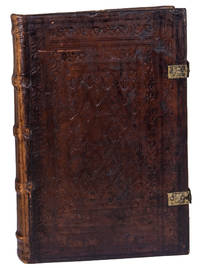
1549ref. 9472Cologne, Mart. Gymnicus, 1549 ; in-8 ; plein vélin estampé sur ais de bois, dos à trois gros nerfs, fermoirs de cuivre (reliure de l'époque) ; (16) y compris le titre, 632, [634], (76) pp. index, (1) f. blanc (*, AZ, Aa-Xx - 8, Yy - 4).
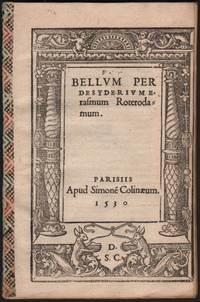
1530ref. 329Parisiis Paris: Apud Simonem Colinaeum Simon de Colines 1530. Reprint of the printer's edition of 1525. First printed by Johann Froben in 1517. Papered spine. In fine condition. Title within elaborate woodcut border with initials S.D.C. and Geoffroy Tory’s Lorraine cross. Title within elaborate woodcut border with initials S.D.C. and Geoffroy Tory’s Lorraine cross. Reprint of the printer's edition of 1525. First printed by Johann Froben in 1517. Papered spine. 8º a–c8 c8 blank; 23 1 blank leaves. Erasmus’ famous pacifist text on the adage “dulce bellum inexpertis" war is sweet to those who have not tried it. It was first published in the revised and enlarged edition of “Adages” called “Proverbiorum chiliades" 1515 Basel; Froben and published separately in 1517 also by Froben. “Bellum" is the first essay where Erasmus speaks of Jews contemporary to him praises them along with the Turks and the pagans as well as various peoples of Europe Asia and Africa for their virtuous living. He writes: “When has the sword murder arson plundering turned conquered people into good Christians! Openly to be a Turk or a Jew is lesser evil than to pretend to be a Christian. I prefer a real Turk to a false Christian.” The printer Simon de Colines 1480–1546 is most notable for his 1525 “Grandes Heures de Simon de Colines” the illustrator was the same Geoffroy Tory 1480–1533 who made the design of the woodcut border of this book. Bibl.: Markish Shimon: Erasmus and the Jews. Chicago. University of Chicago Press 1986.; Johnson Carina L.: Cultural hierarchy in sixteenth-century Europe. The Ottomans and Mexicans. Cambridge; New York. Cambridge University Press 2011.; Olin John C.: Six essays on Erasmus and a Translation of Erasmus' Letter to Carondelet 1523. New York. Fordham University Press 1979. Moreau III 2074. . Apud Simonem Colinaeum (Simon de Colines) unknown
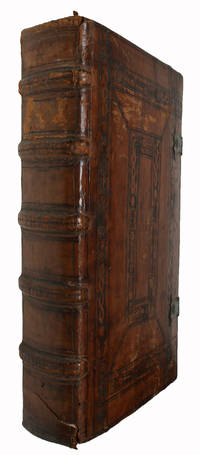
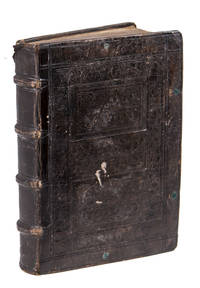
1531ref. 47178Basel, Froben, 1531 + Coloniae, Petrus Quentell, 1536. Folio. Bound together in a beautiful contemporary full calf binding over wooden boards. Blindstamped ornamental frames to boards. Five raised bands to spine. Remains of brass clasps to boards. Brass at corners of boards and brass strips to bottom edges of boards. A tear through the letter at the lower capital, no loss. Some scrathing of leather, mostly to back board and upper part of spine. The titles of the two works written in contemporary hand to the outer edge. The strong vellum cords, which go through the the wooden boards can be seen on the inside of the wooden boards, which also have some initials in red and blue paint, possibly from a painted leaf that has rubbed off? First title-page a bit dusty, otherwise very nice, clean, and crisp throughout. [Eucherius:] Froben printer's device to title-page, to final leaf of the first part, to the half-title of the second part (Episcopi Commentariorum in libros Regum ad Veranium & Salonium) and to the last leaf of that part. Beautiful large woodcut initial at beginning of each new work. (8), 194, (2)" 310, (2) pp.[Radulphus:] Woodcut device to title-page. Numerous beautiful woodcut, allegorical initials, both large and smaller, throughout. (4 - title, dedications), (14 - index), (6), 314 pp.
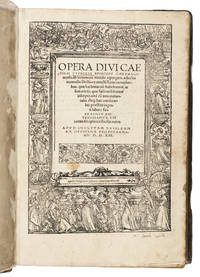
1531ref. 47178Basel Froben 1531 Coloniae Petrus Quentell 1536. Folio. Bound together in a beautiful contemporary full calf binding over wooden boards. Blindstamped ornamental frames to boards. Five raised bands to spine. Remains of brass clasps to boards. Brass at corners of boards and brass strips to bottom edges of boards. A tear through the letter at the lower capital no loss. Some scrathing of leather mostly to back board and upper part of spine. The titles of the two works written in contemporary hand to the outer edge. The strong vellum cords which go through the the wooden boards can be seen on the inside of the wooden boards which also have some initials in red and blue paint possibly from a painted leaf that has rubbed off First title-page a bit dusty otherwise very nice clean and crisp throughout. Eucherius: Froben printer's device to title-page to final leaf of the first part to the half-title of the second part Episcopi Commentariorum in libros Regum ad Veranium & Salonium and to the last leaf of that part. Beautiful large woodcut initial at beginning of each new work. 8 194 2; 310 2 pp.Radulphus: Woodcut device to title-page. Numerous beautiful woodcut allegorical initials both large and smaller throughout. 4 - title dedications 14 - index 6 314 pp. First editions of both works being the first edition of the works "Several Studies" of St. Eucharius most of them printed for the first time here as well as the first edition of Rodulfus Tortarius' or Radulphus Flaviacensis commentaries of Leviticus the third of the Books of Moses written in Latin in 20 books. Saint Eucherius bishop of Lyon ca. 380 - ca. 449 was a high-born and high-ranking ecclesiastic in the Christian Church of Gaul. He is remembered for his letters advocating extreme self-abnegation. Henry Wace ranked him "except perhaps St. Irenaeus the most distinguished occupant of that see"."St. Eucherius Bishop of Lyons theologian born in the latter half of the fourth century; died about 449. On the death of his wife he withdrew to the monastery of Lérins where his sons Veranius and Salonius lived and soon afterward to the neighbouring island of Lerona now Sainte-Marguerite where he devoted his time to study and mortification. Desirous of joining the anchorites in the deserts of the East he consulted John Cassian who in reply sent him some of his "Collationes" describing the daily lives of the hermits of the Thebaid. It was at this time that Eucherius wrote his beautiful letter "De laude Eremi" to St. Hilary of Arles c. 428. Though imitating the virtues of the Egyptian solitaries he kept in touch with men renowned for learning and piety e.g. Cassian St. Hilary of Arles St. Honoratus later Bishop of Marseilles and Valerian to whom he wrote his "Epistola parænetica de contemptu mundi". The fame of Eucherius was soon so widespread in southeastern Gaul that he was chosen Bishop of Lyons. This was probably in 434; it is certain at least that he attended the First Council of Orange 441 as Metropolitan of Lyons and that he retained this dignity until his death. In addition to the above-mentioned letters Eucherius wrote "Formularium spiritualis intelligentiæ ad Veranium" and "Institutiones ad Salonium" besides many homilies. His works have been published both separately and among the writings of the Fathers." Catholic Encyclopedia. His "Epistola paraenetica ad Valerianum cognatum de contemptu mundi "Epistle of exhortation to his kinsman Valerian On the contempt of the world" is an expression of the despair for the present and future of the world in its last throes shared by many educated men of Late Antiquity with hope for a world to come. Erasmus thought so highly of its Latin style that he edited and published it at Basel in 1520. His commentaries on the work are also included here. His "Liber formularum spiritalis intelligentiae" which is addressed to his son Veranius is a defence of the lawfulness of reading an allegorical sense in Scripture bringing to bear the metaphors in Psalms and such phrases as "the hand of God" The term anagoge in Greek is employed for the application of Scripture to the heavenly Jerusalem to come and there are other examples of what would become classic Medieval hermeneutics.Rodulfus Tortarius also known as Raoul of Tourtier Raoul de La Tourte Radulphus Flaviacensis c.1063 - c.1122 was a French Benedictine monk of the Abbey of Fleury-sur-Loire and a poet writing in Latin. He is known both for his style of writing his biblical commentaries and religious works and his literary and comic tales. His commentary on "Leviticus" is considered important and influential. The first edition of the work is rare. hardcover
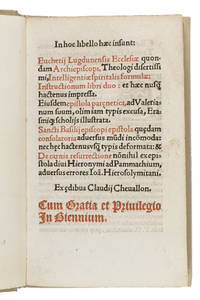
1523ref. ABC_49898Colophon: Paris 1523. 8vo. Claude Chevallon Modern half vellum and beige paper sides blue sprinkled head- and fore-edge manuscript author and title on the spine in brown ink. With Cevallons woodcut device on the verso of the final leaf the title is printed in red and black and 10 woodcut decorated initials. 6 CVII 1 ll. Collection of patristic writings many of which appear here in print for the first time. The book opens with the spiritual writings of Eucherius ca. 380-ca. 449 CE Archbishop of Lyon including his Intelligentiae spiritalis formulae and two instructional treatises both of which are printed here for the first time.At the heart of the volume is Eucherius paraenetic letter to Valerianus a moral exhortation encouraging the rejection of worldly distractions and the pursuit of true Christian wisdom. Although this letter had been printed previously it is presented here together with annotations by Erasmus.Also included is a consolatory letter by Basil the Great Bishop of Caesarea 330-379 CE intended to support believers facing the hardships of earthly life. Like the instructional works of Eucherius this letter also appears here in print for the first time. The final text is a fragment from a letter by Saint Jerome ca. 342/7-420 CE to Pammachius d. 410 CE defending the doctrine of the resurrection of the flesh and refuting the teachings of John of Jerusalem.The exact date of publication remains uncertain but it is unlikely that the book appeared before 1520 the year when Chevallon first began using his soleil dor printers device.The pages show some browning and water staining throughout. Overall in good condition.l BM STC French p. 157; Erasmus Online 4203; Vander Haeghen II 25; Moreau & Renouard III 498; Renouard P. Marques 176; USTC 184320; not in Adams; De Reuck; Kossmann; Meyers. EARLY PRINTING & MANUSCRIPTS RELIGION & DEVOTION Church History & Missions Early Printing - 16th century Erasmus Humanism & Reformation Philosophy & Humanism Religion 16th Century ZZ 001 De Graaf Inkopen hardcover
1988ref. 94084Luca Verlag. New. 1988. Hardcover. 3923641141 . FREE UPGRADE to Courier/Priority Shipping Upon Request - IN STOCK AND IMMEDIATELY AVAILABLE FOR SHIPMENT - Flawless copy brand new pristine never opened -- Text in Dutch; summaries in English and in German. Catalogue Raisonne Catalog Raisonné Complete Works Catalogus Het Complete Oeuvre Raisonnee Luca Verlag hardcover
1531ref. 049721Basel: Officina Frobeniana Froben 1531. First Edition. Hardcover Vellum. Very Good Condition. Contemporary rolled pigskin worn and discolored with old repairs to spine ends and edges but quite sound. Clasps intact. Early notes and an old bookseller catalog entry to front pastedown. The notes appear to be in two hands one contemporary in the same or similar ink to Chripstoph Binder's signature to the title and the other a little later. Title page printer's device with early coloring. Neat marginal notes and underlining throughout heavier early on and at the end neat interlinear notes and notes to the Erasmus letter. Many of the later notes written in triangular format. Scattered stains tiny wormtrails heavier early on some marginal dampstaining at beginning and end. A nice copy. Separate title page for the Chronologia. 8 244 243 210 91 74 45 1 p. Provenance: With the signature on the title page of Württemberg theologian Christoph Binder 1519-1596 the first Protestant abbot of Adelberg Abbey. Size: Folio. Quantity Available: 1. Shipped Weight: Under 1 kilo. Category: History; Antiquarian & Rare. Inventory No: 049721. Officina Frobeniana (Froben) hardcover
1727ref. 77991727 A Amsterdam: Chez François lHonoré, 1727. In-12: 10.5 x 17 cm, 2 ff. de front. grav., 13 ff. n. chiff. de titre, privilège, avertissement, préface du traducteur, préface dErasme, 340 pp. + 6 pl. grav. dép., 10 ff. n. chiff. de tables. Très belle édition de lEloge de la Folie dErasme illustrée de deux titres-frontispices, de 75 figures à mi-page inspirées des dessins dHolbein et de 6 pl. grav. dépliantes. Le titre que nous lui connaissons aujourdhui, dEloge de la Folie, apparaît pour la première fois dans la traduction de Gueudeville, dont la première édition remonte à 1713. Reliure de lépoque en veau brun. Dos à cinq nerfs marqués de filets avec pièce de titre en maroquin rouge. Tranches marbrées. Ex-libris: «E. C. de la Noue» de la famille du Valois, de Noüe. Ex-libris: "André Gutzwiller». Ex-libris manuscrit sur la page de titre «Ex librio Reuest». Reliure restaurée aux coiffes. Reliure solide et gravures très agréables.
ref. 57443SAmsterdam-New York-Oxford-Tokyo Elsevier Science Publishers bv-North Holland Publishing Company. 1969-2008. Original publisher's blue-gray cloth hardback gilt lettering spine blind-stamp portrait Erasmus frontcover thick large 8vo: Volume I. Writings on Philological and Educational Questions: nrs 1-7: xxij 682pp. / viij 726pp. / viij 774pp. / viij 362pp. / viij 432pp. / viij 314pp. / viij 532pp. Volume II. Proverbs and Sayings Adagia: nrs 1-9: viij 620pp. / xij 546pp. / x 528pp. / viij 386pp. / viij 346pp. / vi 347-652pp. / xij 338pp. / xiv 378pp. / xiv 490pp. Volume IV. Writings on Moral Questions: nrs 1-3 & 1A: viij 204pp. / x 330pp. / viij 224pp. / viij 382pp. Volume V Writings Relating to Religious Instruction: nrs. 1 - 6: s. viij 410pp. / x 400pp. / viij 450pp. / viij 496pp. / viij 422pp. / viij 356pp. Volume VII. Paraphrases of the New Testament: nr 6: x 330pp. Volume VIII. Writings Relating to Church Fathers including several translations from Greek: nrs 2 and 3 & 5 and 6 & 8: xiij 516pp. / xij 694pp. / xij 654pp. / xij 404pp. / xij 508pp. Volume IX. Apologies: nrs 1-4: viij 506pp. / x 292pp. / xxvi 250pp. / viii 424pp. Very fine copies. Complete set of volumes published by Elsevier & North Holland Publishers. From 2009 on the series is continued by Brill and still running. Â Amsterdam-New York-Oxford-Tokyo, Elsevier Science Publishers bv-North Holland Publishing Company. 1969-2008 hardcover
1829ref. 259017Roma : Tipografia della Societa Editrice 1829. First Edition. Hardcover. Finely bound set in half gilt-blocked vellum over marble boards with leather gilt-blocked titles. Some wear and tear as with age. Remains well-preserved overall; tight bright clean and sharp-cornered. Physical description; 8 vols. : ill. ; 43 cm. Notes; Engraved title pages. Subjects; Vatican. Painting — Vatican City. Sculpture — Vatican City. Roma : Tipografia della Societa? Editrice hardcover
1791ref. 43999London: J. Johnson 1791. Darwin Erasmus 1731-1802. The botanic garden: A poem in two parts . . . 4to. xii 214 126 2; 2 ix 197 1pp. General title-leaf misbound before title-leaf to Part II. 20 engraved plates including 5 by William Blake 1757-1827; 2 of the plates are after drawings by John Henry Fuseli 1741-1825. London: J. Johnson 1791. 275 x 207 mm. Half calf gilt marbled boards in period style. Minor foxing and offsetting small marginal stains on two or three plates not affecting the images marginal tears in signature S and one plate repaired but very good. First Edition of Part I; third edition of Part II containing two more plates than the first edition of 1789. Darwin's first major literary work and the chief source of his fame during his lifetime. "The Botanic Garden an annotated scientific poem in Augustan couplets appeared in two parts of which the second The Loves of the Plants 1789 was published before the first The Economy of Vegetation 1791. Darwin decided to publish the second part of the work first because it was better suited 'to entertain and charm.' The first part of the work is more ambitious than the second covering all natural philosophy and embodying many of the researches and inventions of Wedgwood Watt Boulton and others. The design of the totality was Darwin wrote 'To enlist Imagination under the banner of Science . . . to induce the ingenious to cultivate the knowledge of botany . . . and recommending to their attention the immortal works of the celebrated Swedish naturalist-Linnaeus'" Dictionary of Scientific Biography. The Botanic Garden is also important for the five plates in Vol. I engraved by William Blake: four engravings of the Portland vase and the "Fertilization of Egypt" after a design by Fuseli. Keynes Blake 103. King-Hele Erasmus Darwin pp. 97-119. . J. Johnson unknown
1791ref. 43999London: J. Johnson 1791. Darwin Erasmus 1731-1802. The botanic garden: A poem in two parts . . . 4to. xii 214 126 2; 2 ix 197 1pp. General title-leaf misbound before title-leaf to Part II. 20 engraved plates including 5 by William Blake 1757-1827; 2 of the plates are after drawings by John Henry Fuseli 1741-1825. London: J. Johnson 1791. 275 x 207 mm. Half calf gilt marbled boards in period style. Minor foxing and offsetting small marginal stains on two or three plates not affecting the images marginal tears in signature S and one plate repaired but very good. First Edition of Part I; third edition of Part II containing two more plates than the first edition of 1789. Darwin's first major literary work and the chief source of his fame during his lifetime. "The Botanic Garden an annotated scientific poem in Augustan couplets appeared in two parts of which the second The Loves of the Plants 1789 was published before the first The Economy of Vegetation 1791. Darwin decided to publish the second part of the work first because it was better suited 'to entertain and charm.' The first part of the work is more ambitious than the second covering all natural philosophy and embodying many of the researches and inventions of Wedgwood Watt Boulton and others. The design of the totality was Darwin wrote 'To enlist Imagination under the banner of Science . . . to induce the ingenious to cultivate the knowledge of botany . . . and recommending to their attention the immortal works of the celebrated Swedish naturalist-Linnaeus'" Dictionary of Scientific Biography. The Botanic Garden is also important for the five plates in Vol. I engraved by William Blake: four engravings of the Portland vase and the "Fertilization of Egypt" after a design by Fuseli. Keynes Blake 103. King-Hele Erasmus Darwin pp. 97-119. . J. Johnson unknown books
1521ref. 371922Basel: Froben 1521. Titles within ornamental woodcut borders; initials and headpieces throughout. Froben's Printer's device on PP10v. Collation: O-V8; Cc-Hh8 Ii4 Kk-Oo8 Pp10; X8-Bb10. Bound out of order lacking Kk8 blank; X2 is signed "X3". 1 vols. 8vo. Nineteenth century drab paper spine and marbled boards. Armorial bookplate: Ex libris Liechtensteinianis and bookplates of General Theological Seminary. Titles within ornamental woodcut borders; initials and headpieces throughout. Froben's Printer's device on PP10v. Collation: O-V8; Cc-Hh8 Ii4 Kk-Oo8 Pp10; X8-Bb10. Bound out of order lacking Kk8 blank; X2 is signed "X3". 1 vols. 8vo. Shortly after Erasmus' revolutionary edition of the Greek New Testament of 1516 he undertook the Paraphrases intending to "retell" the books of the New Testament in one uninterrupted voice without the clutter of textual commentary or critical interruption. It was a bold undertaking and in 1517 Erasmus began with the letters of Paul. They were first issued separately starting with Romans in 1517; and editions appeared in Louvain Thierry Martens Leipzig Valentin Schumann and Basel Johann Froben. Beginning in 1519 Froben began to publish groups of the Paraphrases and in 1521 a collected edition of all of the Pauline letters. This is a nonce volume containing the latter part of the 1521 Froben edition of the Paraphrases of Erasmus. The first half of the book is not present gatherings a-N comprising the Epistles to the Romans Corinthians Galatians Ephesians Philippians Colossians and Thessalonians. The colophon states the edition was completed in July 1521. Four complete sections with their individual title pages: A Paraphrases in Epistolas Pavli ad Timotheum duas ad Titum unam et ad Philemonem unam. Item In catholicas epistolas Apostolorum Petri duas Unam Iudae Unam Iacobi et Treis Ioannis et ad Hebraeos unam. Per Erasmum Roterodamum. Anno M.D.XXI. B Paraphrases Erasmi Roterodami in epistolas canonicas Unam Iacobi et Treis Ioannis. R. D. D. Matthaeo Cardinali Sedunensi Com. Valesij dedicatae. Woodcut border with date 1520 C In Epistolam ad Hebraeos paraphrasis per Erasmum Roterodamum exterma. R. P. ac D. D. Syluestro episcopo Vuigorniensi dedicatae. D Paraphrases Erasmi Roterodami in epistolas canonicas Duas Petri Unam Iudae Unam Iacobi et Treis Ioannis. Woodcut border with date 1520. Bound out of sequence: this section begins with leaf X1 and has a separate title page although it is a subsection of part B. Any of the lifetime editions of the Paraphrases whether from the spearate printings or the collected edition are rare in the market. VD16 E 3376 Froben unknown
1521ref. 371922Basel: Froben 1521. Titles within ornamental woodcut borders; initials and headpieces throughout. Froben's Printer's device on PP10v. Collation: O-V8; Cc-Hh8 Ii4 Kk-Oo8 Pp10; X8-Bb10. Bound out of order lacking Kk8 blank; X2 is signed "X3". 1 vols. 8vo. Nineteenth century drab paper spine and marbled boards. Armorial bookplate: Ex libris Liechtensteinianis and bookplates of General Theological Seminary. Titles within ornamental woodcut borders; initials and headpieces throughout. Froben's Printer's device on PP10v. Collation: O-V8; Cc-Hh8 Ii4 Kk-Oo8 Pp10; X8-Bb10. Bound out of order lacking Kk8 blank; X2 is signed "X3". 1 vols. 8vo. Shortly after Erasmus' revolutionary edition of the Greek New Testament of 1516 he undertook the Paraphrases intending to "retell" the books of the New Testament in one uninterrupted voice without the clutter of textual commentary or critical interruption. It was a bold undertaking and in 1517 Erasmus began with the letters of Paul. They were first issued separately starting with Romans in 1517; and editions appeared in Louvain Thierry Martens Leipzig Valentin Schumann and Basel Johann Froben. Beginning in 1519 Froben began to publish groups of the Paraphrases and in 1521 a collected edition of all of the Pauline letters. This is a nonce volume containing the latter part of the 1521 Froben edition of the Paraphrases of Erasmus. The first half of the book is not present gatherings a-N comprising the Epistles to the Romans Corinthians Galatians Ephesians Philippians Colossians and Thessalonians. The colophon states the edition was completed in July 1521. Four complete sections with their individual title pages: A Paraphrases in Epistolas Pavli ad Timotheum duas ad Titum unam et ad Philemonem unam. Item In catholicas epistolas Apostolorum Petri duas Unam Iudae Unam Iacobi et Treis Ioannis et ad Hebraeos unam. Per Erasmum Roterodamum. Anno M.D.XXI. B Paraphrases Erasmi Roterodami in epistolas canonicas Unam Iacobi et Treis Ioannis. R. D. D. Matthaeo Cardinali Sedunensi Com. Valesij dedicatae. Woodcut border with date 1520 C In Epistolam ad Hebraeos paraphrasis per Erasmum Roterodamum exterma. R. P. ac D. D. Syluestro episcopo Vuigorniensi dedicatae. D Paraphrases Erasmi Roterodami in epistolas canonicas Duas Petri Unam Iudae Unam Iacobi et Treis Ioannis. Woodcut border with date 1520. Bound out of sequence: this section begins with leaf X1 and has a separate title page although it is a subsection of part B. Any of the lifetime editions of the Paraphrases whether from the spearate printings or the collected edition are rare in the market. VD16 E 3376 Froben unknown books
1664ref. B5178Nuremberg: Johann Hofmann c. 1664. There is a fold across one half of the first engraved title page and minor wear but the book is in very good condition. Text and engravings are clean. Binding: Contemporary full vellum. Notes: Text in German. Two volumes in one. This book describes cities and strongholds during the fourth Austro-Turkish War 1663-1664 with the focus being on the year 1663 in particular. The Austro–Turkish War was a short war between the Habsburg Monarchy and the Ottoman Empire. The Ottoman aim was to resume the advance in central Europe conquer Vienna and subdue Austria. The book contains a detailed description of the siege of Vienna with maps and engravings; by C. M. Conrad Meyer perhaps. Erasmus Finx 1627 – 1694 aka Erasmus Francisci was a German Polymath author and writer of Christian hymns. Finx was born in Lübeck the son of a lawyer and received higher education at Lüneburg and Stettin. He studied law and was travelling through Italy France and the Netherlands afterwards. As of 1657 he worked as a reader at Endter publishing at Nuremberg where he also published some of his books. Size: 12vo 129x75mm. Illustration: Illustrated with 2 engraved title pages 4 fold-out maps and 6 views 5 fold-out. Volume: 2 volumes in 1 Provenance: Signed by someone dating to 1664 but the name has been covered by ink and is only partially readable. Pages: P. Blank. Engraved title page. Title page. Introduction 1-19. 1-379 80 mispag. 08. Index 1-5. Blank. Engraved title page. Title page. 1-187 164 mispag. 163. Project 1-21. Blank. Category: Book Europe Hungary; Book Military; Book Near East Turkey; Book Europe Germany; Book Europe Austria; Johann Hofmann hardcover
ref. 88974Zürich Froschauer 1547. Kl.8° Orig.-Titelbl. fehlt dieses sauber auf altem Papier faksimiliert und eingebunden 7 Bl. «Paraclesis» Bl. 1 - 304 m. 127 Holzschnitten im Text u. Initialen in Holzschnitt 20 Bl. «Argumenta capitum in omnes Novi Testamenti libros» Pgt. d. Zt. m. Blindpräg. auf 4 Bünden Es fehlt das Orig.Titelbl. mit der Zueignung verso. - Pgt. fleckig Hinterdeckel m. Verlust in oberer Ecke 1 x 5 cm Schliessen u. Lasche unvollständig kl. Rückenverlust am Kopf vord. Vs. u. 1 Bl. der «Paraclesis» lose u. randrissig zudem 1 Bl. tlw. lose 8 Holzschnitte wenig könnerhaft in Rot u. tlw. 2. Farbe handkoloriert 3 Bl. rissig 1 tief tlw. etw. fingerfleckig. VD 16 B 4273 Vischer C 374. Die Holzschnitte von Heinrich Vogtherr. - «Rudolf Gwalther 2.10.1519 Zürich - 25.12.1586 Zürich ref. von Zürich. Sohn des Andreas Walther Zimmermanns. ehelicht 1541 Regula Zwingli Tochter des Huldrych Zwingli dann 1566 Anna Blarer Tochter des Thomas Bürgermeisters von Konstanz. G. war 1528 Heinrich Bullingers Schüler der den Waisen 1532 zu sich aufnahm. 1538-41 studierte G. in Basel Strassburg Lausanne und Marburg. 1542 wurde er ref. Pfarrer in Zürich St. Peter 1546 Dekan des Zürichseekapitels und 1575 als Nachfolger von Bullinger erster Pfarrer Zürichs am Grossmünster. Er wirkte nicht nur als bedeutender Prediger sondern trat auch als Verfasser lat. Gedichte Übersetzer u.a. Psalter auf Deutsch über 100 Auflagen; auf Lateinisch "Opera Zvinglii" 1544-45 und Herausgeber hervor. Nachdem seine Predigten gegen den Papst als Antichrist 1546 zu Klagen der kath. Orte an der Tagsatzung geführt hatten veröffentlichte er erst wieder ab 1551 dt. Predigten. Bis ins 18. Jh. blieben seine lat. Homilien zu den Evangelien zur Apostelgeschichte zu einigen Paulus-Briefen und zu den zwölf kleinen Propheten 1553-84 bis 1619 aufgelegt sowie die "Archetypi homiliarum" 1587-1612 als gedruckte Konzepte eigener Predigtreihen viel benutzte Vorlagen. G. unterhielt einen weit reichenden Briefwechsel und übte auf die engl. Staatskirche Einfluss aus»; «Heinrich Vogtherr 1490 Dillingen an der Donau - 1556 Wien ab 1526 Bürger von Strassburg. Sohn des Konrad Arztes und der Anna Nachname unbekannt. 1505-08 Lehre vermutlich beim Maler und Holzschneider Hans Burgkmair dem Älteren in Augsburg. 1514-18 in Leipzig danach wieder in Augsburg 1526-42 in Strassburg und ab 1550 auch Augenarzt am kaiserl. Hof in Wien. Als Illustrator hinterliess V. Werke hist. geogr. und religiösen Inhalts als Verfasser ein vorlagenbuchartiges mehrfach aufgelegtes und übersetztes Kunstbüchlein medizin. Traktate sowie reformator. Schriften die er auch unter dem Namen Satrapitanus veröffentlichte. Er fertigte im Auftrag des Zürcher Buchdruckers Christoph Froschauer bei dem er 1544-46 wohnte über 400 Holzschnitte für dessen Foliobibel von 1545 und für Johannes Stumpfs "Chronik der Eidgenossenschaft" 1547/48 solche mit Veduten und Kampfszenen» HLS. 010 Zürich, Froschauer, 1547 unknown
1522ref. ABC_49903Cologne: Eucharius Cervicornus 1522. Contemporary blind-tooled calf with armorial panel-stamps. Sewn on 4 supports with corresponding raised bands on the spine with remnants of 4 pairs of green closing ties re-backed. 4to. With an elaborate woodcut frame on the title page and 2 smaller woodcut frames on the first pages of the texts and 5 woodcut decorated initials. 2 parts in 1 volume. Including: ERASMUS Desiderius. Commentarius in psalmum quare fremuerunt gentes. Second edition printed in the same year as the first of Erasmus version of the Commentaries on the psalms attributed to Arnobius the Younger a Christian priest active in 5th-century Gaul. Arnobius interprets the psalms allegorically relating their content to Christ and the Church. First printed in folio by Froben in Basel in September 1522 the present 4to edition was published shortly after that same year in Cologne by Eucharius Cervicornus. It contains Erasmus preface addressed to Pope Adrian VI the commentary of Arnobius on the psalms and Erasmus own extensive commentary on psalm 2 Quare fremuerunt gentes. The present copy is bound in a contemporary Cologne binding attributed to an anonymous binder active circa 1510. Both boards feature a panel-stamped frame including three armorial shields of the city arms of Cologne ermine field with three open crowns the arms of the Archbishopric of Cologne a black cross on a silver field and a diagonally banded shield likely the binders own mark. Inside there are two identical rectangular panels made up of a stamp with bird motifs and the motto Clamo ad te Domine "I call to you Lord".With two book plates mounted on the front pastedown Thomas Brooke F.S.A. Armitage Bridge and one with the motto Pro viribus summis contendo a small manuscript cypher CP on the title page and Erasmus commentary contains manuscript annotations in the margins and on the final blank page by a near-contemporary hand. The binding has been re-backed the head of the spine is slightly damaged the corners of the boards are slightly damaged the original blind-tooled leather on the boards is somewhat dry and cracked affecting the clarity of the stamps and with some small scratched in the leather on the front board. Some occasional browning and water- staining in the margins. Otherwise in good condition.l Bezzel 554; Goldschmidt 57; Jenkins 2.1; USTC 613135; Vander Haeghen II 10; VD 16 B 3132 and VD 16 E 2460; not in: BM STC German De Reuck. Eucharius Cervicornus, hardcover
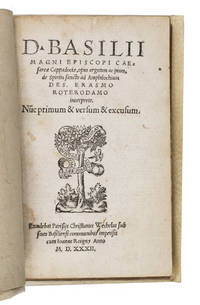
1532ref. ABC_49897Paris 1532. Small 8vo 9.5 x 14.9 cm. Chréstien Wechel and Jean Roigny Modern limp overlapping vellum sewn on 3 supports laced through the joints red edges and with 2 sets of green cloth ties. With Wechels woodcut printers device on the title page and the verso of the otherwise blank last leaf and 2 woodcut decorated initials. 124 3 blank1 pp. Very rare second edition of Erasmus translation of a theological treatise attributed to Basil of Caesarea 330-379 CE.It was published shortly after the first edition published in May of the same year by Froben and Episcopius in Basel May 1532. The work is very rare we have traced only one other copy in sales records of the past 100 years. Erasmus' translation is accompanied by a dedicatory epistle to Joannes Dantiscus 1485-1548 Bishop of Culm and a prominent diplomat of the Polish court. The letter dated April 30 1532 reflects Erasmus conviction that direct engagement with the texts of the Church Fathers rather than with flawed Latin intermediaries was vital for the renewal of Christian piety. As Erasmus himself declared: "It would be of great benefit to sacred letters and Christian devotion if Basil himself in Greek and not the shadow of Basil a Latin translation were made available to all."His source text was a Greek edition he had published just two months prior. According to Julián 2022 Erasmus wanted to publish everything they could find from Basil lamenting that in the existing Latin versions "the greater part of him is missing." Interestingly the legacy of this work can be traced further back to the 15th century when George of Trebizond 1395-1486 a Greek scholar from Crete was commissioned by Cardinal Bessarion 1403-1472 in 1440 to translate both De spiritu sancto and Contra eunomium into Latin. George struggled with the theological complexity of the material confessing in his preface 1442 that he lacked the necessary theological training and fluency in Latin. Erasmus' later effort can be seen as a corrective and a fulfilment of that earlier humanist ambition to make the Greek Church Fathers accessible to a Western audience in an accurate and readable form.Small tear in title page not affecting the text lightly water-stained margin and slightly browned throughout. Overall in very good.l Colón 11; no. 158; Vander Haeghen II 13; Moreau IV 338; V.P. Julián Erasmo traductor y editor de los Padres de la Iglesia: Crisóstomo Basilio y Orígenes. Salmanticensis 691-22022 039-075; USTC 185205 lost book; WorldCat 150413518 913004144 3 copies; not in Adams BM STC German De Reuck; Index Aureliensis; cf. for the Basel 1532 edition: USTC 640558 1 copy; WorldCat 257292311 1374477181 150413518 3 copies. EARLY PRINTING & MANUSCRIPTS RELIGION & DEVOTION Church History & Missions Early Printing - 16th century Erasmus Humanism & Reformation Philosophy & Humanism Religion 16th Century ZZ 001 De Graaf Inkopen hardcover
1521ref. ABC_49920Basel 1521. Folio. Johann Froben Contemporary blind-tooled pigskin over wooden boards with brass catch- and anchor plates along the fore-edge of the boards lacking the clasps. With a detailed woodcut border on the title page and the first page of the dedication. Further with a small woodcut illustration incorporating Frobens device on the verso of the last leaf and with woodcut decorated initials throughout. 24 515 1 blank 32 pp. Second edition of Saint Cyprians works as edited by Erasmus published by Froben one year after their first edition. Between 1516 and 1521 Erasmus worked closely with Johann Froben the humanist printer in Basel on a series of editions of the Latin Church Fathers: Jerome Augustine Ambrose Hilary and Cyprian. Erasmus aim was to purify the texts of the Fathers from medieval corruptions to restore their authentic doctrine by returning to the original sources and to present the Early Church as a model for a purer form of Christianity a theme that directly reflected his theological-humanist ideal.Erasmus states that he has cleansed the text of errors added a few minor treatises from ancient manuscripts and removed the works that seemed to have been falsely attributed to Cyprian. Thascius Caecilius Cyprianus ca. 210-258 CE later known as Saint Cyprian was an influential Church Father of the early Latin Christian tradition. Shortly after his baptism he became bishop of Carthage one of the most important Christian centres in the Roman Empire. Most of his works are pastoral letters and treatises here arranged in the index by type. The manuscript appears to have been used for study as the annotations highlight portions of the text and draw comparisons between Augustine and Cyprian.With small strips of manuscript waste visible in the gutters of the pastedowns a small owners inscription H. Reimers Erlang. 1899 in the upper outer corner of the first blank flyleaf along with elaborate manuscript annotations on the recto of that same leaf numerous contemporary and later annotations in three different hands throughout and some of the text underlined. The leather around the top and fore-edge of the front board has been restored the leather on the back board is somewhat damaged some small worm holes in the leather reveal the wooden boards below. The binding is rubbed the clasps are lacking and the head and foot of the spine are somewhat damaged the structural integrity of the binding nevertheless remains intact. The first blank flyleaf has been restored in the gutter margin the last leaf has been restored in the fore-edge margin the edges of the leaves are somewhat browned. Otherwise in good condition.l Adams C3150; BM STC German p. 234; De Reuck 417; USTC 679668; Vander Haeghen II 23; Huizinga VI p. 148; VD 16 C 6509; not in Bezzel. EARLY PRINTING & MANUSCRIPTS HISTORY RELIGION & DEVOTION Church History & Missions Early Printing - 16th century Erasmus Humanism & Reformation Philosophy & Humanism Religion 16th Century ZZ 001 De Graaf Inkopen hardcover
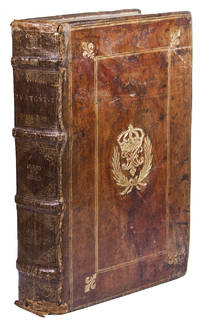
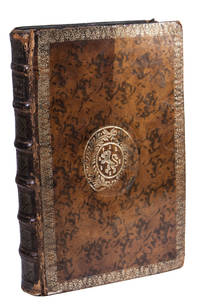
1533ref. ABC_49917Basel 1533. Small folio 21.5 x 31.8cm. colophon Hieronymus Froben & Nicolaus Episcopius 17th-century gold-tooled mottled calf sewn on 4 supports with corresponding raised bands on the spine. Both boards show two triple fillet frames the smaller frame with four fleurs-de-lis cornerpieces on each outer corner and within the smaller frame a centrepiece containing the monogram of the Collège Royal de Navarre in Paris a crown a fleur-de-lis and a laurel wreath can be found. 4 of the 5 compartments on the spine show the same gold-tooled monogram of the College the second compartment from the top contains Svetoniuvs lettered in gold. Further with marbled endpapers gold-tooled board edges and gilt edges. With Frobens large woodcut device on the title page repeated on the final page and several large woodcut initials after Holbein. 2 parts in 1 volume 44 786 2 blank 84 pp. Beautifully bound copy of a collection of Roman imperial biographies known as the Historia Augusta which was supposedly written by 6 authors of the late Roman Empire: Aelius Spartianus Julius Capitolinus Vulcacius Gallicanus Aelius Lampridius Trebellius Pollio and Flavius Vopiscus collectively known as the Scriptores Historiae Augustae. Although modern scholarship questions the authenticity and authorship of these texts they remain a crucial source for understanding the history politics and personalities of the Roman emperors from Hadrian r. 117-138 CE to Numerian r. 283-284 CE.The present edition of the Historia Augusta was edited and annotated by Erasmus alongside several notable scholars including Giovanni Battista Egnazio or Egnatius 1478-1553. Additionally this volume contains a second part with a divisional title page on p. 545: Rerum gestarum libri XVII written by Ammianus Marcellinus ca. 330-ca. 400 CE the last major historian of the Roman Empire. As a former soldier and eyewitness to many events he describes Ammianus essentially wrote a continuation of the history of Tacitus offering vivid accounts of military campaigns court politics and the slow unravelling of Roman power in the West.This version of the Historia Augusta was already printed in 1518 by the Basel publisher Johann Froben. For that edition Erasmus contributed an edited version of Suetonius along with a preface although the title page misleadingly implied that he had also edited Ammianus work. The present edition followed in July 1533 issued by Hieronymus Froben in partnership with Nicolaus Episcopius which incorporated the recently discovered Books 27-30 of Ammianus. Contrary to some claims the editor of that 1533 edition was not Conradus Goclenius but Sigismundus Gelenius. It appears that Erasmus perhaps distracted or misremembering once confused the two names.On the title page surrounding the Froben device there is an ownership inscription reading: DVJON - JVNIVS. This could refer either to Franciscus Junius the Elder François du Jon 1 May 1545 - 23 October 1602 a prominent Huguenot theologian or more likely to his son Franciscus Junius the Younger François du Jon 29 January 1591-1677 the noted philologist and pioneering scholar of Germanic languages known for his extensive collection of ancient manuscripts. With underlinings and marginal annotations throughout including brief notes on the text as well as references to related materials. In a few places the outer margins have been slightly trimmed affecting only a small number of annotations. The spine shows light rubbing with some wear to the spine ends the text is lightly browned throughout. Overall a very good copy.l Adams S 2025; BM STC German p. 842; Clarence H. Miller The Correspondence of Erasmus: Letters 2635 to 2802 volume 19 2019; Erasmus Online 4325; USTC 679548; VD16 E 3647; not in De Reuck; cf. for the monogram of the College de Navarre see: Archives de la Société des collectionneurs dex-libris Paris: 1895 2d Année No. 1 Janvier pp. 66-69. EARLY PRINTING & MANUSCRIPTS HISTORY LITERATURE & LINGUISTICS RELIGION & DEVOTION Classical Antiquity Early Printing - 16th century Erasmus Greek & Roman Classics ZZ 001 De Graaf Inkopen hardcover
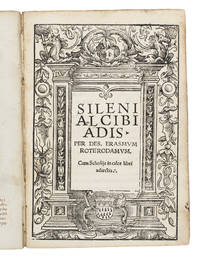
1520ref. ABC_49888Colophon: Cologne: Servas Kruffter 1520. 19th-century marbled boards with a blue paper manuscript title label on the front board. 4to. With an elaborate woodcut border on the title page and a decorated woodcut initial. Rare early edition of an influential work by Desiderius Erasmus which is a call for reform of the Catholic Church. It uses the Ancient Greek figure Alcibiades ca. 450-404 BC and the mythical characters known as the Sileni as an allegory for looking beyond appearances in order to perceive someone's or the Church's true nature. Erasmus wrote the text as part of his compilation of proverbs the Adagia in particular for the revised 1515 edition where it became one of the most popular entries. It was then published by Froben as a separate work in 1517 with his scholia. The present edition is the fourth or fifth overall but the first by Servas Kruffter fl. ca. 1520-1538 and is of considerable scarcity with only five copies recorded in institutions and none in sales records. The Cologne printer Kruffter was repeatedly restricted by censorship and even put in jail several times. Only a comparatively small number of books from his limited production has survived.With the bookplate of the Oberherrlingen Library dated 1839 mounted on the verso of the front board together with two typed descriptions of the work. The boards are somewhat rubbed lacking most of the spine. The work is somewhat browned throughout with a water stain in the inner margin not affecting the text. Otherwise in good condition.l Bibl. Belgica E 261; Erasmus Online 3582; USTC 693956 4 copies; Vander Haeghen I 176; VD 16 E 1991; WorldCat 763214270 150404098 5 copies; not in Adams; Bezzel; BM STC German; De Reuck. Servas Kruffter, hardcover
1515ref. ABC_49919Basel: Johann Froben 1515. Contemporary blind-tooled calf over wooden boards with brass and leather clasps along the fore edge professionally re-backed with later blank pastedowns. Folio. With the title set in a splendid woodcut frame by Urs Graf including Froben's small woodcut device woodcut decorations in the fore-edge and gutter margins of the table of contents verso of the title page and another elaborate woodcut frame on the first page of the dedication. Further with some woodcut initials and Froben's large woodcut device below the colophon on the last page. Senecas complete works here carefully prepared by Erasmus and printed by the renowned Basel publisher Johann Froben are remarkable both for its scholarly rigor and its historical significance. The present work represents one of the earliest Renaissance printings of Senecas writings presenting essays letters and philosophical dialogues that guide the reader toward virtue wisdom and a well-examined life. Erasmus thorough editorial care ensured that the texts were largely purged of errors making this edition an important reference for both humanist scholars and students of classical literature.In addition to the main works this volume includes a number of supplementary writings added by Erasmus reflecting his deep engagement with Senecas philosophy and his commitment to moral and linguistic improvement. The preface encourages attentive reading promising both the refinement of language and the betterment of ones life.The work entitled Ludus de morte Claudii Caesaris includes marginal commentary by Beatus Rhenanus a German humanist and reformer who was a friend of Erasmus and actively involved in the publishing activities of Johann Froben.With printed ex libris bookplate mounted on the front pastedown manuscript waste visible between the front and back endpapers a few manuscript annotations in the margins and some of the text underlined. The binding shows signs of wear the boards have been rubbed some loss of material a small worm hole in the back board the pages are cut slightly short at the head not affecting the text and some occasional slight staining and browning. Otherwise in good condition.l BM STC German p. 808; USTC 667432; Vander Haeghen II 49; VD 16 S5758; not in Bezzel; De Reuck. Johann Froben, hardcover
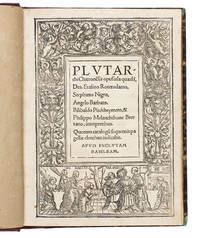
1518ref. ABC_49754Colophon: Basel 1518. 4to. Johann Froben 19th-century richly gold-tooled quarter red morocco and decorated paper sides bound by Gardien in 1863 sewn on 4 supports with corresponding raised bands on the spine with the author title and year lettered in gold on the spine marbled endpapers the whole covered with protective plastic red sprinkled edges and with a green ribbon marker. With a woodcut decorated frame on the title page the first page of the dedication the first page of the text A3r and the first page of the text by Stephanus Niger H2r 18 woodcut decorated initials and a small woodcut illustration incorporating Frobens device. 194 2 pp. An early edition of selected opuscula short philosophical and moral treatises by the Greek author Plutarch of Chaeronea ca. 46-120 CE best known for his Moralia and Parallel lives. The present work brings together Latin translations by multiple Renaissance scholars Erasmus Philipp Melanchthon 1497-1560 Willibald Pirckheimer 1470-1530 Angelo Barbato and Stephanus Niger. It forms part of the earliest wave of humanist publications aiming to make classical Greek thought accessible to Latin readers.Included are four treatises translated by Erasmus himself including his famous version of De tuenda bona valetudine praecepta On the preservation of good health. Particularly notable is Melanchthon's translation of the Convivialem quaestiunculam de notis Pythagoricis a short platonic dialogue dealing with Pythagorean symbols and moral enigmas.With a small catalogue excerpt mounted on the front pastedown including a small modern manuscript note Ex M. Abel le franc an oval black stamp F. Fasting Ex Libris No. added in manuscript: 5080 Rio de Janeiro on the verso of the first free flyleaf and the small stamp of the binder Gardien 1863 on the recto of the second free flyleaf. With some contemporary marginal annotation and underlining of the text. The binding shows slight signs of wear mainly around the corners of the boards slightly browned throughout with minor water stains in the upper outer margins towards the end and brown staining in the upper margins from pages 115 to 169. 3 of the 4 woodcut frames are slightly shaved at the lower margin. Further with a small wormhole in the outer margin from page 127 onward not affecting the text. Overall in good condition.l Adams p. 1653; BM STC German p. 706 ; Vander Haeghen II 46; USTC 684264; VD 16 P 3748; not in: Kossmann; Meyers; De Reuck. EARLY PRINTING & MANUSCRIPTS LAW PHILOSOPHY & POLITICS RELIGION & DEVOTION Early Printing - 16th century Erasmus Humanism & Reformation Philosophy & Humanism Religion 16th Century ZZ 001 De Graaf Inkopen hardcover
1514ref. ABC_49925Paris 1514. Folio. Jodocus Badius 18th-century gold-tooled mottled calf sewn on 6 supports with corresponding raised bands on the spine the author and title lettered in gold on the spine both boards show a gold-tooled armorial centre piece incorporating the arms of the city of Nevers or the arms of the Conflans family from the Champagne region Rietstap I plate CXVIII within a gold-tooled floral frame blind-tooled board edges marbled edges. With a woodcut border and printers device on the title page printed in red and black along with numerous woodcut decorated initials throughout. 6 CCLXVII 1 ll. 1514 Paris edition of Senecas tragedies printed and edited by the humanist printer Jodocus Badius 1462-1535 with contributions from Erasmus and others. Although Erasmus had permitted Badius to use his preparatory work in his autobiographical letter to Botzheim he reflects on the painstaking effort that went into this preparation and subtly expresses his irritation at seeing Badius nostra cum alienis miscuisse that is having mixed Erasmus contributions with those of others. The present work comprises nine dramatic works and extensive scholarly commentary by leading Renaissance philologists.With a printed book plate of the Fossé d'Arcosse family and a manuscript presentation note dated 1828 Emilien Fossé Darcosse donné par Mr B. V. le 10 septembre 1828 on the front pastedown. On the first free endpaper an 18th-century Latin manuscript inscription records the awarding of a prize to Franciscus Vermeil a noble student at the Jesuit College of Nevers in France for his scholarly achievements. The prize which included an award for a Latin oration was granted on 4 September 1746 by virtue of a perpetual endowment from the city of Nevers. The award is formally attested by the Praefectus Studiorum director of studies J. Petrus Coriou whose autograph and the official seal of the college are present. The corners of the boards are bumped the front hinge is weakened the ends of the spine are slightly damaged with some minor loss of material and with some minor loss of material on the back board. The front board is slightly rubbed the outer half of both boards is slightly faded from sun exposure. The lower margin of the title page and the outer margin of the sixth preliminary leaf have been reinforced. The final privilege leaf blank on the verso except for some manuscript annotations has been mounted on the recto of the adjacent blank flyleaf. The first and last leaves are slightly water stained and the upper margins have been cut somewhat short. Otherwise in good condition.l De Reuck 497; Moreau and Renouard 967; Renouard Badius III 252-53; USTC 144361; Vander Haeghen II 49; not in Kossmann. EARLY PRINTING & MANUSCRIPTS LITERATURE & LINGUISTICS RELIGION & DEVOTION Church History & Missions Early Printing - 16th century Erasmus Greek & Roman Classics Humanism & Reformation Philosophy & Humanism Religion 16th Century ZZ 001 De Graaf Inkopen hardcover
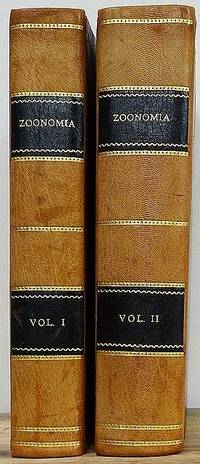
ref. 57923Fine illustrated and antiquarian Natural history . 1st. Ed. Pub. for J. Johnson in St. Pauls Church-yard London. 1794 - 1796. Two volume set with 10 plates 6 hand-coloured. Pages 3 to 6 from the Classes of Diseases not present. 4to. Hardbacks. Some minor spotting and off-setting o/w. contents fine. Original tree-calf boards with more recent spine and very neat repairs to corners. Prov: John Edmonds Stock 1774 - 1835 with his signature dated 1796 and his neat marginal annotations to aid navigation throughout volume I. More recent ownership insc. to both volumes. Scarce first edition. The first consistent all-embracing hypothesis of evolution. A fascinating provenance. John Edmonds Stock Erasmus Darwin 1731-1802 and Thomas Beddoes 1760-1808 were contemporaries of each other. Erasmus Darwin and Thomas Beddoes developed a friendship and working relationship. Indeed Darwin praised and referenced the work of Beddoes in Zoonomia. Stock and Beddoes worked together this in part led to Stock being asked to write the Memoirs of the Life of Thomas Beddoes Pub. 1811. King-Hele 1963 wrote that Darwin was unjustly attacked by reactionaries. Stock came to Darwins aid as a staunch supporter of his ideas. The number of annotations Stock made to this copy of Zoonomia can be seen as an indication of his depth of understanding of Darwins work. Fine illustrated and antiquarian Natural history hardcover