Alberus, ErasmusBiblio.com
4,710 results
ref. 1179954629.Gpaperback. Good. Access codes and supplements are not guaranteed with used items. May be an ex-library book. paperback
ref. 1247492311.Gpaperback. Good. Access codes and supplements are not guaranteed with used items. May be an ex-library book. paperback
ref. 8289Undated. Printed on one side of a piece of thin cream laid paper roughly 17 x 13 cm. Dimensions of print roughly 12 x 9.5 cm. Good on lightly-aged and creased paper. A nicely-printed reproduction of the last engraving produced by the artist. The designer has retained Dürer's monogram in the box in the top left-hand corner and above it has placed 'WILLIAM ALDIS WRIGHT TRINITY COLLEGE CAMBRIDGE'. Undated. unknown
ref. 1108005497.Gpaperback. Good. Access codes and supplements are not guaranteed with used items. May be an ex-library book. paperback
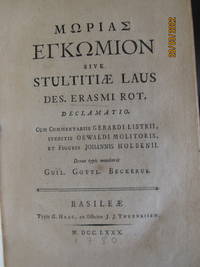
1780ref. 184Typis G. Haas ex officina J.J. Thurneisen 1780. Latin text. illustrated. Bound. 355 pages. Book has yellowed stains caused by the action of time. Size: 13 x 20 cm. Typis G. Haas, ex officina J.J. Thurneisen
1797ref. D19679DERBY: J. Drewry for J. Johnson 1797. First Edition. Paperback. Near Fine. 4to. 128 pp. including half-title. With engraved frontispiece of the grounds of Ashbourne School. ORIGINAL WRAPPERS. Housed in attractive custom box. Written for his two illegitimate daughters who were known as the Misses Parker Darwin covers a number of topics in this treatise on female education. "Education should draw the outline and teach the use of the pencil; but the exertions of the individual must afterwards introduce the various gradations of shade and colour must illuminate the landscape and fill it with the beautiful figures of the Graces and Virtues" preface. He recommends science subjects for girls as well as visits to factories and foundries. Also included is a fifteen-page list of recommended books for studying further one of the many subjects touched upon here. Darwin 1731-1802 grandfather of Charles Darwin was a poet naturalist as well as a prominent physician. He assisted in setting up the Ashbourne School and in furtherance of his belief in the importance of intellectual pursuit for all. He had this work published by Johnson an important radical bookseller of the period who was responsible for among many other works Wollstonecraft's Vindication of the Rights of Women. J. Drewry for J. Johnson paperback
ref. 1140808834.Gpaperback. Good. Access codes and supplements are not guaranteed with used items. May be an ex-library book. paperback
ref. 1023058685.Ghardcover. Good. Access codes and supplements are not guaranteed with used items. May be an ex-library book. hardcover
2018ref. 2-6202138521Editorial Académica Española 2018. Paperback. New. 68 pages. Spanish language. 8.66x5.91x0.16 inches. Editorial Académica Española paperback
2020ref. 2-6200537704LAP LAMBERT Academic Publishing 2020. Paperback. New. 204 pages. 8.66x5.91x0.46 inches. LAP LAMBERT Academic Publishing paperback
2020ref. 2-6200510571GlobeEdit 2020. Paperback. New. 216 pages. 8.66x5.91x0.49 inches. GlobeEdit paperback
ref. Frommann-9783772806094frommann-holzboog Verlag e.K. German Latin Ancient Greek. Hardcover. New. XLI 1029 p. 180 x 245 cm. This edition of Erasmus 14671536 versio graeca and a new Latin translation is one of the most momentous works of the early modern period. It became the basis for the peoples Bible at that time Luther und Tyndale and pointed the way for a new hermeneutics in the humanities. The idea of understanding the text of the Bible as a historical text and thus as being verifiable from the perspective of textual criticism and in addition of subordinating the Vulgate to the early Greek text in its expertise was revolutionary. frommann-holzboog Verlag e.K. hardcover
ref. Frommann-9783772806094frommann-holzboog Verlag e.K. German Latin Ancient Greek. Hardcover. New. XLI 1029 p. 180 x 245 cm. This edition of Erasmus 14671536 versio graeca and a new Latin translation is one of the most momentous works of the early modern period. It became the basis for the peoples Bible at that time Luther und Tyndale and pointed the way for a new hermeneutics in the humanities. The idea of understanding the text of the Bible as a historical text and thus as being verifiable from the perspective of textual criticism and in addition of subordinating the Vulgate to the early Greek text in its expertise was revolutionary. frommann-holzboog Verlag e.K. hardcover
2020ref. 2-6139809401Novas Edições Acadêmicas 2020. Paperback. New. 212 pages. 8.66x5.91x0.48 inches. Novas Edições Acadêmicas paperback
1688ref. 49228Cologne disguised; Paris or the Netherlands: Adrian Le Jeune 1688. First edition. Hardcover. Very good . Duodecimo. Collation: aster.12 2aster.6 A-R12 S4 = 226 leaves. 36 415 1 blankpp. Engraved frontispiece and headpiece; woodcut lettrines head- and tailpieces; printed side notes. Contemporary calf mildly worn at extremities; gilt tooled spine with raised bands gilt lettering piece; edges sprinkled in red. Old inscription cropped from top edge title; one leaf with clean marginal tear just extending into text else fine and crisp throughout. First edition of this defense of Jansenism via the celebrated scholar of Rotterdam. Among the works reviewed by Locke for Jean Le Clerc the present title “indicated a new wave of interest in Erasmus” Mansfield. “Jean Richard 1615-1686 wanted to persuade the Roman Catholic Church that in persecuting the Jansenists it was as much in error as it had been when it denounced Erasmus. He also wanted to convince the English monarch that despite appearances to the contrary Erasmus had never adopted any stance outside the Catholic Church” van Herwaarden. The author surely intends the quotation from Cyprian at the verso of the title as a reference to both Erasmians and Jansenists: “This is always the devil’s work to destroy with lies the servants of God and defame their glorious name with false opinions” trans. Mansfield. Early modern reviews were mixed: Bayle considered it a “pity that the author. stopt at the first part of it” General Dictionary 5 1737 “Erasmus” 85 note T. Burigny Vie d’Erasme Paris: 1758 judged it “. so badly done and so filled with invectives and declamations that it does not lead one to wish for the second” 547; quoted in Mansfield 293n. In 1660 the French cleric Jean Richard was imprisoned by the archbishop of Rouen de Harlay a bitter opponent of Jansenism."During this personal crisis he published two works in defense of his Jansenist belief and behaviour. As we shall see there are grounds for believing that his Sentimens. was meant in part at least to achieve the same end. Nevertheless mysteries surround the work: it was published posthumously Richard died in 1686 having been prior of Beaulieu Saint-Avoie since 1673; what we have is the first part and we may only guess at how seriously the promise of a second part was intended. As it stands this is an ill-organized book repetitive with many digressions but filled with a naive enthusiasm and fascinating partly because of the evidences of a sound judgment about Erasmus partly because of the tantalizing but insoluble problem of the author’s aims. The avowed aim was proselytism. The book is dedicated -- on the eve of the Revolution of 1688 -- to James II of England a new Theodosius who is hazarding three kingdoms for the sake of the kingdom of heaven. May it help the English people to follow the king’s example in conversion to Catholicism by showing them the true character of Erasmus’ religion" Mansfield. References: Barbier 4:467. J. v. Herwaarden Between Saint James and Erasmus Studies in Late-Medieval Religious Life 598; Jöcher 3:2078; VD17 12:110664Q. For a thorough discussion see B. Mansfield Phoenix of His Age: Interpretations of Erasmus c. 1550–1750 Toronto 1979 163–174. Locke’s review appears in Bibliotheque universelle et historique VII 1688: 106-122. Adrian Le Jeune hardcover
1522ref. 53365Mainz: J. Schöffer 1522. First Mainz edition. Octavo. 562 2: colophon blankpp. Collation: A-Z8 Mm8 chi2 O4/O5 reversed complete. Title within historiated woodcut border. Woodcut initials throughout. Text in italics. Printed side-glosses. Errata at final text leaf. Contemporary beveled wooden boards backed in tooled pigskin; spine with raised bands. Brass catch and clasp with expert restoration of leather thong. Contemporary manuscript musical scores used as pastedowns at front and back. Seven leather stubbs affixed at front edge as indexes. Occasional faint smudging mostly at margins else text crisp and fresh. A very good copy in a well-preserved sixteenth-century binding with a notable provenance. Scarce very early collective edition of the Latin "Paraphrases" of the Pauline Epistles prepared by the celebrated humanist scholar theologian and educational writer Desiderius Erasmus of Rotterdam 1466-1536. Preceded by the Froben collective editions of 1520 and 1521 this first and only edition of the Pauline Epistle Paraphrases to be printed at Mainz was issued by Schöffer in two parts each with full title and separate register and pagination; our volume contains the first part only: the Epistles to the Romans; Corinthians 2; Galatians; Ephesians; Philippians; Colossians; and Thessalonians 2. "In the vast and sustained labour he devoted to the New Testament Erasmus saw the culmination of his commitment to scholarship. and nothing else he wrote not even the Moriae encomium was to have so great an influence on posterity. The first edition of the New Testament appeared in 1516 and was followed in his lifetime by four more 1518/10 1522 1527 1535 each newly revised. Each consisted of the Greek text Erasmus' translation thereof and a copious apparatus of notes Annotations published as a separate volume. Beginning in 1517 he also published a Paraphrase of all parts of the New Testament save Revelation. Written in smooth and comprehensible Latin it was usually fuller than the original text. If offered his own interpretatiton but often avoided the provocative statements found in the Annotations. From the outset the translation the Annotations and to a lesser degree the Paraphrases drew criticism originally from conservative theologians who found heresies in his humanist philology but soon also from Lutherans and Catholics who denounced him for departures from their respective doctrines" Bietenholz. The Paraphrases were composed between May 1517 and January 1524. "Erasmus began with the Pauline Epistles. The paraphrase of Romans was published in quarto by Dirk Martens in Louvain in November 1517 and reprinted by Erasmus's friend Johann Froben in January of the following year; it sold well and was soon reprinted in octavo. Corinthians was published by Martens in February 1519 and reprinted in Basel by Froben in March; Galatians appeared later that year with editions from both publishers. The remaining Epistles followed in 1520 and 1521 the last to appear being Hebrews. In the autumn of 1521 Erasmus moved from Louvain to Basel and from that time Froben published the first editions of the remaining Paraphrases" Mynors. Our edition was printed by Johann Schöffer the son of Peter Schöffer who was the principal workman of Johannes Gutenberg. Apart from those of the Pauline Epistles the only other complete Paraphrase of Erasmus to be published by Schöffer was that on the Gospel of Matthew also in 1522. He did in 1521 however issue a series of four brief excerpts from the Paraphrases in German translation which appear to highlight provocative exegesis by the great scholar of Rotterdam concerning for example the hypocracy of the Pharisees Matthew 23 or the exhortation to "Take My yoke upon you and learn from Me" Matthew 11.29. Provenance and annotations: Contemporary manuscript entry at the title-page of the Benedictine monastery library at Amorbach; contemporary 50-word manuscript note in Latin at the free endleaf facing the title which discusses the present work. Early manuscript note in German at the final blank endleaf. Early leaves with light rubrication in red ink; about twenty leaves with contemporary annotations throughout. Later stamps of the Leiningen Palace Library at the bottom margin of the title and very faintly at the pigskin covers. Bookplate of United Theological Seminary Dayton Ohio noting the gift of Dr. Walter N. Roberts with their vertical entry stamp Mar 28 1963 at the dedication leaf lightly over the left-hand edge of the text but not impairing legibility. Full title and imprint: Paraphrases Eras. Rot. In omnes epistolas Pauli apostoli germanas : et in eam quae est ad Hebraeos incerti autoris cum ijs quae Canonicae uocantur diligenter recognitae excusaeque & ita binos in tomos digestae ut cuique secare in formam enchiridij siuelit liberum sit. References: P.G. Bietenholz Encounters with a Radical Erasmus Univ. Toronto 2009 p.13; R.A.B. Mynors "The Publication of the Latin Paraphrases" in: R.D. Sider ed. New Testament Scholarship: Paraphrases on Romans and Galatians University of Toronto Press 1984 pp. xx-xxix; USTC 682534; Vander Haeghen p.145: Paraphrases in omnes epistolas Pauli. Moguntiae Io. Schoeffer m. augusto 1522 octavo; VD16 E-3379 Berlin; Halle; Leipzig; Wittenberg; Wolfenbüttel. This first part not in Adams but cf. E-795 the second part 378pp. J. Schöffer unknown
ref. 1170965865.Gpaperback. Good. Access codes and supplements are not guaranteed with used items. May be an ex-library book. paperback
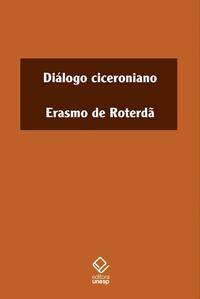
ref. 9788539304004UNESP EDITORA. new. Dilogo ciceroniano aborda questes religiosas e filos�ficas. � importante ressaltar no entanto que sua questo central a ret�rica. O dilogo que se estabelece entre os trs personagens desta obra satiriza e procura pr em xeque o discurso ciceroniano. Entretanto mais do que um ataque a C�cero ou a seus seguidores quinhentistas Erasmo desenvolve consideraes universais e atemporais ainda hoje relevantes para a esttica ou para a avaliao estil�stica e literria. UNESP EDITORA unknown
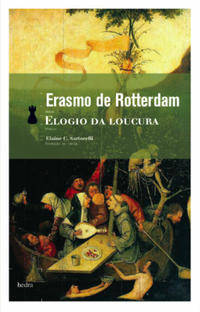
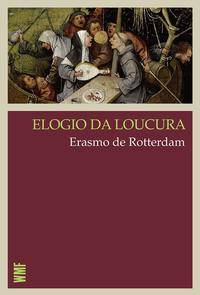
ref. 9788577153237HEDRA. new. Publicado pela primeira vez diretamente do latim Elogio da loucura 1511 uma stira escrita por um dos maiores humanistas do Renascimento. HEDRA unknown
ref. 9786555042979LOYOLA. new. O presente volume � uma breve e original introduo metaf�sica contempornea com amplas referncias hist�ria da filosofia. Os autores apresentam uma seleo de conceitos centrais da metaf�sica substncia propriedade modalidade casualidade e livre arb�trio discutindo contemporaneamente os mais recentes desdobramentos ligados ao debate filos�fico como por exemplo a metaf�sica dos ""poderes"" e ilustrando novas perspectivas para a aplicao desses desdobramentos no debate sobre a causalidade e sobre o livre arb�trio. LOYOLA unknown
ref. 9788578279875WMF MARTINS FONTES - POD. new. Obra singular onde h� mais humor do que esp�rito e mais erudi��o do que gra�a este livro agitou as multid�es abalou a Igreja inquietou os grandes e contribuiu para fazer a Alemanha escutar os reformadores. WMF MARTINS FONTES - POD unknown
ref. 9786554272452EDICOES 70. new. Trata-se de um dos livros emblemǭticos da cultura ocidental e sem d�vida uma das obras literǭrias mais lidas em todo mundo nos �ltimos seis sǸculos. Publicado pela primeira vez em 1511 o ""Elogio da loucura"" Ǹ uma das cr�ticas mais implacǭveis �� vaidade orgulho e contradi����es da natureza humana. Dirigindo a sua sǭtira contra todos os estratos sociais mostra-se seu Autor mais implacǭvel no desmontar dos rid�culos e abusos sobretudo dos poderosos da pol�tica da Igreja e da vida acad�mica do seu tempo usando de uma linguagem e processos literǭrios altamente divertidos mesmo para o leitor de hoje. No fundo de sua obra encerra-se tambǸm ou talvez sobretudo uma mensagem de funda espiritualidade e uma afirma��o e defesa dos valores do pacifismo ou ""irenismo"" conceito de que Erasmo foi sen�o o iniciador pelo menos seguramente um dos maiores e mais eloquentes ap��stolos. Embora existam in�meras vers��es deste livro editadas em Portugal e Brasil tenho a convic��o de que a imensa maioria para n�o dizer a totalidade delas n�o foi feita nem por latinistas de of�cio nem a partir exclusivamente do texto original latino circunst�ncias estas que n�o se verificam com a tradu��o aqui proposta pois Ant�nio Guimar�es Pinto serviu-se dos textos originais sobretudo do �ltimo texto corrigido por Erasmo datado de 1532 e Ǹ o latinista de Brasil e Portugal que traduziu maior n�mero de pǭginas de textos em latim sobretudo de obras que nunca haviam sido vertidas para qualquer idioma moderno. No caso do Erasmo jǭ em 1999 as Edi����es 70 publicaram sob o t�tulo de ""A Guerra e Queixa da Paz"" duas de suas tradu����es de textos basilares deste Autor. EDICOES 70 unknown
ref. 0802043100.Ghardcover. Good. Access codes and supplements are not guaranteed with used items. May be an ex-library book. hardcover
1516ref. 4621Strasbourg: Johann Knobloch 1516. Hardcover. Fine. Bound with: 2. Erasmus Desiderius 1466-1536 De duplici copia verborum ac rerum commentarij duo. Ab authore ipso diligentissime recogniti & emaculati atque in plerisque locis aucti. . ; Item Epistola Erasmi Roterodami ad Iacobum Vuimphelingium Selestatinum. Strasbourg: Mathias Schürer October 1516 And: 3. Hutten Ulrich von 1488-1523; Weiditz Hans 1495- ca. 1536 artist. ΟΥΤΙΣ. Nemo Augsburg: Johann Miller 9 September 1518 Three Publications in One Volume: Quarto: 19.3 x 13.6 cm. I. Burley 8 LII ff. Collation: i-viii8 A-B8 C-D4 E8 F4-H4 I8 leaf 8 in fist gathering blank. II. Erasmus 6 LXXIII 5 ff. Collation: 1-66 a4 b8 c4 d8 e-f4 g8 h-i4 k8 l-m4 n8 o6. III. Hutten 12 ff. Collation: A-C4 A humanist sammelband featuring Ulrich von Hutten's satire championing the liberal arts with the impressive woodcut of Hutten's Odyssean hero surrounded by the equipment of all students: books a flagon board games musical instruments. Bound in 16th c. pigskin signed S.K.E. and dated 1575 soiled and stained corners bumped. The binding tooled in blind with a roll tool with images of Christ St. Paul and King David playing his lyre signed HW Haebler I p. 486/8. Contents in good condition a little careworn binding and contents moderately soiled scattered marginal notes and underscores occasional stains. Text block cut a bit close at the head at the time 1572 of rebinding; text block separating at front of volume. I. Burley: title page with numerous pen-trials 17th c. ownership note; short worm-trail to first three leaves only not affecting text; damp-stain to corner of first gathering. II. Erasmus: Title with white-on-black woodcut border with fools columns and putti supporting a shield with the printer’s initials. The name of Erasmus has been censored on the first two lvs. in ink with shine though onto the following two lvs. and by scratching out the name elsewhere in the text. Small marginal dampstain occ. notes. III. Hutten: With the iconic full-page woodcut title by Hans Weiditz see below for details. Mild soiling throughout final gathering lightly browned/stained cut close at head. I. Medieval Encounters with the Ancient Philosophers Burley Walter Pseudo- ca. 1320; Diogenes Laertius 3rd c. CE Vita Philosophorum et Poetarum : cum auctoritatibus et sententiis aureis eorundem annexis Strasbourg: Johann Knobloch 1516 ONE OF NUMEROUS EARLY EDITIONS. The first edition was printed in 1470. Now believed to have been composed in the early 14th c. from the 15th c. up until the 20th “The Lives of the Philosophers and Poets” was transmitted under the name of Walter Burley ca. 1275–1344 one of the most prominent and influential philosophers of the fourteenth century. Burley had a very long career in both England and France becoming Master of Arts at Oxford by 1301 and Master of Theology at Paris by 1324. He produced a large body of about fifty works many of which were widely read in the later Middle Ages. “In 1990 the image of ‘De vita et moribus’ suffered a terrible blow when Mario Grignaschi severed its connection with Walter Burley Grignaschi “Lo Pseudo Walter Burley” 131–90 and in the same volume “Corrigenda et addenda” 325–54. Grignaschi showed that the work had to have been composed in northern Italy which had the resources in classical materials and that – from the evidence of an anonymous work dated 1326 that made use of it – it had to have been made no later than the 1320s perhaps even about 1310 that is during a period long before Burley arrived in Bologna. Overnight ‘De vita et moribus’ was deprived of its glamorous Burleian associations with Oxford Paris high scholasticism debates about realism and the Plantagenet court to be revealed as the work of an anonymous Italian who is now referred to – teasingly and cruelly – as the ‘Pseudo-Burley.’ How the work came to be attributed to Burley in fifteenth - century manuscripts is unclear although the attribution stuck and was reaffirmed in early prints… “Adding insult to injury the ‘De vita et moribus’ was hack work not the product of thoughtful pedagogical ruminations in the Oxford common rooms. The anonymous Italian was keen to get his work out there in a competitive literary market so he worked quickly. To this end to find lively day-to-day pictures of the ancient philosophers the Pseudo-Burley turned to that eminently chatty anecdootal resource long derided by classicists and philosophers Diogenes Laertius’ Lives and scooped out from it as much detail as suited his purpose supplementing it with anything else to hand to expand his topic. Thus he lumps Pre-Socratics Cynics Skeptics Epicureans Academicians and Stoics together almost indiscriminately with poets dramatists orators and sophists physicians historians and grammarians and he extends the coverage beyond Diogenes’ Hellenic limits to include various authors of Latin antiquity. Some of the gnomic material in the work is derived from the Arabic -Spanish-Latin ‘Bocados de oro’ notably in the chapter on Plato Hasse 50–52; Ferrer 682.”Rita Copeland “Behind the Lives of Philosophers Reading Diogenes Laertius in the Western Middle Ages” A Pleasing Fullness of Expression II. Erasmus Desiderius 1466-1536 De duplici copia verborum ac rerum commentarij duo. Ab authore ipso diligentissime recogniti & emaculati atque in plerisque locis aucti. . ; Item Epistola Erasmi Roterodami ad Iacobum Vuimphelingium Selestatinum. Strasbourg: Mathias Schürer October 1516 An early edition of ‘De duplici copia’. Erasmus was working for a number of years on a treatise on Latin composition begun while in Italy but completed only in 1512 during his third stay in England at the request of John Colet for use in the latter’s newly founded school in St. Paul’s churchyard. This treatise was designed to help the young student in acquiring an elegant and copious style and to provide abundant examples of how to say the same thing in different ways. It was first printed in Paris by Badius in 1512 but was soon reprinted several times becoming a standard textbook in schools throughout Western Europe. This edition contains Erasmus’ long letter to the Alsatian humanist Jakob Wimpfeling 1450-1528 dated 21 September 1514 in which he relates his previous journey to Basle mentioning all the humanist scholars he had met from Alsace and Basle where Erasmus had just taken up residence. Erasmus had first become acquainted with Wimpheling in August 1514 when he stopped in Strassburg on his way to Basle and was officially welcomed by the members of the recently founded literary society which included Sebastian Brant and Joannes Sturm. The work concludes with three poems by Erasmus addressed to Sebastian Brant Joannes Sapidus and Thomas Didimus together with the latter’s reply. "The word ‘copia’ presents a special problem to the translator. Weltkirch a sixteenth-century Erasmian commentator defined ‘copia’ as the ‘faculty of varying the same expression or thought in many ways by means of different forms of speech and a variety of figures and arguments. ‘Copia’ of words has its origins in grammar; ‘copia’ of thought in dialectic.’ However the word is used by Erasmus to denote not only the faculty of varying but also varying itself. Indeed as used by Erasmus ‘copia’ encompasses within its meaning the meaning of four English words: variation abundance or richness eloquence and the ability to vary or enrich language and thought. "In his lengthy discussion of school curriculum in Shakespeare’s age T.W. Baldwin discusses at great length the importance of the ‘De Copia’ in the educational pattern of the time. The schoolmasters’ editions and commentaries that began to appear even in Erasmus’ lifetime provide further evidence of Erasmus’ impact on Renaissance education… "In his study of Renaissance humanism R.R. Bolgar says: ‘The ‘De Copia’ provides us in a sense with a clue to the whole of Humanism. Specifying the techniques on which imitation depended it makes clear what men were attempting not only in Latin but also in the vernaculars . If we want to trace how the Humanist practice of imitation affected creative writing if we want to go behind the scenes and cast an eye on the mechanism of the process.our best guide is Erasmus. The ‘De Copia’ outlines his method. The ‘Adagia’ presents us with the fruits of that method. and finally the ‘Colloquies’ and the ‘Praise of Folly’ show us the finished product.’"Donald B. King and H. David Rix "On Copia of Words and Ideas". Bezzel Erasmusdrucke no. 740; VD16 E 2647; Knaake Reformationsschriften II 144 The Original Liberal Arts Student Hutten Ulrich von 1488-1523; Weiditz Hans 1495- ca. 1536 artist. ΟΥΤΙΣ. Nemo Augsburg: Johann Miller 9 September 1518 FIRST EDITION FIRST ISSUE. With a full-page woodcut title page by Hans Weiditz. First printing of Hutten's second "Nemo" a substantially re-worked and enlarged version of the 1516 original. This edition has been augmented by 60 verses mainly on political subjects an introduction dedicated to Johannes Crotus Rubianus 1480-1545 and a letter to Julius von Pflug 1499-1564. It also marks the first appearance of the celebrated woodcut title page described in detail below. Hutten found the inspiration for his Nemo "Nobody" in Homer's Odyssey where Odysseus calling himself Nobody outwits the Cyclops Polyphemus. Hutten builds on this wordplay to create a new hero a humanist reformer capable of speaking out against the Church "Nobody dares to criticize the luxury of the priests and the idle life of the Pope." and one who appreciates the value of humanistic learning "Nobody gives scholarly studies the rewards they deserve." The title woodcut cleverly illustrates the dual identities of Hutten's satirical hero. Nemo clad in classical garb stands upon a beach with the familiar attributes of the humanities student gaming boards books a lute a drinking flagon strewn about him. In the background the Cyclops threatens to hurl a boulder onto Nemo's waiting ship. The revised "Nemo" is more overtly political than the earlier version. The added distichs reveal Hutten's anger over corruption in the Church and his mounting frustration with German politics. Shortly after he published "Nemo" Hutten assumed a central role in the politics of the nascent Reformation. In the letter to Pflug that concludes this edition Hutten praised Erasmus with whom he had maintained a good relationship since 1514 as the "Forger of a new way"; Erasmus spoke approvingly of Hutten's work Ep 961 967. Soon after publication of "Nemo" however relations between the two men became strained eventually leading to hostility between them. In 1522 Erasmus would lament that "This whirlwind of Luther" had torn Hutten away from him. See "Contemporaries of Erasmus" vol. II p. 218 ff. "Ulrich Von Hutten German humanist neo-Latin poet and political publicist in the service of the Reformation was born into a family of imperial knights in Steckelberg castle in Franconia. Between 1505 and 1511 Hutten pursued humanistic studies at various Germany universities. In 1512 on his way to Italy to study law he visited Joachim Vadian in Vienna and other humanists in the circle of the Emperor Maximilian. He then turned from personal literary interests to political matters. After studying at the universities of Pavia and Bologna and serving briefly in the army of Maximilian Hutten returned to Germany in 1514. There he met Erasmus who expected much of the young poet and who dedicated his epistolary biography of Thomas More to him. During his second stay in Italy 1515-17 he wrote a series of epigrams denouncing not only the enemies of the Emperor Maximilian -the French and the Venetians- but also Pope Julius II. "On his return from Italy Hutten was crowned poet laureate by Maximilian and entered the service of Albert of Brandenburg archbishop of Mainz as councilor; in four dialogues Hutten nonetheless castigated not only the luxury and moral excess of the papal court and the concept of celibacy but also Rome’s fiscal exploitation of the German nation. With its pointed triplets Hutten’s "Vadiscus sive trias Romana" 1521 contains the most comprehensive catalogue of German grievances against Rome. "Despite his antipapal stance Hutten initially viewed the controversy following Luther’s postings of the Ninety-five Theses in Wittenberg as a monks’ squabble and a welcome rift among his opponents. It was only after two years of virtually ignoring Luther that Hutten began to consider himself as an ally. Although Luther’s opposition to Rome was rooted primarily in religious-theological concerns and Hutten’s was prompted by political-nationalist aspirations the two men exercised considerable influence on each other. "In 1520 Hutten embarked on a feverish campaign in which he challenged the Emperor the German nobility the princes the cities and the general reader to take up the fight against Rome if necessary with arms. During the Diet of Worms he next to Luther became the most prominent representative of the antipapal party in Germany. Realizing in the wake of the Diet that a general uprising would not occur Hutten launched the so-called "Priests’ War" in the hope that it would provide the spark that would ignite the German powder keg. In 1522 having lost the protection of Sickingen Hutten fled to Basel and then in 1523 to Zurich where he died on 29 August of Syphilis." Oxford Encyclopedia of the Reformation Benzing Hutten 62; Fairfax-Murray 211; Musper "Petrarka Master" L7; Roettinger 7; Adams H 1237; BM STC German p. 427; VD 16; H 6384; Worst Brock German humanism 1480-1520 2009 p 1200 f. No. 10.2; Röttinger Weiditz 7; Fairfax Murray 211; Richard C. Kessler Reformation Collection I 114. Johann Knobloch hardcover
ref. 9788573073751-11-70866Penso. New. Penso unknown