Erasmus, DesideriusBiblio.com

4,766 results
ref. 3842474849.Gpaperback. Good. Access codes and supplements are not guaranteed with used items. May be an ex-library book. paperback
1900ref. 67256London:: Gibbings & Company. Very Good. 1900. Hardcover. B0006ADY7K . Complete in three volumes. Translated by N. Bailey. Edited with notes by E. Johnson. First edition thus. Small octavos bound in brown cloth with gilt lettering and design top edges gilt. A few bumped corners light edge wear and aging else the three volumes are very good. No dust jackets. Bindings are solid. . Gibbings & Company, hardcover
ref. 1018705929.Gpaperback. Good. Access codes and supplements are not guaranteed with used items. May be an ex-library book. paperback
ref. 1018700897.Ghardcover. Good. Access codes and supplements are not guaranteed with used items. May be an ex-library book. hardcover
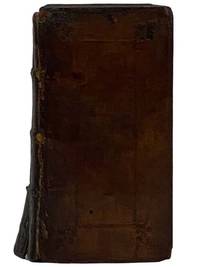
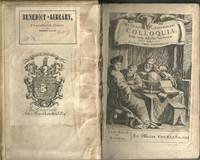
1650ref. 2327061Amstelodami Amsterdam: Typis Ludovici Elsevirii Lodowijk Elzevir 1650. Full-Leather. Good/No Jacket. Spine toned with drying leather and some loss from head joints beginning to split with 2 inch chip from spine base but all sewings holding firmly ink name and date B. Bridges 1689 on front free endpaper which is loose but included ink name on title page minimal ink marginalia pencil notes on rear free endpaper. 1650 Full-Leather. 589 3 pp. A-Mm8 Nn4 Oo8 Pp4. 4 7/8 x 2 5/8. Full leather blind-stamped borders and decorations gilt rules on spine. Engraved title page showing a scribe seated with two other men with an archway in the background. 63 colloquies in the original Latin with a brief biographical sketch of the life of Erasmus preceding text footnotes throughout text. House of Elzevir edition printed by Lodowijk Elzevir who met Galileo in 1636. His grandfather founded the publishing company in the 1580s. One of the many works of the philosopher and Catholic theologian known as the 'Prince of Christian Humanists.' Published in 1518 the pages 'held up contemporary religious practices for examination in a more serious but still pervasively ironic tone' Coffin/Stacey Western Civilizations. Christian Humanists viewed Erasmus as their leader in the early 16th century. Erasmus' works had greater meaning to those learned few who had a larger knowledge of Latin and Greek. Colloquies in Latin means a formal written dialogue thus in his book Erasmus explores man's reaction to others in conversations. The Colloquies is a collection of dialogues on a wide variety of subjects. They began in the late 1490s as informal Latin exercises for Erasmus' own pupils. In about 1522 he began to perceive the possibilities this form might hold for continuing his campaign for the gradual enlightenment and reform of all Christendom. Between that date and 1533 twelve new editions appeared each larger and more serious than the last until eventually some fifty individual colloquies were included ranging over such varied subjects as war travel religion sleep beggars funerals and literature. All of these works were in the same graceful easy style and gentle humor that made them continually sought as schoolboy exercises and light reading for generations. "Originally written in his early days at Paris as dialogues illustrating the art of polite conversation they were afterwards expanded into conversation pieces in which all the topics of the day were discussed with a freedom which ensured their popularity. Later in the century and up to the eighteenth century they were a set book in schools and there are lines in Shakespeare which directly recall Erasmus's words." - Printing and the Mind of Man 53 referencing the 1524 original Typis Ludovici Elsevirii [Lodowijk Elzevir] hardcover books
1650ref. 12687Amstelodami Amsterdam: Typis Ludovici Elzevirii 1650. Acceptable. From Elzevir the Renaissance scholar's press 1650. In 'pocket' format 3"x5" in full leather. Pictorial title page. Lower third of spine missing board detached but present. Text has been trimmed at top edge. In cloth box. Shadrach Munnings armorial bookplate and bookplate of "Collegii Sti Augustini". The great Christian humanist scholar and teacher evolved the Colloquies as a collection of dialogues on a wide variety of subjects. They began in the late 1490s as informal Latin exercises for Erasmus' own pupils. In about 1522 he began to perceive the possibilities this form might hold for continuing his campaign for the gradual enlightenment and reform of all Christendom. Typis Ludovici Elzevirii hardcover
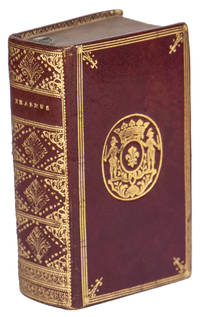
1658ref. 18897Amsterdam: Joannes Janssonius 1658. 18th-century richly gold-tooled red morocco both boards show a triple fillet frame with small cornerpieces in the inside corners and an oval armorial centrepiece crowned fleur-de-lis flanked by two knights gold-tooled spine with "Erasmus" lettered in gold gold-tooled board edges and turn ins gilt edges marbled endpapers. 12mo. With an engraved title page a full-page engraving showing Erasmus woodcut decorated initials and several woodcut head- and tailpieces. Including: Coronis apologetica pro colloquiis Erasmi ex ipsius scriptis quantum per otium licuit fideliter collecta à P.S. accedit ejusdem De Collequiorum utilitate dissertatio. Montanus' edition of a renowned famous Latin schoolbook written by Erasmus one of the most used Latin schoolbooks for centuries as it discusses all basic scholarly and moral issues. With Erasmus' preface-letter to Froben at Basel dated 1524 and the Vita Erasmi preceding the Colloquia as well as two indices of authors and dialogues. Included at the end is a short essay explaining the usefulness of the book.With a few 17th-century annotations on the engraved and letterpress title pages resp. "1662" and "Besnier". The engraved title page is cut slightly short not affecting the engraving. Otherwise in very good condition.l Bibl. Belg. II E 572; Erasmus Coll. City Library Rotterdam p. 50; STCN 850071909 9 copies; Vander Haeghen p. 40. Joannes Janssonius, hardcover
1650ref. 2327061Amstelodami Amsterdam: Typis Ludovici Elsevirii Lodowijk Elzevir 1650. Full-Leather. Good/No Jacket. Spine toned with drying leather and some loss from head joints beginning to split with 2 inch chip from spine base but all sewings holding firmly ink name and date B. Bridges 1689 on front free endpaper which is loose but included ink name on title page minimal ink marginalia pencil notes on rear free endpaper. 1650 Full-Leather. 589 3 pp. A-Mm8 Nn4 Oo8 Pp4. 4 7/8 x 2 5/8. Full leather blind-stamped borders and decorations gilt rules on spine. Engraved title page showing a scribe seated with two other men with an archway in the background. 63 colloquies in the original Latin with a brief biographical sketch of the life of Erasmus preceding text footnotes throughout text. House of Elzevir edition printed by Lodowijk Elzevir who met Galileo in 1636. His grandfather founded the publishing company in the 1580s. One of the many works of the philosopher and Catholic theologian known as the 'Prince of Christian Humanists.' Published in 1518 the pages 'held up contemporary religious practices for examination in a more serious but still pervasively ironic tone' Coffin/Stacey Western Civilizations. Christian Humanists viewed Erasmus as their leader in the early 16th century. Erasmus' works had greater meaning to those learned few who had a larger knowledge of Latin and Greek. Colloquies in Latin means a formal written dialogue thus in his book Erasmus explores man's reaction to others in conversations. The Colloquies is a collection of dialogues on a wide variety of subjects. They began in the late 1490s as informal Latin exercises for Erasmus' own pupils. In about 1522 he began to perceive the possibilities this form might hold for continuing his campaign for the gradual enlightenment and reform of all Christendom. Between that date and 1533 twelve new editions appeared each larger and more serious than the last until eventually some fifty individual colloquies were included ranging over such varied subjects as war travel religion sleep beggars funerals and literature. All of these works were in the same graceful easy style and gentle humor that made them continually sought as schoolboy exercises and light reading for generations. "Originally written in his early days at Paris as dialogues illustrating the art of polite conversation they were afterwards expanded into conversation pieces in which all the topics of the day were discussed with a freedom which ensured their popularity. Later in the century and up to the eighteenth century they were a set book in schools and there are lines in Shakespeare which directly recall Erasmus's words." - Printing and the Mind of Man 53 referencing the 1524 original Typis Ludovici Elsevirii [Lodowijk Elzevir] hardcover
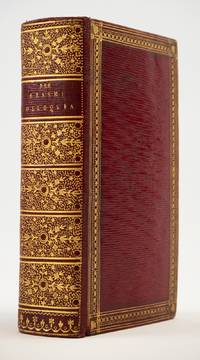
1643ref. ST20492Lugduni Batavorum Leyden: Bonaventura Elzevier and Abraham Elzevier 1643. Second Elzevier Edition. 137 x 78 mm. 5 1/2 x 3". 12 p.l. 672 44 pp. 2 leaves. ELEGANT EARLY 19TH CENTURY RED STRAIGHT-GRAIN MOROCCO VERY ELABORATELY GILT BY BOZERIAN unsigned but see below covers framed by bead-and-star roll enclosed with double gilt fillets leaf tools at corners. smooth spine in compartments with large central fleuron of floral lancets emanating from central circlet in a richly stippled ground small circles at corners one compartment with gilt lettering cresting tulip and violet roll at foot of spine turn-ins with bead-and-star roll marbled endpapers vellum flyleaves all edges gilt. Woodcut initials headpieces and tailpieces numismatic portrait tondo fine engraved title page by C. C. Dusend showing Erasmus gazing through a telescope at the Godly orb seen through parted clouds. Willems 552; Rahir 546; USTC 1027918. For the binding: Culot "Jean Claude Bozerian" Roulette 9 Plate I and Palette 12 Plate X. Just barely perceptible rubbing to joints and extremities one leaf with tiny burn hole affecting a couple of words intermittent minor foxing negligible ink spots here and there other trivial imperfections but an extremely attractive copy the text fresh and clean and the very well-preserved binding with lustrous leather and bright gilt. This is a remarkably pretty copy of an extremely influential but generically elusive work printed by a legendary press and bound by the founder of a celebrated French binding dynasty. First published in 1524 the "Colloquia" comprise 63 conversations originally written for Erasmus' students on varied and overlapping topics but these urbane meditations soon became widely read as they covered subjects that intrigued the important thinkers of the day. Their influence was so profound that it is not saying too much to claim that they helped to speed the Reformation. Although they are difficult to classify precisely one could categorize them as including in general terms exposure of ritualistic fallacies invective against corruption within the church examination of popular imposture deploring of contemporary personal sins practical advice for laymen and miscellaneous discussion of amusing topics. In specific terms the text takes on such controversial topics as the value of pilgrimage celibacy and abstinence from meat on Fridays and other prescribed days. Erasmus' "Colloquia" was frequently published by the Elzeviers once in French and a total of nine times in Latin. The text was universally adopted for school use up through the 18th century. Although our lovely little binding is unsigned Culot firmly identifies its tools as those used by Jean-Claude Bozerian 1762-1840. He was the elder of the Bozerian brothers François is referred to as "le jeune" and was active in Paris from 1795 to about 1810. He began his career in Lyon as an apprentice bookseller printer and bookbinder eventually deciding to focus on the latter craft. Marriage to the widow of binder Pierre Boulier allowed him to establish a binding workshop in Paris where he was joined by his brother. His bindings were soon much in demand by French bibliophiles who appreciated their superior materials tasteful design and flawless execution--all characteristics that are plainly evident in the present case. Bonaventura Elzevier and Abraham Elzevier unknown books
1967ref. 157369Darmstadt: Wissenschaftliche Buchgesellschaft (WBG) 1967. XXVII, 597 Seiten. Lateinisch-deutscher Paralleltext. 8° (17,5-22,5 cm). Orig.-Leinenband mit goldgeprägtem Rückentitel. [Hardcover / fest gebunden].
1774ref. 55843Nürnberg, Felsecker, 1774. 8°. Mit gest. Frontispiz u. einigen Holzschn.-Vignetten. 6 Bll., 870 S., 12 Bll. - Angeb. - Ders. Encomium Moriae, sive declamatio in laudem stultitiae [...]. Ebda., 1774. 88 S., Ldr. d. Zt. m. Rückenverg., goldgepr. Rückentitel u. dreiseitigem Rotschnitt.
1754In-16°; pp. 524, (4), con l’index e l’epitaffio di Erasmo a Basilea frontespizio figurato inciso ad acquaforte, con Erasmo e tre dottori; con una autobiografia dell’autore. dedica a frobenius. legatura in mzza pelle con titolo e fregi in oro al dorso.
1643ref. ST20492Lugduni Batavorum Leyden: Bonaventura Elzevier and Abraham Elzevier 1643. Second Elzevier Edition. 137 x 78 mm. 5 1/2 x 3". 12 p.l. 672 44 pp. 2 leaves. ELEGANT EARLY 19TH CENTURY RED STRAIGHT-GRAIN MOROCCO VERY ELABORATELY GILT BY BOZERIAN unsigned but see below covers framed by bead-and-star roll enclosed with double gilt fillets leaf tools at corners. smooth spine in compartments with large central fleuron of floral lancets emanating from central circlet in a richly stippled ground small circles at corners one compartment with gilt lettering cresting tulip and violet roll at foot of spine turn-ins with bead-and-star roll marbled endpapers vellum flyleaves all edges gilt. Woodcut initials headpieces and tailpieces numismatic portrait tondo fine engraved title page by C. C. Dusend showing Erasmus gazing through a telescope at the Godly orb seen through parted clouds. Willems 552; Rahir 546; USTC 1027918. For the binding: Culot "Jean Claude Bozerian" Roulette 9 Plate I and Palette 12 Plate X. Just barely perceptible rubbing to joints and extremities one leaf with tiny burn hole affecting a couple of words intermittent minor foxing negligible ink spots here and there other trivial imperfections but an extremely attractive copy the text fresh and clean and the very well-preserved binding with lustrous leather and bright gilt. This is a remarkably pretty copy of an extremely influential but generically elusive work printed by a legendary press and bound by the founder of a celebrated French binding dynasty. First published in 1524 the "Colloquia" comprise 63 conversations originally written for Erasmus' students on varied and overlapping topics but these urbane meditations soon became widely read as they covered subjects that intrigued the important thinkers of the day. Their influence was so profound that it is not saying too much to claim that they helped to speed the Reformation. Although they are difficult to classify precisely one could categorize them as including in general terms exposure of ritualistic fallacies invective against corruption within the church examination of popular imposture deploring of contemporary personal sins practical advice for laymen and miscellaneous discussion of amusing topics. In specific terms the text takes on such controversial topics as the value of pilgrimage celibacy and abstinence from meat on Fridays and other prescribed days. Erasmus' "Colloquia" was frequently published by the Elzeviers once in French and a total of nine times in Latin. The text was universally adopted for school use up through the 18th century. Although our lovely little binding is unsigned Culot firmly identifies its tools as those used by Jean-Claude Bozerian 1762-1840. He was the elder of the Bozerian brothers François is referred to as "le jeune" and was active in Paris from 1795 to about 1810. He began his career in Lyon as an apprentice bookseller printer and bookbinder eventually deciding to focus on the latter craft. Marriage to the widow of binder Pierre Boulier allowed him to establish a binding workshop in Paris where he was joined by his brother. His bindings were soon much in demand by French bibliophiles who appreciated their superior materials tasteful design and flawless execution--all characteristics that are plainly evident in the present case. Bonaventura Elzevier and Abraham Elzevier unknown
ref. 46442134like new. unknown
ref. A9781165953110New. unknown
ref. B9781019409206Hardback. New. hardcover
ref. B9781018195490Hardback. New. hardcover
ref. A9781018195490Hardback. New. hardcover
ref. B9781165953110New. unknown
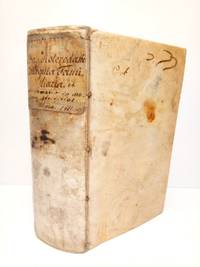
1693ref. 960Z11Amsterdam: Ex Typographia Blaviana 1693. Leather. Very Good Indeed. 8" by 5". None stated. A collection of Latin works from the historic humanist philosopher and theologian Desidarius Erasmus bound in full vellum. A collection of works from Erasmus first published as 'Colloquia Familiaria' in 1518. With a fantastic monochrome wood engraved title page. A collection of dialogues and works by the historic late fifteenth-early sixteenth century philosopher humanist Catholic theologian Desiderius Erasmus. This collection often referred to as the 'Colloquies' features discussions on a wide variety of topics and were first intended as Latin school dialogue exercises and includes notable works such as 'Naufragium' which describes a shipwreck 'Amicitia' which is a collection of folk stories involving animals and 'Epicureus' which discusses ancient Greek philosophical movements. The register runs continuously as -6 A-Z8 Aa-Zz8 Aaa-Eee2. Collated complete. Written in the original Latin. Bound in contemporary full vellum. Bound in full contemporary vellum. Original endpapers and blanks retained. Externally very smart with handling marks and slight fading to the text to the spine. Bookplate of 'Sir John Eliot Bart' to the front pastedown with closed tears to the pastedowns. Internally firmly bound with generally clean and bright pages with minimal age toning and the odd minor spot only. Very Good Indeed Ex Typographia Blaviana hardcover
1712ref. 48094Ulmae Ulm: Sumptibus Danielis Bartholomaei M DCC XII 1712.- 7 h. 869 p. 11 h. y 88 p. de la segunda obra con el mismo pie de imprenta y fecha: Grabado al cobre alegórico in frontis; 8º 173 x 115 cm; Portada a dos tintas; Sig. :7 A-Z8-Aa-Zz8-Aaa-Kkk8 / a-e8 f4; Texto en latín; Enc. de la época en Pergamino rígido a la romana lomo con título rotulado a mano cortes pintados y un ex-libris grabado al cobre de "Ex Bibliotheca Christiani Friederici Schnaussii" grabado por J. B. Gans al verso de la tapa anterior.- RARO. La encuadernación firme y fuerte aunque con diversas señales del tiempo. Al verso de la tapa anterior tienenunas notas manuscritas otra pequeña notita manuscrita en la portada. Por lo demás el interior del libro se encuentra limpio y sin ninguna mancha reseñable. El grabado del frontis tiene una pequeña reparación por detrás sin importancia. El título del libro va manuscrito sobre un tejuelo de pergamino en la cabecera del lomo. Dicho esto que es preceptivo se puede considerar el libro como en muy buen estado. Este libro contiene los Coloquios una especie de manual de cultura clásica para la vida renacentista así como el famoso Elogio de la Locura con un prefacio de Tomás Moro. LITERATURA Y ESTUDIOS LITERARIOS EXTRANJEROS DE LOS SIGLOS XVI-XXI Libro en latín Danielis Bartholomaei hardcover
1664ref. 020084Lugduni Batavorum et Roterodami: Ex Officina Hackiana 1664. Inteira de Pergaminho. Bom / Good / Bon. In-8º190x122. 1 vol. de 12-784-18 pp. Portada gravada a buril em chapa de cobre representando Erasmo sentado a uma mesa sobre a qual está um globo e alguns livros e à sua volta três personagens que ouvem e comentam entre si o que diz o mestre. Encadernação em inteira de pergaminho Ex-libris armoriado inglês. Humanista holandês Erasmo de Roterdão foi educado com os padres augustinianos estudou teologia na Holanda e em Paris e doutorou-se em Turim em 1506. Trabalhou como perceptor privado preparando para os seus alunos uns opúsculos pedagógicos que com o tempo se converteram em importantes livros da cultura europeia. Em Itália foi discípulo de Lorenzo Valla. Viajou para Inglaterra onde foi hospede de Tomás More onde escreveu o célebre Elogio da Loucura e estudou a língua grega. Em Veneza trabalhou com Aldo Manuccio numa composição de provérbios os Adagia. Preparou uma edição grega do Novo Testamento que causou escândalo. Realizou depois diversas edições comentadas de textos clássicos. Afastando-se das posições de Lutero saíu de Basileia entretanto adepta do protestantismo e foi viver para Friburgo durante alguns anos onde escreveu estes Colloquia. Brunet II 1041 Ex Officina Hackiana unknown
1651ref. 6823Amsterdam: Jodocum Janssonium 1651. Hardcover Tapa dura. 134x72mm. 5¼x2¾". Amsterdam Jodocum Janssonium 1651. En 12º 134 x 72mm. Frontispicio grabado 24 672 44 pp. 1 grabado a toda página. Encuadernación de la época en pergamino a la romana. Temprana edición de los Coloquios de Desiderio Erasmo que contienen un manual de enseñanza de latín incluyendo ejercicios y juegos de palabras con fines educativos y un documento sobre cómo la cultura clásica podría servir como modelo en la vida renacentista; finalmente un folleto religioso de tintes reformistas. Buen ejemplar. Jodocum Janssonium hardcover
ref. 0366208489.Ghardcover. Good. Access codes and supplements are not guaranteed with used items. May be an ex-library book. hardcover
ref. 036595134X.Gpaperback. Good. Access codes and supplements are not guaranteed with used items. May be an ex-library book. paperback