BERKELEY, GeorgeBiblio.com
2.769 Ergebnisse
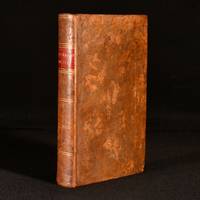
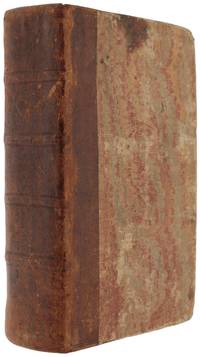
1734Best.-Nr. 6310London: printed for Jacob Tonson 1734. First edition. Rare first edition first issue of Berkeley's renowned critique of Newton and Leibniz's calculus famously described by historian Florian Cajori as "the most spectacular event of the century in the history of British mathematics." Contemporaneously bound with Berkeley's influential Theory of Vision 1733 his Defence of Free-Thinking in Mathematics 1735 and five additional pamphlets. . BERKELEY'S FOUNDATIONAL CRITIQUE OF THE CALCULUS . First edition of Berkeley's famous attack on the calculus of Newton and Leibniz which the historian Florian Cajori described as "the most spectacular event of the century in the history of British mathematics" History of the Calculus p. 57 bound with Berkeley's important Theory of Vision 1733 and Defence of Free-Thinking in Mathematics 1735 and five further pamphlets. "The Analyst is a criticism of the calculus in both its Newtonian and Leibnizian formulations arguing that the foundations of the calculus are incoherent and the reasoning employed inconsistent. Berkeley's powerful objections provoked numerous responses and the task of replying to them set the agenda for much of British mathematics in the 1730s and 1740s" Jesseph p. 121. Perhaps the most famous passage in the book p. 59 and a vivid example of Berkeley's wit is his response to the idea that fluxions could be defined using ultimate ratios of vanishing quantities: 'It must indeed be acknowledged that Newton used Fluxions like the Scaffold of a building as things to be laid aside or got rid of as soon as finite Lines were found proportional to them. But then these finite Exponents are found by the help of Fluxions. Whatever therefore is got by such Exponents and Proportions is to be ascribed to Fluxions: which must therefore be previously understood. And what are these Fluxions The Velocities of evanescent Increments And what are these same evanescent Increments They are neither finite Quantities nor Quantities infinitely small nor yet nothing. May we not call them the Ghosts of departed Quantities' Modern historians have argued that the expression 'Ghosts of departed Quantities' was intended to address both Leibnizian infinitesimals and Newtonian fluxions. "Berkeley's attack on the calculus pointed out real deficiencies . his attack was also incisive witty and infuriating. Many mathematicians were moved to try to answer it. In fact several important eighteenth-century discussions of the foundations of the calculus can be traced back to Berkeley's attack. For instance Maclaurin's monumental two-volume A Treatise ofFluxions began as a reply to Berkeley. Berkeley's attack had a more lasting effect than simply stimulating an immediate set of replies; it served to keep the question of foundations alive and under discussion and it pointed to the questions which had to be answered if a successful foundation were to be given. D'Alembert and Lazare Carnot both used some of Berkeley's arguments in their own discussions of foundations and Lagrange took Berkeley's criticisms with the utmost seriousness" Grabiner p. 27. Despite these 18th century attempts calculus was not placed on a secure foundation until around 1820 with the work of Bolzano and Cauchy on the theory of limits. The 'Infidel Mathematician' in the title is thought to be Edmund Halley 1656-1742. "As a result of the publication of The Analyst there appeared within the next seven years some thirty pamphlets and articles which attempted to remedy the situation. The first appeared in 1734 a pamphlet by James Jurin Geometry No Friend to Infidelity . Berkeley answered Jurin in 1735 in A Defence of Freethinking in Mathematics bound in the offered volume and justly asserted that the latter was attempting to defend what he did not understand. In this work Berkeley again appealed to the divergence in Newton's views - as presented in De analysi the Principia and De quadratura - to show a lack of clarity in the ideas of moments fluxions and limits . In the meantime however numerous attempts some noteworthy and others insignificant were made to find new and more satisfactory forms and arguments in which to present Newton's method. By far the ablest and most famous of these was made by Colin Maclaurin. In his Treatise of Fluxions in 1744 he aimed not to alter the conceptions invlolved in Newton's fluxions but to demonstrate the validity of his method by rigorous procedures of the ancients - to deduce the new analysis from a few 'unexceptional principles'. Maclaurin professed in the preface of this work that the Analyst controversy had given occasion to his treatise" Boyer. Berkeley's Theory of Vision 1733 also bound into this volume is a follow-up and defence of his earlier Essay towards a New Theory of Vision 1709 in which he had attacked Newton's cosmology. Keynes describes the 1733 as a work "of major importance". "Most mathematicians who dealt with calculus techniques in the early 18th century did not worry overmuch about foundational questions. Indeed it is significant that the first intensive discussion on the foundations of the calculus was not caused by difficulties encountered in working out or applying the new techniques but by the critique of an outsider on the pretence of mathematicians that their science is based on secure foundations and therefore attains truth. The outsider was Bishop George Berkeley 1685-1753 the famous philosopher and the target of his critique is made quite clear in the title of the present work. In sharp but captivating words he exposed the vagueness of infinitely small quantities evanescent increments and their ratios higher-order differentials and higher-order fluxions para. 4: 'Now as our Sense is strained and puzzled with the perception of Objects extremely minute even so the Imagination which Faculty derives from Sense is very much strained and puzzled to frame clear Ideas of the least Particles of time or the least Increments generated therein: and much more so to comprehend the Moments or those Increments of the flowing Quantities in statu nascenti in their very first origin or beginning to exist before they become finite Particles. And it seems still more difficult to conceive the abstracted Velocities of such nascent imperfect Entities. But the Velocities of the Velocities the second third fourth and fifth Velocities &c. exceed if I mistake not all Humane Understanding. The further the Mind analyseth and pursueth these fugitive Ideas the more it is lost and bewildered; the Objects at first fleeting and minute soon vanishing out of sight. Certainly in any Sense a second or third Fluxion seems an obscure Mystery. The incipient Celerity of an incipient Celerity the nascent Augment of a nascent Augment i.e. of a thing which hath no Magnitude: Take it in which light you please the clear Conception of it will if I mistake not be found impossible whether it be so or no I appeal to the trial of every thinking Reader. And if a second Fluxion be inconceivable what are we to think of third fourth fifth Fluxions and so onward without end' "Further on comes the most famous quote from The analyst: 'And what are these Fluxions The Velocities of evanescent Increments And what are these same evanescent IncrementsThey are neither finite Quantities nor Quantities infinitely small nor yet nothing. May we not call them the Ghosts of departed Quantities' para. 35. Berkeley also criticised the logical inconsistency of working with small increments which first are supposed unequal to zero in order to be able to divide by them and finally are considered to be equal to zero in order to get rid of them. "Of course Berkeley knew that the calculus notwithstanding the unclarities of its fundamental concepts led with great success to correct conclusions. He explained this success - which led mathematicians to believe in the certainty of their science - by a compensation of errors implicit in the application of the rules of the calculus. For instance if one determines a tangent one first supposes the characteristic triangle similar to the triangle of ordinate sub-tangent and tangent which involves an error because these triangles are only approximately similar. Subsequently one applies the rules of the calculus to find the ratio dy/dx which again involves an error as the rules are derived by discarding higher-order differentials. These two errors compensate each other and thus the mathematicians arrive 'though not at Science yet at Truth For Science it cannot be called when you proceed blind-fold and arrive at the Truth not knowing how or by what means' para. 22" Grattan-Guinness pp. 88-9. "Aside from calling the rigor and coherence of the Newtonian fluxional calculus into question Berkeley argued that there was no useful distinction between it and the Leibnizian calculus differentialis. This charge had a significant ad hominem effect in the context of Newtonians' claims for the superior rigor of their procedures in comparison with those of the Leibnizian school. After remarking that Newton's method is 'in effect the same with that used in the calculus differentialis' because it requires a 'marvellous sharpness of Discernment to be able to distinguish between evanescent Increments and infinitesimal Differences' Section 17 Berkeley echoes the Newtonian complaints against Leibnizian infinitesimal differences by arguing that the Leibnizians make 'no manner of scruple first to supposed and secondly to reject Quantities infinitely small: with what clearness in the Apprehension and justness in the reasoning any thinking man who is not prejudiced in favour of these things may easily discern' Section 18. The result is that Newtonian criticisms of the Leibnizian calculus are turned against the calculus of fluxions itself and the foundations of the calculus are rendered obscure and burdened with apparent self-contradiction" Jesseph p. 128. "Berkeley's publication of The analyst took up two themes that had long been of concern to him one mathematical and the other theological. Mathematically it continued the reservations about the foundations of the calculus that Berkeley had voiced in an early essay 'Of infinites' that he presented to the Dublin Philosophical Society in 1709 and reprised in arts. 130-132 of the Principles. Theologically The analyst was part of Berkeley's battle against freethinking and his principal argument intends to show that freethinkers who deride revealed religion for its mysteries cannot consistently accept the calculus since it contains suppositions at least as extravagant and incomprehensible as anything in revealed religion. This aspect of his criticism is indicated in the full title of The analyst which characterizes the work as A Discourse addressed to an infidel mathematician; wherein it is examined whether the object principles and inferences of the modern analysis are more distinctly conceived or more evidently deduced than religious mysteries and points of faith and attributes it to 'The Author of The minute philosopher'. "Whether the work was directed at a specific 'infidel mathematician' is somewhat uncertain although there is evidence that Berkeley intended it for Edmond Halley. According to Berkeley's 18th-century biographer Joseph Stock the London physician Samuel Garth had declined the last rites in his final illness on the grounds that 'my friend Dr. Halley who has dealt so much in demonstration has assured me that the doctrines of Christianity are incomprehensible and the religion itself an imposture'. According to Stock Berkeley 'therefore took arms against this redoubtable dealer in demonstration and addressed the Analyst to him with a view of shewing that Mysteries in Faith were unjustly objected to by mathematicians who admitted much greater Mysteries and even falsehoods in Science of which he endeavoured to prove that the doctrine of fluxions furnished an eminent example' Stock pp. 29-30. Whomever The analyst was intended to address immediately its broader audience was unmistakably those mathematicians who regarded the calculus as a rigorous and properly founded method that compared favorably with the mysterious tenets of revealed religion" Jesseph pp. 123-4. "As a result of the publication of The Analyst there appeared within the next seven years some thirty pamphlets and articles which attempted to remedy the situation. The first appeared in 1734 a pamphlet by James Jurin Geometry No Friend to Infidelity . Berkeley answered Jurin in 1735 in A Defence of Freethinking in Mathematics and justly asserted that the latter was attempting to defend what he did not understand. In this work Berkeley again appealed to the divergence in Newton's views - as presented in De analysi the Principia and De quadratura - to show a lack of clarity in the ideas of moments fluxions and limits. Jurin's reply in the same year in The Minute Mathematician was again evasively tautological . Berkeley now dropped out of the controversy but the unsatisfactory nature of Jurin's arguments was pointed out by Benjamin Robins in A Discourse Concerning the Nature and certainty of Sir Isaac Newton's Methods of Fluxions and of Prime and Ultimate Ratios 1735 as well as in articles in current journals . numerous attempts some noteworthy and others insignificant were made to find new and more satisfactory forms and arguments in which to present Newton's method. By far the ablest and most famous of these was made by Colin Maclaurin. In his Treatise of Fluxions in 1742 he aimed not to alter the conceptions involved in Newton's fluxions but to demonstrate the validity of his method by rigorous procedures of the ancients - to deduce the new analysis from a few 'unexceptional principles'. Maclaurin professed in the preface of this work that the Analyst controversy had given occasion to his treatise" Boyer p. 228-33. According to Fraser The Works of George Berkeley III 1871 p. 257 the first edition of The Analyst was published in March 1734. Almost all copies including ours have the last two of the three instances of the word 'Science' in Query 36 p. 85 corrected by hand to 'Evidence'. That this is also the case in a presentation copy in the J. M. Keynes Collection King's College Cambridge leaves Keynes notes "no doubt as to Berkeley's intention"; this correction has been made in the version printed in the Works 1784. A second edition was published at Dublin later in the same year Keynes notes that Berkeley did not leave London for Ireland until April and that two of the three errata were corrected in the Dublin edition; it was advertised on 4 June in the Dublin Journal as "just published". The two texts are not identical; e.g. in para. 5 "of a plain an infinitely little plain" in the London text is corrected to "of a plane an infinitely little plane" in the Dublin text this is not noted in the errata to the first edition. Another edition was published at London in 1754. "A NewTheory of Vision 1709 reckoned by Brett's History of Psychology to have been 'the most significant contribution to psychology produced in the eighteenth century' being 'the first instance of clear isolation and purely relevant discussion of a psychological topic'. The main problem examined in this work is the factors that determine our ability to see things at a distance the assumption being that the sense of vision itself is incapable of doing so. Rather seeing distant objects requires the suggestions supplied by other senses especially that of touch as well as such other experiences as visual distortion caused by failure of eye accommodation. We do not 'judge' by means of quasi-optica1 calculation of the distance of objects the traditional account of Berkeley's predecessors; rather we let one group of sensations suggest another in virtue of experience and custom. Moreover from saying that all visual sensations 'seem to be in the eye' Berkeley moves to his basic contention later generalized in his Principles of Human Knowledge 1710 that visual ideas are in our minds. Given his general doctrine that the 'being' of things amounts to their being perceived i.e. being ideas in a mind the ultimate reference is to the divine mind he infers that external space is not basic but is 'only suggested' to us by visual ideas via tactile and other ideas" DSB. "Critics seized upon the inconsistency that Berkeley highlights by portraying objects of touch as outside the mind while objects of vision are within the mind. In at least nine sections of the New Theory Berkeley described tactile properties as if they correspond to real substance. Although these sections were written prior to Principles Berkeley likely understood later in life how these passages undermined the essence of immaterialism. Such incongruities came to haunt him in 1732 when he republished New Theory as an appendix to a theological work called Alciphron. Later that year an abrasive critique of the republished thesis appeared as an anonymous letter in a prominent newspaper the Daily Post-Boy. After reading the critique Berkeley decided to write a supplement to New Theory of Vision clarifying why it was consistent with the philosophy articulated in Principles and Three Dialogues. His rebuttal was published the following year and was titled An Essay Towards a New Theory of Vision Vindicated and Explained. This 71-paragraph essay skirts the thorny issues of immaterialism by conceding that materialists and immaterialists cannot have an honest conversation about vision to begin with. Berkeley reaffirms the consistency of ideas as reality in New Theory by rejecting matter exists outside the mind but did so without proposing any new metaphysical argument" Margo & Harman p. 230. The five other pamphlets bound in this volume are: BERKELEY George. Siris: a chain of philosophical reflexions and inquiries concerning the virtues of tar water and divers other subjects. . A new edition with additions and emendations. London printed for W. Innys C. Hitch C. Davis 1744. PRIOR Thomas and George BERKELEY. An authentic narrative of the success of tar- water: In curing a great number and variety of distempers with remarks. And occasional papers relative to the subject. To which are subjoined two Letters from the author of Siris. Dublin printed by Margt. Rhames for R. Gunne 1746. BERKELEY George. A discourse addressed to magistrates and men in authority: occasioned by the enormous license and irreligion of the times. London J. Roberts 1738. LYTTELTON George Baron. The court secret: a melancholy truth. Now first translated from the original Arabic. By an adept in the oriental tongues. London T. Brown 1742. CAREY Henry. A learned dissertation on dumpling: its dignity antiquity and excellence. With a word upon pudding. And many other useful discoveries of great benefit to the publick. . To which are added A poetical receipt to make an oatmeal pudding by the late Mr. John Dryden. The art of making hasty pudding by the late Dr. William King. Apple-pye. A poem by Mr. Welsted. And an essay on good eating by an eminent hand. The sixth edition. London T. Read 1744. Analyst: Barchas 167; ESTC T21863; Richard Green 31; Stanitz 52A; Honeyman 287; Keynes 32. Theory of Vision: Keynes 4. Defence of Free-Thinking in Mathematics: Keynes 36. Keynes Bibliography of George Berkeley 138a; Richard Green 31; Sotheran I 347; Stanitz 52A; Wallis 245.42. Boyer The History of the Calculus and its Conceptual Development 1949; Cajori A History of the Conceptions of Limits and Fluxions 1919; Grattan-Guinness From the Calculus to Set Theory 1630-1910 1980; Grabiner The Origins of Cauchy's Rigorous Calculus 1981; Jesseph 'George Berkeley The Analyst 1734' pp. 121-30 in Landmark Writings in Western Mathematics 1640-1940 Grattan-Guinness ed. 2005; Margo & Harman 'George Berkeley and the New Theory of Vision' Historia Ophthalmologica Internationbalis 2 2019 pp. 227-231. Stock An Account of the Life of George Berkeley 1776. Eight works in one volume 200 x 125 mm. Theory of Vision: pp .64; Analyst: pp. x 3-94 2 errata; Defence of Freethinking: pp. 71 1 blank; Siris: pp. 174 2 table of contents; Authentic Narrative: pp. 4 248 2 corrigenda et addenda; A Discourse: pp. 32; Court Secret: pp. 24; Learned Dissertation: pp ii ii 3-33 1 blank. Eighteenth-century quarter calf marbled boards spine and sides lightly rubbed hinges cracked but holding firmly some wear at extremities. printed for Jacob Tonson unknown
1934Best.-Nr. 1703Garden City New York: Doubleday Doran & Co. The Crime Club 1934. First American Edition. Near Fine. 8vo 7 1/2 x 5 1/4 inches 190 x 130 mm; 8 347 pp. Publisher's red cloth title in black on spine and a skeleton figure on cover with "Member's Edition" scroll top edge stained red. Spine a tad faded with extremities lightly rubbed; binding tight paper evenly toned pages clean. The Crime Club edition and binding. Bookplate of Elisabeth Rall pasted inside front cover. Published the same year in the U.K. with the title "Panic Party" this is the tenth and final of Berkeley's novels to feature the amateur detective Roger Sheringham. When reviewing this title on 3rd June 1934 Dorothy L. Sayers sums up the plot as follows: 'A rich cynic maroons an ill-assorted generation of human vipers on a desert island informs them just for fun that one of them is an undetected murderer and sits back to enjoy their reactions. The first reaction very rightly is the murder of the cynic; after which Roger Sheringham has to grapple with the reactions to that.' Anthony Berkeley Cox 1893 - 1971 is today recognized as a key figure in the development of crime fiction. He wrote under several pen-names including Francis Iles Anthony Berkeley and A. Monmouth Platts. He was educated at Sherborne School and University College Oxford. He served in the British Army during the First World War and worked as a journalist for many years contributing to such magazines as Punch and The Humorist. His first novel was published in 1925 and it introduced the amateur detective Robert Sheringham who would feature in many of his novels through 1934. In 1930 Berkeley founded the Detection Club in London along with Agatha Christie Freeman Wills Crofts Dorothy L. Sayers Hugh Walpole and other established mystery writers. Several of his books were adapted for the screen including "Before the Fact" adapted by Alfred Hitchcock as "Suspicion" starring Cary Grant and Joan Fontaine. Doubleday, Doran & Co. (The Crime Club) unknown
Best.-Nr. A9781498110303Paperback / softback. New. paperback
Best.-Nr. 48990018-20Ulverscroft Large Print Books. Used - Very Good. Former library copy. Pages intact with possible writing/highlighting. Binding strong with minor wear. Dust jackets/supplements may not be included. Includes library markings. Stock photo provided. Product includes identifying sticker. Better World Books: Buy Books. Do Good. Ulverscroft Large Print Books unknown
Best.-Nr. SKU0634038Anchor 2061-01-21. paperback. New. 5x1x7. New Textbook Ships with Tracking Anchor paperback
1789Best.-Nr. 919P1London: C. Elliot; T. Kay; C. Elliot 1789. First edition. Leather. Very Good. 8.5" by 5.5". None. A very scarce volume of biographical pieces and edited correspondence by eminent historical figures the first edition of this work by George Monck Berkeley. The first edition of this very scarce work.The 'Literary Relics' of George Monck Berkeley an interesting selection of research and correspondence of royal figures edited and collected here into one volume.Berkeley's work contains his 'Inquiry into the Life of Dean Swift' a biographical work for which he is best known as well as an edited selection of letters from Kings Charles II and James II Elizabeth of Bohemia Jonathan Swift and more.George Monck Berkeley was a playwright an author who only published a few works before his death at the age of 29. Half-title is present.Bookplate of Edward Winnington to the front paste down. Winnington was a baronet and politician an MP Droitwich Worcestershire for almost thirty years. In a full marbled calf binding. Externally generally smart a little rubbed to the leather. Minor bumping to the extremities. A few light marks to the boards. Very small crack to the head of the front joint. Bookplate to the front paste down. Internally firmly bound. Pages are bright and clean with a few scattered spots. Very Good C. Elliot; T. Kay; C. Elliot hardcover
Best.-Nr. A9780807896181Paperback / softback. New. Offers the first full-length biography of a man who was primarily a botanist but who is best known for his map of North America. One of the period's outstanding cartographical achievements Mitchell's map served as the basis for the Treaty of 1783 and for the still-existing United States-Canadian border. paperback
Best.-Nr. 113067London 1853 4to. 277-294 pp. lith. plate. Disbound. From the library of Thore M. Fries with his library stamp. Stafleu 20.962. Miles Joseph Berkeley 1803-1889 ”The founder of British mycology” systematist with some 6000 species of fungi being credited to him. Berkeley made very important contributions to the field of plant pathology. He composed the account of native British fungi in Sir W. Hooker’s ”British Flora” 1836 and his most important works are ”Introduction to Cryptogamic Botany” 1857 and his ”Outlines of British Fungology” 1860. He also published a large number of articles on mycology. The co-author Moses Ashley Curtis 1808-72 was an American mycologist. unknown
Best.-Nr. 113072London 1857 4to. 129-132 pp. engr. plate. Disbound. From the library of Thore M. Fries with his library stamp. Not in Stafleu. Not in Volbracht. The plate is after Berkeley and engraved by G. Jarman. ”A very valuable collection of Fungi has been lately made by Fendler in Venezueal which are now for sale in the hands of the Rev. M. A. Curtis of South Carolina.”.Miles Joseph Berkeley 1803-1889 ”The founder of British mycology” systematist with some 6000 species of fungi being credited to him. Berkeley made very important contributions to the field of plant pathology. He composed the account of native British fungi in Sir W. Hooker’s ”British Flora” 1836 and his most important works are ”Introduction to Cryptogamic Botany” 1857 and his ”Outlines of British Fungology” 1860. He also published a large number of articles on mycology. unknown
Best.-Nr. 113064London 1870 4to. 149-152 pp. 2 chromolith. plates. Sewn with blue wrapper. From the library of Thore M. Fries with his library stamp. Stafleu 20.963. Miles Joseph Berkeley 1803-1889 ”The founder of British mycology” systematist with some 6000 species of fungi being credited to him. Berkeley made very important contributions to the field of plant pathology. He composed the account of native British fungi in Sir W. Hooker’s ”British Flora” 1836 and his most important works are ”Introduction to Cryptogamic Botany” 1857 and his ”Outlines of British Fungology” 1860. He also published a large number of articles on mycology. The co-author Christopher Edmund Broome 1812-86 was also a British mycologist but he didn’t publish much. His herbarium contained at his death around 40000 fungal specimens which are now at the Royal Botanic Gardens Kew. unknown
Best.-Nr. 113078London 1853 4to. 149-154 pp. engr. plate. Disbound. From the library of Thore M. Fries with his library stamp. Not in Stafleu. Volbracht suppl. 130a with wrong date. Miles Joseph Berkeley 1803-1889 ”The founder of British mycology” systematist with some 6000 species of fungi being credited to him. Berkeley made very important contributions to the field of plant pathology. He composed the account of native British fungi in Sir W. Hooker’s ”British Flora” 1836 and his most important works are ”Introduction to Cryptogamic Botany” 1857 and his ”Outlines of British Fungology” 1860. He also published a large number of articles on mycology. unknown
1927Best.-Nr. 893P20London: W. Collins Sons & Co LTD 1927. Cloth. Very Good Indeed. 7.5" by 5". None. A scarce murder mystery novel by Anthony Berkeley Cox following the trial of a wife charged with murdering her husband. The second edition of this scarce work.A gripping crime novel by Anthony Berkeley following the amateur detective Roger Sheringham as he becomes involved in a highly publicised trial of a wife who is charged with murdering her husband by poison. Arthur Berkeley Cox was a prolific author of crime novels who wrote under a number of different names including 'Francs Iles' and 'A. Monmouth Platts'.Label of Boekhandel de Bijenkorf to the front paste down. Stamp of J. S. Ewoudt Vermeulen to the title page.Six pages of adverts to the rear. In the original publisher's cloth binding. Externally smart. Light bumping to the head and tail of the spine. A few very light marks to the boards. Scattered spots to the fore edge. Label to the front paste down. Internally firmly bound. Pages are bright and generally clean with some scattered spots. Stamp to the title page. Very Good Indeed W. Collins Sons & Co LTD hardcover
1931Best.-Nr. 895P11London: Victor Gollancz LTD 1931. First edition. Cloth. Very Good/Very Good. 7.5" by 5.5". None. A very scarce science fiction novel by the Liberal politician Reginald Berkeley the author's presentation copy to the physicist Edward Andrade. The first cheap edition of this very scarce work.In the original unclipped dust wrapper.Author's presentation copy inscribed to the recto of the front endpaper 'For E. N. da C. Andrade from Reginald Berkeley in friendship and admiration. Christmas 1931'.'Cassandra' is an intriguing science fiction novel in which a worker's revolt beings a Russian invasion of the U.K. The novel is told from the point of view of a future archaeologist who is examining the few remains of a ruined London.Written by the Liberal politician Reginald Berkeley.This copy is presented from the author to Edward Neville da Costa Andrade a physicist writer and poet who is best known for his work which first found the wavelength of a type of gamma radiation. In the original publisher's cloth binding in the original unclipped dust wrapper. Externally smart. Light marks to the boards and spine. Spine is a little faded. Very light bumping to the head and tail of the spine and to the extremities. Author's inscription to the recto of the front endpaper. Light edge wear to the dust wrapper heavier to the head of the spine. Spine is age-toned and some light age-toning to the extremities of the wraps. Minor marks to the wraps. Internally firmly bound. Pages are bright and clean. Very Good Victor Gollancz LTD hardcover
Best.-Nr. 113071London 1846 4to. 1-4 pp. hand-coloured engr. plate. Disbound and with folding marks. With handwritten dedication to Elias Fries from the author! Stafleu 20.958. Volbracht suppl. 130a. Very fine association copy! There is a reference on page 2 to Elias Fries and his description of Agraricus crinitus. The plate is after C. Sowerby and engraved by G. Jarman. Miles Joseph Berkeley 1803-1889 ”The founder of British mycology” systematist with some 6000 species of fungi being credited to him. Berkeley made very important contributions to the field of plant pathology. He composed the account of native British fungi in Sir W. Hooker’s ”British Flora” 1836 and his most important works are ”Introduction to Cryptogamic Botany” 1857 and his ”Outlines of British Fungology” 1860. He also published a large number of articles on mycology. unknown
Best.-Nr. 113069London 1841 4to. 575-579 pp. engr. plate. First leave with tear and the plate is cut down in size and loose. Disbound and with folding marks. With handwritten dedication to Elias Fries from the author! From the library of Thore M. Fries with library stamp. Not in Stafleu. Not in Volbracht. Very fine association copy! Miles Joseph Berkeley 1803-1889 ”The founder of British mycology” systematist with some 6000 species of fungi being credited to him. Berkeley made very important contributions to the field of plant pathology. He composed the account of native British fungi in Sir W. Hooker’s ”British Flora” 1836 and his most important works are ”Introduction to Cryptogamic Botany” 1857 and his ”Outlines of British Fungology” 1860. He also published a large number of articles on mycology. unknown
Best.-Nr. A9781346029061Hardback. New. hardcover
1939Best.-Nr. 450New York: The Sun Dial Press Inc 1939. Second American Edition. Fine/Fine. 8vo 7 7/8 x 5 1/2 in.198 x 140 mm; pp. x 277. Printed on cream wove paper deckle edges top edge red. Black cloth binding with red lettering on spine. Paper dust jacket in perfect condition. Previous owners name in ink inscribed on the inside front cover. Cox J. R. Masters of Mystery and Detective Fiction pp 28-30. The second American edition of this classic arsenic murder DUST JACKET INTACT with striking lettering and a chilling skull-and-bone with red eyes. The book first appeared in London in 1938 with the title "Not to Be Taken" our inventory no. 451. The first US edition was issued as part of The Crime Club Selection. Anthony Berkeley Cox 1893 - 1971 is today recognized as a key figure in the development of crime fiction. He wrote under several pen-names including Francis Iles Anthony Berkeley and A. Monmouth Platts. He was educated at Sherborne School and University College Oxford. He served in the British Army during the First World War and worked as a journalist for many years contributing to such magazines as Punch and The Humorist. His first novel was published in 1925 and it introduced the amateur detective Robert Sheringham who would feature in many of his novels through 1934. In 1930 Berkeley founded the Detection Club in London along with Agatha Christie Freeman Wills Crofts Dorothy L. Sayers Hugh Walpole and other established mystery writers. Several of his books were adapted for the screen including "Before the Fact" adapted by Alfred Hitchcock as "Suspicion" starring Cary Grant and Joan Fontaine. The Sun Dial Press, Inc unknown
1938Best.-Nr. 451London: Hodder & Stoughton Limited 1938. First Edition. Very good/Good. 8vo. 7 1/4 x 4 3/4 in. 182 x 121mm; pp. 356 iii. Grey cloth binding with black lettering dampstain to the tail of the spine light toning to the edges of the pages but no stains or foxing. Dust jacket present with some tears and chips to the head and tail and a 1 x 2 in. piece missing to back. The first edition of this classic arsenic murder with its DUST JACKET. The book was published one year later in the US under the title "A Puzzle in Poison" see our inventory no. 450. Anthony Berkeley Cox 1893 - 1971 is today recognized as a key figure in the development of crime fiction. He wrote under several pen-names including Francis Iles Anthony Berkeley and A. Monmouth Platts. He was educated at Sherborne School and University College Oxford. He served in the British Army during the First World War and worked as a journalist for many years contributing to such magazines as Punch and The Humorist. His first novel was published in 1925 and it introduced the amateur detective Robert Sheringham who would feature in many of his novels through 1934. In 1930 Berkeley founded the Detection Club in London along with Agatha Christie Freeman Wills Crofts Dorothy L. Sayers Hugh Walpole and other established mystery writers. Several of his books were adapted for the screen including "Before the Fact" adapted by Alfred Hitchcock as "Suspicion" starring Cary Grant and Joan Fontaine. Hodder & Stoughton Limited unknown
1861Best.-Nr. 794A31London: Hurst and Blackett 1861. First edition. Leather. Very Good. 9.5" by 6" . None . The first edition of this work concerning the hunting trips of an English sportsman. The first edition of this work concerning the sporting travels of Grantley Berkeley English sportsman. Recounting the author's hunting journey to the Western prairies sharing impressions experiences and recollections of his travels in the American West. Illustrated with seven full page plates and a vignette to the title page lacking one plate. With Draycot House bookplate on leather to the front pastedown medieval manor largely re-modelled by the Long family over the years and in 1864 after Lord Cowley's inheritance. It was demolished in 1952-4. From the library at Julian Park Hertfordshire belonging to Audrey Pleydell-Bouverie. Audrey was the youngest daughter of an Anglo-American lumber and steel millionaire sister to Edward James a key figure in the Surrealist movement and the illegitimate granddaughter of King Edward VII. She was an English socialite known for her beauty and for charming various wealthy men she was included in The Book of Beauty by Cecil Beaton. A patron of the arts she assisted Viscount Carlow financially in the publication of limited editions of numerous works by leading literary figures such as T E Lawrence James Joyce Wyndham Lewis and others. A hedonistic pursuer she was recognised as one of the 'Bright Young Things'. In a half calf binding over marbled boards and edges with new marbled endpapers. Externally sound with minor shelf wear and a touch of edge wear minor chipping and some rubbing to the boards and spine. With Draycot House bookplate on leather to the front pastedown. Internally firmly bound. With a minor faint spotting to the first and last few leaves otherwise the pages are bright and clean throughout. Illustrated with seven full page plates and a vignette to the title page lacking one plate. The frontispiece is protected by tissue guard loose but present. Very Good Hurst and Blackett hardcover
1857Best.-Nr. 803P13London: Longman Brown Green Longmans & Roberts 1857. First edition. Leather. Very Good Indeed. 8" by 5". John Leech. A Zaehnsdorf bound first edition hunting work by Grantley Berkeley complete with two hand coloured plates by John Leech. The first edition of this work.In a lovely half morocco binding by Zaehnsdorf.Illustrated with a hand coloured frontispiece and one hand-coloured plate by John Leech frontispiece titled 'The Meet'.A fascinating sporting account of a month spend within the forest regions of France. Following thrilling hunts vividly described by the author in a delightful manner.By Grantley Berkeley a politician and sportsman.Bookplate of Reuben Jay Flick to the front paste down. In a half morocco binding with cloth to the boards by Zaehnsdorf. Externally smart. A few light marks to the boards. Very light rubbing to the spine and extremities. Bookplate to the front paste down. Internally firmly bound. Pages are lightly age-toned and clean with a few light spots. Very Good Indeed Longman, Brown, Green, Longmans, & Roberts hardcover
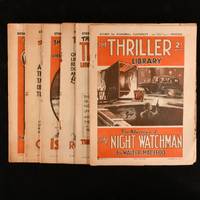
1937Best.-Nr. 801P49London: The Amalgamated Press 1937. Magazine. Very Good Indeed. 11.5" by 9". various. Six lovely consecutive issues of the exciting 'Thriller Library' magazine containing the complete story 'The Great Knock-Over' by Dashiell Hammett all in the original wraps. Six consecutive issues of 'The Thriller Library' magazine.Each issue is present in the original colourful wraps with in-text illustrations throughout. This run includes the entirety of 'The Great Knock-Over' by Dashiell Hammett. It is very rare to find a complete Hammett story in the original parts.The Continental Op featured in 'The Great Knock-Over' also published as 'The Big Knockover' became the prototype for the tough-guy detectives of the generations to come.'The Thriller Library' was a weekly newspaper in circulation from February 1929 to May 1940 containing a variety of exciting stories of detectives solving simple murder cases and even gang warfare.No. 457 November 6th 1937. 'The Adventure of the Night Watchman' by Walter Macleod.No. 458 November 13th 1937. 'The Dictator' by Berkeley Gray.No. 459 November 20th 1937. 'The Rogue of Harley Street' by Anthony Skene.No. 460 November 27th 1937. 'Island of Fear' by George Rochester.No. 461 December 4th 1937. 'Odds on Murder!' by John Hudlestone.No. 462 December 11th 1937. 'The Man From Manhattan' by Leonard Gribble. In the original publisher's paper wraps. Externally smart with some light age-toning and spots to the wraps. Staples are a little rusted. Minor edge wear to the wraps and pages. Ring mark to the first wrap of No. 462. Internally generally firmly bound. Pages are age-toned and clean with some odd spots. Small mark to the last leaf of No. 458 and some heavier spots to the last leaf of No. 461. Very Good Indeed The Amalgamated Press unknown
Best.-Nr. B9780321276131Paperback / softback. New. paperback
1935Best.-Nr. 005487London: Faber. A collection of short stories of crime by famous authors. No editor credited. Great dustwrapper art by McConnell. Dustwrapper has tiny chips on corners of spine. Dustwrapper states second series on spine . Very Good. Hardcover. 4th Edition. 1935. Faber hardcover
1894Best.-Nr. P3298London : S Hildesheimer and Co c.1894. Excellent. Notes: Exceptional quality printed on wide margin thick paper. Signed by Stanley Berkeley in pencil at the lower left proof before title also has the seal of incorporated publishers association. The Charge of Scarlett’s 300 or Heavy Brigade at Balaclava 25 October 1854.Scarce original photogravure after Stanley Berkeley c1890 published by S Hildesheimer and Co 1894. NAM. 1952-04-1 The Charge of the Heavy Brigade would be far better known were it not for the famous action of the Light Brigade later the same day. With luck and skill 800 British heavy cavalry charged 3000 Russian light horsemen and drove them from the field. The large Russian force stopped as it came towards the British camp. This mistake laid it open to attack and 300 British heavy cavalry charged the Russians. The British had movement on their side and the rest of the Heavy Brigade followed up the charge. The much larger Russian force was put to flight with few casualties. The whole action is said to have lasted eight minutes. Stanley Berkeley 1855–1909 was an English painter of animal sporting and historical subjects especially military scenes. Born in London he exhibited regularly at the Royal Academy the Grafton Gallery the New Watercolour Society and elsewhere from 1878 until 1902 and many of his pictures were retrospective military scenes of the English Civil War and the Battle of Waterloo & Crimean War. Image Size : 446x705 mm 17.56x27.76 Inches Platemark Size : 540x775 mm 21.26x30.51 Inches Paper Size : 656x861 mm 25.83x33.91 Inches Coloring: Hand Colored Medium: Photogravure Categories: Views Europe Ukraine; Military Others; S Hildesheimer and Co unknown
1994Best.-Nr. G1565920791I3N00O'Reilly Media 1994. Paperback. Good. Pages can have notes/highlighting. Spine may show signs of wear. ~ ThriftBooks: Read More Spend Less.Dust jacket quality is not guaranteed. O'Reilly Media paperback