8 631 résultats
1938réf. 194048New Haven: Yale University Press; Humphrey Milford Oxford University Press London 1938. Jung on the religious impulse First edition of Jung's three essays delivered for the Terry Lectures in 1937 among his most extensive discussions of the religious function in individual experience. This copy includes the loosely inserted prospectus issued alongside the book by Yale University Press. By the late 1930s Jung's favourable comments on the Nazi regime and its conscious promotion of his psychology over the "Jewish" Freudian rival had damaged his reputation in the English-speaking world. He therefore took advantage of the invitation to deliver the Terry Lectures to make several disparaging references to Nazi ideology while attempting to placate those suspicious of his views on Jews by outlining an essentially positive analysis of the religious impulse. Jung wrote and delivered these essays in English in the form published here. They were subsequently translated into German by Toni Wolff and Felicia Froboese and published in German by Rascher in 1940. Octavo. Publisher's device to title page. Original black cloth spine lettered and with publisher's device in gilt. With dust jacket. Loosely inserted list of manuscript notes and one pencil annotation on page 1. Bookseller's ticket of John M. Watkins of Cecil Court to front free endpaper and small contemporary sticker to rear panel of jacket. Light bumping and rubbing infrequent minor browning and foxing to otherwise clean contents; slight chipping toning and damp staining to unclipped jacket marginal loss to head of spine panel and short closed tear to upper margin of front panel: a very good copy in like jacket. Ress 1938a English - p.74. hardcover
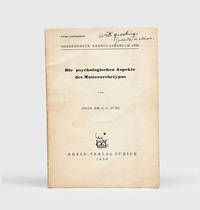
1939réf. 195369Zurich: Rhein-Verlag 1939. A fundamental archetype in Jungian psychology First edition presentation copy inscribed by Jung on the front wrapper "With greetings from the author". This foundational paper argues that a person's conceptions of maternal figures are based not only on their own biological parent but also on a pre-existing universal archetype in the collective unconscious. The lecture was delivered at the Eranos Foundation conference in August 1938; the theme that year was "The Form and Cult of the Great Mother". Small quarto. Original printed wrappers. Wrappers soiled: in very good condition. Ress 1939b. unknown
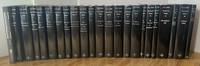
réf. 18525Princeton NJ: Princeton University Press Bollingen Series. Hardcover. Book condition is Very Good bound in black cloth; with Very Good dust jackets. Edgewear to and rubbing to jackets a few small tears to jacket edges. A few volumes are price clipped. Vast majority of collective text is unmarked however there are light unobtrusive and occasional markings to text and margins. Illustrated throughout several volumes. Set includes: Volume 1 - Psychiatric Studies; Volume 2 - Experimental Researches; Volume 3 - Psychogenesis of Mental Disease; Volume 4 - Freud & Psychoanalysis; Volume 5 - Symbols of Transformation; Volume 6 - Psychological Types; Volume 7 - Two Essays on Analytical Psychology; Volume 8 - Structure & Dynamics of the Psyche; Volume 9 Part 1 - Archetypes and the Collective Unconscious; Volume 9 Part 2 - Aion: Researches into the Phenomenology of the Self; Volume 10 - Civilization in Transition; Volume 11 - Psychology and Religion: West and East; Volume 12 - Psychology and Alchemy; Volume 13 - Alchemical Studies; Volume 14 - Mysterium Coniunctionis; Volume 15 - Spirit in Man Art and Literature; Volume 16 - Practice of Psychotherapy; Volume 17 - Development of Personality; Volume 18 - The Symbolic Life; Volume 19 - General Bibliography; Volume 20 - General Index. This set also includes Supplementary Volume A The Zofingia Lectures; A Guided Tour of of the Collected Works of C. G. Jung by Robert Hock also included. The definitive reference for the works of Jung perhaps the most prominent far-ranging thinker in the history of modern psychology. 8vo 8" - 9" tall various publication dates. The complete authoritative English-language edition of Jung's life's work published by Princeton University Press as Bollingen Series XX and translated by R.F.C. Hull under the editorship of Sir Herbert Read Michael Fordham and Gerhard Adler. Spanning the foundational texts of analytical psychology-among them Symbols of Transformation Psychological Types The Archetypes and the Collective Unconscious Aion Psychology and Alchemy and Mysterium Coniunctionis-this set gathers nearly the whole of Jung's published writing thematically arranged and fully indexed on the psyche dreams archetypes alchemy religion and the unconscious. Bound in the series' distinctive black cloth with gilt spine designs it remains the standard scholarly edition consulted by analysts scholars and serious readers worldwide-a cornerstone reference for any depth-psychology or humanities library and an increasingly desirable set to own complete. Princeton University Press, Bollingen Series hardcover
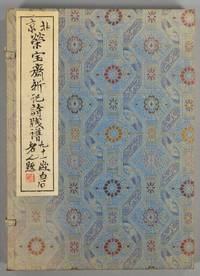
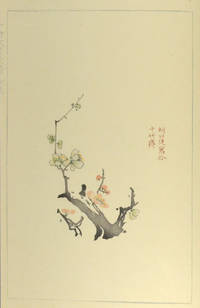
1955réf. 886941955. Peking Jung Pao Chai Publishers Ch'i P'ai-shih etal. PEKING JUNG PAO CHAI HSIN CHI SHIH CHIEN P'U. Peking 1955. Folio 2 vols bound chinese-style in purple wraps enclosed in a brocade folding box with ivory clasps. In fine condition. This collection of wood-block reproductions of paintings was published by the famous Peking art publishers in honor of the 91st year of the painter Ch'i P'ai-shih which was celebrated in 1951. There are a total of 80 multicolor prints of which 32 are after designs by Ch'i P'ai-shih himself. Magnificently done they represent the height of the printer's craft in 20th century China. Complete. unknown
1955réf. 886941955. Peking Jung Pao Chai Publishers Ch'i P'ai-shih etal. PEKING JUNG PAO CHAI HSIN CHI SHIH CHIEN P'U. Peking 1955. Folio 2 vols bound chinese-style in purple wraps enclosed in a brocade folding box with ivory clasps. In fine condition. This collection of wood-block reproductions of paintings was published by the famous Peking art publishers in honor of the 91st year of the painter Ch'i P'ai-shih which was celebrated in 1951. There are a total of 80 multicolor prints of which 32 are after designs by Ch'i P'ai-shih himself. Magnificently done they represent the height of the printer's craft in 20th century China. Complete. unknown books
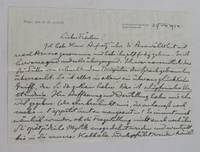
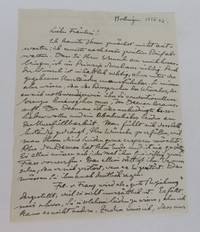
1942réf. 173341942. Superb handwritten letter written and signed by C. G. Jung. Letter written to his mentee Dr. Rivkah Scharf complimenting her on her work on "chosenness" which Jung brought with him to Ascona. Jung labels Scharf's content as "creative insight" and as in another letter to Scharf seems to warn her against a potential insatiableness inside herself which in this letter he fears might come from his complimenting her accomplishment. While suggesting to Scharf that she elaborate on her ideas Jung then refers to his own writings: "The fact that I have written a great deal scares people so much that they might not read anything." Letter measures 5 3/4"h x 8"w 2pp expected folds and toning to paper. Jung's own stationary with his letterhead. unknown
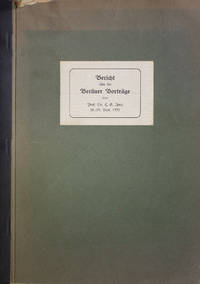
réf. 73399E-002. Very Good. Hardcover. Trade PB. 4to. Ausgearbeitet von Frau Marianne Stark Berlin Germany. 1937. 52 pgs Illustrated with 53 illustrations 6 of them are printed directly onto the page the unnumbered illustration plus illustration #4 17 19 41 & 42. The other 47 are photostatic copies that have been cut and pasted into the text in the appropriate places. Text is in German and single sided one side of the page only First Edition Multigraph Copy. Issued in stapled paper wraps with a cloth spine and paper label present to the front wrapper. Wrappers lightly worn with some light shelf-wear to the extremities present. Previous owner's name present to the FFEP Hede Mann/Anne v. Kraff. Pages lightly toned and faded. Text is clean and free of marks. Binding tight and solid. Unpublished typescript of a lecture concerning the collective unconscious and mandala symbolism delivered in Berlin on 28-29 September 1937. Between 1923 and 1941 Carl Jung delivered and moderated nineteen private seminars some in English and others in German on a variety of different topics. Until 1948 there was no formal Jungian training institute so other than personal analysis with Jung himself participation in these seminars were the primary method for training Jungian analysts during these early years. The attendance at these seminars was strictly limited to small by invitation only groups. A transcription of Jungs comments and his exchanges with the participants was made during the seminar and then privately printed for distribution to the attending group members and to other interested insiders. These privately printed Multigraphed volumes typically carried a stern warning against further distribution the following being a typical example that appeared in the front of each volume of the Psychological Analysis of Nietzsches Zarathustra 1934/39: This report is strictly for the use of members of the Seminar with the understanding that it shall not be circulated. Dr. Jung expressly asks that it shall not be lent nor may any part be quoted for publication without his permission. E-133; 8vo 8" - 9" tall . hardcover
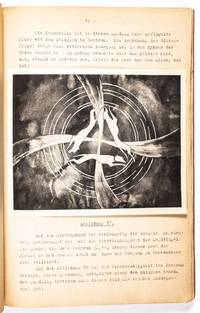
1937réf. 315420Berlin: Frau Marianne Stark 1937. SCARCE FIRST EDITION MULTIGRAPH COPY OF ONE OF JUNG'S PRIVATE 'INVITATION ONLY' SEMINARS. 52 tipped-in numbered and 1 unnumbered p. 14 illustrations. Of these 53 illustrations 6 are printed onto the page the unnumbered illustration plus illustration #4 17 19 41 & 42. The remaining are photostatic copies that have been cut and mounted with illustration #34 pasted onto the verso of page 39. 55pp printed recto only. Folio 292 x 205 mm. Black cloth spine and greenish gray wrappers small chip at top of front cover. SCARCE FIRST EDITION MULTIGRAPH COPY OF ONE OF JUNG'S PRIVATE 'INVITATION ONLY' SEMINARS. 52 tipped-in numbered and 1 unnumbered p. 14 illustrations. Of these 53 illustrations 6 are printed onto the page the unnumbered illustration plus illustration #4 17 19 41 & 42. The remaining are photostatic copies that have been cut and mounted with illustration #34 pasted onto the verso of page 39. 55pp printed recto only. Folio 292 x 205 mm. Frau Marianne Stark unknown
1937réf. 315420Berlin: Frau Marianne Stark 1937. SCARCE FIRST EDITION MULTIGRAPH COPY OF ONE OF JUNG'S PRIVATE 'INVITATION ONLY' SEMINARS. 52 tipped-in numbered and 1 unnumbered p. 14 illustrations. Of these 53 illustrations 6 are printed onto the page the unnumbered illustration plus illustration #4 17 19 41 & 42. The remaining are photostatic copies that have been cut and mounted with illustration #34 pasted onto the verso of page 39. 55pp printed recto only. Folio 292 x 205 mm. Black cloth spine and greenish gray wrappers small chip at top of front cover. SCARCE FIRST EDITION MULTIGRAPH COPY OF ONE OF JUNG'S PRIVATE 'INVITATION ONLY' SEMINARS. 52 tipped-in numbered and 1 unnumbered p. 14 illustrations. Of these 53 illustrations 6 are printed onto the page the unnumbered illustration plus illustration #4 17 19 41 & 42. The remaining are photostatic copies that have been cut and mounted with illustration #34 pasted onto the verso of page 39. 55pp printed recto only. Folio 292 x 205 mm. Frau Marianne Stark unknown books
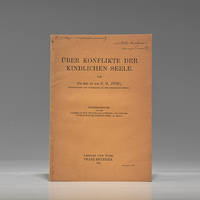
1910réf. 1311381910. First Edition. Signed. JUNG Carl. Uber Konflikte der Kindlichen Seele. Leipzig und Wien: Franz Deuticke 1910. Octavo original paper wrappers. $4200.First separate printing of this paper on ""conflict in the child's soul"" inscribed on the front wrapper by Jung to influential psychiatrist Adolf Meyer: ""Dr. A. Meyer - Johns Hopkins University / with the author's compliments.""Originally delivered as a talk at the famous Clark University psychology conference of 1909 and published in the year that Jung became president of the International Psychoanalytic Association this monograph was one of Jung's earliest papers on the psychological and sexual development of children. The work was reviewed by Alfred Adler before the divisions arose among Freud Adler and Jung: ""Jung's efforts at interpretation are astute as well as intelligently moderateÉ Analyses such as Jung's are the delectable gifts of psychoanalysis. Their value lies not only in questionable results but also in opening and in securing new perspectives."" This offprint was published in the same year as the paper's first appearance in Jahrbuch fr psychoanalytische und psychopathologische Forschung. Ress 1910k. Swiss-born psychiatrist Meyer 1866-1950 was the first director of the Phipps Psychiatric Clinic at Johns Hopkins and the president of the American Psychiatric Association from 1927-28. Meyer and Jung had both attended the 1909 Clark University psychology conference and bothÑalong with FreudÑreceived honorary degrees at the event.Contents clean title page with closed tear from outer edge; spine reinforced short tears starting along edges of reinforcement. A remarkable presentation copy scarce in and of itself and especially so inscribed by Jung in very good condition. unknown
1910réf. 1311381910. First Edition. Signed. JUNG Carl. Uber Konflikte der Kindlichen Seele. Leipzig und Wien: Franz Deuticke 1910. Octavo original paper wrappers. $4200.First separate printing of this paper on ""conflict in the child's soul"" inscribed on the front wrapper by Jung to influential psychiatrist Adolf Meyer: ""Dr. A. Meyer - Johns Hopkins University / with the author's compliments.""Originally delivered as a talk at the famous Clark University psychology conference of 1909 and published in the year that Jung became president of the International Psychoanalytic Association this monograph was one of Jung's earliest papers on the psychological and sexual development of children. The work was reviewed by Alfred Adler before the divisions arose among Freud Adler and Jung: ""Jung's efforts at interpretation are astute as well as intelligently moderateÉ Analyses such as Jung's are the delectable gifts of psychoanalysis. Their value lies not only in questionable results but also in opening and in securing new perspectives."" This offprint was published in the same year as the paper's first appearance in Jahrbuch fr psychoanalytische und psychopathologische Forschung. Ress 1910k. Swiss-born psychiatrist Meyer 1866-1950 was the first director of the Phipps Psychiatric Clinic at Johns Hopkins and the president of the American Psychiatric Association from 1927-28. Meyer and Jung had both attended the 1909 Clark University psychology conference and bothÑalong with FreudÑreceived honorary degrees at the event.Contents clean title page with closed tear from outer edge; spine reinforced short tears starting along edges of reinforcement. A remarkable presentation copy scarce in and of itself and especially so inscribed by Jung in very good condition. unknown books
1916réf. 63295(Genève, Kundig), 1916. 8vo. Original printed orange wrappers. Spine restored, with new paper and new edges. Parts of blank paper towards hinge of back wrapper missing (but with new paper spine in matching paper underneath). A damp stain to front wrapper, towards hinge, some smaller spts, and some small nicks and creases to extremities. A very mild damp stain to inner blank margin of first quire. Pp. (152)-179. Inscribed by Jung to upper front wrapper: ""Herrn Dr. A Maeder / mit besten / Gruss vom / Verf.""
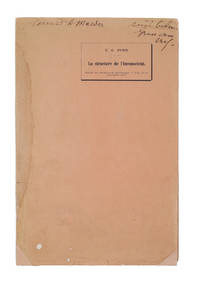
1916réf. 63295Genève Kundig 1916. 8vo. Original printed orange wrappers. Spine restored with new paper and new edges. Parts of blank paper towards hinge of back wrapper missing but with new paper spine in matching paper underneath. A damp stain to front wrapper towards hinge some smaller spts and some small nicks and creases to extremities. A very mild damp stain to inner blank margin of first quire. Pp. 152-179. Inscribed by Jung to upper front wrapper: "Herrn Dr. A Maeder / mit besten / Gruss vom / Verf." Scarce first printing off-print presentation-copy from Jung to Maeder of this seminal paper which contains the very first written appearance of the term "collective unconscious" a concept which is “one of the pillars of the Jungian model of the psyche” Boechat. This paper is the core of what would later become Die Beziehungen zwischen dem Ich und dem Unbewussten EN: "The Relations between the Ego and the Unconscious" 1928. The renowned psychiatrist and psychoanalyst Carl Jung 1875-1961 first introduced the term "collective unconscious" in 1916 in a talk to the Zurich School for Analytical Psychology with the title "Uber das Unbewesste und seine Inhalte". The earliest written appearance of the term was found in the present work a French translation of the Zurich talk published in 1916 in the Archives de Psychologies Tresan 2005: 313. The main chapters of this early work are: I. Distinction de l'inconscient personnel et de l'inconscient impersonnel "Distinction between the personal unconscious and the impersonal unconscious"; II. Les phénomènes subséquents à l'assimilation d l'inconscient "Phenomena subsequent to the assimilation of the unconscious"; III. La personne considérée comme segment de la psyché collective "The person considered as a segment of the collective psyche"; IV. Comment l'individualité essaye de se libérer de la psyché collective "How individuality tries to free itself from the collective psyche". Jung's notion of the collective unconscious “ranges from a passive repository that records the history of all human reactions to the world to an active substratum that is the ground out of which all reality emerges. The components of the collective unconscious were first said by Jung to be primordial ancestral images and later archetypes that manifest in consciousness through images strong affects and behavioral patterns. When the energies of the collective unconscious break through into consciousness consciousness itself is altered and reactions vary from insanity to a significant reordering of major attitudes" Tresan 2005: 313 The notion first came to Jung “from a dream he had in 1909 on board a ship returning from the United States with Freud. The dream depicted a house that had a cellar bellow the normal cellar and below that a repository of prehistoric pottery bones and skulls." Tresan 20025. The first cellar represented the personal unconscious and Jung expected Freud to accept the "cellars below this cellar" Tresan 2005. However "Freud acknowledged primordial ancestral patterns but regarded them as simply inheritable traits Lamarckianism posited in each individual the biogenetic law. For Freud such experiences were phylogenetic recapitulations unrelated to a transcendent structure such as the collective unconscious but for Jung they arise anew from the collective unconscious in each person in each instance just as they did in one's ancestors" Tresan 2005. Jung's formulation of the theory of the collective unconscious went through various phases. According to Boechat its beginnings can be traced back to “the first moments of Jung’s creative journey during the period he was working as a psychiatrist at the Burghölzli Hospital" see Boechat i.e. between 1900 and 1909. Alphonse Maeder 1882-1971 worked under Jung in the Burghölzli hospital and became a close cooperator and friend of Jung; and he broke with Sigmund Freud in 1913. Sources: Boechat Walter. The Collective Unconscious. https://iaap.org/jung-analytical-psychology/short-articles-on-analytical-psychology/the-collective-unconscious-2/ Accessed 15.06.26 Tresan David. 2005. Collective Unconscious. In Alain de Mijolla ed. The International Dictionary of Psychoanalysis pp. 312-314. New York: Thomson Gale. unknown
2022réf. 2-107161004XSpringer Nature 2022. Hardcover. New. 2nd edition. 3720 pages. 10.00x7.01x7.20 inches. Springer Nature hardcover
1937réf. 48062Berlin: Privately Printed 1937. First edition. Softcover. Good to very good condition. Quarto. 1 55 leaves. Original black quarter-cloth library tape over stiff gray wraps with black lettering and frame on white paper label of cover. Scarce unpublished typescript copy prepared by Marianne Starke of the first lecture of Jung's Berlin lectures in September of 1937. Illustrated with forty-seven mounted five printed illustrations and one additional printed map of a river all produced lithographically. First lecture with extensive introduction on the "collective unconsciousness" with references to what could be deemed the philosophical precedent of the term. Jung's historical survey traces back to Leibniz Kant Schelling Hegel C. G. Carus Schopenhauer and Eduard von Hartmann with his "Philosophy of the Unconscious." Jung points to the French School of Nancy Liébeault Charcot and Paul Janet's "Automatisme psychologique" for the unconscious processes of the soul. He introduces the work of Freud and Breuer in relation to the topic and gives an example of one of his patients an experience exemplifying what Albert Dietrich published in the so-called "Zauber-Papyrus Magic-Papyrus" six years later giving directions to see the "origin of the wind." Jung's close friend Prof. Flournoy in Geneva published a series of "unconscious fantasies" in the "Archives de Psychologie" in 1912 and the amount of mythological parallels prompted Jung to consider the possibility of "psychological heredity." Additional work at the Government Hospital for the Insane in Washington in 1913 lead Jung to coin the term of "collective unconsciousness" an idiosyncratic way to produce phenomenon related and maybe identical to mythological motifs. The lecture includes an extensive excurse on the history and symbolism of Mandalas. The principal purpose of the second lecture is to introduce part of the evidence that speaks to and demonstrates the existence of the "collective unconsciousness" with visual aids based on drawings by his patients produced over a period of years which depict experiences that are difficult to express in words. The drawings introduced during the lecture are from educated as well as uneducated patients produced spontaneously during therapy sessions. They are presented here with explanatory text. Short inscription on front free endpaper: "Leni Brand in pencil übereignet an meinen Enkel Ingo-Eric 25. II. 74" Laid in a page of the newspaper "Neue Westfälische" from January 8 1972 featuring an article on organ building in the northeast part of Westphalia. Text in German. Some wear along edges of wraps light creasing at bottom foredge corners a few light spots on front cover with paper label showing some light foxing. Light water staining and light burn spot on back cover diminishing through page 48 with black tape partially missing at head and tail of spine. Block age-toned with light creasing of first few pages at lower foredge corner. Binding in overall good interior in very good condition. Two OCLC entries at Yale University and ETH Zurich. Privately Printed unknown
1937réf. 48062Berlin: Privately Printed 1937. First edition. Softcover. Good to very good condition. Quarto. 1 55 leaves. Original black quarter-cloth library tape over stiff gray wraps with black lettering and frame on white paper label of cover. Scarce unpublished typescript copy prepared by Marianne Starke of the first lecture of Jung's Berlin lectures in September of 1937. Illustrated with forty-seven mounted five printed illustrations and one additional printed map of a river all produced lithographically. First lecture with extensive introduction on the "collective unconsciousness" with references to what could be deemed the philosophical precedent of the term. Jung's historical survey traces back to Leibniz Kant Schelling Hegel C. G. Carus Schopenhauer and Eduard von Hartmann with his "Philosophy of the Unconscious." Jung points to the French School of Nancy Liébeault Charcot and Paul Janet's "Automatisme psychologique" for the unconscious processes of the soul. He introduces the work of Freud and Breuer in relation to the topic and gives an example of one of his patients an experience exemplifying what Albert Dietrich published in the so-called "Zauber-Papyrus Magic-Papyrus" six years later giving directions to see the "origin of the wind." Jung's close friend Prof. Flournoy in Geneva published a series of "unconscious fantasies" in the "Archives de Psychologie" in 1912 and the amount of mythological parallels prompted Jung to consider the possibility of "psychological heredity." Additional work at the Government Hospital for the Insane in Washington in 1913 lead Jung to coin the term of "collective unconsciousness" an idiosyncratic way to produce phenomenon related and maybe identical to mythological motifs. The lecture includes an extensive excurse on the history and symbolism of Mandalas. The principal purpose of the second lecture is to introduce part of the evidence that speaks to and demonstrates the existence of the "collective unconsciousness" with visual aids based on drawings by his patients produced over a period of years which depict experiences that are difficult to express in words. The drawings introduced during the lecture are from educated as well as uneducated patients produced spontaneously during therapy sessions. They are presented here with explanatory text. Short inscription on front free endpaper: "Leni Brand in pencil übereignet an meinen Enkel Ingo-Eric 25. II. 74" Laid in a page of the newspaper "Neue Westfälische" from January 8 1972 featuring an article on organ building in the northeast part of Westphalia. Text in German. Some wear along edges of wraps light creasing at bottom foredge corners a few light spots on front cover with paper label showing some light foxing. Light water staining and light burn spot on back cover diminishing through page 48 with black tape partially missing at head and tail of spine. Block age-toned with light creasing of first few pages at lower foredge corner. Binding in overall good interior in very good condition. Two OCLC entries at Yale University and ETH Zurich. Privately Printed unknown books
1913réf. 63289Leipzig und Wien, Franz Deuticke, 1913. 8vo. Uncut in the original printed yellow wrappers. Upper corners of back wrapper restored. Remains of adhesive tape to spine, mostly to wrappers towards hinges. Most of the printing on spine preserved. Wear to extremities. A few leaves with notes and underlinings in pencil, otherwise nice and clean. V, (3 - blank), 135 pp. Inscribed to front wrapper: ""Herrn Dr. A. Maeder/ mit besten Grüssen / überreichtvonVerf""
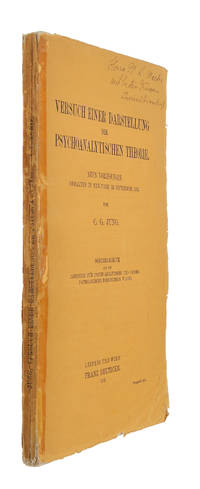
1913réf. 63289Leipzig und Wien Franz Deuticke 1913. 8vo. Uncut in the original printed yellow wrappers. Upper corners of back wrapper restored. Remains of adhesive tape to spine mostly to wrappers towards hinges. Most of the printing on spine preserved. Wear to extremities. A few leaves with notes and underlinings in pencil otherwise nice and clean. V 3 - blank 135 pp. Inscribed to front wrapper: "Herrn Dr. A. Maeder/ mit besten Grüssen / überreichtvonVerf" First edition off-print presentation-copy for Maeder of the seminal "Fordham Lectures" in which Jung breaks decisively with Freud. Jung gave his "Fordham lectures" in New York in 1912 EN: "An attempt to present psychoanalytic theory. Nine Lectures Delivered in New York in September 1912". They were then printed in German for the first time in 1913 and subsequently published in English under the title The Theory of Psychoanalysis in consecutive issues of The Psychoanalytic Review between 1913 and 1915. The "Fordham Lectures" marked a crucial point in Jung's work not least because they constitute a decisive break from Freud's theories but also because he here fully develops his own understandings of sexuality the origins of neuroses dream interpretation and the unconscious. Furthermore Jung was the first to argue that analysts should themselves be analyzed. "At the center of these lectures the reader finds not one theory but the exposition of a new way of doing science a method of investigation that was unique in 1912 and remained deeply shared by Jung and Freud notwithstanding the break that took place between the two pioneers" Wertz 2015 p. 4. "The message from Jung in the Fordham lectures is clear: 'Psychoanalysis is a general method of psychological research and heuristic principle of the first rank in the domain of the human sciences.' Above all else the Fordham lectures highlight the scientific character of the psychoanalysis shared by Jung and Freud in anticipation of the entire movement of psychoanalysis through the twentieth century and into the current century." Wertz 2015 p. 19 Alphonse Maeder 1882-1971 worked under Jung in the Burghölzli hospital and became a close cooperator and friend of Jung; and he broke with Sigmund Freud in 1913.See: Wertz F.J. 2015. Jung’s break with Freud revisited: Research method and the character of theory in psychoanalysis. In M. Mattson F. Wertz H. Fogerty & B. Zibriskie B. Eds. Carl Jung in the academy and beyond: The Fordham Lectures of 1912. New York: The Spring Press.Jung C. G. 2011. Jung contra Freud: The 1912 New York Lectures on the Theory of Psychoanalysis. Princeton University Press. unknown
1942réf. 173331942. Group of three items: An ALS from Jung to his mentee psychoanalyst Dr. Rivkah Scharf; an ALS from Dr. Sharf to Jung responding to the aforementioned letter; and one envelope with Jung hand-writting the address of Dr. Sharf. The two were working on Jung's "Psychology and Alchemy" at the time of the present correspondence. Jung lettter includes wonderful clinical and relational content; while perhaps under the influence of the book material Jung refers with vigor to the activity of Scharf's "daemon" and it's influence on their collaborative process providing perhaps an informal definition stated with directness and ultimately empathy: ".expressing this wish which in itself necessarily must go beyond the conventional limits will awawken the daemon. The daemon is the absolute wanting-to-have-it-this-way and hideous suffering from the impossibility of fulfillment. Hence since one would like to spare you this suffering one feels under constant pressure to grant your wishes. However the daemon is endless and it is never satisfied. You alone with have to voluntarily throw yourself to him every time. Nothing will satisfy him. He must see that by destroying you he will destroy himself. And you will have to make this plain to him.knowing you are suffering so much is difficult for me but I cannot help it. Besides I know that this amount of suffering is necessary to make you as hard as you need to be in your life." Scharf in her reply is thankful for Jung's empathy and also refers to the initial state of emotional reception: "deeply injured and initially almost broken by the inexorable truth contained in your letter." Jung letter measures 8 3/4"h x 7"w 2pp expected folds and toning to paper two small unobtrusive stains to letter. Letter is addressed from Bollingen 1942. Letter accompanied by Certificate of Authenticity. unknown
réf. 67822Dr. C. G. Jung c. 1928 to 1941. A SET OF ELEVEN NOTEBOOKS. Covers are marbled green with one red cover and one blue cover spines are covered as black canvas with gilt lettering. From the working library of scholar Virginia Case these notebooks are heavily annotated in the scholarÕs handwriting with notes throughout the books and clean ruled lines to important sections of each notebook. Case has extensively handwritten notes on the inside boards and first flyleaf referencing certain passages and page numbers. Also tipped in are various ephemeral decorative cards and notes with personal letters and articles plus Virginia CaseÕs own notes to others and to herself. We have left the paperwork and notes where found in the volumes. This is an extensively drawn archive from the scholarÕs personal library. In many of the notebooks translations were made by Mary Foote often with the kind help of Cornelia Brunner. CONDITIONS of the books are good to near fine. Virginia Case is the author of ÒYour Personality - Introvert or ExtrovertÓ Macmillan 1941 1944 referencing the following : ÒDr. C. G. Jung has read the Case book in manuscript form and has consented to its publication.Ó It is obvious that Virginia Case while researching her book thoroughly ransacked these eleven notebooks for her research. The authorÕs purpose is to correct and to make available to the general public the helpful practical knowledge of Dr. JungÕs information. In these seminars it contains some of JungÕs most psychologically revealing work. As noted in the volumes Òthis report in these notebooks is strictly for the use of the members of the Seminar with the understanding that it shall not be circulated. Dr. Jung expressly asked that it shall not be lent nor may any part quoted for publication without his permission.Ó This is the first edition printing. In the second edition Foote made extensive deletions and additions to the earliest versions of the seminar Also included are five original art work plates on heavy stock paper. The eleven volumes are offered as discovered nothing has been removed and as the author Virginia Case lived with the notebooks herself. Dr. C. G. Jung, c. 1928 to 1941 hardcover
2000réf. 160822London: HarperCollins c.2000. With a lengthy inscription by Jung Chang in aid of English PEN A uniquely inscribed copy of this famous memoir with two poignant handwritten reflections by the author on "My Mother & My Family at the Time of Coronavirus" echoing many of the themes of the work including personal liberty resilience in the face of adversity and the importance of family. First published in 1991 Wild Swans remains the most widely read English-language autobiography by a Chinese writer; it is still banned in China. The author's meditations occupy the final five leaves the rear pastedown and a loosely notecard with a printed design after an oil portrait of her mother Xia Dehong. In her first entry dated April 2020 she reflects on the difficulties of securing official leave to visit Xia Dehong in China as well as her mother's resilience during the lockdown in Chengdu. She also speaks of her pride in her nephew an NHS doctor on the front lines of the fight against COVID. "Around this time of the year in the past I was often woken in the middle of the night by a sense of dread anticipating new hurdles turning up in the morning that would threaten my visit to my mother. This year I wake up feeling anxious about whether Joe has adequate personal protective equipment". In the second entry penned on New Year's Eve 2021 Chang writes that "news from China is more and more worrying. The regime seems bent on dragging the country back to the Maoist days and is promoting Mao with draconian measures. I am facing unprecedented danger if I set foot in China. And so it seems my fear of many years that I could not be with my mother in her last moments will be a reality". Chang discussed her inscriptions in this copy at a roundtable in support of English PEN held on 3 July 2022 in London. Overall a unique example of a truly monumental work exemplifying autobiography's potent ability to challenge hegemonic power. Octavo. With 16 halftone plates double-page map of China. Original green boards spine lettered in gilt with gilt Chinese character "hong" "swan". With illustrated dust jacket. Housed in a dark blue flat-back cloth box by the Chelsea Bindery. Binding bright a little cocked light bumping at spine ends internally clean and bright. A near-fine copy in like dust jacket unclipped with touch of creasing. hardcover
1952réf. 902011952. Chinese Woodcuts Peking Jung Pao Chai SHIH CHU CHAI CHIEN P'U Fei An T'i. Peking: Peking Jung Pao Chaiwith the 1952 preface Set of four volumes each 31 x 21.3 cm of the TEN BAMBOO HALL POETRY PAPERS. The TEN BAMBOO HALL POETRY PAPERS of course date back to the late Ming period in the 17th century and is one of the earliest classics of color woodblock printing in the world. It was conceived and created by the same artist Hu Cheng-yen who was responsible for the 16 fascicle TEN BAMBOO HALL PAINTING MANUAL. Each of the four volumes of this facsimile edition is string-bound Chinese style with paper labels. The hundreds 267 of color woodcuts are well printed works of the Peking Jung Pao Chai the finest color printer in China in the 20th century. In the 1972 edition of his book CHINESE POETRY PAPER BY THE MASTER OF THE TEN BAMBOO HALL Jan Tschichold calls the Jung Pao Chai 1952 facsimile edition this edition the first post-Revolution issue of this book the finest issue and one of the most extraordinary jobs of color printing in the 20th century. That being said it is a reprint of the original edition which appeared in the 1930s printed on vintage papers from the collection of the famous author Lu Hsun. That edition is virtually unobtainable and even early post-War copies like this one are quite scarce as well. A remarkable and lovely work very skillfully printed in gauffrage and colors. The original brocade-covered clasped wraparound box is present and near perfect the books themselves are about fine. unknown
1952réf. 902011952. Chinese Woodcuts Peking Jung Pao Chai SHIH CHU CHAI CHIEN P'U Fei An T'i. Peking: Peking Jung Pao Chaiwith the 1952 preface Set of four volumes each 31 x 21.3 cm of the TEN BAMBOO HALL POETRY PAPERS. The TEN BAMBOO HALL POETRY PAPERS of course date back to the late Ming period in the 17th century and is one of the earliest classics of color woodblock printing in the world. It was conceived and created by the same artist Hu Cheng-yen who was responsible for the 16 fascicle TEN BAMBOO HALL PAINTING MANUAL. Each of the four volumes of this facsimile edition is string-bound Chinese style with paper labels. The hundreds 267 of color woodcuts are well printed works of the Peking Jung Pao Chai the finest color printer in China in the 20th century. In the 1972 edition of his book CHINESE POETRY PAPER BY THE MASTER OF THE TEN BAMBOO HALL Jan Tschichold calls the Jung Pao Chai 1952 facsimile edition this edition the first post-Revolution issue of this book the finest issue and one of the most extraordinary jobs of color printing in the 20th century. That being said it is a reprint of the original edition which appeared in the 1930s printed on vintage papers from the collection of the famous author Lu Hsun. That edition is virtually unobtainable and even early post-War copies like this one are quite scarce as well. A remarkable and lovely work very skillfully printed in gauffrage and colors. The original brocade-covered clasped wraparound box is present and near perfect the books themselves are about fine. unknown books
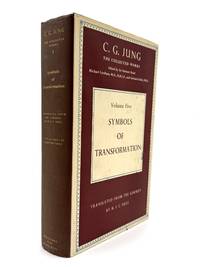
1956réf. 80752London: Routledge & Kegan Paul 1956. Hardcover. Very good/Very good. Signed and dated by Carl Jung on the half-title. From the library of Yousuf Karsh 1908-2002 the Armenian-Canadian photographer whose 1958 portrait of Jung 1875-1961 in his Zurich library is among the best known images of the Swiss psychiatrist. The Collected Works of C.G. Jung Volume 5. Translated by R.F.C. Hull. Octavo: xxix 1 blank 567 1 blank pp. with a frontispiece 64 plates and 43 figures. Original cloth binding with gilt-stamped titling. Light rubbing to the corners and tips. The dust jacket is a bit rubbed; else very good or better. This seminal work examines the interplay between dreams myths and religious experiences illustrating how these symbols serve as bridges between the conscious and unconscious mind. Jung's in-depth analysis of various cultural myths and archetypal symbols reveals their significance in personal growth and psychological development. Routledge & Kegan Paul hardcover
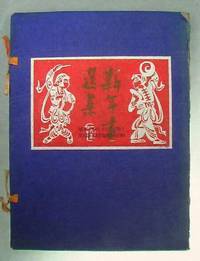
1950réf. ABE-10641627374First edition. Folder size: 34.726.1cm plate size: 33.925cm 46.528.5cm. General wear and tear to folder plates and sheets as new. 26 New Year Picture plates plus 2 large folio sheets of 16 pictures depicting "The Marriage of The River-God" presented in 4 columns. 2 pages of introduction in both English and Russian. Extremely rare. More photos available upon request. Peking: Jung Pao Chai Hsin Chi; Guozi Shudian, 1950