8 522 résultats
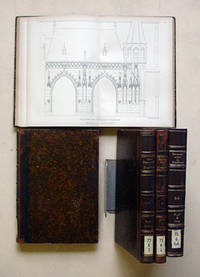
réf. 64291Frankfurt Selbstverlag der beiden Vereine 1895-1914. Kl.-4° ca. 1500 S. ca 1500 Abb. HLdr. d. Zeit goldgeprägt Bibliotheksschild a Rücken. Titelbl. m. Stempel u. Sign. ;1 Bd. m. Verlusten a Kapital 3 Bde. stärker berieben ein Aussengelenk angebrochen. Innen sauber - ansonsten gutes Exemplar. Wichtiges Standardwerk zur Architekturgeschichte Frankfurts. Beschreibt die denkwürdigen Bauten der alten Reichsstadt nach ihrer geschichtlichen und künstlerischen Bedeutung vor der Vernichtung im 2. Weltkrieg. 010 Frankfurt, Selbstverlag der beiden Vereine, 1895-1914 unknown
1988réf. __3110095750De Gruyter 1988. Hardcover. New. 428 pages. German language. 9.61x6.69x1.00 inches. De Gruyter hardcover
1988réf. __3110110695De Gruyter 1988. Hardcover. New. 337 pages. German language. 9.61x6.69x0.81 inches. De Gruyter hardcover
1989réf. 22840München, Profil 1989.
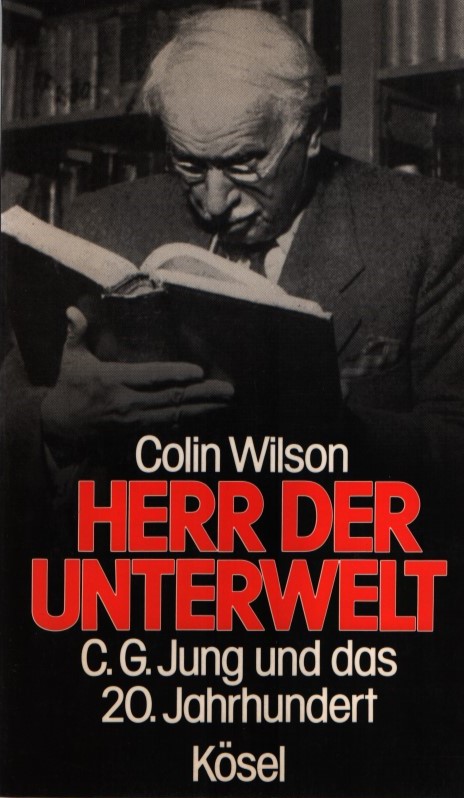
1987Minimal abgenutzt, sehr guter Zustand. - In «Herr der Unterwelt« geht es um C. G. Jungs Weg zwischen Psychologie und Esoterik, zwischen Wissenschaft und Intuition. Der bekannte englische Sachbuchautor legt das Hauptgewicht auf Jungs frühe Erfahrungen mit parapsychologischen Phänomenen, auf seine Zusammenarbeit mit Freud und deren folgenreiches Ende, auf die Entwicklung seiner eigenen tiefenpsychologischen Konzepte, vor allem des kollektiven Unbewußten und der Archetypen, sowie auf den Jungschen Weg der Individuation und die von ihm dazu vorgeschlagene Wachtraumtechnik der »aktiven Imagination«. Durchgehend sieht der Autor Jungs persönliche Entwicklung wie die seines Werks vordem Hintergrund des Denkens und der Wissenschaft des 20. Jahrhunderts. Auch auf kritische Rückfragen verzichtet er nicht: Äußerte Jung sich, wie er vorgab, wirklich »nur als Psychologe«, wenn er über Mythologie, Alchemie oder Religion schrieb? Oder war er - spätestens seit dem Bruch mit Freud - nicht doch der intuitiv Forschende, der Gottsucher in den Tiefen der Seele, der erste »Guru des Westens«? ISBN 9783466341702
in-8°, 212 pages, broche, couverture illustree plast. Bel exemplaire. [SC-3]
1987réf. 1200554München: Kösel, 1987. 192 S. Softcover.
2014réf. 500296720Harlequin 2014 10 6x2x17 6cm. 2014. Broché.
1991réf. Q-0295971266China Institute in America 1991-06-01. Paperback. New. New. In shrink wrap. Looks like an interesting title! China Institute in America paperback
réf. SONG1734658274Used: Good unknown
réf. BN76519V&R unipress. Albert Camus oder der glückliche Sisyphos - Albert Camus ou Sisyphe heureux. V&R unipress. unknown
réf. BN332026Schäffer-Poeschel Verlag. Hardcover. Praxis des Unternehmenskaufs Praxis des Unternehmenskaufs Willi Jung Schäffer-Poeschel Verlag hardcover
1950réf. 140944869New York: Pantheon Books / Princeton University Press 1950. First American Edition. First American edition first printing. Complete in two volumes bound in publisher's black cloth stamped in gilt housed in publisher's slipcase. Fine in Very Good dust jackets spine panels dulled scratched and soiled; vol. I jacket worn along top edge. Near Fine slipcase. The very first English-language translation of the Chinese classic text The I Ching attributed to Fu Xi. Baynes' English rendering of Wilhelm's German translation continues to be widely read today. With an introduction by eminent psychiatrist Carl Gustav Jung. Pantheon Books / Princeton University Press unknown books
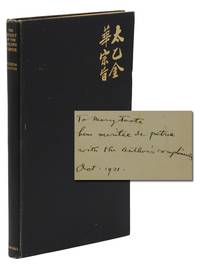
1931réf. 140945041London: Kegan Paul Trench Trubner & Co 1931. First Edition. Very Good. First British edition of this important translation. A presentation copy inscribed by Carl Jung in the year of publication to his secretary Mary Foote. "To Mary Foote bene meritae de petrie with the author's compliments Oct. 1931" though Jung did not sign his name. Foote was an accomplished American painter and producer of notes of Carl Jung's seminars. She published Jung's notes in Zurich beginning in 1928 until WWII. Bound in publisher's original dark blue cloth stamped in gilt lacking the dust jacket. Very Good with light wear to cloth at edges moderate scuffing to covers contents tanned. The Secret of the Golden Flower is a Chinese Taoist book on neidan inner alchemy meditation which also mixes Buddhist teachings with some Confucian thoughts which was written in the late 1600s. First translated into German by sinologist Richard Wilhelm a friend of Jung's The Secret of the Golden Flower describes a straightforward and silent meditation method that has been characterized as "Zen with details." Cary F. Baynes translated that it into English and Jung provided commentary. This translation modernly popularized the work among Westerners as a Chinese "religious classic"; it is read in psychological circles for analytical and transpersonal psychology considerations of Taoist meditations although it receives little attention in the East. Kegan Paul, Trench, Trubner & Co unknown books
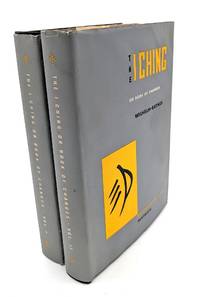
1952réf. 71839New York: Pantheon Books 1952. Second printing by Pantheon Books for the Bollingen Foundation of the Wilhelm-Baynes translation. Hardcover. Very Good/Very Good. 394; 376pp. Octavo 23 cm Black cloth over boards; gilt stamped lettering the spines and gilt ornamentation on the covers. Publisher's pale yellow topstain. Title pages printed in red and black. Spines a bit rolled. In the dust jackets with trivial soiling and very light rubbing and chipping to the edges. The jackets are also toned at the edges of the inside flaps and on the reverse. Bollingen Series XIX. The Cary F. Baynes translation of the I Ching had a significant impact on 1960s counterculture influencing numerous authors musicians and other public figures. The book's text and commentary even directly inspired songs by Joni Mitchell Pink Floyd and The Beatles among others. Pantheon Books hardcover books
2008réf. 15271Norwalk: Easton Press 2008. Limited Edition; Collector's Edition. Hardcover. Book condition is Near Fine bound in full genuine leather with gilt accents 22kt gold page edges and a hubbed spine. Smyth sewn interior vaunts moire end papers acid-neutral paper won't yellow or become brittle over time and silk ribbon page marker. Weak bow to boards. Interior is clean and unmarked. Small 8vo. Easton Press hardcover
réf. 9651878-6Used - Good. Pages intact with minimal writing/highlighting. The binding may be loose and creased. Dust jackets/supplements are not included. Stock photo provided. Product includes identifying sticker. Better World Books: Buy Books. Do Good. unknown
réf. 17915223-6Used - Very Good. Pages intact with possible writing/highlighting. Binding strong with minor wear. Dust jackets/supplements may not be included. Stock photo provided. Product includes identifying sticker. Better World Books: Buy Books. Do Good. unknown
réf. 16136942-6Used - Good. Former library copy. Pages intact with minimal writing/highlighting. The binding may be loose and creased. Dust jackets/supplements are not included. Includes library markings. Stock photo provided. Product includes identifying sticker. Better World Books: Buy Books. Do Good. unknown
1967réf. 027063Princeton New Jersey: Princeton University Press 1967. 3rd Edition . Hardcover. Fine/Near Fine. 8vo - over 7¾" - 9¾" tall. Orig. published in two volumes in 1950 this is the 1967 Third Edition the 25th printing of same from 1985 in 740 pages containing minor textual corrections bibliographical revisions a Foreword by Carl Jung & for the first time an Index new Preface by Hellmut Wilhelm who discusses his father's early translator Richard Wilhelm textual methods & summarizes recent studies on the I Ching. Also contains a Translator's Note by Baynes & a tipped in section "Key for Identifying the Hexagrams" in rear of book which is crisp & clean. 8vo. Bright yellow cloth-covered boards lettered in gilt inside a black title box to spine is in Fine condition: exceptionally clean & bright binding strong & straight pages white & unmarked. Duofold frontispiece with Chinese symbols opposite the title page is flawless save for an upper-interior corner crease. The unclipped DJ is VG with small rubbed spots/silverfish damage most notably to lower spine; nicely protected in new clear mylar cover Free! Our photos depict the Exact book you will receive never "stock" images of books we don't actually have! Same Day Shipping on all orders received by 2 pm Weekdays Pacific time; later orders weekends & holidays ship very next business day. Princeton University Press hardcover
1952réf. 71839New York: Pantheon Books 1952. Second printing by Pantheon Books for the Bollingen Foundation of the Wilhelm-Baynes translation. Hardcover. Very Good/Very Good. 394; 376pp. Octavo 23 cm Black cloth over boards; gilt stamped lettering the spines and gilt ornamentation on the covers. Publisher's pale yellow topstain. Title pages printed in red and black. Spines a bit rolled. In the dust jackets with trivial soiling and very light rubbing and chipping to the edges. The jackets are also toned at the edges of the inside flaps and on the reverse. Bollingen Series XIX. The Cary F. Baynes translation of the I Ching had a significant impact on 1960s counterculture influencing numerous authors musicians and other public figures. The book's text and commentary even directly inspired songs by Joni Mitchell Pink Floyd and The Beatles among others. Pantheon Books hardcover
1950réf. 140944869New York: Pantheon Books / Princeton University Press 1950. First American Edition. First American edition first printing. Complete in two volumes bound in publisher's black cloth stamped in gilt housed in publisher's slipcase. Fine in Very Good dust jackets spine panels dulled scratched and soiled; vol. I jacket worn along top edge. Near Fine slipcase. The very first English-language translation of the Chinese classic text The I Ching attributed to Fu Xi. Baynes' English rendering of Wilhelm's German translation continues to be widely read today. With an introduction by eminent psychiatrist Carl Gustav Jung. Pantheon Books / Princeton University Press unknown
1950réf. 48490New York : Pantheon Books / Bollingen Series XIX 1950. Hardcover - as published. VG-. Pantheon Books / Bollingen Series XIX, hardcover
1969réf. 35485London: Routledge and Kegan Paul 1969. Hardbound in very good condition in a very good dust jacket. Completely Revised and Augmented Edition translated and explained by Richard Wilhelm with a European Commentary by C.G. Jung; 149 pages with 10 black-and-white plates. Routledge and Kegan Paul unknown
1931réf. 140945041London: Kegan Paul Trench Trubner & Co 1931. First Edition. Very Good. First British edition of this important translation. A presentation copy inscribed by Carl Jung in the year of publication to his secretary Mary Foote. "To Mary Foote bene meritae de petrie with the author's compliments Oct. 1931" though Jung did not sign his name. Foote was an accomplished American painter and producer of notes of Carl Jung's seminars. She published Jung's notes in Zurich beginning in 1928 until WWII. Bound in publisher's original dark blue cloth stamped in gilt lacking the dust jacket. Very Good with light wear to cloth at edges moderate scuffing to covers contents tanned. The Secret of the Golden Flower is a Chinese Taoist book on neidan inner alchemy meditation which also mixes Buddhist teachings with some Confucian thoughts which was written in the late 1600s. First translated into German by sinologist Richard Wilhelm a friend of Jung's The Secret of the Golden Flower describes a straightforward and silent meditation method that has been characterized as "Zen with details." Cary F. Baynes translated that it into English and Jung provided commentary. This translation modernly popularized the work among Westerners as a Chinese "religious classic"; it is read in psychological circles for analytical and transpersonal psychology considerations of Taoist meditations although it receives little attention in the East. Kegan Paul, Trench, Trubner & Co unknown