4 966 résultats
réf. 31520In-folio, pleine toile de l'éditeur sous jaquette illustrée (abimée), 60 p. de texte et 163 planches de reproductions sur papier glacé. Editions Leipzig, 1965.
In-4, broché, couverture illustrée, 200 p. de catalogue et 120 planches de reproductions en noir et en couleurs. Catalogue de vente de 1052 entrées de dessins, aquarelles, graphiques, sculptures et livres illustrés. Très bon exemplaire.
réf. 31564In-4, broché, couverture illustrée, 200 p. de catalogue et 120 planches de reproductions en noir et en couleurs. Bern, Kornfeld, juin 1984.
In-4 carré, broché, couverture cartonnée illustrée en couleurs, reproductions en noir et en couleurs. Catalogue de l'exposition de peinture naïve américaine des XVIIeI et XIXe siècle qui eut lieu à la maison américaine de Berlin en mai et juin 1968. Bon exemplaire. (Katalog zur Ausstellung amerikanischer naiver Malerei des 17. und 19. Jahrhunderts, die im Mai und Juni 1968 im American House in Berlin stattfand. Gute Kopie.)
réf. 31501In-4 carré, broché, couverture cartonnée illustrée en couleurs, reproductions en noir et en couleurs. Berlin, Deutsche Gesellschaft für Bildende Kunst, 1968.
1998Paris, Cercle d'Art, 1998; in-8, 470 pp., broché. Pierre Restany est un grand critique d'art et le découvreur des nouveaux réalistes. Il a été également un grand témoin de l'art contemporain de New York et de la nouvelle culture américaine. Très bon état.
1998réf. H2486Paris, Cercle d'Art, 1998 ; in-8, 470 pp., broché. Pierre Restany est un grand critique d'art et le découvreur des nouveaux réalistes. Il a été également un grand témoin de l'art contemporain de New York et de la nouvelle culture américaine. Très bon état.
1980Paris, Flammarion, 1980; in-8, 198 pp., broché. René Huyghe est un écrivain spécialisé en histoire de l'art. Il a été conservateur au musée du Louvre ainsi que du Musée Jacquemart-André, professeur au collège de France et académicien français. Très bon état.
1980Paris, Flammarion, 1980; in-4, 380 pp., cartonnage d'éditeur, sous jaquette imprimée. René Huyghe est un écrivain spécialisé en histoire de l'art. Il a été conservateur au Musée du Louvre, ainsi que du Musée Jacquemart-André, professeur au Collège de France et Académicien français. Nombreuses illustrations en noir et blanc in texte. Très bon état.
1974Paris, Flammarion, 1974; grand in-8, 480 pp. + 32 pl. hors-texte, reliure d'éditeur pleine toile, sous jaquette imprimée. René Huyghe est un écrivain spécialisé en histoire de l'art. Il a été conservateur au musée du Louvre ainsi que du Musée Jacquemart-André, professeur au collège de France et académicien français. Nombreuses illustrations en noir et blanc et en couleurs. Très bon état.
1976Paris, Flammarion, 1976; in-8, 478 pp., reliure d'éditeur pleine toile, sous jaquette imprimée et emboîtage. René Huyghe est un écrivain spécialisé en histoire de l'art. Il a été conservateur au musée du Louvre ainsi que du Musée Jacquemart-André, professeur au collège de France et académicien français. Nombreuses illustrations en noir et blanc et en couleurs. Très bon état.
1950Genève, Pierre Cailler Éditeur, 1950; grand in-8, 262 pp. + 16 pl. hors-texte, 240 pp. + 16 pl. hors-texte, cartonnage d'éditeur (couverture à rabats) entreprendre quelques réparations (recollage du dos). Nombreuses illustrations en noir et blanc et hors-texte en couleurs. Très bon état.
1950réf. D2899Genève, Pierre Cailler Éditeur, 1950 ; grand in-8, 262 pp. + 16 pl. hors-texte, 240 pp. + 16 pl. hors-texte, cartonnage d'éditeur (couverture à rabats) entreprendre quelques réparations (recollage du dos). Nombreuses illustrations en noir et blanc et hors-texte en couleurs. Très bon état.
2006Arles, Actes Sud, 2006; in-8, 271 pp., broché. État neuf.
1985Paris, Pierre Mardaga, Éditeur, 1985; in-4 carré, 304 pp., broché. Édition bilingue, langue anglaise et française. Avec l'intervention de Barre, Chaslin, Granveaud, Nouvel, Anselmi, Hertzberger, Podrecca, Le Clezio, Labrouste, Duras, Guimard. Nombreuses illustrations (documents photographies, dessins, plans et coupes). Très bon état.
In-4 carré, broché, dos renforcé, couverture illustrée (lég. défr.), 238 p., très nombreuses reproductions en noir et en couleurs. Catalogue de l'exposition de la ville de Darmstadt. Bon exemplaire.
réf. 31524In-4 carré, broché, dos renforcé, couverture illustrée (lég. défr.), 238 p., très nombreuses reproductions en noir et en couleurs. Darmstadt, 1963.
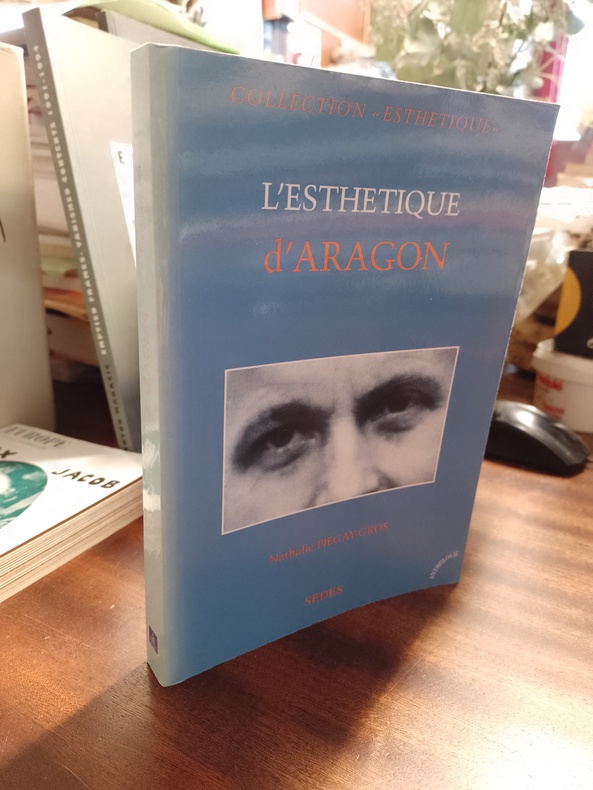
1997réf. LITTFRA49494900426Paris, SEDES, "Esthétique", 1997, 15 x 21,5, 286 pages cousues sous couverture souple illustrée. " Analyser l'esthétique d'Aragon permet de considérer l'œuvre dans sa diversité et invite à faire se déployer ses différentes facettes. La complexité et l'ampleur de cette œuvre résistent aux tentatives d'unification et échappent aux catégories ou aux clichés simplificateurs qui tentent de la contenir. De plus, les écrits sur … Analyser l'esthétique d'Aragon permet de considérer l'œuvre dans sa diversité et invite à faire se déployer ses différentes facettes. La complexité et l'ampleur de cette œuvre résistent aux tentatives d'unification et échappent aux catégories ou aux clichés simplificateurs qui tentent de la contenir. De plus, les écrits sur l'art (cinéma, littérature, peinture), comme les commentaires qu'il ne cesse de développer en marge ou au cœur de ses textes, sont l'écran de cette esthétique : ils la révèlent, et la dissimulent en même temps. Aussi la mise en scène, par Aragon, de sa propre écriture n'est-elle qu'une des voies qu'on puisse emprunter pour analyser ces textes : poésie et politique, surréalisme et réalisme, prose et poésie, désir de lyrisme et volonté de roman, érudition et invention s'y mêlent sans fin, pour interroger l'identité problématique du sujet comme l'urgence de l'histoire."
réf. 39102London: Bro. George Kenning 198 Fleet-Street 1878 . A very good original tight binding. Folio. 14.75" 10" x 1.5" . 2pp./pp.8/pp.602 . Brown blind stamped cloth with gilttitle to front board . Boards lightly soiled edges rubbed. Spine dulled with rubbed gilt title. Original yellow endpapers. Inner hinges carefully strengthened. This tome begins with a very useful 8 page index! 52 weekly papers; Jan 5 to Dec 28 1878 pagination is continious. Clean text throughout just a couple of small blemishes. Articles include: Consecration of the Temple Bar Lodge No. 1728 there are reports on the consecration of 31 craft lodges; A note on the safe arrival of Cleopatra's needle; Obituary. Bro. Dr. J. V. Worthington P.M. 220 in all there are 57 obituaries; The New Grand Officers; An Advert for The Ocarina. The New Musical Instrument.; An Advert and report for the Lauch of the Masonic Life-Boat Albert Edward at Clacton-on-Sea; Provincial Grand Lodge Of Suffolk; etc. ". By the 1850s publishers had rapid and reliable access to the whole country in addition time spent travelling by rail created a demand for material to read. The growing number of freemasons were part of an expanding middle class who travelled and read and these factors help to explain why within three years of each other two new weekly masonic newspapers were launched The freemason in 1869 and The freemasons� chronicle in 1872. It is also surely no coincidence that the first weekly masonic publications were launched after the removal of the last of the stamp and paper taxes in 1855 and 1861 respectively commonly referred to as the taxes on knowledge. As Brake points out after these taxes were abolished there was a rise in daily and weekly serials. The newspaper reported freemasons� involvement in national events for example in the issue for the 27th October 1877 there is a notice concerning the Freemasons Indian Famine Fund. The regular column �Masonic and general tidings� always tended to include items of general interest such as short reviews of good restaurants in London and details of the Lord Mayor�s show. By the 1880s the newspaper had a special column which reviewed the plays on in the London theatres. A further indication of the leisure activities and interests of those who read the newspaper. The newspaper always included reports of lodge meetings with a section specifically for London lodges. These reports often give a detailed account of an event or a meeting listing individuals who attended and can be a very useful source of information about London freemasons and masonic life. Similarly the obituaries some of which are very detailed and include pictures provide insight into an aspect of a man�s life which in many cases has remained hidden. Between 1873 and 1885 the Rev. Adolphus Frederic Alexander Woodford acted as editor. Woodford was a formidable masonic scholar and drew around him some of the great masonic scholars of the time. As a result articles by such men began to appear in the newspapers pages and helped to ignite a lively debate about the accepted views of masonic history. The newspaper was reflecting the interests and concerns of a growing number of freemasons who were believed in a more disciplined and erudite approach to masonic history. In 1886 a year after Woodford stepped down as editor Quatuor Coronati Lodge No. 2076 was formed with the aim of being the premier research Lodge and Woodford was one of its founding members. The newspaper demonstrated that a new approach to the history of freemasonry was in demand by the brethren and the success of the research lodge which still exists today built on the foundations which the paper had laid." - See Fraternal Communications: The Rise Of The English Masonic Periodical by Rebecca Coombes 2009 . George Kenning. The son of an East End oyster seller Kenning realised the potential of the market: he not only manufactured the costumes but sold a range of products from his shops across Britain. He set up a mail order business which operated across the British Empire and was keen to develop new markets in the USA. He became a media magnate and advertised in his own widely read newspaper: The Freemason. He even extended the brand by becoming closely involved in developing new Masonic orders all of which needed special costumes and props. London: Bro. George Kenning, 198, Fleet-Street, 1878 . hardcover
réf. 37781New York: Redding & Co. 731 Broadway 1888 . A scarce early printing of the Cabalist ritual in code. A very good wallet-style leather binding. 5.75" x 4" x 0.5" . pp.198 . Maroon calf over thin board in a wrap-round wallet-style binding. Simple blind stamp decoratoion to back and front covers. The front flap also has the initials "W B". Hinges carefully strengthened and blended to match the original leather binding. All page edges bright gilt. Marbled endpapers. Printed title and clean text throughout. A description of this book by Don Carr states: "Masonic-type rituals�featuring a �Master Cabalist��in a code reminiscent of IF U CN RD THIS with a few other signs and symbols among others x and thrown in. Thus �W-t. ws. th-n. s-d. t. u-.� is �What was then said to you� Assuming a familiarity with Masonic rites and a little practice Cabala is almost readable. " - See The Study of Christian Cabala in English: Addendum by Don Karr . New York: Redding & Co., 731 Broadway, 1888 . hardcover
1989réf. 016216Paris Balland - collection "Le Commerce des idées". 1989 In-8 Broché, couverture illustrée
2011br. Innumerevoli sono stati i tentativi di rifare i capolavori del maestro del brivido, ma con scarsi risultati. L'Hitchcock's touch, quel quid indefinibile che determina la grandezza degli originali, sparisce sempre anche nei remake migliori. Emblematico il caso di tentativi addirittura filologici, come lo "Psycho" di Van Sant, che in un omaggio al maestro rifa il film originale quasi fotogramma per fotogramma. Dobbiamo concludere che i buoni remake sono impossibili? Il fatto che lo stesso Hitchcock sia stato il più intelligente rifacitore di se stesso, suggerisce Zizek, complica però il quadro, e forse la risposta giusta, come in un buon film di suspance, non è quella più probabile.
2008br. Questo saggio è un perfetto esempio dì cosa sia in grado di fare i! filosofo sloveno Slavoj Zizek quando può mescolare a piacimento gli ingredienti che gli sono più congeniali: psicoanalisi, cinema e filosofia. Attraverso l'analisi di uno dei più famosi film di Hitchcock, "Psycho", Zizek espone mirabilmente le differenze che dividono usi approccio estetico moderno da uno post-moderno: mentre l'arte moderna è semplicemente shockante per il pubblico, quella postmoderna comprende in sé tutte le possibili interpretazioni che essa stessa mette in moto. La riflessione su Hitchcock diventa così al contempo auto-riflessione, considerazione critica e messa in discussione continua dei paradigmi che sorreggono le teorie estetiche, In una sorta di strabismo continuo, soggetto e oggetto della riflessione non cessano di scambiarsi di posto e di cancellare la distanza che li separa.
2011brossura Nello scorrere nel suo caleidoscopico universo David Lynch ci mostra come l'unità psicologica di una persona si disintegra da un lato in una serie di stereotipi e comportamenti rituali, dall'altro in esplosioni di un Reale crudo e brutale, dotato di energia psichica insopportabilmente intensa e (auto) distruttiva. Le apparizioni di angeli alla fine di Fuoco cammina con me e di Cuore selvaggio, o il sogno del pettirosso alla fine di "Velluto blu", seppure scene tra le più pateticamente ridicole, vanno prese sul serio. Così come le figure malvagie eccessivamente violente quali Frank in "Velluto blu", Eddy in "Strade perdute", e il Barone Harkonnen in "Dune". L'opera cinematografica di Lynch, con il suo estremo onirismo, consente a Slavoj Zizek un ritorno perturbante sui temi prediletti della sua riflessione, in particolare sull'oscenità del reale e il "ridicolo sublime".