SOULIE DE MORANT (Georges)Livre Rare Book
Joseph MargolisMareMagnum
Three paradoxes of personhood. The venetian lectures
2017Autori: Joseph Margolis. Curatori: Roberta Dreon.

Mimesis Edizioni · Italia15,20 €
4462 risultati
rif. 21322In-4, broché, couverture illustrée rempliée, xvi, 195 p., non coupé. Paris, Paul Geuthner, 1926.
rif. 19601Paris, La Renaissance du Livre, 1973. 13 x 19, 95 pp., 1 illustration, broché, très bon état.
2017Autori: Joseph Margolis. Curatori: Roberta Dreon.
In-4 carré, broché, couverture illustrée en couleurs, 31 planches de reproductions en couleurs, 254 p., 378 reproductions dans le texte. An Exhibition Arranged in Celebration of the Century of Confederation. De la bibliothèque de la famille d'Otto Dix, avec la mention manuscrite "Ms. Dix" sur la couverture. Bon exemplaire.
rif. 53069034like new. unknown
rif. 53069034-nnew. unknown
2026rif. __0198791518Oxford University Press 2026. Hardcover. New. Oxford University Press hardcover
2026rif. x-0198791518Oxford University Press 2026. Hardcover. New. 272 pages. 6.22x0.75x9.41 inches. Oxford University Press hardcover
rif. 31548In-4 carré, broché, couverture illustrée en couleurs, 31 planches de reproductions en couleurs, 254 p., 378 reproductions dans le texte. Ottawa, National Gallery of Canada, 1967.
2012br. Perché Thomas Mann, oggi? Una figura complessa e inquietante, insieme composta e lacerata, rimasta spesso confinata nei limiti della critica letteraria, e dunque per molti versi una figura ancora non indagata e sicuramente inattuale. Questo libro tenta una ricognizione estetica e filosofica del romanziere tedesco, articolata dagli autori (come già nei due precedenti libri su G. Bataille e F. Nietzsche) attraverso un reale dialogo che lascia emergere, all'interno dell'opera manniana, sia le sfaccettature mitologiche sia le numerose connessioni col pensiero filosofico. Partito dalla classica triade del 'pessimismo' tedesco Schopenhauer-Wagner-Nietzsche, col sempre presente e pressante modello goethiano alle spalle, Mann si avventura nella vastità dei territori dello spirito attraverso la necessità della narrazione, presagendo però consapevolmente di essere un 'ultimo', uno che chiude e conclude un intero periodo dell'Occidente. La crisi della coscienza di un'epoca avviata verso la notte e l'oblio; il problema del male e della malattia in relazione all'esistenza stessa dell'arte; la possibilità di un nuovo, difficile umanesimo per poter uscire dalla 'decadenza'; infine, il rapporto col mito come emblema di ciò che è universalmente umano: perciò questo libro è anche uno studio sull'ermetico, ovvero quel peculiare e segreto elemento mitologico che accompagna il 'mago' Mann lungo tutto l'arco della sua opera.
1956In-8°, pp. 180, tela editoriale. Tracce di sporco alla tela.
1976GYORGY LUKACS THOMAS MANN E LA TRAGEDIA DELL'ARTE MODERNA FELTRINELLI 1976 181 PP. FONDO DI MAGAZZINO: SEGNI DEL TEMPO, DUE PICCOLI FORI (1 MILLIMETRO: VEDI FOTO ALL'INTERNO DELL'INSERZIONE) ALLA QUARTA DI COPERTINA, CHE SI ESTENDONO ALLE ULTIME 6 PP (SENZA COMPROMETTERE IN ALCUN MODO LA LETTURA DEL TESTO), MA IL VOLUME è INTONSO, MAI SFOGLIATO.
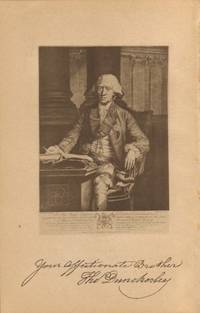
rif. 42329London: Diprose & Bateman Sheffield Street; Spencer & Co.; 15 Great Queen Street; George Kenning 16 & 16A Great Queen Street W.C. 1891 . First Edition. A very good original Victorian binding. 8vo. 8.75" x 5.75" x 1.25". pp.24/pp.316/2pp. - Adverts. Blue cloth over bevelled boards with bright gilt titles to front board and to spine wear to top and tail of spine and edges rubbed. Brown patterned endpapers illustrated owner's bookplate Peter Saunders to verso of the front board: Clean text throughout with subscriber's list and adverts at the end. 4 plates as called for: Portrait frontis of Dunckerley; Portrait of Frederick Prince of Wales; Portrait of King George II.; and Dunckerley's Seal of the Knights Kadosh. A very good copy of this scarce book. "Thomas Dunckerley was born on 23 October 1724 and died on 19 November 1795. After a naval career Dunckerley became a prominent freemason being appointed Provincial Grand Master of several provinces promoting Royal Arch Masonry introducing Mark Masonry to England and instituting a national body for Templar masonry. This was made possible by an annuity of �100 rising to �800 which he obtained from King George III by claiming to be his illegitimate half brother. Albert Mackey blamed Dunckerley for inventing Royal Arch Masonry and splitting the third degree in the process removing the true word of a mason to the new degree and losing the original "pure" form of the ritual forever. This is unlikely as the Royal Arch degree was worked for at least a decade before Dunckerley's initiation. He published a number of Charges Lectures and songs related to different branches of Freemasonry. Together with Grand Secretary Heseltine and William Preston he campaigned and raised funds for the first dedicated headquarters of English Freemasonry the first Freemason's Hall. During his lifetime he held various high masonic offices: Past Senior Grand Warden of England Provincial Grand Master for the Counties above mentioned and Past Grand Master and Grand Superintendent of Royal Arch Masons over eighteen counties. His major contribution was to the emerging "higher degrees" the Templar Royal Arch Ark Mariner and Mark degrees. Not only did he successfully promote them he organised them standardised their ritual and forced them to keep proper records. For this alone historians of Freemasonry have cause to be grateful to him." - See Wikipedia. London: Diprose & Bateman, Sheffield Street; Spencer & Co.; 15, Great Queen Street; George Kenning, 16 & 16A, Great Queen Stree hardcover
1802rif. 1193921Tübingen, Cotta, 1801 - 1802. 12, 312 S., 5 Bl. u. 3 Bl., 330 S. Dekorative Hldrbde d. Zeit m. reicher floraler Rverg. (St. a. d. T., etwas braunfl., gelegentl. schwache Anstreichungen m. Bleistift).
1965In-78° (cm. 24,2), pp. da p. 257 a p. 265). Bross. edit. DEDICA AUTOGRAFA FIRMATA dell'Autore al mazziniano Vittorio PARMENTOLA. Censito alla sola Biblioteca comunale dell'Archiginnasio - Bologna
1989Very Good English Paperback. Pbo. Roy. 8vo. (24 x 17 cm). In English and Turkish. 40 p. Theatrical structure after 12th September the esthetics analysis of theatrical spectator questionnaire and its results.= 12 Eylül sonrasi teatral yapi teatral seyircinin estetik çözümlemeleri anket ve sonuçlari.
1980rif. KOS01206226TBD 1980. Soft Cover. Fine. KOS01206226 TBD paperback
rif. 45490London: Printed for the Author; And Sold by G. Kearsley No 46 Fleet-Street. 1783. Price Eight Shillings in Boards. Captain George Smith: Inspector of the Royal Military Academy at Woolwich; Provincial Grand-Master for the County of Kent; and R.A.". A very good half leather binding probably 19th Century. 8vo. 9.0" x 6.0" x 1.25". 2pp./pp.5-28/pp.399 . Blue calf spine and corners over marbled boards. Later brown leather title label to spine. Library label to verso of the front board: Lodge of Harmony No. 309 Fareham Herts. Presented by Wor. Bro. Forbes. Half-title absent. Printed title with engraved diagram upside-down!. Clear English text throughout just the odd brown spot or blemish from previous use. Early carefull repairs to pp.161-168. A very good copy of this scarce book. Referenced by: ESTC T98248. "Captain George Smith was a Freemason of some distinction during the latter part of the 18th century. Although born in England he entered the military service of Prussia being connected with noble families of the kingdom. During his residency in the kingdom he was initiated in one of the German Lodges. On his return to England he was appointed Inspector of the Royal Military Academy at Woolwich and published The Universal Military Dictionary in 1779 and Bibliotheca Miliaris in 1783. Captain Smith in 1783 published a work entitled The Use and Abuse of Freemasonry: a work of the greatest utility to the Brethren of the Society to Mankind in general and to the Ladies in particular. The interest to the ladies consists in some twenty pages in which he gives the "Ancient and Modern reasons why the ladies have never been accepted into the Society of Freemasons" a section the omission of which would scarcely have diminished the value of the work or the reputation of the author. The work was published without the sanction and the Craft being wiser than their representatives in the Grand Lodge the edition was speedily exhausted. In 1785 Captain Smith was expelled from the Society for "uttering an instrument purporting to be a certificate of the Grand Lodge recommending two distressed Brethren." - See Masonic Network. London: Printed for the Author; And Sold by G. Kearsley, No 46, Fleet-Street. 1783. [Price Eight Shillings in Boards.]. hardcover
1985rif. 2090502113717723Not Available 1985. Soft Cover. Fine. The book is in fine condition. Not Available paperback
rif. 50749London: Hamilton Adams And Co. Paternoster Row; And R. Spencer 314 High Holborn Nottingham : B. S. Oliver MDCCCXL . 1840 . First Edition. A very good original publisher's binding. 8vo. 9.0" x 6.0" x 1.0". 5pp./pp. viii - xxii./pp.338/2pp. - Advert . Brown blid-stampe decorated boards. Edges rubbed and bumped. Top and tail with small loss. Spine with dulled gilt decoration and titles. Endpaper stuck to verso of the front board with printed library label: "Library Of The Lodge Of Virtue No. 177." Inked inscription to front free-endpaper: "Presented to the Library of the Lodge of Virtue No. 177 Queens' Hotel Manchester by Brother Geo. H. Norton June 20 1848". Second later unused Library label to verso of front free-endpaper: "This Book was presented to the Provincial Grand Lodge Library of the Province Of Lancashire eastern Division." Title-page with engraved vignette and ink stamp: "Lodge Of Virtue 177". Clear English text throughout on lightly toned paper with a few blemishes from previous use. London: Hamilton, Adams, And Co., Paternoster Row; And R. Spencer, 314, High Holborn, Nottingham : B. S. Oliver, MDCCCXL . [184 hardcover
rif. 50229London: The Masonic Record Ltd 1938. New and Revised edition. Originally published in 1928 this book summarised the material of many lectures to the Brethren of the Province of Essex."It suggests by instances taken at random that there are several ways of viewing the Craft ritual and symbolism and that apart from its system of ethical guidance and discipline Freemasonry embodies in its teachings a satisfying and consoling philosopjy of life". Pp.137 owner's name to reverse of front free endpaper. Grey cloth with blue title to frpmt and spine slight bending to boards. Scarce. G. London: The Masonic Record Ltd, 1938. hardcover
rif. 50753London : Richard Spencer 314 High Holborn; Uppingham: C.W. Oliver High-Street 1850 . First edition in a very good original Publisher's binding. 8vo. 9" x 6" x 1" . 4pp./pp.xlvi./2pp./pp.345/6pp. - Adverts . Blind stamped decorated blue boards lightly soiled. Spine with bright gilt symbols and titles. Original yellow endpapers. Label laid-down to verso of the front board: "Lodge Of Silent Temple No. 126 Burnley." Engraved frontis and printed title just light off-setting. Clean text throughout on lightly toned paper just a few brown spots and creased corners. A very good copy of this scarce book. Contents include: Valedictory address; On the present state of the Masonic Science; On the poetry and philosophy of Masonry; On the doctrines contained in the Lodge lectures; Twelve definitions of the circle and parallel lines considered; Three great lights at the foot of the Masonic ladder explained with a description of the ladder and its accompaniments; On the theological virtues and their application to Freemasonry; Inquiry into the true Masonic reference of the Blazing Star; General import of the Symbol of Glory . "The Rev. George Oliver D.D. November 5 1782 - March 3 1867 One of the most distinguished and learned of English freemasons George Oliver is remembered as a laborious antiquary and author on both masonic and ecclesiastical themes. While his erroneous theories and fanciful speculations on the early history of Freemasonry must be rejected his laborious researches and genuine scholarship requires that he be placed as the founder of what may well be called the literary school of Freemasonry. " - Encyclopedia of Freemasonry Albert Mackey. London : Richard Spencer, 314, High Holborn; Uppingham: C.W. Oliver, High-Street, 1850 . hardcover
2005156 pages. Features: Interview with Christopher Alexander; Four Reviews and an overview of Christopher Alexander's 'The Nature of Order' - an essay on the art of building and the nature of the universe; Going after the avant-garde - architectural aesthetics and the spirit of advertising; Architecture - biological form and artificial intelligence; Urban superconscious and the return of the garden myth; On the early sketches of Eric Mendelsohn; A view of berlin holocaust memorials; A treasure of Sullivan architectural ornament; Charles Biederman (1906-2004); Why Charles Biederman matters (to me); An imaginary dialogue between Kandinsky and Klee on Abstract art and nature; Florida Everglades; The color of art in nature's landscape; book reviews. Clean, bright and unmarked with very light wear. An excellent copy. Book
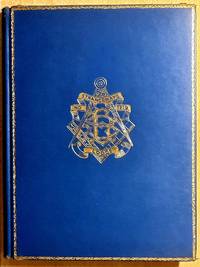
rif. 47333Burnley and London: Produced and illustrated by Charles Eshborn of Strangeways Lodge A Past Master of Cornucopia Lodge No. 4553 and printed for private circulation by The Hortus Press 1968 . First and only edition - Scarce! A very good blue leatherette binding. 12pp./pp.158 9.75" x75" x 1.0". Blue covers with gilt border and central gilt Masonic crest. Light rubbing to edges and corners. Spine with gilt title: "Strangeways". Light marbled endpapers. Clean throughout well illustrated with many black & white pictures. VG. Strangeways Lodge was founded in 1868. Amalgamated with Duke of York Lodge No. 2449 on 10th September 2003 to become Phoenix Lodge 1219. Burnley and London: Produced and illustrated by Charles Eshborn of Strangeways Lodge, A Past Master of Cornucopia Lodge No. 4553 hardcover
rif. 44843London: Methuen And Co. Ltd. 36 Essex Street 1916 . A very good half leather binding. 8vo. 7.5" x 4.75" x 0.75" . Navy blue calf covered spine and corners over blue cloth covered boards. Edges lightly rubbed. Polished leather spine with 5 raised bands gilt decorated compartments and gilt titles. Top page edges gilt. Marbled endpapers. Clean text throughout. VG.THERE was Rundle Station Master An' Beazeley of the Rail An' 'Ackman Commissariat An' Donkin' o' the Jail; An' Blake Conductor-Sergeant Our Master twice was 'e With im that kept the Europe-shop Old Framjee Edu1jee.Outside - " Sergeant! Sir! Salute! Salaam!Inside - 'Brother" an' it doesn't do no 'arm.We met upon the Level an' we parted on the SquareAn' I was junior Deacon in my Mother-Lodge out there!We'd Bola Nath AccountantAn' Saul the Aden JewAn' Din Mohammed draughtsmanOf the Survey Office too;There was Babu ChuckerbuttyAn' Amir Singh the SikhAn' Castro from the fittin'-shedsThe Roman Catholick!We 'adn't good regaliaAn' our Lodge was old an' bareBut we knew the Ancient LandmarksAn' we kep' 'em to a hair;An' lookin' on it backwardsIt often strikes me thusThere ain't such things as infidelsExcep' per'aps it's us.For monthly after LabourWe'd all sit down and smokeWe dursn't give no banquetsLest a Brother's caste were brokeAn' man on man got talkin'Religion an' the restAn' every man comparin'Of the God 'e knew the best.So man on man got talkin'An' not a Brother stirredTill mornin' waked the parrotsAn' that dam' brain-fever-bird.We'd say 'twas 'ighly curiousAn' we'd all ride 'ome to bedWith Mo'ammed God an' ShivaChangin' pickets in our 'ead.Full oft on Guv'ment serviceThis rovin' foot 'ath pressedAn' bore fraternal greetin'sTo the Lodges east an' westAccordin' as commanded.From Kohat to SingaporeBut I wish that I might see themIn my Mother-Lodge once more!I wish that I might see themMy Brethren black an' brownWith the trichies smellin' pleasantAn' the hog-darn passin' down;An' the old khansamah snorin'On the bottle-khana floorLike a Master in good standingWith my Mother-Lodge once more.Outside - Sergeant! Sir! Salute! Salaam!'Inside- Brother" an' it doesn't do no 'arm.We met upon the Level an' we parted on the SquareAn' I was Junior Deacon in my Mother-Lodge out there! First published in the The Pall Mall Gazette and the Pall Mall Budget on May 9th 1895. In the Sussex Edition the poem is dated 1894. ORG No. 634. Rudyard Kipling was initiated into the Lodge of Hope and Perseverance No 782 founded in 1858 under the English Constitution at the Masonic Hall the Jadughar as described in Kim in Anarkali Lahore on 5 April 1886 at the age of twenty. As this was the Lodge into which he was initiated it became his Mother Lodge. A Freemason will always have a particular attachment to the Lodge which saw him enter into Freemasonry even though he may cease to be a member of that particular Lodge. The poem was written some eight years later when he was living in Vermont. Charles Carrington in his The Complete Barrack-room Ballads p.166 reports that it was written in a single day on October 29th 1894 while Conan Doyle was staying with the Kiplings. It celebrates the equality which reigns among Freemasons without distinction of profession rank race or creed and the first two stanzas clearly reflect the diversity of this particular Lodge underscored by the refrain which contrasts the behaviour displayed in public with that shown inside the Lodge. The use of vernacular with the dropped �h� highlights the wide social rankings of the members." - See "The Mother Lodge" by George Kieffer 2017 London: Methuen And Co. Ltd., 36 Essex Street, 1916 . hardcover