Junior, DemocritusBiblio.com

152 résultats
réf. 9354211593.Gpaperback. Good. Access codes and supplements are not guaranteed with used items. May be an ex-library book. paperback
1826réf. 269269Glasgow: R. Griffin & Co 1826. Hardcover. Very Good. New edition. 8vo. Volume two only of two. Three quarter leather cover with cloth boards. Top edge gilt. Very good. Bookplate inside front cover. Front hinge slightly cracked. Corners lightly rubbed. Leather spine lightly rubbed. R. Griffin & Co hardcover
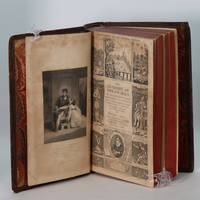
1836réf. 000455London: B. Blake 13 Bell Yard Tmple Bar. 1836. Original half brown calf with original period spine and end papers professionally relaid retaining 90% of original spine. Marbled boards and endsheets. Frontispiece with negligible dampstaining also to flyleaf. Previous owner's name on flyleaf and another owner's stamped name also on same. 744 pages. Overall FAIR PLUS condition. Digital photos upon request. The Anatomy of Melancholy Full title The Anatomy of Melancholy What it is: With all the Kinds Causes Symptomes Prognostickes and Several Cures of it. In Three Maine Partitions with their several Sections Members and Subsections. Philosophically Historically Opened and Cut up. is a book written by Robert Burton which was first published 1621. The book is on its surface a medical textbook in which Burton applies his large and varied learning in the Scholastic manner to the subject of melancholia. Each section piles on ancient and mediæval medical authorities from Hippocrates Aristotle and Galen forward and adds to these ancient examples a great deal of Latin poetry. Burton defines his subject this way: Melancholy the subject of our present discourse is either in disposition or in habit. In disposition is that transitory Melancholy which goes and comes upon every small occasion of sorrow need sickness trouble fear grief passion or perturbation of the mind any manner of care discontent or thought which causes anguish dulness heaviness and vexation of spirit any ways opposite to pleasure mirth joy delight causing frowardness in us or a dislike. In which equivocal and improper sense we call him melancholy that is dull sad sour lumpish ill-disposed solitary any way moved or displeased. And from these melancholy dispositions no man living is free no Stoick none so wise none so happy none so patient so generous so godly so divine that can vindicate himself; so well-composed but more or less some time or other he feels the smart of it. Melancholy in this sense is the character of Mortality.This Melancholy of which we are to treat is a habit a serious ailment a settled humour as Aurelianus and others call it not errant but fixed: and as it was long increasing so now being pleasant or painful grown to a habit it will hardly be removed. Over the course of the book Burton draws from nearly every science of his day including psychology physiology astronomy astrology demonology meteorology and theology. In fact much of the book consists of quotations from various authorities and Burton fills the Anatomy with more or less pertinent references to the works of others. The Anatomy of Melancholy is a particularly lengthy book. The first edition printed as a single quarto volume was nearly 900 pages long and subsequent editions only added to that total. The text is partitioned into three major sections plus an introduction each arranged in Burton's sprawling style. characteristically the introduction includes not only an author's note titled "Democritus Junior to the Reader" but also a Latin poem "Democritus Junior to His Book" a warning to "The Reader Who Employs His Leisure Ill" an abstract of the following text and another poem explaining the frontispiece. The following three sections proceed in a similarly exhaustive fashion: the first section focuses on the causes and symptoms of "common" melancholies while the second section deals with cures for melancholy and the third section explores more complex and esoteric melancholies including the melancholy of lovers and all varieties of religious melancholies. The Anatomy concludes with an extensive index which many years later The New York Times Book Review called "a readerly pleasure in itself".; additionally most modern editions of the book are supplemented with many pages of explanatory notes for the reader. Throughout the book Burton's digressive and inclusive style often verging on a stream of consciousness consistently informs and animates the text. Though nominally a medical book the Anatomy is "vitalized by Burton's pervading humour" and is as much a sui generis work of literature as it is a scientific or philosophical text. The Anatomy of Melancholy has been admired by many subsequent writers from Samuel Johnson Charles Lamb and John Keats who professed it to be his favourite book to Stanley Fish Philip Pullman and Jorge Luis Borges who used a quote as an epigraph to his story "The Library of Babel". Despite its age The Anatomy of Melancholy is still considered an enduring if eccentric literary classic by many modern critics. UncleAndy. Seventh Edition. Half Calf Leather. Fair. 8vo - over 7¾" - 9¾" tall. Hardcover. B. Blake, 13, Bell Yard, Tmple Bar. Hardcover
1850réf. 284417Philadelphia: J. W. Moore 1850. Hardcover. Fair. New edition later printing. Three quarter leather with marbled boards. Poor with front board detached but present stamps and owner gift inscription on front fly foxing on tissue to frontispiece cover edges worn. J. W. Moore hardcover
1826réf. 109777London: R. Griffin & Company 1826. Hardcover. Very Good. New edition. Very good copy with some foxing throughout. R. Griffin & Company hardcover
réf. 46991097-nnew. unknown
réf. 46991097like new. unknown
réf. 1022468685.Gpaperback. Good. Access codes and supplements are not guaranteed with used items. May be an ex-library book. paperback
réf. 1020342552.Ghardcover. Good. Access codes and supplements are not guaranteed with used items. May be an ex-library book. hardcover
1628réf. 347Oxford England: Henry Cripps 1628. 3rd Edition. Contemporary sheep with rebacked modern calf. Very Good. Christof Le Blon. One of the most popular books of the 17th century and one of the most celebrated books of all time. The book is ostensibly a medical treatise about depression but it is really a genre-defying tour-de-force. It branches into many diverse categories including self-help psychology philosophy history astronomy geography humor and various aspects of literature. Burton wrote it under the pseudonym Democritus Junior as a reference to the Ancient Greek "laughing philosopher" Democritus. Condition: Very Good. Textually complete including colophon leaf without errata leaf as is common. Contemporary sheep spine rebacked with modern calf. BOOK INFO The Anatomy of Melancholy by Robert Burton Published in 1626 in Oxford by Henry Cripps. Third edition corrected and augmented by the author originally published only a few years earlier in 1621. In contemporary sheep covered boards with single fillet in blind paneling. Modern rebacked calf spine with raised bands separating compartments ruled in blind a gilt-lettered red morocco spine label in compartment two. Endpapers refreshed circa early 1800s. Small folio 11" x 7 6/8". Collated: viii 77 7 208 but really 210 4 209-374 but really 373 2 375-646 10 Table of Contents and Colophon leaf. This is the first edition to feature the famous engraved title page with 11 separate vignette rectangular panels including the portrait of Robert Burton Democritus Jr. Numerous engraved woodcut initials and chapter head-and-tail pieces along with some vignette headers. Commentary in Latin along gutter and fore-edge margins. CONDITION REPORT Very good for nearly a 400-year-old folio. Spine rebacked in modern calf recornered in matching calf. Refreshed endpapers. Exterior and binding: Very firm hinges and joints tight pages sharp corners. Worn boards but in quite lovely condition overall given its sheep and the age of the binding. Light rubbing to edges. Spine is colorful and supple. Interior: Most of the pages are gently toned with occasional sections of darker toning or browning/oxidization. First dozen leaves with ink spills mostly along the margins with some drips on title page. Infrequent spots of foxing. The occasional smudge a few bent corners. Large water dampening stains in pages 197-208 and 219-250. A few other areas with some smaller and lighter water dampening. Professional tear repairs at foot of title and dedication pages on blank versos. Tear at bottom of 73-74 k1 Tear within header-piece leaf following page 77 of preface slight loss to corner off 455-456 Mmm 4 bottom of 625-626 or Llll2 with some slight loss none affecting text. Provenance and numerous areas of antiquarian writing: 1. John Harper signs his name with a date of 1748 on the title page dedication page and colophon. 2. J.B. Pooley neatly signs his name with a date of 1835 on FFEP and includes a famous quote from Dr. Samuel Johnson: The only book that ever took one out of bed two hours sooner than I wished to rise 3. Vignette bookplate of James S. Burra noted 19th century bibliophile and collector who had an impressive library of important books and manuscripts on front pastedown and his signature in pencil on FFEP. Burra interacts with the text throughout in pencil but lightly - underlining or marking passages along the margin sometimes writing a word or two of commentary. He also has notes in pencil on rear blanks including listing the pages works of Shakespeare are referenced etc. Numerous pagination errors as called for: page 79 is listed as 77 and 80 as 78. Pagination is off 2 until. when page 362 is misnumbered as 363 and pagination is off by one henceforth. Most importantly catch words align page-to-page and register is continuous. CONTENT & INFLUENCE Much of Anatomy was inspired by Burton's own struggles with depression. Anatomy starts with a roughly 200-page-long satirical introduction "Democritus to the Reader" narrated by Burton's pseudonym Democritus Junior. The main body of the book is divided into three partitions. The first partition is The Causes of Melancholy the second partition is The Cure of Melancholy and the third partition is Love-Melancholy and Religious Melancholy. The book regularly quotes biblical ancient and medieval medical authorities and literary sources. The Anatomy of Melancholy inspired countless writers of the following centuries including Samuel Johnson John Milton and Laurence Sterne and modern authors like Philip Pullman. Romantic poet John Keats claimed Anatomy was his favorite book. Burton's numerous anecdotes which tackle melancholy with both sobriety and humor as well as the overarching influence of his personal sadness on the book are often cited as making Anatomy his one truly great work. . Henry Cripps unknown
1883réf. H126London: Chatto and Windus 1883. New Edition . Brown buckram Gilt. Vg. 8vo - over 7¾" - 9¾" tall. xviii747 32pp pub. cat. dated October 1886. Facsimile of original frontispiece. Tissue guard of the frontis. foxed affecting the title page some under-lining in neat hand of the first 18 pages and the original binding torn a little wear on edges. A tight clean copy otherwise in original but worn cloth. What It Is with All the Kinds Causes Symptomes Prognostics and Several Cures of It. In Three Partitions Chatto and Windus hardcover
1836réf. 006552Philadelphia: T. Wardle 1836. Book. Very Good. Cloth. First American Edition. 8vo - over 7¾" - 9¾" tall. SCARCE in the First American from the Thirteenth English Edition Corrected. In two volumes apparently rebound in late 1800s green cloth binding about Very Good leather spine labels rubbed and illegible small prior owner name stamp front end pages both volumes end pages foxed period prior owner name in ink volume one only moderate internal foxing and toning hinges starting but holding well. The first edition was published in 1621. T. Wardle Hardcover books
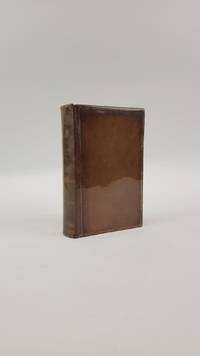
1845réf. 207705London: Tegg 1845. Hardcover. Fair with wear to the edges and corners. Crack in the leather along the spine. Crack between the front end pages. Majority clean body pages and solid binding. A dark brown leatherbound book with gilt text on a red plate on the spine. Color marbled end pages. Red textblocks. 748 pages; black-and-white frontispiece. Tegg hardcover books
1806réf. 009501London: Printed for Messrs. Vernor Hood and Sharpe et al by J. And E. Hodson 1806. Book. Very Good Plus. Hardcover. Eleventh Edition Corrected. 8vo - over 7¾" - 9¾" tall. Eleventh Edition Corrected to which is prefixed an account of the author 1806. Two volumes bound in contemporary half brown morocco over marbled boards gilt backs newer white end papers both volumes with frontispiece illustrations. Very Good Plus marbled covers rubbed light toning primarily at end papers uniform toning at title page of Vol. II caused by frontis illustration. A handsome set. Printed for Messrs. Vernor, Hood and Sharpe , et al , by J. And E. Hodson Hardcover books
1889réf. 9031333New York: A.C. Armstrong and Son 1889. Hardcover. Very Good. Bound in publisher's original blue cloth with labels affixed to spines. Volume one has frontispiece of original edition tipped in. Neat signature of previous owner on flyleafs of all volumes. Minor wear to extremities of all volumes minor chipping to heads of two spines and noticeable chipping to head of third 1/4 x 1/2 inch. Each volume 5 1/4 x 8 1/4 inches. 1481 total pages. A.C. Armstrong and Son hardcover books
1857réf. D4633London: William Tegg 1857. Hardcover. Very Good. Half calf and marbled paper over boards lavishly gilt-stamped compartmented spine gilt-stamped lettering in red leather spine label endpapers and all edges marbled. With a reproduction of the frontispiece to the original edition. Moderate scuffing on boards spine tips and along edges of boards; corners lightly bumped. A worn but pretty copy with bright gilt. Internally clean. William Tegg hardcover books
1826réf. 269269Glasgow: R. Griffin & Co 1826. Hardcover. Very Good. New edition. 8vo. Volume two only of two. Three quarter leather cover with cloth boards. Top edge gilt. Very good. Bookplate inside front cover. Front hinge slightly cracked. Corners lightly rubbed. Leather spine lightly rubbed. R. Griffin & Co hardcover books
1826réf. 109777London: R. Griffin & Company 1826. Hardcover. Very Good. New edition. Very good copy with some foxing throughout. R. Griffin & Company hardcover books
1850réf. 284417Philadelphia: J. W. Moore 1850. Hardcover. Fair. New edition later printing. Three quarter leather with marbled boards. Poor with front board detached but present stamps and owner gift inscription on front fly foxing on tissue to frontispiece cover edges worn. J. W. Moore hardcover books
1867réf. 1373483London: William Tegg 1867. New Edition. Hardcover. Octavo xviii 747 pages. In Very Good condition with plastic covering. Spine is brown with gilt lettering. Boards have some rubbing and dirt staining from dirt trapped beneath the plastic. Text block has minor damp staining to the top exterior edge a letter from the Folger Shakespeare library tucked into the plastic cover on the front paste down minor pencil writing on the front end papers and half title page and some foxing throughout. 1373483. Special Collections - Downstairs. William Tegg hardcover books
1837réf. 212601London: Longman 1837. Hardcover. VG: Wear to the leather especially along the edges of the spine. Some fading to the gilt. Rubbing and smudging to the boards. The first two blank pages and the title page have stains. Slight foxing to some pages. Majority clean body pages and solid binding. Three-quarter red leatherbound book with four ribs and gilt text on the spine. Gilted textblocks. Blue satin ribbon. Color-marbled end pages. Volume two ONLY. This includes only 'Section III.' Part of a two volume set in "Three Partitions: With Their Several Sections Members and Subsections Philosophically Medicinally Histotically Opened and Cut Up." Longman hardcover books
1624réf. 140948955Oxford: Printed by John Lichfield and James Short for Henry Cripps 1624. Second Edition. Very Good. Second edition and first folio edition. iv 64 4 188 4 189-332 2 333-379 370-382 389-391 385 387-557 7 pp. Two pages misnumbered; pagination eccentricities as issued with no break to text. Printed on laid paper. Divided into three sections flanked by 41 page preface "Democritus Junior to the Reader" and 7 page index. Each section preceded by synopsis chart. Garrison-Morton 4918.1 PMM 120 Osler 4622. Small folio bound in contemporary full mottled calf rebacked with original spine laid down red leather title label to spine all edges stained red. Very Good with scuffing and cracks to leather and trivial worming; edgestain rubbed and boards exposed at corners title label slightly chipped. Contents lightly toned and rippled with faint irregular waterstaining throughout and darker staining to first 8 leaves. Antique engraved bookplate to front pastedown ownership signature dated 1846 to front free endpaper old bookseller inscriptions in ink to back pastedown. Occasional ink stains and very occasional marginalia in pencil and ink. Chipping to title page and several interior pages 3 inch tear to p.1 The Synopsis of the Second Partition and 2-1/4 inch tear to p. 499. Two tiny wormholes to pp. 479-7. Binding strong. Robert Burton 1577-1640 went to Oxford in 1593 and never left possibly due to his bouts of depression. He wrote on the subject of melancholy to relieve his own mind of its burden and over the years put together the first psychiatric encyclopedia in the English language. Burton's satirical and discursive Anatomy analyses the causes symptoms and cures of melancholy bolstered by a wide range of quotations and is a literary as well as medical classic. First published in 1621 the book was reprinted with revisions three times during Burton's lifetime and numerous times since. It was a favorite of Dr. Johnson another sufferer of depression who told Boswell that this was "the only book that ever took him out of bed two hours sooner than he wished to rise.". Printed by John Lichfield and James Short, for Henry Cripps unknown books
1845réf. FB3043 /1ABrown cloth binding with gilt title and date on the spine. This book focuses on the art to 'The Anatomy of Melancholy' The Anatomy of Melancholy is a book by Robert Burton first published in 1621. On its surface the book is presented as a medical textbook in which Burton applies his vast and varied learning in the scholastic manner to the subject of melancholia which includes although it is not limited to what is now termed clinical depression. Although presented as a medical text it is as much a sui generis work of literature as it is a scientific or philosophical text and Burton addresses far more than his stated subject. In fact the Anatomy uses melancholy as the lens through which all human emotion and thought may be scrutinized and virtually the entire contents of a 17th-century library are marshalled into service of this goal. It is encyclopedic in its range and reference. In his satirical preface to the reader Burton's persona and pseudonym "Democritus Junior" explains "I write of melancholy by being busy to avoid melancholy." This is characteristic of the author's style which often supersedes the book's strengths as a medical text or historical document as its main source of appeal to admirers. Both satirical and serious in tone the Anatomy is "vitalized by Burton's pervading humour" and his digressive and inclusive style often verging on a stream of consciousness consistently informs and animates the text. Thomas Tegg. hardcover
réf. 1379623707.Ghardcover. Good. Access codes and supplements are not guaranteed with used items. May be an ex-library book. hardcover
1981Spines are discolored. Minor shelfwear. Former owner's name on ffep of vol. 1. ; Isbns: 9004061347 & 9004069348. 2 volumes only (of 4). ; Philosophia Antiqua XXXVII & XLI; 463 pages