Frederick MortBiblio.com

7707 risultati
rif. 654525076Cambridge University Press CUP . Papeback. New. pp. 244 Cambridge University Press CUP unknown
rif. 1665081279.GaudioCD. Good. Access codes and supplements are not guaranteed with used items. May be an ex-library book. unknown
rif. 1350376175.Gpaperback. Good. Access codes and supplements are not guaranteed with used items. May be an ex-library book. paperback
2002New English Paperback. Pbo. 4to. (28 x 22,5 cm). In French. 317 p., 39 b/w plates. B/w ills. A heavy volume. Les Lyciens et la mort. Une etude d'historie sociale. Following the presentation of the subject with its chronological limits and sources, the researcher continues with tomb types, lexicological study, funeral rites and cult, protection of the tombs, profanation of the tombs and the tomb as a reflection of a society. A collection of inscriptions is also given in detail.
2003Clothing, jewelry, animal remains, ceramics, coins, and weaponry are among the artifacts that have been discovered in graves in Gaul dating from the fifth to eighth century. Those who have unearthed them, from the middle ages to the present, have speculated widely on their meaning. This authoritative book makes a major contribution to the study of death and burial in late antique and early medieval society with its long overdue systematic discussion of this mortuary evidence. Tracing the history of Merovingian archaeology within its cultural and intellectual context for the first time, Effros exposes biases and prejudices that have colored previous interpretations of these burial sites and assesses what contemporary archaeology can tell us about the Frankish kingdoms. Working at the intersection of history and archaeology, and drawing from anthropology and art history, Effros emphasizes in particular the effects of historical events and intellectual movements on French and German antiquarian and archaeological studies of these grave goods. Her discussion traces the evolution of concepts of nationhood, race, and culture and shows how these concepts helped shape an understanding of the past. Effros then turns to contemporary multidisciplinary methodologies and finds that we are still limited by the types of information that can be readily gleaned from physical and written sources of Merovingian graves. For example, since material evidence found in the graves of elite families and particularly elite men is more plentiful and noteworthy, mortuary goods do not speak as directly to the conditions in which women and the poor lived. The clarity and sophistication with which Effros discusses the methods and results of European archaeology is a compelling demonstration of the impact of nationalist ideologies on a single discipline and of the struggle toward the more pluralistic vision that has developed in the post-war years. ; 1.05 x 9.24 x 6.38 Inches; 272 pages
rif. DADAX0275997529New unknown
rif. SONG0874311209Used: Good unknown
1972rif. 008990London OZ Publications Ink Limited 1972 In-4 agrafé, couverture illustrée
1990LIGUORI 1990 490 PP. FONDO DI MAGAZZINO: PERFETTO E INTONSO. Questo libro si propone si essere la ricostruzione globale, in una prospettiva di ermeneutica storica (filologicamente e sociologicamente fondata) della poetica di uno dei pittori più illustri e giustamente "popolari" di tutta l'arte spagnola, Francisco Goya y Lucientes.Goya è oggi considerato, a buon diritto, fra i pochi grandi precursori primo-ottocenteschi dell'"arte moderna" (come in modo diverso lo sono stati, ad esempio, Friedrich, Géricault, Delacroix, Turner...). Tuttavia la sua figura va vista non solo come quella di una personalità artistica di grande talento, ma anche come quella di un uomo che si serve della pittura come linguaggio espressivo per comunicare ciò che è necessario dire a proposito di un mondo che egli sogna, più o meno chiaramente, di trasformare. Goya sembra essere coinvolto in un profondo rapporto d'odio-amore con la storia. In una prospettiva totale "male" e "bene" potevano mescolarsi, ma sulla bilancia della storia il "male" era in eccesso. Di qui il compito della ragione come ragione oppositiva e radicale, nel senso di un congiungimento di intelletto e immaginazione per fronteggiare l'orrore, i "mostri della storia".Attraverso il linguaggio (e il pensiero) "forte" e "agonico" della propria arte (per usare il linguaggio della critica "decostruzionista"), Goya ha messo in atto una pratica creativa della trasparenza razionale nei confronti delle contraddizioni e della brutalità del processo storico. Tale pratica si configura come filosofia stessa della "condizione umana" tramite un'arte che, in modo già espressionista e/o surrealista, vuole proporsi come "valore", al di là di un'esclusiva dimensione stilistica, e quindi in una prospettiva decisamente "anticlassica". Ma la "filosofia" di Goya si fonda altresì sulla consapevolezza non marginale che gli ideali di mutamento, di trascendenza di una parte dell'umanità vengono spesso, troppo spesso, annullati e relegati nel "regno di utopia". E tale emarginazione nell'"utopia" è messa soprattutto in atto dalla "stupidità", dalla "malafede", dalla "follia malvagia" di coloro che a questa metamorfosi si oppongono, mossi dalla insensata volontà di percorrere, senza remissione, i sentieri "demoniaci", ma storicamente determinati, del "male".
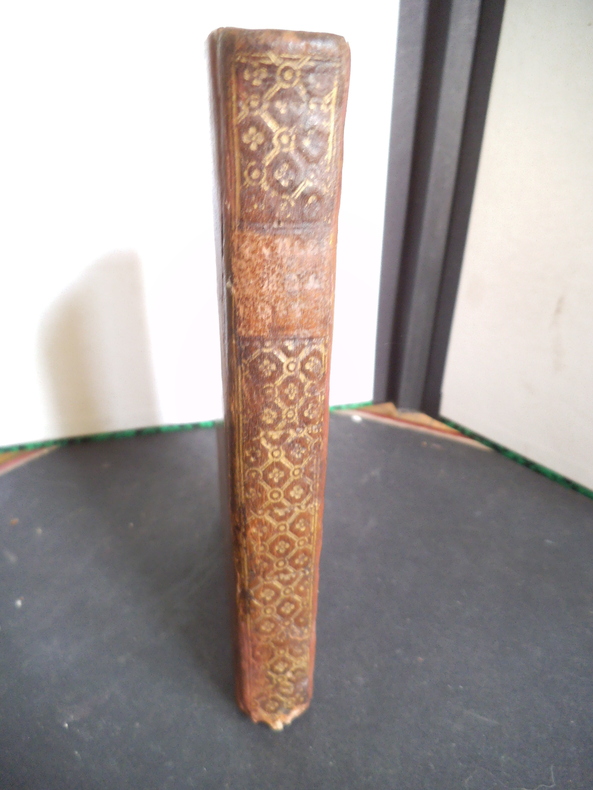
rif. 13993Le tableau de la mort. Réflexion métaphysique sur les principaux thèmes liés à la représentation de la mort Le temps- l’oubli- l’éternité. Se termine par un curieux dialogue entre u mort et un vivant Palmyre et Onyphe. L’auteur tente de détruire le mythe des revenants, vampires, spectres, et autres fantômes. Qu’est ce que la mort, les suites de la mort, le temps, l’éternité ; In 12 plein cuir fauve raciné, 100x165mm, titre, XVIII, deux pages de table, 232pages, tranches marbrées, nouvelle édition, revue, corrigée & augmentée. A Francfort, en foire. Chez J.F BASSOMPIERRE libraire à Liège. 1761 charnières renforcées.
rif. 005113Gustave Batiau (mort après 1927), journaliste, maire de Fleury-Mérogis, L.A.S., Paris, 20 juin, 1p in-8 (13 lignes). Curieuse lettre : « Cher Monsieur, monsieur Yves Guyot (1843-1928) m'avait dit hier qu'il désirait vivement me voir rester avec lui dans votre combinaison ; aujourd'hui il me prie d'aller vous voir. Comme je ne tiens nullement à vous importuner, je vous prie de vouloir bien me faire connaître votre décision et s'il y a lieu de lui fixer un rendez-vous ». La teneur de cette lettre laisse penser à un potentiel duel qui semble n'avoir jamais eu lieu. Batiau était régulièrement témoin et Guyot prit part à de nombreux duels, comme protagoniste ou témoin. [111]
rif. 8391 Broché, couverture illustrée rempliée d'édition, passée, piquée, coiffes et angles amortis. Rousseurs. 23,5 x 16 cm, [6]-106-[2] p., 8 illustrations. Paris, Société d'Editions d'art, Le Livre et l'Estampe, 1902.
rif. 8391 Broché, couverture illustrée rempliée d'édition, passée, piquée, coiffes et angles amortis. Rousseurs. 23,5 x 16 cm, [6]-106-[2] p., 8 illustrations. Paris, Société d'Editions d'art, Le Livre et l'Estampe, 1902.
1987Patroni Griffi Giuseppe La morte della bellezza. , Mondadori 1987-04-01, Copertina originale lievemente segnati dal tempo; sovraccoperta leggermente ingiallita ma in buono stato. Tagli impolverati. Pagine ingiallite ai margini ma in buono stato. La pagina 311 è leggermente scollata dal resto del libro. Buono (Good) . 312 8804301422
rif. 12044introduction de Raoul ALLIER In 12 broché, titre, 194 pages, 1 page de table des matières, illustrations photos hors-texte sur papier couché. Librairie Alphonse PICARD é fils 1912.
rif. 4164Eloges du Comte de Saxe, de Daguesseau, de Duguay-Trouin, de Descartes, du Duc de Sully. Ode à Moreau De Sechelles - Poésies diverses - Lettre à Voltaire. Lyon. Frères Perisse, 1763. In-12, 500 pages environ (pagination séparée) Pleine basane de l'époque, dos à nerfs orné de fleurons dorés. (Coiffes et coins usés).
rif. 97576aafFribourg, Fragnière, 1919, in-8°, Exemplaire bien relié en d-toile aux coins.
rif. 109143aafSion, Saillon, Amis de Farinet, 1986, gr. in-8vo, 140 p. ,Illustrations en noir, dont quelques-unes de Robert Héritier. brochure originale.
1899rif. 436Paris, E. Fasquelle, 1899. Un vol. in-8 (15. 5x20) de III ff. + 88 pages, demi-basane verte à coins, dos (passé) lisse.
rif. 1448.1aafs.d. vers 1970, feuille 36x43 cm Lithographie, originale signée, 1 feuille
rif. 55273aafGenève, Imprimerie de Ferdinand Ramboz, 1847, gr. in-8vo, VIII p. + 62 p. + 2 tableaux dépliants, envoi ms., brochure originale.
1968rif. AUB-1117Paris, Robert Laffont 1968. Bel exemplaire relié, reliure ornée d'éditeur, in-4, 236 pages avec introduction, table analytique des matières, illustrations + planches en couleurs.
rif. 42320aafLondon, J. Hatchard, 1820, in-8vo, X + 240 p., fine full calf binding, spine richly gilt, black title on spine, marbled edges, fine copy.
rif. EXE00BS7Vaduz, Bern.Art Publication, 1982. In-4°, reliure pleine toile de l'édition, jaquette illustrée. Album entièrement illustré d'env. 80 planches en couleurs.