Mort CastleBiblio.com

6 279 résultats
réf. 0967202922.Gpaperback. Good. Access codes and supplements are not guaranteed with used items. May be an ex-library book. paperback
1696réf. 5532Frankfurt: Heirs of Matthäus Merian 1696. SECOND EDITION THUS. Fifth edition overall. This edition is based on Merian's own 1649 edition which was the first to include these revised images and a number of the supplementary texts. Hardcover. Fine. Bound in original tanned sheepskin light surface wear corners bumped lower edge of rear board abraded faithfully and almost imperceptibly rebacked the new spine richly tooled in gold and with a red morocco label. Internally an attractive copy with minor soiling and discoloration to margins of the title page scattered mild soiling in the text mainly marginal a few small rust spots and light blemishes a discreet contemporary repair to one blank margin a small tear in the margin no loss of leaf G1 a clean tear barely entering the image no loss on leaf M1; Memento Mori plate lightly soiled. There is a curious feature in this copy: there is light offsetting -from the text of different book- on one side of the 3 sheets that made up gatherings H S and Cc probably the result of those sheets having been laid upon sheets of the other book while still damp. With the collector's stamp of Johann Carl Conrad Oelrichs 1722-1798 on the title verso. A series of engravings with accompanying text by Matthäus Merian the Elder depicting the Grossbasler Totentanz the 60-meter long Dance of Death mural painted circa 1439 which adorned the inner face of the cemetery wall adjoining the Dominican convent and Predigerkirche in Basel. It was along with the Danse Macabre murals painted in the arcades of the Paris Cimetière des Innocents one of the two earliest painted Dance of Death fresco cycles. The Basel frescoes were lost in 1805 when the wall was destroyed. Only 19 fragments survive. The murals depicted a communal dance between cadavers and people from all strata of society from pope to peasant including members of various trades and professions from physician to fool. The list of those who join -unwillingly- their macabre dance masters in this dance to the grave are in order of appearance: pope emperor empress king queen cardinal bishop duke duchess count abbot knight lawyer councilman church canon physician nobleman noblewoman merchant abbess lame man hermit young man usurer maiden minstrel herald mayor executioner fool peddler blind man Jew heathens a man and a woman cook peasant painter and a mother holding her child. The dance is preceded by the images of a preacher delivering a sermon and a group of skeletons emerging from a charnel house playing instruments this image was probably added over the actual ossuary in the cloister during the restoration of 1616. "The figures of Death were depicted in all kinds of contortions suggesting movement and presumably intended to evoke an association between the represented action and the variety of dance being performed particularly round dances Reigen popular at that time. This is all the more probable because the introductory part of the dance of death which did not survive quite likely depicted figures of Death making music."Dreier Der Totentanz p. 47 "Beneath the pictures was a band containing addresses by Death and replies by the individual representatives of the estates each of four lines in Basel or eight lines in Paris. These verses were written in the local idiom generally in iambic rhyming couplets or alternating rhyme. In the verses the encounter between Death and the human representative was cast as a dialogue in which Death reminded human beings that in the face of mortality everything worldly was transitory and vain. Following Erwin Koller's outstanding philological investigations. it may be assumed that the blockbook produced in Basel around 1460 now preserved in Heidelberg University Library under the shelfmark cpg 438 is a contemporary virtually identical transcription of the original Basel text."Dreier p. 48 Merian made his engravings based on his drawings of the Basel frescoes in 1616. He then either gave or sold his engravings to his nephew Johann Jakob Merian. The first two editions appeared in 1621 one of them printed by Johann Schröter the other by Matthäus Mieg who re-published the book in 1625. The artist himself reworked the plates in 1649 adding atmospheric elements and background details and printed them with a greatly expanded text. This 1696 edition by Merian's heirs reprints the images and text of that edition. For the 1649 expanded edition Merian added a 10-page history of the Basel mural the now-iconic Memento Mori engraving an hourglass with a skull a burning candle and wilting flowers the Adam and Eve engraving and the dual-portrait engraving which when viewed right side up shows a bearded man and when turned upside down show a death's head. Merian also added as announced on the title 42 pages of "Admonitions concerning Human Mortality the Fleeting Nature of This Present Life and the Vanity of All Earthly Things; concerning the Burial and Resurrection of the Dead; concerning the Last Judgment; concerning Hell and the Damnation of the Godless; and concerning Eternal Life.". Heirs of Matthäus Merian hardcover
2017réf. MLU761427324Ariel 2017. New. Temática del libro: El libro aborda la relación de la humanidad con la violencia extrema la guerra y las consecuencias sociales y psicológicas de la barbarie en la historia contemporánea. Explora cómo los individuos y las sociedades enfrentan y sobreviven a situaciones límite reflexionando sobre los derechos humanos y las condiciones que permiten o impiden la supervivencia. Sobre el autor: Daniel Alberto Muchnik es un periodista historiador y analista argentino reconocido por su trabajo en medios de comunicación y sus ensayos sobre historia y actualidad. Su obra se caracteriza por un enfoque crítico y documentado sobre los grandes conflictos del siglo XX y XXI ofreciendo una perspectiva profunda sobre la condición humana en contextos de crisis. Primera idea principal: La guerra y la violencia extrema representan una constante en la historia humana y su análisis permite comprender tanto la capacidad destructiva como la resiliencia de las personas y las sociedades. Muchnik examina cómo los procesos bélicos y los actos de barbarie afectan la dignidad y los derechos fundamentales de las personas. Segunda idea principal: La muerte más allá de su dimensión biológica adquiere un significado social y político en contextos de guerra y violencia institucionalizada. El autor reflexiona sobre cómo la sociedad procesa la pérdida y la amenaza de la muerte y cómo esto influye en la construcción de memorias colectivas. Tercera idea principal: La supervivencia no solo implica mantenerse con vida sino también preservar la humanidad y los valores éticos en situaciones de adversidad. Muchnik destaca la importancia de la solidaridad la memoria y la defensa de los derechos humanos como herramientas para resistir y superar la barbarie. Autor: Reflexiones Sobre la Guerra la Muerte y la Supervivencia. Editorial: Ariel. Colección: PERIODISMO & ACTUALIDAD. Año de publicación: 2017. Idioma: Spanish. Medidas: 22 cm x 15 cm. Materia: Historia / History World History Latin American History. ISBN: 9789873804533. Ejemplar nuevo. Referencia: MLU761427324. Spanish-language edition. Ships from Uruguay with full tracking. Every book is individually wrapped with care and securely packed so it reaches you in excellent condition. Looking for a title you can't find We source books on request. Thank you for letting us serve you. Amado Libros Montevideo. Edición en español. Enviamos desde Uruguay con seguimiento completo. Cada libro va envuelto con cuidado y bien protegido para que llegue a sus manos en excelentes condiciones. ¿Busca un título que no encuentra Conseguimos libros por encargo. Gracias por permitirnos servirle. Amado Libros Montevideo. Ariel unknown
réf. 0124405509.Ghardcover. Good. Access codes and supplements are not guaranteed with used items. May be an ex-library book. hardcover
réf. 0966541316.Ghardcover. Good. Access codes and supplements are not guaranteed with used items. May be an ex-library book. hardcover
réf. 0812560949.Gmass_market. Good. Access codes and supplements are not guaranteed with used items. May be an ex-library book. unknown
réf. 0448168391.Gpaperback. Good. Access codes and supplements are not guaranteed with used items. May be an ex-library book. paperback
1975réf. 12982New York: Scribner. Near Fine in Very Good dust jacket. 1975. First Edition. First Printing; Hardcover. 0684143291 . B&W and Color; 11.0 X 8.5 X 0.9 inches; 224 pages; SIGNED BY 6 OF THE ARTISTS IN THE BOOK on the front end paper. Hard cover has black spine with silver lettering. Covers have slight rubbing bumping. DJ has light rubbing bumping sunning closed tear at bottom of spine; in a mylar cover. Pages are clean and tight. Book appears as if unused. Lavishly illustrated with color and b/w drawings/cartoons. 'This is a collection of more than 330 drawings published in magazines from 1890 to 1974. It is interesting both for the diversity of artistic styles as well as the different themes with social political and the sexual revolution all under scrutiny.' oversized/4#. . Scribner hardcover
réf. 0515101850.Gmass_market. Good. Access codes and supplements are not guaranteed with used items. May be an ex-library book. unknown
réf. DG-24-19293949596Good. unknown
2025réf. ATLASLIB5Fantagraphics 2025. Hard Cover. New. Joe Maneely Robert Q. Sale Gene Colan Art Peddy Mort Lawrence Werner Roth Bob Powell Don Heck. Pre-Code cops and robbers' action from the early 1950s! The fifth stand-alone genre-themed collection in Fantagraphics' archival series of mid-century Marvel Comics. Before focusing on tales of justice via superheroes under the Marvel banner the publisher covered ground-level crime across a range of comics titles and true-crime magazines. Under the Timely imprint from 1947 and Atlas from 1951 up to eleven graphic series including Justice Comics Official True Crime Cases All-True Crime Crime Cases Crime Can't Win Crime Must Lose and Crime Exposed all muscled each other and competitors for space on the newsstands. For the first crime-themed volume in Fantagraphics' ongoing project to restore and resurrect pre-Marvel pulp classics the Atlas Library has selected a book that debuted as the genre peaked just before a Senate hearing and the institution of the Comics Code banned the use of the word "Crime" from even appearing in a comic's title. Escaping that fate Police Action had a seven-issue run of violent and noir-ish morality plays pitting the officers of the law against the forces of urban malevolence and was produced by the cream of the Atlas freelance roster including Joe Maneely Robert Q. Sale Gene Colan Art Peddy Mort Lawrence Werner Roth and Bob Powell. Rounding the volume off also presented is a post-Code one-shot Police Badge #479 a snapshot of the industry's attempts to adapt to new strictures on the genre: here we view "our boys in blue" in the fight against rank corruption highlighting the work of Don Heck and Joe Maneely. 254 pages. Full Colour illustrations. 8" x 12" 198mm x 297mm. 2.5 Fantagraphics hardcover
réf. 0812561228.Gmass_market. Good. Access codes and supplements are not guaranteed with used items. May be an ex-library book. unknown
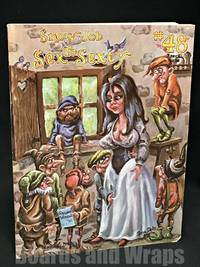
1973réf. 85873SRI Publishing. Very Good in No DJ As Issued dust jacket. 1973. First Edition. Softcover. Rubbing toning light foxing a few creases. Uncommon issue! International shipping billed at cost. Photos upon request.; 4to 11" - 13" tall; 64 pages . SRI Publishing paperback
réf. 0441052983.Gpaperback. Good. Access codes and supplements are not guaranteed with used items. May be an ex-library book. paperback
réf. 0812561244.Gmass_market. Good. Access codes and supplements are not guaranteed with used items. May be an ex-library book. unknown
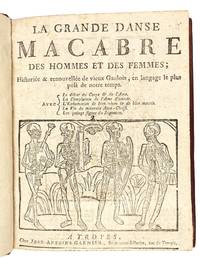
1773réf. 5488Troyes: chez Jean-Antoine Garnier ca. 1766 to 1773. Hardcover. Fine. Bound with: Le Grand Calendrier et Compost des bergers composé par le berger de la Grande Montagne Avec le Compôt naturel reformé selon le retranchement des dix jours par le Pape Gregoire III. Ensemble la manière comme se doit gouverner le Berger pour empêcher qu'aucun Sorciers ne fassent mourir leurs troupeaux avec toutes choses nécessaire pour se régler en leur art. Troyes: Chez Jean-A. Garnier Imp. Lib. No date ca. 1776 Quarto: II. 144 pp. A-S4. TWO RARE EDITIONS. Bound in contemporary tanned sheep the boards framed by a triple gold rule the spine ruled in gold and with rampant lions tooled in the compartments. The Privilege at end is granted to Pierre Garnier and dated 21 May 1728. It gives also a list of his other publications. Unusually fine copies printed on delicate paper of these works which are rarely found in such nice condition bound in a strictly contemporary binding. The bottom line of the first t.p. "avec permission" has been shaved off. In the second work leaf N1 has marginal stains; the last few leaves are lightly foxed. The Dance of Death "Les trois vifs et les Trois Morts" and the other accompanying texts are illustrated with 60 woodcuts of the Dance of Death copied from the original designs which appeared in the edition of the Danse Macabre of G. Marchant 1490. That of the Moor on p. 32 may be a very close copy of the same subject in the Compost. Another version of it appears on p. 27 and is a very close copy of that in the Bradwardine No. 64. N. B. - the two blocks of this subject appearing respectively on pp. 24 & 27 of the present Danse Macabre are not identical. Two works bound together both examples of important literary genres dating to the late-Medieval and early-Renaissance periods. The "Danse macabre" is a pictorial cycle and poem first painted at a Paris cemetery about 1425. Woodcuts copied from the Paris fresco along with the accompanying verses were first printed by Guy Marchant at Paris in 1485. "Le Grand Calendrier" an illustrated almanac and calendar was first printed in 1491 by Guy Marchant. The book remarkable for both its text and its illustrations was a kind of encyclopedia of meteorological agricultural hygienic and moral knowledge. I. The Dance of Death One of the earliest examples of the pictorial cycle and poem known as the Danse Macabre was painted between August 1424 and Lent 1425 in the arcades of the Cimetière des Saints-Innocents Cemetery of the Holy Innocents in Paris. These arcades constructed as charniers to house bones from earlier mass burials were demolished in 1669 along with their frescoes. The images of the Danse in this book were directly inspired by the Paris Danse. Woodcuts of the Danse copied from the Paris fresco along with the 67 verses that accompanied the images were first printed by Guy Marchant at Paris in 1485 with woodcuts designed by Pierre le Rouge. While there were no women in the original Danse in 1486 Marchant published an all-female version "La Danse Macabre des Femmes". Later Marchant united these two texts in the two-volume "Miroer Salutaire". While Marchant followed the sequence from the Cimetière des Saints-Innocents he introduced numerous changes adding new pictorial elements and verses including 20 additional dancers and the woodcut of the four skeleton musicians. From the 16th through the 18th centuries editions of the Danse appeared outside of Paris printed -with various changes- by French provincial printers in Lyon Rouen and Troyes. Over the years the woodblocks used to print the illustrations in the various Paris editions worn or damaged from repeated use and in some instances lost were re-cut with the images reproduced with varying degrees of fidelity to the originals. The printing history of the Danse in Troyes began in 1493 when Pierre le Rouge's woodblocks were acquired by his nephew Nicolas le Rouge who printed editions of the text into the 1530s. It is in Troyes that the woodcuts were first copied and further changes were introduced by successive printers. In 1610 the Troyes printer Noël Moreau began printing editions of the Danse using copies of the woodcuts from the Parisian edition published by Marchant 1490. Moreau added several new images at this point including the Black man blowing a horn and carrying a spear. According to Mortimer Moreau also used several original 15th c. blocks in this edition e.g. p. 26 the Punishment of the Sin of Luxury also used in the "Compost et kalendrier des bergiers" of 1497. and one of the Occupations of the Months May from the "Compost" of 1499. In 1641 Nicolas Oudot's son Nicolas Oudot II printed a new edition using Moreau's woodcuts. The last Oudot edition with the text largely re-written was printed by Nicolas II's son and widow in 1729 under the title "La Grande Danse Macabée sic!". It is this edition that would set the template for the next publishers the Garniers. The dating of this edition /- 1773 is based on the dates during which the publisher is known to have been active. A number of early bibliographers following the printed privilege on the last page dated this edition to 1728 and numerous cataloguing records have this date. However the publisher to whom the privilege was granted Pierre Garnier died in 1738. Further Jean-Antoine Garnier who is named as publisher on the title page was active between 1766 and 1773. Alexis Socard "Livres Populaires de Troyes" 1864 p. 126-127 tells us that the Garniers continued to print the book up until 1820 with the same imprint and privilege. See also: Corrard de Breban "Recherches sur l'établissement et l'exercice de l'imprimerie à Troyes" Paris 1873 4th ed. p.73-74. The additional texts: Already in the late 15th c. editions of the Danse had begun to include supplemental texts. Those included in this edition are: "Le débat du corps et de l'ame" "La complainte de l'ame damnée" "L'exhortation de bien vivre et de bien mourir" "La vie du mauvais Antechrist" and "Les quinze signes du jugement." Of these "La Vie du mauvais Antechrist" pp. 70-72 is antisemitic. The Antichrist is born of incest by "Un paillard Juif abominable" who knows his own daughter carnally is nursed by a whore before embarking on his career of destroying Christianity. He comes to Jerusalem where the Jews adore him he himself is circumcised but when he attempts a second Ascension from the Mount of Olives he is cast down into a sepulchre at the bottom of hell and "dix millions . De ces Juifs l'accompagneront". Marquand Library Notes: Fairfax Murray 108; see a reproduction of one of J.A. Marchant's editions in Claudin's Hist. de l'Impr. I. 339 sq. A brief description of those editions with some reproductions is found in Nisard Hist. des Livres populaires 1854 II 303 sq. A few of the images in these editions are new e.g. p. 26 the Punishment of the Sin of Luxury which originated in the Compost of 1497 see No. 103 and reproduction in Claudin I. 375 and one of the Occupations of the Months May from the Compost & Kal. Des Bergères 1499 see note to No. 103 and Claudin I. 379 sq. Langlois Essai Historique Philosophique et Pittoresque sur les Danses des Morts I p.340 31; Douce p.60 26; Reichelt 96 II. The Shepherd's Calendar and Compost Le Grand Calendrier et Compost des bergers A Troyes chés P. Garnier s.d. ca. 1776 Illustrated with 49 woodcuts including 12 full-page cuts one for each month of the calendar. Like the Danse Macabre many popular editions of this calendar were printed into the 18th c. particularly in Troyes and Paris. The Kalendrier des Bergiers an illustrated almanac and calendar was first printed on 2 May 1491 by Guy Marchant. On 18 April 1493 he printed an entirely new edition under the title: "Compost et Kalendrier des Bergiers" and on 18 July Marchant completed yet another edition further expanded in both text and illustrations: "Here is the Compost et Kalendrier des Bergiers. to which many new items have been added as those who look at it will be able to discover." The book remarkable for both its text and its illustrations was a kind of encyclopedia of meteorological agricultural hygienic and moral knowledge. "What we have here" says Monceaux "is the first almanac ever printed in France and one can readily understand the appeal of a work that addressed itself to the rural and popular masses and gave them advice of every kind on the health and hygiene of men and animals on agriculture on how to conduct oneself in this world with a view to arriving safely in the next - while at the same time giving those who could not read some basic knowledge of astronomy and the measurement of time via explanatory images." The beautiful incunabula editions of the Shepherd's Calendar were transformed into popular booklets in the mid-17th century notably by Nicolas Oudot. All the printers of the Bibliothèque bleue Blue Library published an edition of this Compost. "This undoubtedly means that the Compost was to be considered an introduction to popular literature because it contained presented-one might even say in their purest form the essential themes of the popular library." G. Bollème Les almanachs populaires p. 41. The book opens with a brief verse to the reader explaining the Gregorian calendar reform followed by a prologue in which the shepherd-author presents his central argument: that the natural human lifespan is seventy-two years demonstrable through a parallel between the twelve months of the year and twelve successive stages of human life six years to each month. The heart of the book is the compost and the almanac proper. The compost material includes mnemonic verses and tables for calculating the moveable feasts of the church year - Easter Pentecost and the rest - along with the Golden Number a nineteen-year cycle used to predict the date of the new moon the Dominical Letter a device for finding the day of the week on which any given feast falls and Epact tables the Epact being a number expressing the age of the moon on 1 January used to calculate Easter under the Gregorian reform. The almanac proper gives each month its own full-page woodcut a verse in the month's own voice describing its character and principal feasts and a calendar table. Part Two is devoted to the vices and the torments of Hell. It opens with the "Exhortation pour le Salut de l'Ame faite par maniere de double ballade" a poem calling the reader to repentance. The moral center of this section is an extended account of the punishments awaiting sinners in Hell introduced through the figure of Lazarus. It is illustrated with seven woodcuts depicting the punishments of the damned one for each of the deadly sins - the proud hung from spinning wheels fitted with iron cramps; the envious plunged to the waist in a freezing river; the wrathful pierced by swords in a dark and blood-soaked hall; the slothful assailed by serpents; the avaricious submerged in cauldrons of boiling oil and molten metal; the gluttonous forced to eat toads and drink from a foetid river; the lustful tormented in pits of fire and sulphur. Part Three - headed "La Troisième Partie du Compost des Bergers qui est science salutaire ou champ des vertus" - is devoted to religious and moral instruction. One notable section is the Field of Virtues "Jardin ou Champ des Vertus" which contains a poem of the soul adrift at sea guided by God to port two shepherd songs a verse catalogue of the pains of Hell a long poem in the voice of a rotting corpse meditating on the vanity of earthly honor a poem spoken by Death mounted on the pale horse of the Apocalypse and the Tree of Virtues with Humility as root and seven cardinal virtues - Charity Faith Hope Prudence Temperance Justice and Force - as its branches each with named sub-branches. Immediately following and without a new Part heading comes the Anatomical Man - a figure illustrated with a woodcut showing which of the twelve zodiac signs governs which part of the body with the practical implication that one should not apply a surgical instrument to any part of the body while the moon is passing through its governing sign - followed by the four human complexions or temperaments choleric sanguine phlegmatic and melancholic a month-by-month health regimen giving dietary and practical advice for each season and a comprehensive phlebotomy guide treating every vein in the body from forehead to groin. The book closes with the comic poem "Les débats des Gens d'Armes & d'une Femme contre un Limaçon" in which a woman armed with her distaff and two soldiers with their swords attempt to drive away a snail that has been eating her garden while the snail defies them all by threatening them with its horns. chez Jean-Antoine Garnier, ca. 1766 to hardcover
2001réf. A130-021926-LLU-202Iuniverse Inc 2001-04-01. paperback. SHIPS DAILY WITH FREE TRACKING!. 8x1x11. Iuniverse Inc paperback
2024réf. CBS-9781666871081American Academic Publisher Exclusive 2024. New. American Academic Publisher (Exclusive) unknown
2024réf. CBS-9781666871081American Academic Publisher Exclusive 2024. New. American Academic Publisher (Exclusive) unknown
réf. 1848567065.Ghardcover. Good. Access codes and supplements are not guaranteed with used items. May be an ex-library book. hardcover
2014réf. CBS-9783642542756Springer 2014. New. Springer unknown
2014réf. CBS-9783642542756Springer 2014. New. Springer unknown
réf. B9780415167345Paperback / softback. New. This long-awaited new classic examines ideas of health and illness and their links to moral and immoral notions of sex from 1830 to the present day. Includes new studies of eugenics race hygiene and social imperialism. paperback
réf. 0983130019.Gperfect. Good. Access codes and supplements are not guaranteed with used items. May be an ex-library book. unknown
réf. 051510759X.Gmass_market. Good. Access codes and supplements are not guaranteed with used items. May be an ex-library book. unknown