8.008 Ergebnisse
196972 pages. Features: The French Lady's Treasure; Scouting the Utes; Did Russia Introduce the Horse?; The Cowboy from Yorkshire; How Green is a Bullfrog?; Those Murdering Herricks; The Death Watch; Leadville's Ice Palace; To My Tormentors, I Bequeath; Charlie Siringo and "Eat Em Up Jake"; "Suicide Ted" Elder. Nice copy. Faint date stamp atop back cover. Magazine
1998144 pages. Mysterious objects falling from the sky. Near death experiences. Time slips. Ghosts captured on video. Monsters from the deep. UFOs crash landing on Earth. Alien abductions, spontaneous human combustion, and much much more. With many black and white illustrations. Glossy colour covers. Book
1972Best.-Nr. RO80201214CERF. 1972. In-8. Broché. Bon état, Couv. convenable, Dos satisfaisant, Intérieur frais. 88 pages.. . . . Classification Dewey : 306.9-La mort
1972Best.-Nr. 99942986Les éditions du Cerf Cerf 1972, In-8 broché, 88 pages. Bon état.
Best.-Nr. 054483Paris Morgan 1959 in 8 (19x14) 1 volume broché, jaquette illustrée, 307 pages [2]. Plaidoyer contre la peine de mort. Bel exemplaire ( Photographies sur demande / We can send pictures of this book on simple request )
Best.-Nr. 2368la table ronde 1963 in 8 broché 282 pages
1972Cerf 1972, In-8 broché, 88 pages. Bon état.
2003Best.-Nr. 500249928Sphere 2003 224 pages 12 5x20x1cm. 2003. Broché. 224 pages.
Best.-Nr. 11986Fort Volume broché au format In-8, couverture souple texturée robuste intégralement illustrée en couleurs et titrée en rouge et noir, 1179 pages, bon ensemble en bon état d'usage ( corne sur le haut du premier plat ).
2020brossura Eugenio Gallavotti è un giornalista che nel 2002 ha conosciuto il momento più buio della sua vita, Mario Savino è lo psichiatra che ha favorito il suo percorso ulteriore. A doverosa distanza di anni, hanno voluto trasmettere ai lettori la loro storia personale e le loro esperienze, forti anche delle ultime scoperte scientifiche che hanno squarciato il velo sull'identikit del potenziale suicida.
1909Best.-Nr. 76832Death Valley: N.p. 1909. Twenty-seven noncommercial stereoviews 7 x 3 1/2 inches. The photographs are very sharp and mounted onto plain gray mounts. Overall excellent condition.We can find no other history of a stereoscopic documentation of a gold prospecting expedition in Death Valley nor anywhere else in California for that matter. Almost all of the cards are dated and they bear the same date of January 1909 which leads one to think that they packed it up after a month. The ostensible first view is the exception; it is dated Dec. 1908 and shows a couple of the party standing next to two of Smith's huge borax wagons in Ludlow California. Ludlow was the southern railhead for the Tonopah and Tidewater Railroad operated by the Pacific Coast Borax Company and bringing borax and other mining products from Death Valley and Beatty Nevada to long distance Santa Fe Railway lines. The mere fact that one of the exploring party carried a stereoscopic camera is in itself remarkable as a decent such camera is 1909 cost between $50 and $75 dollars or between $2000 and $2500 in today's dollars. Death Valley prospector's were not known for their wealth and a burro was their usual big ticket item.The majority of the cards have annotations on the verso. From those we learn some of the party's names "Emmit" "Dickie"etc. but no last names and the names of the places in the Valley where they prospected. Their main site seems to have been Gold Basin in the Funeral Mountains of the eastern part of Death Valley. There is no record of a Gold Basin in the literature of Death Valley. Place names in Death Valley were still fluid at this point and the name was likely made up at the time. Probably it become what is now called Golden Canyon. We do know that they were solely active in the Funeral Mountains and this was likely due to the fact that the most successful strikes in Death Valley were also in the Funeral Mountains. The famous Keane Wonder Mine was still very active in January of 1909 and some $600000 in gold and silver were mined before it began to fizzle in 1911. Some of the other places named and shown in the stereos are South Mountain. Gold Mountain Rhode's Wash Scott's Canyon and Scott's Cave Death Valley Narrows Saddle Horseshoe Ridge and others. Again none of the names given by this party survived. Member's of the prospecting party are shown in 16 of the views and it seems to have consisted of six members. One interesting view is captioned "Prospector's Camp and Forge Bill Keys of Death Valley." At age 15 Keys left home to work as a ranch hand smelter worker and miner honing skills that would define his later years. His early adventures took him to Arizona where he served as a deputy sheriff in Mohave County and to Death Valley where he befriended the colorful prospector Walter “Death Valley Scotty” Scott. The year after this photo was taken Keys took a job as custodian and assayer at the Desert Queen Mine in what is now Joshua Tree National Park. He soon took ownership of the land and it became the famous Desert Queen Ranch.Why these views were taken remains something of a mystery. It is more than likely especially when keeping in mind the outrageous cost of a stereoscopic camera in 1909 they they were to be used as an advertising ploy to lure investors into investing in mining Death Valley. The two most famous and best producing gold mines in the history of Death Valley Skidoo and the Keane Wonder Mine were both at their height in 1909 and western Nevada with its mining booms in places like Goldfield Tonopah Rhyolite Bullfrog etc. was also in full-swing. We can be thankful that the anonymous photographer was very skilled; the images are very sharp and he often conveyed the desolation and grandeur in a way not seen before. In recent times taking a trip to Death Valley is considered just another fun road trip but in 1909 is was a perilous endeavor not to be undertaken lightly. N.p. unknown
Best.-Nr. 1330558456.Gpaperback. Good. Access codes and supplements are not guaranteed with used items. May be an ex-library book. paperback
1917Best.-Nr. P75036Berlin, Heinrich Hochstim s.d. [1917] 98pp., 26cm., 1st edition, cart.cover (leather spine), good condition, P75036
191798pp., 26cm., 1st edition, cart.cover (leather spine), good condition, P75036
Best.-Nr. 0671102125.Gpaperback. Good. Access codes and supplements are not guaranteed with used items. May be an ex-library book. paperback
1985Mm 150x210 "Quaderni dell'Unione Fiorentina" - Brossura editoriale di 30 pagine con alcune tavole a colori e in nero fuori testo. Copia in condizioni pari al nuovo. SPEDIZIONE IN 24 ORE DALLA CONFERMA DELL'ORDINE.
Best.-Nr. A9780367027544Hardback. New. hardcover
Best.-Nr. A9780367027575Paperback / softback. New. paperback
Best.-Nr. 0367027577.Gpaperback. Good. Access codes and supplements are not guaranteed with used items. May be an ex-library book. paperback
Best.-Nr. 1606103954.Gpaperback. Good. Access codes and supplements are not guaranteed with used items. May be an ex-library book. paperback
2003Best.-Nr. R240097485SIGNE. 2003. In-8. Broché. Bon état, Couv. convenable, Dos satisfaisant, Intérieur frais. 328 pages - couverture contrepliée - nombreuses illustrations en couleurs dans et hors texte .. . . . Classification Dewey : 306.9-La mort
1994In-8 (cm. 24), brossura illustrata, con alette, pp. 182, (10), con illustrazioni in bianco e nero e a colori nel testo. Allegata, una pianta di Montepulciano, ripiegata. In buono stato (good copy).
2002Moretti & Vitali 2002. LIEVI SEGNI DEL TEMPO Quale spazio può essere oggi allestito dall’etica? Quali sono le condizioni per ricostituire un luogo dove il soggetto possa dimorare al di fuori di ogni pretesa di fondazione ontologica? La filosofia viene convocata con la psicoanalisi per un ripensamento delle categorie fondative, a partire dall’assunto che la centralità del linguaggio non è segno individuante il genere umano e non lo esaurisce nella sua “fisionomia” di animal rationale, limitato in un’etica puramente valoriale oppure affondato nella solitudine di un’etica tragica. Al vettore del linguistico inteso come ciò che marca la discontinuità con “il resto dell’accadere universale” (Freud) non si tratta però di contrapporre 1′”altro dal linguistico”, come risulta, per certi versi, da alcune delle posizioni filosofiche discusse in questo libro. Occorre piuttosto riprendere a percorrere, sulla scorta del lavoro teorico di Sergio Finzi e di Virginia Finzi Ghisi, “la via lunga e discensionale delle forme”, attraverso cui il soggetto si costituisce coestensivamente al resto dell’accadere universale. Da quest’angolazione, il linguaggio non ha più la funzione di differenziare “l’uomo dall’animale” ma di esplicitare “i legami che intercorrono tra i due” (V. Finzi Ghisi), e diventa punto di arrivo “di un processo silenzioso di metamorfosi della luce e del colore” (S. Finzi). Attraverso questa via lunga e discensionale si dischiude, in virtù del fondamentale e inaugurale passo costitutivo di ogni soggettività che è l’invenzione del luogo della fobia, l’etica della verità del soggetto. Per la preminenza che in tale luogo ha la dimensione rappresentativa, quest’etica si configura come un’etica della rappresentazione. Riconosciuto ed elaborato con le sue “prime invenzioni” (teorie sessuali infantili e romanzo familiare) il proprio fondo psicotico (“l’espandersi disordinato del godimento paterno da cui si nasce”), il soggetto articola il proprio esserci in continuità con quel mondo delle forme da cui discende e ritrova, per questa via, il proprio posto nella grande politela della natura.
1975Best.-Nr. 013823Paris Libération - Bazooka production 1975 En feuilles
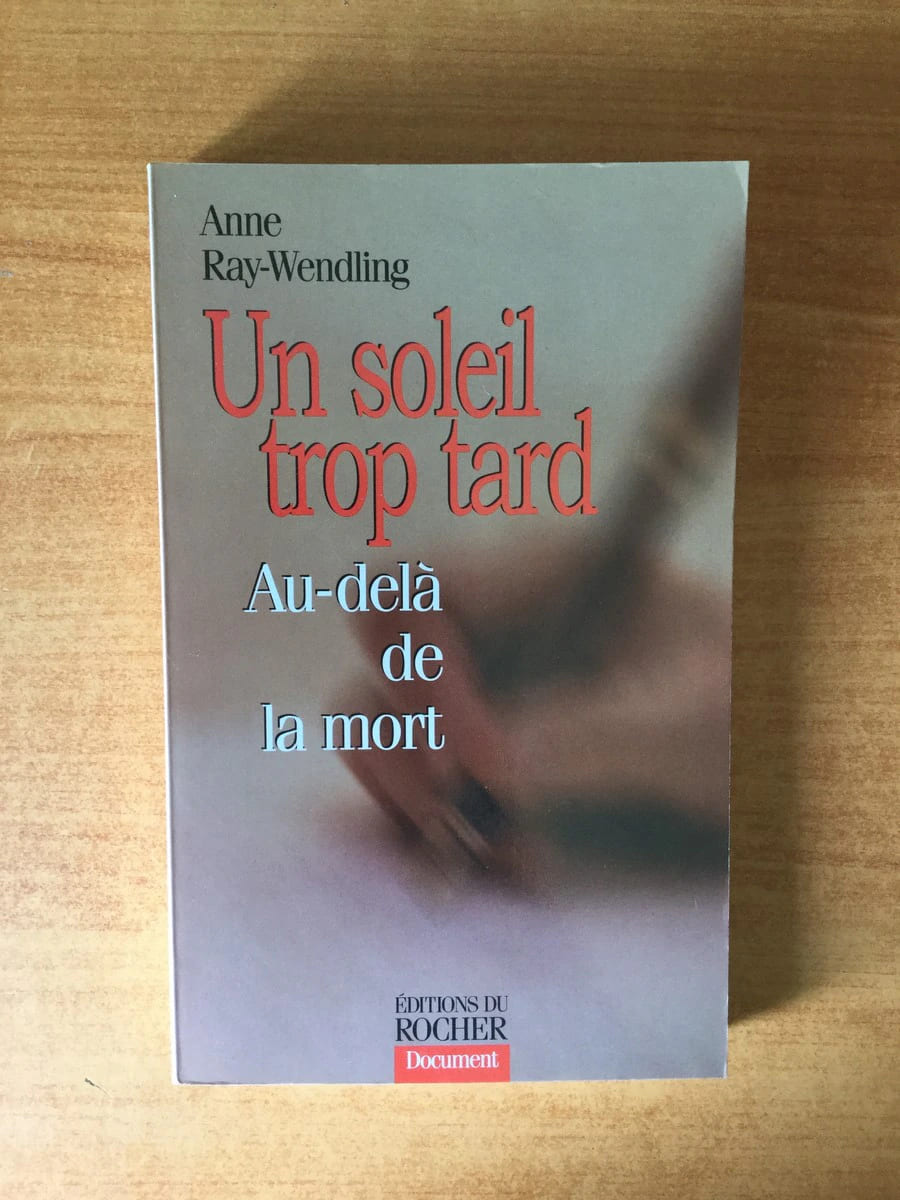
Best.-Nr. 60241Editions du Rocher 1999 livre récit 22,5*13,5 214 pages