MAC ORLAN (Pierre).Livre Rare Book
7.707 resultados
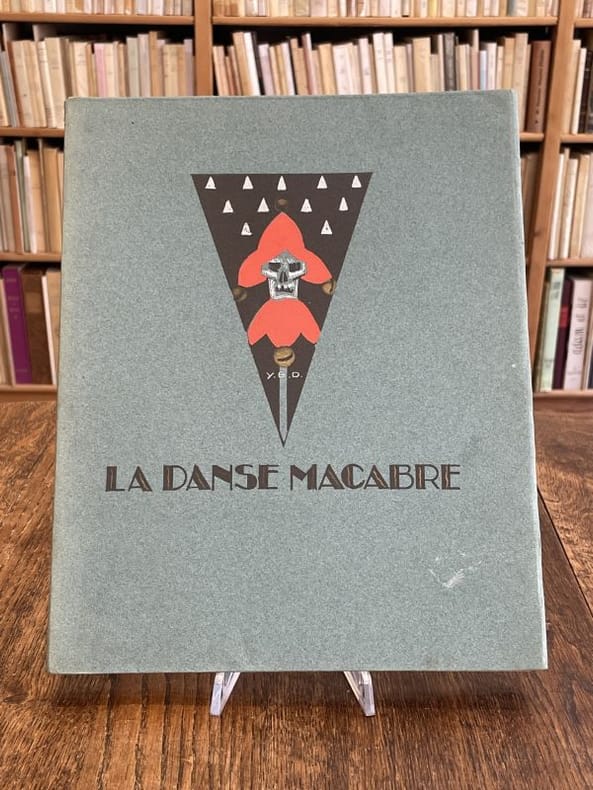
1927ref. 123017Paris Simon Kra 1927 1 vol. broché in-4, broché, couverture illustrée rempliée, non coupé, non paginé (44 ff.). Edition originale de cette danse macabre des années folles illustrée de 21 pochoirs par Yan B. Dyl. Tirage limité à 325 exemplaires, celui-ci numéroté sur vélin. Quelques rares et pales rousseurs, mais bel exemplaire de ce bel illustré "Art déco".
1777In-8 p. (mm. 207x169), cartonato rustico coevo (dorso restaur.), pp. (12),LXII, fregio tipografico xilografato al frontespizio. "Prima edizione", dedicata dall’A. al Barone Giuseppe De Sperges e Palenz (Cavaliere dell’Insigne Reale Ordine di Santo Stefano d’Ungheria, etc.). Trattato suddiviso in 16 paragrafi che contengono: “Della necessità, del fine, e della misura delle Pene in generale - Di alcune Nazioni, le quali non hanno dato la Pena di Morte - Pretesa contradizione della Pena di Morte - Se la Religione diminuisca l’impressione della Pena di Morte - Incovenienti della troppo grande estensione della Pena di Morte - Delle leggi, le quali decretano la Pena di Morte contro il Furto, ecc.”. “Il milanese Paolo Vergani (1750-1821) approfondì gli studi in storia e diritto canonico divenendo prelato. Si formò nell’ambiente intellettuale e culturale milanese dei fratelli Pietro e Alessandro Verri, oltre che di Cesare Beccaria, dal quale successivamente in parte prese le distanze. D’impronta moderata e illuminista, nel 1777 pubblicò con l’editore Malatesta "Della pena di morte", in cui si poneva l’obiettivo di elaborare una sorta di difesa del sistema criminale allora vigente, nella convinzione dell’ineluttabilità della pena di morte. La sua posizione oscillava, tuttavia, tra la necessità che la pena di morte venisse inflitta esclusivamente nei casi di maggiore gravità, in presenza di prove certe, e l’effetto intimidatorio insito nella stessa per la repressione dei reati. Anche per Vergani le leggi penali dovevano avere come fine l’utilità sociale ma, diversamente da Beccaria, sosteneva quanto le disuguaglianze delle condizioni sociali potessero giustificarne l’inflizione.. Ricevette per quest’opera il plauso su riviste come il “Journal encyclopédique”. Così Diz. Biograf. Ital., vol. 98. Fresco esemplare ben conservato, con bell’ex-libris al risguardo.
1935ref. 32680New York: Dell Publishing Co. Inc. 1935. Mild tanning to text paper several tiny edge tears to front cover clear tape to upper right front corner/spine right edge likely trimmed a bright nearly fine copy. 32680. Octavo single issue cover by Rudolph Zirm pictorial wrappers. Pulp magazine. Series character first appeared in All-Detective Magazine. "12 Must Die" by Harold Ward writing as "Zorro." Reference: Tymn and Ashley eds Science Fiction Fantasy and Weird Fiction Magazines pp. 186-87. Dell Publishing Co., Inc. unknown
1786ref. 4439France 1786. Hand-colored etched folding paper fan printed on the recto of two joined sheets backed in plain paper mounted on 15 later plain wooden sticks the open leaf measuring approx. 112 x 460 mm. total fan height 260 mm. The etching shows two couples and a small dog and table with wine carafe and glass flanking a female figure in white Grecian robes and a green wreath holding in one hand a heart at her breast and with the other hand ceremoniously setting alight a bundle of wood a fagot on a small pedestal or altar above which is the wreathed inscription Institution des fagotiers a auteuil le 2 avril 1786 / On prete serment sur un fagot de pratiquer toute sa vie cinq vertus : cordial franchise amitié générosité obeisance sic et tendresse; at top a star with the initials T L A and a banner lettered Vertus des fagotiers surmounted by the caption Ronde joyeuse des fagotiers/ Air: c’est la petite Theresse sic; on either side of this scene are four verses within two green-outlined oval cartouches within stenciled blue and yellow decorative border. Some wear and slight splitting along a few folds a couple of small tears at mounts. A mildly licentious pre-Revolutionary printed fan possibly commemorating a real event a “festival of the wood-gatherers” fagotiers held in Auteuil on April 2 1786 but of which there appears to be no historical record. Rather than a guild the fagotiers may have been a local association or club. The symbolism of the image and verses seems to be along the lines of Carpe diem carnally for death is around the corner — heavy sentiments for a feather-light fan. One of the men is gesturing toward his partner’s crotch and the verses on either side of the central scene are dotted with sexual innuendo. The first stanza “Let us sing of the burning fagot a bundle of small wood lit by friendship / he who backs away from it knows her i.e. friendship only half-way / without her life is nothing / with her one is deified” could be understood as innocuous but the second stanza celebrates the joys of Déduit an archaic term for the pleasures of love or coïtus. Stanza three brings in Death in the form of Charon: “amiable fellow let us sing his good humor his boat may lead to the devil but his spirit leads to happiness / with his worthy ardor the fire burns in our hearts.” The last stanza declares that the “august fagotine law” allows us to include women we need not hide everyone kiss your partner etc. I locate one other example of this fan held by the Musée Carnavelet in Paris. It is digitized on their website with the description “The Genie of Friendship lights the pyre on which the couples will take the oath of friendship.” The stenciled border of our copy differs from that of the Carnavelet example which is in pink; here it is in two colors and includes two birds perched on branches. unknown
1786ref. 4439France 1786. Hand-colored etched folding paper fan printed on the recto of two joined sheets backed in plain paper mounted on 15 later plain wooden sticks the open leaf measuring approx. 112 x 460 mm. total fan height 260 mm. The etching shows two couples and a small dog and table with wine carafe and glass flanking a female figure in white Grecian robes and a green wreath holding in one hand a heart at her breast and with the other hand ceremoniously setting alight a bundle of wood a fagot on a small pedestal or altar above which is the wreathed inscription Institution des fagotiers a auteuil le 2 avril 1786 / On prete serment sur un fagot de pratiquer toute sa vie cinq vertus : cordial franchise amitié générosité obeisance sic et tendresse; at top a star with the initials T L A and a banner lettered Vertus des fagotiers surmounted by the caption Ronde joyeuse des fagotiers/ Air: c’est la petite Theresse sic; on either side of this scene are four verses within two green-outlined oval cartouches within stenciled blue and yellow decorative border. Some wear and slight splitting along a few folds a couple of small tears at mounts. A mildly licentious pre-Revolutionary printed fan possibly commemorating a real event a “festival of the wood-gatherers” fagotiers held in Auteuil on April 2 1786 but of which there appears to be no historical record. Rather than a guild the fagotiers may have been a local association or club. The symbolism of the image and verses seems to be along the lines of Carpe diem carnally for death is around the corner — heavy sentiments for a feather-light fan. One of the men is gesturing toward his partner’s crotch and the verses on either side of the central scene are dotted with sexual innuendo. The first stanza “Let us sing of the burning fagot a bundle of small wood lit by friendship / he who backs away from it knows her i.e. friendship only half-way / without her life is nothing / with her one is deified” could be understood as innocuous but the second stanza celebrates the joys of Déduit an archaic term for the pleasures of love or coïtus. Stanza three brings in Death in the form of Charon: “amiable fellow let us sing his good humor his boat may lead to the devil but his spirit leads to happiness / with his worthy ardor the fire burns in our hearts.” The last stanza declares that the “august fagotine law” allows us to include women we need not hide everyone kiss your partner etc. I locate one other example of this fan held by the Musée Carnavelet in Paris. It is digitized on their website with the description “The Genie of Friendship lights the pyre on which the couples will take the oath of friendship.” The stenciled border of our copy differs from that of the Carnavelet example which is in pink; here it is in two colors and includes two birds perched on branches. unknown books
1955ref. 009647Paris (Gretry Wols) 1955 En feuilles, sous chemise cartonnée bleue éditeur.
1724ref. 000220Paris Imprimerie d'Antoine Urbain Coustelier 1724
2009ref. C86916Caja De Ahorros De La Inmaculada. As New. Hardcover. FREE UPGRADE to Courier/Priority Shipping Upon Request - IN STOCK AND IMMEDIATELY AVAILABLE FOR SHIPMENT - Flawless copy brand new pristine never opened -- INCLUDES CD-ROM. Text in Spanish. 446 pages with many illustrations. Catalogue Raisonne Catalog Raisonné Complete Works Catalogo Razonado Obra Completa Raisonnee -- with a bonus offer-- - May be EITHER: out of print OOP and extremely rare in this pristine condition; signed by author or contributor; or a first or special edition; inquire for details . 2009. 849686927X . Caja De Ahorros De La Inmaculada hardcover
1930ref. 1180Paris, Editions EOS, 1930 ; in-4 en feuillets, couverture rempliée rouge-brique, sous chemise cartonnée à larges rabats et lacets de soie de même couleur et illustrée d’un grand bois gravé bistre, dos en percaline bistre ; (4) feuillets, 88 pages, (4) feuillets ; 20 bois gravés en couleurs dont dix hors-texte, six vignettes et culs-de-lampe et un grand bois illustrant l’étui et la couverture.
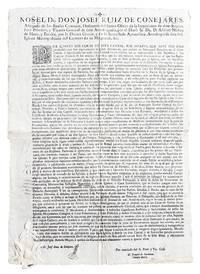
1774ref. 6518Mexico 1774. Very good. Broadside 23.5 x 16.5 inches. Untrimmed. Printed on two joined sheets. Previously folded. Contemporary manuscript docketing on blank verso. Minor edge wear and scattered faint foxing. A rare ecclesiastical edict addressing the burial of deceased infants issued by the Archdiocese of Mexico on March 15 1774. The broadside responds to complaints from parish priests that numerous baptized children were being buried without notification to their parishes depriving the churches of both jurisdictional oversight and the burial fees set by the ecclesiastical tariff. The document sheds light on the social realities of infant mortality and poverty in eighteenth-century Mexico City. It notes that many families were unable to afford burial expenses resulting in unrecorded deaths and in some cases the abandonment of children's bodies at the doors of churches. Particularly noteworthy is its condemnation of the custom of dressing deceased children as angels clerics bishops or cardinals and displaying them publicly before burial. The edict denounces these practices as abuses and orders that all burials whether of children or adults be conducted only with the knowledge and authorization of the proper parish priest. The present copy bears the manuscript rubrics of Josef Ruiz de Conejares Vicar General of the Archdiocese and Joaquín de Sasturain Chief Notary and the complete wafer seal of Archbishop Alonso Núñez de Haro. unknown
1774ref. 6518Mexico 1774. Very good. Broadside 23.5 x 16.5 inches. Untrimmed. Printed on two joined sheets. Previously folded. Contemporary manuscript docketing on blank verso. Minor edge wear and scattered faint foxing. A rare ecclesiastical edict addressing the burial of deceased infants issued by the Archdiocese of Mexico on March 15 1774. The broadside responds to complaints from parish priests that numerous baptized children were being buried without notification to their parishes depriving the churches of both jurisdictional oversight and the burial fees set by the ecclesiastical tariff. The document sheds light on the social realities of infant mortality and poverty in eighteenth-century Mexico City. It notes that many families were unable to afford burial expenses resulting in unrecorded deaths and in some cases the abandonment of children's bodies at the doors of churches. Particularly noteworthy is its condemnation of the custom of dressing deceased children as angels clerics bishops or cardinals and displaying them publicly before burial. The edict denounces these practices as abuses and orders that all burials whether of children or adults be conducted only with the knowledge and authorization of the proper parish priest. The present copy bears the manuscript rubrics of Josef Ruiz de Conejares Vicar General of the Archdiocese and Joaquín de Sasturain Chief Notary and the complete wafer seal of Archbishop Alonso Núñez de Haro. unknown books
1936ref. 015728Paris EDITION ORIGINALE. Tirage à 1012 exemplaires numérotés. Un des 35 sur Hollande van Gelder mis dans le commerce, second papier après vingt-cinq Japon . Bel exemplaire relié à l'époque : demi-maroquin noir à coins et filets or, dos à nerfs et pièce de titre rouge et lettre or, tête dorée, couverture et dos conservés. 1936 fort in-8 Broché Edition originale
2009ref. 86916Caja De Ahorros De La Inmaculada. New. 2009. Hardcover. 849686927X . FREE UPGRADE to Courier/Priority Shipping Upon Request - IN STOCK AND IMMEDIATELY AVAILABLE FOR SHIPMENT - Flawless copy brand new pristine never opened -- INCLUDES CD-ROM. Text in Spanish. 446 pages with many illustrations. Catalogue Raisonne Catalog Raisonné Complete Works Catalogo Razonado Obra Completa Raisonnee -- with a bonus offer . Caja De Ahorros De La Inmaculada hardcover
1615ref. 002850Paris, Chez Toussainct du Bray, 1615
ref. 006479Paris C. L. F. Panckoucke 0 6 volumes in-8 Demi-veau tabac Edition originale
1783ref. 002461Paris, Bastien, 1783
1902[20], 644 pages. Index. Twenty-six black and white photographic plates. Leather binding. "Comprising a history of Egypt, with a comprehensive and authentic account of the antiquity of masonry resulting from many years of personal investigation and exhaustive research in India, Persia, Syria and the Valley of the Nile." - title page. After first receiving the Light in India, the author was moved to "investigate, to the fullest extent, the meaning and purport of the numerous hieroglyphic inscriptions, symbols and characters found upon the ancient tombs and temples, so that the Masonic Fraternity might understand, appreciate and apply the teachings of the hierophants and sages of bygone days." - Preface. Chapters: Alexandria - the Antiquity of Masonry; Ruined Temples - Masonry and Masonic Symbols; Ancient Cities - Soirian Myth - Karma; the Nile - Origin of the Name Free Mason - Scottish Rite Philosophy; Ancient Mysteries - Scottish Rite philosophy; Suez Canal - The Druses, Their Manners and Customs; Agriculture - Irrigation - Lotus - Papyrus; The Supreme Architect of the Universe; Mosques - Tombs - Massacre of Mamelukes - Heliopolis; Esoteric Teaching of the Scottish Rite - Brain and Thought; Pyramids - Sphinx - Tombs; Solomon - Death of Hiram - Cross - Swastica; Mummification - Transmigration - Re-incarnation; Sixteen Saviours - Lost Knowledge; The Golden Fleece - Roman Eagle - Masonic Apron - What it Teaches; Pyramids of Sakkarah - Lisht - Medum - The Fayum - Labyrinth; Sun Worship - Zodiac - Masonic Allegories; A Voyage up the Nile - Description of Tombs and Temples - Pro Doric Columns; Ineffable degrees - Thoughts on Ecclesiastes - I.N.R.I. - Voyaging up the Nile - examining Tombs and Temples - Paintings - Sculptures; Masonic teachings - Hindu beggar - Roman Catholicism; Thebes - Colossi - Der-El-Bahari - Luxor - Karnak; Ceremonies - Initiation - Blue Lodge - Transmigration - Mystery Language; The Gawazee - exploring Temples and tombs - Philae and its ruins - Nubia; Jewish Traditions and customs - Cable tow - Ceremonies of ancient Initiation - book of the Law; Circumsision - upon what the Ancient Craftsmen were obligated - the lost word. All edges gilt. Protected frontis portrait of author. Ornately embossed boards. Raised bands to spine. Partially rubbed gilt lettering and decoration upon back strip. Marbled endpapers. Hinges intact internally, open or opening externally. Front board partially detached. Somewhat above-average wear to boards. Unmarked. A worthy original copy of this monumental work. 12" x 9.5" x 2.5". 11 pounds. Book
ref. 127885aafBasel, (u.a.) Getruckt bey - Jacob Werenfels - J. Bertsche - J.-J. Decker - G. Decker - J.R Genath - J.H. Meyer / Auch (n° XVI:) Winterthur J. R, Meyers / (XXXIX) Frankfurt, Jonae Rosen 1617 / (n° XL, Tauffprädigt) Heidelberg, J. Lancellot, 1618, 28 S. + 2 Bl., um 1655-68, in-4to, Vorgebunden 3 Bl. mit hs. ‘Index Textum - Index Authorum - Nomina Defunctorum’ + 2 Bl. leer + 879 Bl. (= 1758 S.) + 2 Bl. mit handschr. Notizen, teils etwas gebräunt u. fleckig, hs. auf Spiegel ‘Tomus XX’ & ‘Ex Bibliotheca Johann Leonhardi Schopferi, V.D.M. collectus Sangalli Ao 1668’, Prgt. d. Zt. (Bestossen, gebräunt u. fleckig, Kanten tls. etw. beschabt).
ref. 059-Ao.J. Kupferstich, 1614, nach Barthel Beham, auf Bütten. 5,7:8,2 cm. Im rechten Rand gering flecking. Literatur: Hollstein 559. Ganz ausgezeichneter und klarer Abdruck mit leichtem Plattenton und mit Rand um die Plattenkante.
1662In-4to piccolo, (36), 121, (1) pp., 10 tavole. Completo delle 56 silografie nel testo (molte delle quali a piena pagina) e delle 10 tavole incise in rame fuori testo, una delle quali (cuore) con volvelle. Vitello coevo, dorso ben restaurato.
1784ref. 3603426London: Sold in Spur Street Leicester Square 1784. Small crease in lower corner in good condition. Oval engraving 350 x 265 mm. image size; mounted. Rare variant of the famous engraving of Cook's death showing as the caption notes "Part of the Original Plate after Webber" and presumably quite literally printed from an oval cut from the fuller engraved copper. This is only very rarely seen: the single example noted by Joppien and Smith was in the British Museum. The full-size engraving was first issued early in 1784. Based on the oil painting executed by Webber soon after he returned to London in 1780 the figures were engraved by Francesco Bartolozzi and the landscape by William Byrne. Quickly becoming the most famous of all eighteenth-century depictions of the massacre the view appeared at about the same time as the official third voyage account was published. This was no coincidence: although lavishly illustrated by Webber the official account did not include any depiction of the most famous scene of the entire voyage the death of Captain Cook. As a result the iconic engraving is often seen bound into extra-illustrated editions of the third voyage account. Reflecting the general opinion prevailing in published accounts of the voyage the original image as Joppien and Smith argue appeared to show Cook as 'an innocent victim killed in the act of pleading for peace'. This is here heightened by the changed composition as the oval shape dictates a radically different impact to that of the original engraving omitting the dramatic conflict between the British sailors and the Hawaiians and thus implying a scene in which Cook his arm raised in supplication to his men offstage stands alone and is overwhelmed by a seething crowd. The only copy noted among Australian holdings appears to be the heavily clipped copy in the National Library of Australia part of the Nan Kivell collection. . Sold in Spur Street, Leicester Square unknown
1728ref. 17444Troyes 1728. 4to. Jean-Antoine Garnier 19th-century half cloth. With 60 woodcuts in text including 3 repeats most of them half-page. 76 pp. 18th-century French chapbook edition of one of the most popular picture books in Europe since the Middle Ages. It depicts two Dances of Death: first the Dance of Death of men of all ranks and professions followed by the Dance of Death of women of various ranks and stations in life. These Dances of Death were meant to remind people that everybody was mortal however powerful in life and to warn people to be prepared to die at any moment.Browned throughout some occasional foxing and a small piece torn from the margin of page 19 not affecting text or illustration. Overall a good copy.l Oberlé La Bibl. Bleue 1; Nisard II p. 284: "Le plus beau des livres de la Bibliothèque Bleue". hardcover
ref. 10850Wien / Baden bei Wien, Gesellschaft für vervielfältigende Kunst / Verlag Rudolf Rohrer, 1889 bis 1938. 39 volumes (36 in-folio et 3 in-4). Les 5 premiers pleine percaline brune, titre et décors dorés et noirs aux dos, premiers plats richement décorés (doré, noir et à froid), plats biseautés, tranches dorées pour le volume 5. Du 6e au 36e, pleine toile grège d'éditeur, titre et décors rouges jusqu'au 23e, vert pour les suivants, tranches marbrées ou teintées. Les 3 volumes in-4 sont reliés pleine percaline bordeaux, titre doré aux dos, têtes dorées (plats un peu tachés). La toile de certains volumes est un peu poussiéreuse. Intérieur très frais, quelques rousseurs extrêmement rares, 1 planche et 1 cahier déboîtés. Les années 1909, 1917 et 1918 non reliées mais sous cartonnage toilé normal, 1917 en 3 numéros / 2 cahiers (sur 4 / 3), 1918 en 3 numéros / 2 cahiers (sur 4 / 3).
1696ref. 5532Frankfurt: Heirs of Matthäus Merian 1696. SECOND EDITION THUS. Fifth edition overall. This edition is based on Merian's own 1649 edition which was the first to include these revised images and a number of the supplementary texts. Hardcover. Fine. Bound in original tanned sheepskin light surface wear corners bumped lower edge of rear board abraded faithfully and almost imperceptibly rebacked the new spine richly tooled in gold and with a red morocco label. Internally an attractive copy with minor soiling and discoloration to margins of the title page scattered mild soiling in the text mainly marginal a few small rust spots and light blemishes a discreet contemporary repair to one blank margin a small tear in the margin no loss of leaf G1 a clean tear barely entering the image no loss on leaf M1; Memento Mori plate lightly soiled. There is a curious feature in this copy: there is light offsetting -from the text of different book- on one side of the 3 sheets that made up gatherings H S and Cc probably the result of those sheets having been laid upon sheets of the other book while still damp. With the collector's stamp of Johann Carl Conrad Oelrichs 1722-1798 on the title verso. A series of engravings with accompanying text by Matthäus Merian the Elder depicting the Grossbasler Totentanz the 60-meter long Dance of Death mural painted circa 1439 which adorned the inner face of the cemetery wall adjoining the Dominican convent and Predigerkirche in Basel. It was along with the Danse Macabre murals painted in the arcades of the Paris Cimetière des Innocents one of the two earliest painted Dance of Death fresco cycles. The Basel frescoes were lost in 1805 when the wall was destroyed. Only 19 fragments survive. The murals depicted a communal dance between cadavers and people from all strata of society from pope to peasant including members of various trades and professions from physician to fool. The list of those who join -unwillingly- their macabre dance masters in this dance to the grave are in order of appearance: pope emperor empress king queen cardinal bishop duke duchess count abbot knight lawyer councilman church canon physician nobleman noblewoman merchant abbess lame man hermit young man usurer maiden minstrel herald mayor executioner fool peddler blind man Jew heathens a man and a woman cook peasant painter and a mother holding her child. The dance is preceded by the images of a preacher delivering a sermon and a group of skeletons emerging from a charnel house playing instruments this image was probably added over the actual ossuary in the cloister during the restoration of 1616. "The figures of Death were depicted in all kinds of contortions suggesting movement and presumably intended to evoke an association between the represented action and the variety of dance being performed particularly round dances Reigen popular at that time. This is all the more probable because the introductory part of the dance of death which did not survive quite likely depicted figures of Death making music."Dreier Der Totentanz p. 47 "Beneath the pictures was a band containing addresses by Death and replies by the individual representatives of the estates each of four lines in Basel or eight lines in Paris. These verses were written in the local idiom generally in iambic rhyming couplets or alternating rhyme. In the verses the encounter between Death and the human representative was cast as a dialogue in which Death reminded human beings that in the face of mortality everything worldly was transitory and vain. Following Erwin Koller's outstanding philological investigations. it may be assumed that the blockbook produced in Basel around 1460 now preserved in Heidelberg University Library under the shelfmark cpg 438 is a contemporary virtually identical transcription of the original Basel text."Dreier p. 48 Merian made his engravings based on his drawings of the Basel frescoes in 1616. He then either gave or sold his engravings to his nephew Johann Jakob Merian. The first two editions appeared in 1621 one of them printed by Johann Schröter the other by Matthäus Mieg who re-published the book in 1625. The artist himself reworked the plates in 1649 adding atmospheric elements and background details and printed them with a greatly expanded text. This 1696 edition by Merian's heirs reprints the images and text of that edition. For the 1649 expanded edition Merian added a 10-page history of the Basel mural the now-iconic Memento Mori engraving an hourglass with a skull a burning candle and wilting flowers the Adam and Eve engraving and the dual-portrait engraving which when viewed right side up shows a bearded man and when turned upside down show a death's head. Merian also added as announced on the title 42 pages of "Admonitions concerning Human Mortality the Fleeting Nature of This Present Life and the Vanity of All Earthly Things; concerning the Burial and Resurrection of the Dead; concerning the Last Judgment; concerning Hell and the Damnation of the Godless; and concerning Eternal Life.". Heirs of Matthäus Merian hardcover
1696ref. 5532Frankfurt: Heirs of Matthäus Merian 1696. SECOND EDITION THUS. Fifth edition overall. This edition is based on Merian's own 1649 edition which was the first to include these revised images and a number of the supplementary texts. Hardcover. Fine. Bound in original tanned sheepskin light surface wear corners bumped lower edge of rear board abraded faithfully and almost imperceptibly rebacked the new spine richly tooled in gold and with a red morocco label. Internally an attractive copy with minor soiling and discoloration to margins of the title page scattered mild soiling in the text mainly marginal a few small rust spots and light blemishes a discreet contemporary repair to one blank margin a small tear in the margin no loss of leaf G1 a clean tear barely entering the image no loss on leaf M1; Memento Mori plate lightly soiled. There is a curious feature in this copy: there is light offsetting -from the text of different book- on one side of the 3 sheets that made up gatherings H S and Cc probably the result of those sheets having been laid upon sheets of the other book while still damp. With the collector's stamp of Johann Carl Conrad Oelrichs 1722-1798 on the title verso. A series of engravings with accompanying text by Matthäus Merian the Elder depicting the Grossbasler Totentanz the 60-meter long Dance of Death mural painted circa 1439 which adorned the inner face of the cemetery wall adjoining the Dominican convent and Predigerkirche in Basel. It was along with the Danse Macabre murals painted in the arcades of the Paris Cimetière des Innocents one of the two earliest painted Dance of Death fresco cycles. The Basel frescoes were lost in 1805 when the wall was destroyed. Only 19 fragments survive. The murals depicted a communal dance between cadavers and people from all strata of society from pope to peasant including members of various trades and professions from physician to fool. The list of those who join -unwillingly- their macabre dance masters in this dance to the grave are in order of appearance: pope emperor empress king queen cardinal bishop duke duchess count abbot knight lawyer councilman church canon physician nobleman noblewoman merchant abbess lame man hermit young man usurer maiden minstrel herald mayor executioner fool peddler blind man Jew heathens a man and a woman cook peasant painter and a mother holding her child. The dance is preceded by the images of a preacher delivering a sermon and a group of skeletons emerging from a charnel house playing instruments this image was probably added over the actual ossuary in the cloister during the restoration of 1616. "The figures of Death were depicted in all kinds of contortions suggesting movement and presumably intended to evoke an association between the represented action and the variety of dance being performed particularly round dances Reigen popular at that time. This is all the more probable because the introductory part of the dance of death which did not survive quite likely depicted figures of Death making music."Dreier Der Totentanz p. 47 "Beneath the pictures was a band containing addresses by Death and replies by the individual representatives of the estates each of four lines in Basel or eight lines in Paris. These verses were written in the local idiom generally in iambic rhyming couplets or alternating rhyme. In the verses the encounter between Death and the human representative was cast as a dialogue in which Death reminded human beings that in the face of mortality everything worldly was transitory and vain. Following Erwin Koller's outstanding philological investigations. it may be assumed that the blockbook produced in Basel around 1460 now preserved in Heidelberg University Library under the shelfmark cpg 438 is a contemporary virtually identical transcription of the original Basel text."Dreier p. 48 Merian made his engravings based on his drawings of the Basel frescoes in 1616. He then either gave or sold his engravings to his nephew Johann Jakob Merian. The first two editions appeared in 1621 one of them printed by Johann Schröter the other by Matthäus Mieg who re-published the book in 1625. The artist himself reworked the plates in 1649 adding atmospheric elements and background details and printed them with a greatly expanded text. This 1696 edition by Merian's heirs reprints the images and text of that edition. For the 1649 expanded edition Merian added a 10-page history of the Basel mural the now-iconic Memento Mori engraving an hourglass with a skull a burning candle and wilting flowers the Adam and Eve engraving and the dual-portrait engraving which when viewed right side up shows a bearded man and when turned upside down show a death's head. Merian also added as announced on the title 42 pages of "Admonitions concerning Human Mortality the Fleeting Nature of This Present Life and the Vanity of All Earthly Things; concerning the Burial and Resurrection of the Dead; concerning the Last Judgment; concerning Hell and the Damnation of the Godless; and concerning Eternal Life.". Heirs of Matthäus Merian hardcover books