PLATOABAA
7.705 resultados
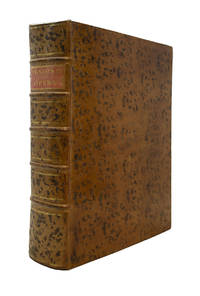
1491ref. 68663Venice: Vernardinus de Choris de Cremona and Simon de Luere for Andreas Torresanus 1491. Venice: Bernardinus de Choris and Simon de Luere for Andreas Torresanus August 13 1491. And: FICINO Marsilio. Platonica theologia de immortalitate animorum. Venice: 13 August 1491. Second edition of the works of Plato. Folio 11 7/8 x 8 inches; 301 x 206 mm. 4 444 leaves. Printed in Gothic type in double columns. With beautifully illuminated initials and border to the first text leaf. Numerous illuminated 7 8 9 and 10-line initials heightened in gilt with blue red and green backgrounds. The initial letter will extend beyond the letter with illumination 5-7 lines both up and down. Additional 3 4 5 and 7-line initials in red blue or gold. The first leaf of text a1 with two large illuminated initials and a full illuminated border with red green blue and gilt scrolls floral motifs and a shield surrounded by a wreath. This is the first edition to include Ficino's great work Platonica Theologia which was not included in the 1484 edition as Ficino first published his work in 1482. Marsilio Ficino's Latin translation. Second editions of Ficino's translation of Plato's work first published 1484 as well as his chief philosophical work the Platonica theologia in which he attempts to illustrate the harmony between Platonism and Christian theology first published 1482 and this edition is the first to collect both works together in one. With only one complete copy of the 1484 first edition at auction since the the copy that came up in the 1940s. This copy sold in 2021 for $1026000. This present edition is realistically the first obtainable edition of Plato's works. 18th-century acid treated calf. Spine with orange morocco spine label lettered in gilt. All edges dyed yellow and speckled red. Newer endpapers. A small amount of old ink neat marginalia. A small repaired hole to the title-page not affecting text just the top edge of some illumination on verso. A very clean and beautiful copy with lovely illumination. Overall a very good copy of the second edition and first obtainable edition of Plato's Opera. Plato was the first of the ancient philosophers to appear in print and for nearly thirty years Ficino's translation was the only published version available until the appearance of the Greek 'editio princeps' in 1513. Ficino's translation took twenty years to complete and during this time he was assisted by members of the Platonic Academy founded by his patron Cosimo de Medici whose ambition was to revive the study of Platonic philosophy. "Amidst a great diversity both of subject and treatment the dialogues are pervaded by two dominant impulses: a love of truth and a passion for human improvement. While nowhere is a definite system laid down it has been truly said that the germs of all ideas can be found in Plato." "Printing and the Mind of Man" # 27 for 1484 edition. BMC V 465 IB. 23432; IGI 7861; PolainB 3190; Goff P-772; PMM 27. HBS 68663. $75000. Vernardinus de Choris, de Cremona, and Simon de Luere, for Andreas Torresanus unknown books
1491ref. 68663Venice: Vernardinus de Choris de Cremona and Simon de Luere for Andreas Torresanus 1491. Venice: Bernardinus de Choris and Simon de Luere for Andreas Torresanus August 13 1491. And: FICINO Marsilio. Platonica theologia de immortalitate animorum. Venice: 13 August 1491. Second edition of the works of Plato. Folio 11 7/8 x 8 inches; 301 x 206 mm. 4 444 leaves. Printed in Gothic type in double columns. With beautifully illuminated initials and border to the first text leaf. Numerous illuminated 7 8 9 and 10-line initials heightened in gilt with blue red and green backgrounds. The initial letter will extend beyond the letter with illumination 5-7 lines both up and down. Additional 3 4 5 and 7-line initials in red blue or gold. The first leaf of text a1 with two large illuminated initials and a full illuminated border with red green blue and gilt scrolls floral motifs and a shield surrounded by a wreath. This is the first edition to include Ficino's great work Platonica Theologia which was not included in the 1484 edition as Ficino first published his work in 1482. Marsilio Ficino's Latin translation. Second editions of Ficino's translation of Plato's work first published 1484 as well as his chief philosophical work the Platonica theologia in which he attempts to illustrate the harmony between Platonism and Christian theology first published 1482 and this edition is the first to collect both works together in one. With only one complete copy of the 1484 first edition at auction since the the copy that came up in the 1940s. This copy sold in 2021 for $1026000. This present edition is realistically the first obtainable edition of Plato's works. 18th-century acid treated calf. Spine with orange morocco spine label lettered in gilt. All edges dyed yellow and speckled red. Newer endpapers. A small amount of old ink neat marginalia. A small repaired hole to the title-page not affecting text just the top edge of some illumination on verso. A very clean and beautiful copy with lovely illumination. Overall a very good copy of the second edition and first obtainable edition of Plato's Opera. Plato was the first of the ancient philosophers to appear in print and for nearly thirty years Ficino's translation was the only published version available until the appearance of the Greek 'editio princeps' in 1513. Ficino's translation took twenty years to complete and during this time he was assisted by members of the Platonic Academy founded by his patron Cosimo de Medici whose ambition was to revive the study of Platonic philosophy. "Amidst a great diversity both of subject and treatment the dialogues are pervaded by two dominant impulses: a love of truth and a passion for human improvement. While nowhere is a definite system laid down it has been truly said that the germs of all ideas can be found in Plato." "Printing and the Mind of Man" # 27 for 1484 edition. BMC V 465 IB. 23432; IGI 7861; PolainB 3190; Goff P-772; PMM 27. HBS 68663. $75000. Vernardinus de Choris, de Cremona, and Simon de Luere, for Andreas Torresanus unknown
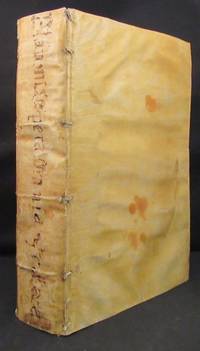
1513ref. 32134Venice: Aldus Manutius and Andreas Torresanus September 1513. The Editio Princeps the First Edition of the Works of Plato in Greek. Folio 312 x 194mm beautifully bound in its contemporary limp vellum binding with hand calligraphy to the spine panel yapp edges. 15 unnumbered leaves without leaf 16 blank; 502 pages without the final blank; 439 pages. Aldine anchor device Fletcher f4 to title-page and verso of the last leaf. A superb copy in excellent condition. Very rare thus in its original binding some leaves with very sophisticated very sympathetic expert re-margining at the bottom outside corners where loss occurred at some time. The restoration has been brilliantly accomplished and is nearly imperceptible. VERY RARE AND IMPORTANT. THE FIRST ALDINE EDITION OF PLATO. THE EDITIO PRINCEPS AND A UNIQUE AND IMPORTANT COPY. As Marsilio Ficino dedicated his Latin translation of Plato to Lorenzo de’ Medici so Manutius dedicates his Greek edition to the son of Lorenzo Giovanni who became Pope Leone X in march. Aldus places his hopes for the foundation of his Academy in the new pope as he says in the dedicatory epistle of his edition of Greek Orators published in the same year: “may you watch over us and take care of our mission which deserves the help and favours of the highest statesmen indeed may you Supreme Pontiff found this Academy as perpetual good for mankind in the city of Rome.” The Platonic Dialogues are preceded by the “Life” of Plato by Diogenes Laertius and followed by a Greek hymn by Marco Musuro publisher of the edition together with Manutius. In 1513 Manutius printed the Editio Princeps of Plato which he dedicated to Pope Leo X in a preface eloquently and earnestly comparing the miseries of warfare and the woes of Italy with the sublime and tranquil objects of the student's life.The printings of Plato done through the years 1484-1485 were issued in parts and the printing of 1491 was printed in book form please see mention in next paragraph. These editions were published and printed in the Latin language rather than in the Greek see the next paragraph for information on the printing and translation of Plato out of the original Greek manuscripts. In 1462 by order and gift of Cosimo de Medici and with support of the Academy the manuscript translations of Plato's philosophical writings.his Dialogues.were begun. They were concluded under the beneficence of Lorenzo the Magnificent. The translation which was completed in the 1470's contributed in great measure to the rediscovery of critical thinking and of the disciplines of Greek scholarship. Marcello Ficino had begun his translation under the patronage of Cosimo de Medici in 1463. The work was completed five years later and circulated in manuscript for several years before finally being printed in parts beginning in 1484. It wasn't until 1491 that an edition brought together for the first time the fundamental text of Plato with Ficino's PLATONICA THEOLOGIA the most important Renaissance interpretation of the great philosopher. In this groundbreaking work Ficino sets out to prove that a harmony can be found between Christian theology and Platonism. The conversion of these two modes of thought the classic and the medieval was instrumental in the formation of the modern European identity. The importance Ficino placed on this work even extended to the printing and he was not pleased with the first edition which contained 7 pages of corrigenda. In contrast Ficino was very pleased with the typographical correctness of the later 1491 edition and this printing in large measure comes with the most important of the textual corrections and emendations and changes. So it was not until 1513 when Aldus undertook the project that the "Works"or "Opera" of Plato the Omnia Platonis Opera was published in the original Greek language of its author. This printing by Aldus was the true first printing of the original writings of Plato in their original tongue. The printing of the Editio Princeps was one of the most important projects ever undertaken by Aldus and represents along with his printing of Aristotle's works the consummate offering of the greatest philosophers of all time. The importance of Aldo's success in bringing the original language of Plato to the reader is one of the most significant accomplishments of the Aldine Press. The leading publisher and printer of the Venetian High Renaissance Aldus set up a definite scheme of book design produced the first italic type introduced small and handy pocket editions of the classics and applied several innovations in binding technique and design for use on a broad scheme. The use of the Greek fonts used in the printing of the text by Aldus is appreciated as one of the singular greatest accomplishments in all of printing history. It was Manutius' ambition to secure the literature of Greece from further loss by committing its chief masterpieces to type. The preface to his editions were written in Greek. Greeks from Crete collated manuscripts read proofs and gave models of calligraphy for casts of Greek type. Not counting the craftsmen employed in purely manual labour Manutius entertained as many as thirty of these Greek assistants in his family. "The entire western philosophical tradition has been described as a footnote to Plato but his importance was particularly felt in the Renaissance where his newly-rediscovered ideas percolated across intellectual communities and laid the groundwork for both the empiricism of the Enlightenment as well as a robust esoteric tradition. Only the Phaedo Meno and a paraphrase of the Timaeus were available to the Latin West for much of the Middle Ages until the groundbreaking Latin translation of the complete works by Marsilio Ficino. For this first Greek edition the great Cretan scholar Marcus Musurus edited the text working from high quality manuscripts belonging to Cardinal Bessarion. In the dedication Aldus sets out a vision for classical studies and the foundation of a Greek academy on Plato’s model; his letter is “one of the most comprehensive statements of the humanist position to be found outside Erasmus” Lowry. This edition also includes the Hellenistic paraphrase of the Timaeus and Diogenes Laertius’s life of Plato. Ahmanson-Murphy 114; Clemons and Fletcher 17; Renouard Alde 62:4; see Lowry The World of Aldus Manutius p.205; Wilson From Byzantium to Italy pp.151-2." Christies 12/2018 Firmin-Didot p. 342; Doniscotti-Orlandi n LXXVIII Laurenziana n 116; Marciana n 130; Legrand I 39; Adams P 1436; UCLA 97 - 1 97-2 Aldus Manutius and Andreas Torresanus hardcover
1484ref. ABC_50481Colophon: Florence: Laurentium Venetum i.e. the Sisters of the Convent of San Jacopo di Ripoli for Laurentius Francisci de Alopa 1484. Modern blind-tooled vellum in period style. Folio ca. 27.7 x 20.8 cm. Editio princeps of the first mathematical world model in philosophy. Platos Timaeus here with the Critias De legibus the Epistolae corrigenda and colophon survives in a substantial consecutive portion of the 1484-1485 Florentine Opera: 176 leaves comprising the complete parts III IV and V. What gives this section its singular force is the presence of the Timaeus the dialogue in which the structure of the cosmos is explained through number proportion geometry and ordered construction. This should not be overstated into modern science in the strict sense yet it is fully arguable that the text offers the earliest great model of nature as intelligible through formal relations and that this edition is the first printed witness to that claim.In that limited but important sense the book stands near the beginning of a long intellectual trajectory that still shapes the modern world: the effort to render complex phenomena explicable through abstraction structure and rule-governed relations. In that respect its underlying ambition still feels strikingly modern: to explain the visible world through abstract structures capable of ordering complexity. Plato grants mathematical form a privileged explanatory status in relation to the visible world; modern computational thinking likewise depends on formalisation modelling and the reduction of phenomena to structures that can be analysed and operated upon. The Critias continuing the Atlantis narrative announced in the Timaeus extends cosmology into political and moral history while the Laws Platos final dialogue turns to the architecture of legislation civic education and mixed government. In the present survival these final Platonic books are joined by the Epistolae and the corrigenda making the copy especially valuable as evidence for the closing structure and publication logic of the edition.Printed as part of the first collected edition of Platos dialogues issued in five sections and associated with the press of San Jacopo di Ripoli the first press known to employ women this copy also embodies a major event in Renaissance textual culture. Ficinos Latin translation produced under Medici patronage furnished Europe with the first complete Plato in a language accessible to the republic of letters decisively shaping philosophy natural speculation theology and political thought. This copy preserves telling signs of early reception. At the opening of the De legibus a contemporary humanistic note reads Ad laurentium medicem virum magnanimum. while an early hand has written at the lower margin Mars. Ficino in Tim. Ptol. The first leaf supplied from another copy and slightly shorter bears a 2.5 cm illuminated initial Q in red green and blue on a gold-ochre ground with further small initials and paragraph marks in red and blue differing from the remainder. Many surviving copies of the 1484-1485 Plato are incomplete a fact long connected with the editions sectional production and probable separate distribution. A consecutive and complete survival of parts III-V is therefore not merely a fragment but a materially eloquent witness to the first printed transmission of Platos mathematical cosmology and one of the decisive editorial enterprises of the Renaissance.Binding with minor abrasion and slight fading to the backstrip. Includes a circular owner's stamp reading "Walter Ashburner Florence" on leaves cum4v 2rum6v ll4r pp1r ss10v chi6v. 1. Small wormhole in the lower blank margin of about ten early leaves; a thin pale water stain along the upper margin of some initial leaves; occasional light blooms and marginal halos more noticeable in places. Further marginal worming from oo2 and towards the end; small old repair with a pasted patch peccetta affecting the lower margin on the final leaves. Generally very well preserved and clean. This copy preserves telling signs of early reception. At the opening of the De legibus a contemporary humanistic note reads Ad laurentium medicem virum magnanimum. while an early hand has written at the lower margin Mars. Ficino in Tim. Ptol. The first leaf supplied from another copy and slightly shorter bears a 2.5 cm illuminated initial Q in red green and blue on a gold-ochre ground with further small initials and paragraph marks in red and blue differing from the remainder.l ISTC ip00771000. IGI 7860. HC 13062. BMC VI 666. GW M33912. Kristeller The First Printed Edition of Platos Works and the Date of Its Publication 1484 in Studies in Renaissance Thought and Letters Rome 1993 138ff. Laurentium Venetum [i.e. the Sisters of the Convent of San Jacopo di Ripoli for Laurentius (Francisci) de Alopa], hardcover
ref. PHI803MLe Livre de Poche, 1967. In-16, broché, 187 pages. Ex-libris manuscrit. Très bon exemplaire