Collipp, Platon J (Ed)Biblio.com

6.077 Ergebnisse
1975Best.-Nr. HVD-57859-A-0Acton MA: Publishing Sciences Group. Very Good with no dust jacket. 1975. 1st Edition Unstated; No Printing Stated. Hardcover. 160 pages; b&w photographs. Minor shelf wear on the covers. Very Good condition otherwise. No other noteworthy defects. No markings. ; - Your satisfaction is our priority. We offer free returns and respond promptly to all inquiries. Your item will be carefully cushioned in bubble wrap and securely boxed. All orders ship on the same or next business day. Buy with confidence. . Publishing Sciences Group hardcover
Best.-Nr. 3487052253.Ghardcover. Good. Access codes and supplements are not guaranteed with used items. May be an ex-library book. hardcover
2017Best.-Nr. 67391Springer 2017. Hardcover. Very Good. 24 x 16.5 cm. Octavo. 315pp. Bound in glossy yellow boards. Top corner is bumped. Gerhard Gentzen is best known for his development of the proof systems of natural deduction and sequent calculus central in many areas of logic and computer science today. Another noteworthy achievement is his resolution of the embarrassing situation created by Gödel's incompleteness results especially the second one about the unprovability of consistency of elementary arithmetic. After these successes Gentzen dedicated the rest of his short life to the main problem of Hilbert's proof theory the question of the consistency of analysis. He was arrested in the summer of 1945 with other professors of the German University of Prague and died soon afterward of starvation in a prison cell. Attempts at locating his lost manuscripts failed at the time but several decades later two slim folders of shorthand notes were found. In this volume Jan von Plato gives an overview of Gentzen's life and scientific achievements based on detailed archival and systematic studies and essential for placing the translations of shorthand manuscripts that follow in the right setting. The materials in this book are singular in the way they show the birth and development of Gentzen's central ideas and results sometimes in a well-developed form and other times as flashes into the anatomy of the workings of a unique mind. Springer hardcover
1910Best.-Nr. 57618Portland Maine: Thomas B Mosher 1910. First edition. Hardcover. Near Fine. 19 x 14.5 cm. 12mo. 123pp. Limited to 900 copies printed on Van Gelder hand-made paper. Bound in blue boards with white spine label. Some uncut pages. Spine is sunned. Previous owner's bookplate on front fixed endpaper. Thomas B Mosher hardcover
Best.-Nr. 9788590665311-11-86317Editora. New. Editora unknown
Best.-Nr. ES-LEOX-848WMartin Claret. New. Martin Claret unknown
1980Best.-Nr. 13702Norwalk: Easton Press 1980. First Edition in this Format; Collector's Edition. Hardcover. Book condition is Very Good bound in full genuine leather with gilt accents 22kt gold page edges and a hubbed spine. Smyth sewn interior vaunts moire end papers acid-neutral paper won't yellow or become brittle over time and silk ribbon page marker. A few small blemishes to page edges mostly to top page edges. Text is clean and unmarked illustrated. ; The 100 Greatest Books Ever Written Series; 8vo 8" - 9" tall. Easton Press hardcover
1975Best.-Nr. X3-606diaThe Franklin Library 1975-01-01. 2nd. hardcover. Like New. 0x0x0. The Franklin Library hardcover
Best.-Nr. 1125389257.Gpaperback. Good. Access codes and supplements are not guaranteed with used items. May be an ex-library book. paperback
1901Best.-Nr. 1386617Ridgewood: Alwill Shop 1901. Limited edition 117/475. Hardcover. Octavo 68 pages. In Fair condition. Spine is tan without print. Boards quarter bound with green cloth to spine and grey paper to boards. Tattering to spine caps and corners bumps to fore edge toning to spine smudging/shelf wear. Text block has deckle edges. News clipping affixed to front pastedown inscription in ink on half-title page intermittent spine breaks. Illustrated: decorative color title page and decorative color capitals. NOTE: Shelved in Netdesk office Case #3. 1386617. FP New Rockville Stock. Alwill Shop hardcover
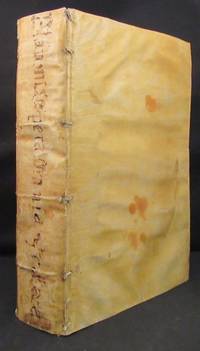
1513Best.-Nr. 32134Venice: Aldus Manutius and Andreas Torresanus September 1513. The Editio Princeps the First Edition of the Works of Plato in Greek. Folio 312 x 194mm beautifully bound in its contemporary limp vellum binding with hand calligraphy to the spine panel yapp edges. 15 unnumbered leaves without leaf 16 blank; 502 pages without the final blank; 439 pages. Aldine anchor device Fletcher f4 to title-page and verso of the last leaf. A superb copy in excellent condition. Very rare thus in its original binding some leaves with very sophisticated very sympathetic expert re-margining at the bottom outside corners where loss occurred at some time. The restoration has been brilliantly accomplished and is nearly imperceptible. VERY RARE AND IMPORTANT. THE FIRST ALDINE EDITION OF PLATO. THE EDITIO PRINCEPS AND A UNIQUE AND IMPORTANT COPY. As Marsilio Ficino dedicated his Latin translation of Plato to Lorenzo de’ Medici so Manutius dedicates his Greek edition to the son of Lorenzo Giovanni who became Pope Leone X in march. Aldus places his hopes for the foundation of his Academy in the new pope as he says in the dedicatory epistle of his edition of Greek Orators published in the same year: “may you watch over us and take care of our mission which deserves the help and favours of the highest statesmen indeed may you Supreme Pontiff found this Academy as perpetual good for mankind in the city of Rome.” The Platonic Dialogues are preceded by the “Life” of Plato by Diogenes Laertius and followed by a Greek hymn by Marco Musuro publisher of the edition together with Manutius. In 1513 Manutius printed the Editio Princeps of Plato which he dedicated to Pope Leo X in a preface eloquently and earnestly comparing the miseries of warfare and the woes of Italy with the sublime and tranquil objects of the student's life.The printings of Plato done through the years 1484-1485 were issued in parts and the printing of 1491 was printed in book form please see mention in next paragraph. These editions were published and printed in the Latin language rather than in the Greek see the next paragraph for information on the printing and translation of Plato out of the original Greek manuscripts. In 1462 by order and gift of Cosimo de Medici and with support of the Academy the manuscript translations of Plato's philosophical writings.his Dialogues.were begun. They were concluded under the beneficence of Lorenzo the Magnificent. The translation which was completed in the 1470's contributed in great measure to the rediscovery of critical thinking and of the disciplines of Greek scholarship. Marcello Ficino had begun his translation under the patronage of Cosimo de Medici in 1463. The work was completed five years later and circulated in manuscript for several years before finally being printed in parts beginning in 1484. It wasn't until 1491 that an edition brought together for the first time the fundamental text of Plato with Ficino's PLATONICA THEOLOGIA the most important Renaissance interpretation of the great philosopher. In this groundbreaking work Ficino sets out to prove that a harmony can be found between Christian theology and Platonism. The conversion of these two modes of thought the classic and the medieval was instrumental in the formation of the modern European identity. The importance Ficino placed on this work even extended to the printing and he was not pleased with the first edition which contained 7 pages of corrigenda. In contrast Ficino was very pleased with the typographical correctness of the later 1491 edition and this printing in large measure comes with the most important of the textual corrections and emendations and changes. So it was not until 1513 when Aldus undertook the project that the "Works"or "Opera" of Plato the Omnia Platonis Opera was published in the original Greek language of its author. This printing by Aldus was the true first printing of the original writings of Plato in their original tongue. The printing of the Editio Princeps was one of the most important projects ever undertaken by Aldus and represents along with his printing of Aristotle's works the consummate offering of the greatest philosophers of all time. The importance of Aldo's success in bringing the original language of Plato to the reader is one of the most significant accomplishments of the Aldine Press. The leading publisher and printer of the Venetian High Renaissance Aldus set up a definite scheme of book design produced the first italic type introduced small and handy pocket editions of the classics and applied several innovations in binding technique and design for use on a broad scheme. The use of the Greek fonts used in the printing of the text by Aldus is appreciated as one of the singular greatest accomplishments in all of printing history. It was Manutius' ambition to secure the literature of Greece from further loss by committing its chief masterpieces to type. The preface to his editions were written in Greek. Greeks from Crete collated manuscripts read proofs and gave models of calligraphy for casts of Greek type. Not counting the craftsmen employed in purely manual labour Manutius entertained as many as thirty of these Greek assistants in his family. "The entire western philosophical tradition has been described as a footnote to Plato but his importance was particularly felt in the Renaissance where his newly-rediscovered ideas percolated across intellectual communities and laid the groundwork for both the empiricism of the Enlightenment as well as a robust esoteric tradition. Only the Phaedo Meno and a paraphrase of the Timaeus were available to the Latin West for much of the Middle Ages until the groundbreaking Latin translation of the complete works by Marsilio Ficino. For this first Greek edition the great Cretan scholar Marcus Musurus edited the text working from high quality manuscripts belonging to Cardinal Bessarion. In the dedication Aldus sets out a vision for classical studies and the foundation of a Greek academy on Plato’s model; his letter is “one of the most comprehensive statements of the humanist position to be found outside Erasmus” Lowry. This edition also includes the Hellenistic paraphrase of the Timaeus and Diogenes Laertius’s life of Plato. Ahmanson-Murphy 114; Clemons and Fletcher 17; Renouard Alde 62:4; see Lowry The World of Aldus Manutius p.205; Wilson From Byzantium to Italy pp.151-2." Christies 12/2018 Firmin-Didot p. 342; Doniscotti-Orlandi n LXXVIII Laurenziana n 116; Marciana n 130; Legrand I 39; Adams P 1436; UCLA 97 - 1 97-2 Aldus Manutius and Andreas Torresanus hardcover
Best.-Nr. 29408Paris: Venundantur ab Ioanne Parvo & Iodoco Badio colophon: impressa sunt solertiore cura Ascensianis Anno domini MDXVIII 1518 Quinto Kalendas Iuanias. Deo Gratiae. Very Rare and Extremely Early Printing. THE FIRST PARISIAN PRINTING AND THE FIRST PRINTING OUTSIDE OF ITALY. It includes certain pseudo-Platonic dialogues never before printed is only the second printing of the 16th century and the fourth of all printings. Truly rare no copy is in the British Museum and it is mentioned only in Adams. Dedicated by Ficino to Lorenzo de’ Medici this printing was reproduced from the Venetian incunable edition of B. de Choris 1491. A COPY WITH FINE PROVENANCE. Four ownership signatures are noted on the title-page suggesting that the book traveled throughout Europe during its first 250 years of existence. One of the signatures most probably signifies ownership of the book by Sir John Cobham who had been raised to the peerage by King Charles I in 1645. Very finely engraved and illustrated title-page with superb Renaissance decorative borders incorporating allegorical figures and a scribe at work; at the center a very beautiful engraving of the printers at work at the press very fine and ornate capital letters throughout in black with ornate xilographic decorations occasional manuscript emendations in the margins in a contemporary Renaissance hand and with contemporary ownership inscription on the title. Folio 330 x 223 in eights full antique calf incorporating double blind fillet borders on the covers enclosing roll tooled inner borders in blind with a large central panel incorporating decorated corner tools and inner rolled borders all in blind the spine with wide raised bands brown morocco lettering label gilt. cc. num. CCCLXXXIX 389 folio leaves A very large handsome crisp and clean copy with expert and insignificant repair to a closed tear on one leaf. A copy with very wide and ample margins. The binding is in quite excellent condition with very little wear of evidence of use. A sympathetic restoration of the spine panel accomplished at some time. VERY RARE. THE FIRST PRINTING OUTSIDE OF ITALY AND THE FIRST PARISIAN PRINTING. A very beautiful and important production of Ficino's great Latin translation of Plato—"still the best translation of that author Italy can boast" Britannica. This printing also includes certain pseudo-Platonic dialogues never before printed. Ficino began his translation in 1466 from a manuscript supplied by his patron Cosimo de'Medici and by Amerigo Benci. During its progress Ficino submitted sections for review to the greatest scholars of the age: Angelo Poliziano Cristofor Landino Demetrios Chalchondylas and others which served to refine the work. Marcilio Ficino is perhaps the most important of all scholarly Renaissance thinkers and his influence on philosophical humanistic and cultural thought remains unsurpassed. Through the beneficence of the Medici family Renaissance Platonism emanated from him and his work and studies caused the vast expansion of the ideas inherent in Platonic thought. Some have argued that Ficino's direct effect on the Renaissance is without equal by any other scholar. His Latin translation of Plato allowed for all of Plato's dialogues to be available to Western readers for the first time. 'This first edition produced by Jean Petit and Jodocus Badius in Paris became the standard Plato-edition of the time with numerous editions following it. It remained for many years perhaps the most influential of all Renaissance readings of Plato and is considered to this day one of the most important and refined of all early printings of the great philospher's writings. Bade and Petit important in their own right were highly important contemporaries of Erasmus. They are responsible for many of the finest and most widely used editions of classical texts printed during the century. Jean Petit printer publisher and bookseller in Paris is known to have printed from 1493 to 1530 about one tenth of all publications in Paris more than ten thousand volumes. He was one of the four major booksellers at the University of Paris and greatly contributed to the spread of early Renaissance Humanism in Paris. He published a large number of original editions. Among his collaborators were Robert Estienne and Josse Bade. Bade Jodocus Badius 1462-1535 an associate of Erasmus is also considered one of the greatest printers of the period. A scholar of considerable repute and a renowned grammarian he studied in Brussels and Ferrara and taught Greek in Lyon from 1492 to 1498. In Lyon he worked as a proofreader and editor for the printer Jean Trechsel. On his arrival in Paris Jean Petit - one of the "grand libraires" and the most important bookseller and publisher of the era - helped Bade establish his own printing house in 1503. The business flourished and turned into one of the most prolific and important presses of the 16th century. It took on the name "Prelum Ascensianum" and specialized in classical texts in Latin often with his own familiare commentum. For the 2nd-century BC Roman playwright Terence Badius printed a Praenotamenta in 1502. This introduced the subject of Roman comedy through a lengthy treatment of general theories of poetry and thorough discussion of its origins development and classifications. He also published the works by contemporary humanist writers who frequented the printing house from where much Renaissance thought was disseminated. With 775 editions Bade's press served as one of the most active publishers during the first three decades of the 16th century. His frequent work with or for Johannes Parvus Jean Petit created an alliance with the era's most important bookseller and publisher. THE KING OF PHILOSOPHERS. ONE OF THE SUPREME TEXTS OF THE RENAISSANCE. Plato’s reintroduction into European thought has had a total and sweeping effect in the realms of philosophy science and religion. This work reprints the whole text in one endeavour of the first edition Florence 1484-85 issued over many months in a series of parts. The first edition in parts of Plato’s OPERA is of the most extreme rarity probably now absolutely unobtainable so this is one of the very earliest printings one could hope to secure in its complete state and an especially interesting issuance of the OPERA from one of the finest European printers. Venundantur ab Ioanne Parvo & Iodoco Badio hardcover
Best.-Nr. 3787310401.Gperfect. Good. Access codes and supplements are not guaranteed with used items. May be an ex-library book. unknown
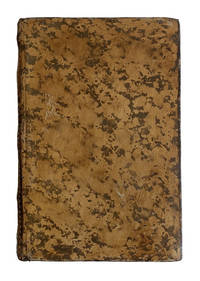
1554Best.-Nr. PA108° mm 158x93. Collation: -8 A-Z8 AA-FF8 GG6. 32 451 i.e. 471 1 pp. Woodcut printer's device on the title page. Large woodcut animated initials. 18th-century mottled calf smooth spine decorated with gilt floral tools title in gold on lettering piece. Pastedown in a nice decorated paper. Red edges. A good copy scattered foxing waterstain on the lower blank margin of the last quires a small ink stain on l. 7r. Manuscript marginalia on l. A2r. Provenance: Vincenzo Maria Carafa della Roccella 1739-1814; ex libris engraved by G. Cataneo on the front pastedown 'Ex libris Vinc. M. Kar. Ca. St. Pr. Amphiss'. The rare first Italian-language edition of The Republic one of the most influential works of philosophy and political theory both historically and intellectually. The Italian translation was prepared by the physician Panfilo Florimbene of Frossombone who based his work on a Greek source text. He dedicated the translation to the Florentine nobleman Francesco Clementi accompanying it with a lengthy and important dedicatory letter. To aid comprehension Florimbene provided an Argument before each book summarizing the key teachings of the corresponding dialogue Bongi I 454. The Republic is Plato's best-known work offering a profound examination of political and ethical justice alongside a detailed vision of the ideal state and its governance. Bongi I 454; Nuovo-Coppens I Giolito e la stampa p. 546 n. 218; Adams P 1468. Gabriele & brothers Giolito de Ferrari
Best.-Nr. 1146260326.Gpaperback. Good. Access codes and supplements are not guaranteed with used items. May be an ex-library book. paperback
Best.-Nr. 1169775756.Ghardcover. Good. Access codes and supplements are not guaranteed with used items. May be an ex-library book. hardcover
1978Best.-Nr. 048774Regensburg. wonderful copy; larger-format . Near Fine. Hardcover. First. 1978. hardcover
Best.-Nr. 45362945like new. unknown
Best.-Nr. 45261285like new. unknown
Best.-Nr. 9112908Short description: In Russian. Kerzhentsev Platon Mikhailovich. Newspaper. Moscow: Publishing House of Vsevo Vsevos Central Executive Committee. Soviet of Railways p. c. d. 1919. The image is provided for reference only. It may reflect condition of one of the available copies or only help in identifying the edition. Please feel free to contact us for a detailed description of the copies available. SKU9112908 unknown
Best.-Nr. 9293015Short description: In Russian. Ippolitov Platon Afanasyevich. Skates. Moscow: Physical Culture and Tourism 1934: 16 type of trust Polygraphbook. The image is provided for reference only. It may reflect condition of one of the available copies or only help in identifying the edition. Please feel free to contact us for a detailed description of the copies available. SKU9293015 unknown
Best.-Nr. 9203184Short description: In Russian. Kerzhentsev Platon Mikhailovich. Organize yourself. Moscow; Leningrad: Young Guard 1927. The image is provided for reference only. It may reflect condition of one of the available copies or only help in identifying the edition. Please feel free to contact us for a detailed description of the copies available. SKU9203184 unknown
Best.-Nr. 4176632Short description: In Russian. Tikhov Platon Ivanovich. Private Surgery: Petrograd: Practical Medicine V.S. Oettinger by F.W. Oettinger 1916. The image is provided for reference only. It may reflect condition of one of the available copies or only help in identifying the edition. Please feel free to contact us for a detailed description of the copies available. SKU4176632 unknown
Best.-Nr. 9112952Short description: In Russian. Kerzhentsev Platon Mikhailovich. Principles of Organization. Petrograd: State Publishing House 1922. The image is provided for reference only. It may reflect condition of one of the available copies or only help in identifying the edition. Please feel free to contact us for a detailed description of the copies available. SKU9112952 unknown
Best.-Nr. 3809823Short description: In Russian. Sokolov Platon Petrovich. Russian bishop from Byzantium and the right of his appointment until the beginning of the 15th century: Kyiv: type. I.I. Chokolov 1913. The image is provided for reference only. It may reflect condition of one of the available copies or only help in identifying the edition. Please feel free to contact us for a detailed description of the copies available. SKU3809823 unknown