[Plato] Oswald UtermohlenBiblio.com

7574 resultados
1967ref. 27126Heidelberg: Carl Winter 1967. Very Good. Heidelberg: Carl Winter 1967. First Edition. Small slim octavo; publisher's blue gilt-lettered cloth; 111pp. Spine a shade sunned light dust-soil to top textblock edge contemporary ownership signature to front free endpaper else Very Good and sound. Carl Winter unknown
1984ref. 322782Yale University Press 1984. Hard Cover -- Ex-Library -- Good/Good -- Volume One -- Book anddust jacket show light wear -- 350 pages with index -- First Edition w/full # string -- The Dialogues of Plato: -- Volume One -- Euthyphro / Apology / Crito / Meno / Gorgias / Menexenus. First Edition. Hard Cover. Good/Good. Ex-Library. Yale University Press Hardcover
2013ref. 2-9892605144Imprensa da Universidade de Coimbra 2013. Paperback. New. 3rd edition. 268 pages. Portuguese language. 7.48x4.72x0.61 inches. Imprensa da Universidade de Coimbra paperback
ref. KG-MU5Y-V2CFHardcover. Very Good. Visually inspected by owner: Hardback with dust jacket as pictured no marks in text and binding solid. dust jacket with wrinkles and tears at top edge. 1956. We ship M-F by 4 pm and Sat. by noon with tracking info. hardcover
ref. 961Both in fine condition illustrated leather Easton Press hardcover
1908ref. 00-47CT-0FC8Printed At the Riverside Press for Houghton Mifflin Co. Very Good. 1908. Unknown Binding. Designed and printed by Bruce Rogers limited #173 of 440 copies. Brown paper covered boards lightly soied and marked yapped edges tips bumped. Paper spine label browned and chipped. Top tips chipped. Some very little and faint foxing 1916 ink gift inscription front endpaper smudged.; 149 pages . Printed At the Riverside Press for Houghton Mifflin Co unknown
ref. B9781165947621New. unknown
ref. B9781167644665New. unknown
ref. B9781167250262New. unknown
ref. B9781168952851New. unknown
ref. B9781168791160New. unknown
1765ref. 003451Paris: Chez Humblot Libraire 1765. Very good. Mid-18th-century edition; 6 3/4 x 4; vol. I pp. 3 iv-ciij 2 2-259 1 vol. II pp. 5 2-406; full speckled roan; five raised bands and gilt title and ruling to spine; illustrated with woodcuts and historiated initials at the beginning of each volume; rubbed spots to corners and chips to tips of spine; vol. II with small loss of leather to lower margin of front board; in good to very good condition. A handsom edition of Plato's Socratic dialogue on justice and order which was originally authored around 375 BCE. Chez Humblot, Libraire hardcover
1965ref. 002844Niu Iork New York: By the Author 1965. First Edition. Very good. First edition; 7 3/4 x 5 1/4; pp. 2 3-95; light-brown wraps printed in black; a small bump to tail of spine; minor creasing to corners; illustrated with frontis photographs and facsimile documents; very good to near fine condition. Around 1958 Ukrainian emigres in the US came up with the idea of building a memorial to "Ukraine's Favorite Son" author Taras Shevchenko as a way of making a statement about their community and of the situation in their homeland. The campaign gained momentum and in 1960 Congress passed a bill which allocated land in Washington DC for the Ukrainians to build a statue. Platon Stasiuk a prominent Ukrainian-American businessman and treasurer of the Shevchenko Memorial Committee went to Ukraine in 1961 intent on taking back a container of soil from Shevchenko's grave to be placed under the monument in Washington. Expecting an appreciative committee he was instead met with rejection as his bringing the soil was viewed as a Soviet ploy. Disappointed Stasiuk published a book describing his experience and the Soviet media denounced the dismissal as hostility towards a friendly gesture. Stasiuk returned the soil to Ukraine and wrote a second account the current one in which he included numerous letters of support he had received for his initiative. By the Author paperback
ref. B9781168171849New. unknown
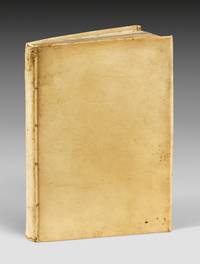
ref. ABAA7Paris chez Sebastien Nyuelle libraire demeurant à l'enseigne des Cicognes rue Sainct Iacques. Avec privilège du Roy pour dix ans 1553. 4to 219 x 153 mm of 4 ll. 350 pp. and 1 l. of privilege. Overlapping vellum flat spine. Seventeenth century binding. First edition in French of the Phaedo an essential work by Plato setting out the main points of his doctrine. It is here translated from Greek into French by Louis Le Roy 1510-1577 'the greatest French Hellenist'. Brunet IV 701 ; Graesse V 324. Louis Le Roy is one of the most unknown figures of a group of 'second generation humanists'. Le Roy known as Regius had a difficult existence so materially miserable that it led him to make pleas to the great ones in the form of unoriginal circumstantial works. This bland character who seems to have lived on the edge of fame especially in his relations with Du Bellay and the Pléiade happens to be in retrospect the greatest French Hellenist and as the one who made the political works of Antiquity known to a wide public. An excellent translator in many ways superior to modern translators he chose essentially the intermediate field between morality Isocrates and his speeches to the young princes philosophy Plato: Timaeus Phaedo Banquet and politics Demosthenes Plato and Aristotle. In this work the main characters taking part in the dialogue are: Socrates Phaedo Simmias and Cebes. Here they are in the cell where Socrates victim of the reaction of the sophists he was fighting and condemned to death as a corrupter of youth is waiting for his jailer to bring him the hemlock. His disciples and friends crowd around him. After having made it clear that a true philosopher cannot be afraid of death Socrates raises the question of the survival of the soul and what will become of it when it is 'gathered into itself and upon itself after having rid itself of its evils'. Socrates is immediately invited by his friends to demonstrate the immortality of the soul and this serious problem will occupy most of the dialogue. Giving a marvelous and symbolic vision of our world placed in the whole Universe Socrates indulges in brilliant cosmological hypotheses in which the physical and metaphysical constitution of our globe tends towards a harmonious unity. Our planet is according to Socrates an enormous sphere placed at the centre of the Cosmos which is much larger than it appears to us. But the time is short: Socrates retires to another room to take his bath then calls the jailer who brings him the hemlock. Having drunk it with perfect serenity Socrates lies down on his bed: but before dying he says to Crito: "We owe a cock to Asclepius: pay him don't forget!" These were his last words. Socrates who had promised to sacrifice a cock to Asclepius Aesculapius if he recovered from a disease he was suffering from was obliged to fulfil his promise since death brought him freedom from his disease with rest. This first edition in French of the Phaedois the work of Louis Le Roy considered "as a highly figure of the humanism of the Renaissance". His teacher was Guillaume Budé of whom he was to write a biography. "A lively and curious mind he was one of the most enthusiastic Hellenists of his time". A friend of Joachim Du Bellay the poet gave him the title of "French Plato". A precious and rare copy pure with wide margins preserved in its seventeenth century overlappingvellum binding. French A Paris chez Sebastien Nyuelle libraire demeurant à l'enseigne des Cicognes rue Sainct Iacques. Avec privilège du Roy pour dix ans 1553. In-4 de 4 ff. 350 pp. et 1 f. de privilège. Plein vélin à recouvrement dos lisse. Reliure du XVIIe siècle. 219 x 153 mm. Edition originale de langue française du Phédon œuvre essentielle de Platon exposant les principaux points de sa doctrine. Elle est ici traduite du Grec en français par Louis Le Roy 1510-1577 " le plus grand helléniste français ". Brunet IV 701 ; Graesse V 324. Louis Le Roy est l'un des personnages les plus méconnus d'un groupe d' " humanistes de la seconde génération ". Le Roy dit Regius traîne une existence difficile matériellement si misérable qu'elle l'amène à adresser des suppliques aux grands sous forme d'œuvres de circonstances sans originalité. Ce personnage falot qui semble avoir vécu sur les bords de la célébrité en particulier dans ses relations avec Du Bellay et la Pléiade apparaît rétrospectivement comme le plus grand helléniste français et comme celui qui a fait connaître auprès d'un large public les œuvres politiques de l'Antiquité. Excellent traducteur à bien des égards supérieur aux traducteurs modernes il a choisi essentiellement le domaine intermédiaire entre la morale Isocrate et ses discours aux jeunes princes la philosophie Platon : Timée Phédon Banquet et la politique Démosthène Platon et Aristote. Dans cette œuvre les principaux personnages prenant part au dialogue sont : Socrate Phédon Simmias et Cébès. Les voici dans la cellule où Socrate victime de la réaction des sophistes qu'il combattait et condamné à mort comme corrupteur de la jeunesse attend que son geôlier lui apporte la ciguë. Autour de lui se pressent ses disciples et ses amis… Après avoir fait admettre qu'un véritable philosophe ne saurait avoir peur de la mort Socrate soulève la question de la survivance de l'âme et de son devenir lorsqu'elle sera " ramassée en elle-même et sur elle-même après s'être débarrassée de ses maux ". Socrate est aussitôt invité par ses amis à démontrer l'immortalité de l'âme et ce grave problème occupera la plus grande partie du dialogue. Donnant de notre monde replacé dans l'ensemble de l'Univers une vision merveilleuse et symbolique Socrate se livre à de brillantes hypothèses cosmologiques dans lesquelles la constitution physique et métaphysique de notre globe tend vers une harmonieuse unité. Notre planète est selon Socrate une énorme sphère placée au centre du Cosmos lequel est beaucoup plus grand qu'il ne nous apparaît. Mais l'heure presse : Socrate se retire dans une autre pièce pour prendre son bain puis fait appeler le geôlier qui lui apporte la ciguë. L'ayant bue avec une parfaite sérénité Socrate s'allonge sur sa couche : mais avant de mourir il dit encore à Criton : " Nous devons un coq à Asclépios : payez‑le ne l'oubliez pas ! ". Telles furent ses dernières paroles. Socrate qui avait promis de sacrifier un coq à Asclépios Esculape s'il guérissait d'une maladie dont il était affligé se devait d'exécuter sa promesse la mort lui apportant avec le repos la libération de sa maladie. Cette première édition de langue française du Phédon est l'œuvre de Louis Le Roy considéré " comme une haute figure de l'humanisme de la Renaissance ". Il eut pour maître Guillaume Budé dont il devait écrire une biographie. " Esprit vif et curieux il compte parmi les hellénistes les plus enthousiastes de son temps ". Lié d'amitié avec Joachim Du Bellay le poète le pare du titre de " Platon Français ". Précieux et rare exemplaire pur et à belles marges conservé dans sa reliure en vélin à recouvrement du XVIIe siècle. hardcover
1978ref. 55153AsNew Softcover. 6.75"x4.2". be13 Gateway Books paperback
1996ref. mon0003234115Harvard University Press 1996T. hardcover. Good. . Harvard University Press hardcover
ref. mon0003224359SCRIBNERS. hardcover. Very Good. 1.0000 9.0000 6.0000. SCRIBNERS hardcover
1887ref. 377095Charles Scribner's Sons 1887. Hardcover. Used Good. 4-Volume set. Front and back covers have notable wear to edges and corners. Spine intact some wear cracking hinges. Binding is intact. Pages are generally clean with edge or corner wear slight tanning. X-Library marks on spine and inside with withdrawl stamps. We carry new and used books in our storefront. We want you to be satisfied with your purchase. Please contact us if you have questions regarding this item. Charles Scribner's Sons hardcover
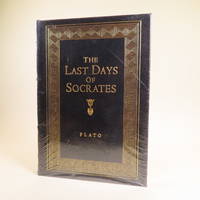
2000ref. 7623Scarce virgin copy in publisher's original shrink wrap. Black leather boards with tasteful Greek key gilt cartouche to boards; title & author to boards and spine. Moire endpapers and silk ribbon; four raised bands. 6.75 x 9.5 in Easton Press hardcover
1981ref. mon0002899009The Franklin Library 1981. Leather Bound. Like New. . Deluxe Limited Edition.- . In Fine Like New Condition with Un-Cracked Unread Binding. - Bound in Fine Genuine Purple Leather - 22kt gold-stamped spine accents - Distinctive raised spine hubs - Intricate gilt stamped cover designs - Specially milled acid-neutral paper - Smyth-sewn pages - Gilded page edges - Permanent satin ribbon page-marker. A Fine Copy. Includes the 'Notes from the Editors' booklet. Exclusive for the subscribers for the 25th anniversary.; Franklin Library the Great Books of the Western World Series. The Franklin Library hardcover
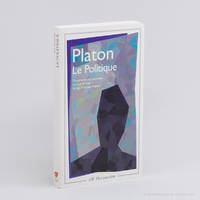
2003ref. 426Paris: GF Flammarion 2003. First Edition. Paperback. Very small closed tear at foot of spine else nearly fine. Binding square & tight text clean & bright. 12mo. 4.25 x 7 in. 316 4 pp. Glossy white pictorial wrappers. Introduction translation and commentary of Plato's dialogue the Statesman 'Politicus' by LUC BRISSON and JEAN-FRANÇOIS PRADEAU. Text in French. Signed by Luc Brisson and Jean-François Pradeau on half-title. Scarce thus. GF Flammarion paperback
1979ref. 2111902160800817Iwanamishoten 1979. Soft Cover. Fine. Number of books: 2 Iwanamishoten paperback