7552 resultados
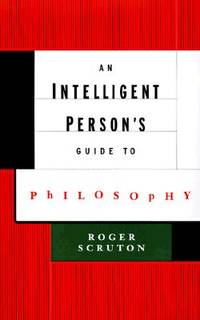
2000ref. 129210London: St. Augustine's Press. New. Hardcover. FREE UPGRADE to Courier/Priority Shipping Upon Request - IN STOCK AND IMMEDIATELY AVAILABLE FOR SHIPMENT - - SIGNED BY AUTHOR -- NEW - Personal view by this conservative British philosopher. - "Scruton a don at London University and a British TV personality sets out to do philosophy rather than talk about it. He succeeds to a large extent in making the subject accessible engaging the reader in philosophic thinking. Scruton inquires into truth time God freedom morality and even sex carefully explaining who he believes is right and who is wrong in their opinions on the subjects. For instance he warns against Nietzsche and Michel Foucault and champions everyone who believes in persons with souls and free intentions and who believes in the sacred and enchantment in the world. In addition to such authoritarian judgments Scruton sometimes gets caught up in fighting internecine battles especially against the view that genuine knowledge can only be scientific; then the clarity of his writing suffers. For example "since the origin of both self and not-self is the act of self-positing nothing on either side of the barrier is anything in the last analysis but self." When he philosophizes more freely he puts the reader in a better mood: "This idea has recurred so often as to suggest that there is truth in it or a permanent need to believe so." In the final analysis Scruton accomplishes his aim of using philosophy as therapy for our modern confusions although mental health for him lies in more conservative thinking." - Publishers Weekly Copyright 1998 Reed Business Information Inc. -- with a bonus offer--; HPP4-000001; Plato Platonic Dialogue Mock Intelligent Person's Guide to Philosophy Scruton Roger PHILOSOPHY CONSERVATISM . 2000. 1890318477 . St. Augustine's Press hardcover
2000ref. 129211London: St. Augustine's Press. As New. Hardcover. FREE UPGRADE to Courier/Priority Shipping Upon Request - IN STOCK AND IMMEDIATELY AVAILABLE FOR SHIPMENT - - SIGNED BY AUTHOR -- NEW - Personal view by this conservative British philosopher. - "Scruton a don at London University and a British TV personality sets out to do philosophy rather than talk about it. He succeeds to a large extent in making the subject accessible engaging the reader in philosophic thinking. Scruton inquires into truth time God freedom morality and even sex carefully explaining who he believes is right and who is wrong in their opinions on the subjects. For instance he warns against Nietzsche and Michel Foucault and champions everyone who believes in persons with souls and free intentions and who believes in the sacred and enchantment in the world. In addition to such authoritarian judgments Scruton sometimes gets caught up in fighting internecine battles especially against the view that genuine knowledge can only be scientific; then the clarity of his writing suffers. For example "since the origin of both self and not-self is the act of self-positing nothing on either side of the barrier is anything in the last analysis but self." When he philosophizes more freely he puts the reader in a better mood: "This idea has recurred so often as to suggest that there is truth in it or a permanent need to believe so." In the final analysis Scruton accomplishes his aim of using philosophy as therapy for our modern confusions although mental health for him lies in more conservative thinking." - Publishers Weekly Copyright 1998 Reed Business Information Inc. -- with a bonus offer--; HPP4-000001; Plato Platonic Dialogue Mock Intelligent Person's Guide to Philosophy Scruton Roger PHILOSOPHY CONSERVATISM . 2000. 1890318477 . St. Augustine's Press hardcover
1998ref. 129208London: Allen Lane: the Penguin Press. As New. Hardcover. FREE UPGRADE to Courier/Priority Shipping Upon Request - IN STOCK AND IMMEDIATELY AVAILABLE FOR SHIPMENT - - SIGNED BY AUTHOR -- NEW - Personal view by this conservative British philosopher. - "Scruton a don at London University and a British TV personality sets out to do philosophy rather than talk about it. He succeeds to a large extent in making the subject accessible engaging the reader in philosophic thinking. Scruton inquires into truth time God freedom morality and even sex carefully explaining who he believes is right and who is wrong in their opinions on the subjects. For instance he warns against Nietzsche and Michel Foucault and champions everyone who believes in persons with souls and free intentions and who believes in the sacred and enchantment in the world. In addition to such authoritarian judgments Scruton sometimes gets caught up in fighting internecine battles especially against the view that genuine knowledge can only be scientific; then the clarity of his writing suffers. For example "since the origin of both self and not-self is the act of self-positing nothing on either side of the barrier is anything in the last analysis but self." When he philosophizes more freely he puts the reader in a better mood: "This idea has recurred so often as to suggest that there is truth in it or a permanent need to believe so." In the final analysis Scruton accomplishes his aim of using philosophy as therapy for our modern confusions although mental health for him lies in more conservative thinking." - Publishers Weekly Copyright 1998 Reed Business Information Inc. -- with a bonus offer--; HPP4-000001; Plato Platonic Dialogue Mock Intelligent Person's Guide to Philosophy Scruton Roger PHILOSOPHY CONSERVATISM . 1998. 0713992263 . Allen Lane: the Penguin Press hardcover
ref. 3659349534.Gpaperback. Good. Access codes and supplements are not guaranteed with used items. May be an ex-library book. paperback
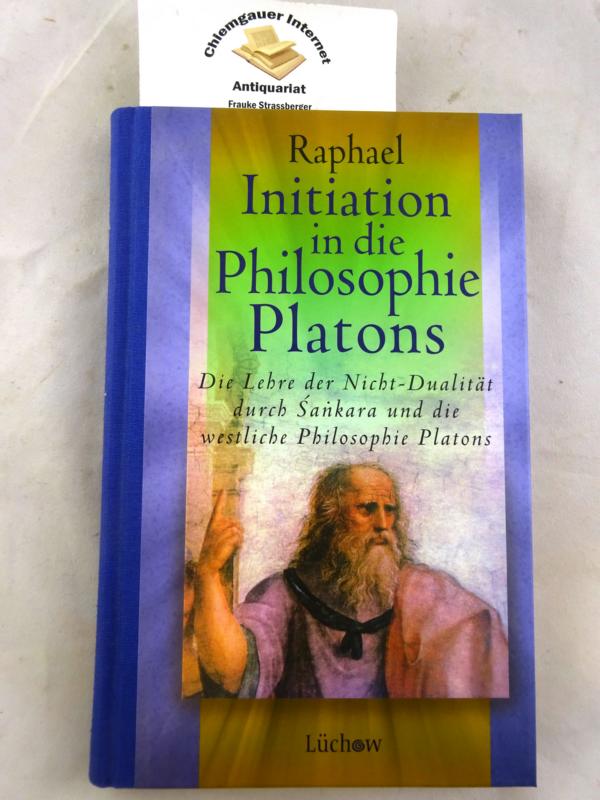
2002ref. 298789Freiburg i. Br. : Lüchow, 2002. 160 Seiten; 21 cm Originalpappband.
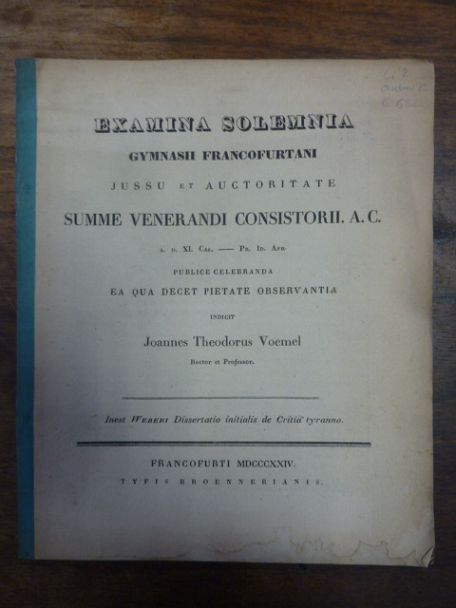
1824ref. 682CBFrankfurt am Main, Heinrich Ludwig Brönner, 1824. 8°, 26, 6 S. (Anhang), original Heft mit Papierrückenstreifen, Erstausgabe schöne, minimal wasserfleckige, leicht altersspurige Broschur mit winzigen Eckverlusten - ansonsten schönes Exemplar (Li2, Ordner29)
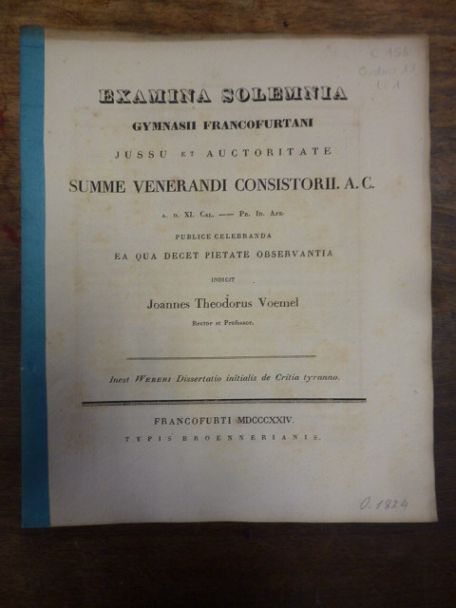
1824ref. 156CBFrankfurt am Main, Heinrich Ludwig Brönner, 1824. 8°, 26, 6 S. (Anhang), original Heft mit Papierrückenstreifen, Erstausgabe schöne, leicht altersspurige Broschur mit handgeschr. Altersangabe (J. 1824) (Li1, Ordner11)
1995This book makes an important intervention in contemporary feminist theory. Cavarero takes four figures from ancient Greek texts and reinterprets them using theories of sexual difference. ; 8.9 X 6.0 X 0.6 inches; 160 pages
ref. 0332409155.Gpaperback. Good. Access codes and supplements are not guaranteed with used items. May be an ex-library book. paperback
ref. 0332654516.Ghardcover. Good. Access codes and supplements are not guaranteed with used items. May be an ex-library book. hardcover
ref. 0332646963.Ghardcover. Good. Access codes and supplements are not guaranteed with used items. May be an ex-library book. hardcover
ref. 0332428451.Gpaperback. Good. Access codes and supplements are not guaranteed with used items. May be an ex-library book. paperback
1816ref. C90444Berlin: Impensis G. E. Reimeri Oxoniae Apud I. Parker. 1816. First Editions Thus. Hardbacks. Hardcover Hardcover. Very Good. First Editions Thus. Hardbacks. 8vos. 816-25 1st. ed. thus the same edition was also printed in 10 vols. . pp 381; 469; 516; 578; 473 8. Half green morocco marbled paper on boards. Spines lettered and ruled in gilt and with five raised bands and gilt ruling. A little rubbing to extremities and boards in places; medium to heavy foxing to the thin paper else VG and an attractive set. Last 2 volumes ar 'apparatus critica.' Impensis G. E. Reimeri, Oxoniae Apud I. Parker. hardcover
1998Light yellowing to spine. Very minor shelfwear. ; X, 226pp. ; 226 pages; This original new book argues for a reassessment of Plato's challenge to the arts. Plato was the first great figure in Western philosophy to assess the value of the arts; he argued in the Republic that traditionally accepted forms of poetry, drama, and music are unsound. While this view has been widely rejected, Janaway argues that Plato's hostile case is a more coherent and profound challenge to the arts than has sometimes been supposed. Denying that Plato advocates "good art" in any modern sense, Janaway seeks both to understand Plato's critique in the context of his own philosophy and to locate him in today's philosophy of art, showing how issues in aesthetics arise from responses to his charges.
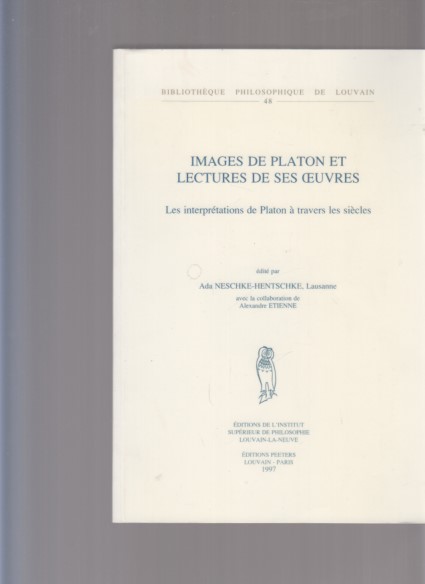
1997ref. 1229755Editions de L'Institut Superieur de Philosophie Louvan-La-Neuve / Editions Peeters; Louvain; Paris, 1997. XXIII; 468 Seiten; 24 cm; kart.
1962ref. 11408Nagel, Genf, Paris, Hamburg, New York, 1962. 382 S., 4°, deutscher Text v. Dr. Xavier Schnieper, durchgehend bebildert, Oln., farb. Kopfschnitt, OS m. Randläsuren, das Buch ist in einem guten Zustand
ref. 1016779194.Ghardcover. Good. Access codes and supplements are not guaranteed with used items. May be an ex-library book. hardcover
2015Iacona, Andrea Il platonismo. Torino, Einaudi 2015 italian, 239 Opera con copertina morbida in brossura . VI, 239 p. ; 21 cm
2007286pp., 24cm., text in Italian, Dissertation (Estratto della Dissertazione per il Dottorato nella Facolta di Filosofia della Pontificia Universita Gregoriana), softcover, stamp at verso of title page, text is clean and bright, good condition, F112204
2007ref. F112204Roma, Pontificia Universita Gregoriana 2007 286pp., 24cm., text in Italian, Dissertation (Estratto della Dissertazione per il Dottorato nella Facolta di Filosofia della Pontificia Universita Gregoriana), softcover, stamp at verso of title page, text is clean and bright, good condition, F112204
1805ref. 26666Siena 1805. allegato al fine: Il Trattato analitico delle sezioni coniche. Tradotto da /Alberti Giovanni Battista; Alterungsspuren auf Einband insgesamt guter Zustand Francesco Rossi Kl.-8°. Pbd. d. Zt. Philosophie unknown
1557ref. 3087Venice: Comin da Trino 1557. Graesse V.325 giving 1558 imprint; a second issue; the Italian Union Catalogue Catalogo Unico lists only 5 copies in Italian libraries. Rare first Italian-language edition of this Platonic dialogue somewhat anomalous in the Platonic corpus because of its extended treatment of the nature of physical matter and cosmology and a favorite among Renaissance readers for its myth of Atlantis which influenced other Renaissance utopias. The 1550s or thereabouts saw the first Italian translation of the most popular Platonic dialogues whether directly from Greek as here or via Ficinos Latin translation; the prestige of Ficinos Latin translation and wider readership for the original Greek probably explains why this Italian edition came so relatively late. The edition was translated by the littérateur Sebastiano Erizzo 1525-1585 a prolific writer of poetry fiction and belles lettres who provides some commentary in the way of printed marginal annotations; he would later translate a further selection of dialogues into Italian in which the Timaeus was reprinted 1574. NUC lists UNC and OCLC adds Duke. Comin da Trino books
1557In-4°: pp. (8), 41, (1) Capilettera incisi in legno. Marca editoriale Al frontespizio e nell’ultima carta
ref. 0332092577.Ghardcover. Good. Access codes and supplements are not guaranteed with used items. May be an ex-library book. hardcover
1557ref. 3087Venice: Comin da Trino 1557. Graesse V.325 giving 1558 imprint; a second issue; the Italian Union Catalogue Catalogo Unico lists only 5 copies in Italian libraries. Rare first Italian-language edition of this Platonic dialogue somewhat anomalous in the Platonic corpus because of its extended treatment of the nature of physical matter and cosmology and a favorite among Renaissance readers for its myth of Atlantis which influenced other Renaissance utopias. The 1550s or thereabouts saw the first Italian translation of the most popular Platonic dialogues whether directly from Greek as here or via Ficinos Latin translation; the prestige of Ficinos Latin translation and wider readership for the original Greek probably explains why this Italian edition came so relatively late. The edition was translated by the littérateur Sebastiano Erizzo 1525-1585 a prolific writer of poetry fiction and belles lettres who provides some commentary in the way of printed marginal annotations; he would later translate a further selection of dialogues into Italian in which the Timaeus was reprinted 1574. NUC lists UNC and OCLC adds Duke. Comin da Trino