3 371 résultats
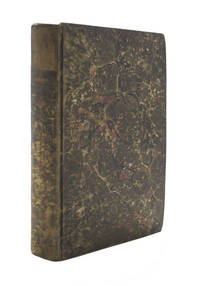
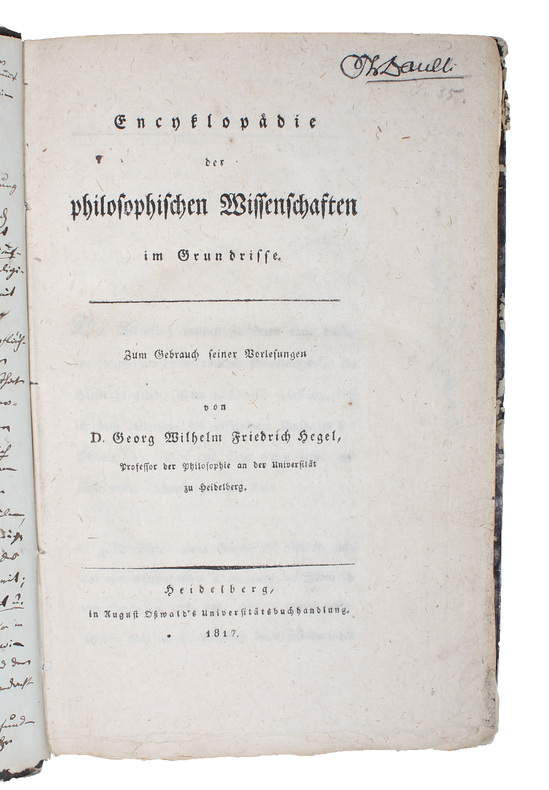
1817réf. 79271Heidelberg: August Oswald. Very Good. 1817. Hardcover. 8 1/4 x 5 1/4 inches in an early 20th century binding of marbled boards with a black cloth spine. Ex-library with bookplate to front pastedown and stamp to title. There are also numbers on the spine and the front hinge is beginning to separate. The contents though modestly foxed throughout are in very good condition with just a few early marginal annotations in ink and some occasional underlining in the same ink. Bound with a later theological work by Hegel published in 1846. . August Oswald hardcover
1840réf. 18245André Hachette Joubert et Grimblot Raybois | Paris & Nancy 1840-1852 | 14.50 x 23 cm | 5 volumes brochés
1840réf. 18245Paris & Nancy: AndréHachetteJoubert et GrimblotRaybois 1840. Fine. André Hachette Joubert et Grimblot Raybois Paris & Nancy 1840-1852 14.50 x 23 cm 5 volumes brochés First edition in French. Spine of second volume missing one tear with lack to lower cover of this volume a few small lacks to head and foot of spine of other volumes small lacks to upper cover of third volume. Internally very fresh despite a little spotting. This edition was published only two years after the original in Berlin. This first edition in French translated by Charles Bénard at first had very little impact before becoming one of the foundations of the modern philosophy of art. Very rare in its original covers. AndréHachetteJoubert et GrimblotRaybois unknown
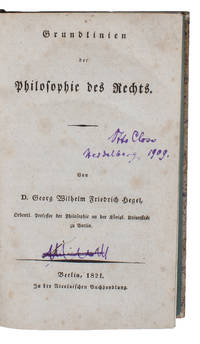
1821réf. 67890The State as Perfect Organization. First Edition with Additional Title-Page HEGEL Georg Wilhelm Friedrich. Grundlinien der Philosophie des Rechts. Berlin: In der Nicolaischen Buchhandlung 1821. First edition. Octavo 7 11/16 x 4 13/16 inches; 196 x 123 mm. 2 xxvi 355 1 printerís imprint pp. With the additional title page: "Naturrecht und Staatswissenschaft im Grundrisse. Zum Gebrauch f¸r seine Vorlesungen". Leaf bound on a stub Contemporary marbled paper over boards. Spine with paper label printing rubbed off. Boards rubbed and chipped mainly along edges and at head and tail of the spine. Very small early ink signature on title page. Pages lightly browned. No rear free endpaper. Overall an excellent clean copy. ìThe Grundlinien deals with moral and political philosophy and is a complete system in which the concept of a sociology dominated by the idea of the State is laid down. It turns away from the apparent chaos of the democratic advocates of individual right in favour of an overwhelming sense that liberty cannot exist apart from order and that the vital connexion of all parts of the body politic is the source of all good. As the family is without contract the instinctive realization of the moral life so equally without contract the State is the fullest expression of the moral spirit where interdependence is combined with free will. The State is the perfection of man as a finite entity whence the spirit moves into the absolute existence of art religion and philosophy. Taken apart from the rest of his system Hegelís political philosophy has been much misrepresented by totalitarian propagandists. He was however one of the most profound and intellectual thinkers of the nineteenth century. Theology philosophy political theory all have been radically influenced by his systemî Printing and the Mind of Man. This is the most important work of political philosophy before Marx whose work is explicitly constructed as a reaction to Hegel. Borst 1361. Printing and the Mind of Man 283. HBS 67890. $2750 Nicolaischen Buchhandlung hardcover books
1827réf. 57047Stuttgart und Tübingen, Cotta, 1827. 4to. In the original patterned paper boards, with contemporary handwritten paper-title to spine and old handwritten library paper-label to lower spine. Wear to extremities and lacking some paper at spine. Stamp to first title-page (general title-page for the wntire year) and stamp to verso of title-page for the front wrapper of the January-issue. A damp stain to the first two leaves, otherwise internally quite good. Bound with the general title-page for the entire year and with some of the original wrappers for the individual months (among these that of January). 1856 colomns (i.e 928 pp.).
1827réf. 57047Stuttgart und Tübingen Cotta 1827. 4to. In the original patterned paper boards with contemporary handwritten paper-title to spine and old handwritten library paper-label to lower spine. Wear to extremities and lacking some paper at spine. Stamp to first title-page general title-page for the wntire year and stamp to verso of title-page for the front wrapper of the January-issue. A damp stain to the first two leaves otherwise internally quite good. Bound with the general title-page for the entire year and with some of the original wrappers for the individual months among these that of January. 1856 colomns i.e 928 pp. The extremely rare first printing of all twelve issues constituting the entire first year of the seminal organ for the philosophical school that developed around Hegel namely the "Yearbooks for Scientific Critique" issued by Hegel himself constituting the starting-point of this greatly influential journal of the Hegelian right. This entire first year with its 12 issues contains a wealth of highly important contributions one being Hegel's own highly important review of Humboldt's lectures on the Bhagavad-Gita delivered in June 1825 and 1826 "On The Episode of the Mahabharata Known by the Name Bhagavad-Gita" in which Hegel puts this Indian work in his large context of world history. Hegel's review which appeared in two parts in the present publication for the first time Jan. nos. 7-8 pp. 51-63 Oct. nos. 181-88 pp. 1441-92 is now considered an extremely important document dealing with India. Humboldt's lectures had praised the Gita as the greatest most beautiful and presumably the only real philosophical poem of all known literatures; Hegel's review was meant as a critical assessment of the Hindu world-view in toto in a comparison with European Weltanschauung.In 1818 Hegel took over Fichte's chair at the University of Berlin. With his great lectures on the different fields of philosophy he soon became widely famous and an important school formed around him. This Hegelian school grew to be extremely influential from the 1820'ies and onwards. From 1827 "the Jahrbücher" founded by Hegel himself began appearing working as the official organ for this seminal school. hardcover
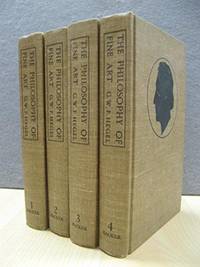
1975réf. L3 box84 b3udThe Philosophy of Fine Art Complete Four Volumes. By G. W. F. Hegel. Translated with Notes by F. P. B. Osmaston. Reissued in 1975 by Hacker Art Books First published in 1920 by G. Bell and Sons Ltd. Brown buckram cloth hardcover complete 4 volumes total 1661 pages: 427 pp Volume 1 414 pp Volume 2 445 pp Volume 3 375 pp Volume 4. Hacker Art Books. hardcover
réf. 000010August Oswald. Heidelberg 1817 First Edition. Orig. boards. Very good in original boards! Narrow 8vo. 288 pp. Covers solid some old wear scuffing and light chipping along spine. Text very firm and only lightly browned. This is the only exposition of the great Hegelian system as a whole that comes directly from Hegel's own hand. This work was originally designed as a textbook for students attending his very popular lectures in Logic and Metaphysics at the University of Heidelberg. A magnificent item and very scarce. August Oswald. Heidelberg, 1817 hardcover
1821réf. 50543Berlin, 1821. 8vo. A beautiful and excellently made pastiche binding in brown half calf with richly gilt spine and red gilt leather title-label. Previous owner's name to title-page (dated 1909) and a few light pencil-marginalia, otherwise internally very nice and clean with only occasional minor brownspotting. XXVI, 355, (1) pp. A very fine copy.
1821réf. 50543Berlin 1821. 8vo. A beautiful and excellently made pastiche binding in brown half calf with richly gilt spine and red gilt leather title-label. Previous owner's name to title-page dated 1909 and a few light pencil-marginalia otherwise internally very nice and clean with only occasional minor brownspotting. XXVI 355 1 pp. A very fine copy. The scarce first edition of Hegel's seminal "The Outline or later Elements of the Philosophy of Right" the last of Hegel's major works which represents the culmination of a life-long interest in politics and political phenomena. Hegel was perhaps more than any other German philosopher influenced by the French Revolution and this masterpiece of philosophy constitutes a grandiose attempt to make freedom the foundation of human society. "Taken apart from the rest of his system Hegel's political philosophy has been much misrepresented by totalitarian propagandists. He was however one of the most profound and influential thinkers of the nineteenth century. Theology philosophy political theory all have been radically influenced by his system; Strauss 300 Baur 322 Bradley Kierkegaard 314 Marx 326 359 Lenin 392 all came under his spell and his indirect influence has been limitless." PMM 283. hardcover
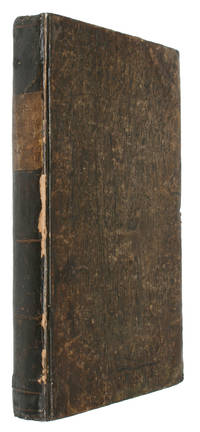
1817réf. 34668Heidelberg, (Druck und Papier von Brede in Offenbach), 1817. 8vo. Nice cont. cardboardbdg. w. title-label to back. Corners and capitals professionally restored. Hinges w. a bit of paper-loss. Occational brownspotting. Front free end-paper w. vast cont. annotations by former owner Fr. Selasinski.
1817réf. 34668Heidelberg Druck und Papier von Brede in Offenbach 1817. 8vo. Nice cont. cardboardbdg. w. title-label to back. Corners and capitals professionally restored. Hinges w. a bit of paper-loss. Occational brownspotting. Front free end-paper w. vast cont. annotations by former owner Fr. Selasinski. The rare first edition of Hegel's immensely important work the "Encyclopaedia of the Philosophical Sciences" by himself and his contemporaries considered his main work and likewise an absolute main work of philosophy in general. Hegel is considered one of the four greatest philosophers of all times and his contributions to philosophy are incomparable to other than perhaps those of Aristotle Plato and Kant. In 1816 Hegel chose the professorship of philosophy at the University of Heidelberg and here he taught his courses with great enthusiasm. He lectured no less than 16 hours a week mostly over his own system which is the object of this chronologically speaking third main work generally just called the "Encyclopaedia".Hegel himself considered his "Encyclopedia" to be the most important of his works and his contemporaries likewise judged it his actual main work. Hegel was considered the epitome of the great systematic thinker of the 19th century and his "Encyclopaedia" forms the epitome of his work at the same time as it to his own mind constitutes his greatest achievement. Hegel's main aim was to systematically comprise all spiritual and natural knowledge and thus his philosophy peaks with his all-comprising Encyclopaedia which remained of the greatest importance to himself throughout his life-time. He kept working on the book and no less than three different altered editions appeared within his lifetime the last in 1830 the year before he died confirming his lasting devotion to this work.The book has belonged to one Friedrich Selasinski perhaps a midshipman from the aristocracy who has annotated the entire front free end-paper ab. 1830. unknown
1817réf. 46416Heidelberg, 1817. 8vo. COMPLETELY UNCUT in contemporary (original interim?) marbled paper-binding with handwritten paper title-label to spine. Boards rubbed and corners a bit worn. Internally unusually clean. Last ten leaves with a small marginal worm-tract, not affecting lettering. Extensive contemporary hand-written scholarly notes (seemingly in three different hands) to all end-papers, in all 6 closely-written pages, in French and German. Contemporary owner's name to title-page (Th. Daulli [?]). A fabulous copy, with very varying sizes of pages. XVI, 288 pp.
1817réf. 46416Heidelberg 1817. 8vo. COMPLETELY UNCUT in contemporary original interim marbled paper-binding with handwritten paper title-label to spine. Boards rubbed and corners a bit worn. Internally unusually clean. Last ten leaves with a small marginal worm-tract not affecting lettering. Extensive contemporary hand-written scholarly notes seemingly in three different hands to all end-papers in all 6 closely-written pages in French and German. Contemporary owner's name to title-page Th. Daulli . A fabulous copy with very varying sizes of pages. XVI 288 pp. The rare first edition extremely scarce in original uncut condition of Hegel's immensely important work the "Encyclopaedia of the Philosophical Sciences" by himself and his contemporaries considered his main work and likewise an absolute main work of philosophy in general. Hegel is considered one of the four greatest philosophers of all times and his contributions to philosophy are incomparable to other than perhaps those of Aristotle Plato and Kant. In 1816 Hegel chose the professorship of philosophy at the University of Heidelberg and here he taught his courses with great enthusiasm. He lectured no less than 16 hours a week mostly over his own system which is the object of this chronologically speaking third main work generally just called the "Encyclopaedia".Hegel himself considered his "Encyclopedia" to be the most important of his works and his contemporaries likewise judged it his actual main work. Hegel was considered the epitome of the great systematic thinker of the 19th century and his "Encyclopaedia" forms the epitome of his work at the same time as it to his own mind constitutes his greatest achievement. Hegel's main aim was to systematically comprise all spiritual and natural knowledge and thus his philosophy peaks with his all-comprising Encyclopaedia which remained of the greatest importance to himself throughout his life-time. He kept working on the book and no less than three different altered editions appeared within his lifetime the last in 1830 the year before he died confirming his lasting devotion to this work. hardcover
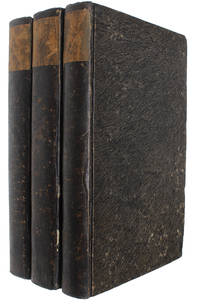
1812réf. 48133Nürnberg, Johann Leonhard Schrag, 1812-1813-1816. 3 vols. 8vo. 3 contemporary uniform (!) marbled paper bindings with hand-written paper title-labels to spines (hand-writing not legible). Very minor, excellently executed and barely noticeable professional restorations to a couple of hinges and corners. An excellent set, also internally very nice, clean, and fresh, wih only very minor occasional brownspotting. Old owner's inscription in the form of a poem and an old, vague owner's stamp (Giulini) to front free end-paper of volume one. Same stamp to title-page and verso of title-page respectively of volumes 2 and 3. Old owner's name neatly removed from title-page of volume 3.XIV (= title-page + Vorrede + Inhalt), XXVIII (= Einleitung), 334 VI (= title-page + Inhalt), 282" (2 = general title-page stating second volume of Wissenschaft der Logik), X (= title-page, Vorbericht + Inhalt), 403, (1) pp.
1812réf. 48133Nürnberg Johann Leonhard Schrag 1812-1813-1816. 3 vols. 8vo. 3 contemporary uniform ! marbled paper bindings with hand-written paper title-labels to spines hand-writing not legible. Very minor excellently executed and barely noticeable professional restorations to a couple of hinges and corners. An excellent set also internally very nice clean and fresh wih only very minor occasional brownspotting. Old owner's inscription in the form of a poem and an old vague owner's stamp Giulini to front free end-paper of volume one. Same stamp to title-page and verso of title-page respectively of volumes 2 and 3. Old owner's name neatly removed from title-page of volume 3.XIV = title-page Vorrede Inhalt XXVIII = Einleitung 334; VI = title-page Inhalt 282; 2 = general title-page stating second volume of Wissenschaft der Logik X = title-page Vorbericht Inhalt 403 1 pp. The scarce first editions of all three volumes that together constitute Hegel's second main work his "Science of Logic" also called his "Greater Logic" as opposed to the Logic section of the Encyclopaedia in which logic is seen as the science of pure thought concerning the principles by which concepts are formed and therefore also as that which reveals to us the principles of pure knowing. THIS IS THE RAREST OF ANY OF HEGEL'S MAJOR WORKS TO FIND COMPLETE - IT IS A TRUE SCARCITY TO FIND A SET IN UNIFORM CONTEMPORARY BINDINGS. Hegel's "Logic" is begun five years after his first major work the "Phänomenologie des Geistes" and the five years which Hegel has had to develop his philosophy in the meantime are clearly reflected in his monumental second masterpiece. The "Logic" can be regarded as a more systematic and well organized epistemological and ontological work. It is in this groundbreaking work of German Idealism that Hegel develops his famous dialectic which comes to determinate all later reading of his philosophy. It is Hegel's dialectic theory later condensed as "thesis-antithesis-synthesis" that is developed in this main work of 19th century philosophy. The dialectical process constitutes the movement of thought and consciousness from basic to complex ideas and thus demonstrates how the categorical infrastructure of thought can be laid bare by thought itself alone. With this work Hegel is considered as having created a revolution in the understanding of Logic because he widens it from being merely concerned with formal rules of propositions to including all of humanity. He elaborates the laws that govern the development of human practice and as a consequence he also uncovers the objective laws that govern the entire objective material world. Throughout the 20th century Hegel's logical philosophy was largely neglected but the last 40-50 years have shown a revived interest in this most fundamental of works which is of the greatest importance for the understanding of his systematic thought.Hegel himself considered his "Logic" to be of the utmost importance and he kept revising it throughout the years. It is very difficult to find a set of all three volumes in first editions. unknown
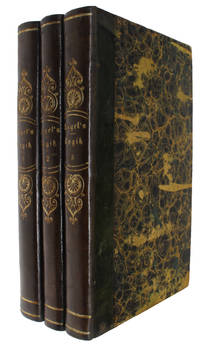
1812réf. 55245Nürnberg, Johann Leonhard Schrag, 1812-1813-1816. 3 vols. 8vo. Bound in three lovely contemporary uniform (!) green half calf bindings with gilt spines. Very minor, excellently executed and barely noticeable professional restorations to small pieces of spines and boards. A magnificent set in lovely contemporary, uniform bindings. Some brownspotting as usual. Housed in a custom-made marbled paper cassette. XIV (= title-page + Vorrede + Inhalt), XXVIII (= Einleitung), 334 VI (= title-page + Inhalt), 282" (2 = general title-page stating second volume of Wissenschaft der Logik), X (= title-page, Vorbericht + Inhalt), 403, (1) pp.
1812réf. 55245Nürnberg Johann Leonhard Schrag 1812-1813-1816. 3 vols. 8vo. Bound in three lovely contemporary uniform ! green half calf bindings with gilt spines. Very minor excellently executed and barely noticeable professional restorations to small pieces of spines and boards. A magnificent set in lovely contemporary uniform bindings. Some brownspotting as usual. Housed in a custom-made marbled paper cassette. XIV = title-page Vorrede Inhalt XXVIII = Einleitung 334; VI = title-page Inhalt 282; 2 = general title-page stating second volume of Wissenschaft der Logik X = title-page Vorbericht Inhalt 403 1 pp. The scarce first editions of all three volumes that together constitute Hegel's second main work his "Science of Logic" also called his "Greater Logic" as opposed to the Logic section of the Encyclopaedia in which logic is seen as the science of pure thought concerning the principles by which concepts are formed and therefore also as that which reveals to us the principles of pure knowing. THIS IS THE RAREST OF ANY OF HEGEL'S MAJOR WORKS TO FIND COMPLETE - IT IS A TRUE SCARCITY TO FIND A SET IN UNIFORM CONTEMPORARY BINDINGS. Hegel's "Logic" is begun five years after his first major work the "Phänomenologie des Geistes" and the five years which Hegel has had to develop his philosophy in the meantime are clearly reflected in his monumental second masterpiece. The "Logic" can be regarded as a more systematic and well organized epistemological and ontological work. It is in this groundbreaking work of German Idealism that Hegel develops his famous dialectic which comes to determinate all later reading of his philosophy. It is Hegel's dialectic theory later condensed as "thesis-antithesis-synthesis" that is developed in this main work of 19th century philosophy. The dialectical process constitutes the movement of thought and consciousness from basic to complex ideas and thus demonstrates how the categorical infrastructure of thought can be laid bare by thought itself alone. With this work Hegel is considered as having created a revolution in the understanding of Logic because he widens it from being merely concerned with formal rules of propositions to including all of humanity. He elaborates the laws that govern the development of human practice and as a consequence he also uncovers the objective laws that govern the entire objective material world. Throughout the 20th century Hegel's logical philosophy was largely neglected but the last 40-50 years have shown a revived interest in this most fundamental of works which is of the greatest importance for the understanding of his systematic thought.Hegel himself considered his "Logic" to be of the utmost importance and he kept revising it throughout the years. It is very difficult to find a set of all three volumes in first editions. hardcover
1812réf. 191790Nuremberg: Johann Leonhard Schrag 1812; 1813; 1816. Logic both objective and subjective First editions of the Idealist philosopher's first and most comprehensive statement of his method of logic the foundation of his philosophical system. The Wissenschaft der Logik Science of Logic brought international acclaim for Hegel then headmaster of a school in Nuremberg: following publication of the final part he was appointed to the chair of philosophy at the University of Heidelberg. The first part Objective Logic was published in two books in 1812 and 1813 while the second Subjective Logic was published in 1816. 2 parts in 3 vols octavo 196 x 118 mm. Pp. xiv xxviii 334; pp. vi 282; pp. i x 403 1. Contemporary mottled paper boards spines with paper label lettered in contemporary manuscript edges sprinkled blue. Light wear stripping and rubbing minor browning to otherwise crisp contents: an excellent copy. Croce I 2. Michael Inwood Hegel 1983. hardcover
1989GUIDA 1989 367 PP. FONDO DI MAGAZZINO: LIEVI FIORITURE AI TAGLI, VOLUME INTONSO, MAI SFOGLIATO «Avventure e disavventure del trascendentale» è un’espressione di Derrida, contenuta nel suo commento all’Appendice alla Krisis husserliana, interamente dedicato al problema del rapporto tra il trascendentale e lo storico nella fenomenologia. In un campo d’indagine diverso, la filosofia di Cohen e Natorp, Gianna Gigliotti indaga il medesimo nesso. Interrogando il rapporto tra il trascendentale e lo storico, il volume si sofferma sul tentativo, che caratterizza il pensiero di Cohen e Natorp, di fare del ritorno al trascendentale la condizione di possibilità della scienza come realizzazione della ragione. Gianna Gigliotti insegna Filosofia della Storia nell’Università de L’Aquila. Ai temi e ai problemi del neokantismo ha già dedicato numerosi studi e saggi, tra i quali va ricordato ’Il neocriticismo tedesco’, 1983. INDICE Prefazione Capitolo primo Dal metodo psicologico al metodo trascendentale. Le scienze della cultura nei primi scritti di Cohen Capitolo secondo La costituzione dell’oggettività Capitolo terzo Il problema della s oggettività e la psicologia Capitolo quarto Filosofia trascendentale o ontologia? Elenco delle abbreviazioni Indice dei nomi Parole e frasi comuni apriori Aristotele BAUCH Bewusstheit BRANISS calcolo infinitesimale Cassirer categorie Cohen concetto concettuale concreto condizioni di possibilità configura conoscenza contenuto correlazione coscienza costituisce critica definire dell'esperienza dell'essere dell'oggetto determinazione differenza Dilthey direzione diverso empirica essenziale esso etica Faktum fenomeno fenomenologia Fichte filosofia fondamentale fondazione fondo forma formale GADAMER generale grandezza intensiva Hegel Heidegger Herbart Hermann Cohen HOLZHEY Husserl ideale infatti infinitesimale invece Kant kantiana Kants Kroner l'essere l'oggetto l'unità Lask legalità legge logica Logik Lotze marburghesi matematica mente metafisica metodo trascendentale modello momento monismo Natorp neocriticismo neokantismo oggettivante oggettivazione ontologica originaria panteismo pensare pensiero Platone posizione possa presupposto principio problema processo proprio psicologia psicologistica Psychologie puro ragione rapporto rappresenta reale realizzazione realtà reinen relazione Rickert riflessione Rosenzweig scientifica scienza scrive scuola di Marburg sembra senso significa significato sistema sistematica soltanto specifica spirito oggettivo Steinthal storico Streben teoria Trendelenburg unità validità vedere volontà
1978traduzione di Vitulano Pasquale GUIDA EDITORI 1978 DUE VOLUMI, RISPETTIVAMENTE 356 E 230 PP. FONDO DI MAGAZZINO: SEGNI DEL TEMPO ALLA COPERTINA, COME DA FOTO, PER IL RESTO VOLUMI INTONSI, MAI SFOGLIATI. In questo libro Hayden White, uno dei più grandi filosofi americani della storia, ha voluto investigare la struttura formale di alcuni capisaldi emblematici della riflessione e della pratica storica del secolo XIX. Il principio di fondo che ispira l'ampia e originale indagine è che ogni opera storiografica è prima di tutto una narrazione, un testo 'poetico' attraverso il quale il magma complesso degli eventi viene ordinato ed espresso. Ma qual è la natura, quali le leggi (se vene sono ) di questa strutturazione poetico-narrativa del discorso storiografico? Per rispondere a questo quesito, White ha interpellato le opere ottocentesche prescelte non già a livello dei loro significati, bensì a quello dei loro significati. Ha cioè verificato se, opportunamente analizzato, l'impianto linguistico di quelle opere esibisca e meno la presenza di una logica - o meglio di una retorica - dalle norme ben individuabili e configurabili. Hayden White (1928) è un filosofo e storico statunitense. È conosciuto per aver sviluppato un’indagine epistemologica sulla storia con una riflessione sui concetti di narrazione e di postmoderno. La sua opera principale, pubblicata per la prima volta nel 1973, si intitola ’Metastoria. L’immaginazione storica nel diciannovesimo secolo in Europa’. Attualmente è professore emerito all’Università della California a Santa Cruz e professore di Letteratura comparata presso l’Università di Stanford. Indice Prefazione PARTE PRIMA: La tradizione ereditata: l'illuminismo e il problema della coscienza storica CAP. I - L'immaginazione storica fra metafora e ironia Introduzione La dialettica della storiografia illuministica Le concezioni convenzionali della storiografia Storia, linguaggio e trama Scetticismo e trama Le principali forme della storiografia pre-illuministica Leibniz e l'illuminismo Il campo storico L'esito storiografico dell'illuminismo La ribellione di Herder alla storiografia illuministica L'idea della storia in Herder Da Herder al romanticismo e all'idealismo CAP. II - Hegel: la poetica della storia oltre l'ironia Introduzione Linguaggio, arte e coscienza storica Storia, poesia e retorica Le strutture d'intreccio possibili Tragedia e commedia come strutture d'intreccio generiche La storia in se stessa e la storia per se stessa La storia in se stessa e per se stessa Il campo storico come struttura Lo stato, l'individuo e la visione tragica della storia Il campo storico come processo Dalla tragedia alla commedia L'intreccio della storia del mondo PARTE SECONDA : Quattro tipi di «realismo» nella storiografia del XIX secolo CAP. III - Michelet: Il realismo storico come «romance» Introduzione I classici della storiografia del XIX secolo La storiografia contro la filosofia della storia La storiografia romantica come «Realismo» nel modo metaforico Il campo storico come caos dell'essere Michelet: la storiografia spiegata come metafora e intrecciata come romance CAP. IV Ranke: Il realismo storico come commedia Introduzione I fondamenti epistemologici del metodo storico di Ranke Il processo storico come commedia La «Grammatica» dell'Analisi storica La «Sintassi» dell'evento storico La «Semantica» dell'interpretazione storica Le implicazioni conservatrici dell'idea della storia di Ranke La storia intrecciata come commedia La difesa formale dell'Organicismo come metodo storico Conclusione CAP. V - Tocqueville: il realismo storico come tragedia Introduzione Antididattica Poesia e storia in due modi Poesia e storia in due modi La maschera liberale La storiografia di mediazione sociale La «Sintassi» dei processi storici significativi La «Semantica» della storia americana Il dramma della storia europea Punto di vista liberale, tono conservatore Il conflitto tragico dal punto di vista ironico La risoluzione ironica del dramma rivoluzionario Il tentativo di resistenza alle implicazioni ideologiche dal punto di vista ironico La critica di Gobineau La caduta dell'ironia Conclusione CAP. VI - Burckhardt: Il realismo storico come satira Introduzione Burckhardt: La visone ironica Il pessimismo come visione del mondo: la filosofia di Schopenhauer Il pessimismo come Base della Coscienza Storica Lo stile satirico La «Sintassi» della storia La struttura d'intreccio come «Satira» Antimetafora Il Realismo come ironia Storia e Poesia Conclusione PARTE TERZA: Il ripudio del «realismo» nella filosofia della storia del tardo XIX secolo CAP. VII - La coscienza storica e la rinascita della filosofia della storia CAP. VIII Marx: la difesa filosofica della storia nel modo metonimico Introduzione Il problema della dottrina marxista L'essenza della concezione storica di Marx Il modello fondamentale di analisi La «Grammatica» dell'esistenza storica La «Sintassi» del processo storico La «Semantica» della storia Il metodo di Marx applicato agli eventi storici concreti Conclusione Cap. IX - Nietzsche: La difesa poetica della storia nel modo metaforico Introduzione Mito e storia Memoria e storia Morale e storia Verità e storia Conclusione Cap. X - Croce: La difesa della filosofia della storia nel mondo ironico Introduzione Filosofia della storia come critica La storia ridotta sotto il concetto generale dell'arte L'Estetica della coscienza storica La natura della conoscenza storica: la giustificazione del buon senso La natura paradossale della conoscenza storica Le implicazioni ideologiche dell'Idea della storia di Croce Il metodo critico applicato: l'effetto addomesticante dell'Ironia Croce contro Marx Croce contro Hegel Croce contro Vico La storia come ideologia borghese Conclusione Soggetti: Studi letterari, Cultura europea, Civiltà occidentale, Metahistory, Letteratura, Critica letteraria, Roland Barthes, Northrop Frye, Kenneth Burke, Hegel, Michelet, Ranke, Tocqueville, Burckhardt, Marx, Nietzsche, Benedetto Croce, Storiografia, Filosofia della storia, Kultur der Renaissance in Italien, Scrittura storica, Carlo Ginzburg, Rivoluzione francese, Intreccio, romance, comedy, tragedy, satire, Ideologie, metafora, metonimia, sineddoche, ironia, Michelet, Struttura formale, Ranke, Tocqueville, Burckhardt, Linguistica, Significante, Testo poetico, Memoria, Filologia, Costruttivismo retorico, Poetica, Linguistica, Metastoria, Grammatica, Semantica, Mito e storia, Organicismo, Epistemologia, Gobineau, Ironia, Leibniz, Illuminismo, Herder