BRADLEY, RichardABAA

17 412 résultats
2005réf. 274808New York: HarperCollinsPublishers 2005. Softcover. Fine. Uncorrected proof. Fine with a faint sticker shadow and a staple hole on the front wrapper. HarperCollinsPublishers unknown books
2004réf. 95236Andover MA: The Acre 2004. Unbound. Fine. First edition of this broadside. One of 100 numbered copies Signed by Bradley. Fine copy. OCLC locates just three copies. The Acre unknown books
1996réf. 89942New York: Alfred A. Knopf 1996. Hardcover. Fine/Fine. First edition. Fine in fine dust jacket. Alfred A. Knopf hardcover books
1927réf. 94445London: Methuen & Co. Ltd 1927. Hardcover. Fine/Near Fine. First edition. Modest foxing to the foredge and first and last few leaves a slight crease on the frontispiece a near fine copy in very good plus dustwrapper with very shallow loss at the crown and a small internal repair. Memoirs of Cambridge beginning in 1869. Methuen & Co. Ltd hardcover books
1981réf. 57739New York: Harper & Row 1981. Hardcover. Fine/Near Fine. First edition. Fine in near fine dust jacket with a small stain on the front inside flap and two tiny tears to the ends of the spine. Winner of the National Book Award. Harper & Row hardcover books
1976réf. 71341New York: Quadrangle 1976. Hardcover. Fine/Very Good. Book Club edition. Front cover with one small scrape else fine in very good or better dust jacket with some rubbing. Bradley's account of his basketball days written before the start of his second career as a politician. Quadrangle hardcover books
1992réf. 35149New York: Henry Holt 1992. Softcover. Fine. First edition. Uncorrected Proof. Fine in wrappers. Henry Holt unknown books
1990réf. 57769New York: Atlantic Monthly Press 1990. Softcover. Fine. First edition. Advance Reading Copy. Fine in wrappers. Atlantic Monthly Press unknown books
1981réf. 57740New York: Harper & Row 1981. Hardcover. Fine/Near Fine. First edition. Fine in near fine dust jacket with some light wear to the spine and a small white price sticker on the front panel. Winner of the National Book Award. Harper & Row hardcover books
1971réf. 49941Houston TX: Menil Foundation 1971. Good. Houston TX: Menil Foundation 1971. First Edition. Slim squarish quarto 23.5cm; publisher's black pictorial wrappers; 74pp.; halftone and full color illus. including one foldout. Wrappers quite worn with large chip at spine crown textblock edges dust-soiled; Good overall contents clean and sound. Important exhibition catalog for a show held at the historic Deluxe Theater one of the only Black cinemas in Houston during the Jim Crow era. Menil Foundation unknown books
1819réf. 9897Albany NY: Printed by G.J. Loomis & Co 1819. First Edition. 300pp. Sextodecimo 14.5 cm Full sheep with gilt bands and title on the backstrip. Near fine. Sporadic foxing throughout. Joshua Bradley was the pastor of churches in Rhode Island Connecticut Vermont and New York he first affirmed and later renounced freemasonry creating no small stir among his former masonic brethren. As a mason he published a defense of freemasonry in 1816 while pastoring in Vermont. At that time Bradley was a member of Newport Royal Arch Chapter and Grand Chaplain of the Washington Encampment of Newport. However about a decade later while preparing to defend freemasonry against the rising tide of antimasonry he altered his views and abruptly did an about face renouncing freemasonry in the light of the antimasonic movement then causing chaos in the country citing the murder of William Morgan as one reason. He became a vocal antagonist of freemasonry. Printed by G.J. Loomis & Co unknown books
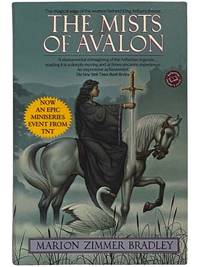
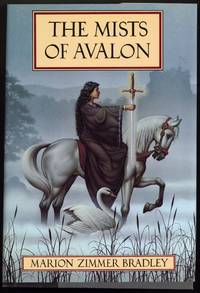
2000réf. 2338279New York: Del Rey / Ballantine Books 2000. Reprint. Trade Paperback. Good. 6x2x9. Reprint. Corners creased edges rubbed pages lightly toned. Binding tight and square text clean and unmarked. 2000 Trade Paperback. xi 876 pp. In Marion Zimmer Bradley's masterpiece we see the tumult and adventures of Camelot's court through the eyes of the women who bolstered the king's rise and schemed for his fall. From their childhoods through the ultimate fulfillment of their destinies we follow these women and the diverse cast of characters that surrounds them as the great Arthurian epic unfolds stunningly before us. As Morgaine and Gwenhwyfar struggle for control over the fate of Arthur's kingdom as the Knights of the Round Table take on their infamous quest as Merlin and Viviane wield their magics for the future of Old Britain the Isle of Avalon slips further into the impenetrable mists of memory until the fissure between old and new worlds' and old and new religions' claims its most famous victim. Del Rey / Ballantine Books paperback books
1982réf. 600655New York: Alfred A. Knopf 1982. Hardcover. Very Good/Near Fine. First edition. Gift inscription on front fly. Page edges lightly foxed spine with a very slight ripple and sunned at the tip of the spine base very good in a price-clipped else fine dust jacket with a tiny bit of wear. Alfred A. Knopf hardcover books
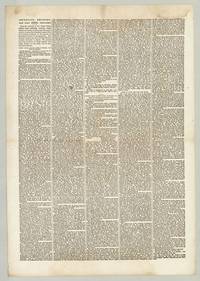
réf. 9066Georgia 1873. Broadside 18" x 12.75" text in five columns. CONDITION: Good old folds light dampstaining one small stain in the second column one tiny puncture at right margin and a small puncture at center causing losses to three letters. A scarce broadside concerning two Federal court decisions that upheld the selection of African American jurors in Georgia per the 14th and 15th Amendments. This broadside was published a day after the decision of Judge Joseph Bradley Associate Justice of the Supreme Court of the U.S. in the U.S. Circuit Court Southern District of Georgia regarding the mixed-race jury in the case of United States Vs. Appleton P. Collins of Macon Georgia "on indictment for violation of Enforcement Act." In 1872 Collins participated in a racially-fueled riot involving voter intimidation against African Americans at a Macon voting station that resulted in fatalities. Responding to "the argued motion to quash the indictment against Mr. A. B. Collins.on the ground of the illegal selection of the grand jury" Judge Bradley upholds an earlier decision delivered in Atlanta by Judge John Erskine of the U.S. Circuit Court in the Northern District of Georgia which calls for juries to be selected "without regard to race color or previous condition." The broadside reprints the decisions of Judges Bradley and Erskine both of which reject motions by white defendants arguing that the mixed-race juries in their respective trials were illegal. Prior to emancipation both enslaved and free African Americans were barred from testifying in court against whites an exclusion that the Black Codes passed by state governments across the South during Reconstruction sought to uphold by making it illegal for African Americans to serve on juries or testify against whites. These codes were countered by the Enforcement Acts 1870-71 which protected those contested rights and allowed Federal intervention in the event of states' failure to uphold them. Judge Bradley's recent decision is presented first. He opens by observing that U.S. courts are independent of state laws and that their processes and procedures are subject to the sole regulation of Congress and its courts. Bradley thus establishes the sovereignty of the Federal government over individual states in spite of the Black Codes. On the subject of selecting and empaneling jurors in the U.S. courts Bradley invokes the Congressional mandate that they be designated by lot "and that they should have the same qualification as required for jurors in the highest courts of the State"-a rule that has its precedent in the July 20 1840 Act of Congress 5 Stat. 394. Bradley states that conformity between Congress and state law concerning jury selection is required on two fronts: "first in reference to the qualifications and exemptions of jurors; secondly in reference to the mode of designating and empanelling jurors as by ballot lot or otherwise." In Georgia he continues the only qualifications of jurors are that "they shall be upright and intelligent jurors between the ages of 21 and 60" and-following an 1869 statute-that they be taxpayers. Officers-state or county officials-are to select from the body of the District 500 persons "without regard to race color or previous condition to serve as jurors" which is "in accord with the spirit of the Fourteenth and Fifteenth Amendments to the Constitution by which all persons born or naturalized in the United States are citizens and entitled to full equality before the laws." The broadside then reprints an earlier decision sustained by Bradley of Judge Erskine in the 1872 case United States vs. William Gardner on "indictment for violation of Revenue laws." Erskine writes: "Before the perusal of the panel comprised of six white persons and six colored the defendant challenged the array on the ground that the jury was illegally constituted and moved that it be quashed." By a rule of the U.S. District Court for this District that was adopted at the March term of 1871 the Marshal was instructed to select the "most upright and intelligent persons" without regard to race or color from the jury list of the county. Concerning the word "most" Erskine writes that the question is raised "by learned counsel on both sides" whether the word was "to apply to each class white or colored." He responds: "At most the word but expressed moral fitness as necessary to the end proposed." Of the nearly 1700 names forwarded to the Marshal 250 names were picked and "strange as it may appear every ballot drawn from the box contained the name of a white person." The ratio in this Judicial District of whites to Blacks is eight to five. Erskine comments: It is obvious to the common mind that that mode of designating or selecting these jurors cast the entire burden of jury service in the Federal Court upon one of the classes only- white citizens; thus released colored citizens who possessed the constitutional and statutory qualifications for jurors from the performance of a duty which they equally with the qualified white citizens owed to their country. Not only the Constitution of this State but the recent amendments to the National Constitution have made the colored man a citizen habilitating him with all the rights privileges and immunities enjoyed by the white citizen: therefore he should perform his part of the public labor. Erskine cites an 1872 amendment ordering that "each ballot shall be so rolled that neither the name nor the county can be seen. The ballots shall then be placed in the box and thoroughly mixed." It is noted that no property qualification is required in Georgia for an individual to serve as a juror. "To be 'white' was another qualification for a juror but this no longer exists-State Constitution supra." The broadside concludes with Erskine's examination of a number of other cases. The defendant in the first case Dr. Appleton P. Collins 1835-1886 was born in Macon Georgia and graduated from the Medical College of New Orleans immediately before the Civil War broke out. He enlisted in the 2nd Battalion Georgia Infantry Co. B in May 1861 and was discharged in September 1862 when he was approved to serve as an assistant surgeon for the Confederate Army. After the war he was appointed city physician for Macon. In 1872 the Georgia Weekly Telegraph Journal and Messenger reported a violent encounter between white and Black voters at a Macon voting station in which several people were killed. The white participants' intimidation tactics violated the Enforcement Act and evidently led to the case United States Vs. Appleton P. Collins. Witnesses quoted in the Telegraph article described the events as follows: The white and blacks had met and there seemed to be a great struggle at the polls as to which should vote. I called the attention of the gentleman to it and proposed to go down and draw away the blacks until arrangements could be made for voting. There were more blacks than whites-a great many more. The colored people were confined to the rear most of the morning but had made a sort of flank movement and were coming from two directions.The struggle between the men seemed to be to see which should get the polls .I was engaged at the time with a white man and a colored man who seemed struggling to see who should get on the terrace.That was Dr. Appleton Collins. He was in a fight with a negro.I saw a pistol between them. No examples recorded in OCLC but we find an example at the University of Georgia. A fascinating broadside offering insight into race relations as they pertained to jury selection for trials in Georgia during the Reconstruction era. REFERENCES: "Appleton P. Collins Macon City Physician" at Rose Hill Cemetery Macon Georgia online; Georgia Weekly Telegraph Journal and Messenger Macon November 5 1872 p. 3. [Georgia,] 1873 unknown books
2001réf. 42707NY: Knopf 2001. Hardcover. Very good. Hardcover. First Edition. Very good hardback in a very good dustjacket. Review copy with slip laid in. Knopf hardcover books
1985réf. 71164Canberra: Australian National University 1985. 8vo pp. vii 1 498 21 1; full blue cloth. red speckled edges plastic dust jacket; gift inscription on free endpaper fine. Includes an appreciation biography and bibliography of Paul K. Benedict. With papers on Prehistoric Cis-Yangtzeana and outside influence of Chinese; East and Southeast Asian areal phenomena; Sino-Tibetan historical phonology; synchronic grammar; historical grammar; and lexicon and semantics. Australian National University unknown books
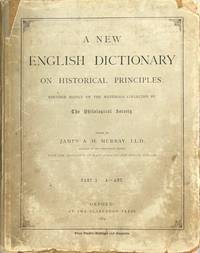
1933réf. 71212Oxford: At the Clarendon Press 1933. First edition in the earliest state of the original 125 fascicles plus the final Supplement Bibliography and Introduction contained in 14 blue cloth clamshell boxes. Large 4to wrappers some loose 2 back wrappers missing and cloth-backed boards many of the latter with dust jackets jackets often with nicks tears splits and some with occasional loss; with many prefaces prefatory notes titles half titles and assorted ephemera etc. most not included in the book edition; a complete set in the most desirable state. This copy belonged to Fitzedward Hall 1825-1901 the American Orientalist and philologist and the author of several works on Sanskrit and Hindi who was "with another US citizen Dr. William Chester Minor the 'professor' in The Professor and the Madman one of the most important and most obsessive collaborators the OED Project's director Sir James Murray 1837-1915 had and is recognized as such in many of the prefaces to the Dictionary itself" Wikipedia. The first fascicle A-ANT is inscribed to Hall by the editor A. H. Murray three days prior to its publication date of February 1 1884. "To F. Hall Esq. D.C.L. / With Compliments and very special Thanks of / James A. H. Murray / 29 Jany. 1884." The second fascicle ANT-BATTEN is also inscribed: "To Fitzedward Hall Esq. D.C.L. / with the deeply grateful regards of / James A. H. Murray / Oxford 12 Nov 1885." Says Murray in the introductory matter to A-ANT: "Henry Hucks Gibbs Esq. M.A. and Fitzedward Hall Esq. D.C.L. who have given general help in every direction .Mr. Gibbs and Mr. Hall have read all but the earliest proof-sheets supplied deficiencies and given valuable literary criticism." Later Murray noted: "Time would fail to tell of the splendid assistance rendered to the Dictionary by Dr. Fitzedward Hall who devotes nearly his whole day to reading the proofs.and to supplementing correcting and increasing the quotations taken from his own exhaustless stores. When the Dictionary is finished no man will have contributed to its illustrative wealth so much as Fitzedward Hall. Those who know his books know the enormous wealth of quotation which he brings to bear upon every point of English literary usage; but my admiration is if possible increased when I see how he can cap and put the cope-stone on the collections of our 1500 readers." After his death in February 1901 when the dictionary was up to the letter 'J' "Murray corresponded with Hall's son to try to find and reference the supplies of quotations his father had noted but not submitted with unclear results." There are perhaps a couple of hundred or so annotations in the early fascicles by Fitzedward Hall. They are written in a tiny hand and are often in abbreviated or shorthand form and frankly difficult to read let alone parse. "In 1919-1920 J. R. R. Tolkien was employed by the OED researching etymologies of the Waggle to Warlock range;25 later he parodied the principal editors as "The Four Wise Clerks of Oxenford" in the story Farmer Giles of Ham" Wikipedia. Printing and the Mind of Man 371: "The greatest tresure house of any language in the world." A-ANT 1884 Murray; ANT-BATTEN 1885 Murray; BATTER-BOZ 1887 Murray; with complimentary slip from the Oxford University Press Delegates laid in - heretofore "OUP comp slip"; BRA-BYZ 1888 Murray; C-CASS 1888 Murray; CASS-CLIVY 1889 Murray; CLO-CONSIGNER 1891 Murray; CONSIGNIFICANT-CROUCHING 1893 Murray; OUP comp slip; CROUCHMAS-CZECH 1893 Murray; with a note tipped in on the binding of letter 'C'; D-DECIET 1894 Murray; back wrapper missing; DECIET-DEJECT 1895 Murray; DEJECT-DEPRAVATION 1895 Murray; OUP comp slip; DEPRATIVE-DEVELOPMENT 1895 Murray; DEVELOPMENT- DIFFLUENCY 1896 Murray; DIFFLUENT-DISBURDEN 1896 Murray; DISBURDENED-DISOBSERVANT 1896 Murray; DISOBST-DISTRUSTFUL 1897 Murray; OUP comp slip; DISTRUSTFULLY-DOOM 1897 Murray; back wrapper missing; DOOM-DZIGGETAL 1897 Murray; with notice to binder on blue paper laid in; OUP comp slip; E-EVERY 1891 Murray & Henry Bradley; OUP comp slip; EVERYBODY-EZOD 1894 Murray & Bradley; prospectus for Skeat's Chaucer bound in and specimen page for the same laid in; errata slip for 'eye-star' tipped-in; F-FANG 1894 Bradley; FANGED-FEE 1895 Bradley; OUP comp slip; FEE-FIELD 1895 Bradley; FIELD-FISH 1896 Bradley; FISH-FLEXUOSE 1896 Bradley; FLEXUOSITY-FOISTER 1897 Bradley; FOISTY-FRANKISH 1897 Bradley; FRANK-LAW - GAIN-COMING 1898 Bradley; with dedication leaf to Queen Victoria bound in; with Note on the structure of this particular fascicle laid in; OUP comp slip; GAINCOPE- GERMANIZING 1898 Bradley; OUP comp slip; GERMANO-GLASS-CLOTH 1899 Bradley; GLASS-COACH-GRADED 1900 Bradley; OUP comp slip; GRADELY-GREEMENT 1900 Bradley; OUP comp slip; GREEN-GYZZARN 1901 Bradley; note for GREEN-GYZZARN laid in; OUP comp slip; H-HAVERSIAN 1898 Murray; OUP comp slip; HAVERSINE-HEEL 1898 Murray; OUP comp slip; HEEL-HOD 1899 Murray; OUP comp slip; HOD-HORIZONTAL 1899 Murray; HORIZONTALLY-HYWE 1899 Murray; 'Notice' slip on green paper laid in; also a single leaf laid in 'HORIZONJTALITY-HYWE'; I-IN 1899 Murray; OUP comp slip; IN-INFER 1900 Murray; INFERABLE-INPUSHING 1900 Murray; INPUT-INVALID 1900 Murray; INVALID-JEW 1901 Murray; JEW-KAIRINE 1901 Murray; OUP comp slip; KAISER-KYX 1901 Murray; OUP comp slip; L-LAP 1901 Bradley ; LAP-LEISURELY 1902 Bradley; 6-p. prospectus for Wright's English Dialect Dictionary laid in; OUP comp slip; LEISURENESS-LIEF 1902 Bradley; LIEF-LOCK 1903 Bradley; OUP comp slip; LOCK-LYYN 1903 Bradley; OUP comp slip; M-MANDRAGON 1904 Bradley; OUP comp slip; MANDRAGORA-MATTER 1905 Bradley; OUP comp slip; MATTER-MESNALTY 1906 Bradley; OUP comp slip; MESNE-MISBIRTH 1907 Bradley; OUP comp slip; MISBODE-MONOPOLY 1907 Bradley; OUP comp slip; MONOPOLY-MOVEMNENT 1908 Bradley; MOVEMENT-MYZ 1908 Bradley; directions to binder slip on green paper tipped in; also commerative leaf to the Company of Goldsmiths at the end; OUP comp slip; N-NICHE 1906 W.A. Craige; OUP comp slip; NICHE-NYWE 1907 Craige; OUP comp slip; O-ONOMONASTIC 1902 Murray; OUP comp slip; ONOMONASTICAL-OUTING 1903 Murray; OUP comp slip; OUTJET-OZYAT 1904 Murray; P-PARGETED 1904 Murray; OUP comp slip; PARGETER-PENNACHED 1905 Murray; OUP comp slip; PENNAGE-PFENNING 1905 Murray; OUP comp slip; PH-PIPER 1906 Murray; OUP comp slip; PIPER-POLYGENISTIC 1907 Murray; POLYGENOUS-PREMIOUS 1908 Murray; OUP comp slip; PREMISAL-PROPHESIER 1909 Murray; OUP comp slip; PROPHESY-PYXIS 1909 Murray; directions to the binder slip on green paper tipped in; OUP comp slip; Q 1902 Craige; R-REACTIVE 1903 Craige; REACTIVELY-REE 1904 Craige; REE-REIGN 1905 Craige; OUP comp slip; REIGN-RESERVE 1906 Craige; RESERVE-RIBALDOUSLY 1908 Craige; OUP comp slip; RIBALDIC-ROMANITE 1909 Carige; OUP comp slip; ROMANITY-ROUNDNESS 1910 Craige; OUP comp slip; ROUND-NOSE-RYZE 1910 Craige; OUP comp slip; S-SAUCE 1909 Bradley; OUP comp slip; SAUCE-ALONE-SCOURING 1910 Bradley; OUP comp slip; SCOURING-SEDUM 1911 Bradley; OUP comp slip; SEE-SENATORY 1912 Bradley; OUP comp slip; SENATORY-SEVERAL 1912 Bradley; OUP comp slip; SEVERAL-SHASTER 1913 Bradley; OUP comp slip; SHASTRI-SHYSTER 1914 Bradley; SI-SIMPLE Craigie 1911; OUP comp slip; SIMPLE-SLEEP Craigie 1911; OUP comp slip; SLEEP-SNIGGLE Craigie 1912; OUP comp slip; SNIGGLE-SORROW Craigie 1913; OUP comp slip; SORROW-SPEECH Craigie 1914; OUP comp slip; SPEECH-SPRING Craigie 1914; OUP comp slip; SPRING-STANDARD Craigie & Bradley 1915; OUP comp slip; STANDARD-STEAD Bradley 1915; with a leaf announcing the death of Murray; also laid in is a 16-page self-wrappered pamphlet: "The Oxford English Dictionary - A Brief Account: Sir James Murrray - In Memoriam" with a portrait of Murray and 5 photomechanical illustrations of the editors and staff; also a specimen sheet by Murray covering the words INFRA-INFRUCTUOSE; OUP comp slip; STEAD-STILLATIM Bradley 1916; STILLATION-STRATUM Bradley 1917; STRATUS-STYX Bradley 1919; directions to binder slip on gray paper tipped in; OUP comp slip; SU-SUBTERRANEOUS C. T. Onions 1915; OUP comp slip; SUBTERRANEOUSLY-SULLEN Onions 1916; OUP comp slip; SULLEN-SUPPLE Onions 1917; OUP comp slip; SUPPLE-SWEEP Onions 1918; SWEEP-SZMIKITE Onions 1919; binder's slip dated July 1919 laid in; T-TEALT Murray 1910; OUP comp slip; TEAM-TEZKERE Murray 1911; OUP comp slip; TH-THYZLE Murray 1912; OUP comp slip; TI-TOMBAC Murray 1913; OUP comp slip; TOMBAL-TRAHYSH Murray 1913; OUP comp slip; TRAIK-TRINITY Murray 1914; OUP comp slip; TRINK-TURN-DOWN Murray 1915; OUP comp slip; TURNDUN-TZIRID Murray & Craigie 1916; OUP comp slip; U-UNFORESEEABLE Craigie 1921; UNFORESEEING-UNRIGHT Craigie 1924; UNRIGHT-UZZLE Craigie 1926; OUP comp slip; V-VERIFICATIVE Craigie 1916; OUP comp slip; VERIFICATORY-VISOR Craigie 1917; OUP comp slip; VISOR-VYWER Craigie 1920; W-WASH Bradley 1921; WASH-WAVY Bradley 1923; WAVY-WEZZON Bradley & Craigie 1926; WH-WHISKING Onions 1923; WHISKING-WILFULNESS; WILGA-WISE Onions 1926; WISE-WYZEN Onions & Craigie 1928; OUP comp slip; X-ZYXT Onions 1921; Supplement Bibliography & Introduction in original wrappers torn and split Craigie & Onions 1933 At the Clarendon Press unknown books
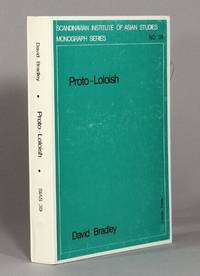
1979réf. 71546London & Malmö: Curzon Press 1979. First edition 8vo pp. xi 1 452; printed from typescript; very good clean and sound in original green and white paper wrappers. Issued as no. 39 in the publisher's Scandinavian Institute of Asian Studies Monograph Series. An ancestor of Proto-Sino-Tibetan and Proto-Lolo-Burmese languages Proto-Loloish "is a reconstructed language. Its words and roots are not directly attested in any written works but have been reconstructed through the comparative method which finds regular similarities between languages that cannot be explained by coincidence or word-borrowing and extrapolates ancient forms from these similarities" en.wiktionary.org. Curzon Press unknown books
1970réf. 614923Baton Rouge: Louisiana State University Press 1970. Hardcover. Fine/Near Fine. First edition. 311pp. Fine in a near fine price-clipped dust jacket with some rubbing. Louisiana State University Press hardcover books
1986réf. 62877Lisbon Iowa: to celebrate a new life at the New Year. The Penumbra Press at Abattoir Editions 1986. Edition limited to 235 copies on Lana Laid paper 12mo pp. 14; title page printed in brown blue and black; woodcut frontispiece; fine copy in original printed wrappers. From the library of Kim Merker. Hand-set and printed by Bonnie O'Connell in Cloister Old Style and Romulus types. to celebrate a new life at the New Year. The Penumbra Press at Abattoir Editions unknown books
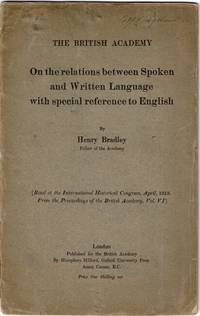
1913réf. 63079London: published for the British Academy by Humphrey Milford Oxford University Press 1913. First edition 8vo pp. 22; original gray printed wrappers loose but present; some soiling a few light pencil underlines; all else good. Kennedy 7566. published for the British Academy by Humphrey Milford, Oxford University Press unknown books
1897réf. 3382Frederick A. Stokes Co. New York 1897 IN THE ORIGINAL LINEN DUST WRAPPER WITH LETTERING AND DECORATION BY BRADLEY An octavo bound in the original rust colored cloth with a beautiful heavily gilt cover design by Bradley. The book is fine with no wear and the gilt clean bright and unworn. New endleaves with appropriate paper done at some point in the past. The paper backed linen dust-wrapper has wear and tear internally at the folds and is soiled with some darkening to the spine. Gilt titling and decoration by Bradley on the dustwrapper is bright and unworn. Very scarce and a nice example of the early cloth dust wrapper. Illustrated by Madeleine Lemaire. Frederick A. Stokes, Co. hardcover books
1897réf. 2666Chicago: Way & Williams 1897. First edition. A beautiful copy in the original black pictorial cloth. Front rear and spine panels stamped in red and yellow TEG other edges untrimmed. First edition first printing. Anatomy of Wonder 1976 2-160; 1981 1-70; 1987 1-97; and 1995 1-97. Bleiler 1978 p. 203. A near fine copy. Way & Williams hardcover books
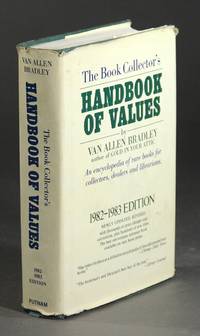
1982réf. 37134New York: G.P. Putnam's Sons 1982. Fourth revised enlarged edition; 8vo pp. xiv 640; inscribed by the author; green boards in dustjacket; signs of shelf wear edges and corners of dj chipped in and worn. G.P. Putnam's Sons unknown books
1861réf. 29932London: Longman Green Longman and Roberts 1861. First edition 2 volumes in 1 thick 8vo pp. xxviii 371 1; xiv 358 2 ads; 3 maps 2 hand-colored 1 folding 8 chromolithographs and 61 woodcuts 8 on plates the balance in the text; attractive copy in original green diaper cloth lettered in gilt on spine. The Rev. Edward Bradley 1827-1889 writing under the name of Cuthbert Bede wrote this extensive history and guide to the peninsula in the west of Scotland. The illustrations are made from sketches and watercolors by the author. Longman, Green, Longman, and Roberts unknown books