17 064 résultats
1982réf. 600655New York: Alfred A. Knopf 1982. Hardcover. Very Good/Near Fine. First edition. Gift inscription on front fly. Page edges lightly foxed spine with a very slight ripple and sunned at the tip of the spine base very good in a price-clipped else fine dust jacket with a tiny bit of wear. Alfred A. Knopf hardcover books
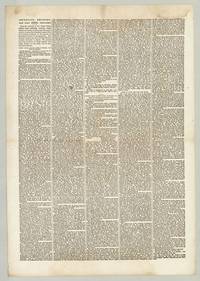
réf. 9066Georgia 1873. Broadside 18" x 12.75" text in five columns. CONDITION: Good old folds light dampstaining one small stain in the second column one tiny puncture at right margin and a small puncture at center causing losses to three letters. A scarce broadside concerning two Federal court decisions that upheld the selection of African American jurors in Georgia per the 14th and 15th Amendments. This broadside was published a day after the decision of Judge Joseph Bradley Associate Justice of the Supreme Court of the U.S. in the U.S. Circuit Court Southern District of Georgia regarding the mixed-race jury in the case of United States Vs. Appleton P. Collins of Macon Georgia "on indictment for violation of Enforcement Act." In 1872 Collins participated in a racially-fueled riot involving voter intimidation against African Americans at a Macon voting station that resulted in fatalities. Responding to "the argued motion to quash the indictment against Mr. A. B. Collins.on the ground of the illegal selection of the grand jury" Judge Bradley upholds an earlier decision delivered in Atlanta by Judge John Erskine of the U.S. Circuit Court in the Northern District of Georgia which calls for juries to be selected "without regard to race color or previous condition." The broadside reprints the decisions of Judges Bradley and Erskine both of which reject motions by white defendants arguing that the mixed-race juries in their respective trials were illegal. Prior to emancipation both enslaved and free African Americans were barred from testifying in court against whites an exclusion that the Black Codes passed by state governments across the South during Reconstruction sought to uphold by making it illegal for African Americans to serve on juries or testify against whites. These codes were countered by the Enforcement Acts 1870-71 which protected those contested rights and allowed Federal intervention in the event of states' failure to uphold them. Judge Bradley's recent decision is presented first. He opens by observing that U.S. courts are independent of state laws and that their processes and procedures are subject to the sole regulation of Congress and its courts. Bradley thus establishes the sovereignty of the Federal government over individual states in spite of the Black Codes. On the subject of selecting and empaneling jurors in the U.S. courts Bradley invokes the Congressional mandate that they be designated by lot "and that they should have the same qualification as required for jurors in the highest courts of the State"-a rule that has its precedent in the July 20 1840 Act of Congress 5 Stat. 394. Bradley states that conformity between Congress and state law concerning jury selection is required on two fronts: "first in reference to the qualifications and exemptions of jurors; secondly in reference to the mode of designating and empanelling jurors as by ballot lot or otherwise." In Georgia he continues the only qualifications of jurors are that "they shall be upright and intelligent jurors between the ages of 21 and 60" and-following an 1869 statute-that they be taxpayers. Officers-state or county officials-are to select from the body of the District 500 persons "without regard to race color or previous condition to serve as jurors" which is "in accord with the spirit of the Fourteenth and Fifteenth Amendments to the Constitution by which all persons born or naturalized in the United States are citizens and entitled to full equality before the laws." The broadside then reprints an earlier decision sustained by Bradley of Judge Erskine in the 1872 case United States vs. William Gardner on "indictment for violation of Revenue laws." Erskine writes: "Before the perusal of the panel comprised of six white persons and six colored the defendant challenged the array on the ground that the jury was illegally constituted and moved that it be quashed." By a rule of the U.S. District Court for this District that was adopted at the March term of 1871 the Marshal was instructed to select the "most upright and intelligent persons" without regard to race or color from the jury list of the county. Concerning the word "most" Erskine writes that the question is raised "by learned counsel on both sides" whether the word was "to apply to each class white or colored." He responds: "At most the word but expressed moral fitness as necessary to the end proposed." Of the nearly 1700 names forwarded to the Marshal 250 names were picked and "strange as it may appear every ballot drawn from the box contained the name of a white person." The ratio in this Judicial District of whites to Blacks is eight to five. Erskine comments: It is obvious to the common mind that that mode of designating or selecting these jurors cast the entire burden of jury service in the Federal Court upon one of the classes only- white citizens; thus released colored citizens who possessed the constitutional and statutory qualifications for jurors from the performance of a duty which they equally with the qualified white citizens owed to their country. Not only the Constitution of this State but the recent amendments to the National Constitution have made the colored man a citizen habilitating him with all the rights privileges and immunities enjoyed by the white citizen: therefore he should perform his part of the public labor. Erskine cites an 1872 amendment ordering that "each ballot shall be so rolled that neither the name nor the county can be seen. The ballots shall then be placed in the box and thoroughly mixed." It is noted that no property qualification is required in Georgia for an individual to serve as a juror. "To be 'white' was another qualification for a juror but this no longer exists-State Constitution supra." The broadside concludes with Erskine's examination of a number of other cases. The defendant in the first case Dr. Appleton P. Collins 1835-1886 was born in Macon Georgia and graduated from the Medical College of New Orleans immediately before the Civil War broke out. He enlisted in the 2nd Battalion Georgia Infantry Co. B in May 1861 and was discharged in September 1862 when he was approved to serve as an assistant surgeon for the Confederate Army. After the war he was appointed city physician for Macon. In 1872 the Georgia Weekly Telegraph Journal and Messenger reported a violent encounter between white and Black voters at a Macon voting station in which several people were killed. The white participants' intimidation tactics violated the Enforcement Act and evidently led to the case United States Vs. Appleton P. Collins. Witnesses quoted in the Telegraph article described the events as follows: The white and blacks had met and there seemed to be a great struggle at the polls as to which should vote. I called the attention of the gentleman to it and proposed to go down and draw away the blacks until arrangements could be made for voting. There were more blacks than whites-a great many more. The colored people were confined to the rear most of the morning but had made a sort of flank movement and were coming from two directions.The struggle between the men seemed to be to see which should get the polls .I was engaged at the time with a white man and a colored man who seemed struggling to see who should get on the terrace.That was Dr. Appleton Collins. He was in a fight with a negro.I saw a pistol between them. No examples recorded in OCLC but we find an example at the University of Georgia. A fascinating broadside offering insight into race relations as they pertained to jury selection for trials in Georgia during the Reconstruction era. REFERENCES: "Appleton P. Collins Macon City Physician" at Rose Hill Cemetery Macon Georgia online; Georgia Weekly Telegraph Journal and Messenger Macon November 5 1872 p. 3. [Georgia,] 1873 unknown books
2001réf. 42707NY: Knopf 2001. Hardcover. Very good. Hardcover. First Edition. Very good hardback in a very good dustjacket. Review copy with slip laid in. Knopf hardcover books
1970réf. 614923Baton Rouge: Louisiana State University Press 1970. Hardcover. Fine/Near Fine. First edition. 311pp. Fine in a near fine price-clipped dust jacket with some rubbing. Louisiana State University Press hardcover books
1897réf. 3382Frederick A. Stokes Co. New York 1897 IN THE ORIGINAL LINEN DUST WRAPPER WITH LETTERING AND DECORATION BY BRADLEY An octavo bound in the original rust colored cloth with a beautiful heavily gilt cover design by Bradley. The book is fine with no wear and the gilt clean bright and unworn. New endleaves with appropriate paper done at some point in the past. The paper backed linen dust-wrapper has wear and tear internally at the folds and is soiled with some darkening to the spine. Gilt titling and decoration by Bradley on the dustwrapper is bright and unworn. Very scarce and a nice example of the early cloth dust wrapper. Illustrated by Madeleine Lemaire. Frederick A. Stokes, Co. hardcover books
1897réf. 2666Chicago: Way & Williams 1897. First edition. A beautiful copy in the original black pictorial cloth. Front rear and spine panels stamped in red and yellow TEG other edges untrimmed. First edition first printing. Anatomy of Wonder 1976 2-160; 1981 1-70; 1987 1-97; and 1995 1-97. Bleiler 1978 p. 203. A near fine copy. Way & Williams hardcover books
1970réf. 10055Springfield IL: Charles C. Thomas 1970. First Edition. Hardcover. Fine in Very Good DJ. First Edition. Hardcover. Forward by Tom Shires. "This monograph represents an increasing recognition of the previously neglected disease of modern times- trauma. This surgical illness is continuously increasing in our society and its now the leading cause of death in the first three decades of life and the third leading cause of death in all ages. In spite of these apalling statistics relative to trauma only recently have clinical and research data been combined in an organized fashion in an attempt to improve the care of the injured patient." Includes a chapter by George Fisher "War Wounds Of The Abdomen In Vietnam" Tight bright and unmarred. DJ shows light shelf/edge wear small closed tear discrete pen notation at rear flap else clean and bright. Orange cloth boards gilt lettering. 8vo. 126pp. Illus. b/w plates. Index. Charles C. Thomas hardcover books
2019réf. 134324N.P.: The Clinker Press 2019. stiff paper wrappers. Clinker Press. 8vo. stiff paper wrappers. ii 6 4 pages. Reprint from "The Printing Art" XX:1 September 1912. The Clinker Press unknown books
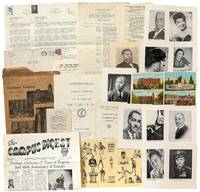
1956réf. 549515Alabama: Tuskegee Institute 1956. Unbound. Very Good. Printed brown envelope with brass clasp 9½” x 12½”. Illustrated from photographs on the front side. Contains several printed programs printed portraits of noted students newsletters post cards ephemera etc. all relating to the Class of 1936 Twentieth Anniversary Reunion held at the Tuskegee Institute March 23-25 during its 75th Anniversary Celebration. A few scattered tears at the edges of the envelope the envelope flap is mostly torn away a few internal materials are lightly rubbed along two or three old folds very good or better overall. Thelma Belcher’s “Welcome” packet of materials to her 20-year reunion of the Tuskegee Institute. Included is a spirited invitation letter from Laly Charlton Washington Miss Tuskegee 1935-36 along with multiple programs and associated ephemera. Also included is another invitation letter sent from Washington to Thelma’s classmate Ollie Belcher. Thelma and Ollie married in 1937 and the couple eventually settled in Detroit where she worked as a librarian and Ollie worked as a supervisor at Ford Motor Company. He was inducted into the Tuskegee University Athletic Hall of Fame in 1974. Each invitation letter is illustrated with a small halftone portrait of the recipient Thelma and Ollie presumably taken from a yearbook mounted at top left corner. A nice survival of materials documenting both the Class of ’36 reunion and the Tuskegee Institute’s 75th Anniversary Celebration. A detailed list of the envelope’s contents is available. Tuskegee Institute unknown books
1900réf. TB31551New York: E. P. Dutton n.d. 1900. First Edition. Very good in its original purple cloth covered boards with gilt text on the spine and on the front board with a mild spine lean. The end sheets appear to be much newer indicating a replacement to repair weakened or cracked hinges. An octavo of 8 5/8 by 5 3/4 inches with the cloth at the head and heel of the spine worn and just beginning to fray and the cloth over the tips of the boards is rubbed the title page preliminaries and first few pages of the book show foxing which is also true of the last few pages the index and faint foxing throughout the book. There is a one inch stain to the fore edge of the text block and a narrow stain to the upper margins of pages 185 to 194. 400 pages of text including an index. Illustrated with a fold-out map of Canada and the English Colonies in 1750 as the frontispiece and with five other maps one of which folds out. A difficult title to locate in first edition. E. P. Dutton hardcover books
1996réf. 004179New York: Alfred A. Knopf 1996. 1st Edition. Hardcover. Fine/Fine. 8vo - over 7¾ - 9¾" tall. 442 pp. Beautiful Sixth Printing Square tight and clean throughout with little or no wear. Appears unread. Equally attractive unclipped wrapper $26.00 is fresh and bright with no creases chipping or tears. Signed and inscribed by the author on the title page to an unspecified Labor Leader "For Jim President of 393 Bill Bradley" A gorgeous collectable copy at a great price. Alfred A. Knopf hardcover books
2009réf. TB27696Boston: Little Brown and Company 2009. First Edition. First Printing Fine in 1/4 black and light gray paper covered boards with white text on the spine and the publisher's initials embossed in blind on the front board. A small quarto measuring 9 1/4" by 6" with map end sheets. 387 pages of text including an index. Illustrated with maps and black and white photographs. Little Brown and Company hardcover books
1985réf. 192754San Francisco: Nomenus 1985. 20p. 8.5x11 inches cover is a photo of a Fairy Circle and a view of Fairy Land information on the organization many photos songs tables cost estimates very good newsletter. Radical Faerie newsletter from a group attempting to establish a sanctuary on open land. Photo of Harry Hay as The Duchess. Only 3 holdings located in OCLC as of 1/2015. Nomenus unknown books
1979réf. TB27653New York: Holt Rinehart and Winston 1979. First Edition. First Printing Fine in dark green cloth covered boards with bold copper colored text stamping on the spine. A quarto measuring 11" by 8 1/2" with dark blue end sheets with a small gift inscription on the verso of the second free end page. Without its issued dust jacket. 165 pages of text and illustrated with a frontispiece photograph of Frost and 48 color photographic plates by David Jones. Holt, Rinehart and Winston hardcover books
1996réf. TB09435New York: Alfred A. Knopf 1996. First Edition. Near fine in 1/4 red cloth and black paper covered boards with a faint crease down the middle of the spine. In a near fine unclipped dust jacket. 442 pages including an index. Alfred A. Knopf hardcover books
1978réf. TB00985New York: G. P. Putnam 1978. 2nd Edition. Very Good - x-library In a very good dust jacket. G. P. Putnam unknown books
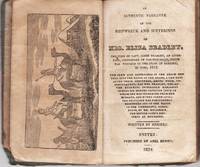
1824réf. 51388Exter: Abel Brown 1824. An exciting early and popular work by a strong and courageous woman. Mrs. Bradley along with her husband and his crew were captured by desert Arabs after a shipwreck off Morocco. She endured six months of captivity and was ultimately ransomed by the British Consul. Unfortunately according to Huntress "This narrative is almost certainly spurious another in the succession "Captivity and Sufferings of Mrs. Mary Velnet" and "Captivity and Sufferings of Maria Martin." Nonetheless Mrs. Bradley's book has wormed its way into the imaginations of generations and is now a part of shipwreck literature. See Huntress 202C. Owner's inscription of Nahum Mitchell on front blank. Bound as issued in 1/4 sheep over blue paper-covered boards. . 14.5 cm. 76 pp. b/w frontispiece. Abel Brown hardcover books
1975réf. 007006London: Jonathan Cape 1975 Gilt stamped blue cloth light shelf wear; illustrated dust jacket sunned along bottom edge and spine. Wonderful folk-art style paintings depicting Edwardian England. . First Edition. Near Fine/Near Fine. Large Oblong 4to. Jonathan Cape hardcover books
2007réf. 339259New York: Random House 2007. First. hardcover. fine/fine. 364 pages 8vo red and black boards dust wrapper. New York: Random House 2007. First printing. Pages a bit toned still a fine copy in a near fine dust wrapper. Inscribed on the title page: "For Dr. Hanauer -- Treat Holly Well -- Bill Bradley. Random House unknown books
2007réf. 266573New York: Random House 2007. Reprint. hardcover. near fine/near fine. 364 pages 8vo red and black boards dust wrapper. New York: Random House 2007. Seventh printing. Pages toned else a near fine copy in a near fine dust wrapper. Inscribed on the title page: "For Sally Bill Bradley. Random House unknown books
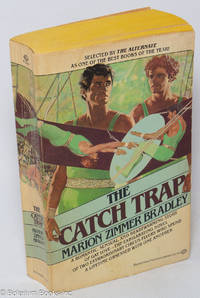
1980réf. 318190New York: Ballantine 1980. Paperback. 688p. lightly worn and toned first mass-market paperback edition in pictorial wraps. The Ballantine 1979 hardcover is Young 408. Trapeze artists. Ballantine paperback books
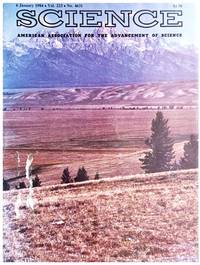
1984réf. S6917In: Science Vol. 223 6 January 1984. Washington D.C.:: American Association for the Advancement of Science 1984. 1984. 4to. Pages 56-57. Entire issue: 98 pp. 2 figs. Pictorial wrappers. Very good. FIRST EDITION. Reports finding carbonaceous material in association with iron-nickel alloy carbides and oxides in interplanetary dust particles. The carbides and oxides are typical of the Fischer-Tropsch reaction. "Associations of carbonaceous material with iron-nickel alloy carbides and oxides were identified by analytical electron microscopy in ten unmelted chondritic porous micrometeorites from the earth's stratosphere. These associations which may be interpreted in terms of reactions between a carbon-containing gas and catalytically active dust grains suggest that some of the carbon in the chondritic porous subset of interplanetary dust was emplaced through heterogeneous catalysis." American Association for the Advancement of Science, 1984. unknown books
1994réf. 1397391Rockville Maryland: Quill & Brush 1994. Limited Edition #45/200. Hardcover. Octavo 115 pages. In Very Good condition with Very Good condition slip case. Spine is grey with black lettering. Slip case has light fraying at corners and along closed-end head edge and faint brown smudges along head edge and spine. Boards have light creasing along rear head joint and mild sun-fading along spine. Textblock has a faint brown smudge along fore edge pp.87-108. Signed by each author on the author page preceding their story. Contains an original silkscreen print signed by Lou Stovall Artist protected by publisher's glassine paper. Shelved in Room Z. 1397391. Special Collections - Upstairs. Quill & Brush hardcover books
1955réf. 301540Milton Bradley 1955. Map. Color lithograph. Measures 17 1/4" x 15 3/8" This pictorial game map was issued by Milton Bradley company in 1955. A game board outlines the map with each space named for American cities including 16 pictorial city views. The map features a large DC-7 plane near the title shows major airline routes in red and road networks in black. Includes instructions for 6 different games using the board with the game pieces found in a Cheerios box. Verso includes various fun facts about American Airlines and the airline industry and features another game board with a map outline. In excellent condition. Small closed tear to right margin along original fold lines. Milton Bradley unknown books
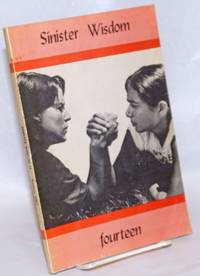
1980réf. 196538Lincoln: Sinister Wisdom 1980. Magazine. 112p. paperback journal mild handling wear generally very good. Includes "Home Movie" by Jane Rule and "It's Important to believe" by Russ. Sinister Wisdom unknown books