Plato [Socrates]Biblio.com
715 résultats
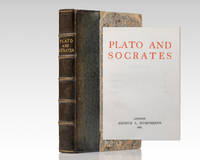
1907réf. 151306London: Arthur L. Humphreys 1907. Finely bound edition of this collection of Plato's Socratic dialogues including “Euthyphro” “Apology” “Crito” and “Phaedo”. Octavo bound in half morocco over marbled boards with gilt titles to the spine in six compartments within raised gilt bands top edge gilt. In near fine condition. Plato c. 427–347 BCE and Socrates c. 470–399 BCE were central figures in the development of ancient Greek philosophy and the foundations of Western intellectual thought. Socrates who left no written works of his own is known primarily through the dialogues of Plato and the writings of contemporaries such as Xenophon; he is remembered for his method of philosophical inquiry based on questioning dialectic and the pursuit of ethical truth. Plato Socrates’ most famous student preserved and developed many of his teacher’s ideas in a series of philosophical dialogues that explored topics including justice knowledge virtue and the nature of reality. Through works such as The Republic Plato both commemorated Socrates’ intellectual legacy and expanded it into a comprehensive philosophical system that would shape later traditions in metaphysics ethics and political theory. Arthur L. Humphreys hardcover
1977Book is in excellent condition. Binding is solid and square, covers have sharp corners, exterior shows no blemishes, text/interior is clean and free of marking of any kind. Dust jacket shows light edge wear, shelf wear only, no tears, is price clipped. Contents include: Plato and Socrates, The Gorgias, Phaedrus and Statesman, Timaeus and Critias, The laws, Aristotle and Plato, Science of the polis, On types of character and skepticism, etc. with three indexes.
1967Pencil notes to inner cover. Pencil underlining throught greek text. Pen notes to back inner cover. English commentary is clean. ; Greek Text with English Introduction and Commentary. ; 115 pages
Typescript (? photocopied?) stapled into green paper wrapper.No date or place or publisher given. 21p.Some handwritten notes inside front cover and in margins, [Alan D Bloom 1936-1992 Author - b.Indianapolis, Indiana, USA. Educated at the University of Chicago, he joined the Chicago liberal arts faculty in 1955, moved on to Cornell and the University of Toronto (1963-79), and returned to Chicago in 1979 to teach political philosophy. He remained an obscure translator of Plato until the publication of his Closing of the American Mind (1987), a neoconservative polemic against what he perceived as the politicization of academia and the decline of liberal education in the Western tradition.] Book
2003réf. 30231Newburyport Massachusetts U.S.A.: Focus Pub R Pullins & Co. New. Paperback. FREE UPGRADE to Courier/Priority Shipping Upon Request - IN STOCK AND IMMEDIATELY AVAILABLE FOR SHIPMENT - FLAWLESS COPY PRISTINE NEVER OPENED -- 140 pages; clean and crisp tight and bright pages with no writing or markings to the text. -- DESCRIPTION: This new translation provides a careful introduction to one of Plato’s most widely studied dialogues. -- -- IMPORTANT / UNIQUE FEATURE: Included is a unique series of illustrations graphically describing step by step the geometrical argument central to understanding the Meno. Extensive endnotes provide guidance to understanding the structure and content of the dialogue. -- The endnotes annotating the text of the dialogue are keyed to our new Speech numbers along with the old Stephanus numbers but without reference to those notes in the text itself to distract the reader of the dialogue. Many readers once it is understood who is talking and perhaps where and when should be able to go through this dialogue without consulting any notes except perhaps for the geometrical illustrations provided in the note for Speech 356 86E-87B and Appendix B of this volume. Thus an attempt has been made by us to permit the reader of English to come to our text much as the reader of Greek might come to Plato’s original text. Some of the endnotes provide elementary information about now-obscure references in the text other of them are about implications of Greek words and wordplay that no translation can convey; still others are designed to help the reader address some of the more difficult questions raised by the dialogue. The endnotes also include references to other Platonic dialogues and to some ancient and modern texts where various questions touched upon in the Meno are treated in much greater detail than it is useful to do here. More than one-fourth of the Speeches in the Meno have at least one endnote provided for them in this volume. -- AUTHORS: George Anastaplo is a Professor of Law at Loyola University of Chicago. He has published numerous wide ranging works in law philosophy and humanities. Laurence Berns is a faculty member of St John’s College Annapolis where he has enjoyed a long and distinguished career. -- with a bonus offer--; 520-Anast; PLATO SOCRATES ; Anastaplo George; Berns Laurence transl. intro Plato's MENO ; PLATO ; SOCRATES PHILOSOPHY This new translation provides a careful introduction to one of Plato’s most widely studied dialogues. -- -- IMPORTANT / UNIQUE FEAT . 2003. 0941051714 . Focus Pub R Pullins & Co paperback
2003réf. 35325Newburyport Massachusetts U.S.A.: Focus Pub R Pullins & Co. New. Paperback. FREE UPGRADE to Courier/Priority Shipping Upon Request – – IN STOCK AND IMMEDIATELY AVAILABLE FOR SHIPMENT - FLAWLESS COPY PRISTINE NEVER OPENED -- 140 pages; clean and crisp tight and bright pages with no writing or markings to the text. -- DESCRIPTION: This new translation provides a careful introduction to one of Plato’s most widely studied dialogues. -- -- IMPORTANT & UNIQUE FEATURE: Included is a unique series of illustrations graphically describing step by step the geometrical argument central to understanding the Meno. Extensive endnotes provide guidance to understanding the structure and content of the dialogue. -- The endnotes annotating the text of the dialogue are keyed to our new Speech numbers along with the old Stephanus numbers but without reference to those notes in the text itself to distract the reader of the dialogue. Many readers once it is understood who is talking and perhaps where and when should be able to go through this dialogue without consulting any notes except perhaps for the geometrical illustrations provided in the note for Speech 356 86E-87B and Appendix B of this volume. Thus an attempt has been made by us to permit the reader of English to come to our text much as the reader of Greek might come to Plato’s original text. Some of the endnotes provide elementary information about now-obscure references in the text other of them are about implications of Greek words and wordplay that no translation can convey; still others are designed to help the reader address some of the more difficult questions raised by the dialogue. The endnotes also include references to other Platonic dialogues and to some ancient and modern texts where various questions touched upon in the Meno are treated in much greater detail than it is useful to do here. More than one-fourth of the Speeches in the Meno have at least one endnote provided for them in this volume. -- AUTHORS: George Anastaplo is a Professor of Law at Loyola University of Chicago. He has published numerous wide ranging works in law philosophy and humanities. Laurence Berns is a faculty member of St John’s College Annapolis where he has enjoyed a long and distinguished career. -- with a bonus offer--; 520-Anast2; Plato; SOCRATES ; Anastaplo George; Berns Laurence transl. intro Plato's MENO ; PLATO ; SOCRATES PHILOSOPHY This new translation provides a careful introduction to one of Plato’s most widely studied dialogues. -- -- IMPORTANT / UNIQUE FEA . 2003. 0941051714 . Focus Pub R Pullins & Co paperback
1996réf. 34504Newburyport Massachusetts U.S.A.: Focus Pub R Pullins & Co. New. Paperback. FREE UPGRADE to Courier/Priority Shipping Upon Request - IN STOCK AND IMMEDIATELY AVAILABLE FOR SHIPMENT - FLAWLESS COPY PRISTINE NEVER OPENED -- 96pages; clean and crisp tight and bright pages with no writing or markings to the text. -- DESCRIPTION: A model of readability and clarity. Translation in English including an introduction and a brief glossary. This dialogue is among Plato’s most difficult. Whitaker provides a clear entry to Plato and Platonic thinking and a succinct translation of the work itself. -- AUTHOR transl. intro: K. Whitaker is ADJunct Assistant Professor of Philosophy at Boston College. He is the series editor for the Focus Classical Library. -- with a bonus offer--; 520-Whiak; PLATO SOCRATES ; Whitaker Albert K. transl. intro Plato's Parmenides PLATO SOCRATES PHILOSOPHY ANCIENT HISTORY SURVEYS CLASSICAL A model of readability and clarity. Translation in English including an introduction and a brief glossary. This dialo . 1996. 094105196X . Focus Pub R Pullins & Co paperback
2003réf. 34505Newburyport Massachusetts U.S.A.: Focus Pub R Pullins & Co. New. Paperback. FREE UPGRADE to Courier/Priority Shipping Upon Request - IN STOCK AND IMMEDIATELY AVAILABLE FOR SHIPMENT - FLAWLESS COPY PRISTINE NEVER OPENED -- 140 pages; clean and crisp tight and bright pages with no writing or markings to the text. -- DESCRIPTION: A modern translation of Plato's Phaedrus. With notes a complete introduction and interpretative essay. -- AUTHOR intro notes: Stephen Scully is an Associate Professor of Classical Studies at Boston University. He is the author of Homer and the Sacred City as well as numerous essays and articles on Homer Attic Tragedy and Virgil. He is currently writing a book on Hesiod’s Theogony its sources and its influences upon later Greek literature. -- REVIEW: "This is a fine translation both fluent and accurate. It captures the range of tonalities of the original in elegant English that is neither stiffly formal nor cheaply colloquial…. The supplementary matter is appropriate and useful. The introduction is crisp and clear the interpretive essay illuminating…Scully has done a sound and serious job of translating and annotating for the general reader. Above all his translation is excellent in respect to style and clarity: really a pleasure to read." -David Konstan Brown University -- with a bonus offer--; 520-Scull; PLATO SOCRATES ; Scully Stephen transl. intro Plato's Phaedrus: A Translation With Notes Glossary Appendices Interpretive Essay and Introduction PLATO SOCRATES PHILOSOPHY POLITICAL SCIENCE A modern translation of Plato's Phaedrus. With notes a . 2003. 0941051544 . Focus Pub R Pullins & Co paperback
2001Very faint foxing else fine. ; Classical Inter/Faces; 9.0 X 6.4 X 0.4 inches; 128 pages
1981Front wrap has creasing with small tear to 1 corner. Some rubbing to wraps. Scholar's name to half-title (Robert Brown). Underlining in blue pen to some pages. Corners of First few pages have moisture exposure (bit of waviness). Reading copy. ; English translation. ; 162 pages
2001Light lifting to wraps. ; 112 pages
1962Mild spotting to spine. Some foxing to endpapers and textblock. Includes slipcase in VG condition that has minor shelfwear with light edgewear. ; English translation only. Limited edition. Signed BY ILLUSTRATOR & PRINTER. ; The Limited Editions Club; 4to 11" - 13" tall; 275 pages; Signed by Illustrator
1987réf. 1256901987 Editions Pardès - 1987 - In-8 broché - 85 pages
1949Mm 180x260 Due volumi in brossura cucita per complessive 858, ancora intonso (a fogli chiusi), Seconda edizione, carte ingiallite. Opera in ottime condizioni.
2002MARSILIO 2002. LEGGERISSIMA ABRASIONE (1 CM) SUL FIANCO DEL DORSO, MA IL VOLUME è NUOVO, INTONSO. Come parla il filosofo con i suoi cittadini e qual è invece la forma di espressione della folla? Quali i discorsi appropriati a uomini liberi, quali i discorsi da schiavi? Tra le raffigurazioni più note dell'attività filosofica in Platone, e in tutta la tradizione filosofica occidentale, troviamo l'aneddoto dell'astronomo Talete che, nel guardare in cielo, non vede quanto gli sta davanti e cade in un pozzo. Nelle varie riprese che la tradizione ha fatto di questo racconto si perde quanto era presente nel testo platonico. La lettura attenta di Platone ci permette di andare oltre la semplice trama della storia e di vedere la riflessione sulla posizione del filosofo rispetto agli altri uomini. Parole e frasi comuni abilità Alcibiade aletheian Antifonte Apologia Aristofane Aristotele ascoltato Ateniesi attribuito avvenuto Bachtin caratterizzazione città cittadini collega conoscenza considerazioni contesto contrapposizione costrizione criterio di pertinenza critica Crizia decisione Deioce dell'argomento dell'elocuzione Demostene determinazione della verità dialogo digressione del Teeteto discorsi in tribunale discorso filosofico distanza diversa doxa educazione elocuzione Erodoto Eschine Esopo exo tou pragmatos favola Fedone Fedro filosofo folla forma giudici giudiziario giuramento Gorgia indica infra interlocutori Ippia Maggiore l'immagine Leggi Leocrate liberi Liside logos luogo menzione narrazione necessario negativo norma oratori parlare Parmenide parola comune parola pubblica particolare passo percorso persuasione persuasivo Platone cfr Politica possiamo possibile precisa presenta problema prokatalepseis proprio Protagora questione racconto raffigurazione rapporto ravvicina Repubblica retorica riferimento risposta saggezza saggio Salmoxis schiavi sembra Senofonte servile situazione Socrate socratica sofisti Solone sophos supra Teeteto temi thorybos Timeo tracia tradizione tratta tropos tumulto uomini vedere verosimile visto Zopiro
1940In 16, cm. 20 x 14, pp. 177 + (3), con illustrazione raffigurante Platone. Brossura editoriale. Collana dei testi filosofici diretta da Antonio Banfi, a cura di Enzo paci. In buone condizioni.
1917Pencil notes and underlining on the first 20 pages or so but rest of text is clean of any marks. Former owner's name on ffep from 1924. Minor shelfwear. ; An invitation to the practise of philosophy of Plato. ; 307 pages
1917Pencil notes and underlining. Former owner's name on ffep from 1924. Minor shelfwear. Inner front hinge is cracked but book is solid and intact. ; An invitation to the practise of philosophy of Plato. ; 307 pages
2004réf. 2090502113709063Not Available 2004. Soft Cover. Fine. The book is in fine condition. Not Available paperback
1938réf. 51733Oxford England: The Clarendon Press. As New. Hardcover. FREE UPGRADE to Courier/Priority Shipping Upon Request – – IN STOCK AND IMMEDIATELY AVAILABLE FOR SHIPMENT - Tight to spine - frontispiece photoportrait of the Munich head bust of Socrates. -- with a bonus offer-- . 1938. The Clarendon Press hardcover
1972réf. RO80262345Presses Universitaires de France. 1972. In-12. Broché. Bon état, Couv. convenable, Dos plié, Intérieur frais. 236 pages. Annotation au stylo en page de faux titre.. . . . Classification Dewey : 180-Philosophie antique, médiévale, orientale
1891réf. 3109582Paris: Hachette et Cie 1891. (4), LXIX, 270 Seiten. 8° (18 x 12 cm). Schöner grüner Halblederband der Zeit mit goldgeprägtem Rücken und Goldschnitt. [Hardcover / fest gebunden].
réf. 0666178496.Gpaperback. Good. Access codes and supplements are not guaranteed with used items. May be an ex-library book. paperback
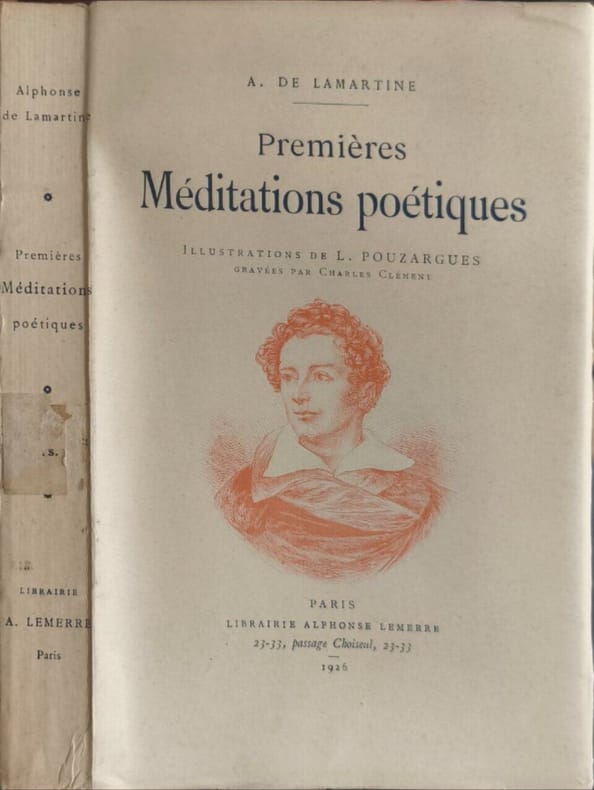
1926réf. 12471Librairie Alphonse Lemerre 1926 300 pages in12. 1926. broché. 300 pages. Premières Méditations Poétiques est le premier recueil d'Alphonse de Lamartine publié en 1820. Composé de 24 poèmes écrits entre 1815 et 1820 il marque le début du romantisme en France et explore des thèmes comme l'amour la nature la mélancolie et la spiritualité souvent inspirés par la relation du poète avec Julie Charles
2020br. 399 a.C.: la città di Atene condanna a morte uno dei suoi figli più autorevoli, Socrate. Cosa è successo davvero nei mesi in cui si è svolta la vicenda giudiziaria? Si ripete spesso che si trattò di un processo politico mascherato, per colpire le simpatie oligarchiche dell'anziano filosofo. Ma forse il vero oggetto del contendere in questa vicenda fu proprio il pensiero di Socrate. Fino a che punto una comunità - ieri come oggi - può tollerare che i principi e i valori su cui si fonda siano messi radicalmente in discussione? E davvero le ragioni della filosofia e quelle della città non sono compatibili? Una lettura originale di uno dei più celebri processi della storia.