Socrates ScholasticusBiblio.com

716 Ergebnisse
Best.-Nr. B9781162693279New. unknown
Best.-Nr. B9781169321861New. unknown
1954A novel set in ancient Athens focusing on the trial of Socrates and the efforts of his friends to save him and the result of his conviction. and "va rious avenues of escape offered to him." Book
2008Best.-Nr. Q-0470149094Wiley 2008-12-01. Hardcover. New. New. In shrink wrap. Looks like an interesting title! Wiley hardcover
2025Best.-Nr. SKU1728360Basic Books 2025-11-04. hardcover. New. 6x1x9. New Book Ships with Tracking Basic Books hardcover
2025Best.-Nr. SKU1735193Basic Books 2025-11-04. hardcover. New. 6x1x9. New Textbook Ships with Tracking Basic Books hardcover
1844Best.-Nr. 4839534Samuel Bagster and Sons 1844. This is an ex-library book and may have the usual library/used-book markings inside.This book has hardback covers. In fair condition suitable as a study copy. Re-bound by library. Larger blue cloth 8vo with gilt lettering and borders on sun faded backstrip. Bumped corners and some general wear including chipping to top of backstrip. Sun fading on back board. Interior is secure clean and clear save for some foxing. Trimmed. Please note the Image in this listing is a stock photo and may not match the covers of the actual item900grams ISBN: Samuel Bagster and Sons hardcover
1844Best.-Nr. 52748Samuel Bagster and Sons 1844. Hardcover. Fair. Disbound spine missing; front and back board loose. Text block secure and pages clean and tight; many pages uncut. -unread. 556 pages. All six volumes in one book. ; From the Accession of Constantine in A.D. 306 To The 36th Year of Theodosius Jun. A. D. 445 Inclu; 8vo 8" - 9" tall; 26521 Professional bookseller for twenty years. Orders shipped daily in cardboard bookfolds. Samuel Bagster and Sons hardcover
1956A clean, unmarked book with a tight binding. Full gray cloth boards. Light edge wear, and small tears to dust jacket. 490 pages.
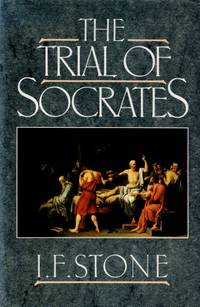
1991Minor shelfwear. Foxing to textblock. ; Argues that ancient Athens and modern America share the same basic moral and psychological problems, and examines the connection between political paranoia and a society's capacity for democratic behavior; 9.2 X 6.3 X 1.6 inches; 448 pages
2007Best.-Nr. 91628Continuum. New. Hardcover. FREE UPGRADE to Courier/Priority Shipping Upon Request - IN STOCK AND IMMEDIATELY AVAILABLE FOR SHIPMENT - Flawless copy brand new pristine never opened -- 160 pages. Description: " 'The Ideas of Socrates' offers a unique interpretation of the ideas forms eide in Plato’s writings. In this concise and accessible study Matthew S. Linck makes four major claims. Firstly the ideas as Socrates discusses them in the 'Phaedo' 'Parmenides' and 'Symposium' are shown to be integral to the person of Socrates as presented in Plato’s dialogues. Secondly Linck argues that if we take Plato’s dialogues as an integrated set of writings then we must acknowledge that the mature Socrates is perfectly aware of the difficulties entailed in the positing of ideas. Thirdly the book shows that Socrates’ recourse to the ideas is not simply an epistemological issue but one of self-transformation. And finally Linck examines how Socrates relates to the ideas in two ways one practical the other speculative. As the only group of Plato’s narrated dialogues that are not narrated by Socrates the 'Phaedo' 'Parmenides' and 'Symposium' constitute a unique collection. These three dialogues also contain accounts of Socrates as a young man and all of these accounts explicitly discuss the ideas. 'The Ideas of Socrates' serves as a commentary on the relevant passages of these dialogues and goes on to build up an explicit series of arguments about the ideas that will transform the way in which we approach these key texts. This important new book will be of interest to anyone involved in the study of Ancient Philosophy." -- with a bonus offer--; "The Ideas of Socrates" offers a unique interpretation of the ideas forms eide in Plato's writings. In this concise and accessible study Matthew S. Linck makes four major claims. Firstly the ideas as Socrates discusses them in the "Phaedo" "Parmenides" and "Symposium" are shown to be integral to the person of Socrates as presented in Plato's dialogues. Secondly Linck argues that if we take Plato's dialogues as an integrated set of writings then we must acknowledge that the mature Socrates is perfectly aware of the difficulties entailed in the positing of ideas. Thirdly the book shows that Socrates' recourse to the ideas is not simply an epistemological issue but one of self-transformation. And finally Linck examines how Socrates relates to the ideas in two ways one practical the other speculative. As the only group of Plato's narrated dialogues that are not narrated by Socrates the "Phaedo" "Parmenides" and "Symposium" constitute a unique collection. These three dialogues also contain accounts of Socrates as a young man and all of these accounts explicitly discuss the ideas. "The Ideas of Socrates" serves as a commentary on the relevant passages of these dialogues and goes on to build up an explicit series of arguments about the ideas that will transform the way in which we approach these key texts. This important new book will be of interest to anyone involved in the study of Ancient Philosophy. . 2007. 082649451X . Continuum hardcover
1816359 p. XLib. Old bookplate of the Lancaster Mechanics' Library Association on front paste down. XLib stamp on title page. Age stain. 12mo. 180 mm. Original leather binding, worn and rubbed. Joint cracked. Front board fragile. Original leather spine label. Title continues: "Exemplified In The Testimonies And Experience Of Persons Distinguished By Their Greatness, Learning, Or Virtue." S&S/AI 38344. Hardbound. AI BX 4
1940Best.-Nr. 10420First edition. Cloth-covered boards with lettering to the spine. Deckle fore-edge. Some toning to endpapers; otherwise this is a clean copy with no previous owners' names or other defacements. 6 x 8.75 in 15 x 22 cm Doubleday, Doran & Company hardcover
1979Spine sunned. Foxing/dustsoiling to top of textblock. ; SR Supplements 7; 274 pages
1971405p. Student copy clean unmarked text, over a little scuffed Book
1968Translated with introduction and notes by Francis MacDonald Cornford. 366p. Index.Neat and complete, paper covers slightly scuffed' Book
1968Translated with introduction and notes by Francis MacDonald Cornford. 366p. Index. Book
1951Original first vintage Penguin Classics edition. [L24] Book
1985Neat crisp student reading copy with a few underlinings 121p. Book
1988Best.-Nr. 32402AB1988. First Edition London Jonathan Cape 1988. Octavo. XI282 pages. Original Hardcover with original dustjacket in protective collector's mylar. Very good condition with only minor signs of wear. Name and date of preowner on endpaper. Newspaper-clipping with a Review of this book by Peter Levi loosely inserted / Newspaper-clipping of an article related to the book by Peter Jenkins also loosely inserted: "Socratic questions for today's society". Includes chapters like: Socrates and Athens / Socrates and Homer / The Good life: The Third Socratic Divergence / The Prejudices of Socrates / Xenophon Plato and the Three Earthquakes / How Socrates did his best to antagonize the Jury / How Socrates easily might have won Acquittal / The Four Words / Why did they wait until he was Seventy / etc. etc. Epilogue: Was there a witch-hunt in ancient Athens hardcover
1920Best.-Nr. 322359London: Macmillan 1920. hardcover. fine. 12mo beautifully rebound by Baynton in full burgundy morocco ornately gilt floral design on spine and covers inner dentelles all edges gilt. London: Macmillan 1920. Fine. Golden Treasury Series. Macmillan unknown
1977Light pencil to about 4 pages. Spine sunned. Stapled book. Light crease to 1 corner. ; English translation. ; 58 pages
1963[Everyman's Library. no. 457]Vintage copy, clean and crisp. The first printing of this translation, with an introduction by John Warrington in the Everyman series , Book
20029.1 X 6.1 X 0.6 inches; 304 pages
1988Vg/VG . delightful clean copy tightly bound. slight rubbing to edges of dj. internally no fault not price-clipped. no inscriptions.An attempt at a new understanding of the trial of Socrates.to Stone the shame of the trial is that a society famous for its citizen's right of free speech prosecuted a philosopher for, " no other crime than exercising it" He asks the question, "How could the trial of Socrartes have happened in a free society ?".