Klepikov, Socrates AlexandrovichBiblio.com
636 resultados
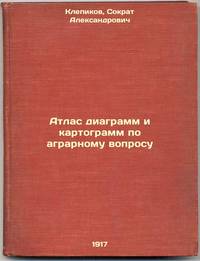
ref. 4217752Short description: In Russian. Klepikov Socrates Alexandrovich. Atlas of charts and cartographs on the agricultural issue. Moscow: Univer. b-ka 1917. The image is provided for reference only. It may reflect condition of one of the available copies or only help in identifying the edition. Please feel free to contact us for a detailed description of the copies available. SKU4217752 unknown
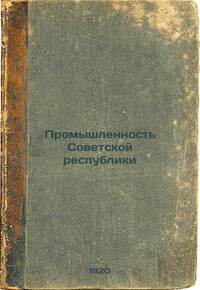
ref. 9144685Short description: In Russian. Klepikov Socrates Alexandrovich. Industry of the Soviet Republic. Moscow: Higher Soviet People's Economy. Editorial Board 1920. The image is provided for reference only. It may reflect condition of one of the available copies or only help in identifying the edition. Please feel free to contact us for a detailed description of the copies available. SKU9144685 unknown
2016ref. x-1138843156Routledge 2016. Hardcover. New. 280 pages. 9.13x6.57x1.11 inches. Routledge hardcover
2017ref. x-3642548008Springer Verlag 2017. Hardcover. New. 502 pages. 9.25x6.50x1.25 inches. Springer Verlag hardcover
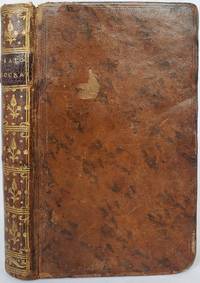
In-8, plein veau marbré de l'époque, dos à nerfs orné de compartiments fleuronnés et cloisonnés, pièce de titre de maroquin bordeaux, tranches rouges, (4), xxiv, 342, (2) p., planche frontispice gravée. Edition originale de la traduction française par G.-A. Junker. L’œuvre majeure de Moses Mendelssohn, principal représentant de la "Haskala", mouvement culturel juif européen influencé par les Lumières. L’essai est précédé d’un "avertissement" sur l’auteur donné par le traducteur, d’une préface de l’auteur et d’une "Vie de Socrate". Planche frontispice d’après Monet, gravé par Ménil. Le traducteur signale que les "remarques ajoutées à la Vie de Socrate ne se trouvent pas dans l’originale allemande" et qu’elles proviennent de l’édition anglaise imprimée à Paris. L’essai est composé de trois dialogues à la manière du Phédon de Platon, à partir de la correspondance de Mendelssohn avec son ami Thomas Abbt. "Ami de Lessing, grand-père du musicien Félix Mendelssohn, ce disciple de Leibniz, dont il tente de concilier la philosophie avec la pensée juive, connut la célébrité à la suite de cette publication. Reprenant le célèbre dialogue du même nom dans lequel Platon met en scène les derniers instants de Socrate, ce Phédon se propose d’accommoder les preuves métaphysiques de Platon au goût de son siècle et met dans la bouche de Socrate des arguments qui sont ceux de Descartes ou de Leibniz" (Jean Blain, in "Lire", 2000). (Cohen, 386. Fürst, II, 361. Szajkowski, 'Franco-Judaïca', n°1625). Restauration à un mors et une coiffe. Rousseurs éparses. Bon exemplaire, relié à l’époque.
ref. 44151Amsterdam.Leipzig.Arkste'e & Merkus. 1754.8 vols in-12 en veau d'époque. Tables des matières.En 1755: Tome VIII: supplément.Traduit de l'anglais.(R) BE.Qques mouillures en marge basse du Tome I,dans les premières pages.Ex-libris M.Desvallées,Avocat au Parlement.Veau raciné,pièces de titre et de tomaison sur dos fleuri.
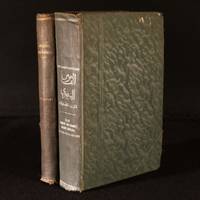
1921ref. 1002F5London; Cairo: School of Simplified Study; Elias' Modern Press 1921-1928 . Cloth. Good. 10" by 7". None. Two highly informative and scarce educational Arabic-English dictionaries and educational guides. Two Arabic and English language educational works from the 1920s.The first of these - lacking the title page - is the 1921 second edition of 'Arabic Simplified: A Practical Grammar of Written Arabic in 200 Lessons' by Arthur T. Upson Abdul-Fady al-Qahirany based on the system of Rev. J. C. Wilcox. First published in 1917 this is a very scarce work.The second volume is the 1928 revised and updated second edition of 'Elias' Modern Dictionary: Arabic-English' published by Elias A. Elias and authored by Elias and Socrates Spiro.Two fascinating works providing insight into Arabic and English languages in the 1920s. In the publisher's original cloth bindings. Bumping to back strip head and tail with handling marks to boards. Rear hinge of Simplified strained but firmly held. Spotting to front board of Simplified. Front hinge of Elias strained but firmly held. Internally generally firmly bound but with title page of Simplified lacking. Pages age toned due to paper type but clean. Good School of Simplified Study; Elias' Modern Press hardcover
1803ref. 9865Paris, Dentu, An XI (1803). 3 volumes petit in-8 de 396; [4]-408 et [4]-385-16 (catalogue) pages, demi-basane brune, dos lisses ornés de filet, roulettes et titre dorés, pastilles de tomaison et étiquettes de titre caramel. Reliure à peine frottée, rousseurs.
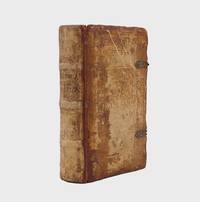
ref. 106305Colophon : Basilae, Per Hieronymum Frobenium et Nicolaum Episcopium, Anno MD XLIIII, Edité à Bâle par Froben, 1544, 1 volume in-folio de 315x200x65 mm environ, 1f.blanc, 6ff. (titre avec la marque de l'imprimeur, epistola, ad lectorem, Ruffinus Chromatio), 851 pages, 18 ff. (index) avec la marque de l'imprimeur au dos du colophon, plein basane marbrée fauve, dos à nerfs portant titres dorés sur pièce de titre en maroquin bordeaux, orné de fers dorés aux entrenerfs, tranches mouchetées de rouge. Rousseurs et pages brunies, notes marginales et ratures à l'encre par endroits (avec petit dans la marge causé par l'encre p.668, sans atteinte au texte), manque de papier sur la page de titre, épidermures et petits trous de ver sur le cuir, sinon bon état.
1720ref. B4486London: Cambridge 1720. Interior very good text very clean. Spine defective. . Binding: Lacks the binding. Notes: Text in parallel Greek and Latin. Ed. Henri Valois Henri Valois one of the great scholars of seventeenth-century France published authoritative editions of the works of the Greek ecclesiastical historians over a span of several decades together with Latin translations and valuable annotations. Size: Folio Category: Book Religious Christianity; Book Classics; Cambridge unknown
PARIS, 17 Volumes In-12 Reliure rouge, dos à 3 nerfs - 1 gravure frontispice - Tous avec 2 pages de titre : 1820, Lefuel, Lib & 1822, A. Payen, Lib avec gravure - entre 230 & 330 pages par volume - certains avec légères rousseus - 1e série, T. I, III, VII, XI & XII - 2e Série : II,III, IV, VI, VII & XII - 3e Série : III,IV, V, VI, VII & VIII - CHaque volume est indépendant l'un de l'autre - Propre - chaque volume peut-être vendu au prix de 50 € - nous préciser lle volume choisi
1569ref. 378648Lovanii: Excudebat Seruatius Sassenus sumptibus haeredum Arnoldi Birckmanni 1569. 22 308 i.e. 314 leaves. Errors in pagination as issued. 8vo. Early pigskin blocked in blind rebacked at an early date worn. Provenance: Ex . Michaelis Maest. 1583 inscription partially covered by label; Conradus Lanins Altendorffensis Anno domini 1615 Augusti inscription; Henry Muhlenberg 1774 signature and date on the front endpaper; Johann Christoph Kunze Prediger in Philadelphia early letterpress booklabel on front pastedown. 22 308 i.e. 314 leaves. Errors in pagination as issued. 8vo. An early edition of part of Socrates of Constantinople's history of the Church with early American provenance to Henry Muhlenberg 1711-1787 German-born Pennsylvania Lutheran clergyman and missionary and John Christopher Kunze 1744-1807 American Lutheran minister educator and theologian and Muhlenberg's son-in-law. Excudebat Seruatius Sassenus, sumptibus haeredum Arnoldi Birckmanni unknown
1569ref. 378648Lovanii: Excudebat Seruatius Sassenus sumptibus haeredum Arnoldi Birckmanni 1569. 22 308 i.e. 314 leaves. Errors in pagination as issued. 8vo. Early pigskin blocked in blind rebacked at an early date worn. Provenance: Ex . Michaelis Maest. 1583 inscription partially covered by label; Conradus Lanins Altendorffensis Anno domini 1615 Augusti inscription; Henry Muhlenberg 1774 signature and date on the front endpaper; Johann Christoph Kunze Prediger in Philadelphia early letterpress booklabel on front pastedown. 22 308 i.e. 314 leaves. Errors in pagination as issued. 8vo. An early edition of part of Socrates of Constantinople's history of the Church with early American provenance to Henry Muhlenberg 1711-1787 German-born Pennsylvania Lutheran clergyman and missionary and John Christopher Kunze 1744-1807 American Lutheran minister educator and theologian and Muhlenberg's son-in-law. Excudebat Seruatius Sassenus, sumptibus haeredum Arnoldi Birckmanni unknown books
1675ref. SAV142Paris: Chez Damien Foucault for the workshop of Pierre Rocolet 1675. First Edition. Hardcover. Very Good. 4to 170 x 240mm. Pagination: 26 476 12pp of table. Signatures: A-Z4 Aa-Zz4 Aaa-Ppp4.Woodcut printers device of Rocolet official printer of Paris with crowned arms of Louis XIV and heraldry of the Foucault and Rocolet supported by muses and with their monograms on plaque. With dedication on title Dediee a Monseigneur le Dauphin and letter by Cousin. Contemporary French mottled brown calf by Rocolet or his workshop with the arms of Louis XIV 1643-1661 three fleur-de-lis stamped in central medallion on covers surrounded by a blind-tooled roll of fleur-de-lis spine with five raised bands with a fleur-de-lis and tan morocco label all edges gilt marbled endpapers; title with small spots and residue not-severe covers slightly bowed and corners lightly bumped otherwise crisp and clean. This book is a fine specimen of such characteristic work from the Rocolet printers. This copy is exemplary for its royal provenance; this church history work which would have been presented at court to Louis XIV and the dauphin the kings son Louis of France 1661-1711. The dauphin would have been about 14 years old at the time of this edition. Louis XIV and other royals often had works printed and bound for presentation in the court and gave them to special members in their circle. The title has an unidentified impression monogram GDV in lower right corner probably dating to the 18th century. First edition and second volume of four containing Socrates Scholasticuss history of the Christian Church; this title part of a en ecclesiastical series by Rocolet published in 1675 and 1676; a reissue was made in Holland in 1686. This set is frequently found as the singular volume in usual institution catalogs. Louis Cousin was the translator of this great compilation corpus on church history written by the fifth century Church Father Socrates which continued the great magnum opus of his forefather Eusebius of Caesarea. Among Cousins law and theological acumen he was an academician royal censor and president of the court of currencies Cour des Monnoyes. This translation was highly regarded by his contemporaries as translations from the Greek of Church Father writings were becoming common in the ecclesiastical language of the Western Church. Pierre Rocolet the printer by appointment for the city government was active in Paris from 1640 until 1662 when his son-in-law Damien Foucault succeeded him in the business. Importantly this work is one of the last that Foucault would produce under the workshops name. He died in 1675 and his widow Anne Bonjean succeeded him until 1686 and then a son Hilaire Foucault continued until 1723. The Rocolet workshop was known for collaborating with select binders and gilders to producing luxurious decorated bindings which dominated the French booksellers markets in the mid and late seventeenth century. This copy is a notable armorial presentation binding within the circle of Louis XIV. First edition and second volume of four containing Socrates Scholasticuss history of the Christian Church; this title part of a en ecclesiastical series by Rocolet published in 1675 and 1676; a reissue was made in Holland in 1686. This set is frequently found as the singular volume in usual institution catalogs. Louis Cousin was the translator of this great compilation corpus on church history written by the fifth century Church Father Socrates which continued the great magnum opus of his forefather Eusebius of Caesarea. Among Cousins law and theological acumen he was an academician royal censor and president of the court of currencies Cour des Monnoyes. This translation was highly regarded by his contemporaries as translations from the Greek of Church Father writings were becoming common in the ecclesiastical language of the Western Church. Pierre Rocolet the printer by appointment for the city government was active in Paris from 1640 until 1662 when his son-in-law Damien Foucault succeeded him in the business. Importantly this work is one of the last that Foucault would produce under the workshops name. He died in 1675 and his widow Anne Bonjean succeeded him until 1686 and then a son Hilaire Foucault continued until 1723. The Rocolet workshop was known for collaborating with select binders and gilders to producing luxurious decorated bindings which dominated the French booksellers markets in the mid and late seventeenth century. This copy is a notable armorial presentation binding within the circle of Louis XIV. Chez Damien Foucault (for the workshop of Pierre Rocolet) hardcover
1675ref. SAV142Paris: Chez Damien Foucault for the workshop of Pierre Rocolet 1675. First Edition. Hardcover. Very Good. 4to 170 x 240mm. Pagination: 26 476 12pp of table. Signatures: A-Z4 Aa-Zz4 Aaa-Ppp4.Woodcut printers device of Rocolet official printer of Paris with crowned arms of Louis XIV and heraldry of the Foucault and Rocolet supported by muses and with their monograms on plaque. With dedication on title Dediee a Monseigneur le Dauphin and letter by Cousin. Contemporary French mottled brown calf by Rocolet or his workshop with the arms of Louis XIV 1643-1661 three fleur-de-lis stamped in central medallion on covers surrounded by a blind-tooled roll of fleur-de-lis spine with five raised bands with a fleur-de-lis and tan morocco label all edges gilt marbled endpapers; title with small spots and residue not-severe covers slightly bowed and corners lightly bumped otherwise crisp and clean. This book is a fine specimen of such characteristic work from the Rocolet printers. This copy is exemplary for its royal provenance; this church history work which would have been presented at court to Louis XIV and the dauphin the kings son Louis of France 1661-1711. The dauphin would have been about 14 years old at the time of this edition. Louis XIV and other royals often had works printed and bound for presentation in the court and gave them to special members in their circle. The title has an unidentified impression monogram GDV in lower right corner probably dating to the 18th century. First edition and second volume of four containing Socrates Scholasticuss history of the Christian Church; this title part of a en ecclesiastical series by Rocolet published in 1675 and 1676; a reissue was made in Holland in 1686. This set is frequently found as the singular volume in usual institution catalogs. Louis Cousin was the translator of this great compilation corpus on church history written by the fifth century Church Father Socrates which continued the great magnum opus of his forefather Eusebius of Caesarea. Among Cousins law and theological acumen he was an academician royal censor and president of the court of currencies Cour des Monnoyes. This translation was highly regarded by his contemporaries as translations from the Greek of Church Father writings were becoming common in the ecclesiastical language of the Western Church. Pierre Rocolet the printer by appointment for the city government was active in Paris from 1640 until 1662 when his son-in-law Damien Foucault succeeded him in the business. Importantly this work is one of the last that Foucault would produce under the workshops name. He died in 1675 and his widow Anne Bonjean succeeded him until 1686 and then a son Hilaire Foucault continued until 1723. The Rocolet workshop was known for collaborating with select binders and gilders to producing luxurious decorated bindings which dominated the French booksellers markets in the mid and late seventeenth century. This copy is a notable armorial presentation binding within the circle of Louis XIV. First edition and second volume of four containing Socrates Scholasticuss history of the Christian Church; this title part of a en ecclesiastical series by Rocolet published in 1675 and 1676; a reissue was made in Holland in 1686. This set is frequently found as the singular volume in usual institution catalogs. Louis Cousin was the translator of this great compilation corpus on church history written by the fifth century Church Father Socrates which continued the great magnum opus of his forefather Eusebius of Caesarea. Among Cousins law and theological acumen he was an academician royal censor and president of the court of currencies Cour des Monnoyes. This translation was highly regarded by his contemporaries as translations from the Greek of Church Father writings were becoming common in the ecclesiastical language of the Western Church. Pierre Rocolet the printer by appointment for the city government was active in Paris from 1640 until 1662 when his son-in-law Damien Foucault succeeded him in the business. Importantly this work is one of the last that Foucault would produce under the workshops name. He died in 1675 and his widow Anne Bonjean succeeded him until 1686 and then a son Hilaire Foucault continued until 1723. The Rocolet workshop was known for collaborating with select binders and gilders to producing luxurious decorated bindings which dominated the French booksellers markets in the mid and late seventeenth century. This copy is a notable armorial presentation binding within the circle of Louis XIV. Chez Damien Foucault (for the workshop of Pierre Rocolet) hardcover books
1920ref. 322359London: Macmillan 1920. hardcover. fine. 12mo beautifully rebound by Baynton in full burgundy morocco ornately gilt floral design on spine and covers inner dentelles all edges gilt. London: Macmillan 1920. Fine. Golden Treasury Series. Macmillan unknown
1920ref. 322359London: Macmillan 1920. hardcover. fine. 12mo beautifully rebound by Baynton in full burgundy morocco ornately gilt floral design on spine and covers inner dentelles all edges gilt. London: Macmillan 1920. Fine. Golden Treasury Series. Macmillan unknown books
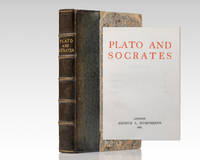
1907ref. 151306London: Arthur L. Humphreys 1907. Finely bound edition of this collection of Plato's Socratic dialogues including “Euthyphro” “Apology” “Crito” and “Phaedo”. Octavo bound in half morocco over marbled boards with gilt titles to the spine in six compartments within raised gilt bands top edge gilt. In near fine condition. Plato c. 427–347 BCE and Socrates c. 470–399 BCE were central figures in the development of ancient Greek philosophy and the foundations of Western intellectual thought. Socrates who left no written works of his own is known primarily through the dialogues of Plato and the writings of contemporaries such as Xenophon; he is remembered for his method of philosophical inquiry based on questioning dialectic and the pursuit of ethical truth. Plato Socrates’ most famous student preserved and developed many of his teacher’s ideas in a series of philosophical dialogues that explored topics including justice knowledge virtue and the nature of reality. Through works such as The Republic Plato both commemorated Socrates’ intellectual legacy and expanded it into a comprehensive philosophical system that would shape later traditions in metaphysics ethics and political theory. Arthur L. Humphreys hardcover
ref. 104098Parisiis (Paris), Sumptibus Sebastiani Cramoisy, Typographi Regij, via Iacobaea, sub Ciconiis 1637, 230x175mm, reliure parchemin muet de l’époque. Bon état, intérieur propre.
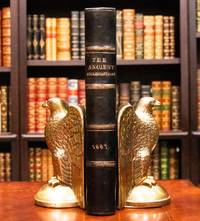
1607ref. 736London: Richard Field 1607. VG. BOOK IS IN VERY GOOD CONDITION REBOUND IN 3/4 LEATHER WITH FIVE COMPARTMENTS AND FOUR RAISED BANDS TO SPINE WITH BRIGHT GILT DETAILS AND TITLE. BINDING AND HINGES ARE VERY GOOD DECORATIVE END PAPERS AND PASTE DOWNS. LACKING BLANK FREE PAPERS IN FRONT AND BACK OF BOOK NO LOOSE OR MISSING PAGES SOME LIGHT DAMPSTAINING TO FRONT AND REAR OF BOOK PAGES FOR THE MOST PART ARE BRIGHT AND CLEAN WITHOUT MARKS EXCEPT FOR PREVIOUS OWNER NAMES TO TITLE PAGE MINIMAL FOXING. BOOK MEASURES 11.25"x7.5". 420 YEARS OLD. A SCARCE TITLE. Richard Field unknown
1521In -4°, cc. 58, piena pergamena e titolo manoscritto al dorso. Frontespizio in cornice xilografica, iniziali e marca editoriale di Mazzocchi in fine. Prima edizione della traduzione in latino di quest’opera di Senofonte fatta da Bessarione (Trebisonda 1403 - Ravenna 1472), Cardinale, teologo e umanista, intorno agli anni ’40 del secolo precedente. Si presume che a scoprire il manoscritto sia stato lo stesso Giano Vitale, autore della lettera dedicatoria che apre il volume. L’opera di Bessarione contribuisce in maniera decisiva alla rivalutazione delle opere di Senofonte, autore pressoché dimenticato nel Medioevo, avvenuta nel Rinascimento, opere che forniranno, relativamente al mondo socratico, una cospicua alternativa alla rappresentazione che ne dà Platone nei suoi Dialoghi. Bellissimo il frontespizio incorniciato (riprodotto in Mortimer, “Italian 16th century books”, p. 583). Adams X-43 Title page in a xilographic frame, initials and Mazzocchi’s printer’s mark at the end. The first edition of the latin translation of this Xenophon’s work, made by Bessarion (1403-1472), a Cardinal and a humanist, in the first half of the XV century. The manuscript was probably discovered by the very Giano Vitale, author of the dedication letter at the beginning of the volume. Bessarion’s work is a crucial contribution to the revaluation of Xenophon’s work, happened in the Renaissance. A very charming title page (reproduced in Mortimer, “Italian 16th century books”, p. 583) Adams X-43
1754ref. 168571754. Vernet Jacques. Dialogues Socratiques Ou Instructions Sur Divers Sujets De Morale 1754 first edition presenting Enlightenment era moral philosophy through the Socratic dialogue form composed for the education of the hereditary prince of Saxe Gotha. The work situates classical philosophical method within eighteenth century pedagogical practice using structured dialogue to examine ethical questions and cultivate reasoning in a princely educational context. Produced within a German court known for intellectual activity the text contributes to the study of Enlightenment education moral philosophy and the adaptation of classical forms for modern instruction. Vernet Jacques. Dialogues Socratiques Ou Instructions Sur Divers Sujets De Morale. 1754. First edition. Duodecimo volume presenting a series of dialogues structured around moral and philosophical inquiry following the classical model associated with Socratic teaching. The text frames ethical problems through exchanges between speakers combining literary form with didactic purpose. Contemporary and later ownership is evidenced by multiple nineteenth century ex libris inscriptions on the final page indicating continued circulation and readership. Issued during the mid eighteenth century the work reflects broader Enlightenment efforts to systematize moral education and integrate classical philosophical traditions into modern intellectual life. Courts such as Saxe Gotha functioned as centers of learning where pedagogical texts were commissioned for elite instruction and Vernet's dialogues align with this context of princely education and intellectual exchange. Shelfwear with bumping to corners dampstaining to several pages and a small tear to the final leaf; inscriptions present; overall good. A documented example of Enlightenment moral instruction in dialogue form. unknown
1754ref. 168571754. Vernet Jacques. Dialogues Socratiques Ou Instructions Sur Divers Sujets De Morale 1754 first edition presenting Enlightenment era moral philosophy through the Socratic dialogue form composed for the education of the hereditary prince of Saxe Gotha. The work situates classical philosophical method within eighteenth century pedagogical practice using structured dialogue to examine ethical questions and cultivate reasoning in a princely educational context. Produced within a German court known for intellectual activity the text contributes to the study of Enlightenment education moral philosophy and the adaptation of classical forms for modern instruction. Vernet Jacques. Dialogues Socratiques Ou Instructions Sur Divers Sujets De Morale. 1754. First edition. Duodecimo volume presenting a series of dialogues structured around moral and philosophical inquiry following the classical model associated with Socratic teaching. The text frames ethical problems through exchanges between speakers combining literary form with didactic purpose. Contemporary and later ownership is evidenced by multiple nineteenth century ex libris inscriptions on the final page indicating continued circulation and readership. Issued during the mid eighteenth century the work reflects broader Enlightenment efforts to systematize moral education and integrate classical philosophical traditions into modern intellectual life. Courts such as Saxe Gotha functioned as centers of learning where pedagogical texts were commissioned for elite instruction and Vernet's dialogues align with this context of princely education and intellectual exchange. Shelfwear with bumping to corners dampstaining to several pages and a small tear to the final leaf; inscriptions present; overall good. A documented example of Enlightenment moral instruction in dialogue form. unknown books
ref. 24908060-nnew. unknown
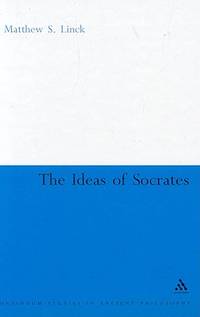
2007ref. 91628Continuum. New. Hardcover. FREE UPGRADE to Courier/Priority Shipping Upon Request - IN STOCK AND IMMEDIATELY AVAILABLE FOR SHIPMENT - Flawless copy brand new pristine never opened -- 160 pages. Description: " 'The Ideas of Socrates' offers a unique interpretation of the ideas forms eide in Plato’s writings. In this concise and accessible study Matthew S. Linck makes four major claims. Firstly the ideas as Socrates discusses them in the 'Phaedo' 'Parmenides' and 'Symposium' are shown to be integral to the person of Socrates as presented in Plato’s dialogues. Secondly Linck argues that if we take Plato’s dialogues as an integrated set of writings then we must acknowledge that the mature Socrates is perfectly aware of the difficulties entailed in the positing of ideas. Thirdly the book shows that Socrates’ recourse to the ideas is not simply an epistemological issue but one of self-transformation. And finally Linck examines how Socrates relates to the ideas in two ways one practical the other speculative. As the only group of Plato’s narrated dialogues that are not narrated by Socrates the 'Phaedo' 'Parmenides' and 'Symposium' constitute a unique collection. These three dialogues also contain accounts of Socrates as a young man and all of these accounts explicitly discuss the ideas. 'The Ideas of Socrates' serves as a commentary on the relevant passages of these dialogues and goes on to build up an explicit series of arguments about the ideas that will transform the way in which we approach these key texts. This important new book will be of interest to anyone involved in the study of Ancient Philosophy." -- with a bonus offer--; "The Ideas of Socrates" offers a unique interpretation of the ideas forms eide in Plato's writings. In this concise and accessible study Matthew S. Linck makes four major claims. Firstly the ideas as Socrates discusses them in the "Phaedo" "Parmenides" and "Symposium" are shown to be integral to the person of Socrates as presented in Plato's dialogues. Secondly Linck argues that if we take Plato's dialogues as an integrated set of writings then we must acknowledge that the mature Socrates is perfectly aware of the difficulties entailed in the positing of ideas. Thirdly the book shows that Socrates' recourse to the ideas is not simply an epistemological issue but one of self-transformation. And finally Linck examines how Socrates relates to the ideas in two ways one practical the other speculative. As the only group of Plato's narrated dialogues that are not narrated by Socrates the "Phaedo" "Parmenides" and "Symposium" constitute a unique collection. These three dialogues also contain accounts of Socrates as a young man and all of these accounts explicitly discuss the ideas. "The Ideas of Socrates" serves as a commentary on the relevant passages of these dialogues and goes on to build up an explicit series of arguments about the ideas that will transform the way in which we approach these key texts. This important new book will be of interest to anyone involved in the study of Ancient Philosophy. . 2007. 082649451X . Continuum hardcover